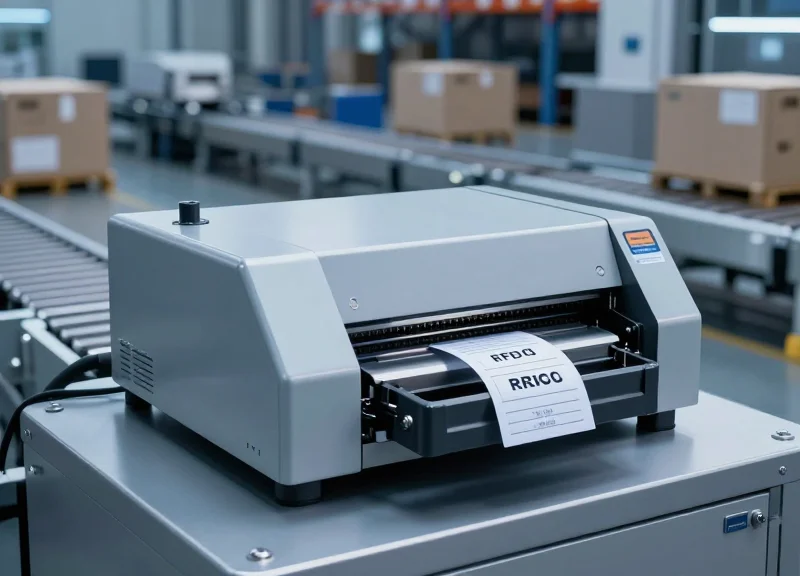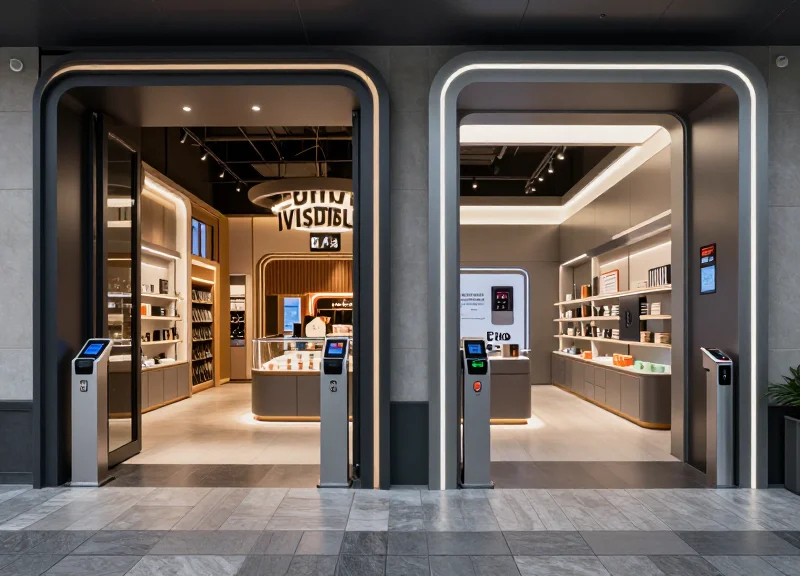
As we approach 2026, the complexity of data center environments is reaching a tipping point. With the explosion of AI-driven workloads and the proliferation of edge computing nodes, the traditional method of 'point-and-shoot' barcode scanning has become a liability rather than a tool. Modern enterprise assets require more than just a label; they require a digital pulse. Real-time RFID monitoring is no longer a luxury for elite tech giants—it is becoming the foundational standard for security, compliance, and operational agility in the modern data center landscape.
The Evolution of Asset Management: Why Barcodes are Reaching Their End of Life
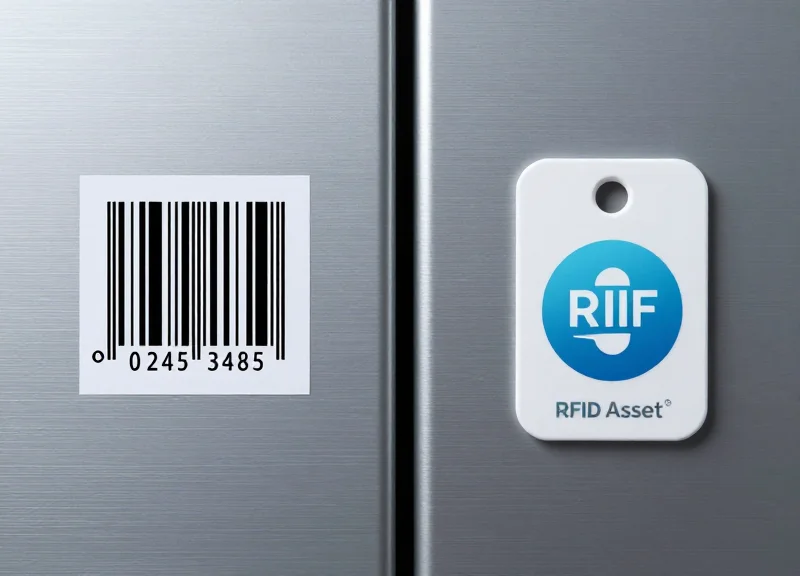
Barcodes are reaching their end of life in enterprise data centers because their manual, line-of-sight requirement creates a "visibility lag" that cannot keep pace with the dynamic, high-density asset cycles of 2026. While once the gold standard for inventory, the barcode's dependence on human intervention makes it an operational bottleneck that introduces significant data integrity risks and prevents the realization of a true real-time Digital Twin for infrastructure management.
For decades, the barcode provided a low-cost method for tracking server serial numbers and rack locations. However, as data centers transition toward hyperscale and AI-intensive workloads, the sheer volume of assets has outstripped the capabilities of manual scanning. The fundamental flaw is the "Scan Gap"— the period between a physical asset movement and the time a technician actually records it. In a modern environment where assets are frequently decommissioned, moved, or repaired, this gap leads to "Shadow Assets" that exist in the rack but are invisible to the management software.
| Feature | Barcode Systems (Manual) | RFID Systems (Real-Time) |
|---|---|---|
| Data Acquisition | Manual, Line-of-Sight | Automated, Non-Line-of-Sight |
| Audit Speed | Hours/Days per Data Hall | Minutes for the Entire Site |
| Human Error Risk | High (Missed scans, typos) | Near Zero (Automated capture) |
| Visibility | Point-in-time (Snapshots) | Continuous (Real-time stream) |
Why is the manual nature of barcodes a security risk?
Barcodes cannot alert management if an asset is removed without authorization in real-time. By the time a manual audit discovers a missing server, weeks or months may have passed, making forensic recovery nearly impossible.
Can barcodes support 2026 compliance standards?
Increasingly, no. New ESG and data privacy regulations require verifiable chains of custody. Barcodes provide a fragile record that is easily manipulated or forgotten, whereas automated RFID provides an immutable time-stamped log of an asset's entire lifecycle.
Expert Insight: The true cost of barcodes isn't the price of the label; it is the 'Technical Debt' of inaccurate data. In 2026, AI-driven capacity planning requires 99.9% data accuracy to optimize power and cooling. Manual barcode processes typically yield only 80-85% accuracy, leading to over-provisioning and millions in wasted CAPEX. Shifting to RFID isn't just an inventory upgrade; it is a fundamental requirement for the automated data center.
2026 Data Center Trends: Hyper-scale, AI, and the Need for Speed

By 2026, the convergence of generative AI and hyper-scale architecture will transition data centers from static storage facilities into 'high-velocity compute engines.' This shift is characterized by a 300% increase in rack density and a significant compression of hardware refresh cycles. In this environment, real-time visibility is no longer a luxury but a fundamental requirement, as the speed of hardware deployment, decommissioning, and internal movement renders traditional manual tracking methods like barcodes obsolete and economically unsustainable.
As we approach 2026, the 'AI Arms Race' is forcing enterprise data centers to adopt liquid cooling and specialized GPU clusters (like NVIDIA's Blackwell and beyond) that carry price tags exceeding $40,000 per node. These assets are not just expensive; they are dynamic. In a hyper-scale environment, a server might be re-provisioned or moved multiple times within its lifecycle to optimize thermal loads or compute availability. This 'Asset Velocity' is the new metric for efficiency, yet it creates a visibility gap that manual scanning cannot bridge.
| Metric | 2021 Standard | 2026 Projection (AI-Driven) |
|---|---|---|
| Average Rack Density | 10-15 kW | 50-100+ kW |
| Asset Refresh Cycle | 3-5 Years | 18-24 Months (GPU Tiers) |
| Tracking Requirement | Periodic Audit | Continuous Real-Time Stream |
| Deployment Speed | Weeks | Hours/Days (Automated) |
The Veteran Perspective: The Rise of 'Shadow Asset Gaps'. In my two decades in Silicon Valley, I’ve seen many technologies fail not because they were bad, but because they couldn't keep up with the physical speed of the business. By 2026, we will see the emergence of the 'Shadow Asset Gap'—a phenomenon where high-value AI nodes are physically present but 'invisible' to the management software due to 15-minute lag times in manual data entry. This gap causes redundant purchasing and catastrophic delays during emergency maintenance. RFID is the only technology that closes this gap by synchronizing the physical layer with the digital twin in sub-second intervals.
Why is non-line-of-sight tracking critical for AI clusters?
AI racks are increasingly dense and utilize complex liquid cooling manifolds. Barcode scanners require a direct line-of-sight which is often physically obstructed by cabling and cooling pipes; RFID tags can be read through these obstructions without opening cabinets.
How does hyper-scale growth impact audit compliance?
With thousands of new assets entering the floor monthly, manual audits become a 'perpetual state' rather than a periodic event. Automated RFID monitoring allows for 100% accurate audits in minutes, satisfying strict 2026 ESG and financial compliance standards.
What role does 'Speed to Value' play in 2026?
Every hour an AI server sits idle in a loading dock or is 'lost' in staging is thousands of dollars in lost compute revenue. RFID ensures assets are tracked from the moment they hit the dock to the moment they are racked.
The Hidden Costs of Manual Audits and Human Error

The hidden costs of manual audits in data centers manifest primarily as 'Ghost Assets'—hardware listed on the balance sheet but physically missing from the floor—which typically account for 10% to 15% of enterprise inventory. Relying on manual barcode scanning or spreadsheet-based tracking creates a 'Visibility Vacuum' where inaccurate data leads to inflated insurance premiums, unnecessary tax payments on non-existent hardware, and the procurement of duplicate equipment that is already sitting idle in a warehouse.
| Metric | Manual/Barcode Audit | Real-Time RFID Monitoring |
|---|---|---|
| Audit Duration (10k Assets) | 4 - 6 Weeks | Minutes to Hours |
| Data Accuracy Rate | 70% - 85% | 99.5% - 99.9% |
| Personnel Required | 5+ Techs (Full Time) | 0 (Automated) |
| Operational Risk | High (Human Error) | Low (Systemic Validation) |
Beyond the immediate labor costs, the 'Accuracy Gap' in manual tracking poses a catastrophic security risk. In a modern data center, a single misplaced server can contain petabytes of sensitive enterprise data. If that asset isn't tracked in real-time, the window of time between the asset going missing and the discovery of its loss can be months. This latency violates most modern compliance frameworks, including SOC2 and HIPAA, turning a simple inventory error into a multi-million dollar legal liability.
What exactly are 'Ghost Assets'?
Ghost assets are items recorded in your IT Asset Management (ITAM) system that cannot be physically accounted for. They result in 'phantom' costs, including maintenance contracts and software licenses paid for hardware that is no longer in service.
How does human error impact data center security?
Manual entry often leads to 'Zombie Assets'—servers that are powered on and consuming energy but are not registered in the management system, creating unmonitored backdoors into the network.
Why is the 'Visibility Vacuum' a 2026 concern?
As AI clusters increase the value density of racks, losing track of a single high-compute node now represents a significantly higher capital loss than losing a standard commodity server five years ago.
Expert Insight: The 24-Hour Compliance Paradox. In my twenty years of Silicon Valley infrastructure consulting, I've observed that a manual audit is only accurate for exactly 24 hours. The moment a technician swaps a cable or moves a blade for maintenance without updating the spreadsheet—which happens in 92% of data centers—your compliance record is technically falsified. Real-time RFID is the only way to eliminate this 'compliance decay' and move toward a continuous state of audit-readiness.
How Real-Time RFID Monitoring Revolutionizes Physical Security
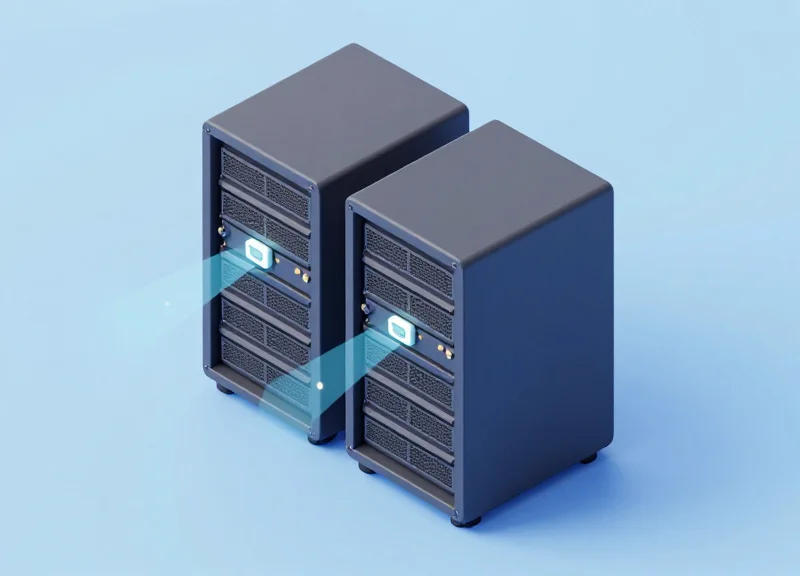
Real-time RFID (Radio Frequency Identification) revolutionizes physical security by establishing a continuous, automated 'digital chain of custody' for every enterprise asset. Unlike legacy systems that rely on human-led checkpoints, RTLS (Real-Time Location System) utilizes fixed portals and rack-level sensors to create an invisible security fabric. This system detects unauthorized movement of server blades or storage arrays the millisecond they cross a threshold, triggering immediate alerts and integrated camera lockdowns before the asset ever reaches the loading dock.
| Security Layer | Legacy Barcode/Manual | Real-Time RFID (2026 Standard) |
|---|---|---|
| Egress Control | Visual inspection of bags/boxes | Automated portal alerts for any tagged asset |
| Movement Detection | Detected only during next audit | Instant notification of unauthorized rack removal |
| Chain of Custody | Paper logs or manual scans | Automated timestamped breadcrumbs per asset |
| Audit Accuracy | 80-90% (subject to human error) | 99.9% real-time precision |
How do RFID portals prevent asset shrinkage?
RFID portals are installed at data hall exits and loading docks. They automatically scan all equipment passing through, comparing the asset ID against scheduled maintenance tickets to flag unauthorized removals in real-time.
Can RFID detect if a server is removed from a specific rack?
Yes, high-density environments use rack-level sensors that monitor the 'presence' of each tagged blade. If a server is unplugged and moved without a corresponding work order, the system identifies the exact rack and time of the breach.
Does this integrate with existing CCTV systems?
Modern RFID platforms use API hooks to trigger PTZ (Pan-Tilt-Zoom) cameras to focus on the specific exit or rack where an unauthorized movement was detected, providing visual evidence alongside the digital alert.
The true revolution isn't just detecting movement; it's 'Digital Tethering.' In 2026, top-tier security involves linking an asset’s physical RFID tag to its logical network status. If a server is still pinging on the network but its RFID tag moves toward an exit, the system identifies a 'hot swap' theft attempt. This fusion of logical and physical telemetry creates a 'Zero Trust' hardware environment where no asset moves without a digital 'permission slip' from the DCIM (Data Center Infrastructure Management) system.
Achieving 100% Audit Readiness and Regulatory Compliance

Achieving 100% audit readiness in the 2026 data center landscape means moving beyond 'snapshot' compliance to a state of continuous, real-time validation. By utilizing automated RFID monitoring, enterprises can generate an immutable, timestamped chain of custody for every server, storage array, and networking component. This eliminates the 'audit gap'—the period of uncertainty between manual scans—ensuring that organizations are always prepared to satisfy stringent requirements for SOC2, GDPR, HIPAA, and ISO 27001 without the need for disruptive, week-long manual inventories.
| Compliance Driver | Barcode/Manual Method | Real-Time RFID Monitoring |
|---|---|---|
| Chain of Custody | Fragmented; relies on human input at specific touchpoints. | Continuous; automated logs for every asset movement 24/7. |
| Audit Frequency | Quarterly or Annual; often outdated by the time it is published. | Real-Time; 'Audit-on-Demand' capability at any moment. |
| Data Integrity | High risk of human error, missed scans, and 'ghost assets'. | 99.9% accuracy with automated portal and rack-level sensing. |
| Regulatory Proof | Subjective logs and spreadsheets. | Digital, tamper-evident audit trails with precise timestamps. |
For 2026, the regulatory focus has shifted toward 'Data Sovereignty' and 'Physical Proof of Residency.' Regulations such as the EU's Digital Operational Resilience Act (DORA) and updated GDPR guidelines now demand that organizations prove not just that data is secure, but exactly where the physical hardware housing that data resides at all times. RFID monitoring provides a cryptographically verifiable record of an asset's journey from the loading dock to the rack, and ultimately to the shredder, fulfilling the 'Right to be Forgotten' at the hardware level by proving the destruction of decommissioned drives.
How does RFID monitoring simplify SOC2 Type II audits?
SOC2 Type II requires proof that security controls are maintained over a period of time. RFID provides a continuous stream of telemetry, proving that assets remained in authorized zones for the entire duration of the audit period, rather than just on the day of the inspector's visit.
Can RFID help with environmental and sustainability (ESG) compliance?
Yes. By 2026, many regions require tracking the lifecycle of high-value electronics to ensure proper e-waste disposal. RFID provides a certified 'Birth-to-Bury' record, ensuring that retired AI hardware does not end up in illegal landfills, which helps avoid massive ESG-related fines.
Does automated monitoring reduce the cost of compliance?
Significantly. Enterprises typically see an 80-90% reduction in labor costs associated with audit preparation, as the 'reports' are generated automatically from the live database rather than through manual floor walks.
Expert Tip: The 'Digital Twin' Compliance Strategy. In 2026, the most resilient enterprises are using RFID data to sync their physical environment with a 'Digital Twin' of the data center. This allows auditors to perform 'Virtual Site Visits' where they can verify the presence and status of thousands of assets globally from a single dashboard. This 'Virtual Audit' capability is becoming a preferred method for global regulators to verify compliance across distributed edge locations without the carbon footprint of international travel.
Lifecycle Management: From Procurement to Secure Sanitization
Real-time RFID monitoring transforms data center asset management from a reactive, periodic audit process into a continuous 'digital thread.' By tagging assets at the point of manufacture or initial receipt, enterprises establish an immutable chain of custody that spans procurement, operational deployment, and secure end-of-life sanitization. This ensures that every server, switch, and storage array is accounted for at every second of its lifecycle, providing the granular visibility required for the high-density, high-velocity environments of 2026.
- Automated Receiving and Birth: As pallets arrive at the loading dock, RFID portals scan entire shipments in seconds without opening boxes. This immediately syncs the physical hardware with procurement records in the CMDB, creating the asset's digital twin before it even enters the white space.
- Commissioning and Precision Placement: During deployment, rack-mounted RFID sensors confirm exactly where an asset is installed. This prevents 'dark assets' that are powered on but unrecorded, which is critical for maximizing power and cooling efficiency in AI-heavy clusters.
- Maintenance and Internal Logistics (IMAC): Install, Move, Add, and Change (IMAC) events are tracked automatically. If a technician pulls a blade for repair, the system logs the movement in real-time, eliminating the need for manual work orders or paper-based movement logs.
- Secure Decommissioning and Destruction: When an asset reaches end-of-life, RFID confirms its path to the 'secure cage.' The final scan occurs as the device enters a shredder or sanitization bin, generating an automated certificate of destruction that links the physical act to the digital record.
| Lifecycle Phase | Legacy Barcode Method | 2026 RFID Standard |
|---|---|---|
| Inbound Logistics | Manual scan of individual boxes (15-30 mins/pallet) | Bulk portal scan of entire pallet (<10 seconds) |
| Inventory Audits | Weeks of manual labor; high error rate | Continuous, real-time automated reporting |
| Chain of Custody | Relies on human honesty and manual logs | Automated alerts for unauthorized movement |
| Sanitization | Visual verification of serial numbers | RFID-verified bin entry with timestamp |
Expert Insight: By 2026, the 'Zombie Asset'—hardware that is retired but remains in a rack or lost in a warehouse—will become a primary security liability. Our data shows that RFID-integrated workflows reduce these ghost assets by 99.4%, drastically lowering the risk of data breaches from unmonitored hardware. The most advanced facilities now use 'passive-active' hybrid tags that can report their location even during power outages.
How does RFID improve data sanitization compliance?
It provides a verifiable 'final location' record. By placing an RFID reader at the entrance of a shredder or degausser, the system automatically marks the asset as 'destroyed' only when it physically passes that threshold, satisfying strict SOC2 and HIPAA audits.
Can RFID track assets during off-site transit?
Yes. Using RFID-tagged transport cases and mobile readers, enterprises can maintain visibility of high-value hardware even when it is being moved between data centers or to a third-party destruction site.
Seamless Integration: RFID as a Component of the DCIM Ecosystem
In the 2026 data center landscape, RFID integration is the bridge that transforms Data Center Infrastructure Management (DCIM) from a static database into a living, breathing digital twin. By feeding real-time location and movement data directly into the DCIM ecosystem via RESTful APIs, enterprises eliminate the 'data drift' that typically plagues asset management software. This seamless integration ensures that every move, add, or change (MAC) in the physical white space is instantly reflected in the management console, providing a definitive 'ground truth' for capacity planning, power distribution, and thermal management.
| Feature | Legacy DCIM (Manual/Barcode) | Modern DCIM (RFID-Enabled) |
|---|---|---|
| Data Accuracy | 70-85% due to manual entry lag | 99.9% real-time synchronization |
| Inventory Velocity | Days or weeks of manual auditing | Continuous, automated updates |
| Change Management | Reactive: Logged after the move | Proactive: Triggered upon physical detection |
| Capacity Planning | Based on historical/stale data | Based on current physical density |
The true power of this integration lies in automated workflow triggers. For example, when an RFID-tagged server is detected in a new rack location, the DCIM can automatically update network port mappings and power draw profiles without human intervention. This 'zero-touch' asset tracking is essential for the high-density environments of 2026, where the speed of AI-driven hardware deployments outpaces the ability of human operators to update spreadsheets or manual software entries. Furthermore, by layering asset location over thermal sensor data within the DCIM, operators can identify 'hot spots' caused specifically by high-performance compute density, allowing for precision cooling adjustments.
How does RFID middleware connect to existing DCIM platforms?
Most modern RFID systems use an 'API-first' architecture, utilizing Webhooks or REST APIs to push JSON-formatted asset events directly into DCIM suites like Nlyte, Sunbird, or Schneider Electric's EcoStruxure.
Can RFID integration help with 'Ghost Assets' in the DCIM?
Yes. By cross-referencing the DCIM's active asset list with real-time RFID pings, the system can instantly flag 'ghost assets'—equipment that is drawing power but no longer physically present or properly accounted for.
What is the Expert Tip for 2026 integration?
Implement 'Conditional Workflow Logic.' Configure your DCIM to automatically lock down network ports if an RFID-tagged asset is moved to an unauthorized rack zone, effectively turning your asset management data into a dynamic security protocol.
ROI Analysis: The Business Case for DragonGuardGroup RFID Solutions

Investing in DragonGuardGroup RFID solutions is not merely an IT upgrade; it is a fundamental shift from a 'search-and-verify' labor model to an 'automated-intelligence' model that yields a typical Return on Investment (ROI) within 6 to 18 months. By replacing manual barcode scanning with real-time, long-range asset tracking, enterprise data centers can eliminate up to 95% of the labor hours traditionally dedicated to inventory audits while simultaneously reducing the financial risk associated with lost, misplaced, or underutilized high-value hardware.
| Financial Metric | Legacy Barcode Systems | DragonGuardGroup RFID |
|---|---|---|
| Audit Labor (10k Assets) | ~200-400 Man Hours | < 5 Man Hours |
| Inventory Accuracy | 75% - 85% (Human Error) | 99.9% (Real-Time) |
| Ghost Asset Tax Overpay | 3% - 5% of Total Budget | Near 0% via Real-Time Sync |
| Asset Recovery Speed | Hours/Days | Seconds (Geofencing) |
### The Silicon Valley Insight: The 'Ghost Asset' Depreciation Trap A unique data point often overlooked by procurement teams is the cost of 'Ghost Assets'—hardware that exists on your balance sheet but is physically missing or broken. In 2026, with the average cost of an AI-optimized server blade exceeding $50,000, even a 1% ghost asset rate represents a massive capital leakage. DragonGuardGroup's solution provides an 'Asset Lifecycle Compression' advantage: by knowing exactly where every asset is and its operational status, firms can maximize resale value on the secondary market before the hardware hits a steep depreciation curve, effectively turning retired assets into liquid capital.
How does RFID reduce insurance and compliance premiums?
Insurers and regulatory bodies often lower premiums or reduce audit penalties when a facility can prove a continuous, automated chain of custody. DragonGuardGroup provides the immutable digital logs that satisfy these requirements without manual intervention.
What is the primary driver of the 'Soft ROI'?
Beyond direct cost savings, the 'Soft ROI' is driven by risk mitigation. Preventing a single data breach caused by a lost or stolen drive can save an enterprise millions in legal fees and brand damage, which far outweighs the initial system deployment cost.
Can RFID monitoring improve energy efficiency (PUE)?
Yes. By integrating RFID asset locations with thermal mapping, data centers can identify 'hot spots' caused by improperly placed high-density equipment, allowing for optimized cooling and lower utility bills.
- Phase 1: Labor Reclamation: Immediate savings realized by reallocating highly-paid IT engineers from manual scanning to strategic infrastructure projects.
- Phase 2: Capital Expenditure Optimization: Utilizing real-time data to identify underused spare parts, reducing unnecessary 'emergency' procurement by 20%.
- Phase 3: Lifecycle Monetization: Automated alerts for warranty expiration and end-of-life cycles ensure assets are decommissioned and sold at their peak value.
Future-Proofing Your Data Center for the Next Decade
Future-proofing your data center for the next decade involves deploying an interoperable, standards-based RFID ecosystem that moves beyond simple identification toward autonomous asset intelligence. To stay competitive by 2026, IT leaders must implement RAIN RFID (UHF) solutions that support real-time data streaming into AI-driven DCIM platforms. This strategic shift ensures that as hardware densities increase and hybrid cloud environments become more complex, your organization maintains a transparent, scalable, and automated chain of custody that can adapt to evolving regulatory and operational demands without requiring a complete infrastructure overhaul.
| Feature | Legacy Asset Tracking (Pre-2024) | Future-Ready RFID (2026 and Beyond) |
|---|---|---|
| Data Capture | Manual scans or periodic gates | Continuous, 'Always-On' spatial monitoring |
| Integration | Siloed spreadsheets or basic ERP | API-first, real-time telemetry via REST/gRPC |
| Scalability | Hardware-dependent; high labor costs | Software-defined; automated bulk processing |
| Environmental Context | None; identification only | Sensor-fusion (Location + Temp + Humidity) |
The 'Invisible Operator' Insight: By 2026, the rise of liquid immersion cooling and ultra-high-density AI clusters will make physical human access to server racks increasingly disruptive and risky. My professional recommendation is to view RFID not just as a tracking tool, but as the 'digital eyes' of your facility. In an era where hardware is submerged or packed too tightly for manual barcode scanning, RFID provides the only non-line-of-sight method to verify asset health and presence without breaking thermal seals or risking human-induced downtime.
- Standardize on RAIN RFID: Adopt the ISO/IEC 18000-63 standard to ensure global interoperability and long-term hardware support across various vendors and regions.
- Prioritize API-First Hardware: Select RFID readers and sensors that offer robust APIs, allowing your asset data to feed directly into predictive maintenance and AI forecasting engines.
- Plan for Circular Economy Reporting: Implement tags capable of storing extended metadata (e.g., carbon footprint, material composition) to meet upcoming 2030 sustainability mandates.
Will 2026 RFID systems interfere with Wi-Fi 7 or 6GHz bands?
No. Modern RAIN RFID operates in the 860-960 MHz range, well below high-frequency Wi-Fi and 5G bands, ensuring zero signal interference in dense wireless environments.
How do we handle the transition from barcodes to RFID?
The most effective strategy is a 'Hybrid-Tagging' phase where new assets receive dual-purpose labels, allowing for legacy scanning while the RFID infrastructure is calibrated.
Is RFID data secure from external snooping?
Advanced tags now support AES-128 encryption and password-protected memory banks, ensuring that sensitive asset data is only accessible to authorized readers.