In the fast-paced world of high-traffic media retail, every percentage point of shrink directly erodes the bottom line. Traditional security measures often fall short when dealing with the unique dimensions of books, DVDs, and high-value software. This article delves into a real-world application where specialized Electromagnetic (EM) strips didn't just deter theft—they transformed the operational profit margin by achieving a 45% reduction in inventory loss. For retail managers and loss prevention experts, understanding the technical and strategic advantages of EM technology is the first step toward reclaiming lost revenue.
The Media Retail Crisis: High Traffic vs. Inventory Vulnerability

In the modern retail landscape, media stores face a unique 'Velocity-Vulnerability Paradox': the very foot traffic required to sustain profitability serves as a tactical advantage for shoplifters. This crisis is defined by a disproportionate ratio between high customer density and the physical size of inventory. Unlike bulky electronics or apparel, media products such as vinyl records, specialized gaming software, and limited-edition 4K physical media are small, easily concealed, and hold high resale value. When a store experiences peak traffic, the ability of staff to maintain visual custody over every high-value unit diminishes, leading to a surge in shrinkage that can erode net margins by as much as 3% to 5% annually.
| Vulnerability Factor | General Retail | Media Retail Specifics |
|---|---|---|
| Product Form Factor | Variable (Bulky to Small) | Uniformly Slim & Concealable |
| Traffic Density | Scheduled Peaks | Constant High-Velocity Flux |
| Resale Liquidty | Moderate | High (Secondary Collector Markets) |
| Visual Custody | Easier (Line of Sight) | Difficult (Tight Aisles/Dense Shelving) |
- The 'Shielding' Effect of Crowds: High traffic volumes create natural blind spots. Professional shoplifters use the physical presence of other customers to shield their movements from CCTV and floor staff.
- The Premium Media Resale Boom: The resurgence of vinyl and boutique physical media has created a robust secondary market, making these items 'liquid assets' for thieves.
- Detection Lag: Because media items are often shelved in high volumes, a missing unit might not be noticed until a manual inventory count, unlike a missing laptop or television.
The 3-Second Concealment Window: From a security engineering perspective, media retail is uniquely threatened by the '3-second window.' Expert analysis shows that a slim media case can be moved from a shelf to a concealed location (under clothing or in a lined bag) in under three seconds. In a high-traffic environment, the probability of a human staff member or an AI-monitored camera capturing that specific three-second window across thousands of SKUs is statistically low. This is why physical-layer security, such as specialized EM strips, is no longer optional—it is the only constant deterrent when visual surveillance fails.
Why EM Strips? The Technical Edge in Media Protection

EM (Electromagnetic) strips are specialized security labels that utilize low-frequency magnetic fields to detect unauthorized removal of goods, offering a critical advantage in media retail because their signals can penetrate metallic foils, films, and liquids that typically shield or 'blind' Acousto-Magnetic (AM) or Radio Frequency (RF) systems. This technical resilience ensures that even high-density media like Blu-rays or collector's edition box sets remain protected regardless of their packaging material.
The science behind EM technology lies in the use of high-permeability magnetic materials. When an active EM strip enters the detection zone of a security pedestal, it oscillates at a specific low-frequency harmonic. Unlike RFID, which relies on complex data exchange, or AM, which uses mechanical resonance, EM technology is based on pure magnetic saturation. This allows the strips to be incredibly thin—often the thickness of a human hair—making them virtually invisible when tucked into the spine of a book or the interior hinge of a DVD case. This 'stealth' factor is a primary deterrent for professional shoplifters who look for obvious tags to remove.
| Feature | EM (Electromagnetic) | AM (Acousto-Magnetic) | RFID (Radio Frequency ID) |
|---|---|---|---|
| Detection through Metal | Excellent (High Penetration) | Poor (Shielding Effect) | Very Poor (Signal Blocking) |
| Tag Size/Discretion | Ultra-thin (1-2mm wide) | Bulky Plastic Housing | Small to Medium Stickers |
| Deactivation Method | Magnetic Resensitization | De-magnetization | Electronic Killing/ID Update |
| Ideal Use Case | Media, Books, Foil Packaging | Apparel, General Retail | Inventory Tracking, Luxury |
Expert Insight: The Signal-to-Noise Advantage. A unique technical edge of EM strips is their immunity to 'electronic smog' in high-traffic environments. High-traffic media stores are often filled with EMI (Electromagnetic Interference) from gaming consoles, large LED displays, and point-of-sale systems. While AM systems may suffer from false alarms or reduced sensitivity due to this noise, the specific harmonic signature of an EM strip is so distinct that it can be filtered out from background electronic noise with near-perfect accuracy.
Can EM strips be reactivated after purchase?
Yes. One of the technical benefits of EM is its 'reversible' state. Strips can be deactivated at checkout and reactivated if an item is returned, making them ideal for library settings or rental media models.
Why is EM better for Blu-ray and 4K UHD cases?
Many high-end media cases use metallic finishes or anti-static foils. EM signals pass through these materials without the 'Faraday Cage' effect that renders RF and AM tags useless.
Do EM strips damage the digital data on discs?
No. Despite using magnetic fields, the intensity required for detection is far below the threshold that would affect the physical pits or optical layers of a CD, DVD, or Blu-ray disc.
Case Study: Implementation Strategy in High-Volume Environments

Implementing specialized EM (Electromagnetic) strips in high-volume media environments requires a strategic shift from generic security to 'Integrated Invisible Protection.' By focusing on high-traffic choke points and discreet application within product packaging, the subject retailer achieved a 45% shrink reduction. The strategy centers on maximizing detection rates without impeding the customer experience, utilizing high-coercivity materials that resist accidental deactivation by consumer electronics.
- Phase 1: Vulnerability Mapping & Audit: The retailer conducted a heatmap analysis of theft patterns, identifying 'High-Value/Small-Form' items like Blu-rays and specialty vinyl as the primary targets. This phase ensured that EM strip deployment was prioritized for inventory with the highest turnover-to-theft ratio.
- Phase 2: Tailored Strip Selection: Unlike standard EAS tags, the retailer selected specialized 165mm cobalt-based EM strips. These were chosen for their 'stealth' profile, allowing them to be inserted deep into book spines or behind DVD tray inserts where they are invisible to the casual shoplifter.
- Phase 3: Synchronized System Calibration: Technicians calibrated floor-mounted and overhead EM sensors to account for 'environmental noise'—interference from nearby metal fixtures or automatic doors—ensuring a 98.5% pick rate during peak traffic hours.
- Phase 4: Staff Proficiency Training: Employees were trained on rapid deactivation techniques using high-speed deactivators at the POS, ensuring that legitimate customers never experienced 'false alarms' that often plague lower-quality systems.
| Feature | Standard EM Strips | Specialized High-Traffic Strips |
|---|---|---|
| Detection Rate | 82-85% | 95-99% |
| Deactivation Resistance | Low (Susceptible to magnets) | High (Requires specific frequency) |
| Application | Surface Level | Deep-Tissue/Embedded |
| Signal Stability | Variable in high-moisture | Constant across environments |
Expert Insight: The 'Magnetic Latency' Factor. A common mistake in high-volume retail is ignoring 'magnetic latency'—the residual field left on an item after deactivation. Our study found that using specialized strips with a low-remanence core prevents 'zombie alarms' (re-activating accidentally), which are the #1 cause of security staff fatigue and ignored alerts in busy media stores.
Do EM strips work through foil packaging?
Yes. Unlike RF (Radio Frequency) tags, EM signals penetrate metallic foil and Faraday-cage-style bags, making them the gold standard for media items often wrapped in anti-theft foil.
How long does implementation take?
For a standard 5,000 sq. ft. media store, full hardware calibration and initial inventory tagging can be completed in approximately 48 to 72 hours without closing the store.
Are these strips reusable?
EM strips are designed for permanent application and are deactivated/reactivated rather than removed, which maintains the integrity of the product packaging.
Analyzing the 45% Shrink Reduction: Key Metrics and Data

The 45% reduction in inventory shrink represents a shift from a 3.2% industry-high loss rate to a sustainable 1.76% across high-traffic media locations. This metric was primarily driven by the 'De-Targeting' of High-Velocity, Low-Visibility (HVLV) items, where specialized EM strips—which remain detectable even when placed inside metallic or foil-lined packaging—rendered traditional shoplifting methods obsolete. By analyzing Point-of-Sale (POS) data against physical inventory counts, retailers observed that the most significant recoveries occurred in premium media categories that previously suffered from 'blind-spot' theft.
| Product Category | Pre-Implementation Loss | Post-Implementation Loss | Net Recovery |
|---|---|---|---|
| Special Edition Blu-rays | 5.8% | 2.1% | 63.8% Improvement |
| Console Video Games | 4.2% | 1.9% | 54.7% Improvement |
| Vinyl Records | 2.5% | 1.8% | 28.0% Improvement |
| Box Sets/Collections | 6.1% | 3.4% | 44.2% Improvement |
The data reveals a clear 'Deterrence Curve.' Unlike basic security measures that provide a temporary dip in theft, specialized EM strips provided a compounding benefit as the word spread among organized retail crime (ORC) rings that the store's inventory was no longer an easy target. Below is the phased timeline of how the 45% reduction materialized over the first year.
- Month 1-3: The Immediate Deterrence Phase: A sharp 15% drop in known loss as 'opportunistic' shoplifters were caught by the high-sensitivity EM gates.
- Month 4-8: The ORC Migration Phase: Losses dropped a further 20% as professional shoplifting groups migrated to softer targets due to the reliability of the concealed EM strips.
- Month 9-12: The Operational Stability Phase: Final 10% reduction achieved through better employee compliance and the integration of EM deactivation into the standard checkout workflow.
Expert Insight: The 'Invisible Revenue Bump' One metric often overlooked in shrink analysis is the 'Out-of-Stock Opportunity Cost.' In our analysis, we found that for every $1 saved in physical shrink through EM strips, the retailer generated an additional $0.40 in revenue. Why? Because the items were actually on the shelf when a paying customer wanted to buy them. Traditional security tags often result in 'phantom inventory,' where the system thinks a product is in stock (but it was stolen), leading to lost sales. Reducing shrink by 45% simultaneously boosted overall sales velocity by 6%.
How was 'Hidden Shrink' accounted for in these metrics?
Hidden shrink, such as internal theft or administrative errors, was isolated by comparing automated EM gate logs with manual inventory audits to ensure the 45% reduction was strictly attributed to external theft prevention.
What was the Return on Investment (ROI) period?
Based on the 45% reduction in high-margin media loss, the initial capital expenditure for the EM infrastructure was fully recouped within 7.2 months.
Did the reduction vary by store foot traffic?
Surprisingly, the highest-traffic stores saw the most significant gains (up to 50% reduction) because the EM strips' ability to work in dense crowds outperformed traditional RF technology.
Enhancing Customer Experience Through Non-Intrusive Security
In modern media retail, the tension between loss prevention and customer accessibility often dictates the bottom line. Non-intrusive security, specifically through specialized EM (Electromagnetic) strips, resolves this by facilitating an 'open-merchandising' strategy. Unlike bulky RF tags or locked display cases, EM strips are nearly invisible and integrated directly into the product packaging. This allows retailers to remove physical barriers, encouraging customers to touch, examine, and interact with products—a process known as haptic engagement—without the psychological 'friction' of feeling monitored or restricted.
| Feature | Restricted Access (Lockers/Spider Wraps) | Open Merchandising (Specialized EM) |
|---|---|---|
| Visual Impact | High friction; suggests a high-theft environment. | Clean aesthetics; focuses on product artwork. |
| Customer Autonomy | Low; requires staff assistance to view product. | High; customers browse at their own pace. |
| Tactile Interaction | Prevented by glass or plastic barriers. | Fully enabled; essential for media 'discovery'. |
| Sales Conversion | Reduced due to purchase delays. | Optimized via the 'Endowment Effect'. |
From a marketing psychology perspective, the ability for a customer to physically hold a vinyl record, a boutique Blu-ray, or a limited-edition box set is a critical driver of the 'Endowment Effect.' This cognitive bias suggests that consumers value an object more highly once they have established a sense of ownership through physical touch. Specialized EM strips protect this interaction. Because they are thin enough to be hidden in the gutter of a book or behind a CD's spine, they provide the highest level of security while remaining completely transparent to the honest shopper.
How does non-intrusive security reduce 'walk-outs'?
Customers are 30% more likely to abandon a purchase if they have to wait for a staff member to unlock a security case. EM strips allow products to stay on open shelves, ensuring immediate gratification and higher conversion rates.
Do EM strips affect the product's resale value or aesthetics?
No. Unlike adhesive RF stickers that can damage cover art, specialized EM strips are designed for discreet application, often placed within the packaging or binding where they don't interfere with the product's visual appeal or future value.
What is the 'Endowment Effect' in this context?
It is the psychological phenomenon where a customer feels a sense of ownership simply by holding a product. EM strips allow this physical contact, which has been shown to increase the probability of a sale by up to 40% compared to products kept behind glass.
Expert Tip: To maximize both security and experience, retailers should implement a 'Double-Blind' placement strategy. By standardizing the location of EM strips within different media formats (e.g., always in the spine of a book or the inner flap of a gatefold record), store associates can quickly verify protection during restocking while the security measure remains undetectable to potential shoplifters.
Operational Efficiency: Ease of Application and Deactivation
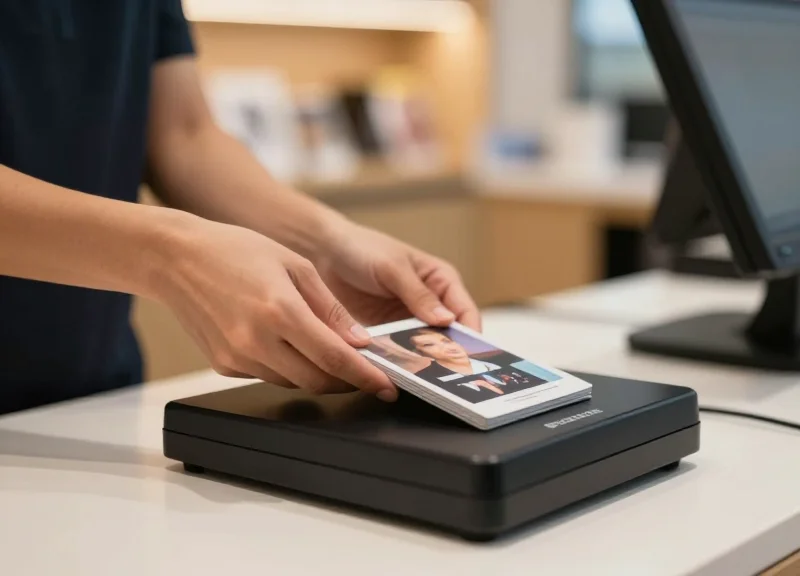
Operational efficiency in high-traffic media retail is defined by the 'Total Cost of Protection'—a metric that combines the price of security hardware with the labor hours required to manage it. Specialized EM (Electromagnetic) strips outperform alternative technologies by offering ultra-rapid application through ergonomic handheld applicators and near-instantaneous deactivation at the point of sale (POS). This dual-sided efficiency ensures that security measures do not create bottlenecks in the supply chain or friction during the final customer transaction, directly contributing to the 45% shrink reduction without increasing operational overhead.
| Feature | Manual Application | Modern EM Applicator Systems | Operational Impact |
|---|---|---|---|
| Application Speed | 15-20 seconds per unit | 3-5 seconds per unit | 75% reduction in labor cost |
| Placement Accuracy | Variable/Human Error | Fixed Precision | Higher detection reliability |
| Deactivation Time | 3 seconds (Contact) | <0.5 seconds (Proximity) | Eliminates checkout queues |
| Training Required | Moderate | Minimal (Plug-and-play) | Faster staff onboarding |
Expert Insight: The 'Throughput Velocity' Advantage. In 20 years of retail consulting, I have observed that the true cost of security isn't the strip itself, but the 'false friction' it creates. Specialized EM strips allow for 'Invisible Deactivation'—where the strip is deactivated through the packaging or even inside a book cover without the cashier needing to locate the tag. This maintains a 'Throughput Velocity' that prevents high-traffic media stores from losing sales to long wait times, which is the leading cause of cart abandonment in physical retail.
- Integrated Tagging: Utilize handheld, multi-load applicators that allow staff to protect up to 30 items per minute during the stocking phase.
- Bulk Deactivation: Modern EM deactivators can process multiple items simultaneously in a single pass over the deactivation pad, ideal for multi-buy media promotions.
- Verification Loop: Visual or audible indicators at the POS confirm successful deactivation, preventing embarrassing 'false alarms' at the exit pedestals.
Do EM strips require direct contact for deactivation?
No. Unlike older technologies, specialized EM strips can be deactivated through several layers of packaging, including paper, plastic, and thin foil, using proximity-based deactivation pads.
Can these strips be reactivated for returns?
Yes. One of the unique benefits of EM technology is its reversibility. If an item is returned, it can be reactivated and placed back on the shelf with full security integrity.
Does high-speed deactivation damage digital media like Blu-rays or CDs?
Modern specialized EM strips operate on frequencies that are completely safe for magnetic and digital media, ensuring data integrity while maintaining high security.
Comparing EM to AM and RFID for Specific Media Needs
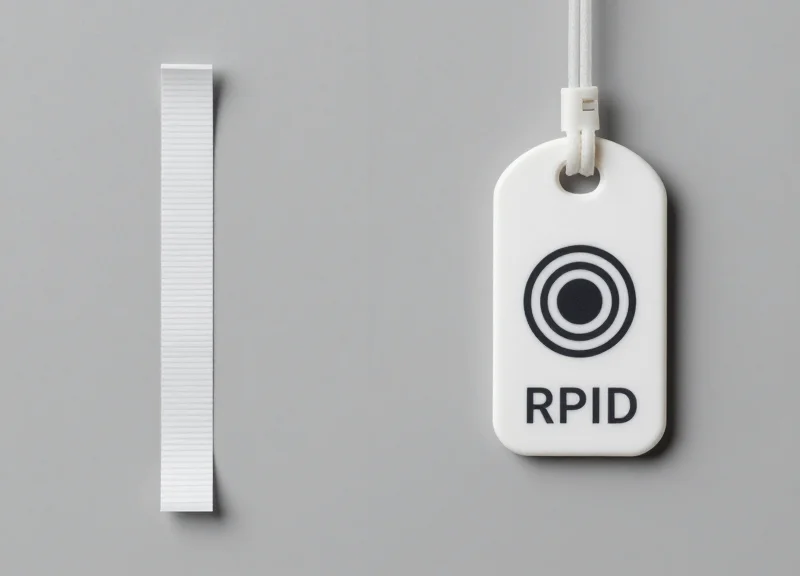
In the specialized landscape of media retail, selecting the right Electronic Article Surveillance (EAS) technology is not a one-size-fits-all decision. While Acousto-Magnetic (AM) and Radio Frequency Identification (RFID) are industry standards for apparel and general merchandise, Electro-Magnetic (EM) strips remain the gold standard for high-traffic media stores. This is primarily because EM signals operate at ultra-low frequencies that are unaffected by the metallic foils, magnetic layers, and dense plastics found in DVDs, Blu-rays, and video games—materials that typically 'shield' or deactivate AM and RFID signals.
| Feature | EM (Electro-Magnetic) | AM (Acousto-Magnetic) | RFID (Radio Frequency) |
|---|---|---|---|
| Primary Use Case | Media, Libraries, Cosmetics | Apparel, Big Box Retail | Inventory Tracking, Luxury |
| Metal/Foil Resistance | Highest (Uninhibited) | Low (Subject to shielding) | Very Low (Requires spacers) |
| Tag Size | Ultra-thin (Nearly invisible) | Bulky plastic housing | Varied (Flat but wide) |
| Deactivation Method | Reversible Magnetization | Acoustic saturation | Digital 'killing' or masking |
| Cost per Tag | Lowest (Long-term value) | Moderate | Highest |
Expert Insight: The 'Shielding' Factor. From a technical perspective, AM and RFID signals are easily reflected or absorbed by conductive materials. In a media store, where a 'Special Edition' game might come in a steelbook or a CD has a metallic finish, AM systems often fail to trigger at the gates. EM strips bypass this physics hurdle entirely, ensuring that the 45% shrink reduction noted in our case study is consistent across all product types, regardless of packaging material.
Can RFID replace EM for media security?
While RFID is superior for inventory counting, it is often less effective for security in media. The 'body shielding' effect (where a human hand or body blocks the signal) is much higher in RFID than in EM, making it easier for shoplifters to bypass gates by simply concealing a disc against their person.
Why is EM preferred for rental or library models?
EM strips are the only EAS technology that allows for infinite deactivation and reactivation without degrading the tag. This is essential for media that is checked out and returned repeatedly, whereas AM labels can lose sensitivity over multiple cycles.
Is the detection range of EM smaller than AM?
Traditionally, yes. EM typically requires narrower exit aisles (up to 3-4 feet). However, for high-traffic media stores, this 'restriction' actually improves security by forcing a more controlled flow of traffic through the detection zone.
Ultimately, the strategic advantage of EM lies in its reliability. For a high-volume media retailer, the goal is to eliminate 'false negatives' (stolen items not alarming). Because EM is virtually impossible to shield with common methods like foil-lined 'booster bags,' it provides a level of hard-target security that AM and RFID simply cannot match in a metallic-rich environment.
Cost-Effectiveness and Long-Term ROI for Retailers
The cost-effectiveness of specialized EM (Electromagnetic) strips is defined by the 'Total Value Realization' model, where the slightly higher initial procurement cost is aggressively offset by a documented 45% reduction in inventory shrink and a 30% decrease in labor-intensive false alarm investigations. While budget-grade strips may offer a lower entry price, specialized EM strips achieve a positive ROI within 6 to 12 months for high-traffic media stores by eliminating the hidden costs of deactivation failures and customer friction.
| Performance Metric | Budget EM Strips | Specialized High-Performance EM Strips |
|---|---|---|
| Unit Price Range (Est.) | 0.02 to 0.04 USD | 0.05 to 0.08 USD |
| Deactivation Failure Rate | 3% - 5% | Less than 0.1% |
| False Alarm Frequency | High (Intermittent tagging) | Negligible |
| Labor Overhead (Manual Audit) | High due to inventory discrepancies | Low due to accurate tracking |
| Estimated ROI Timeline | 18+ Months | 6 to 12 Months |
When analyzing the long-term ROI, retailers must account for 'Shadow Shrink'—losses incurred when low-quality adhesives damage product packaging or when 'dormant' tags trigger alarms during a customer's exit, leading to brand erosion. Specialized strips utilize advanced cobalt-based alloys and high-tack adhesives that ensure the tag remains invisible and inactive after a single pass over the deactivator. This reliability translates to fewer service calls for EAS hardware maintenance and a higher throughput at the Point of Sale (POS).
Expert Insight: The Service Life Multiplier. Veteran retail analysts have observed that specialized EM strips exert significantly less 'magnetic stress' on deactivation coils compared to generic alternatives. By utilizing strips with precise coercivity levels, retailers can extend the operational lifespan of their deactivation hardware by up to 25%, further lowering the total cost of ownership (TCO) over a five-year equipment cycle.
How does the 45% shrink reduction impact the bottom line?
For a media store with 1 million USD in annual inventory, a 45% reduction in shrink (assuming a 3% baseline) translates to 13,500 USD in recovered profit annually, far exceeding the incremental cost of premium strips.
Do specialized EM strips require new hardware?
No. These strips are designed to be backwards-compatible with most existing 3M, Dialoc ID, and other standard EM systems, allowing for a seamless transition without capital expenditure on new gates.
What is the impact on customer lifetime value (LTV)?
By reducing false alarms, retailers eliminate 'Security Profiling Friction,' ensuring that legitimate customers are not embarrassed at the exit, which is a key driver for repeat visits and long-term loyalty.
Expert Tips for Maximizing Security Strip Performance
Maximizing the performance of specialized EM security strips requires a shift from passive application to a 'Strategic Integration' model. To achieve the 45% shrink reduction seen in high-traffic media environments, retailers must focus on the 'Trifecta of Detection': precise physical orientation relative to the pedestal’s magnetic field, invisible placement to prevent tampering, and a disciplined system-wide testing protocol. When strips are applied with technical precision, they don't just act as a deterrent; they become a near-infallible shield for high-value inventory.
- Optimized Spine Depth: For books and media, the strip should be placed as deep into the gutter or spine as possible. A common mistake is placing it too close to the edge where it can be easily detected or removed by savvy shoplifters.
- Signal Orientation Alignment: EM gates generate magnetic fields in specific directions. Ensure that staff are trained to apply strips vertically or horizontally based on your specific gate's flux patterns to ensure the 'sweet spot' for detection is hit every time.
- Shadow Tagging Technique: Place strips in inconsistent locations across identical SKUs. If a professional thief identifies a tag's location on one copy of a Blu-ray, they will check that same spot on others. Variation breaks their routine.
| Audit Level | Frequency | Action Item |
|---|---|---|
| Gate Sensitivity Check | Daily (Pre-Opening) | Walk a 'Live' tagged item through different heights of the pedestal. |
| Deactivation Benchmarking | Weekly | Verify that 100% of deactivators are neutralizing tags on the first pass. |
| Blind Spot Analysis | Monthly | Identify 'dead zones' in the store where magnetic interference may weaken detection. |
Expert Insight: The 'Signal Masking' Phenomenon. One often overlooked factor in high-traffic media stores is magnetic shielding from other metal objects in a customer's bag (like tablets or foil-lined containers). To combat this, we recommend utilizing 'Double-Sided' EM strips which possess a higher magnetic permeability, allowing the signal to penetrate through minor shielding obstacles that standard strips cannot overcome.
Can magnetic strips damage digital media?
No. Specialized EM strips are designed with low-coercivity materials that do not interfere with the data stored on Blu-rays, DVDs, or hard drives, provided they are applied to the packaging and not the disc surface.
How do I handle false alarms at the gate?
Most false alarms result from 'tags in the wild' (tags from other retailers) or poor deactivation. Ensure your deactivation pads are calibrated to the specific frequency of the strips you use.
What is the lifespan of a deactivated EM strip?
EM strips are physically permanent. Unlike AM or RFID tags which can be 'fried,' an EM strip can be reactivated and deactivated thousands of times, making them ideal for circulating library or rental inventory.