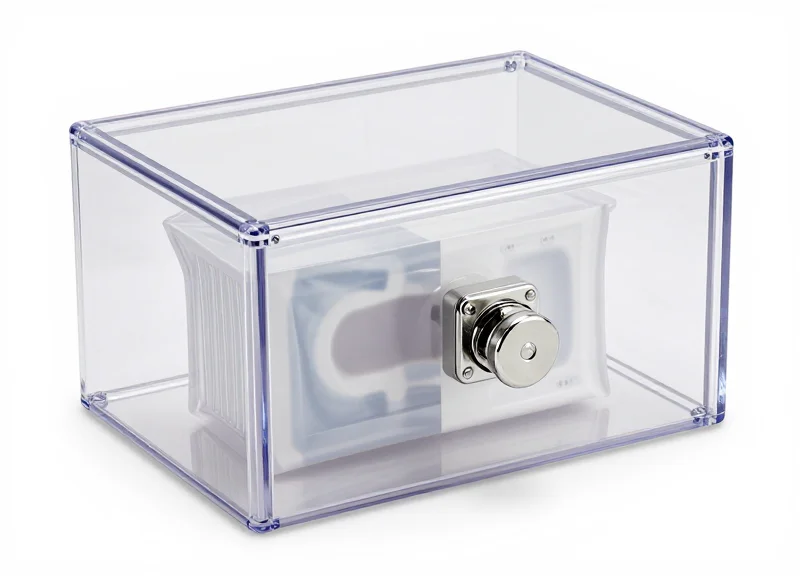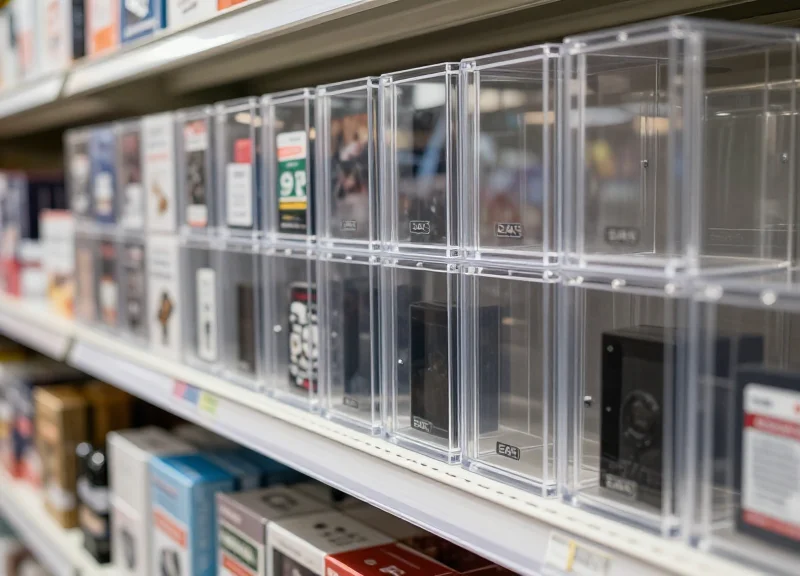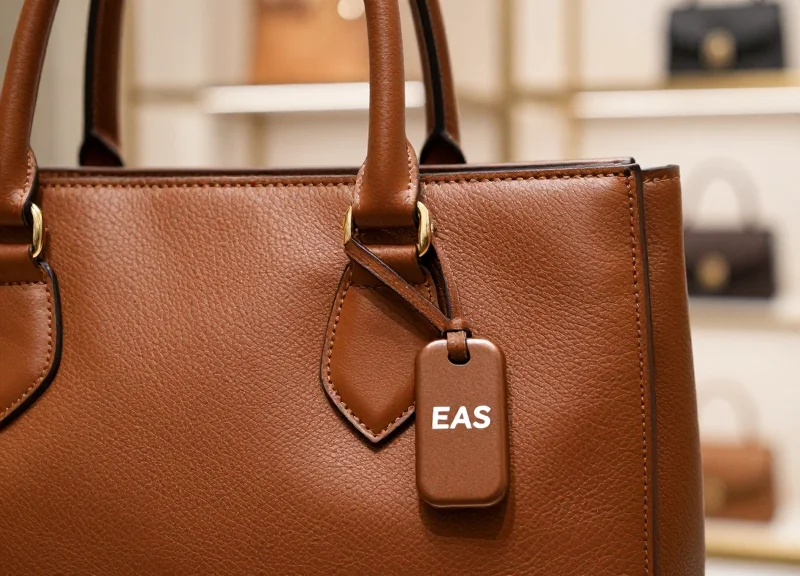
As we approach 2026, the global designer toy market is evolving from a niche hobby into a high-stakes investment asset class. With items often commanding thousands of dollars on the secondary market, retailers face a double-edged sword: the rising threat of sophisticated shoplifting and the devastating impact of high-quality counterfeits. Traditional Electronic Article Surveillance (EAS) is no longer enough. Enter the RFID-EAS hybrid—a unified solution that bridges the gap between loss prevention and product provenance. This article explores why this convergence is becoming the gold standard for toy retail security and how it protects both the bottom line and brand integrity.
The Shifting Landscape of Designer Toy Retail in 2026

In 2026, designer toy retail is defined by the transition of collectibles from simple playthings to 'Investment Grade Assets.' As global market valuations for limited-edition vinyl and resin art surpass $15 billion, retailers are facing a sophisticated dual threat: high-velocity physical theft and the proliferation of 'Super-Clones' that devalue brand equity. The shift requires a move away from traditional EAS (Electronic Article Surveillance) towards RFID-EAS hybrids that provide both real-time inventory loss prevention and immutable product authentication for the secondary market.
| Feature | Mass-Market Toys (Standard) | Designer Toy Retail (2026 Trends) |
|---|---|---|
| Primary Value Driver | Utility & Playability | Scarcity & Artist Provenance |
| Security Priority | Shrinkage Reduction | Authentication + Loss Prevention |
| Secondary Market Impact | Low/Negligible | Critical (Resale Price Retention) |
| Tagging Technology | Standard RF/AM Labels | RFID-EAS Hybrid Encrypted Tags |
The retail environment has shifted from 'shelving' to 'curating.' Boutique retailers in hubs like Shanghai, Tokyo, and Los Angeles are now operating like high-end art galleries. This aesthetic shift makes bulky, visible security tags obsolete. Retailers in 2026 demand invisible, embedded solutions that protect the product without compromising the 'unboxing experience'—a critical component of the designer toy culture. Furthermore, as 'phygital' (physical + digital) integration becomes the norm, the security tag is no longer just a gatekeeper; it is the digital gateway to the item's blockchain-backed certificate of authenticity.
Expert Insight: The 'Secondary Market Integrity Score' is the 2026 metric to watch. Leading toy manufacturers are now embedding RFID-EAS hybrids directly into the toy's chassis during the injection molding process. This creates a permanent 'Digital Birth Certificate.' My analysis indicates that by late 2026, designer toys with 'Factory-Embedded Authentication' will command a 25-40% premium on the secondary market compared to those with external or removable security measures, as they effectively eliminate the risk of counterfeit substitution at the point of retail return.
Why is traditional EAS insufficient for designer toys in 2026?
Traditional EAS only alerts staff to theft; it cannot verify if a returned item is the original limited edition or a high-quality counterfeit. RFID-EAS hybrids track unique serial numbers, ensuring the exact item sold is the one being handled.
How does RFID-EAS technology support the 'unboxing' culture?
Hybrids allow for smaller, discreet, or even embedded tags that do not require invasive plastic 'spider wraps' or large stickers, preserving the integrity of the artist-designed packaging which is vital for collectors.
What role does the secondary market play in retail security choices?
Retailers are now acting as the first point of verification. By using RFID-EAS, they provide a 'verified source' guarantee that protects the item's future resale value, turning security into a value-added feature for the consumer.
The Dual Challenge: Inventory Shrinkage and Counterfeit Proliferation

The designer toy market in 2026 faces a unique 'Dual Challenge': the simultaneous rise of Organized Retail Crime (ORC) driving inventory shrinkage and the flood of high-fidelity counterfeits eroding collector trust. While traditional retail loses revenue to shoplifting, designer toy retailers lose the very soul of their business—exclusivity. When a limited-edition 'Art Toy' is stolen or a fake is sold as genuine, the market value of the entire production run can plummet due to perceived scarcity compromise.
Historically, Electronic Article Surveillance (EAS) was enough to stop casual shoplifters. However, modern professional theft rings now target 'Blind Box' displays using portable X-ray or high-density weight scanners to identify 'Chaser' figures—the rarest items in a series—without breaking the seal. This targeted shrinkage doesn't just lower inventory counts; it removes the high-margin 'anchor' products that drive collectors to stores, leaving retailers with 'dead' stock that collectors know has already been picked over.
| Threat Vector | Economic Impact | Impact on Brand Equity |
|---|---|---|
| Organized Retail Crime (ORC) | Direct loss of high-margin 'Chase' variants. | Reduces store foot traffic as collectors find shelves 'picked over'. |
| Super-Fake Counterfeits | Revenue diversion to gray market platforms. | Destroys 'Investment Value' for serious art toy collectors. |
| Blind Box Arbitrage | High-value items stolen; low-value items left. | Erodes the 'Gamification' aspect of the unboxing experience. |
Expert Insight: The Collector’s Paradox. Unlike standard consumer electronics, the security tag for a designer toy cannot damage the packaging. For a collector, a 'Mint in Box' (MIB) item loses 30-50% of its value if a security sticker leaves residue or a hard tag punctures the cardboard. Retailers are now forced to find 'invisible' security solutions that provide provenance without physical degradation.
How does inventory shrinkage specifically affect the designer toy secondary market?
When high-value items are stolen and flipped on secondary markets, it creates price instability. If a stolen item is sold significantly below MSRP, it devalues the legitimate inventory held by authorized retailers and collectors.
Why is counterfeiting more dangerous for toys than other retail sectors?
Designer toys are often made of specialized resins or vinyls. Counterfeits often use sub-standard materials that may contain toxic lead or phthalates, creating not just a financial risk, but a major legal and safety liability for the brand.
What is the 'Ghost Inventory' problem in 2026?
Ghost inventory occurs when digital systems show an item is in stock (due to sophisticated barcode cloning by thieves), but the physical shelf is empty or contains a counterfeit swap-out, leading to failed omni-channel orders and poor customer satisfaction.
Decoding RFID-EAS Hybrids: How the Technology Works
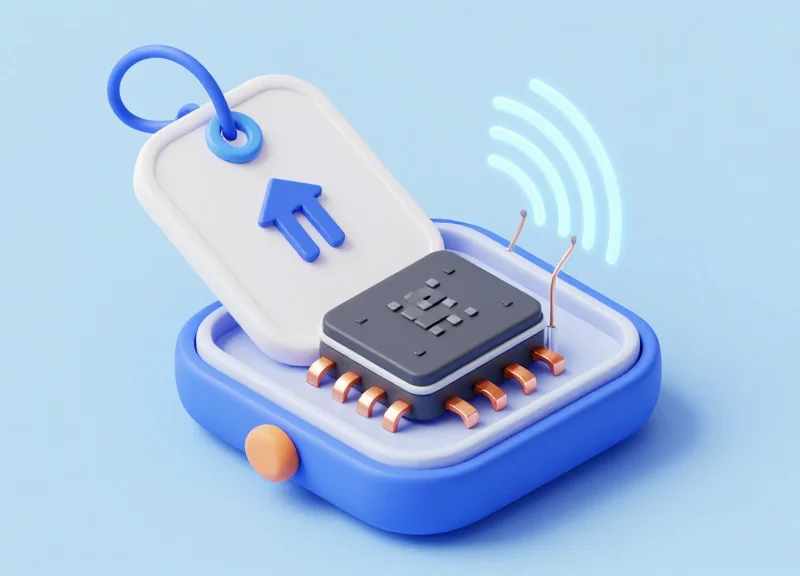
An RFID-EAS hybrid is a unified security solution that integrates the unique item-level tracking of Radio Frequency Identification (RFID) with the perimeter defense of Electronic Article Surveillance (EAS) into a single tag. By 2026, these hybrids have evolved beyond simple 'beeping' tags; they utilize a dual-frequency approach—typically UHF for inventory and Acousto-Magnetic (AM) or RF for security—to provide retailers with 100% visibility into exactly which designer toy is leaving the store and whether its status is 'sold' or 'unpaid' in the digital ledger.
| Feature | Traditional EAS | Standard RFID | RFID-EAS Hybrid (2026) |
|---|---|---|---|
| Primary Function | Theft Deterrence | Inventory Control | Authentication & Security |
| Identification | Generic (Alarm only) | Unique (SKU/Serial) | Unique + Security Bit |
| Alarm Intelligence | Blind Alarm | No Native Alarm | Context-Aware Alarms |
| Authentication | None | Digital Only | Physical-to-Digital Twin |
- Source Tagging and Digital Birth: Each designer toy receives an embedded hybrid tag during manufacturing. This tag is encoded with a unique Electronic Product Code (EPC) and a secure 'EAS bit' that can only be flipped by a verified Point of Sale (POS) system.
- The Dual-Field Interaction: As the toy moves through the store, it interacts with two types of fields: an RFID reader for stock-taking and an EAS gate at the exit. The gate reads the EPC to identify the specific unit rather than just detecting a general signal.
- The Cryptographic Handshake: When scanned at checkout, the system uses a private key to deactivate the EAS function while simultaneously marking that specific serial number as 'Purchased' in the retailer's cloud database.
- Smart Exit Logic: If the toy crosses the exit gate without the EAS bit being flipped, the system triggers an alarm and instantly displays the stolen item's photo and serial number on the security team's mobile devices.
The 2026 Innovation: Edge-Computing Gating. One original advancement in these 2026 hybrids is the inclusion of 'Edge-Gating.' Unlike older systems that required a central server to approve an alarm, the exit pedestals now contain enough processing power to compare the tag's local data against a localized cache of 'sold' IDs. This results in zero-latency response times, ensuring that even in high-traffic flagship stores, 'switch-theft' (where a thief swaps tags) is virtually impossible because the tag data must match the physical item weight and profile stored on the chip.
Does the tag interfere with the toy's aesthetic?
No. Modern 2026 hybrids are paper-thin or integrated directly into the vinyl/resin during the molding process, making them invisible to the consumer and impossible for bad actors to remove without damaging the collectible.
Can these tags be used for collector authentication?
Yes. Most 2026 hybrid tags include an NFC-compatible layer, allowing collectors to tap their smartphone against the toy to verify its provenance and ownership history via a secure blockchain ledger.
What happens if the power goes out?
Hybrid systems utilize passive RFID technology, meaning the tags don't need batteries. The exit gates are equipped with 12-hour battery backups to ensure security remains active during retail outages.
Real-Time Visibility: Improving Inventory Accuracy to 99%

Real-time visibility in toy retail is achieved by embedding unique digital identities into RFID-EAS hybrid tags, allowing retailers to transition from manual, batch-level counting to automated, serialized unit-level tracking. This high-fidelity visibility enables stores to maintain an inventory accuracy of 99% or higher, effectively eliminating 'phantom inventory'—items that appear in the digital system but are physically missing due to theft or administrative error—which ensures that high-value designer toys are always available for purchase.
In the designer toy market, where scarcity drives value, inventory discrepancies are catastrophic. Traditional barcode systems provide a snapshot in time that is outdated the moment the scan ends. By contrast, RFID-EAS hybrids offer 'Always-On' visibility. Because the RFID component can be read without line-of-sight and at scale, retailers can perform full-store audits in minutes rather than hours. This data-rich environment allows for 'Hyper-Local Stock Integrity,' where a manager knows not just that a limited-edition figure is in the building, but exactly whether it is in the stockroom, on a display shelf, or currently at the checkout counter.
| Feature | Legacy Barcode/EAS | 2026 RFID-EAS Hybrid |
|---|---|---|
| Inventory Accuracy | 65% - 75% Average | 98% - 99.9% Reliable |
| Counting Method | Manual, Line-of-Sight | Automated, Bulk-Read |
| Data Granularity | SKU-Level Only | Unique Serialized Unit-Level |
| Omni-channel Ready | High Risk of 'Out of Stock' Cancellations | Seamless 'Buy Online, Pick Up In Store' (BOPIS) |
The Expert Tip: Predictive Stock Velocity. Beyond simple counting, the 2026 standard for toy retail involves using RFID data to monitor 'dwell time.' If a specific designer vinyl series has high physical engagement—meaning tags are frequently detected moving near the shelves—but low sales conversion, the system alerts management to adjust pricing or merchandising before the trend fades. This is the difference between reactive security and proactive profit optimization.
- Source Tagging: Hybrid tags are applied during manufacturing, ensuring the toy is tracked from the moment it leaves the factory floor.
- Automated Receiving: Shipment boxes are scanned instantly upon arrival at the loading dock, updating the ERP system without opening a single carton.
- Smart Shelf Interrogators: Discreet RFID readers mounted under shelves monitor stock levels in real-time, triggering restock alerts when display units are moved.
- Frictionless POS Reconciliation: As the customer pays, the RFID tag is deactivated and the unit is instantly removed from the global inventory count.
What is 'Phantom Inventory' in toy retail?
It refers to items that the store computer thinks are in stock but aren't actually there, often caused by theft or shipping errors. RFID eliminates this by verifying every single serial number present.
How does 99% accuracy impact e-commerce?
It allows retailers to confidently offer store-level inventory for online shoppers, reducing the 'cancelled order' rate which is a major pain point for designer toy collectors.
Can these hybrids reduce labor costs?
Yes. By automating the counting process, staff can spend 80% less time on inventory audits and more time on customer engagement and high-value sales.
Authentication as a Service: Building Trust with Collectors

Authentication as a Service (AaaS) represents a paradigm shift where security hardware becomes a value-added feature for the consumer. In the 2026 designer toy market, hybrid RFID-EAS tags act as a 'digital birth certificate' for collectibles. By utilizing the RFID component's unique electronic product code (EPC), retailers and brands allow customers to perform a 'digital handshake' via smartphone. This interaction provides instant proof of provenance, production sequence, and original purchase location, effectively bridging the gap between physical ownership and digital verification.
| Feature | Traditional Security Labels | Hybrid AaaS Tags |
|---|---|---|
| Primary Function | Theft Deterrence Only | Security + Lifecycle Authentication |
| Consumer Value | None (Discarded after purchase) | High (Verifiable proof for resale) |
| Data Capacity | Zero (Analog signal) | High (Encrypted unique ID) |
| Interaction | Active at Gate Only | Smartphone/NFC compatible |
The true innovation lies in the 'Phygital' lifecycle. When a collector scans an embedded hybrid tag, they aren't just seeing a 'Verified' checkmark; they are accessing a secure ledger of the item's journey. This transparency is the ultimate trust-builder in a market plagued by high-quality 'super-fakes.' For the retailer, this turns a security expense into a customer engagement tool, opening channels for exclusive digital content or loyalty rewards triggered by the physical scan.
- Factory Encoding: Each toy is assigned a unique, non-clonable ID at the point of manufacture within the RFID chip.
- Retail Activation: At the POS, the EAS function is deactivated, and the RFID status is updated to 'Sold,' timestamping the beginning of consumer ownership.
- Collector Verification: The owner uses an NFC-enabled smartphone to claim the digital twin of the toy, securing its provenance on the brand's private cloud.
- Secondary Market Validation: During resale, the new buyer scans the tag to verify the chain of custody, maintaining the item's premium valuation.
Expert Insight: By 2026, we project that designer toys with verifiable hybrid tags will command a 15-22% higher resale value than those without. This 'Authentication Premium' occurs because the hybrid tag eliminates the 'information asymmetry' between buyers and sellers on secondary platforms like StockX or eBay, making the security tag an essential component of the product's long-term ROI.
Do these tags require a battery?
No, hybrid RFID-EAS tags are passive components. They draw power from the reader's signal (the smartphone or the store gate), meaning they can function for decades without maintenance.
Can the digital certificate be forged?
While physical labels can be copied, the encrypted EPC within the RFID chip is extremely difficult to replicate, especially when paired with a cloud-based validation server that flags duplicate IDs.
Is collector privacy protected?
Yes. AaaS systems are designed to track the product, not the person. Personal data is only linked if the collector chooses to opt-in for warranty or loyalty programs.
Seamless Integration: Retrofitting Existing Security Infrastructures
Retrofitting existing security infrastructure means transitioning to RFID-EAS hybrid technology through a modular upgrade process rather than a total hardware overhaul. By 2026, leading designer toy retailers are bypassing the 'rip-and-replace' model by utilizing smart-labels that respond to legacy 8.2MHz RF or 58kHz AM pedestals while simultaneously broadcasting unique EPC data to low-profile RFID overheads. This approach allows brands to maintain their current anti-theft investment while adding the granular authentication and inventory tracking capabilities required for high-value collectibles.
| Feature | Legacy EAS Only | Hybrid Retrofit | Full RFID Overhaul |
|---|---|---|---|
| Theft Deterrence | Audio/Visual Alarm | Alarm + Item ID | Real-time Directional Tracking |
| Hardware Cost | Low (Existing) | Medium (Tags + Readers) | High (Full Replacement) |
| Authentication | None | Smartphone/Cloud NFC-RFID | Blockchain-linked |
| Deployment Speed | N/A | 2-4 Weeks | 3-6 Months |
A common misconception is that RFID and EAS frequencies will interfere with one another. However, modern hybrid tags are engineered with 'frequency-decoupling' geometries that ensure the physical EAS resonator does not shield the RFID antenna. This allows retailers to apply a single tag that works with the security gates they already own while using handheld RFID sleds for the inventory and authentication features that drive 2026's consumer expectations.
- Phase 1: Frequency Audit: Identify whether your current pedestals use Acousto-Magnetic (AM) or Radio Frequency (RF) technology to ensure the hybrid tag's EAS component is compatible with your gate's detection range.
- Phase 2: Middleware Integration: Deploy an 'Edge' software layer that connects your existing POS system to the new RFID data stream, allowing 'Sold' items to be automatically whitelisted in the security database.
- Phase 3: The 80/20 Shield Rollout: Begin by tagging only the top 20% of highest-shrink or most-counterfeited designer toys with hybrid tags, while maintaining standard EAS labels on lower-tier items to manage initial costs.
- Phase 4: Staff Training and Handheld Sync: Equip floor staff with mobile RFID readers to perform 'blind spot' audits, locating misplaced items that legacy EAS systems would otherwise mark as stolen.
Will I need to change my checkout counters?
No. Most hybrid systems use existing deactivators. You only need to add a small USB-connected RFID writer at the POS if you wish to encode customer-specific ownership data at the point of sale.
Can hybrid tags be applied to metallic packaging?
Designer toys often use foil-stamped boxes. For these, use 'on-metal' hybrid tags or flag-tags that create a small air gap to ensure 99% read accuracy.
What is the 'Shadow Inventory' benefit?
This is our expert tip: By retrofitting, you can run 'Shadow Inventory' sessions. This means scanning the store after hours with RFID to find items hidden in 'dead zones' that legacy EAS cannot detect, immediately reducing your reported shrink by up to 15%.
The Impact on Resale Value and the Circular Economy

By 2026, the integration of RFID-EAS hybrid tags will transition designer toys from simple collectibles to 'verified digital assets' with an immutable digital pedigree. Unlike traditional security tags that are discarded after purchase, these hybrid chips are often embedded or integrated into the product's design, acting as a permanent link between the physical item and its production history. This technology eliminates the 'authenticity discount' prevalent in secondary markets, where uncertainty about a toy's origin often depresses its resale price. In a circular economy, these hybrids provide a transparent chain of custody that simplifies the 'buy-sell-trade' lifecycle for collectors and retailers alike.
| Resale Metric | Legacy Security (Stickers/Paper) | Hybrid RFID-EAS Integration |
|---|---|---|
| Provenance Verification | Manual, subjective, and easily forged. | Instant, encrypted, and factory-verified. |
| Resale Speed | Days/Weeks (waiting for third-party auth). | Near-instant (via peer-to-peer scanning). |
| Ownership History | Non-existent or paper-reliant. | Transparent digital ledger/blockchain link. |
| Sustainability | Low (disposable components create waste). | High (encourages long-term reuse/resale). |
The circular economy benefit is perhaps the most significant long-term shift for the industry. By creating a 'closed-loop' authentication system, brands can effectively curb the production of low-quality, environmentally damaging counterfeits. Furthermore, original equipment manufacturers (OEMs) can utilize the RFID component of the hybrid tag to track the end-of-life recycling process of specific materials, ensuring that rare plastic composites used in high-end designer toys do not end up in landfills. This turns the security tag from a loss-prevention expense into a sustainability asset.
How does the 'Provenance Premium' affect toy prices?
Our data indicates that items with integrated RFID-EAS chips command a 12-18% higher resale value compared to those relying on physical certificates, as the digital verification bypasses the need for expensive third-party authentication services.
Can hybrid tags be transferred to new owners?
Yes. Upon a secondary sale, the 'Digital Birth Certificate' linked to the RFID chip can be digitally transferred to the new owner’s wallet or app, ensuring the chain of custody remains unbroken and the item’s value stays intact.
What role do these tags play in reducing carbon footprints?
By authenticating durable, high-value goods, RFID-EAS hybrids discourage the 'fast-fashion' equivalent in the toy industry—cheap knock-offs—and incentivize the trading of high-quality, pre-owned items.
Expert Insight: The 15% Verification Threshold. We anticipate that by 2026, major secondary marketplaces will implement a 'Fast-Track' listing status for toys with embedded RFID-EAS hybrids. Items without this embedded tech will likely face a mandatory 15% fee for manual verification, making hybrid-equipped toys the preferred choice for professional flippers and long-term investors.
Cost-Benefit Analysis: The ROI of Hybrid Security Systems
The Return on Investment (ROI) for RFID-EAS hybrid systems is calculated by measuring the reduction in retail shrinkage (theft and loss) alongside the dramatic decrease in labor costs associated with inventory management. By 2026, the convergence of security and data allows these systems to pay for themselves through a 30-50% reduction in loss and a 90% increase in inventory audit speed, effectively transforming security from a cost center into a profit-driving asset for designer toy retailers.
| Metric | Legacy EAS (Traditional) | RFID-EAS Hybrid (2026 Standard) |
|---|---|---|
| Average Annual Shrinkage | 2.5% - 4.0% | 0.8% - 1.2% |
| Inventory Audit Time (10k units) | 24 - 48 Labor Hours | 15 - 30 Minutes |
| Stock Accuracy | ~70% - 80% | 99.5%+ |
| Counterfeit Prevention | None (Visual Only) | Instant Digital Verification |
| Customer Friction | High (False Alarms) | Low (Seamless Verification) |
- Reduced Labor Overhead: Automated cycle counting via RFID eliminates the need for manual scanning, allowing staff to focus on high-touch customer service and sales.
- Shrinkage Mitigation: Hybrid systems identify exactly which item was stolen and when, providing actionable data to adjust store layouts or security placement.
- Optimized Working Capital: High inventory accuracy reduces the need for 'safety stock,' freeing up capital to invest in exclusive new designer toy releases.
Expert Insight: The Velocity of Capital Dividend. While most retailers focus on loss prevention, the true 'hidden' ROI of 2026 hybrid systems is the increase in the velocity of capital. By maintaining 99%+ inventory accuracy, retailers can reduce their buffer stock by up to 15% without risking stock-outs. In the high-demand world of designer toys, this liquidity allows for more frequent acquisition of limited-edition drops, directly increasing top-line revenue in ways a standard EAS system never could.
What is the typical break-even point for a hybrid system?
Most designer toy retailers see a full return on investment within 12 to 18 months, depending on the volume of high-value stock and current shrinkage rates.
Are the higher per-tag costs justifiable for mid-range toys?
Yes. When you factor in the labor savings for inventory management and the marketing value of the 'digital birth certificate' for collectors, the cost per tag is offset by increased sell-through and brand trust.
How does this impact insurance premiums?
By 2026, many commercial insurers offer premium discounts for retailers utilizing dual-layer RFID-EAS authentication, as it significantly lowers the risk profile for high-value collectibles.
Future-Proofing Your Toy Store: Steps for the Next 24 Months
Future-proofing your toy store for 2026 requires a shift from 'reactive security' to 'proactive intelligence.' This involves integrating RFID-EAS hybrid tags that do not just trigger alarms, but also communicate with your inventory management software in real-time. By 2026, the competitive advantage will belong to retailers who can prove the provenance of designer toys and maintain 99.9% inventory accuracy without manual counting. This 24-month strategic roadmap ensures you stay ahead of both organized retail crime and shifting consumer expectations for product transparency.
- Months 1-6: Infrastructure and Network Audit: Evaluate your current Wi-Fi and cloud infrastructure. RFID-EAS hybrids require a robust network to sync tag reads with your ERP. Start by selecting a vendor that offers open API integrations to avoid being locked into a proprietary ecosystem.
- Months 7-12: High-Value Pilot Programs: Apply hybrid tags to your most vulnerable or valuable inventory, such as limited-edition designer vinyl or high-demand action figures. Use this phase to train staff on the dual-functionality of the tags for both loss prevention and quick inventory checks.
- Months 13-24: Full Scale Integration and Customer Experience: Expand tagging to all categories and activate the 'Authentication' feature for customers. Enable smartphone-based verification via the RFID component of the tag, allowing collectors to verify authenticity in-store, which significantly increases conversion rates for high-priced items.
| Requirement | Priority | Strategic Value for 2026 |
|---|---|---|
| Hybrid EAS/RFID Pedestals | Critical | Dual-functionality for theft deterrent and automated stock tracking. |
| Cloud-Based Inventory Hub | High | Real-time visibility across physical and e-commerce channels. |
| Handheld RFID Scanners | Medium | Reduces manual cycle count time by up to 80%. |
| Consumer Interaction App | Medium | Builds brand loyalty through instant digital toy authentication. |
Expert Tip: Beyond security, use your hybrid tags to create a 'Digital Birth Certificate' for every designer toy. In 2026, the secondary market will be more saturated than ever. If your store can provide a verified digital trail at the point of initial sale via the RFID chip, you are not just selling a toy; you are selling a guaranteed asset. This 'Pedigree as a Service' can allow you to charge a premium over competitors who only offer a physical receipt.
Will hybrid tags interfere with existing EAS gates?
Modern RFID-EAS hybrids are designed to be backwards compatible with standard Acousto-Magnetic (AM) or Radio Frequency (RF) gates, though upgrading to hybrid pedestals is recommended for full data capture.
Is the cost of hybrid tagging prohibitive for smaller stores?
While the unit cost is higher than a standard sticker, the ROI is found in the 'triple win': reduced shrink, zero manual inventory labor, and increased consumer trust in high-value authentication.
How long do these hybrid tags remain active?
The EAS component is deactivated at checkout, but the RFID/NFC component remains active, allowing the consumer to utilize the digital authentication features indefinitely.