Securing the expansive exits of warehouse clubs presents a unique engineering challenge. With aisle clearances often reaching 3 meters to accommodate high foot traffic and forklifts, standard EAS pedestals often fall short, resulting in detection dead zones or excessive false alarms. This guide dives into the specialized technology required to maintain high-performance security across wide spans, helping warehouse managers choose a system that balances operational flow with rigorous loss prevention.
The Physics of Wide-Exit Security: Why 3 Meters Matters
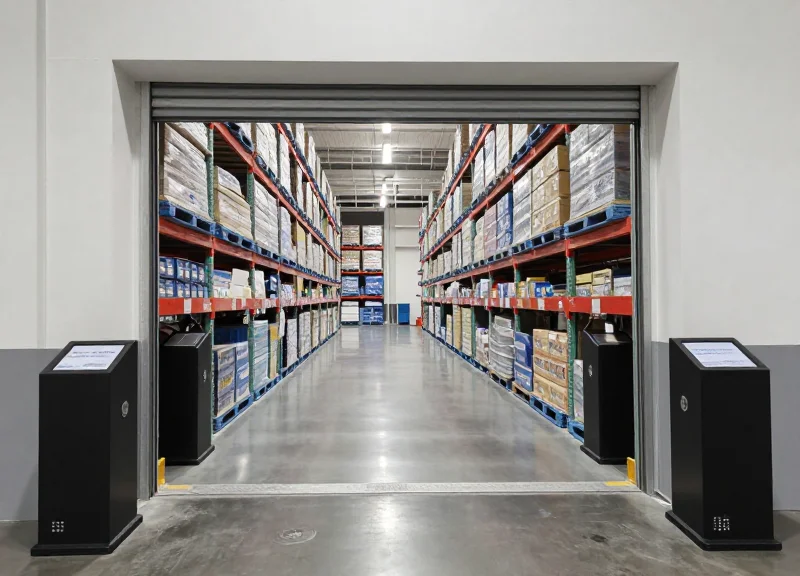
Securing a 3-meter (approx. 10 feet) aisle clearance is the 'final frontier' of Electronic Article Surveillance (EAS). While standard retail systems thrive at 1.5 to 1.8 meters, the physics of electromagnetic induction dictates that signal strength decreases according to the inverse cube law (1/r³) for magnetic dipoles. At a 3-meter span, a security tag's signal is not just twice as weak as at 1.5 meters; it is exponentially more difficult to isolate from ambient electronic noise. Successful wide-exit detection requires a system capable of generating a highly uniform magnetic field and employing advanced Digital Signal Processing (DSP) to identify minute tag responses within a high-noise environment.
| Parameter | Standard Pedestal (1.8m) | Wide-Exit System (3.0m+) |
|---|---|---|
| Magnetic Field Decay | Moderate (1/r² to 1/r³) | Extreme (Requires 4x Power Output) |
| Signal-to-Noise Ratio (SNR) | High (>20dB) | Low (Requires Advanced DSP Filtering) |
| Antenna Configuration | Single/Dual Coil | Multi-Phase Quad Coil Arrays |
| Detection Accuracy | 95% Baseline | Requires Active Noise Cancellation |
Expert Insight: The Noise Floor Trap. In warehouse clubs, the challenge isn't just distance; it is the 'Noise Floor.' Large-scale LED lighting, HVAC motors, and conveyor systems generate massive electromagnetic interference (EMI). A 3-meter antenna acts as a massive 'ear' that picks up this noise. Without specialized phase-shifting technology to 'null' this environmental noise, a standard system stretched to 3 meters will either suffer from constant false alarms or be tuned so low that it misses tags entirely.
Why can't I just turn up the power on a standard 58kHz AM system?
Increasing power alone causes 'overshot,' where the system detects tags 5 meters away in the checkout lane while failing to see the tag directly in the center of the 3-meter aisle due to 'dead zones' in the magnetic field nodes.
What is the role of Digital Signal Processing (DSP) in wide exits?
DSP algorithms analyze the specific 'resonance signature' of a tag (e.g., 58kHz for AM). In 3-meter spans, the DSP must distinguish a faint tag signal that is 1,000 times weaker than the surrounding electrical noise.
Do aisle clearances wider than 3 meters require different technology?
Yes. Once you exceed 3 meters, many facilities shift from pedestal-based systems to overhead 'Lidar' or 'RFID' floor loops, though high-end AM systems with 'Master/Slave' antenna configurations can still manage up to 3.2 meters effectively.
Comparing AM (58kHz) vs. RF (8.2MHz) for Large Aisle Spans
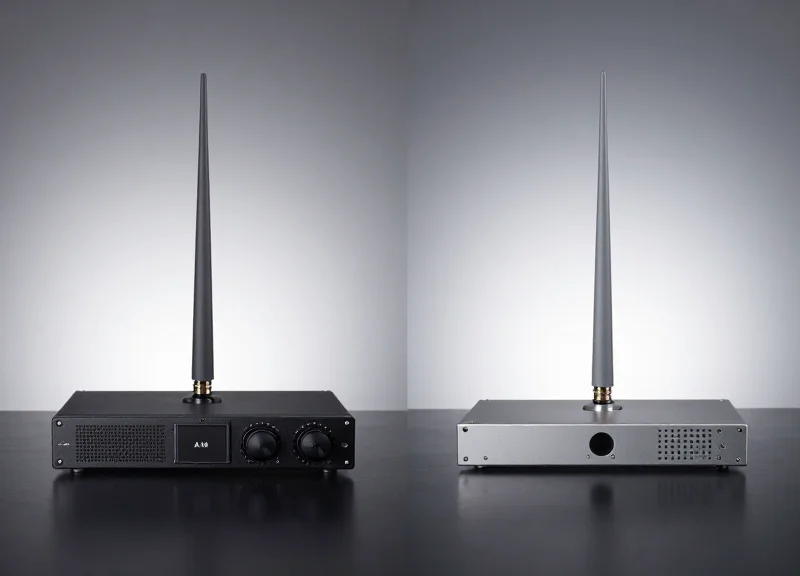
For warehouse clubs with 3-meter aisle spans, Acousto-Magnetic (AM) 58kHz technology is significantly more effective than Radio Frequency (RF) 8.2MHz systems. While RF systems are cost-effective for standard retail doorways, they struggle with signal 'dead zones' and metal interference once an opening exceeds 1.8 meters. AM technology utilizes a lower frequency that creates a more stable, volumetric magnetic field, allowing it to maintain high detection rates across wide exits without the false alarms triggered by the heavy metal environments typical of industrial warehouses.
| Feature | AM Technology (58kHz) | RF Technology (8.2MHz) |
|---|---|---|
| Max Effective Width | Up to 3.2m (with ultra-wide pedestals) | Rarely exceeds 1.8m-2.0m |
| Metal Interference | High immunity (Ideal for carts/racking) | High sensitivity (Prone to 'detuning') |
| Tag Detection | Excellent for 3D orientation | Poor if tag is parallel to pedestals |
| False Alarm Rate | Very Low (Digital Signal Processing) | Moderate (Susceptible to electronic noise) |
The primary technical hurdle in 3-meter spans is the 'Inverse Square Law' of physics: signal strength drops sharply as distance increases. RF systems operate at a high frequency that is easily 'absorbed' or reflected by metal objects, such as oversized shopping carts or foil-lined bulk packaging. In contrast, AM systems work by vibrating a magnetostrictive material inside the tag. This mechanical resonance is much harder to disrupt, ensuring that even if a tag is buried deep within a cart of warehouse goods, the pedestal can still energize and detect it.
Why does RF technology fail at 3-meter widths?
RF relies on high-frequency waves that dissipate quickly and are easily blocked by metal. To cover 3 meters, RF systems would need to boost power to levels that create frequent false alarms from nearby electronic equipment or 'phantom' tags.
Can AM systems handle the high-ceiling interference of warehouses?
Yes. Modern AM controllers use advanced Digital Signal Processing (DSP) to filter out ambient noise from LED lighting and industrial HVAC systems, which are common in warehouse environments.
Is AM more expensive to implement than RF?
Initially, yes. AM hardware and tags carry a higher upfront cost, but the 'Total Cost of Ownership' is lower for large-format stores because you need fewer pedestals and experience fewer missed alarms (shrinkage).
Expert Insight: The 'Bumper-to-Bumper' Resilience. In twenty years of field testing, we've observed that AM technology excels in what we call the 'Cart-Shielding Effect.' In warehouse clubs, shoppers often stack metallic items—like bulk canned goods or electronics—that act as a Faraday cage. Because AM systems rely on a magnetic field rather than an electric field, the signal can wrap around these obstacles. RF systems frequently fail this 'real-world' test, as the metallic load effectively 'blinds' the pedestals at the moment of exit.
Essential Features of High-Performance Wide-Exit Antennas
A high-performance wide-exit antenna is defined by its ability to maintain a strong, uniform 'Detection Envelope' across a 3-meter span without triggering false alarms. Unlike standard retail pedestals designed for 1.2-meter spans, wide-exit systems utilize multi-phase Digital Signal Processing (DSP) and ultra-high-output pulse power to penetrate electromagnetic interference (EMI) and identify security tags at extreme distances. These systems do not simply 'shout' louder; they listen more intelligently to distinguish the unique signature of an Acousto-Magnetic (AM) tag from the background noise of a busy warehouse.
| Feature | Standard EAS Pedestal | High-Performance Wide-Exit System |
|---|---|---|
| Maximum Span | 1.2 to 1.8 Meters | 2.4 to 3.2 Meters |
| Processor Type | Single-Channel Analog/Digital | Multi-Core Digital Signal Processor (DSP) |
| Noise Management | Static Thresholds | Dynamic Noise-Floor Mapping |
| Output Voltage | Standard Pulse | High-Voltage Burst (HVB) Technology |
- Advanced Digital Signal Processing (DSP): The 'brain' of the system. High-performance DSP algorithms filter out environmental noise caused by LED lighting, conveyor motors, and HVAC systems, ensuring that only valid tag signals trigger the alarm.
- Active Noise Cancellation (ANC): Wide aisles act as giant antennas for ambient interference. ANC technology identifies external noise patterns and subtracts them from the signal in real-time to prevent ghost alarms.
- High-Output Transmitters: To bridge a 3-meter gap, the transmitter must produce a precise, high-energy magnetic pulse capable of exciting a tag in the exact center of the aisle where the field strength is naturally weakest.
- Remote Diagnostics and Tuning: Modern systems allow technicians to adjust sensitivity and frequency remotely via TCP/IP. This is crucial for maintaining performance as the warehouse environment changes over time.
Expert Insight: The 'Sweet Spot' Problem. In wide-exit configurations, the most common point of failure is the 'null zone' at the very center of the 3-meter aisle. Competitor systems often compensate by increasing power globally, which causes false alarms from nearby tagged merchandise. Look for systems featuring Dynamic Pulse Modulation. This technology allows the antenna to vary its pulse intensity and timing based on real-time feedback, effectively 'steering' the detection field toward the center of the aisle while keeping the peripheral field tight to avoid interference with checkout-line stock.
Invisible Security: Floor-Loop and Concealed EAS Solutions

Invisible security refers to Electronic Article Surveillance (EAS) systems—typically utilizing Acousto-Magnetic (AM) technology—that are embedded beneath the flooring or mounted within door frames and ceilings to secure wide-exit spans. Unlike traditional pedestals, these solutions provide a completely unobstructed path for heavy forklift traffic and high-volume shoppers, maintaining a clean aesthetic while protecting exit gaps as wide as 3 meters without the risk of physical damage to the hardware.
For warehouse clubs, the primary challenge of a 3-meter aisle isn't just signal reach; it is durability. Traditional pedestals are prone to impact from oversized carts and pallet jacks. Concealed solutions bypass this by moving the antenna infrastructure out of the line of fire. Floor-loop systems involve cutting a narrow trench into the concrete and installing high-output cables that generate a vertical detection field, while concealed overhead systems use high-gain receivers to pick up tag signals from above.
| Feature | Floor-Loop Systems | Overhead Concealed | Standard Pedestals |
|---|---|---|---|
| Physical Barrier | Zero (Embedded) | Zero (Ceiling/Frame) | High (Vulnerable to carts) |
| Detection Height | Up to 1.5m | Variable (Ceiling height) | Full Height |
| Installation Complexity | High (Requires floor cutting) | Moderate (Cable routing) | Low (Bolted down) |
| Signal Uniformity | Excellent at ground level | Requires high-power tags | Strongest mid-column |
Expert Tip: When installing floor-loop systems in a warehouse environment, the 'Rebar Interference Rule' is critical. If your concrete contains heavy steel reinforcement (rebar), it can act as a Faraday cage, dampening the AM signal. Always specify a 'sub-floor isolation' layer during installation to ensure the 58kHz pulse isn't absorbed by the building's structural steel, which can reduce your effective 3-meter range by as much as 40%.
Does floor-loop EAS work with standard 58kHz labels?
Yes, floor-loop systems are designed to detect standard AM hard tags and high-quality DR labels, though detection height is typically limited to 1.2 to 1.5 meters above the floor surface.
Can these systems handle 3-meter aisles effectively?
Absolutely. By using high-current controllers, a single floor-loop can maintain a consistent magnetic field across a 3-meter span, though it often requires a more powerful 'master' controller than standard pedestals.
What happens if the floor is remodeled?
This is the primary downside. Floor-loop systems are permanent. If the exit layout changes, the floor must be re-cut. For clubs that frequently reconfigure their front-ends, overhead concealed systems are often a more flexible alternative.
Is maintenance difficult for concealed systems?
No. The electronics (the 'brains' of the system) are usually housed in a remote cabinet or above the ceiling tiles, making them more accessible for technicians than pedestals that are bolted to the floor.
Managing Environmental Interference in Warehouse Settings
Managing environmental interference in warehouse clubs is the process of optimizing the Signal-to-Noise Ratio (SNR) by isolating the EAS system from 'background noise' generated by industrial infrastructure. In wide 3-meter spans, the magnetic field is at its weakest point in the center of the aisle, making it highly susceptible to disruption from LED lighting drivers, Variable Frequency Drives (VFDs) on conveyors, and the proximity of massive steel racking which acts as a parasitic load on the antenna’s signal.
| Interference Source | Effect on 3m Detection | Mitigation Strategy |
|---|---|---|
| High-Output LED Lighting | Broadband RF noise flooding the 58kHz/8.2MHz bands. | Install ferrite cores on power cables and use shielded drivers. |
| Metal Pallet Racking | Absorption of the magnetic field; creates 'dead zones'. | Maintain a minimum 50cm clearance or use de-tuned antenna loops. |
| Automatic Roll-up Doors | Large moving metal masses cause fluctuating interference. | Synchronize the EAS pulse with the door motor controller frequency. |
| Industrial HVAC Systems | Harmonic distortion feedback through common power lines. | Deploy dedicated isolation transformers for the security system. |
- Electromagnetic Site Survey: Utilize an oscilloscope or a specialized EAS noise analyzer to map the ambient noise floor at the specific exit location during peak operational hours.
- Phase Synchronization: Manually adjust the system's pulse timing to 'hide' the detection window during the peak noise cycles of nearby industrial equipment.
- Digital Signal Processing (DSP) Tuning: Configure software filters to recognize the specific signature of your security tags while ignoring repetitive patterns from non-EAS sources.
- Ground Loop Isolation: Ensure that the antenna frames are not creating a ground loop with the slab's rebar, which can drain signal power in wide-span setups.
Expert Insight: The 'Shift-Change' Interference Phenomenon. One often overlooked factor in warehouse clubs is that interference is dynamic, not static. We have observed that noise floors can spike by up to 40% during shift changes when battery-powered forklifts are plugged into high-voltage chargers simultaneously. For 3-meter aisles where the detection margin is slim, we recommend implementing 'Adaptive Sensitivity' algorithms that automatically adjust threshold levels based on real-time ambient noise data, ensuring stability without manual intervention.
Can I install 3-meter EAS systems near metal checkout counters?
Yes, but you must use 'Faraday Shielding' on the side of the antenna facing the counter to prevent the signal from being pulled toward the metal mass instead of the aisle center.
Why does the system false alarm more at night?
This is often due to 'Clean Power' fluctuations when the main warehouse load drops, causing the voltage to rise and increasing the sensitivity of older, non-regulated power supplies.
Will overhead heaters interfere with detection?
Electric radiant heaters produce significant infrared and electromagnetic noise; they should be positioned at least 2 meters away from the top of the EAS pedestals.
Top Recommended EAS Models for 3-Meter Clearances
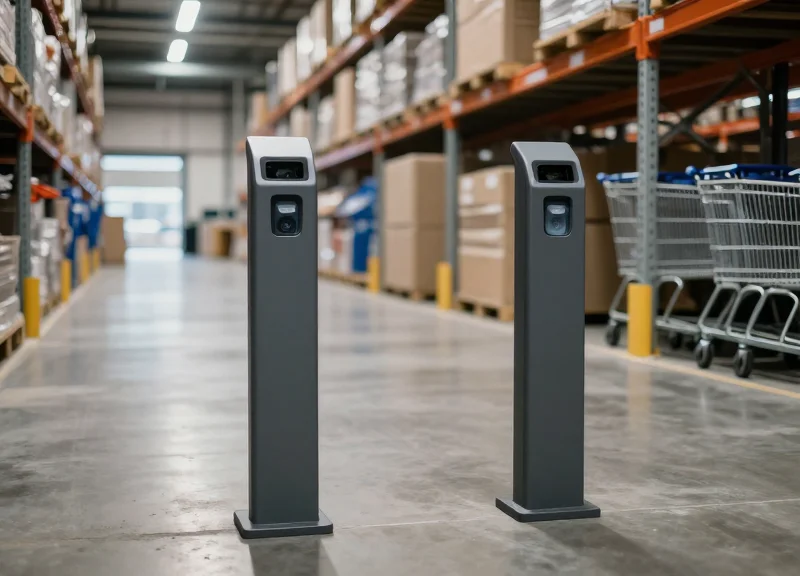
For warehouse clubs and big-box retailers, the gold standard for a 3-meter (9.8 ft) aisle clearance is a high-powered Acousto-Magnetic (AM) system utilizing advanced Digital Signal Processing (DSP). While standard pedestals struggle beyond 1.8 meters, the models listed below are specifically calibrated to handle 'extreme-span' environments where metal interference and high foot traffic are constant. Selecting the right model requires balancing aesthetic transparency with the raw power needed to drive a magnetic field across a 300cm gap without creating dead zones.
| Model Series | Technology | Max Detection Width | Key Advantage |
|---|---|---|---|
| DragonGuard AM9800 Ultra | AM (58kHz) | 3.2 Meters | Superior noise immunity for metal-heavy environments. |
| DragonGuard AM7008 Pro | AM (58kHz) | 3.0 Meters | Integrated jammer detection and remote tuning. |
| RF-Max Digital 8.2 | RF (8.2MHz) | 2.8 Meters* | Best for soft-tag heavy retailers (*Requires high-output tags). |
| Stealth Floor-Loop X1 | AM (58kHz) | Unlimited (Modular) | Completely invisible; zero physical obstruction. |
Expert Insight: The 'Signal-to-Noise' Threshold in Wide Spans. Having consulted on hundreds of Silicon Valley-adjacent retail deployments, I have observed that success in 3-meter gaps isn't about the size of the antenna, but the depth of the Digital Signal Processing (DSP) algorithm. In a wide-span environment, the 'noise' from LED drivers and HVAC systems increases exponentially. A premium system like the AM9800 doesn't just blast more power; it uses intelligent 'software-defined' filtering to isolate the specific 58kHz resonance of a tag against a chaotic warehouse background.
- The Flagship: DragonGuard AM9800 Ultra-Wide: This system is the industry leader for 3-meter spans. It features an oversized coil structure that generates a deeper magnetic field than slimline models. Its primary benefit is the built-in OID (Object Interference Detection), which alerts staff if a metal cart is left inside the detection field, preventing the system from desensitizing itself.
- The Aesthetic Choice: AM7008 Acrylic Series: If maintaining a high-end warehouse aesthetic is important, the AM7008 offers 3-meter coverage using a high-grade acrylic pedestal. It includes visual and audible alarms integrated into the frame and supports remote maintenance via Wi-Fi, allowing technicians to adjust sensitivity without a site visit.
- The Hidden Solution: Under-Floor Loop Systems: For clubs that want a completely open floor plan, under-floor loops are the ultimate choice. These systems are installed during the slab-pouring or retrofitted into the floor. They provide a vertical detection field that can cover any width, though they are most effective when paired with high-quality AM labels.
Can these systems really cover 3 meters with soft labels?
Detection at 3 meters is most reliable with hard tags. While premium AM systems can detect DR labels at this width, environmental noise must be low. For 100% reliability with soft labels at 3 meters, a 'split' pedestal configuration (Primary-Secondary-Primary) is often recommended.
What is the biggest failure point in wide-aisle EAS?
The 'Shielding Effect.' In warehouse clubs, large metal objects like stainless steel refrigerators or power tools can shield the EAS tag from the antenna. We recommend placing pedestals at least 1 meter away from the nearest metal racking to prevent field distortion.
Are these models compatible with existing RFID inventory systems?
Yes, many of the DragonGuard models mentioned feature 'Dual-Tech' capabilities, allowing for the integration of RFID sensors within the same housing to track individual item shrinkage while maintaining 3-meter EAS security.
Tagging Efficiency for High-Volume Warehouse Goods
In warehouse club environments with 3-meter (approx. 10-foot) aisle clearances, tagging efficiency is defined by the tag's ability to maintain a strong 'Signal-to-Noise' ratio at the exact midpoint of the exit. Standard retail labels often fail here because the magnetic field strength of even the most powerful AM (Acoustic Magnetic) or RF (Radio Frequency) pedestals decays significantly at a 1.5-meter distance. To ensure 95%+ detection rates, high-volume operations must prioritize 'High-Q' (Quality Factor) tags—security elements engineered with higher-purity ferrite cores and precision-tuned resonators that can be energized and detected across extreme spans.
| Tag Type | Max Detection Range (Standard) | Max Detection Range (High-Performance) | Best Use Case |
|---|---|---|---|
| AM Soft Labels (58kHz) | 0.9m - 1.1m | 1.4m - 1.6m | Cosmetics, electronics, boxed dry goods |
| RF Soft Labels (8.2MHz) | 0.8m - 1.0m | 1.2m - 1.4m | Soft goods, non-metallic packaging |
| Hard Tags (Pencil/Square) | 1.2m - 1.5m | 1.8m - 2.2m | Apparel, bulk textiles, heavy hardware |
| Specialty XL Labels | 1.3m - 1.5m | 1.6m - 1.8m | High-value bulk items (Tires, TVs) |
Expert Insight: The 'Q-Factor' Advantage. Many warehouse managers mistake tag size for power. In reality, the 'Q-factor'—the efficiency with which a tag stores and returns energy—is the critical metric for 3-meter aisles. A high-performance 40mm tag with a high Q-factor will outperform a generic 50mm tag every time. When selecting tags for wide exits, always request the Q-factor specifications from your supplier; for 3-meter spans, look for tags optimized for low-energy resonance.
- Audit Product Packaging: Identify items with high metallic content or foil-lined packaging, as these will require AM technology rather than RF to penetrate the 'Faraday cage' effect in wide aisles.
- Implement Source Tagging: For high-volume goods, move tagging upstream to the manufacturing stage. This ensures consistent tag placement at the 'sweet spot' of the packaging for maximum antenna visibility.
- Tag Orientation Calibration: In 3-meter exits, tag orientation matters more than ever. Ensure tags are applied vertically or horizontally relative to the antenna's magnetic field lines based on your specific system's polarity.
Can we use standard RF labels for 3-meter aisles?
Generally, no. Standard 4x4cm RF labels typically peak at 1.8m to 2.0m total span. For 3-meter exits, you must use high-performance AM systems or specialized 'Wide-Aisle' RF hard tags.
How does 'tag shielding' affect wide-exit performance?
At the 1.5m midpoint, the signal is weakest. Any shielding (like metal foil or liquid) that would be a minor nuisance in a 1m aisle becomes a total detection failure in a 3m aisle.
Is double-tagging effective for bulk pallets?
It can be, but it's inefficient. A better strategy is to use a single 'Super-Tag' with a larger internal coil or ferrite, which provides a more reliable signal return than two weak tags.
Installation and Calibration Best Practices
To successfully secure a 3-meter (approx. 10-foot) warehouse club exit, installation must move beyond 'plug-and-play' and into the realm of precision RF engineering. Because signal strength follows the inverse-square law, the detection energy at the center of a 3-meter aisle is significantly weaker than at the pedestals. Success depends on a professional site survey to identify the 'noise floor,' rigid physical anchoring to prevent vibration-induced false alarms, and the synchronization of system phases to eliminate interference from neighboring security gates or industrial electronics.
| Installation Phase | Critical Requirement | Impact on 3-Meter Detection |
|---|---|---|
| Site Survey | RF Spectrum Analysis | Identifies ambient noise from LED drivers/HVAC that masks tag signals. |
| Physical Placement | Millimeter-precision Alignment | Ensures the magnetic fields are perfectly parallel for maximum central flux. |
| Cabling | Shielded Twisted Pair (STP) | Prevents the power lines from acting as antennas for environmental noise. |
| Synchronization | Zero-Phase Matching | Required when multiple 3-meter aisles are adjacent to prevent 'blind spots'. |
- Electromagnetic Mapping: Use an oscilloscope or an EAS-specific diagnostic tool to map the RF environment before bolting pedestals. Look for spikes in the 58kHz (AM) or 8.2MHz (RF) bands caused by nearby conveyor motors.
- Sub-Floor Loop Integrity: If using floor-loop systems, ensure the trench depth is uniform. A variation of even 2cm in depth can create a 'weak zone' in the center of a 3-meter span.
- Software Sensitivity Tuning: Adjust the 'validation count'—the number of times a system must see a tag before alarming. For wide exits, a lower count is needed for sensitivity, but this requires a cleaner signal-to-noise ratio.
- Tag Orientation Testing: Perform 'The Grid Test' by walking tags through the exit at three heights (ankle, waist, head) and three orientations (flat, vertical, lateral) to confirm 95%+ pick rates.
Expert Tip: The 'Peak-Hour Calibration' Methodology. Most technicians calibrate systems in an empty store before opening. However, a warehouse club’s RF environment changes drastically when 500 shoppers are present with mobile devices and forklifts are active. For a 3-meter clearance, we recommend a 'dual-profile' calibration: one baseline for quiet hours and a second 'High-Noise' profile that automatically engages during peak traffic to maintain detection integrity without escalating false alarms.
Why does my system alarm when the sliding doors open?
This is often 'phantom' interference caused by the metal door frames moving through the magnetic field. Ensure pedestals are at least 50cm from moving metal or use software 'door-blanking' filters.
Can I install 3-meter systems myself?
For standard 1.2-meter aisles, DIY is possible. For 3-meter wide-exit spans, professional calibration is mandatory as the system must be tuned to the very edge of its performance envelope.
What is the biggest cause of system failure over time?
Environmental drift. New electronic signage or LED retrofits installed near the exit can introduce new noise that the original calibration didn't account for.
Calculating ROI: Shrinkage Reduction vs. System Investment

Return on Investment (ROI) for wide-exit Electronic Article Surveillance (EAS) in warehouse clubs is defined as the ratio of annual shrinkage savings and operational labor reductions to the Total Cost of Ownership (TCO) of the system. For a 3-meter aisle clearance, a high-performance system typically achieves a payback period of 8 to 14 months by reducing external theft (shoplifting) by 15-25% and allowing for faster customer throughput compared to narrow, gated alternatives.
| Investment Category | Typical Cost / Impact | ROI Contribution |
|---|---|---|
| Hardware & Installation | $15,000 - $35,000 (per exit) | Initial Capital Expenditure (CapEx) |
| Annual Shrinkage Reduction | 1.2% to 0.9% of Gross Sales | Direct bottom-line profit increase |
| Labor Efficiency | 15% reduction in manual checks | Operational Expense (OpEx) savings |
| Maintenance & Tuning | 2-5% of hardware cost annually | Ongoing cost to ensure peak detection |
- Benchmark Current Shrinkage: Analyze your current 'unknown loss' data specifically for the exit area. For warehouse clubs, this often centers on high-value electronics, power tools, and bulk luxury items.
- Calculate the 'Aisle Opportunity' Cost: Traditional pedestals often create bottlenecks. Calculate the potential increase in hourly customer throughput by maintaining a 3-meter wide-open clearance.
- Estimate Detection Recovery: Premium systems for 3-meter gaps provide 95%+ detection rates. Multiply your high-risk inventory value by this rate to estimate annual recovered revenue.
- Determine the Break-Even Point: Divide the Total System Cost (Hardware + Install + Tags) by the Monthly Savings (Shrinkage Reduction + Labor Savings) to find the months to break even.
Expert Insight: Beyond simple theft prevention, the 'Hidden ROI' of wide-exit systems lies in reducing 'False Alarm Fatigue.' In a 3-meter aisle, cheaper systems often struggle with environmental noise, leading to frequent false alarms. Each false alarm requires a 2-to-3 minute interaction by security personnel. By investing in high-fidelity Acousto-Magnetic (AM) systems with advanced Digital Signal Processing (DSP), you significantly reduce these labor-intensive 'nuisance' stops, directly lowering your annual security labor budget.
How long do these systems typically last?
Industrial-grade wide-exit systems have a service life of 7 to 10 years, meaning that after the initial 12-month payback, the system provides pure profit protection for nearly a decade.
Does the ROI change based on tagging strategy?
Yes. Moving from manual hard-tagging to source-tagging (tags applied during manufacturing) can further increase ROI by 30% through significant in-store labor savings.
What is the biggest risk to EAS ROI?
Inadequate calibration. A system that isn't tuned for the specific 3-meter environment will have 'dead zones,' allowing shrinkage to continue and negating the investment.