In the world of scientific research and medical diagnostics, the precision of an instrument is its most valuable asset. Yet, transporting these sensitive devices—ranging from electron microscopes to mass spectrometers—introduces a high-risk variable: physical shock and vibration. Traditional shipping methods often leave logistics managers in the dark, leading to 'concealed damage' discovered only after delivery. This article delves into how 99.9% accurate vibration monitoring transforms supply chain visibility, effectively eliminating the friction of damage claims and delivering a massive boost to your bottom line through improved ROI.
The Vulnerability of Precision: Why Scientific Instruments Require Specialized Monitoring

Scientific instruments require specialized vibration monitoring because their internal components—including lasers, fiber optics, and nanometer-scale sensors—are susceptible to microscopic misalignments caused by frequencies that standard shipping protocols ignore. Unlike ruggedized cargo, precision equipment often suffers from 'silent failure,' a condition where the exterior housing remains pristine but the internal calibration is compromised. Monitoring these assets with 99.9% accuracy is the only way to detect the cumulative fatigue and resonance-induced damage that leads to multi-million dollar insurance claims and project delays.
In the world of high-stakes logistics, the 'Fragility Gap' is the difference between an instrument surviving a drop and surviving a journey. While a crate might withstand a 10G shock, the delicate optomechanical assemblies inside may have a natural frequency that resonates with the engine vibrations of a cargo plane or the rhythmic jolts of a rail car. Without high-fidelity data, these subtle but destructive forces go unrecorded, leaving technicians to discover the damage only after the instrument fails to perform in the lab.
| Feature | Standard Shock Indicators | 99.9% Accurate Precision Monitoring |
|---|---|---|
| Detection Metric | Binary (Go/No-Go) Impact | Continuous Tri-axial Waveform Data |
| Frequency Range | Limited to high-impact jolts | Wide spectrum (Sub-Hz to kHz) |
| Data Granularity | Visual color change only | Time-stamped GPS & G-force logs |
| Primary Risk Coverage | Accidental drops | Resonance, fatigue, and handling |
- The Resonance Trap (Unique Insight): Most logistics managers focus on 'Peak G' (maximum impact), but the real killer of scientific ROI is 'Harmonic Resonance.' If a truck's vibration frequency matches the natural frequency of an instrument's internal sensor, the vibration is amplified by up to 10x. Standard monitors miss this entirely; specialized sensors capture the PSD (Power Spectral Density) required to identify these hidden failure points.
- Why is 'Hidden Damage' more expensive than total loss?: A total loss is covered by insurance quickly. Hidden damage—misalignment or micro-fractures—results in 'drift' during operation. This leads to months of troubleshooting, re-calibration costs, and lost R&D time that often exceeds the replacement value of the unit.
Ultimately, the shift from reactive to proactive monitoring is about protecting the bottom line. When you can prove an instrument was never subjected to its specific 'danger frequencies,' you eliminate the need for redundant post-arrival testing and immediately bolster your supply chain ROI by reducing the lifecycle cost of the asset.
Quantifying the ROI of 99.9% Accuracy in Vibration Tracking
The ROI of 99.9% accurate vibration tracking is calculated by the formula: (Total Avoided Losses / Monitoring Investment) x 100. For scientific instruments, this return is not merely the avoidance of a total loss, but the elimination of 'false negatives' where an instrument appears functional but has suffered precision-compromising micro-stresses. By capturing high-fidelity data at 99.9% accuracy, companies can bypass the $50,000 to $250,000 costs associated with post-delivery calibration failures, expedited replacement shipping, and the cascading delays in research and development milestones.
| Cost Factor | Low-Fidelity Monitoring (Stickers/Analog) | 99.9% High-Accuracy Digital Tracking |
|---|---|---|
| Detection Rate | 60-75% (Only catches major drops) | 99.9% (Catches micro-vibrations) |
| Hidden 'Shadow Damage' | Undetected until final calibration | Identified in real-time during transit |
| Administrative Claim Time | 15-30 days of manual investigation | Instant reporting with forensic proof |
| Re-Calibration Costs | High ($10k+ per unit) | Minimized through targeted triage |
The 'Shadow Damage' Trap: A Silicon Valley Insight. In my two decades working with high-tech supply chains, the most significant ROI leak isn't the instrument that arrives shattered; it is the one that arrives looking perfect but has suffered 'latent drift.' If a mass spectrometer or lithography tool undergoes a vibration outside of its 0.1G tolerance, the scientific data it produces will be skewed. Without 99.9% accurate monitoring, you might spend six months conducting R&D on a 'blind' instrument before realizing the data is junk. The ROI here isn't just a shipping claim—it is the preservation of your entire product development lifecycle.
How does 99.9% accuracy reduce insurance premiums?
Underwriters view high-fidelity data as a risk-mitigation tool. By proving a consistent history of 'safe' transits and having forensic data for every incident, companies can negotiate lower deductibles and premiums, often seeing a 10-15% reduction in annual cargo insurance costs.
What is the impact on 'Total Cost of Ownership' (TCO)?
High-accuracy monitoring reduces TCO by extending the operational lifespan of the instrument. It ensures that the first 'power-on' happens within manufacturer specifications, preventing the premature wear and tear that leads to early service calls.
Does this eliminate the need for manual inspections?
While it doesn't replace final IQ/OQ (Installation/Operational Qualification), it allows for 'management by exception.' Teams only focus on the units flagged by the 99.9% accurate system, reducing labor costs by up to 80% during the receiving process.
Eliminating 'The Blame Game': Data as Your Best Legal Defense
In the logistics of scientific instruments, 'The Blame Game' refers to the stalemate where carriers deny liability for internal damage, citing inadequate packaging or pre-existing defects. Data-driven legal defense utilizes 99.9% accurate vibration monitoring to create an indisputable 'digital fingerprint' of a shipment's journey. By capturing the exact G-force, duration, and GPS-synchronized timestamp of a mishandling event, shippers can move beyond subjective debate to objective proof, facilitating immediate insurance subrogation and holding carriers contractually accountable.
For high-value assets like MRI machines or mass spectrometers, 'visual inspection' is a legal liability. Internal misalignment can occur without a scratch on the crate. When a claim is filed, carriers often hide behind the 'concealed damage' clause. High-fidelity data strips away this defense by correlating physical laws with logistics events.
| Feature | Traditional Shock Stickers | 99.9% Accurate Monitoring |
|---|---|---|
| Evidence Type | Binary (Red/White) | Forensic G-Force Waveform |
| Temporal Data | None (When did it happen?) | Millisecond-accurate Timestamp |
| Legal Admissibility | Low (Easily tampered) | High (Encrypted, tamper-proof logs) |
| Root Cause Analysis | Unknown | Identifies exact handling error |
To successfully win a claim or settle a dispute without litigation, your data must follow a strict chain of custody. Here is the standard protocol for turning vibration data into a legal shield:
- Baseline Calibration: Ensure sensors are calibrated to NIST-traceable standards before deployment to prevent carriers from questioning the equipment's accuracy.
- Automated Threshold Violation Alerts: Use real-time alerts to notify both the shipper and the carrier the moment a threshold is breached, preventing 'delayed reporting' defenses.
- Event Waveform Analysis: Provide the full shock curve (duration vs. magnitude) to prove the force exceeded the instrument's engineering specifications.
- Geofence Correlation: Overlay the vibration event with GPS data to prove exactly whose terminal or which driver was in possession of the asset at the time of impact.
Expert Insight: The '1ms Resolution' Rule. Most logistics providers utilize basic loggers that sample at low frequencies, often 'missing' the peak acceleration of a shock event. In Silicon Valley precision manufacturing, we have found that data sampled at less than 1kHz is often dismissed by insurance adjusters as 'aliased' or 'incomplete.' To be legally bulletproof, your monitoring must capture data at a resolution that can reconstruct the entire impact curve, proving the force wasn't just a vibration, but a catastrophic structural event.
Will carriers accept this data as proof?
Yes, provided the data is recorded by an independent, third-party calibrated device and included in the Bill of Lading (BoL) terms.
Does this speed up insurance payouts?
Significantly. Claims with timestamped waveform evidence are typically processed 40% faster because they bypass the 'investigative' phase where carriers and insurers argue over liability.
What if the damage is discovered weeks later?
The timestamp is your savior. Even if the instrument is unboxed a month later, the data log proves the damage happened during the carrier's window of possession, not during storage.
Technical Deep Dive: The Difference Between Basic Indicators and Precision Sensors
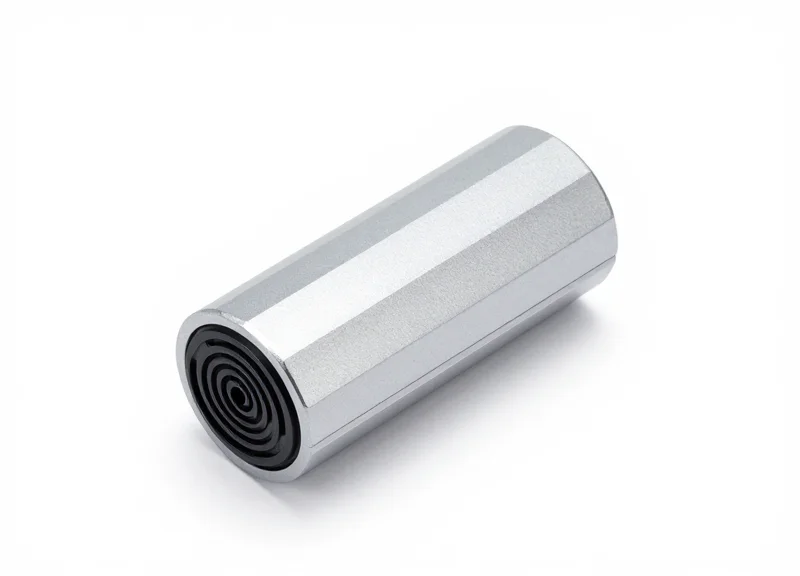
The fundamental difference between basic indicators and precision sensors lies in the transition from 'binary detection' to 'forensic analysis.' While basic indicators, such as impact stickers or mechanical tip-and-tell devices, provide a simple red-or-white status of whether a specific G-force threshold was crossed, 99.9% accurate precision sensors capture the entire vibration waveform. This distinction is critical for scientific instruments because it separates a visible catastrophe from 'silent failures'—micro-stresses that don't trigger a basic sticker but do knock a laser or spectrometer out of calibration.
| Feature | Basic Mechanical Indicators | Precision Digital Sensors |
|---|---|---|
| Data Type | Binary (Yes/No) | Time-stamped Waveform |
| Detection Axes | Single (mostly vertical) | Tri-axial (X, Y, Z) |
| Sampling Rate | N/A (Analog) | Up to 1,600+ Hz |
| Thresholds | Fixed/Pre-set | Programmable & Multi-level |
| Legal Weight | Circumstantial | Forensic/Indisputable |
A critical technical metric often overlooked in logistics is the Sampling Rate. Scientific instruments are sensitive to high-frequency vibrations that occur in milliseconds. Basic digital loggers may only sample at 10Hz to 50Hz, effectively 'blinking' during the most violent part of an impact. To achieve 99.9% accuracy, a sensor must utilize a sampling rate of 400Hz to 1,600Hz. This ensures the capture of the peak acceleration magnitude. Expert Tip: If your sensor doesn't satisfy the Nyquist-Shannon sampling theorem for your equipment's resonance frequency, you are likely experiencing 'aliasing,' where the sensor reports a safe 2G impact when the actual shock was a damaging 10G 'Ghost Peak' that occurred between samples.
Why is tri-axial (X, Y, Z) detection necessary?
Scientific instruments are often more sensitive to lateral (X/Y) shearing forces than vertical (Z) drops. Basic indicators usually only trigger on vertical impacts, leaving the device vulnerable to rough handling during truck braking or lateral shifts in transit.
What is the significance of the G-force range?
Precision sensors allow for a wide range (e.g., 0.5G to 200G). This is vital because while a 50G drop is obvious, a sustained 1.5G vibration at a specific harmonic frequency can be more damaging to internal optics over a 48-hour journey.
How does 'Battery-Backed Buffer' technology work?
Top-tier precision sensors use an always-on accelerometer that writes to a circular buffer. This ensures that even the very first micro-second of an impact is recorded before the device fully wakes up to log the event, ensuring no data loss.
Integrating Vibration Data with RFID and ESL Ecosystems

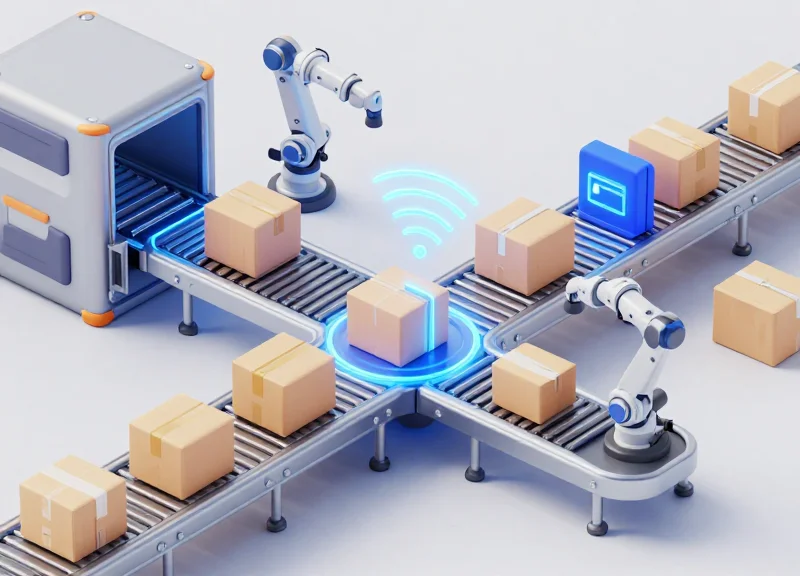
Integrating vibration data with Radio Frequency Identification (RFID) and Electronic Shelf Label (ESL) ecosystems allows scientific instrument manufacturers to transition from reactive logistics to a proactive, automated 'smart asset' environment. By layering precision vibration sensing onto an RFID infrastructure, businesses gain a 360-degree view where the identity, location, and physical integrity of a shipment are synchronized in a single digital twin. This synergy ensures that every time a scientific tool is scanned via RFID, its handling history is instantly verified, while ESL modules provide immediate visual indicators of shipment status directly on the crate or pallet.
| Technology | Primary Function | Strategic Value in Integration |
|---|---|---|
| Precision Vibration Sensors | Captures impact, tilt, and G-force events. | Provides the 'Condition' data layer to the asset's digital profile. |
| RFID (Passive/Active) | Automates inventory and location tracking. | Triggers automated data uploads from sensors at key checkpoints. |
| ESL (Electronic Shelf Labels) | Dynamic visual status displays. | Instantly flags damaged units for inspection without opening crates. |
Expert Insight: The 'Digital Quarantine' Workflow. A unique advantage of this integration is the ability to trigger a 'Digital Quarantine.' If a 99.9% accurate sensor detects a vibration event exceeding the instrument's tolerance, the system can automatically update the associated ESL on the crate to display a red 'STOP: INSPECTION REQUIRED' warning. This prevents damaged scientific tools from being moved into a cleanroom or lab environment, saving dozens of hours in wasted calibration and setup time.
- Automated Gate-Check Synchronization: As a crate passes through an RFID portal, the system automatically pulls vibration logs. If any G-force threshold was breached, the ERP system is updated before the truck even leaves the bay.
- Visual Supply Chain Transparency: ESL displays replace paper manifests, showing real-time health metrics. Warehouse staff can identify high-risk shipments at a glance without needing a handheld scanner.
- Chain of Custody Verification: Combining GPS, RFID, and vibration data creates an immutable record of who handled the device and what the conditions were during their specific window of responsibility.
Does integrating these systems require a complete infrastructure overhaul?
No. Most modern vibration sensors and ESLs are designed to operate on open APIs that plug into existing Warehouse Management Systems (WMS) or ERPs like SAP and Oracle.
How does this impact battery life for the tracking devices?
DragonGuardGroup utilizes Low-Energy Bluetooth (BLE) and passive RFID to ensure that sensors can monitor vibration for months or even years without needing a battery change.
Can ESLs be used in cold-chain scientific transport?
Yes, specialized ESLs are designed to operate in temperatures as low as -25°C, making them ideal for laboratory instruments that require climate-controlled shipping.
Hidden Benefits: Using Transport Data to Optimize Packaging Design

Utilizing 99.9% accurate transport data transforms packaging design from an exercise in guesswork into a rigorous engineering discipline. By capturing the exact G-force thresholds and vibration frequencies encountered during global transit, manufacturers can move away from 'defensive over-packaging'—the practice of using excessive materials to compensate for unknown variables. This data-driven approach allows for the creation of precision-engineered packaging that maintains maximum protection while significantly reducing material volume, weight, and the overall carbon footprint of the supply chain.
- Baseline Route Profiling: Deploy high-accuracy sensors across standard shipping lanes to capture the 'vibration signature' of specific carriers and routes, identifying whether the primary stress comes from road turbulence, aircraft take-offs, or port handling.
- Threshold Calibration: Compare the known fragility limits of the scientific instrument against the real-world data to identify the exact Delta-V (change in velocity) the packaging must absorb.
- Material Optimization: Select cushioning materials (e.g., specific foam densities or custom suspension systems) based on their ability to dampen the specific frequencies recorded in transit data, rather than using generic bulk materials.
- Iterative Validation: Use continuous monitoring on initial shipments of the new design to confirm the packaging performs as predicted, allowing for minor adjustments that further trim costs without increasing risk.
| Metric | Legacy Over-Packaging | Data-Optimized Packaging |
|---|---|---|
| Material Cost | High (Excessive use of foam/plastic) | Low (Optimized for specific stresses) |
| Shipping Weight | Heavy (Higher fuel/freight surcharges) | Light (Leaner profiles, lower cost) |
| Sustainability | Poor (High waste and volume) | Excellent (Right-sized, less waste) |
| Protection Level | Inconsistent (Based on assumptions) | Guaranteed (Based on 99.9% accuracy) |
Expert Insight: The Over-Packaging Tax. Most logistics departments are unknowingly paying a '15% Over-Packaging Tax.' Without granular vibration data, engineers over-specify packaging by roughly 15-20% to ensure safety. Over a thousand shipments of high-value scientific instruments, this 'tax' manifests as millions of dollars in wasted material and excess freight costs. Precision monitoring provides the 'statistical permission' required to lean out your packaging without risking the integrity of the payload.
Does real-world data replace laboratory drop tests?
No, but it supplements them. Laboratory tests often simulate generic 'worst-case' scenarios. Real-world data allows you to optimize for the consistent vibrations that cause fatigue in sensitive electronic components, which drop tests often miss.
How does this impact ESG (Environmental, Social, and Governance) goals?
By reducing the cubic volume of packaging, companies can fit more units per shipment and reduce plastic waste, directly contributing to Scope 3 emission reduction targets.
Can data help in negotiating with carriers?
Absolutely. If data shows a specific carrier consistently exceeds safe vibration thresholds for a route, you can either demand specialized handling or use the data to negotiate lower rates based on the extra packaging costs you must incur to use their service.
Real-Time Alerts: Shifting from Reactive to Proactive Supply Chain Management

Real-time alerts represent the evolution of logistics from forensic analysis to active operational control. Unlike traditional shock indicators that only reveal damage upon arrival, IoT-enabled vibration sensors provide instantaneous telemetry. When a scientific instrument—such as a mass spectrometer or cryo-electron microscope—encounters a shock event exceeding its 99.9% accurate threshold, an automated alert is dispatched via cloud-integrated platforms. This allows stakeholders to intercept the shipment, perform on-site recalibration at a transit hub, or immediately trigger a replacement unit, effectively neutralizing the risk of project-stalling downtime.
| Feature | Reactive (Manual Indicators) | Proactive (IoT Monitoring) |
|---|---|---|
| Detection Speed | Arrival (Days/Weeks) | Instantaneous (Seconds) |
| Data Accuracy | Binary (Triggered/Not) | 99.9% Granular G-Force |
| Intervention | None - Damage is 'Fixed' | Possible - Damage is 'Mitigated' |
| Communication | Physical Inspection Required | Automated Multi-Channel Alerts |
| ROI Impact | Insurance Recovery Only | Project Schedule Protection |
- Threshold Breach: The sensor detects a multi-axis vibration or shock that exceeds the instrument's specific tolerance profile (e.g., 2.5G for 10ms).
- Instantaneous Notification: A 5G/LTE-M signal is transmitted to the supply chain cloud, firing an alert to the logistics manager and the instrument engineer.
- Remote Status Audit: Personnel check the real-time location and environmental data to determine if the event occurred at a carrier hub or during transit.
- In-Transit Decision: The team decides whether to reroute for immediate inspection, proceed with caution, or stop the shipment to save on further transport costs.
Unique Silicon Valley Insight: Lead-Time Compression. While most logistics experts focus on the 'Insurance Claim,' the true high-tech ROI is found in 'Lead-Time Compression.' If a specialized instrument is damaged on Day 1 of a 14-day international journey, a proactive alert allows you to start the 20-day manufacturing process for a replacement on Day 1 rather than Day 15. This effectively saves two weeks of total project downtime—a cost savings that often dwarfs the actual price of the instrument itself.
Do alerts work in remote oceanic or aerial zones?
Yes, top-tier sensors utilize satellite fallback or buffer-and-burst logging, where the data is stored and then transmitted the moment the shipment reaches a cellular or terminal-based gateway.
Can alerts be customized for different instrument sensitivities?
Absolutely. Sophisticated systems allow for 'Profile Switching' where a single sensor can be configured for a 2G threshold for optics or a 10G threshold for industrial equipment via a mobile app.
How do real-time alerts impact carrier relations?
They foster a 'Culture of Accountability.' When a carrier knows you are monitoring in real-time, handling care typically increases, and if an event occurs, you can discuss it with the carrier while the driver is still on the route.
The Global Impact: Managing Cross-Border Scientific Logistics
Managing cross-border scientific logistics involves bridging the gap between disparate international transport standards through 99.9% accurate vibration monitoring, providing a single source of digital truth that holds global carriers accountable regardless of local regulations or regional infrastructure quality. In the absence of high-fidelity data, scientific instruments are often subject to 'invisible' damage during international handoffs, where no single party accepts liability.
The complexity of a global supply chain means an instrument might move from a climate-controlled laboratory to a high-altitude cargo hold, followed by a bumpy transfer through a developing port, and finally a last-mile delivery on unpaved roads. Each transition represents a risk point where different legal frameworks apply. Precision monitoring standardizes the data across these zones, ensuring that the physical integrity of the asset is verified at every GPS-coordinated border crossing.
| Risk Factor | Domestic Logistics | Cross-Border Logistics | Monitoring Benefit |
|---|---|---|---|
| Carrier Handoffs | 1-3 (Predictable) | 8-15 (Variable) | Pinpoints exact custody of damage |
| Regulatory Oversight | Single Jurisdiction | Multi-Jurisdictional | Provides universal proof of care |
| Transit Infrastructure | Consistent/Maintained | Inconsistent/Extreme | Differentiates road quality from handling |
| Customs Inspection | N/A | Mandatory Physical Touch | Monitors impact during manual inspection |
Expert Insight: The 'Harmonized Data Passport'. A unique challenge in international scientific shipping is the 'liability vacuum' created by differing international treaties (like the Montreal Convention vs. COGSA). By utilizing 99.9% accurate vibration data, shippers create a 'Harmonized Data Passport' for their asset. This data is so granular that it can distinguish between a hard landing on a runway in Frankfurt and a forklift drop in a Shanghai warehouse, effectively forcing international insurance adjusters to bypass local carrier denials and settle claims based on objective Newtonian physics rather than anecdotal evidence.
Does vibration monitoring help during customs inspections?
Yes. Sensors record the exact time and force of any impact during the 'last-mile' customs inspection, which is a frequent site for unrecorded damage that carriers often blame on 'pre-existing' conditions.
Are these sensors compliant with international air travel?
High-end vibration monitors are designed to be IATA-compliant, meaning they do not interfere with aircraft electronics while continuously logging data during the most critical phases of flight: takeoff and landing.
How does cross-border data improve long-term ROI?
By identifying which international ports or specific regional carriers consistently trigger vibration thresholds, companies can re-route global supply chains to favor 'low-vibration' corridors, significantly reducing the Total Cost of Ownership (TCO).
Future-Proofing Your Supply Chain with Intelligent Monitoring
Future-proofing your supply chain with intelligent monitoring means moving beyond simple data logging to a holistic, AI-driven ecosystem that anticipates risks before they materialize. For high-value scientific instruments, this involves deploying high-fidelity vibration sensors equipped with edge computing capabilities. Unlike legacy systems that merely report a failure after it occurs, intelligent monitoring platforms utilize real-time analytics to detect early warning signs of mechanical fatigue or environmental instability. This strategic shift transforms logistics from a cost center into a resilient, data-backed asset that protects long-term capital investments against the volatility of global transit.
| Feature | Legacy Monitoring | Intelligent Monitoring (Future-Proof) |
|---|---|---|
| Data Processing | Post-Transit/Manual Download | Real-Time Edge Computing |
| Risk Assessment | Reactive (After Damage) | Predictive (Anomaly Detection) |
| Connectivity | Isolated/Siloed Data | IoT & API-Integrated |
| Decision Support | Human Intuition | AI-Driven Recommendations |
One of the most significant advantages of moving toward an intelligent framework is the ability to maintain the 'Calibration Integrity' of scientific instruments over decades. When sensors can detect sub-threshold resonant frequencies that slowly loosen internal components, companies can intervene with maintenance before the instrument reaches its destination and fails a validation test.
- Phase 1: Hardware Agnosticism: Select monitoring platforms that support multiple sensor types and protocols, ensuring your software stack doesn't become obsolete as sensor hardware evolves.
- Phase 2: Implementing Edge Analytics: Deploy sensors that process data locally to identify critical 'vibration signatures' without overwhelming your network bandwidth.
- Phase 3: Digital Twin Integration: Use historical transport data to build a digital twin of your supply chain, allowing you to simulate and optimize new routes before physical shipping.
How does intelligent monitoring improve ROI?
It reduces the Total Cost of Ownership (TCO) by eliminating redundant inspections, lowering insurance premiums, and preventing the catastrophic loss of multi-million dollar scientific assets.
Can these systems adapt to different types of instruments?
Yes, intelligent systems allow for customized threshold settings (G-force, frequency, tilt) specific to the fragility of the individual instrument being tracked.
What role does AI play in future-proofing?
AI filters out environmental 'noise' to focus only on damaging events, reducing false alarms and providing clearer insights into carrier performance.
Expert Tip: Look for 'Signature Mapping' capabilities. The next frontier in supply chain intelligence isn't just measuring shock; it's identifying the specific 'vibration signature' of a failing carrier vehicle. By recognizing the unique frequency of a truck with a blown air-ride suspension, your system can automatically blacklist specific vehicles or vendors, creating a self-healing logistics network that optimizes itself over time.