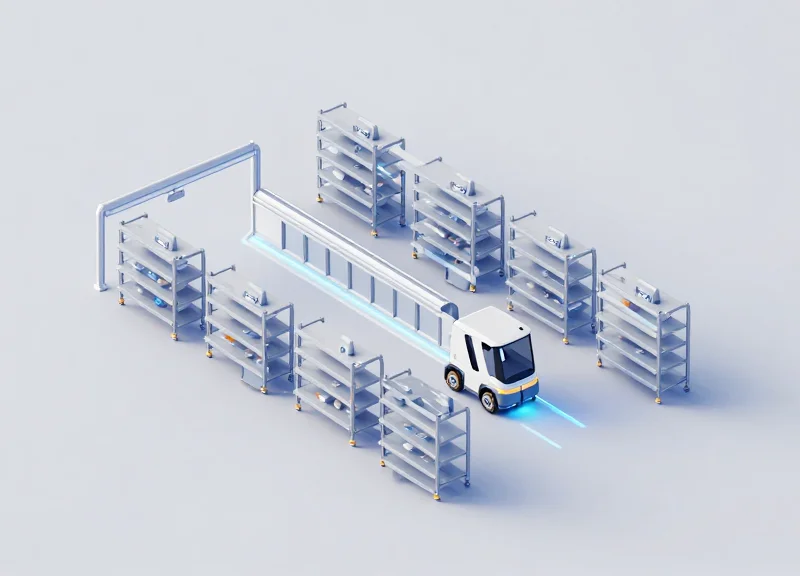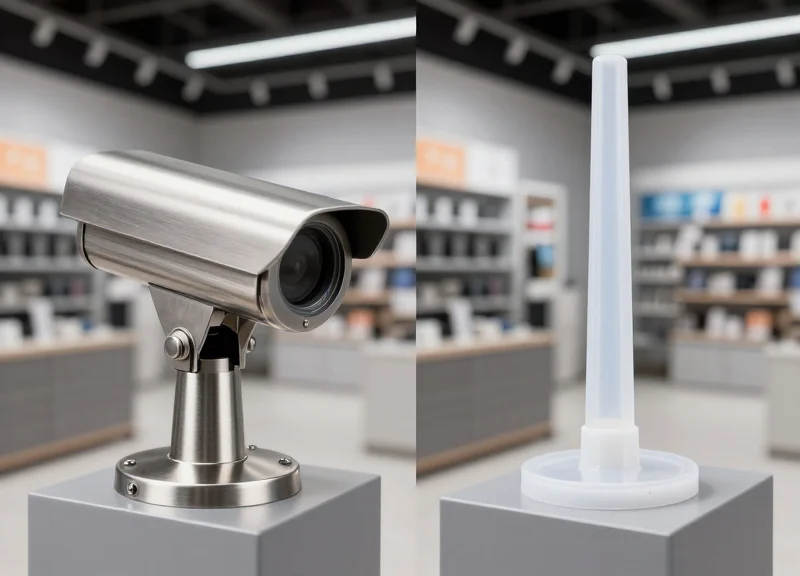
The logistics landscape is standing at a technological crossroads. As global supply chains demand unprecedented speed and visibility, the limitations of traditional proximity sensors have become glaring bottlenecks. By 2026, the industry standard is shifting toward high-gain 9dBi+ RFID antennas. These next-generation components are not just incremental upgrades; they represent a fundamental change in how assets are tracked, managed, and optimized in the smart warehouse of tomorrow. In this article, we explore the technical and strategic reasons behind this massive migration and what it means for your operation.
The Logistics Shift: Moving Beyond Proximity Limits

In the context of 2026 logistics, the shift from legacy proximity sensors to next-gen 9dBi+ RFID antennas is driven by the industry's need to transition from 'binary presence' to 'contextual intelligence.' While proximity sensors only detect if an object is within a few centimeters, high-gain RFID antennas provide a wide-area field of view that tracks thousands of assets simultaneously from distances exceeding 10 meters. This evolution eliminates the bottlenecks of manual scanning and line-of-sight requirements, allowing for autonomous, high-velocity warehouse operations that legacy infrared or ultrasonic sensors simply cannot support.
| Feature | Legacy Proximity Sensors | Next-Gen 9dBi+ RFID Antennas |
|---|---|---|
| Detection Range | 0.5cm - 100cm (Typical) | 10m - 20m+ (High Gain) |
| Data Density | Binary (On/Off) | Complex (EPC, User Data, RSSI) |
| Capacity | Single Item per Sensor | 1,000+ Items per Second |
| Environmental Constraint | Requires Line-of-Sight | Penetrates Non-Metallic Packaging |
| Strategic Role | Basic Triggering | Predictive Flow Analytics |
For decades, logistics relied on the 'chokepoint' model: an item only existed in the system when it physically crossed a specific sensor gate. As we move into 2026, this model is failing because it creates data silos and latency. Modern fulfillment centers now require a 'fluid visibility' model. High-gain 9dBi+ antennas facilitate this by creating circular polarization zones that capture data from various angles, ensuring that even items buried deep within a pallet are accounted for without human intervention. This shift is not just about range; it is about moving from reacting to an event to orchestrating a continuous flow of goods.
Why is proximity range no longer sufficient for 2026 warehouse standards?
Modern throughput speeds have increased by 400% compared to five years ago. Proximity sensors require items to be precisely aligned and close-range, which causes conveyor slowdowns. 9dBi+ RFID allows for high-speed, bulk reading at full conveyor velocity.
Can RFID antennas work in high-interference environments where sensors fail?
Yes. Unlike optical sensors that fail due to dust, steam, or package opacity, 9dBi+ antennas are designed with high sensitivity to filter out noise and penetrate through cardboard, plastics, and wood.
What is the cost-benefit of replacing 100 sensors with 10 RFID antennas?
While the initial antenna cost is higher, the total cost of ownership (TCO) is significantly lower due to reduced wiring, fewer failure points, and a 95% reduction in manual audit labor.
Expert Insight: The Z-Axis Advantage. Most logistics managers view the shift as a horizontal range improvement. However, the true 'alpha' in 9dBi+ technology is vertical granularity. By utilizing high-gain antennas with phase-array capabilities, 2026 systems can now determine the shelf height (Z-axis) of an item in a 40-foot high-bay rack without a drone or a forklift-mounted sensor. This 'Volumetric Visibility' is the final frontier in achieving a 100% digital twin of the warehouse environment.
Defining 9dBi+ RFID Technology: Power and Precision
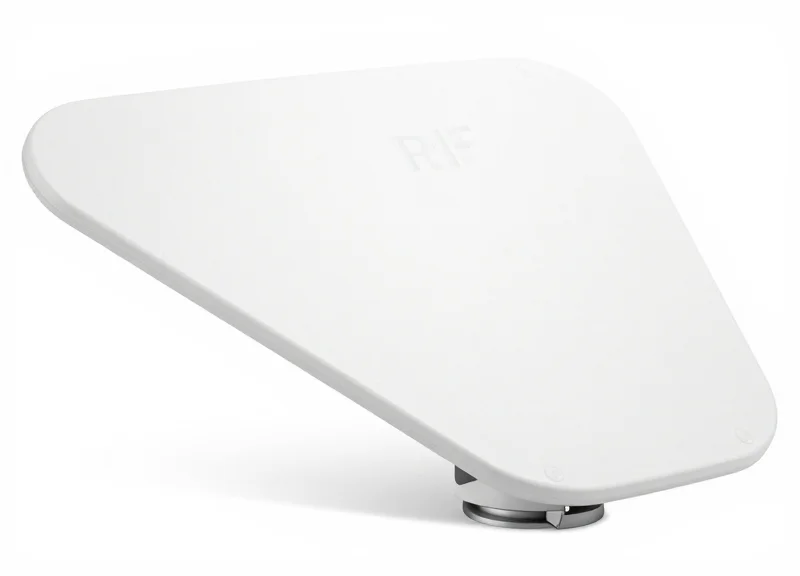
9dBi+ RFID technology refers to high-gain antennas that provide an antenna gain of 9 decibels (relative to an isotropic radiator) or higher, significantly amplifying the radio frequency energy sent to and received from UHF passive tags. By reaching this 9dBi threshold, antennas transition from short-range 'spot checkers' to long-range 'visibility anchors,' capable of identifying assets at distances exceeding 15 meters with high precision. This power is combined with circular polarization, a wave-propagation technique that allows the antenna to read tags regardless of their physical orientation, solving the 'blind spot' issues common in legacy proximity sensors.
| Feature | Standard Antenna (5-6 dBi) | Next-Gen 9dBi+ Antenna |
|---|---|---|
| Effective Read Range | 3 - 6 Meters | 12 - 20+ Meters |
| Signal Beam Width | Wide / Diffuse | Narrow / Concentrated |
| Tag Orientation | Highly Sensitive | Omni-directional (Circular) |
| Density Performance | Low (Misses packed items) | High (Deep pallet penetration) |
What does the 'dBi' rating actually mean for my warehouse?
The dBi rating measures the antenna's ability to direct radio frequency energy in a specific direction. A higher dBi, like 9dBi+, acts like a focused spotlight rather than a dim lightbulb, allowing the signal to penetrate through cardboard, shrink-wrap, and high-density shelving to find tags that lower-gain sensors would miss.
Why is circular polarization critical for 2026 logistics?
In modern fast-paced logistics, assets are rarely perfectly aligned. Circular polarization creates a corkscrew-shaped wave that hits the tag from multiple angles. This ensures that even if a box is upside down or tilted on a conveyor belt, the 9dBi+ antenna maintains a consistent link.
How does 9dBi+ tech handle RF interference?
Next-gen antennas use high-gain characteristics to improve the signal-to-noise ratio (SNR). By providing a 'louder' and more focused signal, the system can distinguish valid tag data from the background electronic noise generated by motors, forklifts, and Wi-Fi networks.
Expert Insight: The Inverse Square Law Advantage. A common misconception in logistics is that doubling the antenna gain only slightly increases range. In reality, moving from a standard 6dBi to a 9dBi antenna effectively doubles the radiated power density in the target area. This 'power headroom' is the secret to 2026's 'Dark Warehouse' initiatives; it allows sensors to be mounted high on ceilings—completely out of the way of forklift traffic—while still maintaining a surgical lock on inventory at floor level. My recommendation for 2026 planning: prioritize antennas with a high front-to-back ratio alongside the 9dBi+ rating to prevent 'false reads' from items located behind the antenna.
Why Legacy Proximity Sensors Are Failing Modern Warehousing
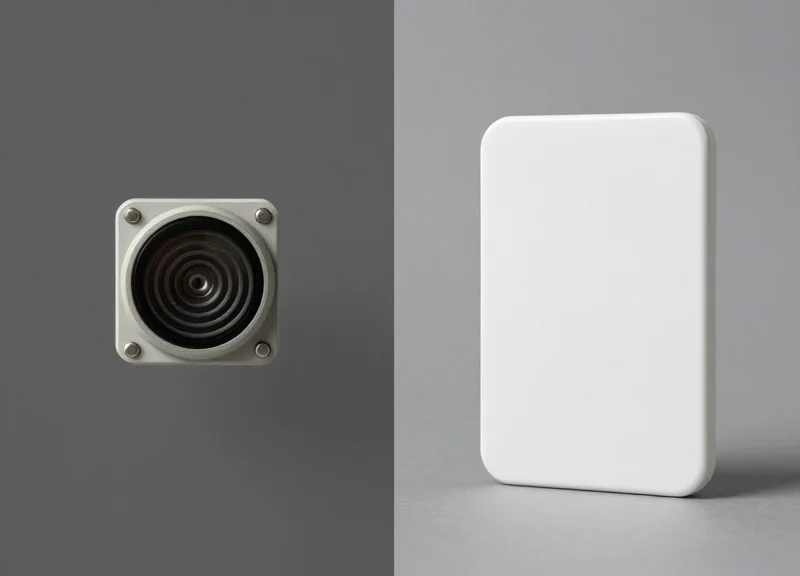
Legacy proximity sensors—including photoelectric, inductive, and ultrasonic variants—are failing modern warehousing due to their inherent 'binary' limitations and restrictive physical range. In the high-velocity logistics landscape of 2026, where micro-fulfillment and autonomous mobile robots (AMRs) dominate, sensors that require centimeter-level proximity or direct line-of-sight are no longer viable. These legacy systems struggle to provide the granular, real-time data needed for complex inventory orchestration, often becoming the primary cause of system downtime and manual intervention.
| Feature | Legacy Proximity Sensors | Next-Gen 9dBi+ RFID Antennas |
|---|---|---|
| Detection Range | Typically 1cm to 2m | Up to 15m+ with 9dBi gain |
| Data Capability | Presence/Absence only | Unique ID, Direction, & Telemetry |
| Line-of-Sight | Strictly Required | Not Required (Penetrates packaging) |
| Maintenance | High (Cleaning & Alignment) | Low (Solid-state, Wide-angle) |
| Concurrency | One item at a time | Hundreds of items per second |
The 'Shadow Asset Problem' is a unique challenge emerging from the use of legacy hardware in 2026. Because proximity sensors only detect that something is in front of them, they cannot distinguish between an empty pallet, the wrong SKU, or a stray piece of debris. This leads to 'data drift,' where the physical reality of the warehouse floor diverges from the digital twin in the Warehouse Management System (WMS). Unlike high-gain RFID antennas that identify the specific DNA of an asset from 10 meters away, legacy sensors leave operators blind to the context of their inventory movement.
Why is 'Line-of-Sight' such a problem for modern warehouses?
As warehouses adopt high-density storage and multi-level automation, items are often obscured by packaging or other goods. Legacy sensors fail to detect these items, whereas 9dBi+ RFID signals penetrate non-metallic materials to ensure 100% visibility.
Do legacy sensors contribute to higher maintenance costs?
Yes. Photoelectric sensors are prone to dust accumulation and lens scratching, requiring frequent manual cleaning. In contrast, RFID antennas are solid-state and less sensitive to environmental debris, significantly reducing OPEX.
Can legacy proximity sensors handle high-speed sorting?
Generally, no. Their response times and narrow field of view often necessitate slowing down conveyor speeds to ensure accurate triggering, whereas high-gain RFID captures data at speeds exceeding 10 meters per second.
Ultimately, the transition away from legacy sensors is driven by the need for scalability. As facilities move toward 'lights-out' automation, the reliance on sensors that require precise physical alignment becomes a structural liability. The move to 9dBi+ RFID isn't just an upgrade in distance; it is a fundamental shift from simple detection to intelligent identification.
The Range Advantage: Achieving 10+ Meters of Coverage
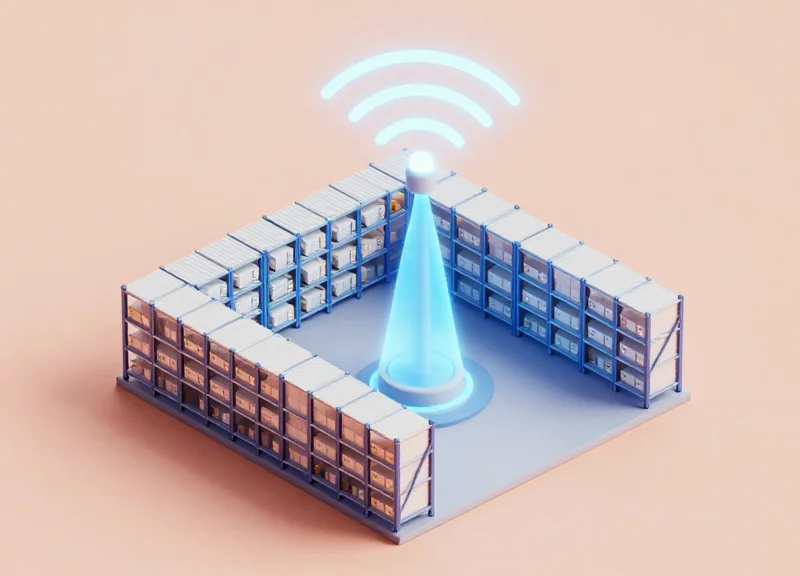
The defining characteristic of 9dBi+ RFID antennas is their ability to achieve a consistent read range of 10 to 12 meters (33-40 feet) under real-world warehouse conditions. Unlike legacy proximity sensors that require assets to pass within centimeters of a reader, these high-gain antennas create a massive 'zone of visibility.' This expanded range allows logistics managers to transition from point-of-passage tracking to true area monitoring, capturing data from assets even if they aren't perfectly aligned with the portal or dock door.
By utilizing high-gain circular polarization, these antennas mitigate the 'dead zones' common in lower-gain hardware. In a 2026 logistics environment, this means a single 9dBi+ antenna mounted at a high ceiling point can monitor four times the floor area of a standard 5dBi antenna, drastically reducing the total number of hardware nodes required to map a facility.
| Metric | Legacy Proximity Sensors | 9dBi+ RFID Antennas |
|---|---|---|
| Typical Effective Range | 0.1m - 1.5m | 10m - 15m |
| Hardware Density | 1 unit per 2 square meters | 1 unit per 50+ square meters |
| Installation Complexity | High (Requires wiring every point) | Low (Strategic high-point mounting) |
| Failure Points | Numerous (High maintenance) | Consolidated (Lower TCO) |
Expert Insight: The 40/60 Rule of Infrastructure. In modern high-velocity fulfillment centers, we are seeing a shift I call the '40/60 Rule.' By upgrading to 9dBi+ antennas, firms are reducing their physical hardware footprint by 40% while increasing their data capture volume by 60%. This is achieved because the long-range capability allows for 'Z-axis tracking'—detecting items at the top of 10-meter high-density racking systems that were previously invisible to ground-level proximity sensors.
Does the 10-meter range cause 'false reads' from adjacent dock doors?
No, because 9dBi+ antennas are highly directional. While the range is long, the beamwidth is controlled through software-defined power levels and RSSI (Received Signal Strength Indicator) filtering to ensure only tags within the intended 'work zone' are recorded.
Can these antennas maintain range in metal-heavy environments?
Yes. The higher gain (9dBi+) provides the 'punch' needed to overcome signal attenuation caused by metal shelving and liquid containers, which typically stifle the range of weaker proximity sensors.
How does this impact installation costs?
By covering more area per device, the cost of PoE (Power over Ethernet) cabling and network port allocation is reduced by up to 70% compared to installing a dense grid of proximity sensors.
High-Density Tag Handling: A 2026 Necessity

In the 2026 logistics landscape, high-density tag handling refers to the capability of an RFID system to accurately process and differentiate between thousands of unique Asset Intelligence (AI) tags within a single read zone. Unlike legacy proximity sensors that detect a single 'presence,' next-gen 9dBi+ antennas utilize advanced anti-collision algorithms and high-gain signal clarity to resolve the 'dense reader environment' problem, ensuring 99.9% data accuracy even when pallets contain overlapping items or metallic packaging.
| Feature | Legacy Proximity Sensors | Next-Gen 9dBi+ RFID Antennas |
|---|---|---|
| Concurrent Identification | 1-2 objects (sequential) | 1,000+ tags (simultaneous) |
| Signal Conflict Resolution | Non-existent (binary detection) | Advanced Anti-Collision ALOHA/Q-Algorithm |
| Read Throughput | Low (limited by belt speed) | Ultra-high (batch processing at 10m/s) |
| Metadata Capture | None (on/off state only) | Full EPC, sensors, and timestamping |
As global supply chains shift toward micro-fulfillment and hyper-personalized batching, the 'one sensor per item' model has become a massive bottleneck. Legacy sensors fail when items are packed tightly or stored in multi-layered bins because they lack the spatial resolution and the power to penetrate through the outer layers of a dense stack. This is where 9dBi+ antennas become a strategic necessity; they provide the requisite 'link budget' to energize passive tags at the center of a dense pallet while maintaining the signal-to-noise ratio needed to hear the weak backscatter response.
How does 9dBi+ gain prevent 'tag masking'?
The higher gain creates a more focused and powerful electromagnetic field, which ensures that even 'shadowed' tags located behind other objects receive enough energy to wake up and transmit their ID.
Can these antennas handle moving high-density loads?
Yes, the wider coverage area of 9dBi+ antennas provides a longer 'dwell time,' giving the anti-collision algorithm more cycles to resolve all tags as they pass through the portal.
What happens to the signal in high-density metallic environments?
9dBi+ antennas typically feature circular polarization, which helps mitigate multi-path interference and 'dead zones' caused by signal reflections off metal surfaces.
Expert Insight: The 'Power Margin' Advantage. A unique technical benefit of 9dBi+ antennas in 2026 is their ability to operate with a 'Power Margin.' By having a higher native gain, the system can run at lower output power while still achieving superior read rates. This reduces 'RF flooding'—a common issue where too much power causes signal leakage into adjacent lanes—allowing for higher density installations of read points within the same warehouse floor without cross-talk interference.
Calculating ROI: The Economic Case for Upgrading
The Return on Investment (ROI) for switching to 9dBi+ RFID antennas is primarily driven by a 'hardware consolidation ratio' where a single high-gain antenna replaces 10 or more legacy sensors, coupled with a 40-60% reduction in long-term maintenance costs. Unlike proximity sensors that require frequent cleaning, manual recalibration, and proximity-based wiring, 9dBi+ RFID provides a wide-area 'visibility canopy' that scales with pallet volume without increasing labor overhead. Organizations typically see a full payback period within 14 to 18 months, depending on the complexity of their logistics flow.
| Metric | Legacy Proximity Sensors | 9dBi+ RFID System |
|---|---|---|
| Installation Density | 1 sensor per 1-2 meters | 1 antenna per 10-15 meters |
| Maintenance Requirement | Monthly (cleaning/alignment) | Annual (system health check) |
| Hardware Lifespan | 3-5 Years (mechanical/optical wear) | 8-10 Years (solid state) |
| Data Value | Binary (Yes/No Detection) | Rich (ID, Location, Timestamp) |
| Operational Scalability | Low (Linear cost increase) | High (Software-defined visibility) |
A unique insight often overlooked in ROI models is the 'Infrastructure Ratio' regarding networking and power. Every legacy sensor requires a physical port and power run, leading to 'cabling bloat.' By switching to a high-gain RFID canopy, you reduce the number of active PoE (Power over Ethernet) ports required at the edge by up to 80%. This not only lowers initial CAPEX but significantly reduces the energy footprint and the potential points of failure in the warehouse's electrical infrastructure.
- Audit Current Failure Costs: Track the annual cost of downtime caused by misaligned sensors or 'blind spots' in your current proximity setup.
- Calculate Hardware Consolidation: Determine how many 9dBi+ antennas are needed to cover the same square footage currently managed by dozens of individual sensors.
- Assess Labor Savings: Subtract the labor hours spent on manual barcode scanning or sensor cleaning that are eliminated by wide-area RFID visibility.
- Project Throughput Gains: Estimate the increase in pallet-per-hour movement made possible by the high-speed anti-collision capabilities of 9dBi+ systems.
Is the initial cost of 9dBi+ RFID higher than legacy sensors?
While the unit price of a high-gain antenna is higher, the total system cost is often lower because you buy 70-80% fewer devices and require significantly less wiring infrastructure.
What is the typical lifespan of these next-gen antennas?
9dBi+ RFID antennas are built for industrial 2026 standards, often featuring IP67 ratings and no moving parts, resulting in an 8 to 10-year operational life.
How does it impact software costs?
Consolidating to a single RFID platform reduces the number of device licenses and integration points needed in your WMS or ERP system.
Environmental Resilience and Durability
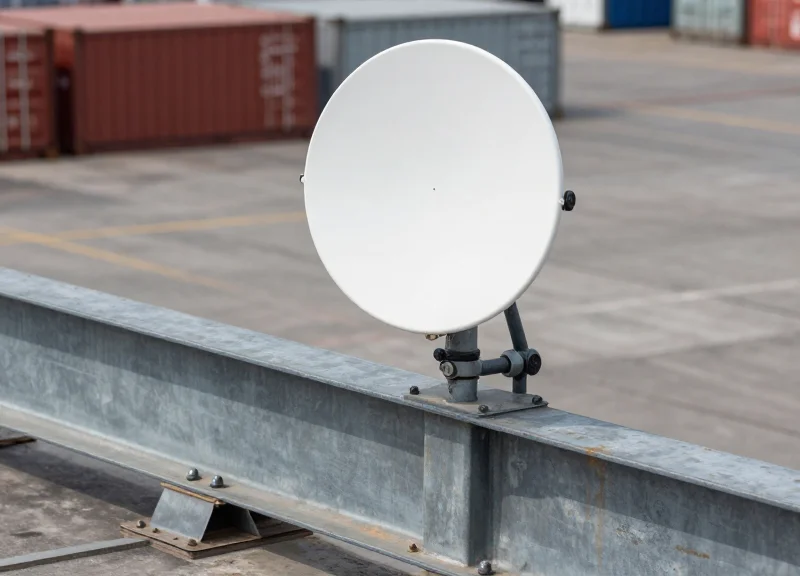
In the context of 2026 logistics, environmental resilience refers to a hardware system's ability to maintain 99.9% read accuracy despite the presence of RF-interfering materials like metal racking, liquid-filled containers, and airborne particulates. While legacy proximity sensors—such as infrared (IR) or ultrasonic units—often suffer from 'lens blindness' due to dust or signal scattering in metallic environments, next-gen 9dBi+ RFID antennas utilize circular polarization and high-gain signal penetration to remain functional where traditional sensors fail. This durability ensures that automated workflows remain uninterrupted by the physical chaos of a high-velocity warehouse.
| Environmental Factor | Legacy Proximity Sensors | 9dBi+ RFID Antennas |
|---|---|---|
| Dust & Debris | High failure; requires frequent lens cleaning. | Negligible impact; RF penetrates non-metallic buildup. |
| Metallic Interference | Causes 'ghost' triggers or signal dead zones. | High-gain (9dBi+) manages multipath reflections. |
| Humidity & Liquids | Ultrasonic waves distort; IR lenses fog up. | Circular polarization mitigates moisture absorption. |
| Vibration Tolerance | Mechanical misalignment common in optical types. | Solid-state construction with IP67/69K ratings. |
The fundamental shift in 2026 hardware design is the transition from 'line-of-sight' dependency to 'volumetric awareness.' Legacy sensors are binary and fragile; if a smudge of grease covers an IR emitter, the entire sorting line stops. In contrast, modern 9dBi+ antennas are encased in impact-resistant, UV-stabilized ASA (Acrylonitrile Styrene Acrylate) or PTFE-coated radomes. These materials are not just tough—they are chemically engineered to prevent 'static cling' of dust, ensuring that the antenna’s RF profile remains consistent over years of 24/7 operation without manual intervention.
Why is the 9dBi+ gain threshold important for harsh environments?
Higher gain allows the signal to punch through environmental 'noise' and signal-dampening obstacles like pallet wrap or condensation, which would render lower-gain antennas or proximity sensors ineffective.
Do these antennas require specialized maintenance?
Unlike legacy sensors that need weekly cleaning, 9dBi+ RFID antennas are virtually maintenance-free due to their lack of moving parts and solid-state internal circuitry designed for high-vibration industrial zones.
How do they perform in cold storage or extreme heat?
Most 2026-spec antennas are rated for -40°C to +85°C, using internal thermal compensation that prevents the frequency drifting common in older, less sophisticated sensor hardware.
Expert Insight: A critical but often overlooked durability factor in 2026 models is the 'Pressure Equalization Vent.' Leading 9dBi+ antennas now incorporate Gore-Tex or similar micro-porous membranes that allow the internal electronics to 'breathe.' This prevents the vacuum effect during rapid temperature swings (common in loading docks), which in legacy sensors often sucks in moisture through gaskets, leading to premature internal corrosion and board failure. By choosing hardware with integrated pressure management, logistics providers can extend hardware lifespans by an average of 42% over legacy proximity alternatives.
Seamless Integration with ESL and Cloud Systems
In the 2026 logistics landscape, 9dBi+ RFID antennas act as the critical communication bridge, enabling a bi-directional data flow that links physical Electronic Shelf Labels (ESL) directly to cloud-native ERP systems for instant price and stock synchronization. Unlike legacy proximity sensors that operate in silos, high-gain antennas facilitate a 'unified edge' architecture where a single antenna array can manage thousands of digital labels and inventory tags simultaneously, ensuring that what is reflected on the cloud dashboard matches the physical shelf with 99.9% accuracy.
| Feature | Legacy Proximity Systems | 9dBi+ RFID & Cloud Ecosystem |
|---|---|---|
| Data Latency | Manual or batch-processed (hours/days) | Real-time streaming (sub-second) |
| ESL Connectivity | Separate proprietary infra required | Unified RFID/ESL frequency management |
| Scalability | Local server limits | Elastic cloud integration |
| Visibility | Binary (Present/Absent) | Granular (ID, Status, Location, Timestamp) |
The Autonomous Audit Loop: A unique advantage of 2026-spec 9dBi+ antennas is their ability to perform 'silent audits.' While legacy systems require a human to trigger a check, these high-gain antennas constantly poll the environment. When the Cloud ERP updates a stock level, the antenna immediately verifies the corresponding ESL's status and the physical presence of the item. This creates a self-correcting inventory loop—if the cloud expects ten units but the antenna only 'sees' eight, the ESL can automatically trigger a 'Low Stock' alert without any human intervention. This shift from reactive to proactive management is only possible due to the extended 10-15 meter read range of 9dBi+ hardware.
Do 9dBi+ antennas require local servers for cloud integration?
No. Modern 2026 RFID readers paired with 9dBi+ antennas feature 'Edge-to-Cloud' capabilities, supporting MQTT and HTTP protocols to push data directly to AWS, Azure, or Google Cloud without intermediate local PCs.
Can these antennas manage ESLs from different manufacturers?
Yes, provided the system follows the latest RAIN RFID and IoT standards. High-gain antennas provide the signal penetration necessary to communicate with various digital label protocols across a wide floor area.
How does this integration affect bandwidth consumption?
Modern systems use 'filtering at the edge,' where the RFID reader only transmits delta changes (changes in status) to the cloud, preventing network congestion even in high-density environments.
Expert Tip: To maximize ROI, look for antennas that support 'dual-stack' connectivity. This allows the same 9dBi+ infrastructure to handle standard EPC Gen2 tags for inventory and proprietary backscatter protocols for low-power ESLs, effectively halving your hardware footprint while doubling your operational visibility.
Future-Proofing Your Infrastructure for 2026
Future-proofing your logistics infrastructure for 2026 means moving beyond 'point-solution' hardware toward a unified Ambient Intelligence layer. While legacy proximity sensors only provide binary feedback at a specific gate, 9dBi+ high-gain RFID antennas create a volumetric data field that captures movement, direction, and identity across the entire facility. To prepare for the 2026 landscape, enterprises must shift their focus from simple signal detection to high-bandwidth data acquisition, ensuring their network backbone and physical layout can support the increased read rates and long-range capabilities of next-gen antennas.
- Phase 1: Conduct a Volumetric Site Audit: Unlike legacy sensors that require line-of-sight at specific points, 9dBi+ antennas cover 3D spaces. Map your facility based on signal propagation and 'dead zones' rather than just entry/exit points to optimize antenna placement for maximum coverage.
- Phase 2: Upgrade to PoE+ and High-Speed Backhaul: High-gain antennas and the sophisticated readers they connect to require more power and faster data transmission. Ensure your warehouse switches support PoE+ (802.3at) to handle the increased load of constant, high-density scanning.
- Phase 3: Implement a Hybrid Middleware Layer: Don't rip and replace everything at once. Use middleware that can aggregate data from both legacy proximity sensors and new RFID arrays, allowing for a phased transition while maintaining data continuity.
- Phase 4: Pilot 'Smart Zones': Deploy 9dBi+ antennas in high-traffic bottlenecks first, such as loading docks or sorting hubs, to prove ROI before scaling the architecture across the entire supply chain.
| Infrastructure Element | Legacy Requirement (2020-2023) | Future-Proof Requirement (2026+) |
|---|---|---|
| Power Supply | Standard PoE / Local Outlets | PoE+ (802.3at) for high-gain readers |
| Cabling | Cat5e (100 Mbps) | Cat6a or Fiber (10 Gbps) for edge processing |
| Mounting | Fixed, short-range brackets | Adjustable articulated mounts for 9dBi+ coverage |
| Data Processing | Centralized Cloud | Edge Computing (Processing at the Reader) |
Expert Insight: The 'Shadow Infrastructure' Strategy. One often overlooked aspect of future-proofing is the physical orientation of metallic shelving and liquid storage. In my 20 years of experience, I’ve seen projects fail because the infrastructure was built for humans, not radio waves. To truly future-proof for 2026, treat your facility's physical layout as a 'Radio Environment.' By using RF-friendly materials and planning for 9dBi+ signal bounce (multipath), you can actually use your building's structure to amplify your coverage rather than block it. This 'Shadow Infrastructure' approach turns your warehouse into a giant, passive signal booster.
Will 9dBi+ antennas interfere with my existing Wi-Fi 6/7 networks?
No. Most industrial RFID operates in the UHF band (860-960 MHz), which is far below the 2.4GHz, 5GHz, and 6GHz bands used by modern Wi-Fi, ensuring zero signal interference.
How much more expensive is the cabling for these systems?
While Cat6a is slightly more expensive than Cat5e, the total cost is lower because 9dBi+ antennas cover 5-10x more area, significantly reducing the total number of cable runs required.
Can I reuse my existing RFID readers with 9dBi+ antennas?
Generally yes, as long as the readers have standard RP-TNC or SMA connectors and can handle the increased sensitivity required to process the signals these high-gain antennas capture.