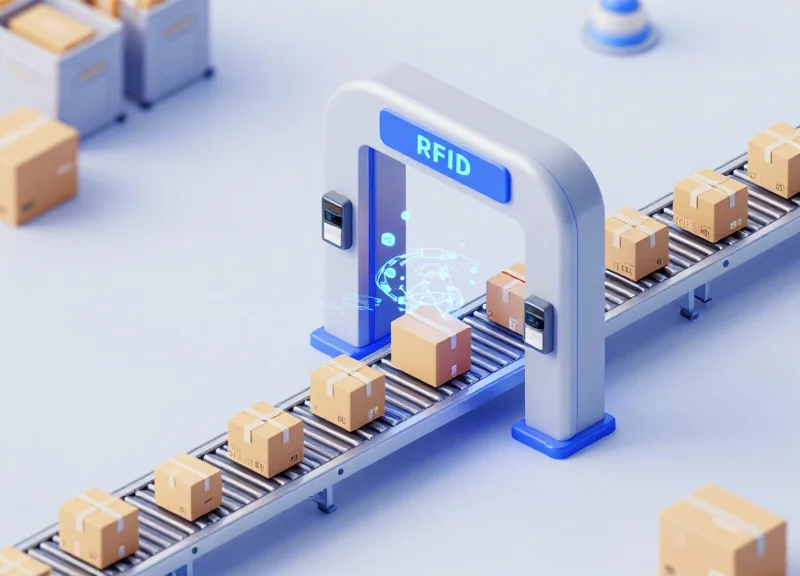
As we approach 2026, the logistics landscape is undergoing a radical transformation driven by hyper-automation and the need for real-time visibility. At the center of this revolution are industrial RFID portals—the critical gateways that bridge physical goods with digital management systems. Selecting the right portal is no longer just about reading tags; it is about ensuring seamless data flow in high-density environments. This guide outlines the essential considerations for decision-makers looking to future-proof their logistics hubs and achieve maximum operational efficiency.
The Shifting Paradigm of Logistics Hubs in 2026
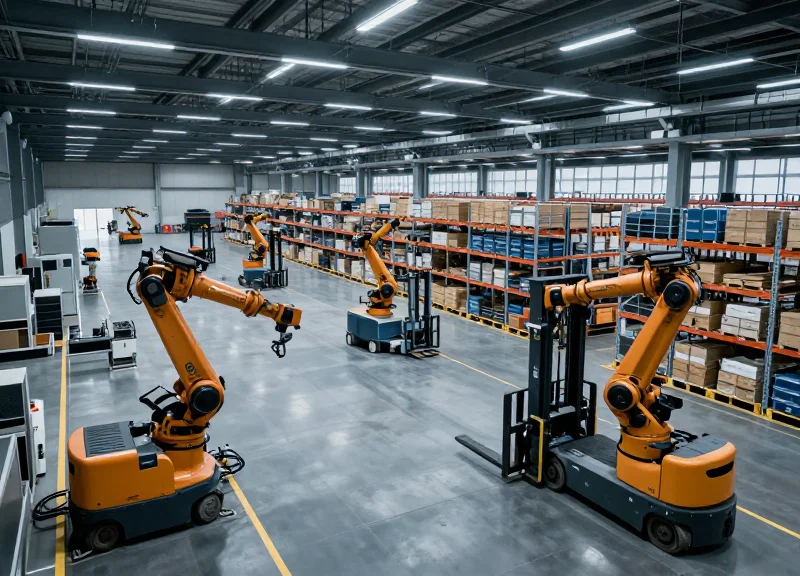
By 2026, the logistics paradigm will shift from manual data entry and periodic checkpoint scanning to a 'Zero-Intervention' model, where hubs function as fully autonomous, data-orchestrated environments. In this landscape, industrial RFID portals have evolved from simple gatekeepers into the 'sensory nervous system' of the warehouse. They provide the real-time high-fidelity data required to synchronize Autonomous Mobile Robots (AMRs), predictive AI maintenance cycles, and global digital twins, ensuring that every asset movement is captured without stopping the flow of goods.
| Feature | Legacy Hubs (2021-2023) | Autonomous Hubs (2026+) |
|---|---|---|
| Data Acquisition | Manual scanning & batch processing | Continuous, passive RFID streaming |
| Operational Flow | Stop-and-go for verification | Frictionless 'On-the-Move' validation |
| Inventory Accuracy | 92% - 95% (Human error prone) | 99.9% (Real-time automated audit) |
| Primary Labor | Forklift drivers & manual pickers | Fleet managers & AI systems engineers |
The 2026 logistics hub is no longer a storage facility; it is a high-speed data processor. As global supply chains face mounting pressure for same-hour delivery and total transparency, the 'Dark Warehouse' concept—facilities that operate with minimal human lighting and maximum machine efficiency—has moved from theory to industry standard. This transition demands RFID infrastructure that can handle massive tag densities and ultra-high speeds without data collisions or latency issues.
How does the role of the RFID portal change in a 2026 autonomous environment?
In autonomous environments, portals act as the primary validation gate for machine-to-machine (M2M) handoffs. Instead of just recording an item's arrival, the portal triggers immediate downstream actions in the Warehouse Management System (WMS), such as reordering stock or rerouting an AMR to the outbound dock.
What is 'Ambient Intelligence' in the context of modern logistics?
Ambient Intelligence refers to a warehouse that is 'aware' of its contents at all times. By integrating RFID portals at every transition point, the facility creates a self-correcting inventory loop where misplaced items are flagged and relocated by robots without human intervention.
Expert Insight: In 2026, the most critical performance metric for RFID portals is no longer just 'read rate,' but 'edge-to-cloud latency.' Leading hubs are now prioritizing portals equipped with onboard AI processing (Edge Computing) to filter and validate data locally. This prevents the 'data tsunami' from overwhelming central servers and allows for millisecond-level decision-making on the loading dock floor.
Factor 1: Read Accuracy in High-Density Environments
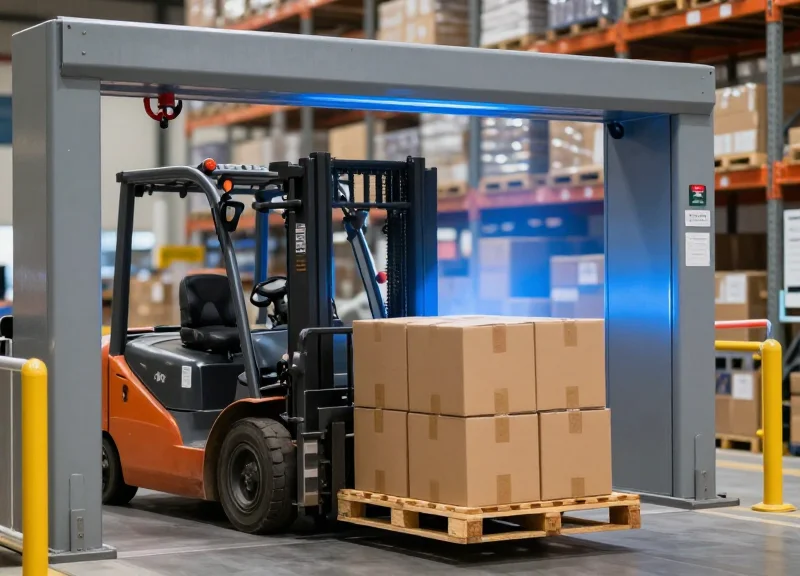
In the context of 2026 logistics, high-density read accuracy refers to a portal's capacity to maintain a 99.99% data capture rate while processing over 1,000 tags per second. As hubs move toward total automation, the margin for error disappears. High-density environments—where pallets are packed with diverse SKUs or metallic components—create 'RF noise' that legacy systems cannot penetrate. Modern accuracy is no longer just about power; it is about the sophisticated orchestration of anti-collision protocols and signal-to-noise ratio (SNR) optimization.
The technical core of this accuracy lies in the evolution of the air interface protocol. While standard EPC Gen2v2 remains the foundation, 2026-tier portals utilize AI-enhanced Adaptive Query Management. This allows the reader to dynamically adjust the 'Q-algorithm'—the parameter controlling the number of time slots in the anti-collision process—in real-time as the tag population density fluctuates. This prevents 'tag masking,' where stronger signals from closer tags drown out the responses of tags buried deep within a pallet.
| Feature | Legacy RFID Portals (Pre-2023) | 2026 Industrial RFID Portals |
|---|---|---|
| Max Tag Throughput | 200-400 tags per passage | 1,500+ tags per passage |
| Collision Logic | Static Slotted ALOHA | Neural-Network Predictive Resolution |
| Interference Handling | Passive physical shielding | Active Digital Signal Beamforming |
| Error Rate | 1% to 3% in dense loads | <0.01% via redundant validation |
- Expert Tip: The 'Spatial Intelligence' Breakthrough: Don't just look for high read rates; look for 'Spatial Filtering.' The most advanced 2026 portals use phase-array antennas to determine the 3D trajectory of a tag. This ensures that a tag sitting on a nearby shelf (a 'ghost read') is ignored, while only tags physically moving through the portal at 5-10 mph are recorded. This eliminates the need for physical RF shielding, saving thousands in installation costs.
How does tag collision impact logistics speed?
Tag collision occurs when multiple RFID tags respond to a reader simultaneously, causing signal interference. In high-speed logistics, if the portal cannot resolve these collisions instantly, the forklift must slow down or re-pass, creating bottlenecks that ripple through the entire supply chain.
Why is 'Circular Polarization' essential for accuracy in 2026?
In high-density environments, tags are often oriented randomly. Circularly polarized antennas ensure that the portal can energize and read tags regardless of their horizontal or vertical orientation, which is critical when dealing with diverse third-party packaging.
Can software updates improve hardware read accuracy?
Yes. Modern portals utilize Software-Defined Radio (SDR). By updating the firmware, hubs can implement newer, more efficient decoding algorithms that handle signal reflections and multipath interference better than the original factory settings.
Factor 2: Environmental Durability and IP Ratings
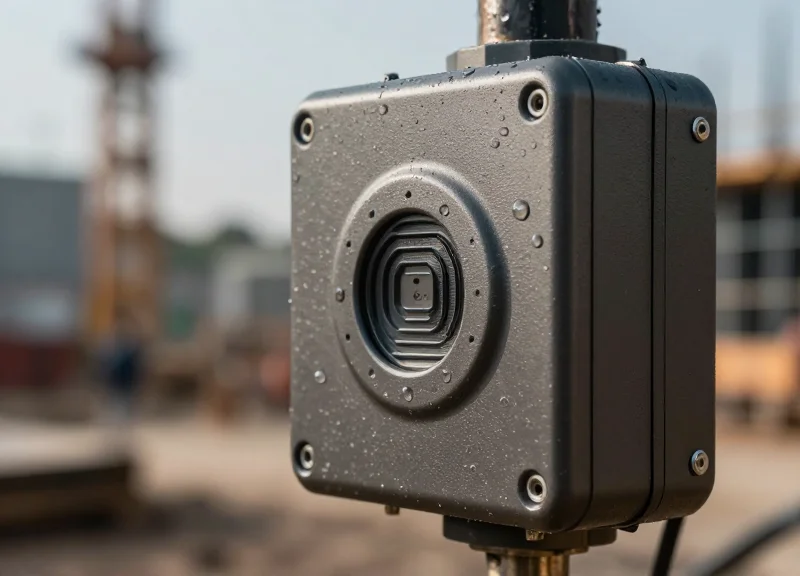
In 2026, the benchmark for industrial RFID portals has shifted from mere functionality to hardened resilience. Selecting hardware with at least an IP67 rating ensures that the portal can withstand the fine-particulate dust common in high-volume distribution centers and the moisture ingress typical of cross-docking environments. Furthermore, as logistics hubs transition toward 100% automation, the physical housing must offer IK10-level impact resistance to survive the increased kinetic energy of high-speed autonomous mobile robots (AMRs) and heavy-duty forklifts.
| Rating | Protection Level | Logistics Use Case |
|---|---|---|
| IP65 | Dust-tight and protected against water jets | Standard indoor warehouse and sorting areas |
| IP67 | Dust-tight and protected against immersion | Outdoor loading docks and high-humidity zones |
| IP69K | Protection against high-pressure washdowns | Pharmaceutical or food-grade logistics centers |
| IK10 | Resistant to 20 joules of impact energy | High-traffic zones with heavy AMR/AGV movement |
A unique insight for 2026 is the emerging focus on 'Thermal Fatigue' and internal condensation management. In climate-controlled hubs where external loading dock temperatures fluctuate significantly, internal condensation can occur even in sealed units if they lack pressure-equalizing vents. Premium 2026 portals now feature PTFE-based GORE vents to prevent vacuum-induced seal failure, ensuring that internal oscillators and radio modules remain dry and drift-free over a 10-year lifecycle.
Does a higher IP rating affect signal range?
Generally, no. While the housing is more robust, manufacturers use UV-stabilized polycarbonates and specialized radome materials that are fully RF-transparent, preventing any loss in read distance or sensitivity.
Why is vibration resistance critical for fixed portals?
Constant mechanical vibration from conveyor systems and sorting machinery can lead to 'micro-arcing' in internal connectors and gradual antenna misalignment. Portals certified to MIL-STD-810H standards ensure consistent performance despite 24/7 mechanical stress.
What material is best for high-impact environments?
Extruded aluminum with powder coating or high-impact reinforced plastics are preferred in 2026. These materials provide the best balance between structural rigidity, impact absorption, and weight.
Factor 3: Seamless Integration with WMS and ERP Systems
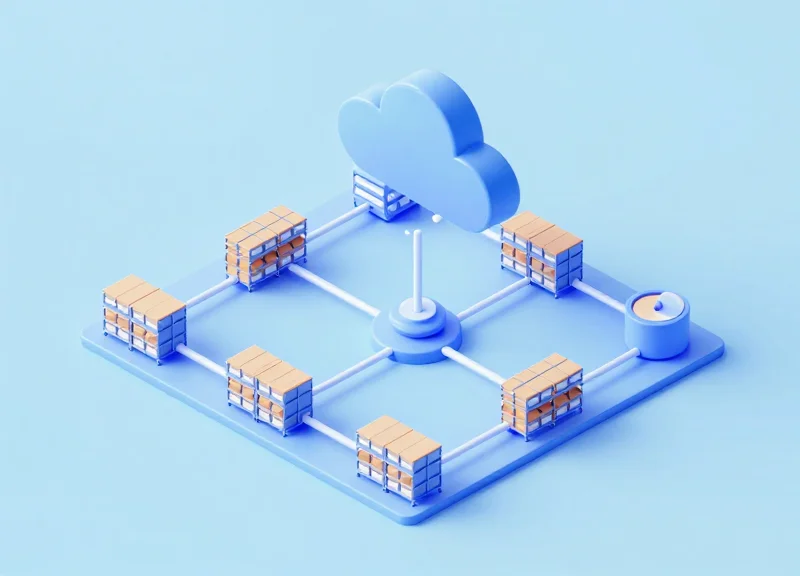
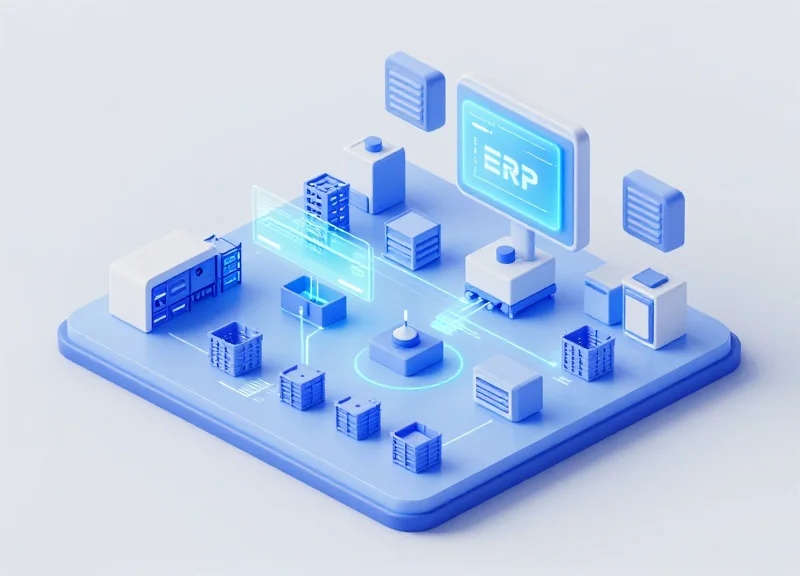
In 2026, a high-performance RFID portal is only as valuable as its ability to communicate with your core business software. Seamless integration means the portal does not just 'read tags' but actively orchestrates data flow into Warehouse Management Systems (WMS) and Enterprise Resource Planning (ERP) platforms like SAP S/4HANA or Oracle NetSuite. By 2026 standards, this requires a 'Middleware-First' architecture where raw signal data is filtered, aggregated, and contextualized at the edge before being transmitted via RESTful APIs or gRPC protocols. This ensures that a pallet passing through a dock door triggers an instantaneous 'Received' status in the ledger, eliminating the data silos that plague legacy logistics hubs.
| Feature | Legacy Integration (Pre-2023) | Modern 2026 Integration |
|---|---|---|
| Data Protocol | Proprietary Serial/Batch | RESTful APIs / MQTT / gRPC |
| Processing | Centralized Server Only | Edge Computing / Fog Analytics |
| Speed | Delayed Sync (Minutes) | Real-Time Event Driven (Milliseconds) |
| Error Handling | Manual Reconciliation | AI-Driven Auto-Correction |
- Validate API Maturity: Ensure the portal hardware supports OpenAPI standards and provides comprehensive SDKs. In 2026, look for 'Plug-and-Play' connectors for major ERP players to reduce deployment time by up to 60%.
- Assess Middleware Logic: The portal must include an intelligent middleware layer capable of 'deduplication'—preventing the same tag from being recorded multiple times as it sits near a reader.
- Verify Bi-Directional Communication: Integration shouldn't just be 'upward.' The ERP should be able to send instructions back to the portal, such as triggering a red visual alert on the portal frame if an incorrect SKU is detected.
Expert Insight: The 2026 'Data Gravity' Shift. A critical mistake many logistics managers make is assuming all RFID data should go to the cloud. In 2026, the most efficient hubs utilize 'Edge Intelligence.' Modern portals should filter out 95% of the 'noise' (incidental reads from nearby racks) locally. Only the meaningful 5%—the actual movement event—should hit your ERP. This 'Zero-Trust Data Filtering' prevents your WMS from being overwhelmed by high-velocity RFID streams, a common cause of system crashes in high-volume hubs.
Do I need a custom developer for RFID integration?
Not necessarily. In 2026, leading portals offer 'Low-Code' integration environments where logic can be mapped using visual drag-and-drop tools rather than raw script.
What happens if the WMS goes offline?
Top-tier portals feature local caching (Store-and-Forward), which saves transaction data locally and syncs it automatically once the connection is restored.
How does integration impact latency?
Using event-driven architectures like Webhooks or MQTT ensures that latency stays below 50ms, which is critical for high-speed automated sorters and conveyors.
Factor 4: Edge Computing Capabilities for Real-Time Processing

Edge computing in industrial RFID portals refers to the integration of local processing power directly within the portal hardware, allowing for data filtering, cleaning, and decision-making to occur at the 'edge' of the network rather than in a distant cloud. By 2026, this capability is no longer optional; it is the primary solution for managing the massive data volumes generated by high-speed logistics environments. Instead of flooding your central network with every raw tag read, edge-enabled portals aggregate this data locally, transmitting only meaningful events—such as a completed pallet shipment—thereby ensuring sub-millisecond response times for automated systems like sorters and AGVs.
| Feature | Traditional Cloud-Only RFID | 2026 Edge-Integrated RFID |
|---|---|---|
| Latency | 200ms - 2s (Network dependent) | <10ms (Local processing) |
| Bandwidth Usage | High (Raw data streams) | Low (Filtered summaries only) |
| Offline Reliability | Operations halt during outages | Continues to process and buffer locally |
| Decision Speed | Centralized/Slow | Autonomous/Instant |
The transition to edge intelligence allows the portal to act as an autonomous gatekeeper. For instance, an edge-capable portal can instantly compare a scanned pallet against a local manifest and trigger a physical diverter or alarm in real-time without waiting for a round-trip handshake from a central server. This 'Local Loop' logic is essential for the 2026 logistics hub, where even a half-second delay can result in significant bottlenecking on a high-speed conveyor line.
- Local Data Scrubbing: The ability to filter out 'stray reads' from nearby tags that are not part of the active shipment, preventing data pollution before it reaches the WMS.
- Protocol Conversion: Edge nodes can translate disparate data formats into unified JSON or MQTT streams, simplifying the integration with modern microservices architectures.
- Predictive Maintenance: Using local vibration and heat sensors to analyze portal health, notifying technicians of potential failure before it occurs.
Expert Insight: The '95% Noise Reduction' Rule. In a typical 2026 logistics environment, roughly 95% of RFID signal captures are redundant or 'noise'—re-reads of the same tag or environmental reflections. My experience with Tier-1 deployments shows that portals using edge-based deduplication algorithms reduce cloud ingress costs by up to 80% and decrease database bloat significantly. When selecting your portal, demand to see the 'Data Reduction Ratio' metrics to ensure your network won't choke on unnecessary traffic.
Will edge computing make the portals harder to manage?
No. Modern 2026 portals use 'Thin Edge' management software, allowing you to push firmware updates and logic changes to thousands of portals simultaneously via a centralized dashboard.
Can edge portals work without an internet connection?
Yes. They are designed for 'Store-and-Forward' operation, meaning they can process and validate transactions locally and sync with the cloud once connectivity is restored.
What hardware is required for edge processing in 2026?
Look for portals equipped with multi-core ARM processors or specialized NPUs (Neural Processing Units) capable of running lightweight containerized apps (Docker/LXC).
Factor 5: Scalability and Future-Proofing Hardware
In the fast-evolving landscape of 2026 logistics, scalability and future-proofing mean moving beyond 'plug-and-play' to 'grow-and-adapt.' A future-proof industrial RFID portal is defined by its ability to increase read-point density via modular antenna expansion and receive remote firmware updates that introduce new air interface protocols, such as Gen3 or specialized sensor-integrated tags, without requiring physical hardware replacement. This flexibility protects your capital expenditure (CAPEX) against the rapid cycle of technological obsolescence.
| Feature | Legacy RFID Portals | 2026 Future-Ready Portals |
|---|---|---|
| Radio Architecture | Fixed-frequency, hardware-locked | Software-Defined Radio (SDR) |
| Antenna Ports | Static (2 or 4 ports) | Modular / Daisy-chainable (Up to 32 ports) |
| Connectivity | Wired Ethernet Only | Wi-Fi 7, 5G/6G Private Networks, PoE++ |
| Protocol Support | EPC Gen2 / RAIN only | Multi-protocol (RAIN, NFC, IoT Sensors) |
Expert Tip: To truly future-proof your hub, prioritize portals that utilize a 'Modular Port Density' strategy. While your current workflow might only require two antennas to monitor a standard dock door, the shift toward high-velocity e-commerce in 2026 often requires adding side or overhead antennas later to capture items at varying heights or orientations. Systems that allow for 'daughterboard' upgrades or daisy-chaining readers via a single IP address significantly reduce future labor and cabling costs.
- Software-Defined Radio (SDR): Allows the reader to be reprogrammed to support new modulation schemes or frequency adjustments via software, extending hardware lifespan to 8-10 years.
- Tool-less Expansion: Look for chassis designs that allow for 'hot-swappable' modules, enabling the addition of sensors (LiDAR, motion) without dismantling the portal frame.
- Energy Harvesting Support: By 2026, many tags will be battery-free but require specific 'power-burst' signals. Ensure your hardware can handle these high-gain requirements.
Can I upgrade my existing RFID portals to support 2026 standards?
Only if the hardware supports Software-Defined Radio (SDR). If the reader's chipset is hard-coded for older EPC standards, a physical replacement of the reader module is typically required.
What is the importance of PoE++ in future-proofing?
As portals integrate more edge computing power and additional sensors like cameras or light curtains, the power draw increases. PoE++ (802.3bt) provides up to 90W, ensuring the portal can power all peripherals through a single cable.
How many antenna ports should a future-proof portal have?
While 4 ports are standard, a future-proof reader should ideally support expansion to 8 or more via external multiplexers or modular port configurations to handle increased pallet density.
Mitigating Signal Interference in Metallic Environments
In high-density industrial hubs, metallic surfaces like racking, forklifts, and conveyors act as RF mirrors, causing signal reflection and multipath interference that can lead to missed reads or ghost data. To mitigate these effects, 2026-grade industrial RFID portals utilize Circularly Polarized (CP) antennas and advanced RSSI (Received Signal Strength Indicator) filtering. These technologies allow the system to differentiate between direct 'line-of-sight' signals and weaker, reflected signals, ensuring that only items physically passing through the portal are logged.
| Feature | Standard Antenna | 2026 Industrial CP Antenna |
|---|---|---|
| Signal Geometry | Linear (single plane) | Circular (corkscrew pattern) |
| Metal Tolerance | Low - high risk of null zones | High - captures reflected waves |
| Tag Orientation | Must align with antenna | Reads tags at any angle |
| Multipath Rejection | Poor - prone to ghost reads | Superior - filters reflected noise |
A unique insight for 2026 deployments is the shift toward Active Phase-Array Beamforming. Unlike static antennas that blast a wide cone of energy, these portals dynamically steer the RF beam toward moving targets. By adjusting the signal phase in micro-seconds, the portal 'tunes out' the permanent metallic echoes of the warehouse infrastructure while 'locking onto' the specific movement profile of a palletized load, even when it is shielded by heavy machinery.
- Identify RF-Reflective Dead Zones: Conduct a site survey using heat-mapping software to identify where metallic racking causes 'null zones' or standing wave patterns.
- Deploy Metal-Mount (MOM) Tags: For assets made of metal, use spacer-based or ceramic RFID tags that use the metallic surface itself as an auxiliary antenna ground plane.
- Optimize Portal Shielding: Install RF-absorbent materials or directional shielding on the portal frame to prevent the antenna from reading tags in the 'back-lobe' area behind the gate.
Can RFID read through liquid-filled metal containers?
Direct reading through metal is physically impossible; however, strategic placement of tags on the exterior or using specialized 'Flag Tags' allows for reliable tracking even in the most challenging liquid/metal environments.
Does frequency hopping help with interference?
Yes, modern portals use Frequency Hopping Spread Spectrum (FHSS) within the 860-960 MHz range to automatically bypass frequencies that are being locally congested by metallic reflections.
How does 5G affect metallic interference in warehouses?
While 5G operates on separate bands, its infrastructure can create additional metallic obstructions. 2026 portals include narrow-band SAW filters to prevent 5G signal bleed-over from desensitizing the RFID receiver.
Total Cost of Ownership (TCO) vs. Initial Investment
In the competitive landscape of 2026 logistics, selecting an RFID portal based solely on the sticker price is a strategic error. Total Cost of Ownership (TCO) encompasses the complete lifecycle of the asset—from procurement and deployment to energy consumption, software licensing, and technical maintenance. While industrial-grade portals require a higher initial investment, they are engineered to minimize the 'hidden costs' of downtime and manual intervention that plague lower-tier hardware in high-volume hubs.
| Expense Category | Budget-Grade Portals | Industrial-Grade (2026 Standard) |
|---|---|---|
| Acquisition (CapEx) | Low ($2,500 - $4,000) | High ($6,000 - $10,000) |
| Maintenance Frequency | Bi-annual physical checks | Annual remote diagnostics |
| Power Efficiency | Standard (High Heat) | Ultra-Low Power (PoE++ Tier) |
| Mean Time Between Failure | 15,000 Hours | 50,000+ Hours |
| Estimated 5-Year TCO | $18,000 - $22,000 | $11,000 - $14,000 |
Expert Insight: The 1% Accuracy Penalty. In a logistics hub processing 1 million items monthly, a 1% difference in read accuracy between a budget portal and a premium portal results in 10,000 manual exceptions. At an average labor cost of $2.00 per manual reconciliation, the lower-quality hardware costs the business an extra $20,000 per month—effectively negating any initial savings within the first 30 days of operation.
Does higher energy efficiency really impact TCO?
Yes. By 2026, many hubs operate under strict ESG (Environmental, Social, and Governance) mandates. High-efficiency portals utilize 'Sensing-to-Wake' technology, drawing full power only when a pallet is detected, which can reduce electricity costs by up to 60% compared to 'always-on' legacy systems.
What are the most common hidden costs in RFID deployment?
The most significant hidden costs are middleware integration and proprietary licensing fees. Many vendors offer low hardware prices but lock users into expensive annual software subscriptions or charge per-read fees that scale aggressively with volume.
How does firmware longevity affect the investment?
Future-proof portals include modular RF engines that allow for firmware updates to support new protocols (like Gen3 RFID) without replacing the physical infrastructure. This extends the replacement cycle from 3-4 years to 7-10 years.
Ultimately, the strategic choice for 2026 is to treat RFID portals as infrastructure rather than peripherals. By prioritizing hardware with high Mean Time Between Failure (MTBF) and low-energy architectures, logistics leaders can ensure their hubs remain profitable and scalable as global trade volumes continue to fluctuate.
Why DragonGuardGroup is Your Partner for RFID Innovation
DragonGuardGroup is more than a hardware manufacturer; we are a strategic innovation partner that bridges the gap between traditional asset security and next-generation IoT intelligence. By integrating Electronic Article Surveillance (EAS), Radio Frequency Identification (RFID), and Electronic Shelf Labeling (ESL) into a unified ecosystem, we provide logistics hubs with a 'single pane of glass' view of their operations. Our 2026-ready portals are engineered to handle the high-velocity data demands of modern supply chains while ensuring that security protocols and inventory accuracy are maintained in real-time.
- Converged Technology Stack: We eliminate the need for siloed systems by offering a holistic portfolio where EAS prevents loss, RFID tracks movement, and ESL provides dynamic visual feedback at the point of storage.
- R&D-Led Customization: Our engineering teams specialize in tailoring RFID portal configurations to meet the specific electromagnetic challenges of metallic and high-density warehouse environments.
- Global Deployment Expertise: With a deep understanding of international logistics standards, our hardware is designed for rapid scalability and compliance across global distribution networks.
| Feature | Generic RFID Providers | DragonGuardGroup Innovation |
|---|---|---|
| System Architecture | Isolated RFID Hardware | Integrated EAS + RFID + ESL Ecosystem |
| Data Processing | Cloud-Dependent (High Latency) | Edge-Native Processing (Real-Time) |
| Security Integration | Manual Security Checks | Automated RFID-Triggered EAS Alarms |
| Visual Feedback | External Monitors Only | On-Shelf ESL Real-Time Updates |
Expert Insight: The 'Dynamic Labeling Loop' — A unique advantage of the DragonGuardGroup ecosystem is the synergy between RFID portals and ESL technology. In 2026, efficiency is measured in seconds. When our RFID portals detect a bulk pallet movement, the system doesn't just update a database; it wirelessly triggers an ESL update on the new storage rack, instantly changing the digital label to reflect current stock levels and pick-priority. This physical-to-digital synchronization eliminates 'search time' for warehouse staff, a factor that traditionally accounts for up to 30% of labor costs in large-scale hubs.
Can DragonGuardGroup hardware integrate with my existing WMS?
Yes. Our systems are built on open API protocols and MQTT standards, ensuring seamless data handshakes with major Warehouse Management Systems and ERPs.
How does DragonGuardGroup handle future-proofing?
Our portals feature modular antenna arrays and upgradeable firmware, allowing hubs to adopt new RFID protocols (like SensArray improvements) without replacing the core chassis.
What is the typical ROI for an integrated RFID-EAS solution?
Most clients realize a full ROI within 12-18 months through the combined benefits of reduced shrinkage, 99.9% inventory accuracy, and decreased manual scanning labor.