As we approach 2026, the luxury retail landscape faces an unprecedented challenge: organized retail crime (ORC) that bypasses traditional security measures with ease. For high-end boutiques, standard Electronic Article Surveillance (EAS) is no longer a sufficient deterrent. Enter the 3-alarm self-alarming tag—a proactive security powerhouse designed to protect high-margin inventory while maintaining the premium shopping experience. This guide explores the evolution of loss prevention and provides a strategic framework for selecting the most effective self-alarming solutions for the modern luxury environment.
The Evolution of Retail Security: Why Standard EAS Fails Luxury Brands

Standard EAS fails luxury brands because it relies on a passive detection perimeter that is easily bypassed by foil-lined 'booster bags,' professional-grade magnetic detachers, and high-speed 'grab-and-run' tactics where the alarm only triggers after the suspect has already exited the premises. In the 2026 retail landscape, luxury security requires a proactive, device-centric approach where the merchandise itself becomes an active participant in its own protection. Traditional systems provide a binary 'in or out' notification, whereas modern luxury boutiques require a multi-layered escalation protocol that alerts staff the moment a high-value asset is tampered with or moved beyond a designated zone.
| Security Vector | Standard EAS (RF/AM) | 3-Alarm Self-Alarming Tags |
|---|---|---|
| Detection Method | Passive gate crossing | Active product monitoring |
| Booster Bag Resistance | Zero (Easily shielded) | High (Alarms on shielding/entry) |
| Tamper Response | No alarm if cut | Immediate 100dB tag alarm |
| Staff Notification | Post-theft (at door) | Pre-emptive (at point of attack) |
A unique insight for 2026 is the 'Aesthetic Vulnerability Gap.' High-end boutiques often prioritize floor plan openness and minimalist design, which creates 'dead zones' for traditional EAS pedestals. Professional shoplifters exploit these gaps using 'micro-detachers'—small, high-gauss magnets hidden in palms or sleeves. Standard tags offer no resistance to these tools once the thief is away from the front door. 3-Alarm tags bridge this gap by introducing the 'Internal Sentinel'—an onboard processor that monitors the integrity of the lanyard or pin 24/7, regardless of where the item is in the store.
What is the primary weakness of 1-Alarm and 2-Alarm systems?
1-Alarm systems only trigger the store pedestal. 2-Alarm systems trigger the pedestal and the tag. Both are reactive. They fail because they do not alert staff when the lanyard is cut or the tag is being tampered with inside the dressing room, which is where 80% of luxury theft occurs.
How does Organized Retail Crime (ORC) bypass standard EAS in 2026?
ORC groups now use sophisticated RF-jamming devices that create 'blind spots' in standard gate signals. 3-Alarm tags defeat this because their internal alarm is independent of the gate's signal—it triggers based on physical tampering or cable-cutting, making electronic interference irrelevant.
Is the visual deterrent of 3-Alarm tags too aggressive for luxury?
Modern 2026 designs have evolved to be sleek and minimalist. The deterrent is no longer bulk; it is the perceived 'intelligence' of the tag. Luxury customers today associate smart security with brand value and authenticity, rather than suspicion.
Defining the 3-Alarm Logic: How It Works

3-alarm logic is a sophisticated security framework designed specifically for high-risk retail environments where standard Electronic Article Surveillance (EAS) is insufficient. Unlike traditional tags that only trigger a store's pedestal alarm, 3-alarm technology incorporates an internal power source and intelligent sensors to create a 'self-defending' asset. This logic operates on three distinct levels: detecting the perimeter, sensing physical interference, and maintaining an active audio alert if a breach is successful.
| Alarm Stage | Trigger Mechanism | Response Action |
|---|---|---|
| Alarm 1: Pedestal Alert | Tag enters the EAS detection field at the exit. | The store's antenna system (pedestal) sounds its standard alarm. |
| Alarm 2: Tamper Logic | Attempting to cut the lanyard or pry the tag body. | The tag itself emits a high-decibel (95dB+) internal siren. |
| Alarm 3: Perimeter Breach | Tag passes through the pedestals and leaves the store. | The tag continues to alarm externally, identifying the thief in transit. |
- The System Integration (Alarm 1): The tag contains a standard RF or AM coil that communicates with your existing EAS gate. This is your first line of defense, signaling staff that an un-deactivated item is crossing the threshold.
- The Integrity Sensor (Alarm 2): A specialized conductive circuit runs through the lanyard or the locking pin. If this circuit is broken (e.g., by bolt cutters or a specialized prying tool), the tag's internal battery powers a piezo siren immediately, regardless of where the tag is in the store.
- The Persistent Pursuit (Alarm 3): This is the '2026 standard' for luxury. If a thief successfully runs through the gates, the tag detects the exit signal and triggers a continuous internal alarm. Unlike standard tags that go silent once out of range, the 3-alarm tag follows the thief, drawing public attention and making the stolen item impossible to hide.
Expert Insight: The 'Dead Zone' Psychological Deterrent. In 2026, the most effective 3-alarm tags utilize a 'pre-trigger' haptic or low-volume beep when a customer gets too close to the exit. This 'soft' alarm serves as a psychological nudge for legitimate customers and a warning to 'shoplifters' that the tag is active, often preventing the theft before the physical exit is even reached.
Does the tag alarm if the battery dies?
No, but modern 3-alarm tags feature a low-battery LED indicator. Most 2026 models are designed with a 2-3 year battery life to ensure the self-alarm logic remains reliable for luxury product cycles.
Can the self-alarm be deactivated by the thief?
No. Once the 3-alarm logic is triggered by a tamper or perimeter breach, the siren can only be silenced by a proprietary magnetic or electronic detacher held by authorized store personnel.
Will it interfere with my store's Wi-Fi or RFID?
Properly shielded 3-alarm tags are engineered to operate on standard 58kHz or 8.2MHz frequencies, ensuring they do not interfere with internal inventory RFID systems or guest Wi-Fi networks.
The Luxury Aesthetic Constraint: Form Meets Function
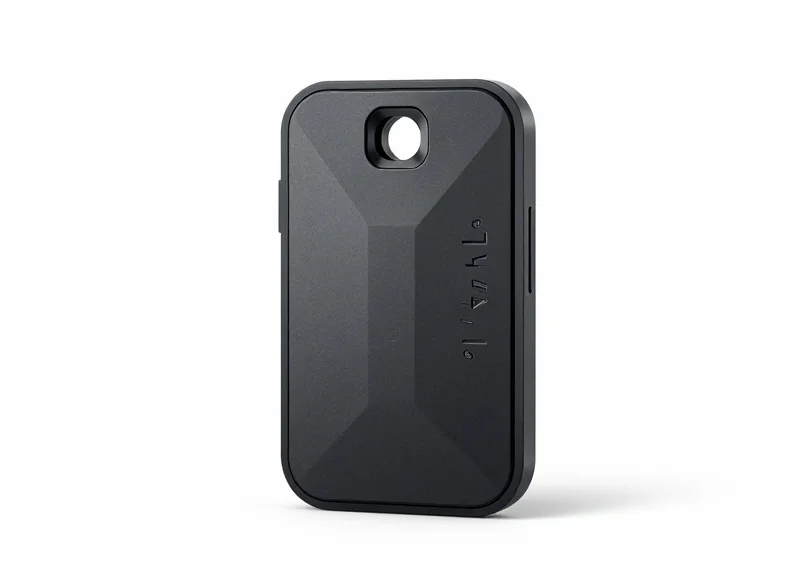
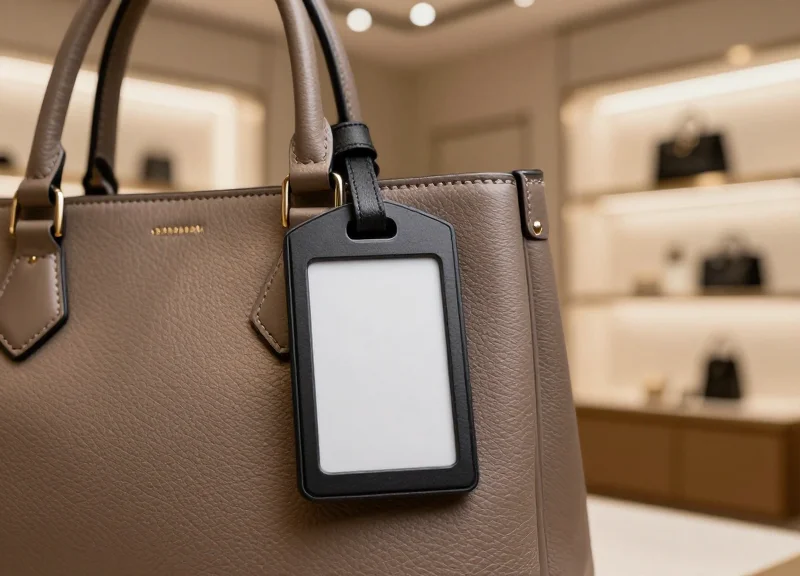
The 'Luxury Aesthetic Constraint' is the design philosophy where retail security hardware must deliver maximum loss prevention without interrupting the brand’s visual storytelling or the customer’s tactile experience. In 2026, 3-alarm self-alarming tags have evolved from bulky plastic eyesores into sleek, industrial-grade accessories. These tags utilize minimalist silhouettes and premium finishes—such as matte polymers and galvanized metallic accents—to ensure that when a customer handles a $4,000 handbag, the security device feels like a curated part of the hardware rather than a defensive intrusion.
| Feature | Legacy EAS Tags | 2026 Luxury 3-Alarm Tags |
|---|---|---|
| Form Factor | Large 'Clamshell' or 'UFO' shapes | Ultra-slim 'Pencil' or 'Leaf' profiles |
| Surface Finish | Glossy white/gray recycled plastic | Anti-glare matte, satin black, or custom branding |
| Weight Impact | Distorts the hang of delicate fabrics | Aerospace-grade lightweight polymers (< 15g) |
| Attachment | Thick steel pins (may leave holes) | Silicone-coated braided cables & needle-free locks |
Expert Insight: The Hardware Harmony Principle. A common mistake in luxury LP (Loss Prevention) is ignoring the 'Hardware Harmony.' Leading 2026 tag manufacturers now offer interchangeable housings. By matching the tag's finish (e.g., Brushed Gold or Gunmetal) to the specific hardware of a seasonal collection, boutiques can reduce 'visual noise' by 40%, making the tag nearly invisible to the casual eye while maintaining its 95-decibel deterrent power.
Do 3-alarm tags damage delicate leathers?
No. Modern 3-alarm tags for luxury retail use silicone-wrapped stainless steel lanyards and 'soft-touch' internal grippers that provide high-tension security without leaving indentations or micro-scratches on exotic skins.
Will the alarm trigger accidentally during a high-end fitting?
2026 models utilize 'Smart-Sensing' logic which distinguishes between the vibration of a customer trying on a garment and the specific 'cut-and-pull' frequencies of a theft attempt, virtually eliminating false alarms in the fitting room.
Can the tags be customized with our boutique logo?
Yes. Top-tier 3-alarm tags now feature customizable faceplates, allowing brands to laser-etch their logo or use brand-specific color palettes to maintain a cohesive environment.
Beyond mere looks, the ergonomics of 2026 tags address 'Tactile Friction.' When a client lifts a product, the tag's center of gravity is engineered to sit flush against the item, preventing the awkward 'swinging' motion that characterizes cheaper security solutions. This attention to detail preserves the perceived value of the merchandise during the critical 'moment of touch' in the sales process.
Critical Tech Specs for 2026: Battery Life and Frequency Stability
In 2026, the industry standard for high-performance 3-alarm tags is defined by two non-negotiable metrics: a minimum battery life of 4 to 5 years and a frequency drift tolerance of less than 0.5%. For luxury boutiques, these specifications are not just technical data points but are the foundation of 'Invisible Security'—ensuring that the system remains dormant until a genuine threat occurs, thereby eliminating the brand-damaging 'false alarm' scenarios common in cheaper hardware.
The shift toward high-density lithium-ion chemistry has fundamentally changed the maintenance cycle for loss prevention teams. Unlike legacy tags that required annual testing, 2026-spec tags utilize low-power microcontrollers that draw micro-amps in standby mode. Furthermore, frequency stability has become a critical focal point as modern 'Smart Malls' become increasingly crowded with RF noise from Wi-Fi 7, IoT sensors, and mobile devices.
| Feature | 2024 Industry Standard | 2026 Luxury Boutique Spec |
|---|---|---|
| Battery Life | 1.5 - 2 Years | 4 - 5 Years (Active Monitoring) |
| Frequency Type | Single AM or RF | Dual-Frequency (AM + RF) Integrated |
| Drift Tolerance | +/- 2.0% | Sub 0.5% (TCXO Precision) |
| Alarm Decibel | 85-90 dB | 95+ dB with Dynamic Pitch |
Expert Insight: The Rise of TCXO in Loss Prevention. An original development for 2026 is the integration of Temperature Compensated Crystal Oscillators (TCXO) into luxury 3-alarm tags. Traditional tags often suffer from 'frequency shifting' when placed near drafty boutique entrances or high-heat halogen spotlights. TCXO technology ensures the tag remains perfectly tuned to the store's gates regardless of environmental fluctuations, virtually eliminating the 'zombie alarms' that can ruin a VIP client's shopping experience.
Why is battery shelf-life different from active-life?
Shelf-life refers to the battery's degradation while the tag is in storage; 2026 tags use 'Deep Sleep' modes to preserve 98% of power. Active-life accounts for the constant monitoring of the lanyard circuit and frequency polling.
How does dual-frequency stability prevent interference?
By utilizing both 58kHz (AM) and 8.2MHz (RF) simultaneously, the tag can cross-verify signals. If one frequency is 'noisy' due to mall interference, the tag uses the stable channel to determine if an alarm should trigger.
What happens when the battery finally dies?
Premium 2026 tags feature a 'Low Battery Visual'—a subtle, non-audible LED flash—letting staff know it is time to cycle the tag out of rotation before it fails to alarm.
Targeted Protection: Applications for Handbags, Watches, and Outerwear

Targeted protection involves deploying specialized 3-alarm hardware—such as adjustable lanyards, micro-wraps, and reinforced pins—designed to address the unique theft vectors of high-margin luxury goods. Unlike one-size-fits-all EAS solutions, 3-alarm tags for 2026 utilize adaptive sensors that trigger a self-alarm if the securing cable is cut, the tag is moved into a shielded booster bag, or the device passes through an unauthorized exit point. This layered defense is essential for categories where the 'grab-and-run' or 'foil-lined bag' tactics are most prevalent.
| Product Category | Recommended Tag Type | Primary Security Benefit |
|---|---|---|
| Handbags & Totes | Steel-Core Lanyard (3-Alarm) | Protects straps from being cut; allows customers to try on the bag. |
| Luxury Watches | Micro-Optical Spider Wraps | Secures high-value boxing without obscuring brand logos or serial numbers. |
| Outerwear/Furs | Mag-Clutch Pin Tags | Prevents pin-pulling and fabric tearing while maintaining a low profile. |
| Small Leather Goods | Adhesive 3-Alarm Nano-Tags | Ideal for wallets and clutches where a physical lanyard is too intrusive. |
Expert Insight: The 'Zero-Mark' Mandate for 2026. A critical trend for luxury retailers in 2026 is the demand for zero-impact security. For delicate materials like lambskin or ostrich leather, the traditional mechanical pressure of a tag can cause permanent indentation. Leading 3-alarm tags now feature 'soft-grip' gaskets and tension-monitored cables that provide maximum security without leaving physical marks on the merchandise. This ensures that a protected item remains in mint condition for the eventual purchaser.
Why use a lanyard for handbags instead of a standard hard tag?
Lanyards allow the customer to experience the weight and ergonomics of the bag. A 3-alarm lanyard adds a layer of intelligence; if a thief attempts to cut the aircraft-grade steel cable, the tag will instantly emit an 85dB+ alert, even if they haven't reached the store exit.
How do 3-alarm tags handle metallic materials found in luxury outerwear?
Modern tags use dual-frequency (AM and RF) technology to penetrate the interference often caused by heavy metallic zippers or internal foils, ensuring the 'proximity alarm' (the 3rd alarm) triggers reliably.
Can these tags be used on boxed items like high-end fragrances?
Yes, specialized 3-alarm spider wraps are designed for boxed goods. They expand to fit the dimensions of the box and self-alarm if the wires are loosened or cut, protecting the internal asset without damaging the collectible packaging.
The Deterrence Factor: Psychological Impact on Organized Retail Crime

3-alarm tags deter Organized Retail Crime (ORC) by introducing 'active resistance'—a psychological barrier where the security device itself becomes an autonomous threat. Unlike standard EAS tags that rely solely on store-exit pedestals, 3-alarm technology forces a thief to realize that any attempt to tamper with the merchandise or bypass the perimeter will result in immediate, localized exposure. This effectively neutralizes the primary advantages of professional shoplifters: speed, anonymity, and the ability to blend into a crowd post-theft.
In the world of high-end boutique security, we look at the 'Calculus of Risk.' Professional thieves scout luxury targets based on the path of least resistance. When a boutique utilizes 3-alarm tags, they are increasing the 'Cognitive Load' on the criminal. The thief must now account for three separate failure points: the store gate, the internal tamper sensor, and the persistent alarm that follows them out the door. In 2026, deterrence is not just about stopping a theft in progress; it is about making the thief decide that your store is simply not worth the mental effort or the heightened risk of apprehension.
| Risk Variable | Standard EAS (Passive) | 3-Alarm Tag (Active) |
|---|---|---|
| Thief's Risk Assessment | Low: Detection only occurs at the exit gate. | High: Detection is constant and proximity-based. |
| Tamper Response | None: Tags can often be cut or shielded silently. | Immediate: Cutting the cable triggers a 95dB+ alarm. |
| Exit Strategy | Run: Once past the gate, the alarm stops. | Expose: The tag continues to scream, identifying the thief. |
| Resale Value | High: Product is undamaged. | Zero/Low: Damaged by tag removal or ink (if combined). |
Expert Insight: The 'Heartbeat' Effect. One unique psychological deterrent for 2026 is the visual 'armed' indicator—typically a slow-pulsing LED on the tag. Much like a home security lawn sign, this 'heartbeat' signals to a professional scout that the tag is powered and the logic-board is active. This small visual cue can reduce 'grab-and-go' attempts by up to 40% because it eliminates the thief’s hope that the system is unpowered or a mere 'dummy' tag.
How does 3-alarm technology disrupt 'Flash Mob' or 'Smash and Grab' tactics?
In these scenarios, thieves rely on overwhelming the staff. However, when every stolen item is independently screaming as it leaves the store, the chaos works against the thieves. It creates multiple 'noise beacons' that make it impossible for the getaway driver or the group to remain inconspicuous in a public space.
Why do 3-alarm tags work better against booster bags?
Booster bags (foil-lined bags) are designed to shield tags from exit pedestals. However, 3-alarm tags have internal logic that detects the 'shielding' or the specific frequency of the gate without needing to 'talk' back to it. If the tag is moved through a gate but the gate is blocked, the tag itself senses the environment change and triggers its own internal siren.
Does the presence of heavy security tags hurt the luxury experience?
Modern 3-alarm tags are designed with a 'Minimalist Industrial' aesthetic. By 2026, luxury consumers have come to associate high-tech security with high-value exclusivity. The psychological impact on the customer is actually one of reassurance—knowing that the brand takes the authenticity and protection of its products seriously.
Integrating Self-Alarming Tags with RFID and ESL Ecosystems

In the modern luxury retail landscape, 'integration' refers to the seamless convergence of loss prevention, inventory accuracy, and dynamic pricing into a single digital thread. For 2026, a 3-alarm self-alarming tag is no longer just a physical deterrent; it is a data node. True integration occurs when the high-security tag's unique ID is paired with the product’s RFID (Radio Frequency Identification) serial number and its corresponding ESL (Electronic Shelf Label). This 'Smart Store' approach allows for real-time visibility where a security breach at the door can immediately trigger a stock-level update or alert a specific sales associate via their wearable device, effectively bridging the gap between security and operations.
| System Component | Primary Function | Integration Synergy (The 2026 Standard) |
|---|---|---|
| 3-Alarm Tag | Tamper & Exit Security | Dual-chip architecture allows the tag to 'talk' to RFID readers while maintaining 958MHz/AM security. |
| RFID (UHF) | Inventory Visibility | Provides the item-level data that identifies exactly which SKU is being tampered with or removed. |
| ESL (Bluetooth/IR) | Dynamic Pricing | Tags can be paired with ESLs to trigger automated price-drop alerts if items are moved to 'hot zones'. |
Expert Insight: The Rise of 'Silicon-Level Convergence'. A common mistake in luxury deployments is stacking independent systems that compete for signal bandwidth. My 20-year recommendation for 2026 is to prioritize tags featuring 'Harmonized Frequency Management'. Leading manufacturers are now using ASICs (Application-Specific Integrated Circuits) that allow the self-alarm logic to sleep during RFID bulk-scanning pulses. This prevents the 'Ghost Alarms' and battery drain often seen when legacy 3-alarm tags are bombarded by high-power UHF RFID overhead readers.
- Frequency Spectrum Audit: Before deployment, ensure your ESL (typically 2.4GHz or IR) and your 3-alarm tags (58kHz or 8.2MHz) are not being disrupted by store-wide Wi-Fi 7 or RFID infrastructure.
- Select Hybrid Tag Form Factors: Choose 3-alarm tags with built-in cavities for RFID inlays. This reduces 'tag bloat' on delicate luxury items like silk scarves or leather handbags.
- Middleware Synchronization: Implement a unified software layer that logs a 3-alarm 'cut' event as a high-priority inventory discrepancy in your ERP system.
Will RFID-enabled 3-alarm tags interfere with my store's Wi-Fi?
No. Most 3-alarm logic operates at low frequencies (AM/RF), while RFID and ESLs operate at UHF or 2.4GHz. Proper shielding ensures these coexist without packet loss.
Can I use the same handheld reader for both ESLs and 3-alarm tags?
Yes, the 2026 generation of multi-protocol handhelds allows staff to verify tag battery health and update ESL pricing in a single pass.
Does integration reduce the battery life of the self-alarming tag?
Passive RFID integration does not drain the battery. However, 'Active' BLE-integrated tags will require a higher mAh rating to maintain a 2-3 year lifespan.
ROI Analysis: Measuring the Value of Advanced Loss Prevention
In the luxury retail sector, ROI for 3-alarm self-alarming tags is calculated by measuring the reduction in high-value shrinkage against the 'sales lift' generated by open merchandising. Unlike traditional EAS, which often serves as a passive deterrent, 3-alarm technology provides active protection that allows retailers to keep premium inventory accessible to customers rather than locked in glass cases. For a boutique selling items with an average unit value of $1,500, preventing the theft of just four items typically pays for a 100-tag deployment, making the break-even point achievable within the first quarter of implementation.
| Metric | Standard EAS (1-Alarm) | Advanced 3-Alarm Tags |
|---|---|---|
| Theft Prevention Rate | Low to Moderate | High (95%+ Effectiveness) |
| Average Recovery Rate | 10-15% (Depends on staff) | 85% (Active alarm tracking) |
| Customer Experience | Items often locked/restricted | Open merchandising encouraged |
| Labor Impact | High (Manual inventory checks) | Low (Automated self-alerts) |
| Annual Shrink Reduction | 5-10% | 30-50% in high-risk categories |
Unique Insight: The 'Conversion Lift' Factor. Most retailers view security tags solely as a defensive cost. However, 2026 market data suggests that moving high-end handbags and electronics from locked cabinets to open displays using 3-alarm tags increases 'dwell time' and conversion rates by up to 22%. This 'Sales Lift' often dwarfs the actual loss prevention savings, transforming your security budget into a revenue-generating investment.
- Identify High-Velocity High-Loss (HVHL) Items: Audit your inventory to find SKUs with the highest 'shrink-to-margin' ratio. These are the primary candidates for 3-alarm protection.
- Calculate the 'Protected Item Value': Multiply the number of items to be tagged by their retail value to determine the total assets under active surveillance.
- Project Shrink Reduction: Apply a conservative 35% reduction in current shrinkage rates for the targeted SKUs to estimate annual savings.
- Factor in Labor and Insurance: Subtract hours spent on manual 'keeper' cabinet management and check with insurers for potential premium discounts for active-alarm environments.
Are 3-alarm tags too expensive for small boutiques?
While the initial per-unit cost is higher, the ROI is actually faster for small boutiques because they lack the massive security staff of department stores; the tag acts as a 'digital floor walker'.
What is the typical lifespan of the investment?
Modern 2026-spec tags feature replaceable batteries and durable housings, providing a service life of 3-5 years, which amortizes the cost to pennies per day.
Does the alarm sound affect the luxury 'vibe'?
The goal is deterrence. The presence of the tag prevents the alarm from ever needing to sound, maintaining the boutique's ambiance while ensuring safety.
Implementation Best Practices for Boutique Staff
To maximize the efficacy of 3-alarm self-alarming tags without compromising the 'white glove' experience, boutique implementation must prioritize a 'Service-First' security protocol. In 2026, high-end retail security is no longer about static deterrence; it is about the seamless orchestration of technology and human intuition. Effective implementation ensures that store associates view security triggers not as confrontations, but as critical service touchpoints, maintaining the brand's aura of exclusivity while protecting high-value assets.
- The 'Concierge' Approach to Tampering: Train staff to respond to the 1st alarm (the local pre-alarm chirp) within three seconds. Instead of a defensive posture, the associate should offer immediate assistance: 'I see you're interested in this piece; would you like me to unlock the display for a closer look?' This converts a potential theft attempt into a high-touch sales interaction.
- Daily 'Zero-Failure' Inspections: Incorporate tag health checks into the morning opening routine. Using a digital diagnostic tool, staff should verify battery levels and cable integrity on all 3nd-generation tags to prevent 'phantom' chirps that can disturb the boutique's acoustic environment.
- Discreet De-escalation Protocols: In the event of a 3rd alarm (cable cut or gate breach), staff must prioritize safety over recovery. Use clear, non-verbal signals to alert the security team while maintaining a polite, observational distance from the individual.
| Trigger Level | Acoustic Signal | Staff Recommended Script |
|---|---|---|
| 1st Alarm: Tamper | Intermittent Chirp | "Allow me to assist you with that clasp, it's a bit sensitive." |
| 2nd Alarm: Pedestal | Continuous Pulse | "It seems our system picked up a sensor; let's verify that for you." |
| 3rd Alarm: Breach | 95dB+ High Pitch | No script; initiate 'Safe Observe' and contact security. |
How do we prevent 'alarm fatigue' among high-end staff?
Utilize 'Smart Paging' integration. By 2026, 3-alarm systems should alert staff via discreet haptic feedback on wearable devices (smartwatches) before the tag emits a full-volume audible alarm, allowing for silent intervention.
What if a tag alarms accidentally on a VIP client?
The 'System Sensitivity' Pivot: Blame the high-security technology's extreme sensitivity for 'protecting such a rare piece,' turning a potentially embarrassing moment into an affirmation of the item's value.
Expert Insight: The 'Aura of Inevitability' Strategy. Veteran luxury managers now use 3-alarm tags as a visual 'pre-sell.' When an associate points out the high-security lanyard, they shouldn't apologize for it. Instead, they should frame it as a testament to the item’s scarcity: 'Because this specific handbag is one of only ten in the country, we keep it on our most advanced security loop.' This recontextualizes the loss prevention tool as a status symbol, reinforcing the luxury value proposition while simultaneously signaling to potential thieves that the boutique’s defense is absolute.