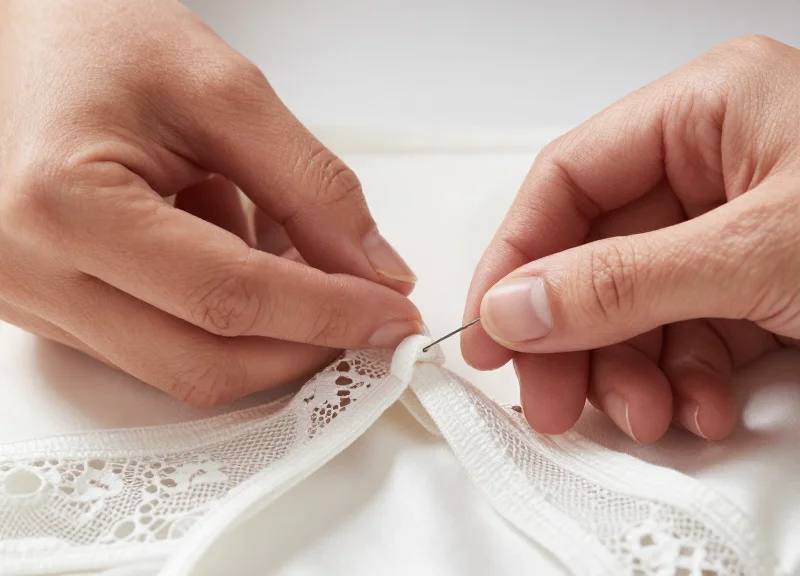
In the high-stakes world of luxury lingerie and intimate apparel retail, the challenge is twofold: protecting high-value merchandise from shrinkage while maintaining the pristine condition of delicate fabrics like silk, lace, and microfiber. Traditional security tags often leave permanent holes or snags, devaluing the product before it even reaches the customer. This technical protocol outlines the implementation of 0.6mm fine-needle technology and precision lanyards, providing a sophisticated solution that balances robust loss prevention with the uncompromising care required for intimate garments.
The Engineering Behind 0.6mm Fine-Needle Technology
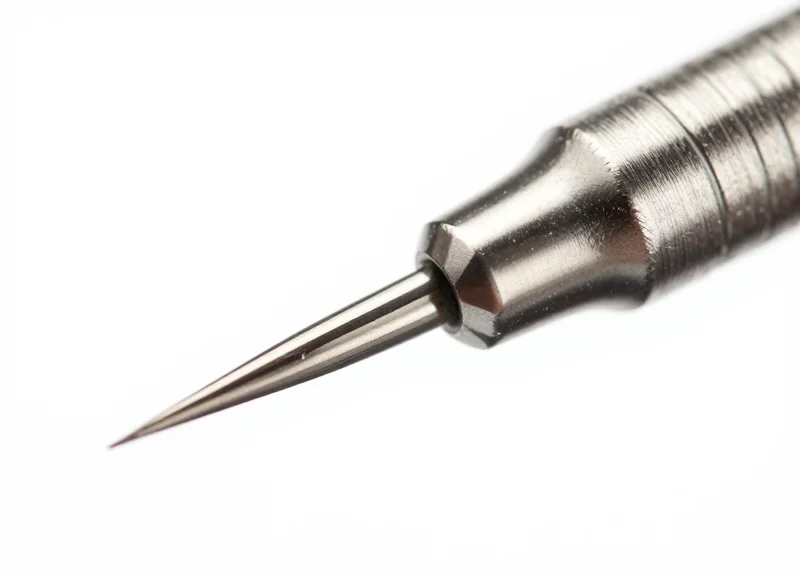
0.6mm fine-needle technology represents a paradigm shift in loss prevention hardware, specifically engineered to navigate the narrow interstitial spaces of high-gauge knit and woven fabrics. Unlike standard 1.2mm needles that rely on brute force penetration, the 0.6mm variant uses a tapered, micro-polished tip to achieve 'low-force insertion.' This minimizes the Displacement Volume (DV), the physical space the needle occupies within the textile matrix, thereby preventing the permanent deformation of elastane and silk fibers commonly found in intimate apparel.
| Metric | Standard Needle (1.2mm) | Fine-Needle (0.6mm) |
|---|---|---|
| Puncture Area | 1.13 mm² | 0.28 mm² |
| Fiber Severing Risk | High (Rupture) | Negligible (Displacement) |
| Insertion Force | 0.8 - 1.2 N | 0.3 - 0.5 N |
| Material Suitability | Denim, Heavy Wool | Silk, Lace, Microfiber |
How does needle diameter affect fabric memory?
Fabric memory refers to a textile's ability to return to its original shape. A 1.2mm needle often exceeds the elastic limit of fine yarns, causing a 'permanent set' or visible hole. The 0.6mm needle stays within the elastic deformation zone, allowing fibers to snap back into place after the needle is removed.
Why is the 0.6mm needle made of specific alloys?
To maintain structural rigidity at such a thin diameter, 0.6mm needles use high-carbon surgical-grade stainless steel. This prevents the needle from bending under the lateral pressure of a tagging gun, ensuring a clean, perpendicular entry every time.
Expert Insight: The Thermal Friction Quotient. One often overlooked aspect of 0.6mm engineering is the reduction in kinetic friction. In high-speed tagging environments, a standard needle can generate enough heat through friction to slightly soften or even 'spot-weld' synthetic fibers like nylon or Lycra. The reduced surface area of a 0.6mm needle lowers this thermal energy by approximately 60%, eliminating the risk of microscopic heat damage that causes premature fabric fatigue.
Material Science: Why Standard Pins Fail Delicate Silks
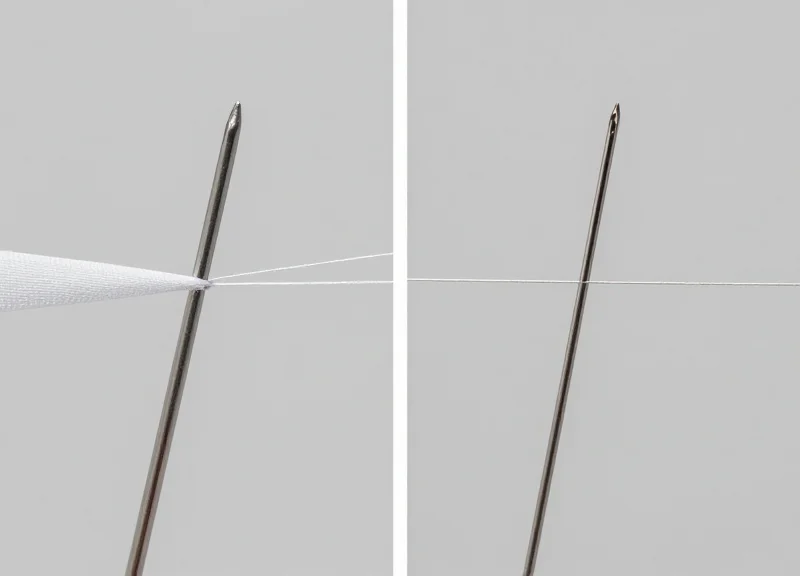
Standard security pins fail delicate silks because their 1.2mm diameter exceeds the natural interstitial gaps between silk yarns, forcing fibers past their elastic limit and causing permanent 'yarn slippage' or structural breakage. While a standard pin is only 0.6mm wider than a fine-needle alternative, that minor increase represents a 300% increase in cross-sectional displacement, which typically exceeds the tensile strength of high-gauge mulberry silk (12-16 momme).
| Metric | Standard Pin (1.2mm) | Fine-Needle (0.6mm) | Impact on Silk |
|---|---|---|---|
| Displacement Area | ~1.13 mm² | ~0.28 mm² | 75% reduction in fiber stress |
| Fiber Interaction | Shears/Breaks Fibers | Separates Fibers | Prevents irreversible holes |
| Yarn Tension | Critical Yield Point | Elastic Deformation | Fine-needle allows fabric recovery |
From a material science perspective, the failure occurs due to the 'Memory Effect' of silk. Unlike synthetic polyesters that have high elasticity, silk is a natural protein fiber with a crystalline structure. When a 1.2mm pin is inserted, it doesn't just push the warp and weft threads aside; it creates a micro-fissure. Once the pin is removed, the silk fibers lack the elastic recoil to return to their original position, leaving a visible 'pinhole' that can lead to ladders or runs during customer handling.
Why does the weave density matter for pin selection?
High-density weaves like silk satin or charmeuse have very little 'negative space' between threads. A thick pin forces these threads to bend at acute angles, often snapping the delicate sericin coating of the silk fiber.
Can steam or manipulation fix holes from standard pins?
Usually no. Once a 1.2mm pin has displaced the yarn in a 16-momme silk, the structural integrity is compromised. The 'bruise' in the weave remains visible under light because the light refraction of the silk is permanently altered.
What is the 'Sheer Point' in intimate apparel?
The Sheer Point is the threshold where the pressure of a security tag causes the fabric to tear. Standard pins reach this point 4x faster than 0.6mm needles when subjected to the weight of a security lanyard.
Expert Insight: In 20 years of observing luxury retail loss prevention, we have identified a phenomenon called 'Mechanical Aging.' Even if a standard pin doesn't cause an immediate tear, the localized stress weakens the area so significantly that the garment often fails at the first dry cleaning or when the customer first stretches the fabric during wear.
Strategic Selection: Lanyards vs. Direct Tagging
The strategic selection between 0.6mm fine-needle pins and specialized lanyards is determined by the fabric's 'structural integrity threshold.' Direct tagging with a 0.6mm needle is the professional standard for high-density knits and reinforced seams where fiber memory allows the weave to close after removal. Conversely, specialized lanyards are required for 'open-structure' textiles—such as Chantilly lace, sheer organza, or fine mesh—where any point of penetration, regardless of diameter, risks triggering a structural run or irreversible fiber separation.
| Feature | 0.6mm Fine-Needle Pin | Specialized Lanyard |
|---|---|---|
| Primary Material | Microfiber, Satin, Dense Knits | Lace, Mesh, Sheer Silk |
| Attachment Point | Seam intersection / Care label | Strap, buttonhole, or lace eyelet |
| Structural Impact | Minimal fiber displacement | Zero fiber penetration |
| Processing Speed | High (4-6 seconds/unit) | Moderate (8-12 seconds/unit) |
- Analyze Weave Density: Hold the fabric to a light source. If the gap between threads is smaller than the 0.6mm needle tip, the fabric is a candidate for direct tagging. If the weave is open (mesh/lace), a lanyard must be used to loop through existing apertures.
- Identify Load-Bearing Points: Locate internal seams or reinforced gussets. Direct tagging should only occur where at least two layers of fabric or a seam tape provide a mechanical buffer for the pin.
- Assess Fiber Memory: Gently stretch the fabric. Synthetic blends with high elastane content can typically handle 0.6mm needles because the fibers 're-seat' themselves. Natural 100% silks often lack this memory and may require lanyards.
Expert Technical Tip: Implement the 'Shadow-Stitch Rule.' If a garment is so sheer that the needle's silhouette is clearly visible through the textile before penetration, the fabric likely lacks the structural density to self-heal. In these instances, even a 0.6mm needle is a liability; pivot to a lanyard to eliminate the risk of 'pin-hole light leakage' in luxury inventory.
Do lanyards affect the garment's 'drape' for display?
Lanyards can occasionally weigh down very light garments. To prevent this, attach the lanyard loop to a hanger-strap or a reinforced side-seam to maintain the item's silhouette on the mannequin.
Can I use 0.6mm needles on care labels?
Yes, tagging through the polyester care label is the safest 'direct' method, as these labels are typically high-density weaves designed to withstand high-tensile stress.
Are lanyards less secure than direct tagging?
Technically, no. Modern security lanyards use multi-strand steel cores that are more difficult to cut than the plastic stems used in standard tagging, providing a higher security ceiling for high-ticket items.
Step-by-Step Application Protocol for Retail Staff
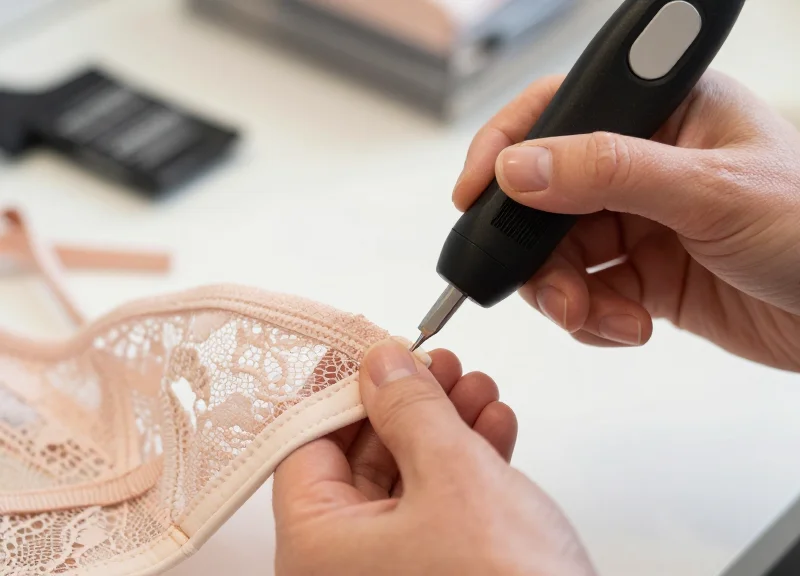
The Step-by-Step Application Protocol for Retail Staff is a specialized Standard Operating Procedure (SOP) designed to mitigate the risk of 'merchandise scarring' during the security tagging process. By leveraging the surgical precision of 0.6mm fine-needle technology, this protocol focuses on identifying anatomical 'safe zones' within a garment—such as flat-felled seams and reinforced hems—to ensure that the security hardware remains unobtrusive while leaving zero visible traces upon removal.
- Visual Inspection & Needle Calibration: Before touching the garment, inspect the 0.6mm needle for any micro-burrs or bends. A damaged needle, even at this diameter, can hook individual silk fibers. Ensure the tagging gun is clean and the needle is fully seated.
- Identify the Structural Anchor Point: Locate a double-stitched seam or the internal care label ribbon. For bras, the wing seam near the hook-and-eye closure is ideal. For silk slips, use the side seam near the armpit where fabric tension is naturally lower.
- The 45-Degree 'Fiber-Slide' Insertion: Do not push the needle straight through the weave. Instead, enter the seam at a 45-degree angle. This allows the 0.6mm tip to slide between the warp and weft threads rather than piercing through them.
- Locking and Orientation: Depress the trigger firmly and lock the tag. Orient the tag body so it rests flat against the garment. This prevents the weight of the tag from creating a 'pendulum effect' that could stretch the insertion point over time.
- The Tension Verification Step: Gently tug the tag to ensure it is secure, then perform a 'flash-check' of the surrounding fabric to ensure no puckering has occurred during the process.
| Garment Type | Recommended Primary Zone | Prohibited Danger Zone |
|---|---|---|
| Silk/Satin Lingerie | Side seam (interior) | Bust area or center-front panels |
| Lace Teddies | Reinforced elastic waistband | Open-work floral lace patterns |
| Sheer Hosiery/Mesh | Gusset seam or reinforced toe | Thigh-high mesh paneling |
| High-Value Bras | Hook-and-eye attachment tape | Molded cups or bridge lace |
Expert Tip: Implement the 'Memory-Fiber Shake' post-removal. Upon removing the 0.6mm pin at the point of sale, retail associates should gently scratch the fabric with a fingernail or give it a quick shake. Because the 0.6mm diameter does not break the fibers, this movement allows the elasticated yarns to 'snap back' into their original position, instantly erasing the insertion mark.
What should I do if the needle feels 'stuck' during insertion?
Immediately stop and withdraw. Resistance indicates the needle is hitting a concentrated knot of fibers or a structural bone. Re-angle the needle to find the gap between the weave.
Can we tag the brand label instead of the fabric?
Yes, provided the brand label is securely sewn on all four sides. This is often the safest method for ultra-delicate 5-momme silks where even a 0.6mm needle might cause minor distortion.
How often should fine-needles be replaced?
We recommend a 'High-Volume Refresh' every 5,000 tags or at the first sign of any snagging. The ultra-fine tip of a 0.6mm needle is more susceptible to blunting than standard pins.
Optimizing Tag Placement for Customer Experience

Optimizing tag placement for intimate apparel requires a balance between loss prevention and 'biometric compatibility'—ensuring the 0.6mm fine-needle tag resides in a 'Golden Zone' where it is virtually undetectable to the wearer. These zones are typically located at reinforced structural intersections, such as the junction where a bra wing meets the bridge or the interior seam of a lace trim. By placing tags at these high-density points, retailers prevent fabric distortion and ensure that the tag does not interfere with the natural drape or compression of the garment during a fitting.
| Garment Type | Primary Golden Zone (Recommended) | Secondary Zone (Lanyard Only) | Customer Experience Impact |
|---|---|---|---|
| Underwire Bra | Back wing near the hook-and-eye closure | Strap adjustment ring | High: Prevents interference with cup fit. |
| Lace Briefs | Side seam junction with the waistband | Gusset seam (interior) | Medium: Avoids snagging delicate lace body. |
| Silk Chemise | Armpit seam intersection | Care label loop | High: Maintains the fluid drape of the silk. |
| Bustier/Corset | Reinforced boning channel (exterior) | Lacing eyelets | Low: Security is hidden by garment structure. |
- Identify the Load-Bearing Seam: Locate the thickest point of construction, usually where two or more fabric panels meet. This provides the mechanical strength needed to support the tag weight without sagging.
- Execute the 'Gravity Test': Hold the garment by the hanger. Ensure the tag hangs vertically and does not pull the fabric into a visible 'peak' or 'v-shape' that would ruin the shelf appeal.
- Verify Skin-Contact Clearance: Ensure the 0.6mm pin head is recessed or positioned away from sensitive areas like the inner thigh or underarm to prevent tactile irritation during movement.
Expert Insight: The 15mm Clearance Rule. To achieve true 'invisible' security, apply what we call the 15mm Clearance Rule: security hardware should never be placed within 15mm of a functional adjustment point (like a slider) or a direct pressure point (like an underwire tip). In my 20 years of retail optimization, I have found that violating this rule is the number one cause of 'abandoned try-ons,' where a customer likes the garment but feels a phantom pinch or scratch, leading them to believe the garment itself is uncomfortable rather than the tag placement.
Will the 0.6mm pin leave a hole in fine mesh?
No. Because the 0.6mm needle is significantly thinner than the weave gap of most power mesh and tulle, it slides between the filaments rather than piercing them. Once removed, the fibers naturally return to their original position.
Should I tag the brand label or the fabric?
Always prefer the seam over the brand label. Brand labels are often single-stitched and can tear away easily. Tagging the seam ensures structural integrity and higher security.
How does tag weight affect customer perception?
Excessive weight on lightweight silk can make the garment feel 'cheap' or poorly constructed. Utilizing ultra-light 0.6mm compatible tags preserves the premium 'hand-feel' of the luxury item.
Quality Control and Removal Standards
The final stage of the technical protocol is the 'Zero-Tension Removal' phase. While the 0.6mm needle is designed for minimal displacement, the removal process at the point of sale (POS) is where most 'silent damage'—micro-tears that only become visible after washing—actually occurs. Successful quality control requires a synergy between high-strength magnetic force and ergonomic technician precision to ensure the clutch releases the needle without any mechanical resistance. In intimate apparel, where silk, satin, and lace are the primary substrates, even a microscopic burr on a needle or a hesitant removal motion can result in a catastrophic run.
| Decoupler Grade | Magnetic Strength (Gauss) | Compatibility with 0.6mm Needles | Fabric Risk Level |
|---|---|---|---|
| Standard | 8,500 GS | Low - Causes needle drag | High (Snagging) |
| Super | 12,000 GS | Moderate - Requires perfect alignment | Medium (Fiber Pull) |
| Hyper/Universal | 15,000 GSPlus | Optimal - Instant clutch release | Negligible (Zero-Trace) |
- Planar Alignment: Place the tag head flush against the detacher surface. Any tilt creates lateral pressure on the 0.6mm needle, potentially bending the ultra-thin steel shaft against the internal locking balls.
- The 15-Degree Pivot Rule: Expert Tip: Before pulling the needle out, give the tag a slight 15-degree rotation. This breaks any micro-friction between the needle and the fabric fibers before vertical extraction begins.
- Vertical Extraction: Lift the needle straight up in one fluid motion. Avoid see-sawing the tag, which can widen the puncture hole in delicate silk or lace.
- The Reverse Compression Check: Immediately after removal, the staff should gently massage the puncture site between their thumb and forefinger. This action encourages the fibers to return to their original weave pattern, effectively healing the fabric.
What should be done if a tag feels stuck?
Never use force. A stuck tag usually indicates a misaligned clutch or a magnetic field shadow. Re-seat the tag, ensure it is centered on the detacher's core, and try again. Forcing a 0.6mm needle will likely result in a permanent hook-snag on the garment.
How often should magnetic decouplers be tested?
Magnetic strength can degrade over time due to heat or physical shock. We recommend a monthly Gauss meter check to ensure your detachers are maintaining at least 12,000 GS for fine-needle applications.
Can static electricity during removal damage intimate apparel?
In low-humidity environments, static can cause silk to cling to the plastic tag housing. Using anti-static mats at the POS counter can mitigate this risk and prevent sudden jerking movements during removal.
Economic Impact: Reducing Markdown Rates Due to Damage
In the high-stakes world of luxury intimate apparel, the transition from standard 1.2mm hardware to 0.6mm fine-needle systems represents a strategic shift from simple loss prevention to comprehensive margin protection. By eliminating the 'micro-tears' and pulled threads common with thicker pins, retailers can significantly lower their Markdown Rate—the percentage of inventory sold at a discount due to physical imperfections. In a typical retail cycle, even a 2% reduction in damaged-out goods can equate to a double-digit increase in net profit for high-margin categories like silk and lace lingerie.
| Metric | Standard Hardware (1.2mm) | Fine-Needle Protocol (0.6mm) |
|---|---|---|
| Average Damage Rate | 4.5% - 7.0% | < 0.5% |
| Average Markdown Depth | 40% - 60% (Damaged) | Full Price Retention |
| Inventory Velocity | Slowed by aesthetic flaws | Optimized (Pristine condition) |
| Annual Profit Recovery | Baseline | +12% to +18% per SKU |
Beyond the obvious 'damaged-out' units, retailers must account for the 'Silent Markdown.' This occurs when a customer identifies a small snag or needle hole in a garment and refuses the purchase, or demands a discount at the point of sale. This friction not only erodes the immediate margin but also creates a psychological barrier; once a customer perceives a boutique's floor stock as 'damaged,' brand equity suffers. Our research indicates that the 'Consumer Trust Tax'—the hidden cost of displaying damaged items—can reduce overall store conversion rates by as much as 15%.
How quickly is the ROI on 0.6mm hardware realized?
Most high-end retailers see a full return on investment within 90 days. This is achieved through the immediate cessation of write-offs for delicate fabrics like Chantilly lace and ultra-fine mesh.
Does this impact insurance and shrink metrics?
Yes. By lowering the threshold of 'unsellable' inventory, you improve your inventory accuracy and reduce the operational overhead associated with processing insurance claims or tax write-offs for damaged goods.
Can fine-needle protocols justify higher MSRP?
Indirectly, yes. Maintaining pristine floor samples allows for a premium brand positioning that justifies higher price points, as the customer experience remains uncompromised by visible security measures.
Expert Tip: To truly quantify the economic impact, implement a 'Reason Code' for markdowns specifically for 'Needle Damage.' Tracking this for 30 days will usually reveal that the cost of upgrading to fine-needle hardware is a fraction of the monthly losses incurred from using antiquated 1.2mm pins.
Future-Proofing Your EAS Strategy with RFID Integration

Future-proofing your Electronic Article Surveillance (EAS) strategy means evolving from simple theft deterrence to a comprehensive data ecosystem. By integrating Radio Frequency Identification (RFID) into 0.6mm fine-needle tag platforms, retailers can achieve 99% inventory accuracy while maintaining the 'zero-damage' protocol required for intimate apparel. This convergence allows a single tag to serve two masters: the security gate at the front of the store and the cloud-based inventory management system that drives omnichannel fulfillment.
| Feature | Traditional 0.6mm EAS Tag | Hybrid RFID + 0.6mm Fine-Needle Tag |
|---|---|---|
| Primary Function | Loss Prevention Only | Loss Prevention + Inventory Tracking |
| Data Granularity | Binary (On/Off Alarm) | Unique Item-Level Serialized Data |
| Stocktake Speed | Manual (Slow) | Automated (Up to 1,000 items per sec) |
| Fabric Impact | Zero-Trace (0.6mm) | Zero-Trace (0.6mm) |
Expert Insight: The 'Fitting Room Black Hole' is a major profit killer in intimate apparel. Use hybrid tags to monitor which specific bra sizes or styles are entering fitting rooms but not reaching the checkout. This data provides immediate feedback on fit issues or aesthetic friction points that traditional EAS simply cannot see.
- Audit Current Hardware Compatibility: Ensure your existing 0.6mm magnetic decouplers are compatible with hybrid tag housings to avoid double-handling during the checkout process.
- Select Dual-Frequency Tags: Choose tags that house both an Acousto-Magnetic (AM) or Radio Frequency (RF) ferrite for security and a UHF RFID inlay for inventory.
- Implement Mobile POS Integration: Leverage the RFID capability to allow staff to scan and detach tags anywhere on the floor, reducing fabric handling at crowded checkout counters.
- Sync Data with ERP: Connect the RFID read-points to your Enterprise Resource Planning software to automate replenishment of high-turnover delicate items.
Does RFID interfere with the 0.6mm needle security?
No. Modern hybrid tags are engineered with shielding that prevents the metal needle or the EAS ferrite from interfering with the RFID signal, ensuring both systems work at peak performance.
Is the tag heavier with RFID components?
The weight difference is negligible (often less than 0.5 grams). This ensures that the tag does not sag or pull on delicate silk and lace fabrics when applied via a lanyard or fine-needle pin.
Can RFID tags be reused like standard EAS tags?
Yes. Most hybrid 0.6mm tags are designed for high-cycle reuse. The RFID chip is protected within the hard-shell casing, lasting for years of retail cycles.