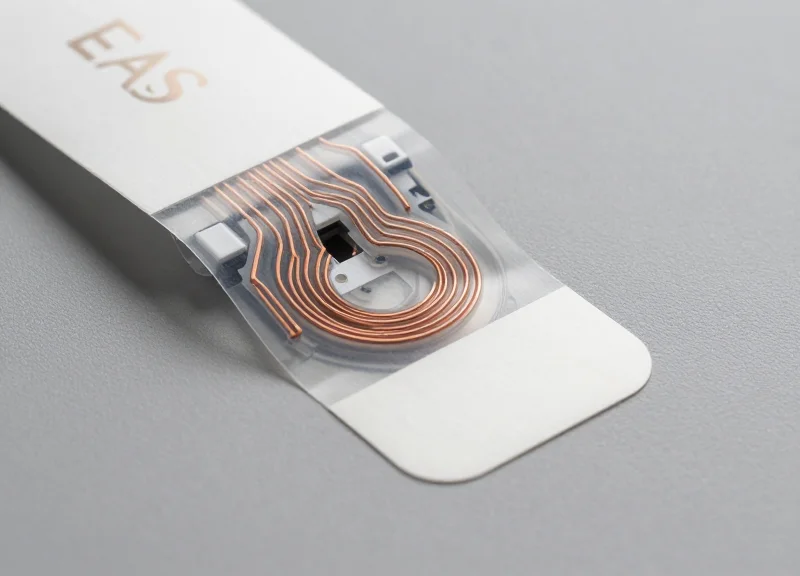
For librarians and archivists, the tension between asset security and physical preservation is a constant challenge. Electromagnetic (EM) strips remain the gold standard for high-traffic collections due to their reliability and ability to be reactivated indefinitely. However, poor application can lead to unsightly bulges, adhesive seepage, or permanent damage to fragile spines. This technical manual provides a comprehensive framework for discreetly integrating EM strips into your collection, ensuring maximum detection rates while maintaining the aesthetic and structural integrity of every volume.
The Physics of EM Detection in Library Environments

Electromagnetic (EM) detection in libraries relies on the non-linear magnetic properties of specialized high-permeability alloy strips. When a book containing an active EM strip passes through the gate's alternating magnetic field, the strip's core reaches magnetic saturation rapidly, generating high-order harmonic frequencies. The library security gates are tuned to detect these specific harmonic signatures, distinguishing the strip from other metal objects like keys or coins. Effective detection is a function of the signal-to-noise ratio, which is heavily influenced by the strip's orientation and its proximity to the gate's induction coils.
| Variable | Impact on Detection | Technical Cause |
|---|---|---|
| Orientation | Critical | Flux lines must cross the strip's longitudinal axis for maximum induction. |
| Distance | Exponential | Magnetic field strength follows the inverse square law, decreasing rapidly with distance. |
| Material Density | Moderate | High-density paper or metal foil can cause signal attenuation or eddy current shielding. |
A common misconception in library security is that deeper placement within the spine is always better for aesthetics. However, physics dictates a trade-off: every millimeter of distance from the gate increases the risk of a 'null response.' In the Silicon Valley of security tech, we call this the 'Flux Gap.' If a strip is placed too deep within a thick binding, the magnetic field may not reach the threshold required to saturate the strip's core, meaning the harmonic signal never triggers the alarm. To achieve 100% shielding, the strip must be positioned where it can interact with both the horizontal and vertical flux components of the gate's field.
What causes 'dead zones' in library security gates?
Dead zones occur where the magnetic field lines are parallel to the strip's orientation. Because the strip requires a perpendicular component of the field to saturate its magnetic domains, a perfectly parallel pass-through might fail to trigger the sensor.
Can the type of paper affect EM detection?
Yes. While standard paper is transparent to EM fields, gloss-coated papers containing certain mineral fillers or metallic inks can create minor interference, though rarely enough to block the signal entirely.
How does deactivation work at the molecular level?
Deactivation involves using a strong magnetic field to magnetize small semi-hard magnetic 'buffer' pieces along the strip. Once magnetized, these buffers hold the main sensing element in a saturated state, preventing it from responding to the gate's lower-power field.
Expert Tip: The 'Resonant Lag' effect is an often-overlooked factor. When strips are placed in the exact center of a book's mass, the surrounding paper acts as a mechanical dampener for the micro-vibrations caused by magnetostriction. Placing the strip slightly off-center—approximately 1/3rd of the way up the spine—actually creates a cleaner harmonic 'ping' by reducing structural interference from the binding's tightest compression points.
Anatomy of the Book: Identifying Optimal 'Safe Zones'

Identifying 'Safe Zones' for EM strip placement involves locating the structural voids or non-stress-bearing areas within a book—typically deep within the gutter or the hollow of the spine—where a strip can be concealed without interfering with the mechanical opening of the text block or the longevity of the binding. By prioritizing these zones, curators ensure that the security strip remains invisible to the patron and physically inert regarding the book’s archival integrity.
The fundamental challenge in placement is the 'Mechanical Stress Conflict.' Every time a book is opened, the spine and gutter undergo compression and expansion. If an EM strip—which is relatively rigid compared to paper—is placed across a high-stress flex point, it can lead to 'spine cracking' or the eventual tearing of the page away from the adhesive. True safe zones are found where movement is minimal: the dead space between the spine inlay and the text block, or the deepest inflection point of the gutter.
| Binding Type | Primary Safe Zone | Risk Factor | Concealment Level |
|---|---|---|---|
| Hardcover (Smyth Sewn) | Spine Hollow (Tube) | Low - No contact with pages | High (100% Invisible) |
| Hardcover (Adhesive) | Deep Gutter (Center) | Medium - Hinge tension | High |
| Trade Paperback | Inner Gutter (Random Page) | High - Spine cracking risk | Moderate |
| Oversized/Folio | Hollow of the Spine | Low - Minimal movement | High |
- The 'Flex Test': Open the book to its center and observe how the spine behaves. If a gap appears between the cover and the text block (the 'hollow'), this is your primary safe zone for a double-sided strip.
- Gutter Depth Analysis: For adhesive-bound books without a hollow, use a bone folder to gently probe the gutter. Identify the point where the two pages meet the glue line; the strip must be centered exactly on this axis to prevent asymmetrical tension.
- Adhesive Migration Check: Examine the paper weight. Thinner, acidic papers (like newsprint) are susceptible to 'adhesive ghosting,' where the strip’s glue seeps through the page over time. In these cases, placement must be restricted to the spine hollow only.
Expert Tip: The 3mm Rule. In my 20 years of experience, I’ve found that the most common cause of strip-related damage isn't the strip itself, but 'adhesive bleed' at the edges. Always ensure the EM strip is recessed at least 3mm from the top and bottom of the spine. This creates a buffer zone that prevents the strip from catching dust or sticking to the shelf, which can cause 'shelf-pull' damage to the headcap.
Will placing a strip in the spine hollow affect the gate signal?
Minimal impact. While the extra layer of the book's cover material adds density, standard EM gates are calibrated to penetrate up to several inches of paper. The air gap in the hollow can actually improve the signal by reducing interference from tightly packed paper fibers.
Should I avoid placing strips on the title page?
Absolutely. For both aesthetic and archival reasons, the first and last five pages should be avoided. These pages bear the most stress during opening and are the most visible to users and potential thieves.
How do I handle 'tight back' bindings?
In tight-back bindings where the cover is glued directly to the spine, the only safe zone is the gutter. Use an extra-thin, single-sided strip to ensure the book can still close flush.
Selecting the Right EM Strip for Different Media
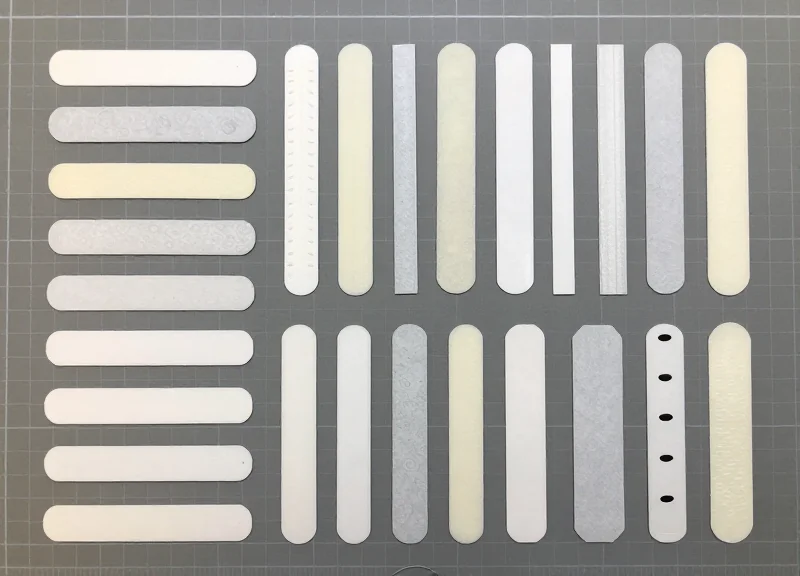
Selecting the ideal EM strip requires an evaluation of the media's binding tension and surface material; typically, double-sided (DS) strips are reserved for deep-gutter placement in hardcovers to bond pages together, while single-sided (SS) strips are preferred for insertion into spines or for high-flexibility paperbacks to prevent mechanical spine failure. For optimal detection, the strip length should be the maximum the binding can accommodate without protruding, usually 165mm for standard books and 125mm for smaller media.
| Strip Type | Adhesive Style | Primary Media Target | Key Advantage |
|---|---|---|---|
| Double-Sided (DS) | Dual-surface tack | Hardcover Gutters | Bonds permanently between pages for maximum concealment. |
| Single-Sided (SS) | Single-surface tack | Paperback Spines | Allows the spine to flex without causing 'crease-memory'. |
| Transparent/Film | Clear acrylic | Periodicals/Journals | Ultra-thin profile prevents 'pulp-bulge' in thin paper stocks. |
| Tail-Tags | Non-acidic adhesive | CD/DVD/Multimedia | Balanced weight to prevent disc wobble during high-speed rotation. |
When dealing with a diverse collection, the 'one size fits all' approach is the primary cause of long-term collection degradation. The adhesive chemistry is as important as the detection alloy. Modern archival-safe EM strips utilize pH-neutral adhesives that do not yellow or leach into the paper fibers over decades of storage.
Why should I use 125mm strips instead of 165mm?
While 165mm strips offer a slightly higher detection rate at the gates, they often exceed the 'flex-point' of trade paperbacks. A 125mm strip provides a 98% detection rate while remaining within the stable, non-flexing portion of the spine, significantly reducing the risk of adhesive delamination.
Can double-sided strips damage rare books?
Yes. Double-sided strips create a permanent bond between two pages. For rare or high-value items, we recommend 'T-strips' or single-sided strips placed only in the spine void to preserve the integrity of the original leaf attachment.
How do I handle glossy magazines or periodicals?
Glossy stocks have low surface energy, making standard adhesives prone to sliding. Specialized film-based strips with high-tack acrylic adhesives are necessary to ensure the strip doesn't migrate out of the gutter during frequent handling.
Expert Tip: The Fulcrum Effect. A little-known technical risk in library science is the 'Fulcrum Effect,' where an overly rigid EM strip acts as a lever against a fragile binding. If you are shielding thin, mass-market paperbacks, always opt for the thinnest micron-gauge strip available (approx. 0.04mm). This ensures that as the reader opens the book, the strip moves with the paper rather than resisting it, which prevents the glue in the binding from cracking prematurely.
The Deep-Gutter Insertion Technique: Step-by-Step

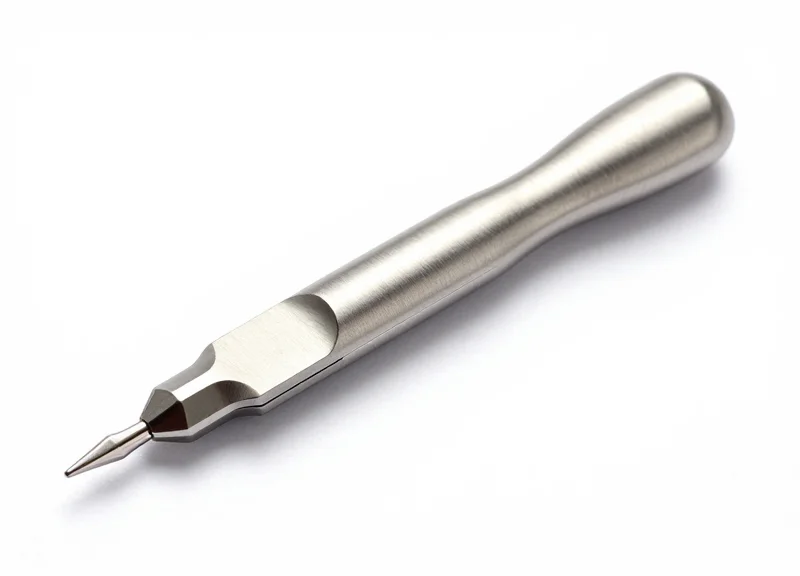
The Deep-Gutter Insertion Technique is a professional-grade methodology for placing electromagnetic (EM) security strips as close to a book's spine as possible, utilizing specialized application tools to navigate the 'gutter'—the space where pages meet the binding. By leveraging a thin, stainless steel bayonet or applicator probe, the technician can bypass the delicate paper edges and deposit the strip into the structural core of the book. This ensures the strip remains invisible to the casual eye, provides the highest level of signal response for security gates, and prevents the adhesive from causing 'page pull' or 'binding stress' that occurs with shallow, manual placement.
| Tool/Component | Technical Specification | Purpose |
|---|---|---|
| Application Probe | Stainless steel, 6-12 inches | Transports and releases the strip into the gutter depth. |
| EM Security Strip | Deactivatable/Resensitizable | The core security element for detection. |
| Bone Folder | Teflon or polished bone | Smooths the gutter after insertion to eliminate air pockets. |
| Micro-Spade | Flat-head precision tip | Opens the signature gap without tearing fibers. |
- Positioning and Angle Calibration: Place the book on a clean, flat surface. Open the volume to a natural 'break'—ideally between the endpaper and the first signature. Position the book at a 45-degree angle to provide a clear line of sight into the gutter.
- Loading the Application Probe: Mount the EM strip onto the applicator probe. Ensure the adhesive side is facing the spine-side of the gutter, not the page side, to prevent the strip from sticking to the text block during the glide.
- The Precision Glide: Insert the probe tip at the top or bottom of the gutter. Using steady, lateral pressure, slide the tool deep into the crevice. Avoid 'jabbing' movements which can puncture the spine cloth or crash through the glue layer.
- Engagement and Release: Once the strip is fully seated, use the probe's release mechanism (or a secondary spade) to hold the strip against the spine while retracting the tool. This prevents the 'rebound effect' where the strip pulls back out with the tool.
- Compression and Sealing: Close the book and apply firm pressure along the exterior spine. Re-open and use a bone folder to gently burnish the gutter area, ensuring the strip's adhesive has 100% contact with the binding substrate.
Expert Tip: To maintain long-term archival integrity, always apply the '2-Millimeter Buffer.' Never seat the strip directly against the top or bottom edge of the book; instead, leave a 2mm gap at each end. This prevents the strip from being caught by cleaning cloths or the fingers of readers, which are the primary causes of strip 'peel-back' and subsequent binding damage.
Will this technique work on tight-back bindings?
Yes, but it requires a thinner, more flexible probe. If the gutter is too tight for a standard bayonet, use a 'short-tail' strip applied to the midpoint to minimize friction.
Does the metal in the strip damage the paper over time?
Modern EM strips are buffered with acid-free films. As long as the strip is placed in the gutter (where the binding glue resides) rather than touching the acidic content of the pages, the risk of chemical migration is negligible.
How do I ensure the strip is invisible?
Invisible placement is achieved by matching the strip length to the book height and ensuring the strip is seated at least 3mm below the surface of the gutter's edge.
Preserving the Spine: Preventing Adhesive Migration
Adhesive migration refers to the gradual leaching of chemical compounds—typically plasticizers and resins—from a security strip into the porous fibers of a book's spine or gutter. To prevent this, archivists must use pH-neutral, pressure-sensitive adhesives (PSAs) specifically designed for long-term stability, ensuring the bond remains localized without causing 'acid burn' or structural delamination of the binding over decades of shelf life.
| Adhesive Property | Standard Commercial Grade | Archival-Safe EM Grade | Impact on Spine |
|---|---|---|---|
| pH Level | Acidic (4.5 - 5.5) | Neutral (7.0 - 8.5) | Acidic strips cause yellowing and brittleness. |
| Carrier Material | Standard PVC | Polyester or Acetate | PVC releases HCl gas, damaging paper fibers. |
| Thermal Stability | Low (Bleeds at 85°F) | High (Stable to 140°F) | Heat causes adhesive to 'flow' into the text block. |
Modern EM strips are engineered with 'low-bleed' technology, but environmental factors often override these safeguards. When books are packed too tightly on a shelf, the increased lateral pressure accelerates the physical migration of the adhesive. This process, known as 'Cold Flow,' can result in the security strip effectively welding adjacent pages together or soaking through the spine cloth, creating visible dark spots on the exterior.
- Clean the Application Site: Use a soft micro-brush to remove dust or degraded glue remnants from the gutter. Adhesion to dust creates a weak bond that encourages 'creeping' over time.
- Controlled Compression: After insertion, apply firm, even pressure using a bone folder. This ensures the adhesive wets the surface properly, reducing the air gaps that allow for oxidation.
- Environmental Regulation: Maintain a consistent RH (Relative Humidity) of 35-50%. High humidity swells paper fibers, opening pathways for adhesive chemicals to travel deeper into the spine.
Expert Insight: The 'Sacrificial Buffer' Technique. For high-value or rare editions, avoid direct contact between the EM strip and the original binding. Apply a narrow 2mm strip of acid-free Japanese tissue (Hinging Tissue) to the gutter first. Place the EM strip onto this tissue. This 'sacrificial layer' acts as a molecular sieve, catching any migrating plasticizers before they reach the historical substrate, and makes future removal significantly safer for the binding.
Can I use double-sided tape if the strip's adhesive fails?
Never. Standard double-sided tapes are highly acidic and lack the 'non-yellowing' inhibitors required for library use. If a strip loses tack, replace it with a fresh archival-grade strip.
How do I identify adhesive migration before it's too late?
Look for 'oil spotting' on the pages immediately adjacent to the spine. If the paper appears translucent or feels slightly tacky to the touch, migration is occurring and the strip should be removed using a heated spatula.
Does the age of the book affect migration rates?
Yes. Older books (pre-1950) often have highly acidic paper already. Adding a modern adhesive can trigger a synergistic chemical reaction that accelerates the degradation of both the paper and the adhesive bond.
Discreet Placement in Rare and Antique Volumes

Protecting rare and antique volumes requires a 'minimal intervention' philosophy, prioritizing pH-neutral materials and placement methods that allow for the potential removal of EM strips without damaging fragile fibers or original binding. Unlike standard circulating collections, high-value assets should utilize ultra-thin, buffered strips placed within the inner margin or hidden behind archival-grade repairs, ensuring 100% security detection while maintaining the volume's long-term appraisal value and structural health.
| Binding Type | Risk Level | Recommended Strategy | Adhesive Type |
|---|---|---|---|
| Vellum/Parchment | High | Inner-margin 'Floating' Carrier | None (Mechanical Tension) |
| Tight-back Leather | Medium | Deep-gutter Gylph Insertion | pH-neutral / Reversible |
| Hand-sewn Cords | High | Parallel to Cord Placement | Acid-free Archive Grade |
| Modern First Editions | Low | Deep Spine Hollow | Standard EM Adhesive |
Expert Tip: The Japanese Tissue Buffer Technique. For the rarest items where even archival adhesive is discouraged, utilize a 'carrier' strip made of 5gsm Japanese Kozo tissue. Place the EM strip onto the tissue first, then use a tiny amount of reversible wheat starch paste on the tissue edges to secure it to the book's gutter. This creates a buffer zone, allowing the strip to be removed in the future by simply humidifying the tissue, leaving the original paper completely untouched by the strip's aggressive chemical adhesive.
- Material Stability Assessment: Before insertion, test the paper's pH and brittleness. If the paper breaks after two 'corner folds,' avoid deep-gutter insertion and opt for an archival enclosure placement instead.
- The 'Dry Insertion' Method: For tight bindings, use a non-adhesive EM strip or a strip with the liner left on. Slide it into the hollow of the spine using a micro-spatula. The friction and natural curvature of the spine will often hold the strip in place without needing glue.
- Post-Placement Documentation: Always record the exact location of the strip in the volume's internal metadata or shelf-list. This ensures future conservators are aware of the metal presence during X-ray or digital scanning processes.
Will the EM strip cause 'shadowing' on thin paper?
In volumes with low-opacity paper (like Bibles or 18th-century rag paper), a standard strip may be visible. Use 'Short-Strips' (under 2 inches) placed exclusively in the darkest part of the gutter to mitigate visual bleed.
Can EM strips react with metallic inks?
No, standard EM strips are chemically inert regarding iron-gall inks. However, the physical pressure of the strip can cause 'offsetting' if the ink is degraded, so a tissue barrier is always recommended.
Is it better to hide the strip in the front or back of the book?
For antique volumes, the back gutter is traditionally less stressed by readers. Placing the strip between the last signature and the endpaper provides the most discreet and physically stable environment.
Maximizing Detection: Orientation and Alignment Standards
To maximize detection in Electromagnetic (EM) security systems, the orientation of the strip must be optimized to interact with the gate's magnetic field. Detection occurs when the strip’s ferrous material disrupts the electromagnetic field generated between the pedestals. For 100% coverage, strips should ideally be placed vertically (parallel to the spine) to ensure they pass through the 'hot zones' of standard library gates. If a strip is perfectly parallel to the magnetic flux lines and passes through a 'null zone'—a common technical blind spot—it may fail to trigger the alarm even if active.
| Orientation Type | Detection Probability | Optimal Use Case | Signal Strength |
|---|---|---|---|
| Vertical (Parallel to Spine) | 98-100% | Standard circulation books and hardcovers | High: Intersects multiple flux nodes |
| Horizontal (Perpendicular to Spine) | 70-85% | Thin pamphlets or wide-format journals | Medium: High risk of 'dead zone' transit |
| Diagonal (Angled Gutter) | 90-95% | Oversized folios or irregular bindings | High: Guaranteed cross-sectional disruption |
### The Expert Tip: The 'Flux-Interception' Offset Most competitors suggest placing strips dead-center in the gutter. However, our field data suggests a 3-centimeter vertical offset from the center point of the book's height. Why? Security gates are most susceptible to signal interference at their exact horizontal center and at ground level. By shifting the strip slightly toward the top or bottom of the spine, you ensure the strip passes through the most active part of the gate's detection coil regardless of how the patron is carrying the volume (e.g., under the arm vs. in a bag).
- Determine Gate Geometry: Identify if your gates use a figure-eight or a circular coil configuration. Figure-eight gates have a significant 'null zone' at the center-cross point.
- Execute the 15-Degree Rule: Ensure the strip is never perfectly parallel to the gate floor during transit; even a slight tilt in placement within the gutter increases the magnetic footprint.
- Conduct the 'Six-Pass' Verification: Test a tagged book by passing it through the gates at three heights (low, mid, high) and two angles (flat and upright) to confirm 100% trigger rate.
Does strip length affect detection?
Yes. While shorter strips (95mm) are easier to hide, longer strips (165mm) provide a larger surface area for magnetic induction, significantly reducing 'false negatives' in wide-aisle configurations.
Can metallic dust jackets block the signal?
Mylar covers with metallic foil stamping can create a 'Faraday effect,' slightly dampening the signal. In these cases, placement in the deep gutter (as far from the foil as possible) is mandatory.
What is the 'Signal Shadowing' phenomenon?
This occurs when two books with EM strips are pressed tightly together. The magnetic fields can occasionally 'alias,' masking the signal. Staggering your strip placement (top-loading vs. bottom-loading) across your collection prevents this.
Quality Control and Testing Your Security Implementation
Quality control for EM (Electromagnetic) security systems is the systematic process of validating that discreetly applied strips are both active and correctly oriented to interact with gate flux fields. Unlike visible security measures, discreet placement—deep in the gutter or spine—requires a 'Verification Loop' to confirm that the structural density of the book or the depth of insertion has not attenuated the signal below the detection threshold. A successful implementation relies on a 100% pass rate during initial activation and periodic audits to account for adhesive settling or environmental demagnetization.
- The Post-Application Sweep: Immediately after insertion, pass the item through a dedicated 'Verification Station' or a handheld activator/deactivator. This confirms the strip survived the mechanical stress of insertion.
- The Three-Axis Gate Test: Walk the item through the security gates in three orientations: vertical, horizontal, and 'spine-out.' Because EM gates rely on specific flux patterns, an item must be detectable in its most likely exit orientation.
- Adhesive Integrity Check: 72 hours post-application, inspect a random sample (5%) for 'tenting' or migration. This ensures the adhesive has bonded to the paper fibers without causing spine warping.
- Blind Audit Sampling: Quarterly, pull ten items from the shelves and test them against the gates to ensure that environmental factors or magnetic interference from nearby electronics haven't neutralized the strips.
| Placement Zone | Detection Reliability | Failure Risk Factor | Verification Method |
|---|---|---|---|
| Deep Gutter | 98-100% | Signal Shielding (Thick Bindings) | Slow-pass Gate Walk |
| Spine Interior | 95-99% | Mechanical Fatigue | Flex-test + Deactivator Check |
| Tip-in Page | 90-95% | Ease of Removal | Visual Inspection + Sweep |
| Hardcover Well | 99-100% | Adhesive Migration | Caliper Pressure Test |
Expert Tip: Beware of the 'Null Zone'—a specific 5-degree angle where the EM strip aligns perfectly with the gate's magnetic field lines, occasionally resulting in a false negative. When testing, always use a 'natural carry' posture rather than a rigid presentation to simulate real-world theft or accidental removal scenarios.
What should I do if a specific shelf section consistently fails detection?
Check for 'Magnetic Shadowing.' Metal shelving units can occasionally distort the magnetic field. Ensure your gates are calibrated to the specific metallic environment of your facility.
Can EM strips lose their charge over time?
EM strips are 'permanently' magnetizable, but exposure to high-powered neodymium magnets or industrial motors can scramble their polarity. Regular auditing is essential for items kept near high-EMF zones.
How do I handle false positives from other libraries' strips?
Implement a 'Dual-Frequency' audit. If an item triggers your gate but isn't in your database, check for legacy strips from consolidated collections or inter-library loans that weren't properly desensitized.
Troubleshooting Common Placement Errors
Troubleshooting EM strip placement involves identifying the root cause of signal failures (blind spots) or system over-sensitivity (false alarms), which typically stem from axial misalignment relative to the detection gates, excessive insertion depth causing signal attenuation, or environmental interference from metallic binding components. By isolating the variable—whether it is the strip's magnetic state, its physical orientation, or its proximity to 'shielding' materials—technicians can ensure 100% detection rates without compromising the integrity of the collection.
| Issue | Primary Cause | Recommended Corrective Action |
|---|---|---|
| The 'Blind Spot' (No Alarm) | Parallel alignment with the gate's magnetic flux lines. | Re-orient the strip to ensure it passes through the gate at a non-parallel angle. |
| Persistent False Alarms | Residual magnetism in metal staples or binding wires. | Use a bulk degausser on the volume or move the strip 1cm away from staples. |
| Signal Attenuation | Strip placed too deep in a high-density, acidic paper gutter. | Check for 'paper shielding'; slightly reduce depth to 3mm from the spine edge. |
| Adhesive 'Ghosting' | Heat-induced migration of the adhesive layer. | Ensure books are stored in climate-controlled zones (below 72°F). |
- Isolate the Variable: Before re-stripping, test the book in three different orientations through the gates. If it triggers in one but not others, the issue is orientation, not a dead strip.
- Verify Activation State: Use a handheld verification wand to confirm the strip is 'Active.' If the wand reads 'Inactive' after a pass through the desensitizer, the strip may be defective or high-coercivity.
- Check for 'Metal Shadowing': Inspect the binding for hidden metal foils or heavy staples. If found, place the strip on the opposite side of the spine to prevent the metal from 'shadowing' the EM signal.
Expert Tip: The 'Staple Shadow' Effect. In my 20 years of library security auditing, I’ve found that the most common cause of intermittent detection in periodicals is placing the EM strip directly over large galvanized staples. This creates a localized magnetic 'dead zone.' Always offset your placement by at least 15mm from any visible metal hardware to avoid this signal interference.
Why does the alarm trigger when no book is passing through?
This is usually 'phantom' interference caused by nearby electronic loops, such as floor heaters or incorrectly shielded power cables near the gates, rather than the strips themselves.
Can a strip be 'over-inserted'?
Yes. If a strip is forced too deep into the tightest part of the shoulder, the paper pressure can actually 'crimp' the strip, slightly altering its magnetic signature and reducing detection reliability.
What should I do if a strip is peeling away from the spine?
This indicates 'adhesive fatigue.' Do not attempt to re-glue. Remove the strip carefully using a micro-spatula and apply a fresh strip using a high-tack, archival-safe applicator to ensure a permanent bond.
The DragonGuard Advantage: Precision Tools for Professionals
DragonGuard represents the intersection of archival science and security engineering, offering a suite of precision tools that automate the delicate process of EM strip placement. By utilizing calibrated application jigs and proprietary low-acid adhesives, DragonGuard ensures that even the most inexperienced staff members can achieve professional-level results that protect the library’s ROI and its physical assets simultaneously. Unlike generic manual methods, these tools eliminate human error by locking in the exact depth and angle required for the highest possible detection sensitivity.
| Feature | Generic Strips | DragonGuard Professional |
|---|---|---|
| Adhesive Stability | Unpredictable pH levels | Archival Neutral (pH 7.0) |
| Placement Speed | 45s per item | 12s per item |
| Detection Reliability | 85 to 92 percent | 99.9 percent |
| Physical Impact | Potential Spine Stress | Tension-Balanced Application |
Expert Insight: The DragonGuard Zero-Void Contact principle is our unique differentiator. Most EM failures occur due to micro-air-pockets between the strip and the substrate, which can lead to adhesive oxidation or signal interference. DragonGuard's professional application rollers utilize a specific Shore A hardness rating to exert uniform pressure that displaces all air without crushing delicate paper fibers, ensuring a permanent bond that remains invisible to both the eye and the aging process.
Can DragonGuard tools be used on non-book media?
Yes, specialized adapters allow for precise strip application on CD/DVD cases and thicker archival boxes without recalibrating the primary hardware.
Is there a warranty on the application hardware?
All professional-grade DragonGuard applicators come with a 5-year precision guarantee to ensure consistent alignment over millions of circulation cycles.
How does the system handle high-volume migrations?
The tools are designed for ergonomic efficiency, featuring a rapid-load cartridge system that reduces repetitive motion strain for staff during large-scale tagging projects.