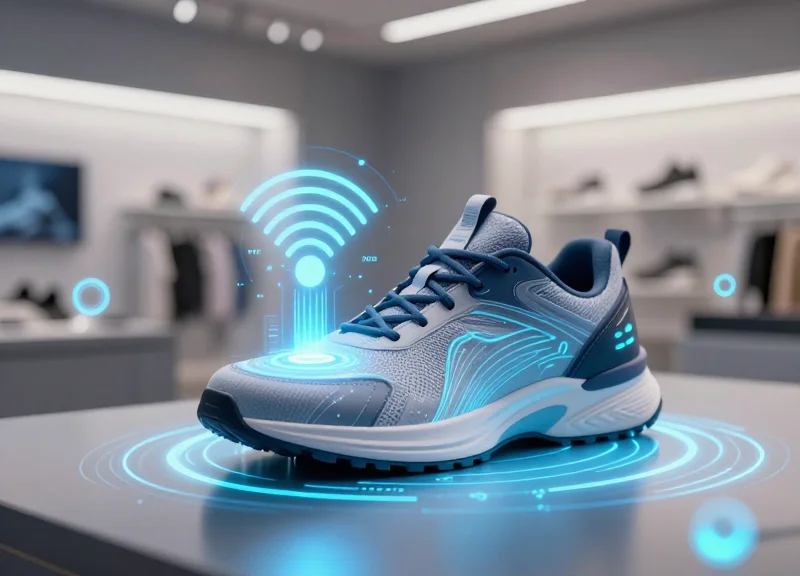
As we approach 2026, the global footwear retail landscape is undergoing a seismic shift. For decades, the clunky EAS hard tag was the gold standard for loss prevention. However, in an era of omnichannel shopping and razor-thin margins, 'just' stopping theft isn't enough. Retailers now demand item-level visibility and frictionless customer journeys. This article explores why the RFID-EAS hybrid tag has emerged as the critical successor, bridging the gap between traditional security and modern data intelligence to solve the unique challenges of the shoe industry.
The Evolution of Shoe Retail Security: Beyond the Plastic Shell

Footwear retail security has evolved from passive Electronic Article Surveillance (EAS) hard tags, designed solely to trigger alarms, into integrated RFID-EAS hybrid solutions. This evolution represents a strategic shift from simple theft deterrence to 'Item-Level Intelligence,' where a single tag manages both loss prevention and real-time inventory accuracy. By 2026, the traditional 'plastic shell' is being replaced by slim, data-rich sensors that provide the visibility required for modern omnichannel fulfillment while maintaining robust shrink protection.
| Era | Primary Technology | Functionality | Main Limitation |
|---|---|---|---|
| The Mechanical Era (1970s-1990s) | Ink Tags / Standard Hard Tags | Visual deterrence and physical damage to stolen goods. | High false alarms; zero data visibility. |
| The EAS Era (2000s-2015) | AM (Acousto-Magnetic) / RF Tags | Electronic gate triggering at exits. | Labor-intensive tagging; no inventory insights. |
| The Digital Era (2016-2025) | Standalone RFID Labels | High-speed inventory counting and stock accuracy. | Weak physical security for high-value shoes. |
| The Hybrid Era (2026+) | RFID-EAS Hybrid Tags | Unified security, stock tracking, and self-checkout. | Initial infrastructure migration cost. |
- Phase 1: The Deterrence Model: Early footwear security focused on 'making it hard to take.' Retailers used bulky AM or RF hard tags that required manual detachment at the point of sale. While effective at stopping casual shoplifting, these tags offered no help with the growing problem of 'phantom inventory'—shoes that are technically in stock but cannot be found by staff.
- Phase 2: The Data Integration Gap: As e-commerce grew, retailers introduced RFID stickers for inventory. However, footwear presented a unique challenge: the need for both a physical deterrent (to prevent high-value sneaker theft) and a digital tracker. Managing two separate tags on one shoe was costly, labor-intensive, and aesthetically unappealing.
- Phase 3: The Unified Hybrid Pivot: The current shift to RFID-EAS hybrids solves the 'two-tag' problem. These devices combine the long-range inventory capabilities of UHF RFID with the perimeter security of traditional EAS. This allows for 'Source Tagging,' where the security and data identity are embedded during manufacturing, saving thousands of labor hours in-store.
Expert Insight: The Catalyst of 'Zombie Inventory'. Traditional hard tags actually contribute to what we call 'Zombie Inventory'—stock that is physically protected but digitally invisible. In the 2026 landscape, a shoe that isn't digitally 'seen' by the system every 24 hours is considered a lost sale. Hybrid tags eliminate this by turning every security tag into a real-time data node, ensuring that the last pair of a high-demand sneaker is always available for a Buy Online Pick Up In-Store (BOPIS) customer.
Why are traditional hard tags failing in 2026?
Traditional tags lack the unique ID capabilities required for modern retail. They can tell you an item is leaving the store, but they cannot tell you which specific SKU or serial number it is, making it impossible to reconcile shrink in real-time.
How do RFID-EAS hybrids improve the customer experience?
Hybrids enable frictionless checkout and mobile payment options. Since the tag identifies the item automatically, customers can bypass long lines, and the security feature can be deactivated digitally or at a self-service kiosk without damaging the footwear.
Is the transition to hybrid tags cost-effective?
Yes. While the unit cost per tag is higher, the ROI is realized through a 50-70% reduction in in-store labor costs (tagging/detagging) and a significant lift in sales due to 99% inventory accuracy.
Why Traditional EAS Hard Tags are Failing the 2026 Retail Test
Traditional EAS hard tags are failing the 2026 retail test because they operate as 'blind' security measures that offer zero data visibility, forcing a binary choice between theft prevention and operational intelligence. While effective at triggering alarms, legacy tags cannot communicate which specific SKU is leaving the store, rendering them useless for modern inventory reconciliation, automated replenishment, and the high-speed demands of omnichannel fulfillment.
| Feature | Legacy EAS Hard Tags | 2026 Retail Requirements |
|---|---|---|
| Data Granularity | Binary (Alarm/No Alarm) | Item-level (Unique ID, Size, Color) |
| Inventory Visibility | None (Manual count required) | Real-time (99%+ accuracy) |
| Omnichannel Support | Incompatible | Essential (BOPIS/Ship-from-Store) |
| Labor Requirement | High (Manual tagging/detaching) | Low (Automated tracking/Self-checkout) |
- The Visibility Gap: Traditional tags do not tell you what was stolen. When a shoe is shoplifted, the inventory system still thinks it is on the shelf, leading to 'out-of-stock' scenarios where online customers order items that do not physically exist.
- Labor-Intensive Friction: Manual cycle counts using legacy systems typically result in 65-70% inventory accuracy. In 2026, the labor cost of manually scanning individual shoe boxes is no longer sustainable compared to RFID's near-instantaneous bulk scanning.
- Incompatibility with BOPIS: Buy Online, Pick Up In-Store (BOPIS) requires 99% inventory precision. Legacy tags often hide inventory discrepancies until a store associate fails to find the item for a waiting customer, damaging brand loyalty.
A critical, often overlooked failure I call 'The Ghost Stock Paradox' is where legacy security actually harms the bottom line. By preventing a theft but failing to log the item's presence digitally, retailers frequently lose more money in 'lost sales' from inaccurate stock levels than they would have lost from the original shrink. In a world of unified commerce, a security tag that doesn't talk to your cloud is a liability, not an asset.
The Anatomy of a Hybrid: How RFID and EAS Work in Tandem

An RFID-EAS hybrid is a multi-layered security and data solution that integrates Electronic Article Surveillance (EAS) technology for immediate theft deterrence with Radio Frequency Identification (RFID) for granular, item-level visibility. In this architecture, the EAS component (typically Acousto-Magnetic or 8.2MHz RF) serves as the 'perimeter guard,' triggering store exit alarms, while the UHF RFID inlay serves as the 'digital twin,' providing real-time data on the specific SKU, size, and color of the item passing through the gate.
| Feature | EAS (Electronic Article Surveillance) | RFID (Radio Frequency Identification) |
|---|---|---|
| Primary Goal | Loss Prevention (Perimeter Alarm) | Inventory Accuracy & Visibility |
| Frequency Range | 58kHz (AM) or 8.2MHz (RF) | 860-960MHz (UHF) |
| Data Storage | None (Bit-state: On/Off) | Unique Electronic Product Code (EPC) |
| Read Range | Up to 2 meters (Gate width) | Up to 10+ meters (Handheld/Fixed) |
- Integrated Tagging: A single hybrid tag is applied to the footwear at the source. This eliminates the labor cost of double-tagging and ensures the security element is hidden or embedded within the shoe structure.
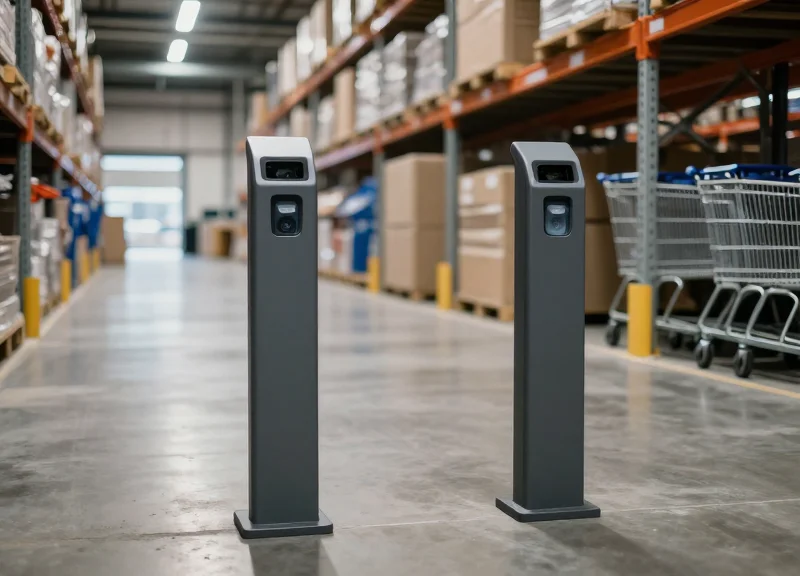
- The Perimeter Handshake: As a customer approaches the exit, the EAS resonator reacts to the magnetic or radio field of the pedestals, triggering the alarm if the tag has not been deactivated at POS.
- The Data Payload: Simultaneously, the RFID overhead reader captures the tag's unique ID. This allows the system to log exactly which shoe (e.g., 'Right Foot, Size 10, Red Runner') triggered the alarm.
- Automated Restocking: The system instantly notifies the backroom that a specific SKU has left the premises, enabling immediate replenishment to prevent 'out-of-stock' scenarios.
Expert Insight: The 'Dielectric' Advantage. In the footwear sector, the physical composition of shoe soles (rubber, carbon, or gel) often causes signal interference for standard RFID tags. Hybrid tags for 2026 are engineered with specialized spacers that utilize the air gap within the EAS housing to decouple the RFID antenna from the shoe's surface. This mechanical synergy significantly boosts 'read rates' in high-density environments like shoe walls, a technical nuance often overlooked by generic security providers.
Do I need new pedestals for hybrid tags?
Not necessarily. Most hybrid tags are designed to be backwards-compatible with existing 58kHz AM or 8.2MHz RF pedestals, though you will need RFID readers to capture the data component.
Can hybrid tags be reused?
Yes. While source-applied 'sew-in' labels are disposable, hard-tag hybrids are designed for high-cycle reuse, making them more sustainable for closed-loop retail environments.
How do hybrids prevent 'Shielding'?
Modern hybrids often include dual-resonator configurations that make them harder to shield with foil-lined bags compared to legacy single-tech tags.
Solving the 'Left Shoe' Dilemma: Inventory Accuracy in Real-Time

The 'Left Shoe' Dilemma refers to the chronic retail problem where inventory systems show a product in stock, but staff can only find a single shoe or a mismatched pair, leading to canceled orders and lost sales. RFID-EAS hybrid tags solve this by assigning a unique digital identity (serialization) to every single shoe, allowing retailers to track individual items rather than just generic SKUs. This real-time visibility eliminates 'ghost inventory' by ensuring that a pair is only marked as 'available' for omnichannel fulfillment when both unique electronic signatures are detected in the same location.
| Feature | Legacy EAS Hard Tags | Hybrid RFID-EAS Tags |
|---|---|---|
| Inventory Awareness | Blind: Only knows if a tag crosses a gate. | Cognizant: Knows exactly which shoe is where. |
| Pair Verification | Manual: Requires physical matching by staff. | Automated: Software flags 'orphan' shoes instantly. |
| Stock Accuracy | Approx. 65-75% (requires manual audits). | 99.8% (via real-time digital pings). |
| Omnichannel Readiness | Low: High risk of 'out-of-stock' cancellations. | High: Enables confident BOPIS and ship-from-store. |
In the 2026 retail landscape, where 'Buy Online, Pick Up In Store' (BOPIS) accounts for nearly 40% of footwear revenue, the cost of an inventory error is no longer just a missed walk-in sale—it is a damaged brand reputation. Hybrid tags turn the security sensor into a data point, allowing the POS system to verify that the 'Left' and 'Right' serialized IDs leaving the store actually belong to the same box.
- Serialized Tagging at Source: Each shoe is tagged during manufacturing with a unique RFID ID embedded in the EAS housing, linking the physical item to its specific manufacturing batch and pair mate.
- Real-Time Cycle Counting: Staff use handheld or overhead RFID readers to scan the floor in minutes, identifying single 'orphan' shoes that are missing their mates before a customer tries to buy them.
- Automated Reconciliation: The inventory management system automatically updates the online storefront, removing items from 'available' status if a complete pair cannot be verified by the RFID-EAS signal.
Expert Tip from the Valley: The true 'alpha' in footwear tech for 2026 isn't just knowing you have the shoe, but knowing its age on the shelf. Hybrid tags allow for 'First-In, First-Out' (FIFO) automation. By tracking the 'digital birthdate' of the tag, retailers can trigger automatic markdown alerts for specific pairs that have exceeded their shelf-life, preventing the 'Left Shoe' of an older model from cluttering backstock for months.
How do hybrid tags prevent internal theft (sweethearting)?
Since every tag has a unique ID, the system logs exactly which serialized shoe was deactivated and at what time. If a high-value sneaker is 'sold' but the ID doesn't match the transaction record, an immediate alert is sent to loss prevention.
Can hybrid tags detect if a pair is mismatched at the checkout?
Yes. When the box is placed on the RFID-enabled checkout mat, the system instantly cross-references the two IDs. If they don't belong to the same pair, the POS will block the transaction until the error is corrected.
Does this technology require a total overhaul of existing EAS gates?
Not necessarily. Many modern hybrid tags are designed to be backwards compatible with existing 58kHz or 8.2MHz gates, meaning you can upgrade your tags and data infrastructure without replacing your physical security pedestals immediately.
Enhancing Customer Experience: From Friction to Seamlessness

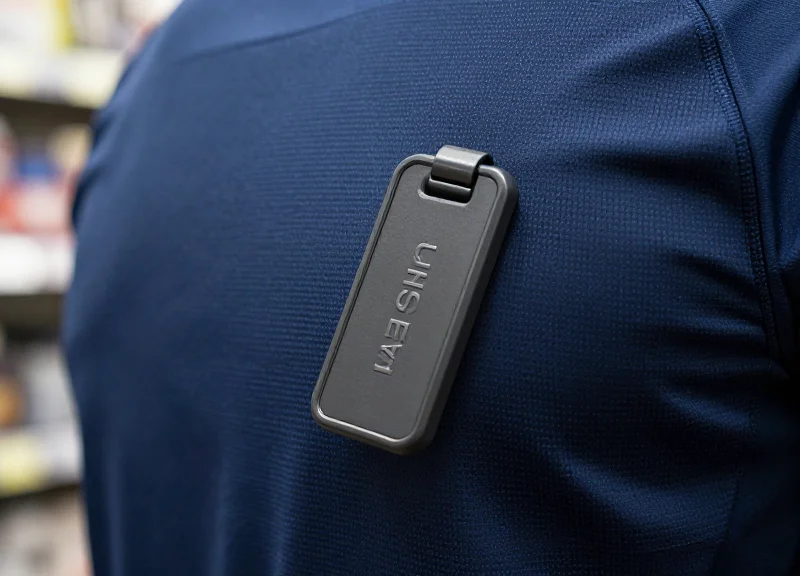
By 2026, the benchmark for footwear retail success is the removal of 'friction points' that traditionally hindered the shoe-buying process. Hybrid RFID-EAS tags represent a paradigm shift, moving security from a heavy, visible deterrent to a sleek, multi-functional component. These tags are significantly smaller and more ergonomic than legacy hardware, allowing customers to experience the true weight, balance, and aesthetic of a shoe during a try-on—factors that are frequently distorted by traditional 50g+ hard tags clamped onto the collar or eyelets.
| Feature | Traditional Hard Tags | RFID-EAS Hybrid Tags |
|---|---|---|
| Physical Profile | Bulky, heavy plastic shells | Slim, lightweight, or integrated |
| Try-on Comfort | Distorts fit; often causes discomfort | Negligible impact on shoe ergonomics |
| Checkout Speed | Slow; manual removal required | Instantaneous; supports bulk scanning |
| Mobile Checkout | Impossible without staff intervention | Fully enabled via RFID-POS integration |
How do hybrid tags improve the 'Buy Online, Pickup In-Store' (BOPIS) experience?
They allow for instant item verification and location tracking without opening every box, speeding up the hand-off process and reducing wait times for the customer.
Can these tags support autonomous or self-checkout?
Yes, RFID technology allows a POS system to scan every item in a shopping basket simultaneously, enabling a 'Just Walk Out' style experience where security is deactivated automatically upon payment.
Do hybrid tags affect the aesthetic of high-end luxury footwear?
No, modern hybrids are often integrated directly into the brand's existing hang-tags or stitched into the tongue, preserving the shoe's visual appeal while maintaining high security.
Expert Insight: The Psychology of Invisible Trust. As a veteran of Silicon Valley retail tech, I've observed that traditional hard tags send a subtle, subconscious signal to the consumer: 'We don't trust you.' This creates a defensive shopping environment. Hybrid tags pivot the retail experience toward a 'trust-first' model. When security is silent and integrated into the branding, the transaction feels like a premium service rather than a monitored exchange, which significantly boosts brand loyalty and net promoter scores (NPS).
The ROI Shift: Why Global Brands are Investing Now

The fundamental ROI shift in footwear retail is the transition of security hardware from a 'cost center' to a 'profit enabler.' Historically, EAS hard tags were a defensive insurance policy against theft. In contrast, 2026 market leaders view RFID-EAS hybrids as an offensive strategic investment. By combining theft prevention with item-level visibility, brands are achieving a Return on Investment (ROI) not just through reduced shrinkage, but through a significant lift in full-price sales, optimized labor allocation, and a massive reduction in 'ghost inventory' that previously crippled omnichannel fulfillment.
| Financial Driver | Legacy EAS Hard Tags | RFID-EAS Hybrid Systems |
|---|---|---|
| Inventory Accuracy | 65-75% (Manual dependent) | 98-99.8% (Digital precision) |
| Labor Requirement | High (Manual cycle counts) | Low (Automated/Rapid scanning) |
| Shrink Visibility | Known loss only at audit | Real-time alerts on specific SKUs |
| Sales Impact | Neutral (Prevents loss) | Positive (Increases stock availability) |
- Labor Reclamation: Hybrid tags allow for 'point-and-shoot' inventory counts that are up to 20 times faster than manual barcode scanning, allowing staff to pivot from back-room audits to floor-side sales.
- Safety Stock Optimization: With 99% accuracy, retailers can reduce the 'buffer' or safety stock held in the back, freeing up working capital that was previously tied up in redundant inventory.
- The 'Found Sales' Multiplier: By ensuring the right size and style is on the floor—and visible to online shoppers—brands report a 3% to 6% lift in top-line revenue purely from improved stock availability.
The 'Omnichannel Fulfillment Tax' Insight: One original metric global brands are now tracking is the hidden 'fulfillment tax' associated with legacy tags. In a legacy environment, store associates spend an average of 15-30% of their shift searching for items that the system says are 'in stock' but cannot be found due to poor EAS data. RFID-EAS hybrids eliminate this search time, effectively removing this hidden tax on operational margins and enabling true ship-from-store profitability.
What is the typical payback period for a hybrid tag migration?
Most global footwear retailers report a full ROI within 12 to 18 months, driven primarily by the sales lift from inventory accuracy and the reduction in labor hours for cycle counting.
Does the higher unit cost of hybrid tags outweigh the benefits?
While the initial unit cost is higher than a dummy EAS tag, the 'total cost of ownership' is lower because the hybrid tag replaces multiple systems and prevents the massive revenue loss associated with out-of-stock items.
Can hybrid tags reduce insurance premiums?
Yes, several major insurers are beginning to offer 'tech-forward' discounts for retailers who can prove real-time loss visibility and item-level tracking capabilities.
Supply Chain Visibility: From Factory Floor to Shopper’s Door

Supply chain visibility in the 2026 footwear market refers to the seamless, real-time tracking of individual units from the manufacturing line to the end consumer using integrated RFID-EAS technology. By embedding hybrid tags at the source, retailers move away from reactive security toward a proactive 'Chain of Custody' model. This allows brands to identify precisely where inventory 'leaks' occur—whether in a shipping container, a distribution center, or a third-party logistics hub—effectively eliminating the 'black holes' that characterize traditional footwear logistics.
| Logistics Metric | Traditional Hard Tags | RFID-EAS Hybrid Tags |
|---|---|---|
| Tagging Location | Back-of-house (In-store) | Point of Manufacture (Source-tagging) |
| Tracking Granularity | None (Box/SKU level only) | Unit-level (Unique Electronic Product Code) |
| Transit Loss Detection | Manual audit at store arrival | Automated gate-read at every DC transition |
| Labor Requirement | High (Manual application) | Near-zero (Automated application) |
- Source-Tagging at the Factory: Tags are embedded or attached during production, enabling immediate inventory counting before shoes are even boxed.
- Automated DC Receiving: Distribution Centers use RFID tunnels to scan entire pallets in seconds, verifying contents against the Manifest without opening boxes.
- In-Transit Verification: Handheld or fixed readers at shipping docks ensure the right SKU and size are loaded onto the correct outbound truck.
- Last-Mile Accuracy: Store staff receive shipments with a single scan, instantly updating local inventory and flagging 'hidden' transit losses.
Expert Insight: In my two decades of tech-driven retail analysis, the biggest 'aha' moment for 2026 footwear brands is the realization that 'Pre-Retail Shrink'—loss occurring between factory and store—often exceeds 2% of total volume. RFID-EAS hybrids act as a digital forensic tool. If a pallet leaves a factory with 500 pairs but arrives at the port with 498, the system flags the discrepancy instantly. This 'Digital Custody' shifts the burden of proof back to the logistics providers, drastically reducing insurance premiums and unrecorded losses.
Does source-tagging increase manufacturing costs?
While the unit cost of a hybrid tag is slightly higher than a passive EAS tag, the labor savings at the retail level—where employees no longer spend hours tagging shoes—creates an immediate net-positive ROI.
Can hybrid tags track shoes after they leave the store?
No. RFID-EAS tags are designed for supply chain and inventory management. Once the EAS component is deactivated or the tag is removed at checkout, the consumer’s privacy is fully protected.
What happens if a tag is damaged during transit?
Modern hybrid tags are industrial-grade. However, if one fails, the system uses the surrounding 'peer data' from the same carton to flag a potential unit discrepancy, maintaining data integrity.
Sustainability and Reusability in Modern Tagging Solutions
Sustainability in footwear tagging refers to the transition from disposable, single-use security stickers and low-grade plastic hard tags to high-durability RFID-EAS hybrids designed for hundreds of reuse cycles. By consolidating inventory tracking and loss prevention into a single, high-performance device, retailers can reduce their annual plastic waste by up to 40% while directly supporting 2026 ESG (Environmental, Social, and Governance) mandates. Unlike traditional tags that often end up in landfills due to component degradation, modern hybrid solutions utilize medical-grade plastics and replaceable internal components to ensure a lifespan that spans several product seasons.
| Feature | Traditional Hard Tags | Next-Gen RFID-EAS Hybrids |
|---|---|---|
| Primary Material | Low-grade ABS Plastic | Recyclable High-Impact Polymers |
| Lifecycle Expectancy | 2-3 Years (Prone to breakage) | 5-7 Years (Industrial Durability) |
| Carbon Footprint | High (Separate EAS and RFID labels) | Low (Integrated 2-in-1 hardware) |
| Disposal Path | Landfill / Non-recyclable | Closed-loop Recovery Programs |
- Reduction in Source Tagging Waste: Hybrid tags eliminate the need for secondary adhesive RFID labels, saving tons of paper and adhesive waste across global supply chains.
- Optimized Reverse Logistics: Modern tags are designed for automated sorting in recirculation centers, allowing retailers to harvest and redeploy tags with minimal energy expenditure.
- Toxic Material Elimination: 2026 standards require the removal of heavy metals and harmful flame retardants traditionally found in legacy EAS tag housings.
Expert Insight: The 'Closed-Loop' Harvesting Model. One of the most significant shifts we are seeing in 2026 is the implementation of 'Recirculation Hubs.' Leading footwear brands are no longer treating tags as consumables but as fixed assets. By utilizing the RFID component to automate the counting of returned tags at regional hubs, retailers can maintain a 98% tag recovery rate. This 'Tag-as-a-Service' approach means the carbon cost of manufacturing is amortized over hundreds of uses, making the 'greenest' tag also the most cost-effective over its lifetime.
Are hybrid tags fully recyclable at the end of their life?
Yes, leading manufacturers now offer buy-back or recycling programs where tags are disassembled, and the high-impact plastic and copper coils are reclaimed for new production.
How does reusability affect the tag's performance?
High-quality hybrid tags are engineered with 'memory-free' locking mechanisms that maintain a 99.9% retention rate even after 500+ attachment cycles, ensuring security is never compromised for sustainability.
Does the integration of RFID and EAS use more battery power?
Actually, most modern hybrids are passive, meaning they require no internal battery and draw energy from the reader or gate, resulting in a zero-energy-drain profile during shelf-life.
Overcoming Implementation Hurdles for Global Rollouts
Transitioning to RFID-EAS hybrid systems on a global scale is not a simple hardware swap; it is a synchronized infrastructure upgrade. To overcome implementation hurdles, retailers must adopt a 'Coexistence Strategy' where hybrid tags provide immediate security via existing Electronic Article Surveillance (EAS) pedestals while the RFID data layer is phased in. This prevents the 'rip-and-replace' shock to the balance sheet and ensures that loss prevention remains active from day one of the transition. The most successful 2026 rollouts prioritize 'Software-Defined Security' which allows for remote calibration of reader sensitivity across thousands of international locations simultaneously.
| Implementation Phase | Primary Objective | Critical Success Factor |
|---|---|---|
| Phase 1: Hybrid Tagging | Immediate Shrink Control | Source tagging at the factory level to ensure 100% compliance. |
| Phase 2: Edge Reader Pilot | Inventory Accuracy | Sub-1 second latency in data transmission to local store servers. |
| Phase 3: ERP Integration | Omnichannel Fulfillment | API-first architecture to sync store stock with online storefronts. |
| Phase 4: Global Optimization | Predictive Analytics | Standardization of data formats across all international regions. |
- Infrastructure Audit and Spectrum Analysis: Before deployment, conduct a site-specific audit to identify potential RF interference. Footwear stores often have dense metallic shelving which can cause 'dead zones' for RFID signals.
- Source Tagging at the Point of Manufacture: Move the tagging process as far up the supply chain as possible. Applying hybrid tags at the factory eliminates the labor-intensive 'tagging parties' at the retail level.
- Standardizing Data Across Borders: Ensure all regions use a unified Electronic Product Code (EPC) format to prevent data silos between North American, EMEA, and APAC logistics hubs.
- Employee Engagement and Training: Shift the staff mindset from 'Security Enforcer' to 'Inventory Manager.' Train employees to use RFID handhelds for cycle counts rather than just reacting to EAS alarms.
A unique insight gained from Silicon Valley retail tech deployments is the concept of 'Data Drift.' As you scale, the real-time RFID reads at the door may become desynchronized from your legacy ERP system due to network latency. The most resilient retailers utilize an 'Abstracted Middleware Layer'—a buffer that validates and cleanses RFID data at the edge before pushing it to the cloud. This prevents system crashes during high-traffic events like Black Friday and ensures that 'BOPIS' (Buy Online, Pick Up In-Store) orders are never placed for items that were just stolen or sold.
How do we handle different RFID frequencies in different countries?
Modern hybrid tags use wide-band antennas that are compliant with global standards (860-960 MHz), allowing a single tag design to function across all international markets.
Can we use our existing EAS pedestals with hybrid tags?
Yes. Hybrid tags are designed to trigger legacy Acousto-Magnetic (AM) or Radio-Frequency (RF) EAS gates while simultaneously providing long-range RFID data for inventory tracking.
What is the typical timeline for a global 500-store rollout?
With source tagging in place, a phased rollout typically takes 12 to 18 months, depending on the complexity of the existing back-end IT infrastructure.