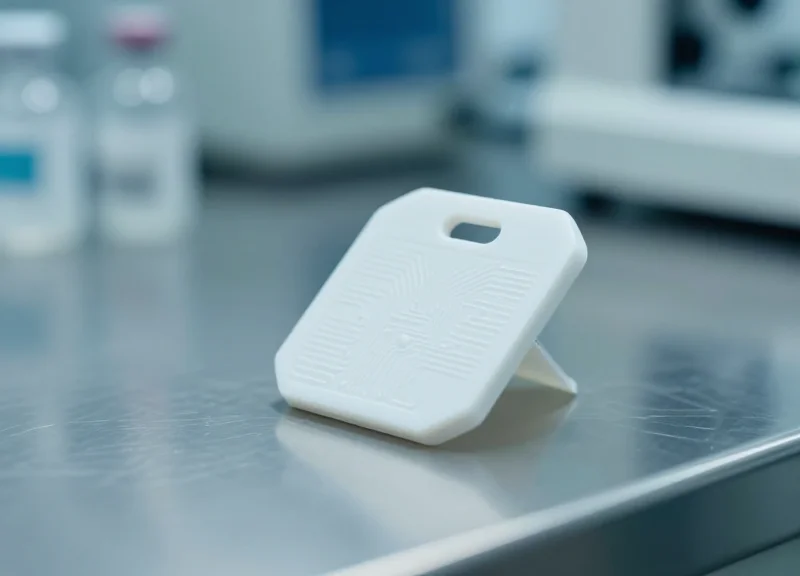
In the high-stakes world of semiconductor manufacturing and biotechnology, every particle counts. As industries move toward 2026, the integration of RFID technology into cleanrooms is no longer a luxury but a necessity for automated tracking and compliance. However, selecting a tag that meets stringent ISO-Class standards without sacrificing physical durability under aggressive sterilization protocols remains a major engineering challenge. This guide explores how to navigate the complex intersection of contamination control and hardware longevity to ensure seamless, contaminant-free operations.
The Evolution of Cleanroom RFID in 2026: Why Precision Matters

In 2026, the evolution of cleanroom-grade RFID has shifted from basic inventory tracking to 'Atomic-Level Traceability,' where tags must provide 99.99% read accuracy while maintaining zero-particulate emissions in ISO Class 1 to 5 environments. As semiconductor and biotech manufacturing move toward 'Lights-Out' automation, RFID precision has become the critical link between physical assets and digital twins, ensuring that every wafer carrier or surgical kit is accounted for without compromising sterile integrity or introducing outgassing risks.
| Feature | 2020 Standard RFID | 2026 Cleanroom-Grade RFID |
|---|---|---|
| ISO Compatibility | ISO Class 7-8 | ISO Class 1-3 (Certified) |
| Sterilization Endurance | Occasional IPA wipe-down | Autoclave, VHP, and Gamma-irradiation ready |
| Outgassing Performance | Standard adhesive (High VOCs) | Low-outgassing epoxy (ASTM E595 compliant) |
| Data Capacity | 96-bit EPC only | High-memory (2KB+) for maintenance logs |
The drive toward precision is fueled by the 'Zero-Margin Era' of manufacturing. In 2026, a single particulate flake from a degrading RFID tag can result in millions of dollars in yield loss within a 2nm fabrication plant. Therefore, precision no longer refers only to the frequency of the radio waves, but to the physical stability of the tag's encapsulation under extreme chemical stress.
Why is precision critical for 2026 compliance?
Regulatory bodies like the FDA and EMA now require 'Ambient Intelligence' in sterile processing, meaning RFID tags must provide real-time location and sterilization history to pass audit trails automatically.
Does tag durability affect ISO classification?
Yes. If a tag sheds particles during use, it effectively downgrades the cleanroom's ISO class. 2026 tags use laser-welded PEEK or PTFE housings to prevent this.
How does 5G integration impact cleanroom RFID?
Modern cleanrooms use private 5G networks to bridge RFID readers with cloud analytics, requiring tags with improved interference shielding to maintain high-speed data transfer.
Expert Insight (Silicon Valley Perspective): The biggest shift we are seeing in 2026 is the adoption of 'Bio-Inert RFID Encapsulation.' Unlike traditional plastics, these tags use specialized glass-filled polymers that exhibit zero molecular migration. My tip: when selecting a vendor, don't just ask for an ISO certificate—request the 'Outgassing Molecular Profile' (OMP) report. If they can't provide it, the tag isn't truly 2026-ready for high-purity environments.
Navigating ISO 14644-1 Standards for RFID Hardware

To comply with ISO 14644-1 standards, RFID hardware must be evaluated based on its 'Particle Emission Rate' rather than just its functional performance. In 2026, compliance hinges on ensuring that the tag's encapsulation material—such as PFA, PTFE, or high-grade ceramics—does not contribute to the maximum allowable concentration of airborne particles per cubic meter of air, ranging from ISO Class 1 (most stringent) to ISO Class 9 (least stringent). Selecting the wrong tag can lead to micro-abrasions that release microscopic debris, immediately voiding the sterile integrity of the environment.
| ISO Class | Particle Limit (>=0.1um) | Recommended RFID Encapsulation | Application Context |
|---|---|---|---|
| ISO Class 1-3 | 10 - 1,000 | Polytetrafluoroethylene (PTFE) or Medical Ceramic | Semiconductor Lithography |
| ISO Class 4-5 | 10,000 - 100,000 | High-Density Polyethylene (HDPE) or PEEK | Aseptic Pharmaceutical Fill |
| ISO Class 6-8 | Not Specified to 3.5M | Medical-grade Epoxy or Polycarbonate | Medical Device Assembly |
When navigating these standards, it is vital to understand that ISO 14644-1 focuses on particle count, but for 2026, industry leaders also look at ISO 14644-8 (Airborne Molecular Contamination). In high-spec cleanrooms, the adhesive used to mount the RFID tag is often the primary culprit of failure. Standard acrylic adhesives can outgas Volatile Organic Compounds (VOCs), which settle on sensitive optical equipment or silicon wafers. Expert Tip: Always specify 'Low-Outgassing' (ASTM E595) certified adhesives alongside your ISO-rated RFID hardware to ensure the chemical stability of the tag doesn't degrade the air quality.
Can any RFID tag be 'cleaned' for ISO Class 5?
No. While surface sterilization is possible, many tags have micro-porous surfaces that trap contaminants. Only tags with non-porous, hydrophobic coatings are suitable for high-classification environments.
How does tag placement affect ISO compliance?
Placement in high-velocity airflow zones can increase 'friction-induced shedding.' Tags should be flush-mounted or recessed to minimize turbulence and particle release.
Do active RFID tags pose more risk than passive tags?
Yes. Active tags contain batteries and circuitry that may generate heat, which can accelerate the outgassing of internal polymers. Passive tags are generally preferred for ISO Class 1-4.
The 2026 standard for high-reliability tracking introduces the 'Friction Coefficient Benchmark.' This metric measures how much particulate matter is shed when an RFID tag is subjected to standard robotic handling. For sub-ISO Class 4 environments, we recommend tags with a friction coefficient below 0.15 to prevent material degradation during high-speed automated processing.
The Durability Dilemma: Balancing Chemical Resistance and Particle Shedding
The fundamental dilemma in cleanroom RFID selection lies in the inverse relationship between material ruggedness and particle stability. To survive the aggressive sterilization protocols of 2026—such as Vaporized Hydrogen Peroxide (VHP) or high-concentration Isopropyl Alcohol (IPA)—RFID tags must be encased in high-performance polymers. However, many standard industrial 'rugged' materials, while chemically resistant, are prone to micro-fretting or outgassing, which introduces prohibited contaminants into ISO-Class environments. Achieving the ideal balance means selecting materials that are chemically inert while maintaining high surface integrity to prevent the shedding of sub-micron particles over repeated thermal and chemical cycles.
| Material Type | Chemical Resistance (VHP/IPA) | Outgassing Risk | Particle Shedding Potential | Ideal ISO Class |
|---|---|---|---|---|
| PEEK (Polyetheretherketone) | Excellent | Ultra-Low | Minimal | ISO 1 - 3 |
| PPS (Polyphenylene Sulfide) | High | Low | Low | ISO 4 - 5 |
| Medical-Grade Silicone | Moderate | Low | High (Friction) | ISO 7 - 8 |
| Standard Epoxy Resin | Low (Brittle over time) | Moderate | Moderate | Not Recommended |
A critical, often overlooked factor is the 'Seal Integrity Fatigue.' In 2026, we are seeing that even the most resistant polymers can fail if the bonding method between the tag's housing halves is not laser-welded. Traditional adhesives are often the primary source of outgassing and the first point of failure when exposed to caustic cleaning agents, leading to internal component corrosion and eventual tag failure.
How does VHP sterilization affect RFID tag longevity?
Vaporized Hydrogen Peroxide is highly oxidative. It can cause micro-cracking in lower-grade plastics (like standard ABS), which then become 'particle generators' as the material flakes. Only tags with high-crystallinity polymers should be used in VHP environments.
Why is 'Outgassing' a concern for RFID in vacuum-integrated cleanrooms?
In semi-conductor or aerospace cleanrooms, outgassing can deposit a molecular film on sensitive optics or wafers. Always verify that your RFID tag meets ASTM E595 standards for Total Mass Loss (TML).
Can I use 'rugged' industrial tags in a cleanroom?
Usually, no. Industrial tags often use carbon-black fillers for UV resistance or low-cost adhesives that fail ISO 14644-1 particle concentration tests once the chemical cleaning degrades the outer shell.
Expert Insight: The Micro-Vibration Variable. In modern automated cleanrooms, high-frequency vibrations from robotic sorters can cause RFID tags to rub against metal carriers. This 'micro-fretting' creates a fine dust of plastic particles. To mitigate this, look for tags with 'Low-Coefficient of Friction' (LCOF) coatings or PEEK housings, which are significantly more resistant to mechanical abrasion than standard epoxies, ensuring the tag remains particle-neutral throughout its multi-year lifecycle.
Material Science: Selecting Low-Outgassing Encapsulations
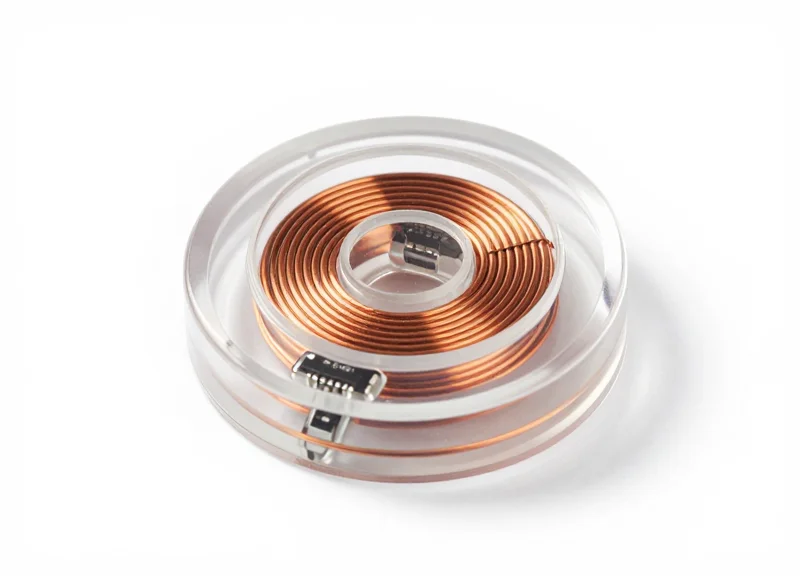
Selecting low-outgassing encapsulations for cleanroom RFID involves choosing materials that exhibit minimal Total Mass Loss (TML) and Collected Volatile Condensable Material (CVCM) when exposed to vacuum or thermal stress. In 2026, the industry standard for ISO Class 1 through 3 environments mandates materials like Polyether Ether Ketone (PEEK) and specialized, high-density epoxies that prevent the release of Molecular Airborne Contamination (MAC), which can compromise semiconductor lithography and sensitive pharmaceutical synthesis.
| Material Type | TML % (ASTM E595) | Chemical Resistance | Primary Use Case |
|---|---|---|---|
| PEEK (Polyether Ether Ketone) | < 0.15% | Exceptional (Acids/Bases) | Extreme vacuum & high-temp sterilization |
| Medical-Grade Epoxies | < 0.85% | High (Solvents/IPA) | General purpose pharmaceutical tracking |
| PTFE (Polytetrafluoroethylene) | < 0.10% | Universal | Ultra-high purity chemical storage |
| Standard FR4 / PC | > 1.50% | Moderate | Non-cleanroom or ISO Class 8+ only |
Expert Insight for 2026: Beyond raw material selection, the 'Vacuum-Bake' pre-conditioning phase is now a non-negotiable step for tier-one semiconductor suppliers. Even high-grade polymers can retain residual moisture or manufacturing volatiles. By subjecting RFID tags to a controlled vacuum-thermal cycle (typically 125°C for 24 hours at 10⊃-6 Torr) before deployment, you can reduce post-installation outgassing by up to 90%, effectively 'pre-aging' the tag to ensure immediate compliance with ultra-high purity (UHP) standards.
Why is PEEK preferred over standard plastics in 2026?
PEEK offers a unique combination of mechanical strength, thermal stability up to 250°C, and the lowest outgassing profile of any processable thermoplastic, making it the 'gold standard' for ISO Class 1 environments where gas-phase contamination is as dangerous as physical particles.
What is the danger of using high-outgassing materials in a cleanroom?
Materials that outgas release microscopic vapors that can condense on lenses, mirrors, or silicon wafers. This leads to 'haze' on optics or electrical failures in microcircuits, often resulting in millions of dollars in yield loss.
How does the ASTM E595 standard apply to RFID tags?
ASTM E595 is the testing method used to determine outgassing properties. For a tag to be 'vacuum-stable' in a cleanroom, it should ideally have a Total Mass Loss (TML) of less than 1.0% and a Collected Volatile Condensable Material (CVCM) of less than 0.10%.
Sterilization Compatibility: From Autoclaves to Gamma Irradiation
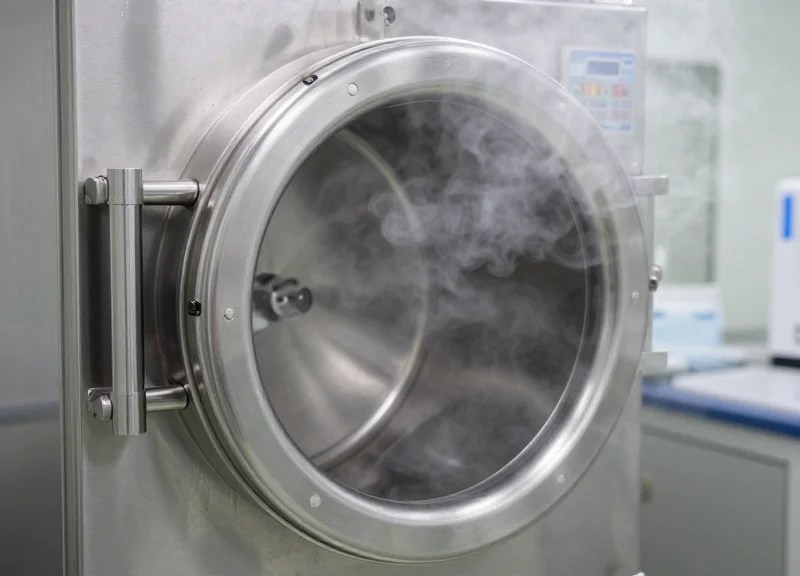
Sterilization compatibility in RFID tags is the measure of a transponder's ability to maintain physical structural integrity and data retention when subjected to extreme environmental stressors like high-pressure steam, chemical vapors, or ionizing radiation. In 2026 pharmaceutical and biotech workflows, compatibility isn't just about the tag surviving one cycle; it is about ensuring the internal integrated circuit (IC) and the antenna bond-points withstand the cumulative fatigue of repeated sterilization without drifting out of frequency or suffering 'bit-flip' data corruption.
| Sterilization Method | Primary Stressor | RFID Risk Factor | Recommended Memory/Shell |
|---|---|---|---|
| Autoclave | 121°C–134°C + Pressure | Thermal expansion & moisture ingress | FRAM Memory / PPS or PEEK Housing |
| Gamma Irradiation | 25–50 kGy Radiation | Data corruption (EEPROM erasure) | Radiation-Hardened FRAM / Ceramic |
| Vaporized H2O2 (VHP) | Chemical Oxidation | Corrosion of exposed contacts | Full Hermetic Epoxy Encapsulation |
| E-Beam | High-Energy Electrons | IC logic gate damage | Shielded Tags / Specific FRAM ICs |
A critical, often overlooked technical detail is the 'Memory-Effect' of ionizing radiation on standard EEPROM. Most commercial RFID tags use EEPROM memory, which stores data as an electric charge. Gamma and E-Beam sterilization provide enough energy to discharge these cells, effectively wiping the tag's identity. To counter this, 2026-grade cleanroom tags increasingly utilize Ferroelectric RAM (FRAM). FRAM uses a crystalline state to store data, making it immune to the magnetic and ionizing fields that typically erase standard silicon memory.
How many autoclave cycles can a standard cleanroom tag survive?
Premium PPS-encapsulated tags are typically rated for 100 to 300 cycles. Beyond this, the mismatch in the Coefficient of Thermal Expansion (CTE) between the internal chip and the external casing can lead to micro-fractures in the solder joints.
Does Gamma sterilization change the frequency of the RFID tag?
While the physical antenna is rarely affected, the dielectric constant of the surrounding plastic encapsulation can shift slightly after high-dose radiation, potentially causing a minor 'frequency detuning' that reduces read range.
Is 'Radiation-Hardened' just a marketing term for RFID?
No. True rad-hardened tags utilize specialized IC designs that include redundant logic gates and parity-bit error correction specifically to handle the displacement damage caused by high-energy photons.
- Audit the Sterilization Protocol: Confirm the peak temperature, duration, and radiation dosage (kGy) used in your facility. A tag rated for 121°C may fail instantly in a 134°C flash-autoclave.
- Select Memory Architecture: Choose FRAM for Gamma/E-Beam requirements and high-cycle autoclaving due to its faster write speed and superior radiation resistance compared to EEPROM.
- Verify Mechanical Bonding: Ensure the tag uses 'Flip-Chip' or advanced thermosonic bonding rather than simple conductive epoxy, as the latter is prone to softening during heat-intensive sterilization.
Expert Tip: When implementing RFID in 2026, always request a 'Post-Irradiation Recovery' test report from your vendor. Some tags appear functional immediately after sterilization but fail 48 hours later due to latent charge migration within the silicon substrate. Reliability is measured in days, not just the seconds after it leaves the sterilization chamber.
Application Deep-Dive: Semiconductors vs. Biotech Requirements

Selecting cleanroom-grade RFID requires a fundamental choice between two divergent engineering priorities: the absolute suppression of sub-micron particles and electrostatic discharge (ESD) for semiconductor fabrication, versus the ability to withstand aggressive sterilization cycles and maintain biological inertness in biotechnology. While both sectors demand ISO-compliant hardware, semiconductors typically require tags rated for ISO Class 1-3 environments with rigorous outgassing limits, whereas biotech applications focus on ISO Class 5-8 compatibility, prioritizing resistance to Gamma irradiation and autoclaving over ESD protection.
| Feature | Semiconductor Fabrication | Biotech & Pharma |
|---|---|---|
| Primary Threat | ESD & Sub-micron particulates | Biological contamination & Cross-contamination |
| Typical ISO Class | ISO 1 - ISO 5 | ISO 5 - ISO 8 |
| Tag Encapsulation | Antistatic PEEK or PPS | Medical-grade Silicone or PTFE |
| Cleaning Protocols | Ultra-pure water, IPA, CO2 snow | VHP, Autoclave, Gamma Irradiation |
| Key Tracking Asset | FOUPs and SMIF pods | Single-use bioreactors, Vials, Trays |
Expert Insight: The Rise of 'Environmental History Fingerprinting' By 2026, the industry has shifted beyond simple location tracking. In high-end semiconductor fabs, RFID tags are now being used for 'Environmental History Fingerprinting.' This involves using the tag’s unique ID to correlate a wafer's yield loss with the specific micro-fluctuations in humidity or chemical exposure recorded by sensors on the SMIF pod. For biotech, the equivalent is 'Batch Genealogy Integrity,' where the tag must survive -80°C cryogenic storage and immediate thawing without data corruption to ensure the cold chain remains unbroken for personalized medicine (Cell & Gene Therapy).
Can a single RFID tag be used for both Semiconductor and Biotech environments?
Rarely. While a tag might be physically durable enough, semiconductor tags require carbon-loaded materials for ESD dissipation which can shed particles that are unacceptable in a sterile biotech fill-finish line. Conversely, biotech tags are often optimized for moisture resistance, which may not meet the low-outgassing requirements of high-vacuum semiconductor processes.
What is the most common failure point in Semiconductor RFID?
Electrostatic discharge during the tagging of FOUPs. If the tag is not properly grounded or lacks an antistatic coating, it can act as a lightning rod for static, destroying sensitive 3nm or 2nm wafers during transport.
How does Gamma irradiation affect biotech RFID tags?
Standard EEPROM-based RFID tags often suffer data corruption or permanent 'bit-flip' errors when exposed to Gamma sterilization. For biotech, engineers must specify tags with Fram (Ferroelectric RAM) or specialized shielded circuits to maintain data integrity through the sterilization tunnel.
- Assess Environmental Extremes: Identify the most aggressive chemical or thermal process the tag will encounter (e.g., 121°C Autoclave or Vacuum chambers).
- Define ISO Compliance Level: Consult ISO 14644-1 to determine the maximum allowable particle concentration for the specific zone where the tag will reside.
- Select Substrate and Adhesive: Ensure the adhesive is medical-grade (for biotech) or low-outgassing (for semi) to prevent 'ghost' contamination.
- Pilot and Stress Test: Run 50-100 cycles of the standard cleaning protocol to check for material degradation or signal attenuation.
Installation Strategies for Minimal Environmental Impact
In 2026, the installation of RFID hardware in ultra-clean environments has shifted from a secondary consideration to a critical compliance factor. Minimal environmental impact installation refers to the application of tracking tags using non-shedding, low-outgassing methods that preserve the laminar airflow dynamics and surface integrity of ISO Class 1 through Class 5 zones. To achieve this, engineers must prioritize flush-mounting, medical-grade adhesive bonding, or encapsulated embedding that eliminates the micro-cavities where microbial contaminants or sub-micron particles can colonize.
- Plasma-Treated Adhesive Bonding: Utilizing atmospheric plasma to activate the surface of equipment ensures a molecular bond with low-VOC, medical-grade acrylic adhesives, preventing tag detachment and subsequent particle generation.
- Aerodynamic Low-Profile Geometry: Selecting 'pancake' or 'wedge' shaped tags with chamfered edges reduces the wake effect in laminar airflows, preventing the stagnation points that lead to localized contamination.
- Sub-Surface Integration: In new facility builds, embedding RFID tags directly into equipment housings during the molding process eliminates external surfaces entirely, providing the ultimate 'zero-impact' solution.
| Mounting Method | Cleanroom Compatibility | Durability Score | Typical Use Case |
|---|---|---|---|
| Medical-Grade Adhesive | ISO Class 3-8 | High | Single-use bioreactors & mobile carts |
| Stainless Steel Recess | ISO Class 1-5 | Extreme | Wafer transport pods (FOUPs) |
| Heat-Shrink Encapsulation | ISO Class 5-8 | Medium | Cables and curved tubing |
| Mechanical Riveting (Nylon) | ISO Class 7-8 | Low | Legacy warehouse-to-cleanroom pallets |
Expert Insight: The 5-Degree Rule for Laminar Flow. A common oversight in RFID deployment is ignoring the 'Edge-Effect' turbulence. Even a 2mm thick tag can create a turbulent wake extending ten times its height if placed perpendicular to airflow. My recommendation for 2026 is to utilize Computational Fluid Dynamics (CFD) modeling for tag placement on critical-path equipment. Positioning tags with a leading edge tapered at less than 5 degrees ensures that the air stream remains attached, effectively making the tag 'invisible' to the cleanroom's filtration system.
- Surface Decontamination: Clean the target area with 70% IPA or a validated cleanroom-grade detergent to remove any residual oils that could cause adhesive outgassing.
- Vacuum-Sealing Verification: For tags applied via adhesive, ensure a 'no-void' seal to prevent air pockets that might expand and burst during autoclave or pressure-cycling processes.
- Particle Emission Testing: Perform a localized particle count post-installation to verify that the mounting process itself did not introduce micro-particulate into the environment.
Can RFID tags interfere with HEPA filter efficiency?
Tags do not interfere with the filters themselves, but poorly placed tags create 'dead zones' in airflow that reduce the effectiveness of the HEPA system in clearing particles.
Are mechanical fasteners like screws allowed?
Generally discouraged in ISO Class 5 or lower because screw threads create 'dirt traps' and metal-on-metal contact can generate metallic shedding. If required, use capped, recessed nylon fasteners.
How do I handle tag replacement without surface damage?
Specify 'clean-peel' high-bond tapes that are designed to leave zero residue and require no scraping tools, which would otherwise compromise the stainless steel passivation layer.
Data Integrity and Signal Performance in Metallic Environments

Data integrity in metallic environments is challenged by two primary physical phenomena: detuning and multipath interference. When a standard RFID tag is placed near metal, the metal's conductivity alters the tag antenna's impedance, effectively 'detuning' it and rendering it unreadable. To maintain signal performance in 2026 cleanrooms—which are often filled with stainless steel reactor vessels and aluminum wafer carriers—engineers must utilize 'on-metal' tags that incorporate a dielectric spacer or a ground-plane-independent design to isolate the antenna from the interference surface.
| Mounting Strategy | Signal Reliability | Cleanroom Impact | Primary Use Case |
|---|---|---|---|
| Direct Flush-Mount | High (with Ceramic tags) | Excellent (No airflow disruption) | Small tools, surgical instruments |
| Synthetic Standoff | Very High | Moderate (Requires cleaning) | Mobile carts, large equipment |
| Encapsulated Flag Tag | Maximum (Omnidirectional) | Risk (Can snag/trap particles) | Wire racks, mesh bins |
| Recessed In-Metal | Moderate | Superior (Zero footprint) | Heavy machinery, permanent assets |
- Electromagnetic Interference (EMI) Mapping: Conduct a baseline RF survey to identify 'dead zones' caused by large metallic surfaces or interference from brushless DC motors common in cleanroom automation.
- Antenna Polarization Alignment: Utilize circular-polarized reader antennas to mitigate multipath reflections from stainless steel walls, ensuring tags are read regardless of their orientation.
- Dynamic Power Leveling: Implement software-defined reader power adjustments to prevent 'over-saturation' where signals bounce excessively off metal surfaces, causing false reads.
Does stainless steel 316L affect RFID differently than aluminum?
Yes. While both are conductive, 316L stainless steel has lower conductivity than aluminum, which can slightly shift the resonant frequency. High-end 2026 RFID tags are broad-band tuned to compensate for these varying metallic substrates.
How do I prevent signal 'shadowing' in dense storage?
Shadowing occurs when metal objects block the line of sight. Solving this requires spatial diversity—using multiple reader antennas at different angles to ensure at least one clear RF path to the tag.
Can RFID signals penetrate metal containers?
No. Standard UHF RFID cannot pass through solid metal. For tracking contents inside a metal cabinet, an external antenna or a 'slotted' wave-guide design must be integrated into the container itself.
Expert Tip: for 2026: Shift your perspective from 'insulating' the tag to 'coupling' with the environment. Advanced 'Surface-Wave' RFID tags are now emerging that actually use the metallic surface of a machine as a secondary radiator. By intentionally coupling the tag's energy into the metal substrate, the entire equipment surface becomes an extension of the antenna, significantly increasing read range and eliminating the need for bulky standoff spacers that might harbor contaminants.
Total Cost of Ownership: Calculating ROI for High-Spec Tags
In 2026, the Total Cost of Ownership (TCO) for cleanroom-grade RFID is defined not by the procurement price per unit, but by the 'Cost of Certainty.' High-spec tags, while commanding a 3x to 5x premium over standard industrial tags, eliminate the hidden expenses associated with outgassing, adhesive failure in autoclaves, and the labor-intensive process of manual asset reconciliation during downtime. For a standard ISO 5 facility, a single tag failure that results in particulate shedding can trigger a decontamination event costing upwards of $50,000 in lost production time, making the ROI of high-durability tags immediate upon the first avoided failure.
| Cost Factor | Low-Spec Industrial Tag | Cleanroom-Grade High-Spec Tag |
|---|---|---|
| Initial Unit Price | $0.50 - $1.50 | $5.00 - $12.00 |
| Estimated Lifespan (Autoclave) | 5-10 Cycles (High Failure) | 200+ Cycles (Validated) |
| Replacement Labor Cost | High (Frequent Re-tagging) | Near-Zero (Lifetime of Asset) |
| Contamination Risk | High (Adhesive/Plastic Degradation) | Negligible (ISO-Certified Materials) |
| Data Integrity Accuracy | 85-90% (Signal Interference) | 99.99% (Shielded/Optimized) |
Expert Insight: The 'Contamination Multiplier' Effect. When calculating ROI, most managers forget the 'Cleanroom Liability Multiplier.' For every $1 spent on a substandard tag, there is a statistical liability of $45 in potential audit non-compliance fines and cleanroom recovery costs. High-spec tags act as an insurance policy against the most expensive variable in your facility: human intervention required to fix hardware failures in sterile zones.
- Step 1: Quantify Maintenance Labor: Calculate the hourly rate of a cleanroom technician multiplied by the time taken to gown up, enter the zone, and replace a failed tag. High-spec tags reduce this frequency by 95%.
- Step 2: Factor in Throughput Loss: Measure the revenue lost during a 'line stop' caused by an unreadable tag on a critical batch carrier. High-spec tags ensure continuous visibility and flow.
- Step 3: Account for Sterilization Resilience: Standard tags often fail after repeated Gamma or VHP exposure. Calculate the 'cycle-to-failure' ratio to see how quickly low-cost tags become more expensive due to replacement volume.
Is the higher CapEx of high-spec tags justifiable in a small-scale lab?
Yes, because even in small labs, the cost of a single contaminated batch far exceeds the total lifetime investment in premium RFID infrastructure.
How does 2026 tech impact TCO?
Modern high-spec tags now include 'self-reporting' health diagnostics, allowing facilities to replace tags during scheduled maintenance rather than reacting to failures.
What is the typical 'break-even' point?
Most cleanroom facilities see a full return on investment within 14 to 18 months, primarily driven by reduced labor and zero contamination incidents.