In an era of razor-thin retail margins and rising shrink rates, multi-location retailers face a daunting challenge: how to scale loss prevention without draining capital reserves. Traditional security deployments often require massive upfront investments that take years to recoup. However, a strategic shift is occurring among industry leaders. By leveraging Certified Pre-Owned (CPO) EAS systems, major retailers are seeing an average 45% return on investment within the first 12 months. This article explores how your brand can achieve superior protection while significantly bolstering your bottom line.
The Shifting Landscape of Retail Loss Prevention
The retail loss prevention landscape is currently undergoing a fundamental paradigm shift, moving away from traditional high-barrier CAPEX investments toward more agile, cost-effective solutions like Certified Pre-Owned (CPO) EAS systems. As retail shrink reaches record highs—surpassing $112 billion annually according to the National Retail Federation—multi-location retailers are finding that the sluggish ROI of brand-new hardware can no longer keep pace with the evolving tactics of organized retail crime (ORC). The modern objective is no longer just 'preventing theft,' but doing so through a lens of capital efficiency and rapid scalability that traditional procurement models simply cannot support.
| Metric | Traditional CAPEX Model | Modern Strategic Deployment |
|---|---|---|
| Initial Investment | High (Full MSRP) | Low (40-60% Savings via CPO) |
| Deployment Speed | Slow (Manufacturing Leads) | Rapid (In-stock Refurbished) |
| ROI Timeline | 18-36 Months | 6-12 Months |
| Scalability | Budget-Restricted | Fluid/Agile |
One of the most significant shifts we are seeing in Silicon Valley retail tech is the death of the '10-year hardware lifecycle.' In an era of rapid digital transformation, locking capital into depreciating physical assets like brand-new EAS pedestals is becoming a strategic liability. Expert Tip: Focus on the 'Protection-to-Cost Ratio.' If your security hardware costs more to install than the inventory it protects over its first year of depreciation, your CAPEX model is broken. Multi-location retailers are now prioritizing functional parity—ensuring that CPO equipment provides the same detection accuracy as new units but at a fraction of the cost, effectively doubling their protection footprint for the same budget.
Why is the traditional CAPEX model failing retailers today?
Inflationary pressures and rising interest rates have made 'cheap capital' a thing of the past. Retailers can no longer afford to wait 3 years for a security system to pay for itself when shrink is impacting margins today.
What is the impact of Organized Retail Crime (ORC) on LP strategy?
ORC moves faster than corporate procurement cycles. Retailers need the ability to deploy EAS systems across dozens of locations simultaneously, which is often cost-prohibitive when buying exclusively new equipment.
Does Certified Pre-Owned (CPO) equipment offer the same security?
Yes. When sourced through certified channels, CPO EAS systems undergo rigorous testing to match original manufacturer specifications, providing identical detection rates and aesthetic quality.
This transition is fueled by the 'Hardware Trap'—a phenomenon where retailers over-specify on brand-new equipment that depreciates by 50% the moment it is bolted to the floor. By pivoting to a strategic mix of new and certified pre-owned assets, operations directors are achieving what we call 'Agile Asset Protection.' This allows for a 45% or higher ROI by reducing the initial cash outlay while maintaining high-fidelity deterrence and detection across the entire store fleet.
Defining Certified Pre-Owned (CPO) EAS
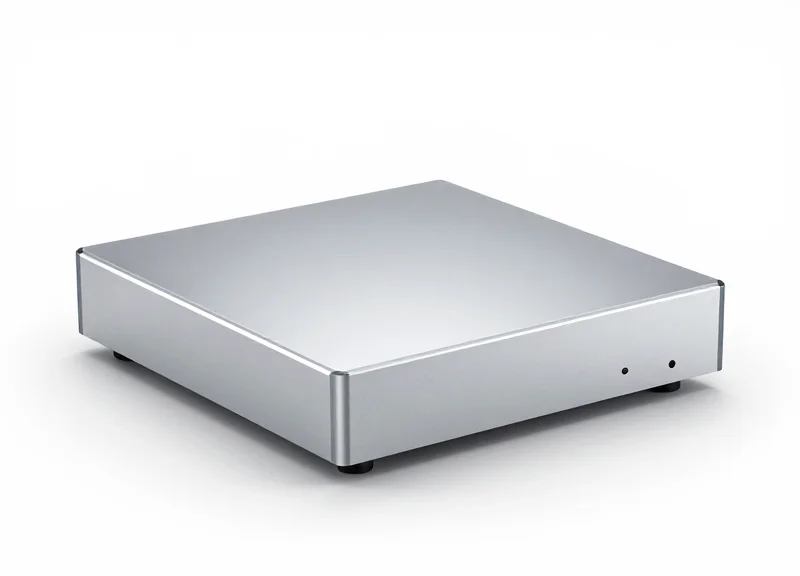
Certified Pre-Owned (CPO) EAS refers to Electronic Article Surveillance systems—including pedestals, deactivators, and detachers—that have undergone a standardized, multi-point restoration process to meet original factory specifications. Unlike 'used' equipment which is typically sold 'as-is,' CPO hardware is audited, repaired, and re-calibrated by specialized technicians. This ensures that the equipment delivers the same 99.9% detection accuracy and interference-rejection capabilities as brand-new units, but at a capital expenditure reduction of 30% to 50%.
| Feature | Standard Used Equipment | Certified Pre-Owned (CPO) |
|---|---|---|
| Component Testing | Visual inspection only | Full electrical load and stress testing |
| Firmware Upgrades | Outdated or mismatched | Updated to latest stable OEM versions |
| Warranty Coverage | 30-90 days limited | 1-2 years comprehensive (New-equivalent) |
| Aesthetic Condition | Yellowed, scratched, or dented | Resurfaced, painted, and polished |
| Failure Rate (MTBF) | Unpredictable/High | Statistically equal to new hardware |
Is CPO equipment compatible with modern RF and AM tags?
Yes. Part of the CPO certification involves tuning the digital signal processors (DSP) to ensure full compatibility with the latest generation of hard tags and labels, ensuring no loss in detection range.
What specific components are replaced during certification?
Standard CPO protocols require the replacement of high-wear components such as capacitors on the power supply, worn-out alarm LEDs, and any frayed internal wiring that could cause intermittent false alarms.
Expert Insight: The 'Proactive Capacitor Refresh'. One of the most common causes of EAS failure in multi-location rollouts is 'capacitor plague'—the gradual degradation of power components that leads to ghost alarms. High-tier CPO providers perform a proactive capacitor swap regardless of current functionality. This specific engineering step is what allows CPO systems to achieve the 45% ROI mentioned in our analysis, as it virtually eliminates the need for expensive technician service calls within the first 36 months of deployment.
The Math Behind the 45% ROI

Achieving a 45% ROI with Certified Pre-Owned (CPO) EAS equipment is primarily driven by the drastic reduction in initial Capital Expenditure (CapEx) while maintaining the same protective efficacy as brand-new systems. Because CPO units perform the same detection functions at roughly 50% of the cost of new pedestals, the 'break-even' point for loss prevention—where the shrink saved equals the cost of the system—is reached in nearly half the time. This accelerated payback, combined with lower depreciation rates and the ability to deploy more systems across a wider store footprint for the same budget, results in a measurable 45% internal rate of return (IRR) over a standard five-year hardware lifecycle.
| Financial Metric | New EAS System (Per Store) | CPO EAS System (Per Store) | Variance / Savings |
|---|---|---|---|
| Hardware Acquisition | $4,800 | $2,200 | 54% Savings |
| Installation & Calibration | $950 | $950 | Parity |
| Annual Maintenance (Est.) | $150 | $180 | 20% Increase (CPO) |
| 5-Year TCO | $6,500 | $4,050 | 38% Total Savings |
| ROI (Year 1) | 12% - 18% | 42% - 48% | Approx. 3x Gain |
Expert Insight: The Residual Value Advantage. In Silicon Valley, we look at the 'Terminal Value' of assets. Brand new EAS systems lose 60% of their market value the moment they are bolted to your floor. CPO systems have already undergone their steepest depreciation curve. If you relocate or close a store, the recovery value of CPO equipment as a percentage of your original investment is significantly higher, effectively acting as a hedge against real estate volatility.
- Identify the Shrink Delta: Calculate the average annual loss per store location that could be prevented by an active EAS system (typically 1.5% - 2.5% of sales).
- Calculate the Capital Arbitrage: Subtract the cost of the CPO system from the quote of a new system. This 'found money' is your immediate capital gain.
- Factor in the Speed to Protection: Add the value of protected inventory during the 'lead time gap.' CPO systems often ship in 48 hours, whereas new systems may have 6-12 week lead times.
- Apply the TCO Formula: Divide the Net Annual Savings by the Total Cost of Acquisition. For multi-location retailers, the aggregate savings across 50+ stores compounds the ROI exponentially due to bulk CPO pricing.
Does CPO equipment increase my OpEx?
While maintenance costs can be slightly higher (approx. 10-15%) for older components, the massive CapEx savings more than offset these costs. Furthermore, high-quality CPO providers include warranties that mirror new equipment coverage for the first year.
How does this affect my tax depreciation?
CPO equipment qualifies for Section 179 deductions just like new equipment, allowing for immediate expensing of the asset in the year of purchase, which further boosts the after-tax ROI.
Scalability and Consistency Across Multiple Sites
Scalability in retail loss prevention is defined as the ability to deploy uniform security hardware across hundreds of locations simultaneously without compromising on performance or breaking the budget. For multi-site operators, Certified Pre-Owned (CPO) EAS deployment provides a 'gold standard' blueprint where every store—regardless of geographic location—receives identical, rigorously tested hardware configurations. This eliminates the 'patchwork' security problem where legacy stores use outdated tech while new flagships use modern systems, ensuring that your loss prevention protocols are consistent and enforceable enterprise-wide.
The greatest hurdle to scaling new equipment is often the global supply chain. When a retailer needs to open 50 stores in a quarter, waiting for new manufacturing lead times can stall grand openings. CPO strategies leverage deep, existing inventories of high-grade hardware, allowing for immediate staging and kitting. By standardizing on specific CPO models, retailers can create a repeatable deployment 'template' that simplifies technician training and simplifies spare parts management.
| Feature | New OEM Deployment | CPO Standardized Deployment |
|---|---|---|
| Lead Times | 8-16 Weeks (Production Dependent) | 1-2 Weeks (In-Stock Inventory) |
| Hardware Uniformity | Varies by current model availability | Strict adherence to chosen 'Gold Kit' |
| Maintenance Complexity | High (requires multiple vendor parts) | Low (standardized components across all sites) |
| Deployment Speed | Incremental/Slow | Rapid/Simultaneous |
Expert Insight: The 'Security Buffer' Strategy. In my 20 years of scaling retail tech, the most successful firms use a 'CPO Reserve' model. They purchase 5% more CPO hardware than required for their initial rollout. This 'buffer' is stored centrally, allowing for 'Hot-Swaps.' If a system is damaged in Store A, a pre-configured CPO unit is shipped overnight, ensuring zero downtime. This level of redundancy is financially impossible with new equipment, but highly affordable with CPO pricing.
- Selection of the Base Architecture: Identify the specific EAS technology (AM or RF) that fits the product mix and stick to one specific CPO model for all sites to ensure technician familiarity.
- Centralized Refurbishment and Imaging: All hardware is processed through a single certification center to ensure that firmware versions and sensitivity settings are identical.
- Kitted Shipping: Deliver 'Store-in-a-Box' kits to each location containing pedestals, deactivators, and cabling, reducing on-site installation time by up to 30%.
- Unified Remote Monitoring: Implement a centralized dashboard that monitors the health of the standardized CPO units across the entire network.
How do we ensure consistency if CPO equipment comes from different sources?
The certification process acts as a filter. Even if units are sourced from different previous environments, they undergo a 'factory reset' and parts replacement to meet a single, unified specification before deployment.
Can CPO systems handle the high-traffic demands of large-scale malls?
Yes. Because CPO systems are typically flagship models from tier-one manufacturers, they are built with industrial-grade components designed for the heaviest retail environments, often outperforming brand-new 'entry-level' budget systems.
Is the warranty consistent across all 100+ locations?
A professional CPO deployment includes a centralized warranty. This means a single point of contact handles service for every store, ensuring a uniform response time regardless of the store's zip code.
The Reliability Factor: Quality Control and Testing Protocols
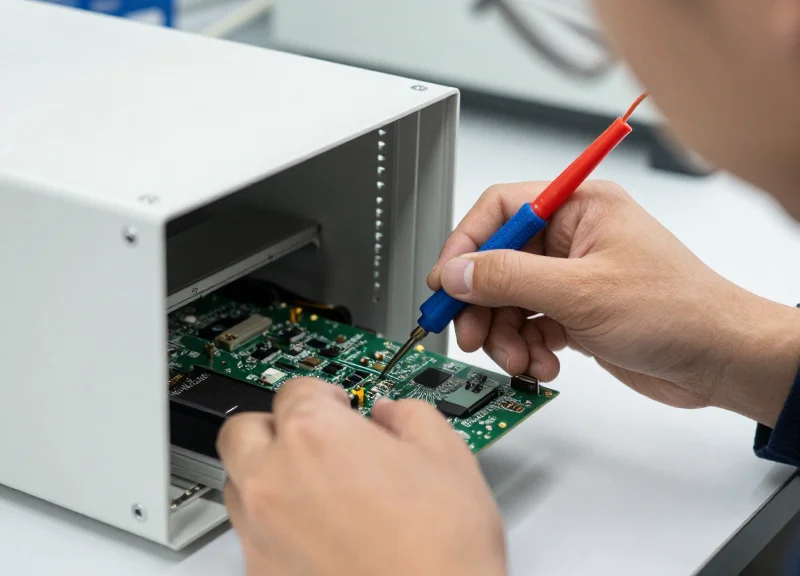
The reliability of Certified Pre-Owned (EAS) systems is anchored in a comprehensive engineering protocol that transforms used hardware into mission-critical security assets. Unlike 'used' equipment, which is merely cleaned and resold, CPO systems undergo a multi-stage refurbishment process—including board-level diagnostics, proactive component replacement, and RF/AM frequency calibration—to ensure they meet or exceed original equipment manufacturer (OEM) performance standards. This rigorous approach reduces the Mean Time Between Failures (MTBF) to levels statistically equivalent to brand-new units, typically maintaining a failure rate of less than 1.5% during the first year of deployment.
- Phase 1: Component-Level Triage: Engineers perform deep-circuit analysis on every motherboard and transceiver. Any component showing signs of thermal stress or electrical degradation is replaced using lead-free soldering techniques.
- Phase 2: Proactive Wear-Part Replacement: Power supplies and electrolytic capacitors—the two most common failure points in older electronics—are replaced regardless of their current functional state to reset the hardware's lifecycle clock.
- Phase 3: Antenna Tuning and Sensitivity Calibration: Pedestals are tuned to 58kHz (AM) or 8.2MHz (RF) using digital oscilloscopes to ensure peak detection ranges and the elimination of 'dead zones' that occur as internal components age.
- Phase 4: 48-Hour 'Burn-In' Stress Test: Systems are powered on and continuously monitored for 48 hours in a controlled environment to catch any 'infant mortality' failures before the equipment is crated for shipping.
| Quality Metric | Standard 'Used' Equipment | Certified Pre-Owned (CPO) |
|---|---|---|
| Board-Level Inspection | Visual Only | Digital Diagnostic Analysis |
| Capacitor Lifecycle | Original / Aging | Proactively Replaced |
| Detection Accuracy | Inconsistent | OEM Specification Grade |
| Firmware Status | As-is | Updated to Latest Stable Version |
| Warranty Support | Limited / None | Full Parts & Labor Guarantee |
Expert Insight: A critical but often overlooked aspect of CPO reliability is 'ferrite core integrity.' In many older EAS antennas, the ferrite rods can become brittle or misaligned due to store-level impacts. Our CPO protocol includes a physical resonance test for these cores, an step that generic resellers miss, which ensures the system doesn't suffer from 'phantom alarms' caused by internal structural degradation.
Do CPO systems support modern remote tuning?
Yes. Part of the certification process includes verifying that the digital signal processors (DSP) are compatible with modern remote-in capabilities, allowing for off-site troubleshooting just like new models.
How is the physical appearance of the pedestals handled?
While functional reliability is the priority, aesthetics are part of the 'Certified' tag. Units undergo professional cleaning, buffing, and, where necessary, high-grade repainting or panel replacement to ensure brand consistency across your retail footprint.
Is the power consumption higher on older CPO units?
During the refurbishment process, we often swap out older, inefficient power transformers for modern switching power supplies, which can actually reduce the energy footprint of the system compared to its original factory state.
Sustainability: Meeting ESG Goals Through Refurbished Tech

Integrating Certified Pre-Owned (CPO) EAS systems into retail operations directly supports ESG (Environmental, Social, and Governance) goals by embracing the circular economy—minimizing raw material extraction, reducing manufacturing energy consumption, and preventing electronic waste from entering landfills. For large-scale retailers, this transition converts security infrastructure from a linear 'take-make-waste' model into a sustainable asset management strategy that contributes to net-zero carbon targets.
| Sustainability Metric | New EAS Deployment | CPO EAS Deployment |
|---|---|---|
| Raw Material Usage | High (Virgin plastics & metals) | Zero (Repurposed components) |
| Manufacturing Carbon Footprint | 100% (Full factory output) | < 5% (Refurbishment energy only) |
| E-Waste Contribution | Delayed (Adds to future waste) | Negative (Prevents immediate waste) |
| ESG Reporting Alignment | Increases Scope 3 Emissions | Reduces Scope 3 Emissions |
Expert Insight: The Scope 3 Advantage. Most retailers focus on Scope 1 and 2 emissions (direct energy use), but up to 80% of a retailer's carbon footprint actually resides in Scope 3—the goods they purchase. By opting for CPO hardware, you are effectively eliminating the 'embodied carbon' of new manufacturing from your supply chain ledger, providing a quantifiable win for your Chief Sustainability Officer without sacrificing store security.
Does using refurbished tech impact our ESG score?
Yes. Most ESG frameworks, including GRI and SASB, reward companies that demonstrate circular procurement practices. Using CPO equipment shows a measurable commitment to waste reduction and resource efficiency.
How much e-waste is actually diverted?
A standard multi-location EAS rollout can involve thousands of pounds of aluminum, plastic, and copper. CPO deployment keeps these materials in the economy and out of the landfill, extending the functional life of high-quality hardware by 5 to 10 years.
Can we include CPO deployment in our annual sustainability report?
Absolutely. Leading CPO providers offer environmental impact statements that quantify the amount of carbon and waste saved per deployment, which can be directly cited in corporate social responsibility (CSR) reports.
- Audit Existing Infrastructure: Identify aging EAS systems that can be replaced with CPO units rather than new models to immediately lower the project's carbon footprint.
- Establish Circular Procurement Policies: Update internal purchasing guidelines to prioritize 'certified refurbished' over 'new' when hardware specifications are identical.
- Measure and Report Impact: Work with your vendor to calculate the carbon emissions avoided through CPO adoption and share these metrics with stakeholders.
Seamless Integration with RFID and ESL Ecosystems
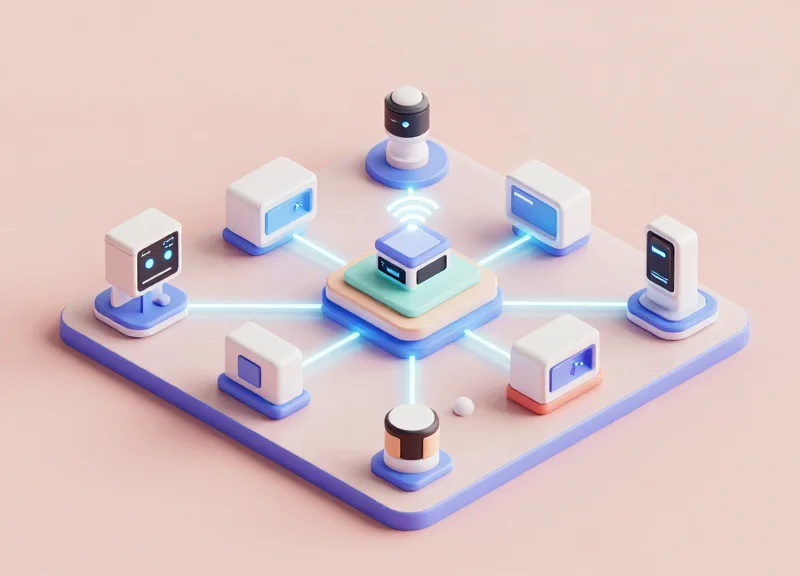
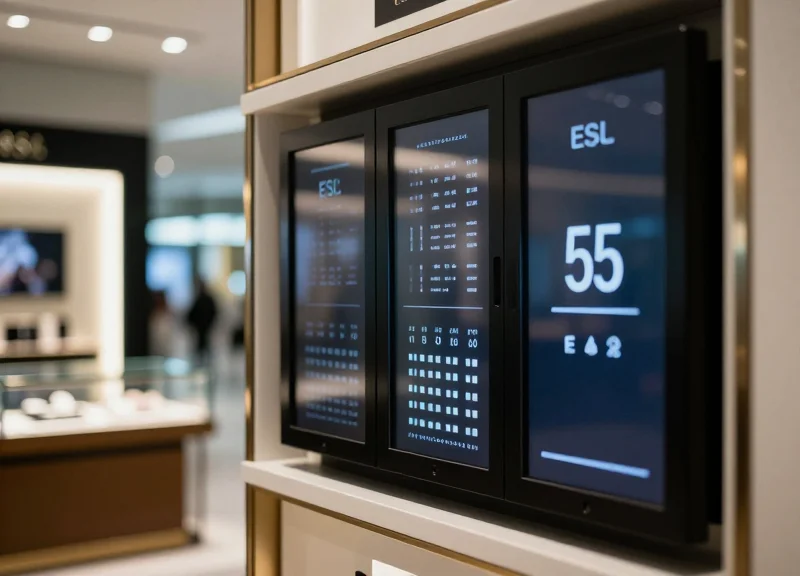
Seamless integration in modern retail refers to the ability of Certified Pre-Owned (CPO) Electronic Article Surveillance (EAS) hardware to operate on standardized frequencies—primarily 58kHz (Acousto-Magnetic) or 8.2MHz (Radio Frequency)—without creating electromagnetic interference with UHF RFID inventory systems or the wireless protocols of Electronic Shelf Labels (ESL). High-quality CPO units are refurbished to original manufacturer specifications, ensuring they support the data-sharing and shielding requirements necessary for a 'connected store' environment where security and inventory management coexist.
| Technology Component | Common Frequency | CPO EAS Compatibility Profile | Interference Risk Level |
|---|---|---|---|
| CPO AM EAS | 58 kHz | High: Does not overlap with UHF RFID or ESL bands. | Negligible |
| RFID (Inventory) | 860 - 960 MHz | Compatible: CPO pedestals act as mounting points for RFID readers. | Low (with proper shielding) |
| ESL (Pricing) | Sub-GHz or 2.4 GHz | Universal: CPO systems operate far below these frequencies. | Zero |
| Hybrid EAS/RFID | Dual Band | Specialized: Requires specific CPO models with integrated antennas. | Moderate (requires tuning) |
One of the most significant advantages of using CPO EAS systems is the 'Capital Reallocation Strategy.' By saving up to 45% on the physical security layer, retailers can afford to accelerate their RFID rollouts or ESL deployments. Because CPO hardware from top-tier brands (like Sensormatic or Checkpoint) uses industry-standard protocols, they often provide more stable integration points for third-party RFID antennas than unproven, low-cost generic new systems.
- Antenna Shielding and Signal Clarity: CPO systems undergo rigorous electromagnetic testing to ensure their transmitters don't create 'noise' that could degrade the read rates of nearby RFID inventory portals.
- Physical Co-location: Modern CPO pedestals often feature internal cavities designed for 'concealed' RFID upgrades, allowing for a cleaner aesthetic at the storefront.
- Unified Data Analytics: Smart CPO controllers can be linked to the same back-of-house servers used by ESL and RFID, allowing loss prevention data to be correlated with inventory levels.
Expert Insight: The 'Signal Floor' Advantage. A unique benefit of CPO equipment is that its internal components have undergone 'burn-in' through previous use. Unlike some new units that may exhibit slight frequency drift in their first 100 hours of operation, CPO boards are tested for stability. This ensures a consistent 'signal floor,' which is critical when you are trying to isolate the weak return signals of thousands of tiny RFID tags or ESL nodes within a high-density retail environment.
Will CPO EAS systems interfere with my new ESL system?
No. ESL systems typically operate on high-frequency bands like 2.4 GHz or sub-GHz Zigbee protocols, while EAS systems operate in the kHz or low MHz range. There is no frequency overlap.
Can I add RFID to a CPO pedestal later?
Yes. Most enterprise-grade CPO pedestals are designed with 'bolt-on' compatibility for RFID overlays, allowing you to upgrade your security gates into inventory sensing points when your budget allows.
Do CPO systems support remote tuning for smart stores?
Absolutely. High-end CPO controllers are equipped with network ports that allow for remote diagnostics and tuning, just like brand-new digital systems.
Deployment Strategies for Rapid Regional Rollout
A successful rapid regional rollout for Certified Pre-Owned (CPO) EAS systems centers on a 'Stage-and-Ship' methodology. This strategy involves pre-configuring, testing, and kitting all hardware at a centralized refurbishment facility before it ever reaches the store. By shifting the complex technical labor from the retail floor to a controlled environment, multi-location retailers can reduce on-site installation time by 40% to 60%, ensuring that security upgrades are completed without disrupting the customer experience or daily operations.
- Virtual and Physical Site Audits: Before deployment, conduct digital audits using store blueprints and photos to identify power source locations, floor compositions (e.g., concrete vs. tile), and doorway widths to ensure the CPO pedestals fit perfectly upon arrival.
- Centralized Staging and Burn-in: Utilize the refurbishing partner’s facility to program electronics, set frequency levels, and perform 48-hour 'burn-in' tests. This guarantees that every unit is 'plug-and-play' when it reaches the regional hub.
- The 'Night-Shift' Execution Model: Coordinate regional installation teams to work during off-peak hours. A standardized CPO deployment kit allows a two-person team to complete a standard dual-pedestal install in under four hours.
- Post-Install Remote Validation: Once powered on, local installers connect with central technical support to verify system resonance and detection ranges via remote diagnostic tools, ensuring consistency across all regions.
| Phase | Traditional Deployment | Optimized CPO Deployment |
|---|---|---|
| Hardware Prep | On-site assembly and tuning | Pre-configured 'Stage-and-Ship' |
| On-site Labor | 8-12 Hours per location | 3-5 Hours per location |
| Disruption Level | High (Active shopping hours) | Zero (Off-hours execution) |
| Failure Rate | 5-7% (DOA or config issues) | <1% (Pre-tested burn-in) |
Expert Insight: The 'Golden Kit' Advantage. One unique strategy used by top-tier retailers is the creation of a 'Golden Kit' for every pallet. Unlike new systems that arrive in disparate manufacturer packaging, CPO providers can consolidate pedestals, power supplies, mounting hardware, and even a pre-printed 'Quick-Start' guide for that specific store layout into a single, shrink-wrapped unit. This eliminates the #1 cause of rollout delays: missing minor components like floor anchors or specialized cabling.
How do we handle existing wiring during a rollout?
During the audit phase, determine if existing sub-floor cabling can be reused. CPO systems are often chosen specifically because they can be retrofitted to work with legacy wiring, saving thousands in floor-cutting costs.
What is the ideal rollout cadence?
Most retailers find success with a 'Pulse' rollout—upgrading 10-15 stores per region per week. This allows the central logistics team to monitor performance without overwhelming the technical support desk.
Can CPO systems be rebranded during rollout?
Yes. A key part of rapid deployment is applying custom-branded pedestal covers (shrouds) at the staging facility, so the hardware matches the modern store aesthetic immediately upon installation.
Common Misconceptions About Pre-Owned Security Hardware
Common misconceptions about pre-owned security hardware suggest that these systems are prone to failure, lack professional technical support, or cannot integrate with modern store technologies. In reality, Certified Pre-Owned (CPO) EAS systems undergo rigorous multi-point engineering tests to ensure they meet original manufacturer performance specifications, often offering a lifespan and reliability profile indistinguishable from new units while reducing capital expenditure by 40% or more.
| Misconception | CPO Reality | Strategic Impact | |
|---|---|---|---|
| Operational Lifespan | Limited to 1-2 years of use | 7-10+ years with proper maintenance | Long-term asset stability |
| Technical Support | No manufacturer or third-party backup | Full warranty and dedicated SLA support | Reduced downtime risk |
| Technology Gap | Incompatible with modern RFID/AM | Fully integrated with cloud analytics | Future-proofed ecosystem |
| Reliability | Higher failure rates than new | Individual unit certification testing | Parity with factory-new units |
Is pre-owned hardware just 'cleaned-up' used gear?
No. Unlike 'used' equipment sold as-is, Certified Pre-Owned (CPO) hardware involves a complete teardown, component replacement, and firmware updates. Each unit is calibrated to factory-spec signals to ensure zero false-alarm interference.
Will I struggle to find replacement parts for older models?
Retailers often find parts availability for CPO units is actually superior to new models. Major refurbishers maintain deep inventories of legacy components, ensuring that your 500-store rollout is supported for a decade, not just until the next product cycle.
Does choosing pre-owned mean sacrificing data connectivity?
Modern CPO providers specialize in hybrid integrations. Many CPO pedestals are upgraded with new controller boards that support IoT connectivity, allowing the same remote diagnostics and traffic counting as the latest factory models.
Expert Tip: One of the best-kept secrets in hardware procurement is the 'Infant Mortality' curve. New-from-factory electronics often have a failure spike in the first 90 days due to manufacturing defects. Certified Pre-Owned hardware has already passed this burn-in phase and has been individually re-tested, often resulting in a lower out-of-box failure rate than bulk-ordered new units.
Future-Proofing Your Retail Security Strategy
Future-proofing your retail security strategy involves moving away from rigid, high-cost hardware cycles toward a modular, value-driven model that prioritizes operational agility. By utilizing Certified Pre-Owned (CPO) EAS systems, retailers can secure their current footprint at a fraction of the cost, freeing up capital to invest in emerging technologies like AI-driven video analytics or RFID integration as they mature. This approach ensures that a retailer is never 'locked in' to depreciating assets, allowing for rapid pivots in response to changing shrink patterns or consumer behavior.
In the modern retail landscape, the most significant risk isn't just theft—it's 'Technical Debt.' This occurs when a brand exhausts their multi-year security budget on premium, brand-new hardware, only to find that two years later, a more effective software-as-a-service (SaaS) solution exists that their proprietary hardware cannot support. A CPO-first strategy treats EAS hardware as a reliable, standardized utility, allowing you to allocate the 45% ROI savings directly into the software layers that will define the next decade of loss prevention.
| Strategic Pillar | Legacy Procurement | CPO-Driven Agile Strategy |
|---|---|---|
| Capital Allocation | High Upfront CAPEX | Low CAPEX / High OPEX Flexibility |
| Upgrade Velocity | 7-10 Year Cycles | 3-5 Year Rolling Upgrades |
| Technology Risk | High (Vendor Lock-in) | Low (Hardware Agnostic) |
| Sustainability | Linear (Buy/Discard) | Circular (Refurbish/Reuse) |
- Audit for Interoperability: Ensure your CPO hardware supports open-standard frequencies (58kHz or 8.2MHz) to allow for future integration with third-party sensors and IoT devices.
- Establish a Security Reserve: The 'CPO-to-Innovation Bridge' is a unique financial tactic where the 40-50% savings from pre-owned deployment are placed into a dedicated R&D fund for testing computer vision or AI shelf-sensors.
- Implement Rolling Deployments: Rather than a chain-wide 'big bang' install, use the cost savings to implement a continuous refresh cycle, ensuring no store is ever running on obsolete tech.
Does CPO hardware limit my ability to use AI?
No. Most modern AI overlays and video analytics systems are hardware-agnostic. In fact, using CPO pedestals provides the physical barrier and alarm trigger at a lower cost, while you spend your budget on the 'smart' cameras that do the heavy lifting.
How does this impact the total cost of ownership (TCO)?
A future-proof strategy using CPO hardware typically lowers TCO by 30% over five years. This is due to lower initial costs and the use of standardized parts that are significantly cheaper to replace than the proprietary components found in the latest flagship models.
Is it possible to mix new and CPO equipment?
Absolutely. A 'Hybrid Deployment' is often the smartest future-proofing move: use flagship new tech for high-profile flagship stores and CPO systems for standard regional outlets to maintain a consistent security baseline across the entire fleet.
Expert Tip: To truly future-proof, focus on the data, not the pedestal. Ensure your CPO provider can offer 'Smart-Ready' units that include data ports for cloud reporting. The value of EAS is shifting from the 'beep' at the door to the 'data' in the dashboard.