In today's fast-paced global supply chain, the difference between profitability and loss often rests on a decimal point. While RFID hardware provides the raw visibility, it is the middleware that transforms chaotic signals into actionable intelligence. For enterprises aiming to maximize ROI, transitioning to cloud-based RFID middleware is no longer optional—it is a strategic necessity. This guide explores how cloud architectures bridge the gap between physical tags and enterprise resource planning (ERP) systems, ensuring that your inventory data reaches the elusive 99.9% accuracy threshold required for modern automation.
The Evolution of Inventory Management: From Manual to RFID

The evolution of inventory management represents a transition from reactive, human-centric counting to proactive, automated data capture. In the early stages, manual ledger entries were the standard, but they suffered from a baseline 10% error rate. The introduction of barcodes improved visibility but remained limited by line-of-sight requirements and manual labor. Today, Radio Frequency Identification (RFID) stands as the gold standard, enabling non-line-of-sight bulk scanning that achieves up to 99.9% data accuracy. This shift is essential for digital-first economies where ERP systems require high-velocity, real-time data to optimize supply chains and maximize ROI.
| Feature | Manual Records | Barcode Systems | Cloud-Based RFID |
|---|---|---|---|
| Data Accuracy | Low (~85-90%) | Moderate (~95%) | High (99.9%) |
| Scanning Speed | Very Slow | Slow (One-by-one) | Instant (Bulk scan) |
| Human Intervention | High | Significant | Minimal |
| ERP Integration | Batched/Delayed | Near Real-Time | Instantaneous/Cloud-Sync |
The fundamental flaw in legacy systems—including many barcode implementations—is the 'Human Bottleneck.' In a barcode-driven warehouse, an operator must physically locate and scan every single SKU. This linear process cannot scale with the demands of modern e-commerce. RFID middleware solves this by digitizing the physical environment entirely. The middleware acts as a high-speed translator, converting raw radio waves from thousands of tags into clean, ERP-ready business events. Without this evolution, your ERP is essentially 'flying blind,' making decisions based on data that is often 24 to 48 hours old.
- Why is manual inventory tracking now considered a financial risk?: Manual tracking introduces a latency between physical movements and digital records. This 'data lag' leads to Ghost Inventory (items listed but not present) and Hidden Stockouts, which typically erode 20-30% of annual warehouse ROI through lost sales and emergency replenishment costs.
- What is the 'Accuracy Chasm' in modern supply chains?: The Accuracy Chasm is the gap between the 99% accuracy needed for automated ERP workflows and the ~95% maximum accuracy of barcode systems. While 5% seems small, in a 100,000-unit facility, it represents 5,000 errors that trigger cascading failures in procurement and fulfillment.
- Expert Tip: The 1% Rule in High-Velocity Logistics: In my 20 years in Silicon Valley logistics, I have seen that for every 1% increase in inventory accuracy above 95%, companies typically see a 2-3% increase in bottom-line profitability due to reduced safety stock and optimized labor allocation.
Defining Cloud-Based RFID Middleware: The Digital Translator
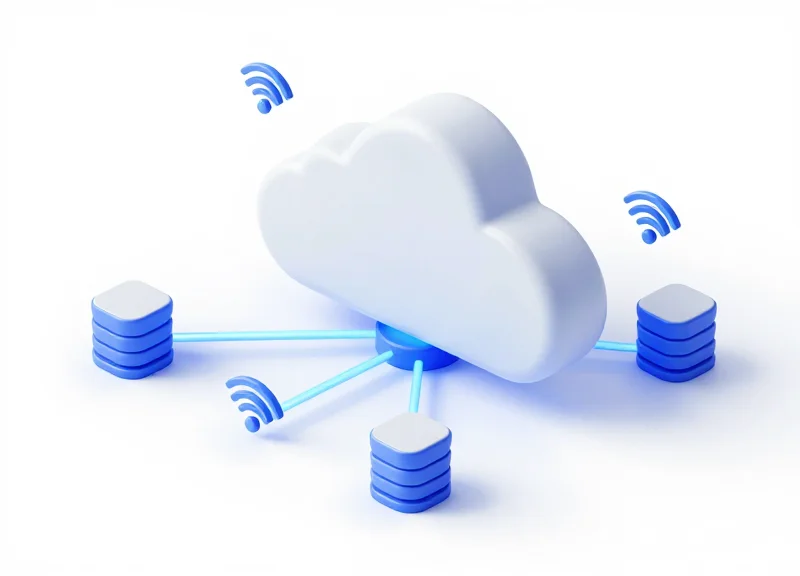
Cloud-based RFID middleware is the sophisticated software layer that sits between physical RFID readers and enterprise business applications like ERP, WMS, or SCM systems. It functions as a "digital translator," capturing raw signal bursts from tags, filtering out redundant or erroneous data, and formatting the results into actionable business events. By moving this processing to the cloud, organizations gain real-time visibility and global scalability, ensuring that the heavy volume of raw radio frequency data does not overwhelm the core business database.
- Data Filtering & De-duplication: RFID readers may scan a single tag hundreds of times per second. Middleware removes these redundant pings, sending only one clean record to the ERP.
- Device Management: A centralized hub to monitor the health, firmware versions, and configuration of thousands of RFID readers across global locations.
- Semantic Translation: Converts raw hexadecimal tag IDs into meaningful business identifiers, such as SKU numbers, batch IDs, or expiration dates.
- Edge Intelligence: Executes local logic to determine if a tag movement represents a sale, a shipment, or just a routine stock count before uploading data.
| Feature | Legacy On-Premise Middleware | Modern Cloud-Based Middleware |
|---|---|---|
| Deployment Speed | Months (Hardware procurement/setup) | Days (Instant provisioning) |
| Scalability | Limited by physical server capacity | Infinite, elastic cloud scaling |
| Maintenance | Manual patches and local IT support | Automated OTA updates & 24/7 monitoring |
| Data Accessibility | Siloed by location | Global, real-time access from any device |
The Expert Perspective: The 'Signal-to-Insight' Ratio. In my two decades of Silicon Valley deployments, the biggest misconception I've seen is that 'more data' equals 'better inventory.' In reality, an RFID reader generates massive amounts of 'noise.' Without a robust middleware layer, your ERP will choke on 1,000 pings for the same pallet. High-performance middleware is actually an editor; it filters out the noise to ensure your ERP receives only the 'truth'—improving system performance by up to 40% compared to direct-integration attempts.
Why can't I connect my RFID reader directly to my ERP?
Direct connection lacks filtering capabilities. ERPs are designed for transaction processing, not for handling the high-velocity, high-volume raw data streams produced by radio frequency hardware.
Does cloud middleware introduce latency?
Modern cloud architectures use 'Edge Computing' to process data locally before syncing with the cloud, ensuring sub-millisecond response times for local operations while maintaining global data sync.
Is cloud middleware secure for sensitive inventory data?
Yes. Enterprise-grade cloud middleware utilizes end-to-end encryption (TLS 1.3) and SOC2-compliant data centers, often providing higher security than localized, unpatched on-premise servers.
Why 99.9% Accuracy Matters for ERP Readiness

ERP readiness is the state where your digital inventory records mirror physical reality with near-perfect precision, allowing Enterprise Resource Planning systems like SAP, Oracle, or Microsoft Dynamics to function as true 'Single Sources of Truth.' In a modern supply chain, 99.9% data accuracy is not just a target; it is the prerequisite for automated decision-making. Without this high-fidelity data, the ERP operates on 'Garbage In, Garbage Out' logic, leading to systemic failures in procurement, forecasting, and fulfillment.
| Metric | Legacy Accuracy (80-90%) | ERP-Ready Accuracy (99.9%) |
|---|---|---|
| Inventory Visibility | Delayed & Estimated | Real-Time & Absolute |
| Safety Stock Levels | High (Buffer against errors) | Lean (Data-driven confidence) |
| Ghost Inventory | Frequent write-offs | Virtually eliminated |
| Automated Reordering | High risk of overstocking | Safe and autonomous |
Expert Insight: The 'Inventory Drift' Effect. Most enterprises fail to realize that inventory data degrades over time. An error rate of just 1% per day in a high-velocity warehouse can lead to a 30% deviation in record accuracy within a single month. This compounding error—known as Inventory Drift—is the primary reason manual audits are perpetually 'behind' and why 99.9% accuracy via RFID is essential to stop the bleed before it impacts the bottom line.
- Elimination of Ghost Inventory: Ghost inventory occurs when the ERP thinks items are in stock that are physically missing. 99.9% accuracy ensures that when a customer clicks 'buy' or a production line requests a part, the item is exactly where the system says it is.
- Reduction of Safety Stock: When data is unreliable, managers keep 'just-in-case' inventory. High-fidelity RFID data allows companies to slash safety stock by 10-15%, freeing up massive amounts of working capital.
- Seamless Cross-Channel Fulfillment: For omnichannel retail, 99.9% accuracy prevents the 'out-of-stock' email after a customer has already placed an order, protecting brand reputation and maximizing sales.
How does 99.9% accuracy impact ERP automation?
It enables 'lights-out' procurement, where the ERP can autonomously trigger purchase orders based on real-time consumption without needing a human to physically verify the shelves.
Can SAP or Oracle handle raw RFID data?
Usually no. ERPs are designed for business logic, not the high-volume noise of raw RFID pings. Middleware is required to clean and validate this data to maintain the 99.9% accuracy standard before it hits the ERP.
What is the ROI of moving from 95% to 99.9% accuracy?
The final 4.9% often represents the difference between manual cycle counting (labor-intensive) and fully automated inventory management (low-cost), often resulting in a 20-30% reduction in operational overhead.
Core Technical Advantages of Cloud vs. On-Premise Architectures
The primary technical advantage of cloud-based RFID middleware lies in its distributed, elastic architecture which decouples the physical RFID reader hardware from the computational load of data filtering. Unlike on-premise systems that rely on localized server capacity and manual hardware scaling, cloud middleware utilizes microservices and containerized environments to handle 'data bursts'—the massive influx of tag reads that occur during bulk scanning—ensuring that ERP systems receive clean, deduplicated data without latency or infrastructure bottlenecks.
| Feature | On-Premise Middleware | Cloud-Based Middleware |
|---|---|---|
| Scalability | Vertical (requires hardware upgrades) | Horizontal (automatic & elastic) |
| Initial Investment | High CapEx (Servers, licenses, HVAC) | Low OpEx (Subscription-based) |
| Data Accessibility | Local network only (VPN required) | Global access via secure APIs |
| Updates/Security | Manual patches, high downtime risk | Continuous delivery, zero-downtime |
| Data Redundancy | High-cost localized backups | Built-in multi-region failover |
Expert Insight: The 'Parallel Stream Processing' Advantage. One unique technical differentiator of cloud-native RFID middleware is the ability to implement 'Parallel Stream Processing.' In a legacy on-premise environment, data is often processed sequentially through a single server pipe; if 10,000 tags are read at once, the system can hang. Cloud-based systems shard this incoming data across hundreds of virtual nodes instantly. This ensures that even in massive distribution centers, the data reaches the ERP with sub-second latency, preventing the 'buffer lag' that frequently compromises inventory accuracy in high-volume retail or manufacturing.
Does cloud-based RFID middleware increase latency?
No. Modern cloud middleware uses 'Edge-to-Cloud' orchestration. Critical filtering happens at the reader level (the edge), while complex logic and ERP synchronization happen in the cloud, resulting in faster performance than congested local networks.
How does cloud middleware reduce Total Cost of Ownership (TCO)?
By eliminating the need for on-site server maintenance, specialized IT staff for database management, and periodic hardware refreshes, organizations typically see a 30-50% reduction in TCO over a five-year period.
Is cloud RFID data secure enough for enterprise ERPs?
Yes. Top-tier cloud middleware providers utilize AES-256 encryption, SOC 2 Type II compliance, and dedicated VPCs (Virtual Private Clouds), offering higher security standards than most localized server rooms.
Advanced Data Filtering and Logic Engines

Advanced Data Filtering and Logic Engines serve as the intellectual core of RFID middleware, acting as a high-speed refinery that transforms raw, chaotic radio frequency signals into 'clean' business events. By utilizing algorithmic de-duplication, RSSI (Received Signal Strength Indicator) thresholds, and context-aware business rules, these engines filter out environmental noise and redundant reads. This process is essential for achieving 99.9% data accuracy, ensuring that ERP systems like SAP or Oracle receive only validated, actionable data points rather than a paralyzing flood of duplicate sensor pings.
In a typical warehouse environment, a single RFID tag might be read hundreds of times per second by multiple readers. Without a logic engine, this would trigger thousands of 'ghost' transactions in your database. The challenge is not just collecting data, but discarding the 98% of it that is redundant or irrelevant. This is where the transition from 'raw data' to 'business intelligence' occurs.
- De-duplication and Anti-Collision: The first line of defense, identifying multiple reads of the same Electronic Product Code (EPC) across different antennas and collapsing them into a single event record.
- Smoothing and Noise Reduction: Applying moving average filters to signal strength to ignore momentary 'flicker' caused by physical obstructions or signal bounce (multipath interference).
- Semantic Mapping: Translating a raw tag ID into a business object, such as 'Pallet 402' or 'SKU-789', by cross-referencing the middleware's internal asset registry.
- Directional Logic: Determining movement vectors (Inbound vs. Outbound) based on the sequence and strength of reads across an antenna array.
| Feature | Legacy Filtering | Advanced Cloud Logic Engines |
|---|---|---|
| Data Handling | Simple thresholding (pass/fail) | Probabilistic RSSI weighted filtering |
| Context Awareness | None (reads every tag in range) | Zone-based exclusion and inclusion |
| Scalability | Limited by local hardware CPU | Elastic cloud computing for massive bursts |
| Logic Updates | Manual firmware flashes | Over-the-air (OTA) dynamic rule deployment |
Expert Insight: The 'Stray Read' Paradox. A common failure in RFID deployments is the 'neighboring dock door' problem, where a reader at Door A picks up tags being loaded at Door B. Advanced logic engines solve this through RSSI Delta Analysis. By comparing the peak signal strength over a millisecond window, the engine can mathematically prove which reader is 'closest' to the tag, effectively silencing the stray read without human intervention. This is the difference between an inventory system that 'works' and one that is 'ERP-ready'.
{
  "event_type": "item_movement",
  "validated_epc": "urn:epc:tag:sgtin-96:3.0037000.06542.0",
  "confidence_score": 0.998,
  "logic_applied": ["DeDup", "RSSISmoothing", "ZoneValidation"],
  "direction": "outbound",
  "timestamp": "2023-10-27T10:15:30Z"
}
How does the middleware prevent ERP lag?
By performing heavy computational filtering at the 'Edge' or in a scalable cloud buffer, the middleware ensures that the ERP only handles one 'Commit' transaction rather than millions of raw tag pings.
Can the logic engine handle multiple tag types simultaneously?
Yes, modern logic engines use adaptive protocols to distinguish between metal-mount tags, liquid-safe tags, and standard inlays, applying different filtering algorithms based on the expected behavior of each tag type.
What happens if the cloud connection is lost?
Top-tier middleware utilizes 'Store-and-Forward' logic, where filtering happens locally at the edge, and the cleaned data is queued for the ERP once connectivity is restored.
Bridging the Gap: Seamless API-Driven ERP Integration
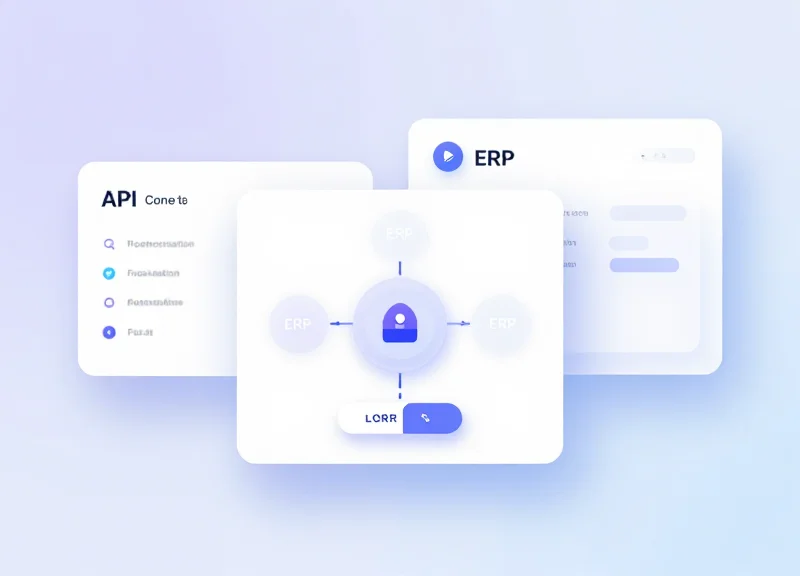
To achieve a truly ERP-ready inventory system, cloud-based RFID middleware must act as more than just a relay; it must function as a sophisticated data orchestrator. Seamless API-driven integration involves using RESTful or GraphQL architectures to push cleansed, contextualized data from the edge to enterprise systems like SAP, Oracle, or Microsoft Dynamics. By leveraging Webhooks and asynchronous processing, businesses can ensure that inventory movements are reflected in the ERP in milliseconds, eliminating the lag between physical events and digital records.
| Integration Method | Data Delivery Style | Best Use Case | Latency Level |
|---|---|---|---|
| RESTful API | Synchronous / Request-Response | Ad-hoc stock lookups and status queries | Low |
| Webhooks | Asynchronous / Event-Driven | Real-time shipping and receiving alerts | Near-Zero |
| Batch Processing (SFTP) | Scheduled File Transfer | End-of-day reconciliation for legacy systems | High |
| GraphQL | Flexible Querying | Complex mobile dashboards and selective data pulls | Low |
- Data Normalization and Mapping: Translate raw RFID hex codes into business-friendly identifiers (SKUs, Serial Numbers) that match the ERP's data schema.
- Authentication and Security Layer: Implement OAuth 2.0 or mTLS to ensure that every data packet moving from the cloud middleware to the ERP is encrypted and authenticated.
- Transactional Atomicity: Ensure that inventory updates follow 'all-or-nothing' logic; if the ERP update fails, the middleware must log the error and retry to prevent data discrepancies.
- Payload Enrichment: Before transmission, the middleware adds critical metadata—such as GPS coordinates, gate IDs, and timestamp—to provide a full audit trail.
{
  "event_type": "SHIPMENT_DEPARTED",
  "timestamp": "2023-10-27T10:15:00Z",
  "location_id": "WH-ZONE-4A",
  "epc_list": ["3034257BF400B7800004CB2F", "3034257BF400B7800004CB30"],
  "erp_reference": "PO-99821",
  "idempotency_key": "unique_hash_12345"
}
Expert Tip: To prevent the 'double-count' nightmare often caused by network flickers, implement an Idempotency Key in your API headers. This unique identifier ensures that if the same RFID event is sent twice due to a retry, the ERP recognizes it as a duplicate and only processes the first instance, maintaining 99.9% financial accuracy.
How does middleware handle ERP downtime?
Enterprise-grade middleware utilizes a 'store-and-forward' mechanism, caching events locally or in a cloud queue until the ERP confirms a successful 200 OK response.
Is real-time integration always better than batch?
For high-velocity fulfillment, real-time is essential. However, for monthly auditing of static assets, batch processing can reduce API overhead and costs.
Can RFID middleware connect to legacy on-premise ERPs?
Yes, by using a secure hybrid gateway or an Enterprise Service Bus (ESB) that bridges cloud-based API calls with on-premise SQL or SAP RFC connections.
Quantifying ROI: The Financial Impact of Accurate Data
The Return on Investment (ROI) for cloud-based RFID middleware is the measurable financial gain achieved by bridging the gap between physical assets and ERP intelligence with 99.9% data accuracy. For most enterprises, this ROI is realized through the radical reduction of 'Safety Stock' levels, the near-elimination of manual audit labor, and the prevention of revenue leakage caused by out-of-stock scenarios or mis-shipped orders.
| ROI Driver | Legacy/Manual Process | Cloud-RFID Middleware Impact |
|---|---|---|
| Inventory Accuracy | 70% - 85% (Average) | 99.9% (Consistent) |
| Audit Labor Cost | High (Weekly/Monthly Manual Counts) | Minimal (Automated Real-Time Scans) |
| Safety Stock Buffer | 15% - 25% (Hedging Uncertainty) | 5% - 8% (Data-Driven Lean Model) |
| Order Fulfillment Error | 1% - 3% (Standard) | < 0.1% (Validated at Dock Door) |
Beyond simple labor savings, the true financial impact lies in capital optimization. When your ERP receives high-fidelity data, you can reduce the amount of working capital tied up in 'Just-in-Case' inventory. For an enterprise managing $50 million in stock, a 10% reduction in safety stock frees up $5 million in cash flow that can be redeployed into R&D or market expansion. Furthermore, eliminating 'ghost inventory' ensures that your sales team never turns away a customer for a product that is actually sitting in the back of the warehouse.
How quickly can we expect a positive ROI?
Most mid-to-large scale enterprises achieve a break-even point within 12 to 18 months. The speed of ROI is primarily driven by the reduction in labor-intensive cycle counts and the immediate drop in expedited shipping costs used to fix fulfillment errors.
What are the 'hidden' cost savings of cloud middleware?
Cloud-based solutions significantly reduce Total Cost of Ownership (TCO) by eliminating the need for local server maintenance, specialized IT staff for on-premise hardware, and expensive version upgrades, which are handled automatically in the cloud.
Does 99.9% accuracy directly affect the bottom line?
Yes. Every 1% increase in inventory accuracy typically correlates to a 2-3% increase in stock availability, which directly translates to higher sales conversions and lower customer churn.
Expert Insight: Beware of the 'Data Latency Tax.' Generic ROI models often focus on accuracy but ignore the cost of delay. In a Silicon Valley context, we've observed that 'real-time' data delivered via cloud middleware prevents the Bullwhip Effect in supply chains. By acting on data that is minutes old rather than days old, companies can achieve a 'Dynamic Re-allocation' strategy—moving stock to high-demand locations before the demand peaks. This agility can add an additional 3-5% to gross margins, a benefit that is often invisible in standard accounting but transformative for market share.
Security and Compliance in Cloud-Based Deployments
Security in cloud-based RFID middleware is the foundational layer that ensures the 99.9% data accuracy promised by high-performance systems. For enterprise-level deployments, security protocols must transition from legacy perimeter-based defenses to a Zero Trust model. This means every RFID reader, edge gateway, and API call is continuously verified, authenticated, and encrypted using industry-standard AES-256 for data at rest and TLS 1.3 for data in transit, preventing the 'Man-in-the-Middle' (MITM) attacks that frequently plague legacy on-premise hardware.
| Security Layer | Protocol / Standard | Impact on Inventory Management |
|---|---|---|
| Edge Security | X.509 Certificate-based Auth | Ensures only authorized readers can transmit data to the middleware. |
| Data Transmission | TLS 1.2/1.3 Encryption | Prevents packet sniffing and data tampering during cloud upload. |
| Cloud Storage | AES-256 Encryption at Rest | Protects historical inventory data from unauthorized database access. |
| Identity Management | OIDC / SAML 2.0 (SSO) | Restricts ERP write-access to verified administrative personnel only. |
Expert Insight: While most providers focus on cloud encryption, the real vulnerability is the 'Identity of Things.' In high-ROI deployments, we utilize hardware-based 'Secure Elements' inside RFID readers to store cryptographic keys. This ensures that even if a reader is physically stolen from a warehouse, the encryption keys cannot be extracted, and the device can be remotely revoked from the network instantly.
- Compliance Mapping: Align the middleware infrastructure with SOC 2 Type II and ISO 27001 standards to ensure third-party verification of security controls.
- Data Sovereignty and Residency: Configure cloud regions to ensure that sensitive supply chain data resides within specific geographic boundaries to comply with GDPR or CCPA.
- Role-Based Access Control (RBAC): Implement granular permissions so that a warehouse clerk can trigger a 'read' but cannot modify the 'inventory adjustment' logic in the ERP.
How does cloud RFID middleware ensure GDPR compliance?
By utilizing data anonymization and pseudonymization techniques, middleware ensures that no personally identifiable information (PII) is attached to the movement of goods unless specifically required and encrypted.
What is the role of an Audit Trail in RFID security?
An immutable audit log tracks every change made to the middleware configuration and every data packet sent to the ERP, providing a 'forensic' level of detail for compliance audits.
Can cloud middleware protect against RFID tag cloning?
Advanced middleware uses 'Tag Authentication' logic that checks for duplicate Electronic Product Codes (EPCs) appearing in impossible locations (e.g., London and New York simultaneously), flagging potential clones immediately.
Future-Proofing with DragonGuardGroup: RFID, ESL, and Beyond

Future-proofing with DragonGuardGroup means transitioning from isolated hardware silos to a unified IoT ecosystem where RFID and Electronic Shelf Labels (ESL) share a single cloud-based middleware backbone. By integrating 99.9% accurate RFID data with dynamic ESL displays, businesses create a 'closed-loop' system where the physical shelf automatically reflects the digital inventory state of the ERP. This synergy eliminates manual auditing, synchronizes pricing across omni-channel platforms, and ensures that infrastructure investments remain scalable as retail and logistics technology evolves toward total automation.
In the modern enterprise, RFID provides the 'identity' and 'location' of a product, while ESL provides the 'interface' and 'instruction.' When these two technologies are managed through DragonGuardGroup’s cloud-native middleware, they act as a single nervous system. For example, when an RFID reader detects that inventory has fallen below a safety threshold, the middleware doesn't just alert the ERP; it can simultaneously trigger the ESL to update with a 'Low Stock' badge or change the pricing to move the remaining units efficiently.
| Feature | Standalone RFID | Standalone ESL | Integrated Ecosystem |
|---|---|---|---|
| Data Source | Scanning/Gates | Manual/Database | Real-Time RFID Stream |
| Inventory Precision | High (99%+) | Low (Estimated) | Absolute (Verified) |
| Operational Focus | Loss Prevention/Stock | Pricing Efficiency | Omni-channel Automation |
| ERP Synergy | Asynchronous | Manual Push | Bi-Directional API Sync |
Expert Insight: The 'Contextual Visual Feedback' Loop. One original advantage of the DragonGuardGroup ecosystem is the use of ESL LED indicators triggered by RFID middleware logic. During a pick-and-pack operation, the RFID system identifies the item's general zone, while the middleware sends a command to the specific ESL to flash a distinct color (e.g., bright green). This 'guided fulfillment' reduces employee search time by up to 40% and virtually eliminates picking errors, providing a level of ROI that standalone systems cannot match.
Does integrating ESL require a separate server from my RFID middleware?
No. DragonGuardGroup's cloud architecture is designed to manage both RFID and ESL through a unified API layer, reducing hardware overhead and simplifying maintenance.
How does this ecosystem improve the customer experience?
By ensuring that the price on the shelf always matches the online store and that 'In-Stock' indicators are actually accurate, you eliminate the friction that causes cart abandonment and brand distrust.
Is it possible to scale from RFID-only to an integrated system later?
Yes. Our middleware is modular. You can start with RFID for inventory accuracy and add ESL functionality as your budget and operational needs expand without replacing your core infrastructure.
Looking beyond the immediate horizon, DragonGuardGroup is preparing for the next wave of IoT integration, including sensor-based environmental monitoring and AI-driven predictive analytics. By building on an RFID and ESL foundation today, you are not just solving current inventory problems—you are installing the infrastructure for the autonomous, data-driven warehouse of tomorrow.