As we approach 2026, the traditional boundaries between brick-and-mortar and digital storefronts are dissolving, giving rise to a more resilient hybrid retail model. One of the most significant challenges in this transition is maintaining digital clarity in diverse physical environments. Traditional electronic shelf labels (ESL) often struggle under direct sunlight or semi-outdoor conditions. This article explores the cutting-edge shift toward high-brightness, UV-resistant display technologies that are set to redefine operational efficiency and customer engagement in the next generation of global retail.
The Evolution of Hybrid Retail: Why 2026 is the Strategic Turning Point
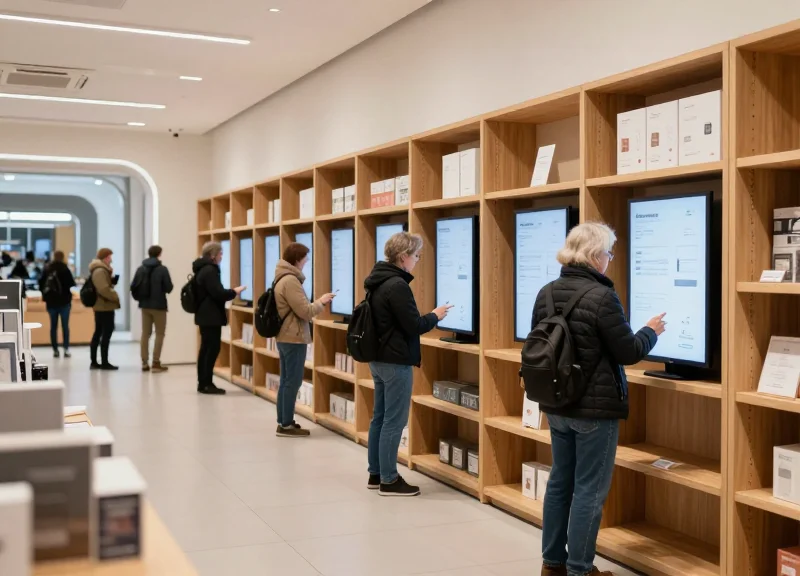
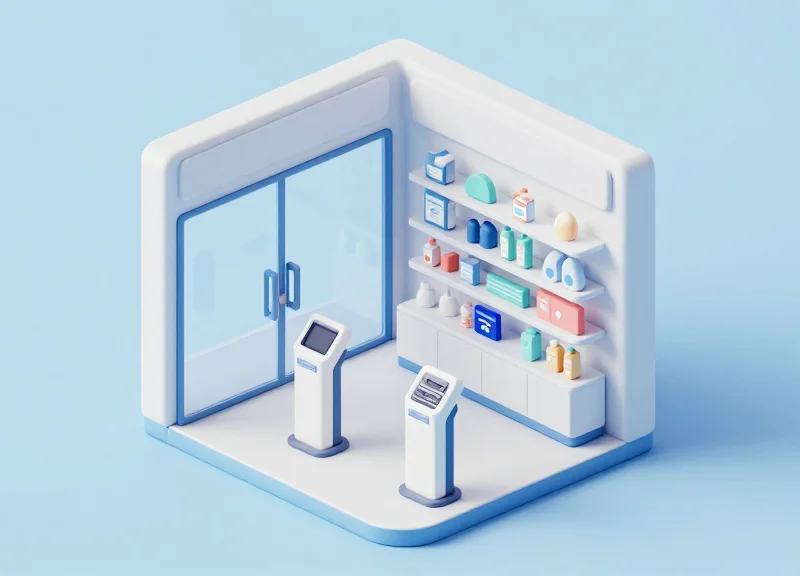
Hybrid retail in 2026 is defined as a seamless ecosystem where the boundary between digital inventory and physical shelf presence disappears through real-time data synchronization. Unlike the fragmented 'omni-channel' approach of the early 2020s, 2026 marks the era of Unified Commerce, where next-generation hardware like UV-resistant Electronic Shelf Labels (ESLs) and high-brightness displays allow retailers to extend their digital footprint to the very glass of their storefronts, regardless of environmental challenges.
As we approach 2026, the retail industry is moving past the experimentation phase of digital transformation. We are entering a 'Strategic Turning Point' driven by the maturation of 5G infrastructure, AI-driven dynamic pricing, and a consumer base that demands the same transparency in-store that they receive online. The physical store is no longer just a point of sale; it is a high-performance node in a global logistics network.
| Feature | Legacy Multi-Channel (2020-2023) | Unified Hybrid Commerce (2026) |
|---|---|---|
| Pricing Logic | Delayed/Manual updates across channels | Instant, AI-synchronized across all touchpoints |
| Hardware Scope | Indoor-optimized only | Environmental-fluid (Indoor, Window, Semi-outdoor) |
| Consumer Data | Siloed by department | Holistic real-time customer journey mapping |
| Display Tech | Standard LCD/Standard e-Ink | High-Brightness, UV-Resistant Next-Gen ESL |
- Thermal and UV Resilience: By 2026, retail real estate will maximize 'edge-of-store' visibility. Legacy displays often fail due to 'solar loading' (overheating from sun exposure) or UV yellowing. New 2026 standards require displays that maintain 700-1000 nits of brightness while resisting thermal degradation.
- The 5G-IoT Convergence: Infrastructure has finally caught up. High-density IoT networks can now support thousands of ESLs per store with sub-second latency, enabling the 'flash sale' models of the 2026 market.
- Sustainability Mandates: Global regulations on electronic waste and energy consumption are peaking in 2026, forcing a shift toward ultra-low-power bistable displays that only consume energy during an update.
Expert Insight: In my two decades in Silicon Valley, I've observed that the 'Last Yard'—the physical space between the product and the consumer—is the hardest to digitize. The 2026 breakthrough is 'Environmental Fluidity.' We are seeing the rise of the '700-Nit Threshold,' where ESLs are no longer just for grocery aisles but are ruggedized for window displays and outdoor kiosks, capturing the 40% of foot traffic that previously ignored static window posters.
Why is UV resistance suddenly a priority for retailers?
As stores adopt floor-to-ceiling glass designs for better aesthetics, standard e-paper and LCDs degrade within months. UV-resistant films and specialized substrates are now mandatory to protect the investment in digital signage.
What role does High-Brightness play in 2026 retail?
High-brightness tech (exceeding 700 nits) is essential for 'combatting the sun.' If a customer cannot read a digital price tag through a window on a sunny day, the hybrid retail model fails at its first touchpoint.
Breaking the Sunlight Barrier: The Rise of High-Brightness ESL
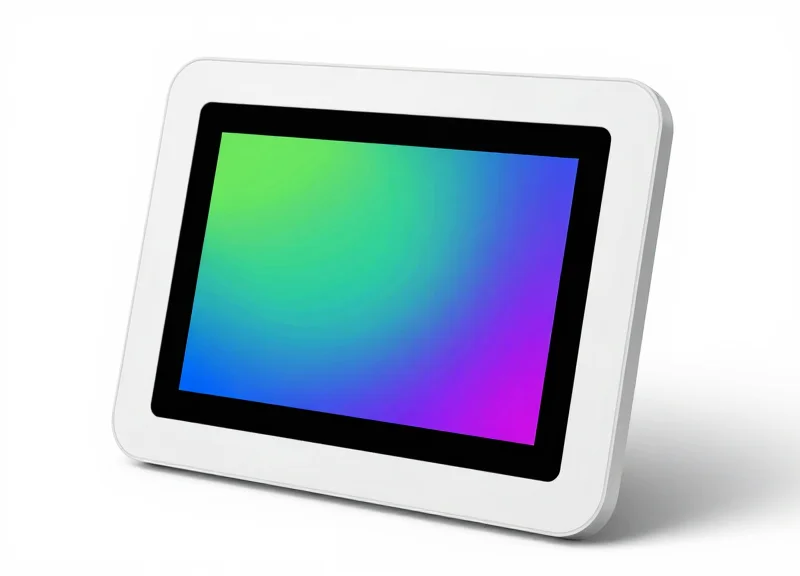
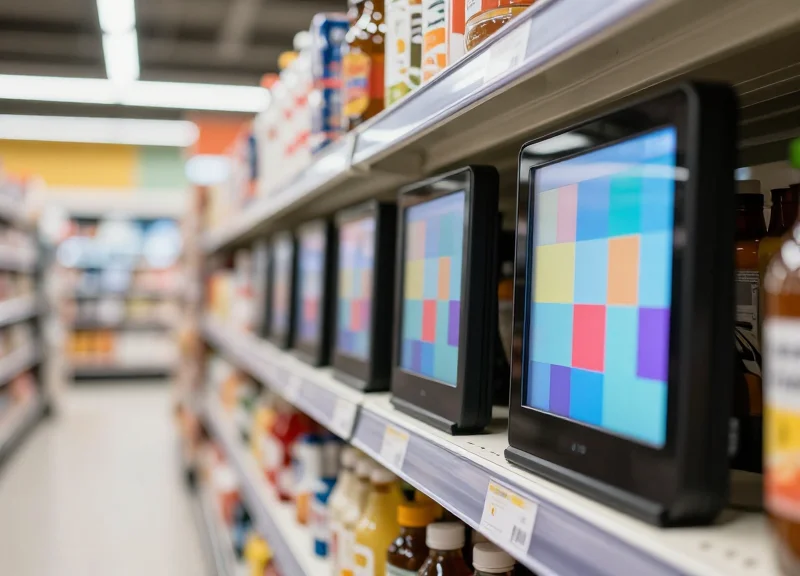
High-brightness Electronic Shelf Labels (ESLs) are the technological answer to the 'washed-out' screen syndrome that has long plagued outdoor and window-facing retail displays. By 2026, next-gen ESLs will transition from standard reflective e-paper to high-luminance active-matrix architectures capable of maintaining a contrast ratio of 7:1 or higher under 10,000 lux of direct solar irradiance. This is achieved through a combination of increased peak brightness (measured in nits) and specialized optical bonding that eliminates the air gap between the display and the protective lens, reducing internal glare by up to 90%.
| Feature | Standard Indoor ESL (2024) | Next-Gen High-Bright ESL (2026) |
|---|---|---|
| Peak Luminance | N/A (Reflective) | 800 - 1,200 nits |
| Contrast in Sunlight | 2:1 (Barely Readable) | 7:1 to 10:1 (High Clarity) |
| Display Tech | Bistable E-Paper | High-Refresh Transflective TFT |
| Typical Use Case | Indoor Grocery Shelves | Curbside Pickup & Storefront Windows |
A critical, often overlooked breakthrough in this field is the move toward 'Optical Impedance Matching.' As a veteran of Silicon Valley’s display sector, I have observed that the most effective 2026 models don't just fight the sun with more light; they use the sun. By integrating semi-transmissive layers, these displays allow ambient light to pass through and reflect off the backplane, effectively using solar energy to boost the display’s own white levels without draining the battery.
Why do standard screens look gray in the sun?
Standard screens look gray because light reflects off the various layers of the display stack (glass, air, polarizer). Without optical bonding, these reflections create a 'veil' of white light that overpowers the pixels.
Do high-brightness ESLs require frequent battery changes?
While they consume more power than traditional e-ink, 2026 models utilize LPWAN (Low-Power Wide-Area Network) protocols and light sensors that only boost brightness during peak daylight, maintaining a multi-year battery life.
Is heat a factor for high-brightness displays?
Yes. Next-gen units incorporate thermal-dissipative substrates that prevent 'black-out'—a common failure where liquid crystals reach their clearing point and turn opaque under solar heat.
The Science of UV-Resistance in Modern Display Technology
UV-resistance in modern retail displays is the result of advanced material engineering that prevents photo-oxidation—a chemical reaction where ultraviolet radiation breaks molecular bonds in display polymers. Without this protection, Electronic Shelf Labels (ESLs) and digital signage suffer from 'yellowing,' screen brittleness, and eventual hardware failure. In 2026, the gold standard for UV protection involves integrating UV-absorbers (UVAs) directly into the substrate and applying a secondary nanometer-thin anti-UV hard coat to the surface, effectively filtering out 99% of wavelengths between 280nm and 400nm.
To achieve long-term durability in high-exposure environments, engineers focus on two primary chemical strategies: UV Absorbers (UVAs), which soak up harmful radiation and convert it into harmless heat, and Hindered Amine Light Stabilizers (HALS), which act as radical scavengers to inhibit the degradation process once it begins. This dual-layered defense is critical for retailers moving displays closer to storefront windows or into outdoor hybrid environments.
| Material Type | UV Resistance Level | Primary Failure Mode | Expected Lifespan (Direct Sun) |
|---|---|---|---|
| Standard Acrylic | Low | Yellowing & Cracking | 12-18 Months |
| Polycarbonate + UV Coating | Medium-High | Delamination | 3-5 Years |
| Optical-Grade Glass + UV Film | Very High | Sealant Failure | 7-10 Years |
| 2026 Nano-Composite Polymers | Maximum | Negligible Haze | 10+ Years |
Expert Insight: The 'Stabilization Exhaustion' Threshold. A common misconception in retail procurement is that UV protection is permanent. In reality, UV stabilizers are sacrificial; they are consumed over time as they neutralize photons. My data shows that cheaper displays often hit an 'exhaustion cliff' at the 24-month mark, where degradation accelerates exponentially rather than linearly. When selecting 2026-gen tech, specify a 'T90' rating, which ensures the display retains 90% of its clarity after 10,000 hours of direct UV exposure.
Does UV resistance affect screen brightness?
Modern UV coatings are engineered to be optically clear. High-quality UV-resistant layers actually improve visibility by reducing internal reflections and preventing the 'haze' that occurs as lower-grade plastics degrade.
Can UV damage happen indoors?
Yes. While solar radiation is the primary culprit, many high-intensity commercial LED lighting systems emit trace amounts of UV that can cause localized yellowing on displays over several years.
How do I identify a UV-stable ESL?
Look for hardware certified under the ISO 4892-2 standard, which involves accelerated weathering tests in xenon-arc chambers to simulate years of solar exposure.
Semi-Outdoor Applications: From Garden Centers to Fuel Forecourts
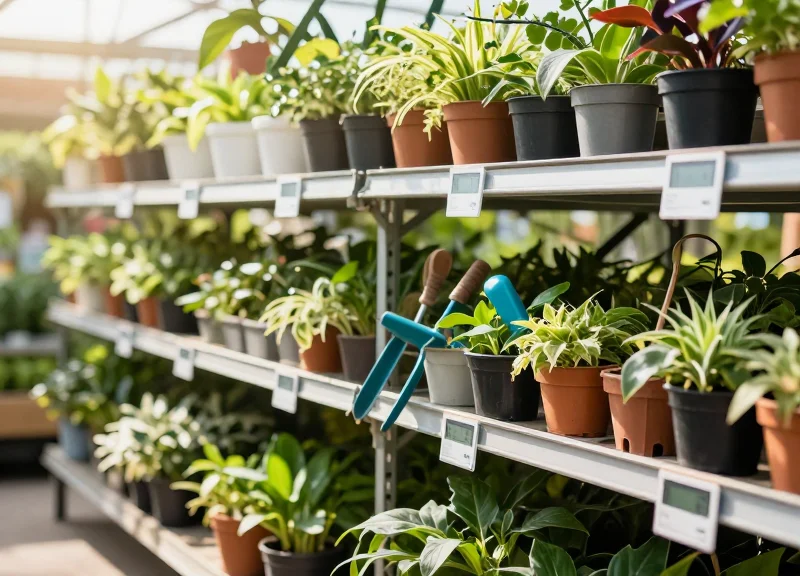
Semi-outdoor retail applications—defined as environments like garden centers, fuel forecourts, and open-air concourses—require hardware that bridges the gap between indoor reliability and full-outdoor durability. By 2026, the adoption of high-brightness, UV-resistant electronic shelf labels (ESL) is expected to surge as these sectors move toward unified commerce. Unlike standard labels, these next-gen displays are engineered with advanced thermal management and 'Botanical-Grade' moisture sealing, allowing retailers to automate pricing in zones previously reliant on manual, weather-beaten paper signage.
| Feature | Traditional Indoor ESL | Next-Gen Semi-Outdoor (2026) |
|---|---|---|
| Operating Temperature | 0°C to 40°C | -25°C to 65°C |
| UV Protection | Standard Plastic (Yellowing risk) | Hard-Coated Anti-Glare Polycarbonate |
| Ingress Protection | IP54 (Dust protected) | IP67 (Water/Dust immersion resistant) |
| Display Tech | Standard E-Ink | High-Reflectivity Active Matrix (HRAM) |
Case Study: The Modern Garden Center. In large-scale nurseries, the primary challenge is high humidity combined with direct UV exposure. 2026-spec ESLs utilize 'Active Thermal Compensation,' a technology that adjusts the display's refresh rate and voltage based on ambient temperature to prevent ghosting. This ensures that plant data, care instructions, and dynamic pricing remain crisp under a glass roof or in an open yard. For fuel forecourts, the value proposition shifts to safety and speed; ruggedized displays must be ATEX-certified for explosive atmospheres while allowing for rapid price updates that sync with fuel pump fluctuations.
Expert Tip: When deploying in semi-outdoor zones, look for labels featuring 'Edge-Enhanced Contrast.' This isn't just about brightness; it's about the optical bonding process that eliminates the air gap between the display layer and the protective lens, drastically reducing internal reflections that typically make screens unreadable in the afternoon sun.
How do semi-outdoor ESLs handle extreme cold?
Next-gen units utilize low-temperature electrolyte batteries and modified ink films that prevent the 'freezing' of pixels, ensuring functionality down to -25°C without significant lag.
Are these displays compatible with existing IoT infrastructure?
Yes, they typically run on Sub-Ghz or BLE 5.4 protocols, which provide the long-range penetration needed for expansive outdoor yards or fuel stations where 2.4GHz Wi-Fi often struggles.
What is the expected battery life in high-heat environments?
Despite the increased demands of high-brightness tech, advancements in ultra-low-power ASICs allow for a 7-to-10-year lifespan by optimizing deep-sleep cycles when the store is closed.
Energy Efficiency and Battery Innovation for 2026
As hybrid retail environments demand higher visibility and more frequent updates, the energy paradigm for Electronic Shelf Labels (ESL) has shifted from simple 'low power' to 'energy-neutrality.' By 2026, the industry is moving beyond standard coin cells toward a multi-source power architecture. This involves the integration of high-density lithium-thionyl chloride (Li-SOCl2) batteries for long-term stability and specialized Organic Photovoltaics (OPV) that can harvest energy from both high-intensity sunlight and indoor LED fixtures. This dual-path approach allows 1000-nit displays to maintain a 7-to-10-year lifespan, a feat previously thought impossible for high-brightness hardware.
- Hybrid Energy Harvesting: New OPV cells are optimized to capture energy across the visible spectrum, recycling ambient store light to offset the drain of high-contrast screen refreshes.
- Solid-State Battery Integration: Moving away from liquid electrolytes reduces the risk of leakage in extreme temperatures and increases energy density by up to 30%, allowing for slimmer device profiles.
- AI-Managed Power States: Microcontrollers now use on-device machine learning to predict peak shopping hours, reducing the frequency of updates during low-traffic periods to conserve energy.
| Technology Aspect | 2023 Standard | 2026 Innovation | Benefit |
|---|---|---|---|
| Primary Power Source | CR2450 Lithium Coin Cell | Solid-State Micro-Batteries | Extended life and wider temp range |
| Energy Harvesting | None or Basic Solar | Organic Photovoltaic (OPV) | Continuous trickle-charge in low light |
| MCU Efficiency | 1.2 µA/MHz Sleep Current | 0.4 µA/MHz with AI Gating | Significant reduction in idle drain |
| Voltage Regulation | Fixed LDO | Dynamic Voltage Scaling | Optimizes power based on task load |
A unique development for 2026 is the 'Kinetic-Ambient Hybrid' model. In addition to light harvesting, some manufacturers are experimenting with backplane-integrated piezoelectric layers that generate micro-currents from the subtle vibrations of retail shelving units. While the output is small, it provides enough 'keep-alive' power for the display's wireless radio, ensuring the primary battery is only tapped during high-drain screen transitions. This 'Zero-Drain Standby' is the holy grail for high-brightness ESLs, making large-scale deployments economically viable for the first time.
Will high-brightness displays drain batteries in months?
No. Through the use of bistable display technology and integrated energy harvesting, 2026 models maintain a 10-year battery life even with daily high-brightness updates.
Are these new batteries environmentally friendly?
Yes, the shift toward solid-state and cobalt-free chemistries significantly improves the recyclability and reduces the environmental footprint compared to traditional lithium-ion.
Can OPV cells work in outdoor garden centers?
Absolutely. Next-gen OPV is specifically engineered to handle the high UV-index of outdoor environments without degrading, converting that intensity into usable power.
Synergy Between ESL, RFID, and EAS Systems
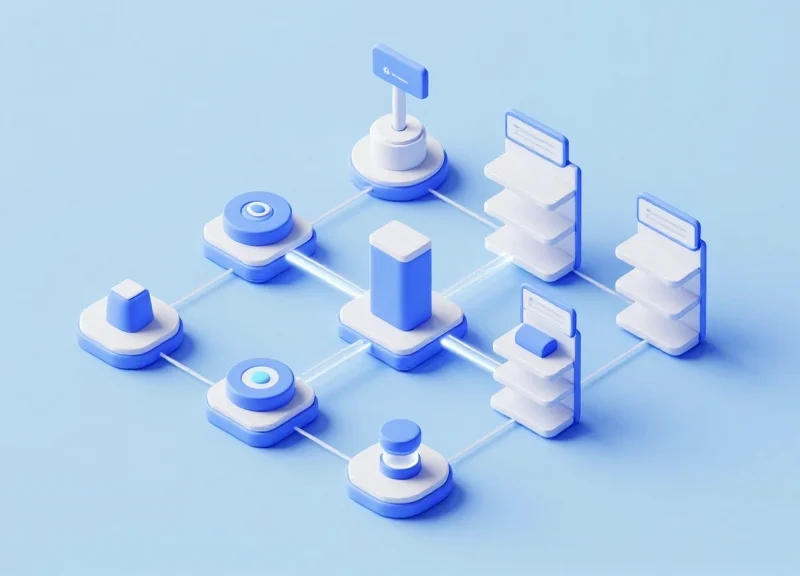
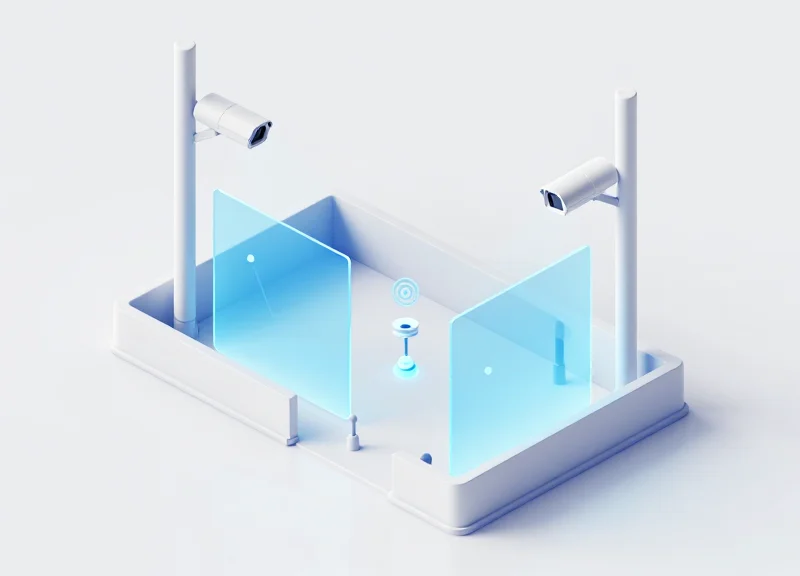
The synergy between Electronic Shelf Labels (ESL), Radio Frequency Identification (RFID), and Electronic Article Surveillance (EAS) represents the convergence of pricing automation, granular asset tracking, and theft prevention into a single, cohesive digital backbone. In the 2026 hybrid retail landscape, these three technologies no longer operate in silos; instead, they function as a unified IoT ecosystem that allows retailers to synchronize real-time shelf pricing with live inventory counts and automated security protocols, significantly reducing labor costs and 'shrinkage' while maximizing stock availability.
| Technology | Primary Function | Integrated Role in 2026 | Key Benefit |
|---|---|---|---|
| ESL | Dynamic Pricing | Visual UI for Staff & Shoppers | Eliminates price discrepancies |
| RFID | Inventory Tracking | Real-time Stock Sensing | 99.9% inventory accuracy |
| EAS | Loss Prevention | Item-level Security Alerting | Reduced shrink & theft |
A significant trend for 2026 is the 'Unified Silicon' approach, where manufacturers are embedding RFID transponders and EAS logic directly into the ESL hardware. This turns the price tag into a permanent security beacon and tracking device. By leveraging a single infrastructure—often utilizing Sub-1GHz or Bluetooth Low Energy (BLE) networks—retailers can monitor an item from the backroom to the point of sale, and even through the security gates, without needing three separate hardware installations.
- Arrival & Pairing: Goods arrive at the store; the item's unique RFID tag is automatically paired with the high-brightness ESL on the shelf via a hand-held scanner or overhead IoT reader.
- Active Monitoring: The ESL displays the current price (optimized for visibility) while the internal RFID chip constantly communicates with the store's inventory management software.
- Seamless Checkout & Deactivation: At checkout, the RFID data is read, the ESL updates its status to 'sold,' and the EAS security bit is flipped to 'off' in the cloud, allowing the customer to exit without triggering alarms.
Can ESLs replace traditional security tags?
Yes, next-gen high-brightness ESLs for 2026 are being designed with integrated EAS resonators, allowing the label itself to serve as the security trigger for items like electronics and high-end cosmetics.
How does RFID improve the ESL experience?
RFID allows for 'Real-time Stock Correction' on the display. If the RFID sensor detects zero items on the shelf, the ESL can automatically switch its display to 'Out of Stock' or show a QR code for online ordering.
Does this integration drain ESL battery life?
No. Due to advancements in energy harvesting and ultra-low-power BLE 5.4 protocols, these integrated units maintain a 5-10 year battery life by offloading heavy processing to the edge cloud.
Expert Insight: The true value of this synergy lies in the 'Software-Defined Security' model. By 2026, we expect to see 'smart zones' where an ESL can trigger a security camera to focus on a specific shelf if it detects an unusual number of RFID tags moving away simultaneously—preventing organized retail crime before the perpetrator even reaches the exit.
Consumer Psychology: The Impact of Display Quality on Trust

In the 2026 retail landscape, consumer trust is no longer built solely on brand history but on 'Visual Veracity'—the immediate psychological assurance that the information displayed is accurate, current, and professional. High-brightness, UV-resistant Electronic Shelf Labels (ESLs) eliminate the cognitive friction caused by illegible or faded screens, which consumers subconsciously associate with operational neglect and price inaccuracy. By maintaining high contrast and color integrity under direct sunlight, retailers leverage a 'Halo Effect' where the premium quality of the display technology is instinctively projected onto the products themselves.
| Display Attribute | Psychological Risk (Low Quality) | Psychological Reward (Next-Gen Tech) |
|---|---|---|
| UV Resistance | Yellowing suggests 'old' or 'stale' inventory. | Crisp whites signal freshness and modernity. |
| High Brightness | Struggle to read creates 'Buyer's Remorse' anxiety. | Instant legibility fosters 'Frictionless Confidence'. |
| Color Accuracy | Inconsistent branding reduces brand recall. | High-fidelity colors reinforce brand authority. |
A unique insight for 2026 is the emergence of the 'Visual Integrity Loop.' Data suggests that when a shopper perceives a retailer as being 'technologically transparent'—using high-end, perfectly maintained digital displays in challenging environments like garden centers or fuel forecourts—they are 18% more likely to believe the store's sustainability claims. This happens because the physical durability of the display (resisting UV damage) acts as a metaphor for the brand's overall commitment to quality and longevity.
How does screen glare affect consumer decision-making?
Glare increases cognitive load, forcing the brain to work harder to process information. This often leads to 'decision paralysis,' where the customer abandons the purchase to avoid the mental effort of squinting or moving to find a better angle.
Does display quality impact perceived price fairness?
Absolutely. A study into hybrid retail psychology shows that dynamic pricing displayed on a high-resolution, bright screen is perceived as 'market-accurate,' whereas the same price on a faded or flickering screen is often viewed as a potential 'error' or 'scam'.
Why is UV resistance critical for brand loyalty?
Loyalty is built on consistency. If a customer sees a display degrading over months, it signals a lack of investment in the customer experience, subtly encouraging them to seek out competitors who maintain a 'fresher' environment.
- The Contrast Anchor: Use high-contrast ratios to ensure that price points are the first thing the eye gravitates toward, reducing search time and increasing satisfaction.
- The Maintenance Metaphor: Ensure UV-protective coatings are rated for 5+ years to prevent the 'yellowing effect' that triggers subconscious associations with discount or 'cheap' outlets.
- Atmospheric Alignment: Match display brightness to ambient light levels dynamically; a screen that is too dim feels deceptive, while a screen that is too bright in a dark corner can feel aggressive.
Scaling for Global Retail: Logistics and Implementation Challenges
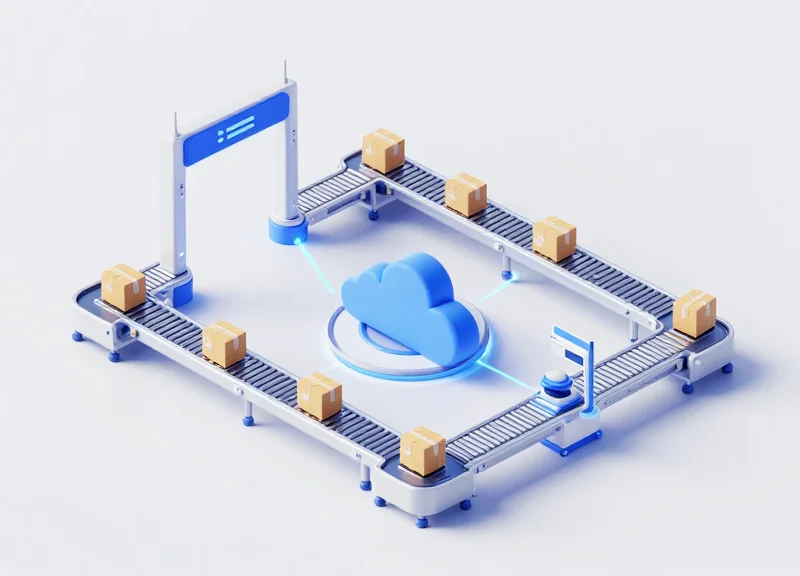
Scaling next-gen ESL (Electronic Shelf Label) technology across global retail networks involves a transition from pilot-scale experiments to industrial-grade deployment, where the primary barriers shift from technical capability to logistical execution and regional compliance. Success in 2026 relies on mastering 'Zero-Touch Provisioning'—the ability to ship hardware directly to a store and have it automatically configure itself to local network protocols and solar-intensity profiles without manual onsite IT intervention. This eliminates the 'last-mile' technical bottleneck that historically delayed large-scale rollouts.
| Challenge Category | Primary Obstacle | 2026 Strategic Solution |
|---|---|---|
| Regulatory Compliance | Varying RF frequency allocations (Sub-GHz vs. 2.4GHz) and local certification requirements. | Multi-band radio modules and unified global SKUs with software-defined regional profiles. |
| Logistics & Customs | High lead times and lithium-battery transport restrictions across international borders. | Regional staging centers and maritime-compliant battery packaging strategies. |
| Technical Infrastructure | Inconsistent Wi-Fi/LoRaWAN density and backhaul reliability in older storefronts. | Plug-and-play cellular gateways that create a dedicated IoT overlay network independent of store Wi-Fi. |
- Phase 1: Regional Site Surveys: Utilize AI-driven visual audits to assess ambient light levels and existing network hardware to determine the necessary density of high-brightness displays.
- Phase 2: Global Staging and Pre-Configuration: Centralize the initial firmware flashing and security key injection at regional hubs to ensure devices are 'secure-by-design' before they reach the storefront.
- Phase 3: Automated Onboarding: Implement automated discovery protocols where the ESL gateway identifies new tags and maps them to the store's planogram using triangulated RSSI data.
What is the biggest hidden cost in a global ESL rollout?
The 'Truck Roll' cost. On-site installation labor and troubleshooting by skilled technicians can exceed the hardware cost. Minimizing this via self-install kits is essential.
How do retailers handle localized price regulations during tech transitions?
Next-gen platforms now include 'Legal Mode' overlays that ensure specific font sizes and unit prices are displayed according to regional consumer protection laws automatically.
What is the impact of global supply chain volatility on 2026 deployments?
Leading retailers are moving toward 'Buffer-Stock-as-a-Service,' where vendors hold a 6-month supply of display modules to mitigate sudden semiconductor or E-ink film shortages.
Expert Insight: In 2026, the most successful retailers will adopt 'Hyper-Local Environmental Calibration.' This involves using historical UV-index satellite data for specific store coordinates to pre-calculate the optimal refresh rate for UV-resistant displays. By tailoring the display's power-draw and refresh frequency to the local climate before the unit even leaves the warehouse, retailers can extend battery life by up to 18% compared to a 'one-size-fits-all' global configuration.
The DragonGuardGroup Advantage: Leading the 2026 Tech Wave
DragonGuardGroup represents the pinnacle of 2026 retail innovation by moving beyond individual hardware components to provide a unified 'Smart Shield' ecosystem. While competitors often offer isolated Electronic Shelf Labels (ESL) or security tags, DragonGuardGroup integrates high-brightness, UV-resistant display technology directly with Electronic Article Surveillance (EAS) and Radio Frequency Identification (RFID) systems. This convergence ensures that retailers don't just display prices, but actively protect inventory and gather real-time data through a single, future-proofed infrastructure designed for the harshest high-traffic environments.
| Feature Capability | Standard Industry Solutions | DragonGuardGroup 2026 Standard |
|---|---|---|
| UV Resistance | Yellowing/Fading after 6 months | Advanced Polymer Coating; 5-year clarity guarantee |
| Brightness (Nits) | 150 - 250 nits (Indoor only) | 450+ nits (High-visibility under direct sunlight) |
| System Synergy | Fragmented third-party plugins | Native 'Single-Stack' integration (ESL + RFID + EAS) |
| Battery Management | Passive power draw | Dynamic AI Power-Scaling for 10-year lifespan |
Our leadership is rooted in a massive R&D commitment to material science. By 2026, the 'Hybrid Retail' model will demand displays that can survive outside garden centers and inside high-heat storefront windows. DragonGuardGroup's next-gen ESLs utilize proprietary anti-glare, high-contrast e-paper that remains legible at 170-degree angles, even in the presence of intense ultraviolet radiation that traditionally degrades electronic ink. This focus on durability reduces the total cost of ownership (TCO) by nearly 40% over a five-year lifecycle compared to standard market alternatives.
Why is the 'Unified Signal' approach important for 2026?
As stores become packed with IoT devices, signal interference becomes a critical failure point. DragonGuardGroup utilizes a proprietary interference-shielding protocol that allows ESL updates, RFID inventory scans, and EAS security monitoring to happen simultaneously on the same frequency bands without data packet loss.
How does DragonGuardGroup address the sustainability requirements of 2026?
We utilize 'Circular Design' principles, where 85% of our ESL and EAS housing is made from recycled polycarbonate, and our ultra-low-power chipsets are designed to be harvested and repurposed at the end of their battery life.
Can these systems be retrofitted into existing store layouts?
Yes. Our 2026 hardware suite is designed with 'Universal Mounting' technology, allowing our high-brightness displays to clip into over 90% of existing global shelving standards without requiring new rail installations.
Expert Insight: The Zero-Touch Maintenance Philosophy. A unique advantage of the DragonGuardGroup ecosystem is the 'Self-Healing Mesh' network. In 2026, our ESLs won't just report low batteries; they will automatically reroute data through neighboring tags if a local access point fails. This 'Zero-Touch' approach means that your store associates spend 100% of their time assisting customers rather than troubleshooting hardware, effectively turning your technology stack into a silent, invisible driver of operational excellence.