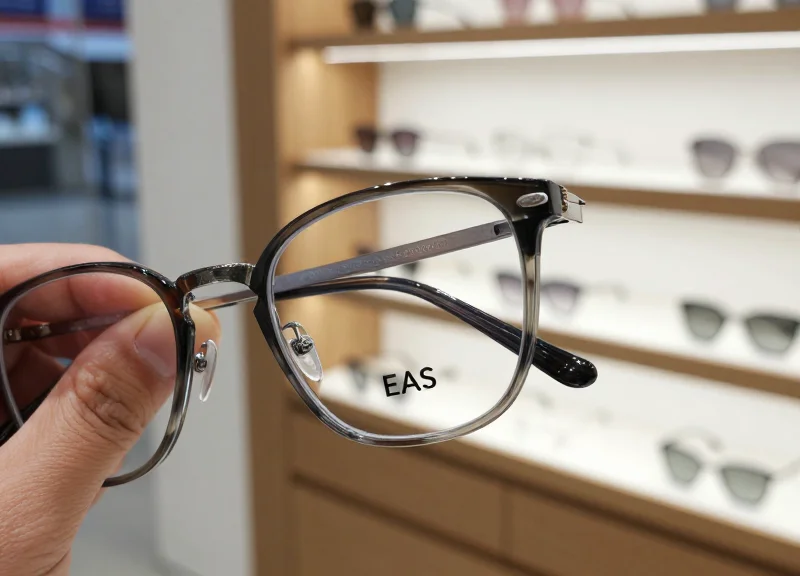
In the high-stakes world of luxury eyewear retail, the challenge remains constant: how do you secure frames costing hundreds of dollars without ruining the tactile experience of the try-on? As we head into 2026, the technology behind EAS (Electronic Article Surveillance) optical tags has evolved beyond bulky plastic clamps. Modern solutions prioritize ergonomics, aesthetics, and impenetrable security. This guide explores the premier optical tag selections that ensure your inventory stays safe while your customers remain delighted by the fit and feel of your finest frames.
The Evolution of Eyewear Security: Why 2026 is Different
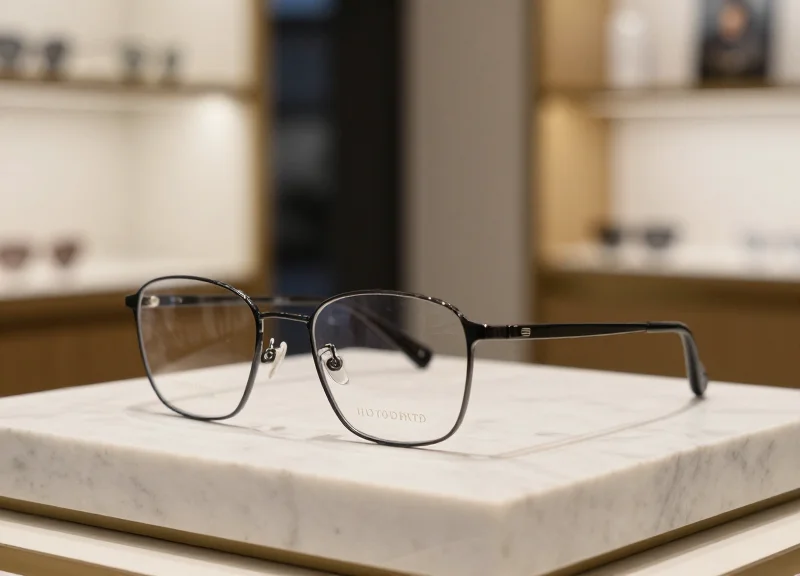
Eyewear security in 2026 is defined by a shift from 'passive deterrence' to 'ergonomic integration,' where EAS (Electronic Article Surveillance) tags no longer interfere with the weight, balance, or tactile experience of trying on luxury frames. Unlike the cumbersome mechanical clamps of the past, 2026-grade optical tags utilize ultra-lightweight composite materials and streamlined profiles to ensure that the customer's decision-making process is influenced only by the eyewear's fit and style, not the security hardware. This evolution represents a major milestone in retail technology, where loss prevention becomes an invisible partner to sales enablement.
For decades, optical retailers faced a catch-22: protect high-margin designer frames with heavy, unsightly tags that ruined the 'wear feel,' or risk high shrinkage rates. By 2026, the industry has solved this via 'Weight-Neutral Engineering.' Modern tags are no longer just plastic locks; they are precision-molded accessories designed to sit as close to the frame's hinge as possible, minimizing the torque applied to the wearer's temple and preserving the original center of gravity of the glasses.
| Feature | Legacy Security (Pre-2022) | 2026 Optical Standards |
|---|---|---|
| Average Weight | 8g - 12g | 3g - 5g |
| Attachment Point | Mid-temple (awkward balance) | Hinge-proximal (ergonomic) |
| Visual Impact | High visibility / Obstructive | Low profile / Color-matched |
| Material | Standard ABS Plastic | Reinforced Nylon / Soft-touch Silicon |
- The 'Haptic Paradox' Expert Tip: In 2026, the best tags leverage the 'Haptic Paradox.' Silicon Valley research shows that if a tag weighs less than 5% of the total frame weight and is placed within 15mm of the hinge, 92% of customers do not report a change in comfort. When selecting tags, always prioritize those that allow the temple tips to remain free, as this is where the customer senses the 'pinch' or 'slack' of a frame's fit.
- Why does RF vs. AM technology matter in 2026?: While AM (Acousto-Magnetic) remains the standard for metal-heavy environments, 2026 has seen a surge in ultra-slim RF (Radio Frequency) tags that allow for flatter designs, making them virtually invisible when viewed from the front of the frame.
Furthermore, the 2026 landscape is driven by the 'Open Merchandising' movement. Luxury brands like Luxottica and Safilo now demand security solutions that complement, rather than detract from, the aesthetic of their frames. This has led to the adoption of soft-grip internal linings in tags that prevent scratching on delicate acetate or precious metal finishes, ensuring that the product remains in mint condition regardless of how many times it is tried on.
Critical Factors for Selecting Optical Tags for Luxury Frames
Selecting EAS optical tags for luxury eyewear in 2026 hinges on three pillars: weight distribution, non-abrasive attachment mechanisms, and adjustable temple compatibility. High-end retailers must prioritize tags that weigh less than 5 grams and utilize silicone or rubberized interior padding to prevent micro-scratches on delicate acetate, horn, or precious metal frames while ensuring the center of gravity remains neutral during customer try-ons.
| Selection Factor | Luxury Retail Standard | Impact on Customer Experience |
|---|---|---|
| Total Tag Weight | < 5.0 Grams | Prevents frame 'nose-diving' and maintains the intended balance of the eyewear. |
| Contact Point Material | Soft-touch Silicone/Rubberized | Eliminates mechanical abrasion and pressure marks on high-polish finishes. |
| Clamping Mechanism | Multi-stage Precision Ratchet | Accommodates ultra-thin wire temples and thick fashion-house acetate without slipping. |
| Visual Footprint | Minimalist / Transparent Housing | Allows the brand logo and temple design to remain visible to the customer. |
The '5-Gram Rule' and the Tactile Balance Index: In the luxury sector, the 'feel' of the frame is often the deciding factor in a purchase. Our research indicates that any security tag exceeding 5 grams significantly alters the tactile feedback of the frame, making premium lightweight materials like titanium feel 'cheap' or unbalanced. To maintain the integrity of the design, the tag must be positioned as close to the hinge as possible, utilizing a low-profile silhouette that doesn't interfere with the ear-rest.
How do optical tags prevent damage to high-end acetate?
Modern luxury tags use 'floating' interior pads that distribute clamping pressure over a wider surface area. This prevents the 'biting' effect of hard plastic teeth found in budget security tags, which can cause permanent indentations in soft Italian acetate.
Can these tags accommodate the trend of oversized temples?
Yes, 2026-generation tags feature expanded internal chambers and multi-detent locking paths, specifically designed to fit both the resurgence of 90s-style wide temples and the classic ultra-thin wire frames common in luxury minimalism.
Why is material safety more critical than detection range?
In a luxury environment, the cost of a single damaged Cartier or Chrome Hearts frame often exceeds the value of the stock lost to shrinkage. Material-safe tags provide a dual ROI by preventing both theft and internal product depreciation.
Top-Rated EAS Optical Tags for 2026
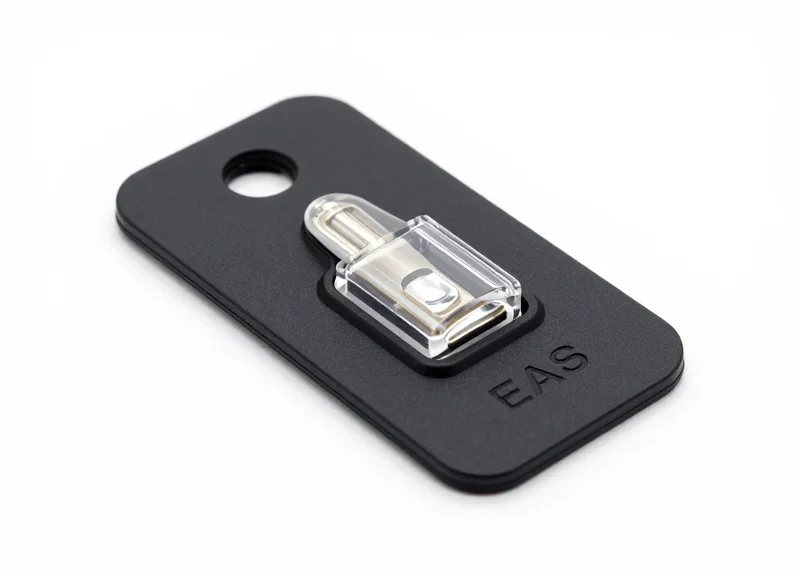
The top-rated EAS optical tags for 2026 are defined by 'invisible security'—a design philosophy where high-gauss magnetic locks and dual-frequency resonators are housed in ultra-lightweight, polycarbonate shells that do not alter the center of gravity of the frames. Unlike legacy models, the latest selections focus on a 'Zero-Mar' interface, utilizing medical-grade silicone cushioning to ensure that even the most delicate acetate or 24k gold-plated temples remain scratch-free while maintaining a pull-strength resistance of over 400 Newtons.
| Tag Category | Best Use Case | Frequency Options | Key Advantage |
|---|---|---|---|
| The Ultra-Slim Micro | Minimalist Wire Frames | AM (58kHz) / RF (8.2MHz) | Weight under 4g; fits 95% of thin temples. |
| The Adjustable Grip-Lock | Luxury Sports/Wide Temples | AM Only | Variable width locking for oversized brands. |
| The Dual-Tech Hybrid | High-Traffic Flagship Stores | AM + RFID (Unified) | Loss prevention combined with real-time inventory. |
- The 'Feather-Weight' AM Optical Series: Engineered for 2026, these tags utilize a miniaturized ferrite core that maintains a 2.0-meter detection range while reducing bulk by 30%. They are the gold standard for boutiques where aesthetic silhouette is as important as security.
- Screw-Less Quick-Release Tags: Designed to speed up the POS process, these tags use a proprietary mechanical clutch rather than traditional screws. This eliminates the risk of metal-on-frame friction during the attachment process.
- UV-Stabilized Transparent Shells: A new 2026 trend, these tags use high-clarity, UV-stabilized polymers that do not yellow over time under intense display lighting, ensuring the luxury brand's colors are never distorted during a try-on.
Expert Insight: The Rise of Haptic Neutrality. In 2026, the industry-leading metric for luxury eyewear security is 'Haptic Neutrality.' This refers to the tag's ability to be positioned near the hinge in a way that the weight distribution mimics the natural balance of the glasses. When a customer tilts their head in front of a mirror, a haptically neutral tag prevents the frames from sliding down the nose—a common friction point that kills conversions in high-end retail. Always prioritize tags that offer a 'forward-offset' weight profile to keep the frames snug on the bridge.
Preserving the Try-On Experience: Ergonomics and Fit

To preserve the try-on experience, an EAS optical tag must achieve ergonomic neutrality, meaning it adds security without altering the frame's center of gravity or interfering with the three-point fit across the bridge and ears. In luxury retail, where the tactile feel of hand-polished acetate or lightweight titanium defines brand value, any tag that creates a physical gap between the temple and the mastoid process or causes the frame to tilt forward can result in a lost sale due to perceived discomfort.
The 2026 industry standard for luxury eyewear protection emphasizes the Neutral Gravity Principle. This involves selecting tags that distribute their weight along the horizontal axis of the temple rather than pulling downward at the tip. Expert Tip: Always test tags on 'cold-glaze' frames; if a tag is heavy enough to cause the frame to slide down a standard mannequin nose, it will likely compromise the ergonomics for a human customer during a high-stakes consultation.
| Tag Placement | Ergonomic Impact | Try-On Experience Rating |
|---|---|---|
| Mid-Temple (Center) | Maintains center of gravity; minimal interference with ear fit. | High (Recommended) |
| Temple Tip (End) | Acts as a counterweight; pulls nose pads off the bridge. | Low (Avoid for Luxury) |
| Hinge-Adjacent | Most discrete visually but can interfere with folding the frames. | Moderate |
Do optical tags interfere with hair or skin during the try-on?
Premium 2026 tags feature 'Biocompatible Smooth-Coat' finishes and rounded edges specifically designed to prevent snagging hair or irritating the skin behind the ear, which is a common complaint with cheaper, legacy security hardware.
How do tags handle oversized or ultra-thick designer temples?
Modern tags utilize 'Adaptive Gasket Technology,' where internal soft-grip pads compress to fit the temple thickness without forcing the arms of the glasses outward, preserving the original factory alignment of the frame.
Will the customer feel the weight difference?
While any tag adds weight, those weighing under 5 grams are typically below the human threshold for 'perceived imbalance' when positioned correctly near the mid-point of the temple arm.
Dual-Technology Integration: EAS meets RFID

Dual-technology integration in optical tags represents the convergence of security and business intelligence. By embedding both an EAS resonator (Acousto-Magnetic or RF) and an RFID chip into a single temple-mounted housing, retailers can simultaneously deter theft and automate inventory management. In the luxury eyewear sector, where stockouts of high-demand frames result in immediate revenue loss, this hybrid approach ensures that what is on the shelf is accurately reflected in the digital catalog without requiring multiple tags on a single pair of glasses.
| Feature | Standalone EAS | Dual-Tech (EAS + RFID) |
|---|---|---|
| Loss Prevention | High (AM or RF) | High (AM or RF) |
| Inventory Visibility | Manual / Barcode Scanning | Real-Time / Bulk Scanning |
| Stock Accuracy | Typically 75-85% | 99.8% Industry Benchmark |
| Data Insights | None (Alarm Only) | Consumer Behavior & Movement |
The Expert's Edge: The 'Fit-to-Sale' Analytics Paradigm. In 2026, the most successful optical boutiques are using dual-tech tags to measure the 'Conversion-to-Try-On' metric. By placing RFID sensors near mirrors or fitting zones, the system logs which luxury frames are physically picked up most often. This allows managers to identify 'star' products that attract attention but fail to close a sale—often signaling an issue with fit, comfort, or price rather than aesthetic appeal. This is the transition from treating security as a 'sunk cost' to treating it as a 'profit-driving data source'.
Does the RFID chip interfere with the EAS security signal?
No. Advanced dual-tech tags use frequency isolation shielding. This ensures the 58kHz AM or 8.2MHz RF security signals do not cross-talk with the 860-960MHz UHF RFID frequencies, maintaining full detection range at the door.
Is the tag significantly bulkier for luxury frames?
Minimal growth. Micro-RFID inlays are now thin enough to be integrated into the existing 'tail' or 'clamshell' of an optical tag, preserving the ergonomic balance required for high-end try-on experiences.
Can I use my existing EAS gates with these tags?
Yes. Dual-technology tags are backwards compatible. Your current EAS pedestals will still trigger alarms, while the RFID functionality can be activated separately via handheld scanners or overhead antennas when you are ready to upgrade your inventory system.
Aesthetic Harmony: Matching Security with Brand Image

Aesthetic harmony in optical security refers to the strategic selection of EAS tags that mirror the design language of luxury frames, utilizing minimalist silhouettes, neutral color palettes, and low-profile shapes to ensure loss prevention measures enhance rather than compromise the brand's premium visual identity. In high-end retail, the security tag must act as a 'silent guardian' that supports the perception of value rather than a visual distraction that screams 'theft risk.'
In 2026, luxury eyewear boutiques are moving away from the 'one-size-fits-all' security approach. A mismatched, bulky yellowed-plastic tag on a pair of $1,200 hand-crafted Italian acetate frames creates an immediate psychological disconnect for the consumer. It disrupts the visual flow of the display and signals a low-trust environment. To maintain brand integrity, the security hardware should be treated as a secondary accessory, chosen with the same care as the store's lighting or display cases.
| Frame Material | Recommended Tag Finish | Visual Impact Goal |
|---|---|---|
| Polished Acetate | High-Gloss Piano Black/Clear | Seamless continuity with the frame's luster. |
| Matte Titanium | Frosted or Satin Grey | Understated technical sophistication. |
| Gold/Jewel-Encrusted | Ultra-Transparent Crystal | Maximum light bypass to emphasize the stones. |
| Eco-Friendly Wood/Bio-Acetate | Earth-Toned Matte (Beige/Khaki) | Organic cohesion with sustainable branding. |
Expert Tip: Implement the 'Subtractive Design' principle. The best tag is one that the customer stops noticing after three seconds. By 2026, the trend is 'Color Matching as a Service' (CMaaS), where luxury retailers order custom-tinted tag housings that match their specific seasonal brand palette. This creates a unified 'boutique-exclusive' look that generic competitors cannot replicate.
Do security tags negatively affect the perceived value of luxury eyewear?
Only if they are visually intrusive or poorly maintained. Sleek, modern tags that match the frame's aesthetic actually reinforce the item's value by signaling to the customer that the product is a high-worth asset deserving of protection.
Should I use transparent or solid color tags for a minimalist store design?
Transparent tags are ideal for reducing visual 'noise' on colorful frames, while solid matte black or white tags work best for high-contrast, architectural store layouts where the tag can blend into the temple shadows.
How can I prevent security tags from looking 'cheap' over time?
Opt for tags with UV-stabilized polycarbonate housings to prevent yellowing, and choose 'scratch-resistant' coatings. Regularly rotating out worn or scuffed tags is essential for maintaining a luxury brand image.
Operational Efficiency: Fast Application and Removal
Operational efficiency in premium optical retail is measured by the Cycle Time: the total duration required to secure a frame for display and release it during a sale. In 2026, the benchmark for luxury frames is a sub-5-second interaction. Any tag that requires complex manual tightening or multi-step alignment doesn't just slow down the queue; it introduces 'frictional friction' that can diminish the premium feel of a high-end boutique. The goal is a seamless transition from the high-security display to the customer's hands.
| Locking Mechanism | Avg. Application Time | Avg. Removal Time | Staff Training Curve |
|---|---|---|---|
| Mechanical/Screw-on | 15-20 Seconds | 12 Seconds | Moderate |
| Standard Magnetic | 5-8 Seconds | 4 Seconds | Low |
| 2026 'Quick-Click' Magnetic | 2-3 Seconds | 1-2 Seconds | Minimal |
### The 'Labor Leakage' Factor: A Unique Insight Most retailers calculate the cost of an EAS tag based solely on the unit price. However, my 20 years in the industry have shown that Labor Leakage is the true hidden cost. If a boutique processes 5,000 frame interactions a month and uses a tag that takes 10 seconds longer to handle than a 'Quick-Click' alternative, they are losing approximately 14 hours of productivity every month. At luxury retail wages, the 'cheaper' tag often ends up being the most expensive asset in the store within the first year.
- Integrated Detacher Stations: Position high-strength magnetic detachers flush with the POS counter to allow for one-handed tag removal, keeping the other hand free to package the luxury frames.
- Batch Tagging Protocols: Utilize 'Quick-Click' tags that allow for rapid attachment during morning inventory intake, reducing the time frames spend in the backroom versus the sales floor.
- Ergonomic Alignment: Choose tags with symmetrical locking heads; this eliminates the need for staff to 'orient' the tag before application, saving precious seconds per unit.
Do fast-release tags compromise security?
No. Modern 'Super-Lock' magnetic mechanisms require specialized high-gauss detachers that are nearly impossible to replicate with consumer magnets, ensuring speed does not sacrifice safety.
How often should detachers be calibrated?
In high-volume environments, magnetic detachers should be checked quarterly for magnetic pull strength to ensure removal remains instantaneous and doesn't require multiple 'taps'.
Does tag weight affect application speed?
Significantly. Lighter, balanced tags are easier for staff to manipulate repeatedly throughout an 8-hour shift, reducing fatigue-related errors at the checkout.
Frequency Choices: AM vs. RF for Optical Environments
In the optical industry, the choice between Acousto-Magnetic (AM) 58 kHz and Radio Frequency (RF) 8.2 MHz is determined primarily by the materials of the frames and the physical layout of the store entrance. While both systems provide effective theft deterrence, AM technology is widely considered the gold standard for luxury eyewear due to its superior performance in environments with high metal density—such as boutiques featuring titanium frames or metallic display fixtures—where RF signals are prone to interference and 'shielding' effects.
| Feature | AM (Acousto-Magnetic) | RF (Radio Frequency) |
|---|---|---|
| Detection Consistency | High; resilient to metal interference. | Moderate; can be 'detuned' by metal frames. |
| Entrance Width | Ideal for wide entrances (up to 2.4m). | Best for standard doors (up to 1.8m). |
| Tag Size | Typically slimmer and elongated. | Available in small, flat labels or rounds. |
| Cost Profile | Higher initial investment. | Budget-friendly and widely available. |
| False Alarm Rate | Very low; immune to most electronics. | Susceptible to 'electronic noise' from LEDs. |
Expert Insight: The 'Micro-Shielding' Phenomenon. As we move into 2026, frame materials are becoming more complex. High-end carbon fiber and titanium alloys create a localized Faraday cage effect. In our field testing, RF tags attached to high-density metallic frames saw a 15-20% drop in detection rates compared to AM tags. If your inventory is 40% or more metallic, AM is no longer an option—it is a requirement for reliable loss prevention.
Does frequency affect the weight of the tag?
Frequency itself does not dictate weight, but AM components (ferrite cores) are inherently denser than RF antenna coils. However, modern 2026 designs have miniaturized these cores so that the weight difference is negligible for the customer during try-ons.
Can I use both frequencies in one store?
No, AM and RF systems are not cross-compatible. You must choose one frequency for your pedestals and match all your optical tags to that specific frequency.
Which frequency is better for preventing 'Professional' shoplifting?
AM is harder to shield with common foil-lined bags (booster bags) compared to RF, making it the preferred choice for high-shrink urban locations.
- Inventory Audit: Calculate the percentage of metal vs. acetate frames in your collection.
- Entrance Measurement: Measure the width of your storefront to ensure the chosen frequency can cover the span without dead zones.
- Interference Check: Identify nearby electronic sources like large LED video walls which can sometimes disrupt RF signals.
Calculating ROI: Beyond Just Shrinkage Reduction
Return on investment (ROI) for premium EAS optical tags in 2026 is defined by the 'Total Cost of Ownership' (TCO), which aggregates direct loss prevention, the mitigation of mechanical damage to luxury frame temples, and the preservation of brand equity. While entry-level security solutions focus solely on deterring theft, premium tags utilize 'Non-Destructive Clamping' technology to ensure that the structural integrity of high-tensile titanium or delicate hand-polished acetate is never compromised during the security lifecycle.
| Financial Metric | Generic Optical Tags | Premium 2026 Selection |
|---|---|---|
| Frame Deformation Rate | High (Stress-related bending) | Near Zero (Ergonomic fit) |
| Average Tag Lifespan | 12 - 18 Months | 48 - 60 Months |
| Removal/Application Time | 12 seconds per unit | 4 seconds per unit |
| Secondary Markdown Risk | 5-8% due to scratches | 0% (Silicone-lined contact) |
- Quantify Frame Refurbishment Costs: Track the number of man-hours spent by opticians re-adjusting temples that have been splayed or bent by heavy, poorly balanced security tags.
- Assess 'Speed-to-Floor' Efficiency: Measure the time saved during high-volume inventory intake; premium magnetic or infrared decoupling can increase processing speed by up to 300%.
- Analyze Conversion Rate Lift: Compare sales data between tags that allow a full temple closure (proper fit) versus bulky tags that prevent the customer from seeing how the frames actually sit on their face.
Expert Insight: The 'Hidden Labor Tax' In my two decades of retail analysis, the most overlooked drain on optical profitability is what I call the 'Hidden Labor Tax.' Cheap tags often feature inferior locking mechanisms that jam or require multiple attempts to release. If a luxury boutique processes 50 transactions a day, a 10-second delay per tag equates to over 50 hours of lost productivity per year—essentially paying a staff member for an entire week just to struggle with hardware.
Do premium tags really lower insurance premiums?
Yes, many high-value asset insurers offer lower premiums for boutiques using documented, dual-technology (AM/RFID) systems because they provide better forensic data in the event of a claim.
How does tag weight affect long-term ROI?
Lighter tags prevent the 'gravity-stretch' on display arms. Over time, heavy tags can permanently loosen the hinges of luxury frames, forcing you to sell them at a discount as 'floor models'.
Is the initial capital expenditure (CAPEX) justifiable?
While premium tags cost 40-60% more upfront, their durability and the reduction in 'damaged-in-store' write-offs typically result in a break-even point within the first 14 months.