In the fast-evolving digital landscape of 2026, manual document tracking is no longer viable for high-stakes environments like banking and law. Misplacing a single legal file or an essential bank bill can lead to catastrophic compliance failures and financial loss. Radio Frequency Identification (RFID) technology has emerged as the gold standard for archival efficiency, providing real-time visibility and automated inventory control. However, the unique physical properties of paper archives—such as high density and the presence of metal fasteners—require specialized tag selection. This guide provides an authoritative roadmap to choosing the best RFID archive tags tailored for the rigorous demands of financial and legal institutions.
The Strategic Importance of RFID in 2026 Archiving

In 2026, RFID (Radio Frequency Identification) has transitioned from a logistical luxury to a non-negotiable strategic asset for institutional archiving. Driven by stringent global data residency laws and the need for instantaneous auditability, RFID archive tags now serve as the 'physical-to-digital' bridge, allowing banks and legal firms to automate inventory, ensure 100% chain-of-custody accuracy, and mitigate the massive liability risks associated with lost or misfiled sensitive documentation. By providing a real-time digital twin for every physical bill or case file, RFID eliminates the human error inherent in manual barcoding and legacy filing systems.
| Feature | Legacy Archiving (Pre-2024) | Modern RFID Archiving (2026) |
|---|---|---|
| Inventory Speed | Hours/Days per room | Minutes via handheld/gate |
| Search Accuracy | 92% - 95% (Prone to misfiles) | 99.9% (Real-time location data) |
| Compliance Audit | Manual sampling/Disruptive | Automated/Continuous reporting |
| Security | Visual/Manual check-out | Sensor-based theft/loss alerts |
The shift toward RFID is primarily fueled by 'Zero-Trust Physical Governance.' In this framework, no physical asset is trusted to be in its correct location unless it is electronically verified by the archive management system every 60 seconds. For bank bills and legal files, where a single missing document can lead to millions in regulatory fines or the dismissal of a high-profile case, the cost of RFID implementation is now viewed as an insurance premium that pays for itself through labor savings and risk reduction.
Why is 2026 the tipping point for RFID in legal sectors?
The widespread adoption of 'Smart Courts' and digital-first evidence rules requires that any physical original must have a verifiable digital audit trail that matches its physical location exactly, a feat only achievable at scale via RFID.
How does RFID improve banking compliance in 2026?
Regulations like Basel IV and updated local privacy laws now mandate 'instant retrieval' capabilities for physical records. RFID tags allow banks to locate specific currency bundles or loan original documents within seconds, satisfying regulators during unannounced inspections.
What is the role of AI in 2026 RFID archiving?
AI algorithms now ingest RFID signal data to predict 'document drift'—identifying files that are likely to be lost based on unusual movement patterns before they actually disappear from the system.
Expert Insight: In 2026, the most successful firms are moving beyond simple UHF tags to 'Hybrid Archive Tags' that combine long-range RAIN RFID for bulk scanning with NFC for smartphone-based individual verification. This allows a junior associate to verify a file's authenticity with a mobile device without needing expensive industrial readers, democratizing data access while maintaining a strict security perimeter.
Navigating Technical Barriers: Paper Density and Metal Interference

Successful RFID archiving in 2026 requires a deep understanding of the 'Dielectric Loading' effect, where dense bundles of bank bills or legal files absorb and shift the frequency of Radio Frequency (RF) signals. While paper is generally considered RF-friendly, high-density environments like stacked legal binders or tightly packed currency create a 'shielding effect' that significantly reduces read range. Furthermore, the presence of metal—from filing cabinets to simple staples—can cause detuning or complete signal reflection, requiring specialized hardware configurations and tag placement strategies to ensure 100% data integrity.
| Material Type | RF Impact Level | Typical Signal Loss | Recommended Mitigation |
|---|---|---|---|
| Standard Bond Paper | Low | 5-10% | Standard UHF Inlays |
| Dense Legal Binders | Medium | 30-45% | High-Sensitivity ICs (e.g., Monza R6-P) |
| Stacked Bank Bills | High | 50-70% | Edge-Placement + High-Gain Antennas |
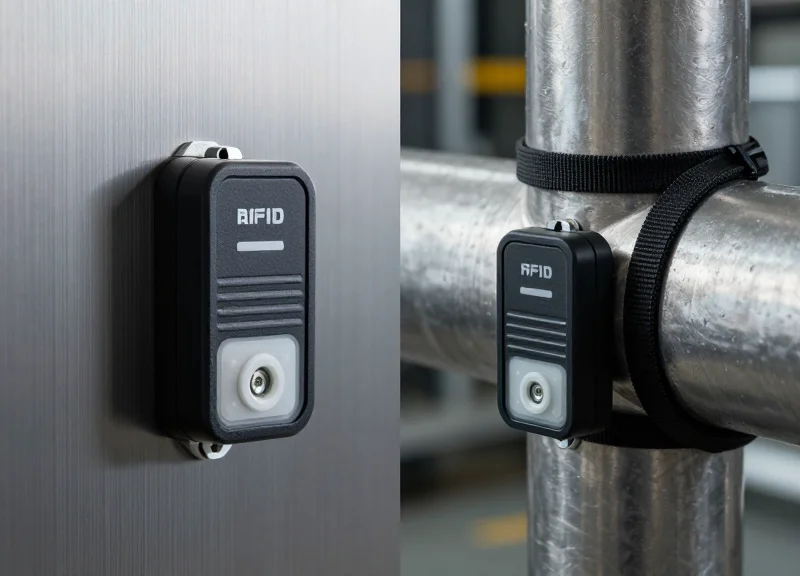
| Stainless Steel Cabinets | Critical | 90-100% | External Antennas or 'On-Metal' Spacer Tags |
| Metal Staples/Clips | Low (Detuning) | Variable | Self-Tuning Tag Antennas |
In archival settings, the primary enemy is the 'Multipath Effect.' In a room full of steel filing cabinets, RF waves bounce erratically, creating 'null zones' where tags become invisible to the reader. By 2026, the industry has largely pivoted toward Circularly Polarized antennas to combat this. Unlike linear antennas, circular polarization allows the reader to pick up signals regardless of the tag's orientation, which is essential for legal files that may shift or settle over decades of storage.
Do staples and paperclips interfere with RFID readability?
Small metallic fasteners like staples do not typically block the signal, but they can 'detune' an antenna if they come into direct contact with the tag inlay. Using tags with 'Auto-Tune' technology compensates for this impedance shift automatically.
How does paper moisture affect archival tags?
Paper is hygroscopic, meaning it absorbs moisture. High humidity in archives increases the dielectric constant of the paper, leading to higher signal absorption. Maintaining a controlled climate (40-50% RH) is as much about RFID performance as it is about document preservation.
Can RFID tags read through high-density currency bundles?
Yes, but it requires 'Far-Field' UHF tags. For 2026, we recommend tags specifically calibrated for high-dielectric environments which utilize the material itself to actually extend the virtual aperture of the antenna.
Expert Insight: The 'Air-Gap' Innovation. The most significant breakthrough in 2026 for legal archiving isn't the chip itself, but the 'Air-Gap Spacer' integrated into the tag adhesive. By creating a 1.5mm physical buffer between the RFID inlay and the dense paper surface, we reduce the dielectric loading effect by nearly 40%. This allows for 'Bulk Reading'—the ability to inventory an entire cabinet of 500+ files in under three seconds without opening a single drawer.
UHF vs. HF: Choosing the Right Frequency for Document Tracking
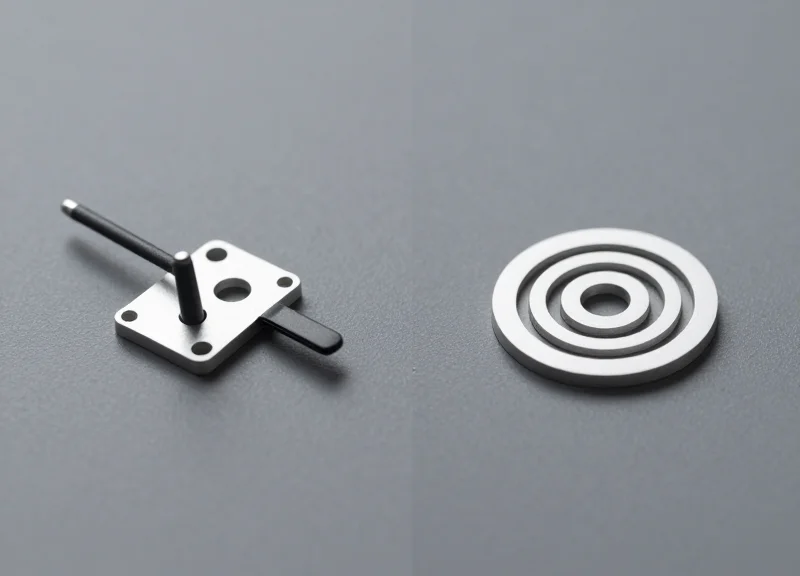
For 2026 archive management, the choice between Ultra-High Frequency (UHF) and High Frequency (HF) is the most critical technical decision an organization can make. UHF RFID (specifically RAIN RFID) is optimized for long-range communication and rapid bulk scanning, making it ideal for auditing thousands of files in seconds. Conversely, HF RFID (including NFC) operates at a shorter range but offers superior security features and less interference in moisture-rich environments, which is essential for high-security bank bill tracking and individual legal file authentication.
| Feature | UHF (RAIN RFID) | HF (High Frequency/NFC) |
|---|---|---|
| Read Range | Up to 10-15 meters | Up to 10-30 centimeters |
| Read Rate | High (1,000+ tags/sec) | Low (10-50 tags/sec) |
| Primary Use | Warehouse/Inventory audit | Secure access/Authentication |
| Security | Standard password protection | Advanced encryption (AES-128) |
| Smartphone Support | Requires specialized reader | Built-in to most smartphones |
Expert Insight: The Rise of Dual-Frequency Inlays in 2026. While the industry historically forced a choice between these two, 2026 has seen the maturation of 'dual-interface' tags. These hybrid inlays integrate both UHF and HF chips on a single label. This allows logistics teams to track crates of legal files via UHF while auditors use standard NFC-enabled smartphones to verify individual document signatures on-site, effectively bridging the gap between supply chain efficiency and secure chain-of-custody.
- Choose UHF if...: You need to perform a full inventory of a basement archive in minutes or track files as they move through high-traffic doorways equipped with portal readers.
- Choose HF if...: You are tracking individual high-value bank bills or sensitive legal evidence where 1:1 authentication, data encryption, and zero read-interference from neighboring files are mandatory.
Can UHF readers distinguish between two files stuck together?
Modern 2026 UHF chips with 'Self-Interference Cancellation' are highly effective at reading overlapping tags, though extremely dense paper stacks may still require high-sensitivity tags.
Is HF safer for sensitive digital data storage?
Yes. HF/NFC protocols support higher levels of on-chip encryption, making it the preferred choice for storing metadata directly on a legal file tag rather than just a reference ID.
Which frequency is more cost-effective for millions of documents?
UHF tags generally have a lower unit cost due to higher production volumes and simpler antenna designs, making them the standard for massive paper-based archives.
Essential Features of Archive-Grade RFID Tags
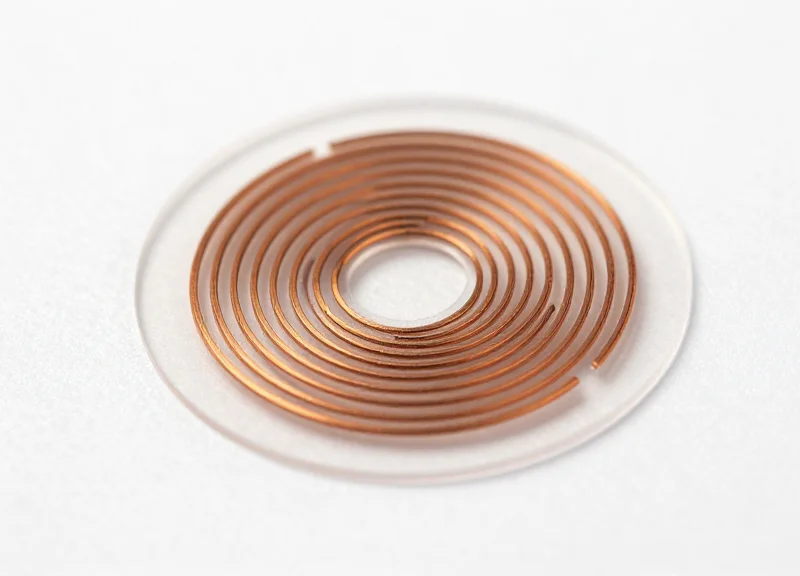
Archive-grade RFID tags are specialized tracking devices engineered with acid-free substrates and ultra-slim profiles (often under 100 microns) to ensure document preservation and space efficiency in high-density storage. Unlike standard inventory tags, archival-safe variants must maintain adhesive integrity for 30 to 50 years without causing chemical 'bleeding' or yellowing of the paper they are attached to.
| Feature | Standard Commercial RFID | Archive-Grade RFID (2026 Std) |
|---|---|---|
| Thickness | 0.2mm - 0.5mm | 0.06mm - 0.1mm (Ultra-Thin) |
| Adhesive Type | General Purpose Acrylic | PH-Neutral, Non-Migratory Acrylic |
| Substrate | PET or PVC | Acid-Free Paper or Bio-PET |
| Data Retention | 10 Years | 50+ Years (ISO/IEC 15963) |
| Stacking Impact | Causes 'Wedging' in files | Zero-footprint integration |
- Ultra-Thin Profile (The 'Stack Factor'): In legal and banking environments, even a 0.5mm bump can cause a 'fan effect' when thousands of files are stacked. 2026 archive tags utilize 'Inlay-less' technology where the antenna is printed directly onto a paper-thin substrate to prevent physical distortion of document folders.
- Non-Outgassing Adhesives: Standard adhesives release volatile organic compounds (VOCs) over time. Archive-grade tags use cross-linked, pressure-sensitive adhesives that are chemically inert, preventing the 'ghosting' of text on the page behind the tag.
- Flexible Antenna Design: Since legal files are frequently thumbed through, the antenna must be made of etched aluminum or silver ink that withstands thousands of micro-bends without fracturing, ensuring the tag remains readable even after heavy manual auditing.
- Tamper-Evidence & Security: For bank bills and sensitive evidence, tags often include a 'fragile' top layer that disintegrates if removal is attempted, providing a physical layer of security alongside the digital ID.
Expert Insight: The 'Micro-Migration' Risk. One often overlooked factor in document archiving is adhesive migration. Over a decade, standard adhesives can seep through paper fibers, eventually reaching the ink on the opposite side of a bank bill or legal contract. To mitigate this in 2026, we recommend specifying tags that meet the 'PAT' (Photographic Activity Test) standards, even if you aren't storing photos. This ensures the chemical stability of the tag-to-paper bond for the entire lifecycle of the record.
Reading Range and Anti-Collision Performance

Reading range and anti-collision performance are the two critical metrics that determine the reliability of an RFID archival system. In 2026, the industry standard for bank bill and legal file tracking requires a reading range of 3 to 7 meters and anti-collision algorithms capable of identifying over 500 tags per second. While the range ensures that entire pallets or document bins can be identified by overhead readers, the anti-collision protocol prevents signal 'clashing,' ensuring that no single file—such as a critical mortgage deed or high-value currency bundle—is missed during a bulk scan.
In a dense archival environment, hundreds of tags reside within the same reader field. Standard RFID tags often suffer from 'the mask effect,' where closer tags drown out those buried deeper in the stack. Advanced anti-collision protocols, specifically those utilizing the EPC Gen2v2 'Q-algorithm,' allow the reader to dynamically adjust the number of time slots available for tags to respond. This is essential for financial institutions where missing a single file constitutes a compliance failure.
| Metric | Standard Archival Tag | 2026 High-Performance Tag | Impact on Operations |
|---|---|---|---|
| Reading Speed | 50-100 tags/sec | 800+ tags/sec | Reduces audit time from hours to minutes. |
| Max Read Distance | 1-3 Meters | 6-10 Meters | Allows for ceiling-mounted 'Smart Gate' tracking. |
| Collision Recovery | Basic ALOHA | Advanced Q-Algorithm | Ensures 99.99% accuracy in dense file boxes. |
Why is 'Sensitivity' more important than 'Power' in 2026?
Increasing reader power creates signal 'noise' and interference. The 2026 expert consensus is that tag sensitivity (measured in dBm) is the key. Higher sensitivity allows the tag to wake up and respond with minimal energy, which is vital when buried under 500 sheets of paper.
Does the orientation of the file affect anti-collision?
Yes. Linear polarized readers may miss tags oriented at 90 degrees. For bank archives, we recommend circular polarized antennas paired with dual-dipole 'omni-directional' tags to maintain performance regardless of how files are tossed into a bin.
What is the 'Shadow Effect' in legal archives?
This occurs when moisture in thick legal bundles or metallic security strips in bills absorb RF energy. High-performance tags compensate for this with auto-tuning circuits that shift the resonance frequency to maintain range.
Unique Expert Insight: The 'RPS-to-Density' Ratio. In 2026, we no longer look at raw Read Per Second (RPS) speeds in isolation. The new benchmark for elite legal archiving is the 'Density-Accuracy Index.' This measures the ability to read 1,000 tags packed within a 0.5-cubic-meter space without a single drop-off. When selecting your vendor, ask for their 'Zero-Leakage' certification in high-density environments; if they only provide open-air test results, the tags will likely fail in a real-world compact shelving unit.
Security and Data Integrity for Sensitive Legal Files

In the context of 2026 archival standards, security for legal and banking documents is defined by the integration of encrypted integrated circuits (ICs) that utilize cryptographic authentication to prevent unauthorized skimming and cloning. Unlike standard inventory tags, high-security archive tags protect the 'data-at-rest' on the chip through password-protected memory banks and 128-bit AES encryption, ensuring that only authenticated readers can access sensitive file metadata or chain-of-custody records.
| Security Feature | Standard RFID Tags | Archive-Grade Secure Tags (2026) |
|---|---|---|
| Encryption | None or Basic Parity | AES-128 or ECC Cryptography |
| Access Control | Open or Simple PIN | Mutual Authentication (Reader & Tag) |
| Privacy Mode | Not Available | Untraceable Mode (Hidden EPC/TID) |
| Data Integrity | Read/Write standard | Permanent Digital Lock & Hash Verification |
For bank bills and legal files, the risk is not just theft, but unauthorized data modification. Modern 2026 archive tags now feature 'User Memory Locking,' where specific fields containing sensitive identifiers are permanently locked after the initial write. This creates a digital seal. If a file's location or status is updated in the database, the tag’s unique UID acts as a cryptographic key, ensuring the physical file and its digital twin in the Document Management System (DMS) remain perfectly synchronized without the risk of 'man-in-the-middle' attacks during the scanning process.
Can RFID tags be skimmed by unauthorized parties?
With 2026-era secure archive tags, 'Untraceable Mode' allows tags to ignore unauthorized queries. Only readers with the correct cryptographic handshake can 'wake' the tag, making the documents invisible to unauthorized scanners.
How is data integrity maintained over decades?
High-end archive tags use high-retention NVM (Non-Volatile Memory) that guarantees data integrity for up to 50 years. Additionally, cyclic redundancy checks (CRC) are performed during every scan to ensure the data has not corrupted over time.
What happens if a tag is physically tampered with?
Modern archival tags often include 'Tamper-Loop' technology. If the tag is peeled or the antenna is cut, the chip enters a 'Tamper-State,' which notifies the system immediately upon the next attempted scan that the file's physical integrity has been compromised.
Expert Insight: In 2026, we are moving toward 'Zero-Trust Document Tracking.' This means the RFID tag no longer stores the actual sensitive data (like a client's name or account number). Instead, it stores a cryptographically signed pointer or hash. Even if an attacker were to bypass the AES-128 encryption, they would only find an encrypted string that is useless without access to your institution's secure internal server. This 'tokenization' of physical archives is the gold standard for mitigating data breach liabilities.
Integration: RFID, ESL, and Digital Management Systems

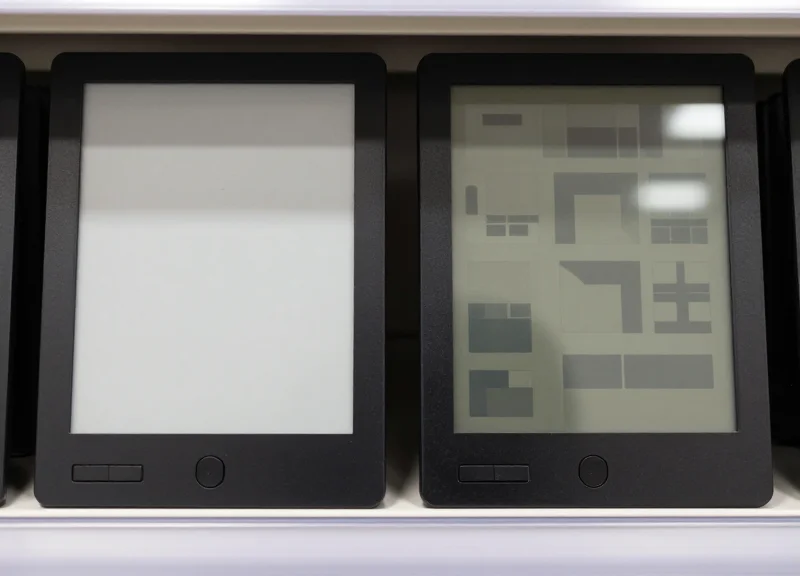
Integrating RFID archive tags with Electronic Shelf Labels (ESL) and Digital Management Systems (DMS) creates a 'Smart Archive' ecosystem where physical documents are digitally tethered to their storage locations in real-time. By 2026 standards, this integration relies on an API-first architecture that allows the RFID-tagged identity of a bank bill or legal file to be visually represented on an e-paper display (ESL) at the shelf level, enabling sub-minute retrieval times and automated inventory reconciliation across vast physical repositories.
| Component | Primary Function | Role in Integration |
|---|---|---|
| RFID Archive Tags | Identification | Provides a unique, non-line-of-sight digital identity for every individual file or bill. |
| ESL (Electronic Shelf Labels) | Visualization | Displays dynamic metadata (File ID, Status, Due Date) and provides visual indicators like LEDs. |
| Digital Management System | Orchestration | The central database (SSoT) that syncs tag data with shelf displays via a middleware layer. |
- Database Mapping: Link the Unique Identifier (UID) of the RFID tag to the corresponding metadata in your Document Management System (DMS).
- ESL Association: Assign specific RFID tags to a shelf section managed by an ESL. When a document is scanned into a box, the ESL automatically updates its summary display.
- The 'Pick-to-Light' Trigger: A user searches for a file in the DMS; the system sends a command to the corresponding ESL to flash an LED, guiding the archivist to the exact location.
- Automated Reconciliation: Periodically, fixed RFID readers scan the room; if a file is moved, the DMS updates the location and moves the data to the correct ESL display automatically.
Expert Insight: The 2026 Visual-First Paradigm. While RFID provides the 'where' in the digital world, humans still operate in the physical one. The most significant advancement in 2026 is the use of multi-color LED indicators on ESLs to signify urgency or security levels. For example, a legal file marked 'High Priority' in the DMS can trigger a red flashing LED on the shelf label during an audit, a feature that reduces human search errors by up to 85% compared to RFID-only systems.
Will ESL batteries last as long as RFID tags?
Modern ESLs used in archives feature ultra-low power e-paper and can last 5-10 years. While not as permanent as passive RFID tags, they typically match the standard audit cycle of high-turnover legal files.
Is a specialized middleware required for integration?
Yes. Most legacy DMS platforms cannot talk to ESL hardware directly. You will need a middleware layer that translates MQTT or REST API commands between the RFID reader and the ESL gateway.
Does the system work if the network goes down?
The RFID tags remain readable by handhelds, and the ESLs will continue to display the last cached image, ensuring you never lose the visual 'address' of a document even during a power outage.
Environmental Durability: Ensuring 10-20 Year Longevity
Environmental durability in RFID archiving refers to the tag's ability to maintain physical integrity and signal readability over a 10-20 year retention cycle despite fluctuating humidity, temperature shifts, and the chemical outgassing of stored paper materials. Unlike retail tags designed for a six-month lifecycle, archival tags for bank bills and legal files must utilize advanced material science—specifically PET (Polyethylene Terephthalate) or PI (Polyimide) substrates—to prevent the brittleness and adhesive failure that commonly plagues standard inventory labels.
| Feature | Standard Commercial Tag | 2026 Archival-Grade Tag |
|---|---|---|
| Substrate Material | Standard Paper or PVC | High-Stability PET / PI Film |
| Antenna Tech | Printed Silver Ink | Etched Copper or Aluminum |
| Adhesive Type | Rubber-based (Yellows/Dries) | Acid-Free Permanent Acrylic |
| Operational Life | 2-5 Years | 20+ Years |
| Thermal Range | 0°C to 40°C | -40°C to 85°C |
One critical factor often overlooked by procurement teams is 'Ionic Migration.' In cheaper tags using printed silver ink antennas, moisture in the air can cause silver ions to migrate across the substrate over several years, eventually short-circuiting the antenna and rendering the tag unreadable. For 2026 deployments, we recommend etched copper antennas. Copper etching provides a robust, continuous metallic path that is significantly more resistant to oxidation and environmental stress than printed alternatives, ensuring the file remains 'discoverable' even at the end of its legal retention period.
How does humidity affect RFID tags in long-term storage?
High humidity can cause standard paper-based tags to swell and delaminate. Archival tags use hydrophobic synthetic overlays that protect the chip-to-antenna bond (the 'bump') from moisture-induced corrosion.
Will the adhesive damage sensitive legal documents over time?
Standard adhesives can 'bleed' into paper, causing staining and acid degradation. Best-in-class archive tags use pH-neutral, non-migratory acrylic adhesives that meet ISO 18916 Photographic Activity Test (PAT) standards.
Can RFID tags survive fire suppression system activation?
While not fireproof, archival tags with IP68 ratings can survive immersion in water from sprinkler systems, allowing for data recovery and file identification after a disaster.
Expert Tip: When auditing your RFID vendor, request 'Accelerated Aging Test' data (IEC 60068-2-2). A truly durable 2026 tag should maintain 98% readability after 1,000 hours of exposure to 85°C and 85% relative humidity, which simulates roughly 25 years of shelf life in a climate-controlled vault.
2026 Cost-Benefit Analysis: ROI of High-Quality Tagging

The Return on Investment (ROI) for high-quality RFID archive tags in 2026 is no longer measured solely by the unit cost per tag, but by the drastic reduction in Total Cost of Ownership (TCO) over a 15-year lifecycle. While premium archival-grade tags may require a higher initial capital expenditure, they provide a break-even point typically within 14 to 18 months by automating inventory workflows that previously required hundreds of manual labor hours. For banks and legal firms, high-quality tagging acts as a hedge against 'dark data'—the costly scenario where physical files exist but cannot be located during critical audits or litigation.
| Metric (100,000 Document Archive) | Standard Commodity Tags | High-Performance Archival Tags |
|---|---|---|
| Initial Tagging Cost | $15,000 | $45,000 |
| 5-Year Failure/Replacement Rate | 12% - 15% | < 0.1% |
| Annual Audit Labor (Hours) | 160 Hours | 4 Hours |
| Search Time per Misplaced File | 2-4 Hours | < 2 Minutes |
| Projected 10-Year TCO | $185,000 | $62,000 |
- Baseline Audit: Calculate the current labor cost of a 100% manual inventory check, including 'search and rescue' time for missing files.
- Labor Redistribution Factor: Estimate the value of redirecting staff from manual filing to high-value billable or analytical tasks enabled by RFID automation.
- Risk Mitigation Value: Quantify the potential regulatory fines or legal losses avoided by ensuring 99.9% document findability for compliance checks.
- Hardware Longevity Calculation: Compare the cost of a one-time premium tag application against the labor and hardware costs of a 're-tagging' project required every 4 years with cheap adhesives.
Unique Expert Insight: The 2026 'Audit-Ready Premium'. Beyond labor savings, high-quality RFID integration allows firms to negotiate lower professional liability insurance premiums. Insurers are increasingly offering discounts to firms that can demonstrate 'real-time chain of custody' and 100% asset visibility, a feat only possible with tags that offer superior read rates in high-density storage environments where signal collision usually causes cheap tags to fail.
Is the higher upfront cost of archival tags justified for bank bills?
Yes. The high metal content in some modern currency security strips can interfere with cheap RFID signals. High-quality tags are tuned to perform near metallic or dense paper environments, ensuring 100% accuracy during bulk scanning.
How does tag durability affect ROI?
Poor quality adhesives dry out and fail in 3-5 years. The cost of re-identifying and re-tagging a legal archive is often 5x the cost of the original tag, making long-term durability the most significant factor in TCO.
Can RFID tagging reduce insurance costs?
Increasingly, yes. In 2026, many underwriters view the instantaneous audit capabilities of RFID as a primary risk-reduction tool for document-heavy industries.
Final Selection Checklist for Bank and Legal Professionals
Selecting the right RFID archive tags for bank bills and legal documents in 2026 requires a balance between high-speed data capture and ironclad security. A professional-grade selection process must verify that tags meet ISO/IEC 18000-63 standards, support AES-128 encryption for sensitive data, and maintain a 99.99% read accuracy in high-density storage environments. Before signing a procurement contract, stakeholders must audit the vendor's reliability and the physical longevity of the tag's adhesive and substrate to ensure they withstand the 15-to-20-year retention cycles common in the legal and financial sectors.
- Security & Encryption Validation: Confirm the presence of a 'Kill' and 'Lock' function to prevent unauthorized data access once files leave the facility, and ensure the chip supports password-protected memory banks.
- Interference & Read-Range Testing: Perform a 'Stress Test' using high-density file bundles (e.g., 500 bank bills per box) to ensure no signal collisions or 'blind spots' occur during bulk scanning.
- Physical Durability Audit: Verify that the tag substrate is acid-free and pH-neutral to prevent document degradation over 20 years, and that the adhesive is non-migratory.
- Software Ecosystem Compatibility: Ensure the RFID tags are fully interoperable with your existing Document Management System (DMS) and any installed Electronic Shelf Labels (ESL) via open APIs.
| Feature | Minimum Requirement | Preferred Specification (2026) |
|---|---|---|
| Chip Protocol | EPC Gen2v2 | EPC Gen2v3 with Advanced Crypto |
| Read Rate | 200 tags per second | 800+ tags per second (Bulk Mode) |
| Data Retention | 10 Years | 25 Years (Grade A Inlay) |
| Failure Rate (DoA) | < 0.5% | < 0.01% (Enterprise Tier) |
Expert Insight: The 'Total Cost of Failure' Metric. While unit price is often the focus, Silicon Valley enterprise buyers prioritize the 'Total Cost of Failure.' In a legal or banking context, a single unreadable tag during a multi-million dollar audit can trigger compliance penalties that dwarf the cost of the entire RFID system. Always demand a 'Batch Reliability Certificate' from your vendor and negotiate a Service Level Agreement (SLA) that guarantees a DoA (Dead on Arrival) rate of less than 1 in 10,000 tags.
Can these tags be used on metal-lined security boxes?
Standard archive tags will fail on metal. If your bank bills are stored in metallic safety deposit boxes, you must specify 'On-Metal' (MOM) RFID tags which utilize a spacer to prevent signal interference.
What is the recommended pilot size before a full rollout?
We recommend a 'Live-Environment Pilot' of at least 5,000 tags. This volume is sufficient to reveal potential issues with signal bounce, reader calibration, and adhesive performance under real-world handling.
Are there environmental concerns with bulk RFID disposal?
Yes. For 2026 compliance, look for 'Green RFID' tags that use paper-based substrates and aluminum-etched antennas instead of plastic (PET) and copper to align with corporate ESG goals.