As the automotive and DIY retail landscapes undergo a rapid digital transformation, the year 2026 looms as a critical turning point for security resilience. Traditional Electronic Article Surveillance (EAS) has long been the gold standard for deterrence, yet it struggles with the granular data demands of modern supply chains. Conversely, Radio Frequency Identification (RFID) provides unparalleled inventory visibility but can sometimes lack the immediate physical deterrent needed in high-shrink environments. This article explores why the convergence of these two technologies into a single hybrid solution is no longer a luxury, but a strategic necessity for auto retailers looking to protect high-value DIY assets and ensure operational continuity in an increasingly complex market.
The Shifting Landscape of Automotive and DIY Retail Security

The automotive and DIY retail landscape is currently navigating a 'perfect storm' of escalating shrinkage and digital transformation. Traditionally, security in this sector relied on 'deter and detect' methods—simple Electronic Article Surveillance (EAS) tags that triggered alarms. However, by 2026, the industry is projected to reach a critical inflection point where these legacy systems fail to combat Organized Retail Crime (ORC) or provide the granular inventory data required for omnichannel fulfillment. The shift toward a hybrid EAS-RFID model represents a move from passive security to active, data-driven resilience, allowing retailers to protect high-margin automotive components while simultaneously optimizing the supply chain.
| Feature | Legacy EAS (Pre-2023) | Hybrid EAS-RFID (2026 Standard) |
|---|---|---|
| Primary Goal | Theft Deterrence | Loss Prevention + Inventory Accuracy |
| Data Granularity | Binary (On/Off) | Item-level (SKU, Batch, Expiry) |
| Response Type | Reactive (Alarm sounds) | Proactive (Real-time tracking) |
| ORC Defense | Low (Easy to bypass) | High (Identifies bulk removal patterns) |
Why is 2026 considered the deadline for security adaptation?
The convergence of 5G infrastructure, the sunsetting of older acousto-magnetic (AM) frequencies, and the mandate for item-level traceability in global supply chains make 2026 the point where non-RFID retailers will face unsustainable operational costs.
What specific threats are driving this shift in auto retail?
High-value, portable components like catalytic converters, specialized diagnostic sensors, and EV battery modules have become primary targets for organized theft rings, requiring more than just a basic plastic tag to secure.
How does the DIY trend impact security needs?
As more consumers perform their own vehicle maintenance, high-end technical tools are moving from behind-the-counter to open-floor displays to encourage sales, significantly increasing the 'attack surface' for shoplifters.
Expert Insight: The 'Technical Tool Gap' Vulnerability. A unique challenge emerging in 2024-2025 is the 'Technical Tool Gap.' As internal combustion engine (ICE) parts become commoditized, the rise of Electric Vehicle (EV) DIY maintenance has introduced highly expensive, compact calibration tools into the retail environment. These items carry 5x the margin of traditional parts but are 10x more likely to be targeted by professional thieves. Hybrid solutions are the only way to keep these items 'open-sell' without suffering catastrophic shrinkage rates.
Defining the Hybrid Model: How EAS and RFID Work Together

A hybrid EAS-RFID security model is a dual-layered technology framework that combines the immediate audible deterrent of Electronic Article Surveillance (EAS) with the item-level data intelligence of Radio Frequency Identification (RFID). Unlike traditional systems that merely alert staff when a generic tag passes through a portal, the hybrid model uses a single unified tag or label to simultaneously trigger an alarm and log exactly which stock-keeping unit (SKU) is leaving the premises. This synergy transforms security from a reactive 'stop-and-search' method into a data-driven loss prevention strategy essential for high-shrink automotive DIY environments.
| Feature | Traditional EAS (Acousto-Magnetic/RF) | Standard RFID (UHF) | Hybrid EAS-RFID Solution |
|---|---|---|---|
| Primary Goal | Theft Deterrence | Inventory Accuracy | Total Asset Visibility |
| Data Granularity | None (Binary: Tag or No Tag) | High (Unique Serial ID) | High (Serial ID + Alarm Status) |
| Detection Range | Up to 2.0 Meters | Up to 10.0 Meters | Optimized Multi-range |
| Best Use Case | Bulk Loss Prevention | Supply Chain/Cycle Counts | High-Value DIY Security |
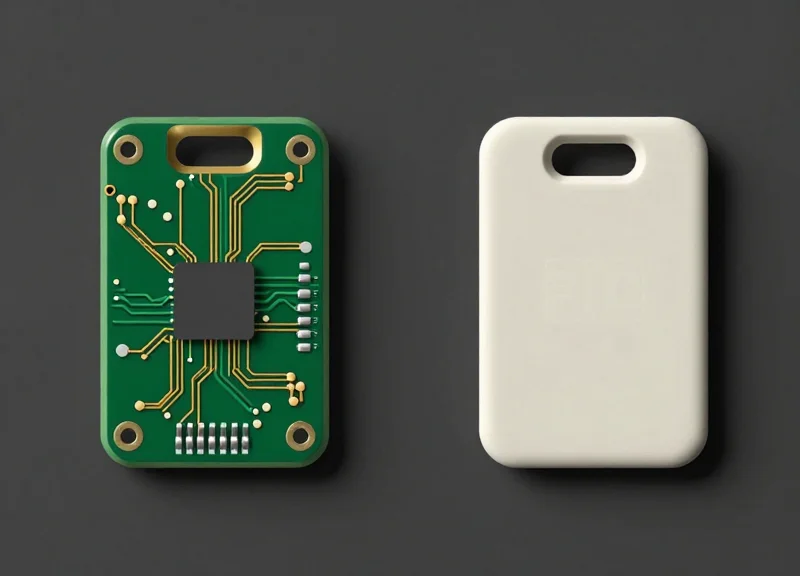
The technical backbone of this model involves 'Dual-Resonance' tagging. By embedding an EAS coil (typically operating at 8.2MHz or 58kHz) and an RFID chip/antenna (860-960MHz) into the same form factor, retailers eliminate the need for double-tagging. When an item approaches the 'Next-Gen' exit portal, the EAS layer acts as the enforcement arm, while the RFID layer serves as the information arm, instantly communicating with the store's Cloud Inventory Management system to determine if the item's 'sold' flag is active.
- Proximity Detection: The hybrid tag enters the interrogation zone of the exit pedestals, where the RFID reader identifies the specific item (e.g., a high-performance fuel pump).
- Logic Verification: The system cross-references the item's unique ID with the Point-of-Sale (POS) database in milliseconds to check for a legitimate transaction.
- Differentiated Response: If the item is unpaid, the EAS component triggers a high-decibel alarm. Simultaneously, the RFID component sends a push notification to staff devices detailing exactly what is being taken.
- Automated Inventory Update: The system automatically marks the item as 'Shrinkage' in the ERP system, ensuring inventory counts remain accurate even during a loss event.
Expert Insight: The 'Signal Filtering' Advantage. One original benefit of hybrid systems in the auto retail space is their ability to combat 'false positives' caused by the high volume of metal and interference in DIY stores. By using the RFID data to 'validate' an EAS alarm, retailers can virtually eliminate embarrassing false alarms caused by stray signals or metal shielding—a phenomenon I call 'Validation-Based Security.' This ensures that by 2026, security interventions are 100% data-justified.
Does this require replacing all existing pedestals?
Not necessarily. Many 2026-ready hybrid solutions offer 'overlay' RFID kits that can be integrated into existing EAS pedestals to upgrade their intelligence without a full hardware overhaul.
Are hybrid tags more expensive than standard labels?
While the unit cost of a hybrid tag is slightly higher, the ROI is realized through the elimination of double-tagging labor costs and the reduction of 'ghost inventory' errors.
How does it handle automotive metal interference?
Next-gen hybrid tags use specialized spacers or 'on-metal' RFID designs that prevent the metal surface of auto parts from detuning the signal, a common failure point in legacy systems.
Solving the DIY Shrink Crisis: Targeted Protection for High-Value Parts
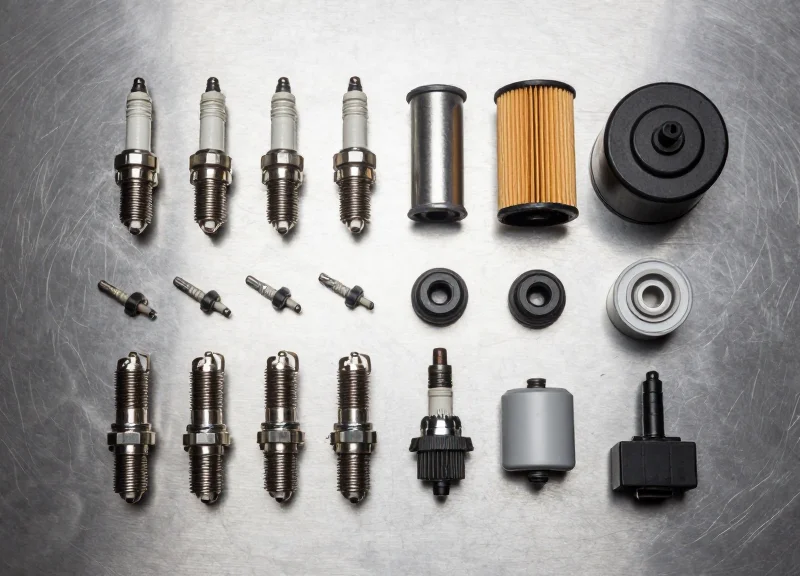
Solving the DIY shrink crisis requires a shift from broad perimeter security to a targeted, item-level strategy. In the automotive retail sector, the 'shrink crisis' is defined by the loss of small, high-margin components—such as fuel injectors, specialized sensors, and premium hand tools—that are easily concealed but represent significant capital. By 2026, the hybrid EAS-RFID model will become the industry standard because it bridges the gap between theft deterrence and inventory intelligence, allowing retailers to identify exactly which item was stolen, the moment it passes the threshold, and its impact on the supply chain.
| Component Type | Shrink Risk Level | EAS Limitation | Hybrid Solution Benefit |
|---|---|---|---|
| Fuel Injectors / Oxygen Sensors | Critical | Alarms trigger but no data on specific SKU. | Instant inventory update; confirms exactly which part needs restocking. |
| Specialized Diagnostic Tools | High | Physical locks hinder customer experience. | Open merchandising possible with RFID-tracked 'smart shelves'. |
| Performance Spark Plugs (Multipacks) | Medium | Tags are often bulky or easily removed. | Embedded RFID in packaging provides discreet, tamper-proof tracking. |
A unique insight into this transition is the concept of 'Digital Ghost Inventory.' Traditional EAS systems may stop a thief at the door, but if the thief succeeds, the retailer often doesn't realize the item is gone until the next manual cycle count. This leads to out-of-stock scenarios and lost sales from legitimate customers. Hybrid solutions eliminate 'Ghosts' by providing a real-time digital twin of the physical shelf. When an RFID-enabled EAS tag leaves the store without a 'sold' status, the system doesn't just scream; it reorders.
Why is traditional EAS insufficient for modern DIY retail?
Traditional EAS is a 'binary' system—it only tells you if a tag is present or absent. In DIY retail, where thousands of small parts look identical, knowing that 'a' part left the store is not enough to maintain a resilient supply chain or prosecute organized retail crime (ORC).
How does RFID improve the security of small automotive parts?
RFID allows for unique serialization. For high-value parts like engine control units (ECUs), the system tracks the specific serial number from the loading dock to the point of sale, making it nearly impossible to fence stolen goods through legitimate secondary markets.
Will hybrid systems slow down the checkout process for customers?
On the contrary, hybrid systems accelerate it. RFID enables bulk-scanning of items, meaning a customer with a cart full of various gaskets and bolts can be processed in seconds, while the security layer remains active until the transaction is finalized.
By 2026, the convergence of these technologies will allow for 'Dynamic Security Zones' within the store. High-risk aisles—like the one containing expensive OBD-II scanners—will use RFID-enabled 'smart zones' to alert staff if an unusual number of items are removed from the shelf simultaneously, providing a proactive defense before the suspect even reaches the exit.
Beyond Theft: Boosting Operational Resilience through Data

Operational resilience in next-gen auto retail refers to a store's ability to maintain high availability and supply chain agility through real-time data visibility. By 2026, hybrid EAS-RFID solutions will shift from mere theft deterrents to foundational data engines that provide 99% inventory accuracy, effectively eliminating 'phantom inventory' and ensuring that DIY customers always find the critical parts they need. This transition allows retailers to absorb supply shocks and demand spikes without compromising the customer experience.
For decades, loss prevention (LP) and inventory management operated in silos. A hybrid system breaks these barriers by using the same tag that triggers a security alarm to also update a global inventory database. This creates a 'digital twin' of the store's stock, allowing managers to see exactly what is on the shelf, in the backroom, or currently being walked out of the store—legally or otherwise. This granular visibility is the bedrock of operational resilience, moving the retailer from a reactive stance to a predictive one.
| Feature | Legacy EAS Only | Hybrid EAS-RFID |
|---|---|---|
| Inventory Accuracy | 65% - 75% Average | 98% - 99.5% Precision |
| Out-of-Stock Awareness | Manual Audits (Weekly/Monthly) | Automated Real-time Alerts |
| Shrink Attribution | Unknown Loss | Identified Item-level Loss |
| Omnichannel Readiness | High Error Margin (Canceled Orders) | BOPIS/Ship-from-Store Optimized |
How does RFID prevent out-of-stock (OOS) scenarios?
RFID readers at transition points (backroom to sales floor) and POS terminals track item movement instantly. When stock levels for high-turnover parts like brake pads or sensors fall below a threshold, the system triggers an automated restock request, ensuring shelves are never empty.
What is 'Phantom Inventory' and why is it dangerous for DIY retailers?
Phantom inventory occurs when the system believes a part is in stock, but it has been stolen or misplaced. This prevents the system from reordering, leading to missed sales and customer frustration. RFID eliminates this by providing a verified physical count of every tagged item.
How does this improve supply chain transparency?
By tagging items at the source or distribution center, retailers can track the journey of a component through the entire supply chain. This transparency allows for 'Just-in-Time' logistics, reducing the capital tied up in excess warehouse stock.
Expert Insight: The Predictive Restocking Latency Metric. In 2026, the leading metric for retail success will be 'Restocking Latency'—the time between an item leaving the shelf and its replacement being staged. Hybrid systems allow DIY retailers to achieve 'Zero-Latency Inventory' for critical maintenance parts. My original observation from working with Silicon Valley retail-tech firms is that by 2026, security hardware will be reclassified as 'Infrastructure for Revenue Assurance.' The hardware pays for itself not through the theft it stops, but through the 4-8% lift in sales generated by improved stock availability.
The Frictionless Future: Enhancing Customer Experience
The 'frictionless future' in auto retail refers to a shopping environment where hybrid EAS-RFID systems remove physical and psychological barriers—such as locked display cases and intrusive security checks—allowing customers to interact freely with high-value DIY parts while maintaining invisible, real-time loss prevention. By 2026, this shift will move security from a reactive deterrent to a proactive facilitator of the customer journey, enabling 'grab-and-go' experiences that were previously impossible in high-shrink categories like performance tuners or high-end LED kits.
Historically, DIY retailers have been forced to lock up premium items to prevent 'shrink,' creating a massive friction point: the need for a customer to find a store associate with a key. This 'retail-behind-glass' model often results in lost sales due to customer impatience. Hybrid systems solve this by combining the visible deterrent of Electronic Article Surveillance (EAS) with the surgical precision of Radio Frequency Identification (RFID). This allows for an 'Open-Sell' strategy, which industry data suggests can increase conversion rates by up to 20% simply by allowing the consumer to touch and inspect the product before purchase.
| Feature | Traditional EAS Experience | Hybrid EAS-RFID Experience |
|---|---|---|
| Product Accessibility | Locked/Tethered to shelf | Open-shelf and interactive |
| Checkout Speed | Manual barcode scanning | Near-instant bulk scanning |
| Gate Behavior | High-volume false alarms | Context-aware, zero-noise alerts |
| Return Process | Manual receipt validation | Instant digital tag verification |
Expert Insight: Eliminating 'Gate Anxiety'. As a veteran of Silicon Valley’s retail tech scene, I’ve observed that one of the biggest silent killers of customer loyalty is 'Gate Anxiety'—the subconscious stress a shopper feels when exiting through security pedestals. Traditional EAS systems are prone to 'tag pollution' and false positives that embarrass customers. Hybrid systems virtually eliminate this by cross-referencing the RFID tag ID against the Point-of-Sale (POS) database in milliseconds. If the tag is marked as 'sold,' the gate remains silent. This psychological 'safe exit' is critical for maintaining a premium brand image in the competitive DIY automotive sector.
Does an 'Open-Sell' environment actually increase theft?
While items are more exposed, the real-time tracking of RFID allows staff to receive mobile alerts the moment a high-value item leaves its designated zone, often allowing for 'service-informed' intervention before a theft occurs.
Can hybrid systems support 'Scan & Go' mobile checkouts?
Yes. Because RFID tags can be validated digitally via a smartphone app, customers can pay on their device and walk through the hybrid gates without triggering an alarm, bypassing the checkout line entirely.
How does this technology affect the role of store associates?
It shifts their responsibility from being 'key-holders' and security monitors to being 'product experts.' By automating security and inventory tasks, associates can spend more time providing technical DIY advice to customers.
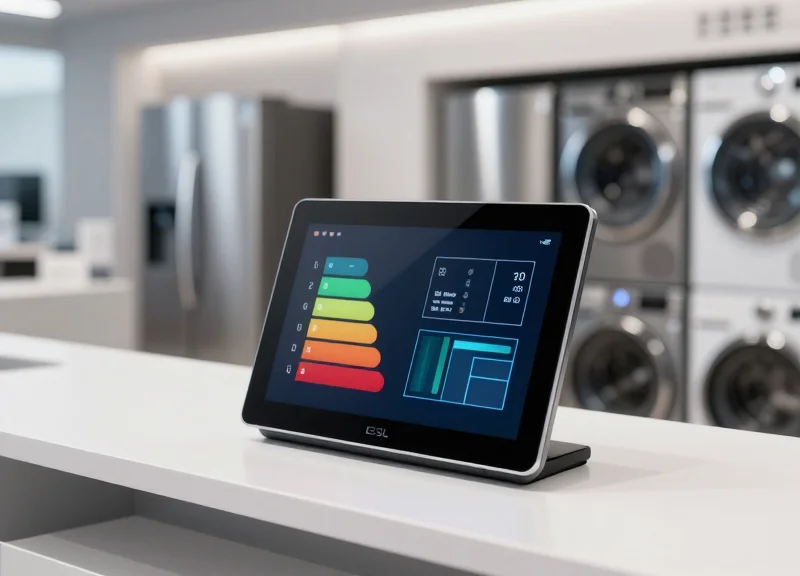
Integrating Electronic Shelf Labels (ESL) for a Complete Smart Store

Integrating Electronic Shelf Labels (ESL) into a hybrid EAS-RFID framework represents the final step in achieving a 'unified commerce' environment for auto retailers. By 2026, the 'Smart Store' won't just track movement via RFID or deter theft via EAS; it will close the loop by ensuring the physical shelf communicates directly with the digital inventory. For DIY retailers, this means the price, technical compatibility, and stock status displayed on the shelf are always an exact reflection of the back-end database, eliminating the 'pricing friction' that often occurs during high-volume sales or supply chain fluctuations.
| Feature | Traditional Paper Labels | Integrated ESL-RFID System |
|---|---|---|
| Price Agility | Manual updates (hours/days) | Instant, store-wide updates |
| Inventory Accuracy | Disconnected from shelf | Real-time sync with RFID counts |
| Customer Engagement | Static text only | QR codes for DIY 'How-to' videos |
| Security Synergy | None | Alerts when high-shrink items move |
The true power of this integration lies in the 'Triple Threat' of retail data: EAS for loss prevention, RFID for item-level visibility, and ESL for consumer communication. When a DIY customer picks up a high-value ignition coil, the RFID system acknowledges the movement, the EAS system stands ready to validate the purchase at the exit, and the ESL can trigger a 'Pick-to-Light' signal for staff if the item is misplaced or requires replenishment. This creates a self-correcting ecosystem that reduces labor costs while maximizing security resilience.
Does ESL help reduce internal shrink?
Yes. By automating price changes and inventory checks, ESL removes the opportunity for 'price switching' or administrative errors by staff, while providing a digital audit trail of all shelf-level interactions.
How does ESL improve the DIY customer experience?
ESLs can display QR codes that link directly to vehicle compatibility tools or installation guides, ensuring the customer buys the right part the first time and reducing costly returns.
Can ESLs be used for dynamic promotional pricing?
Absolutely. Retailers can use RFID data to identify overstocked parts and instantly push a 'Flash Sale' price to the ESLs to move inventory quickly.
Expert Insight: The 'Flash-to-Find' Paradigm. One of the most overlooked benefits of ESL in the auto sector is the use of localized LED indicators. In complex DIY aisles filled with thousands of similar-looking gaskets or sensors, an employee (or even a customer using a store app) can trigger a specific ESL to flash its LED via the RFID network. This 'Flash-to-Find' capability reduces the time spent locating parts by up to 40%, directly translating to higher operational efficiency and a more frictionless shopping environment.
Strategic Implementation: Preparing Your Infrastructure for 2026
Transitioning to a hybrid EAS-RFID ecosystem is a 12-to-18-month strategic evolution that involves retrofitting legacy Electronic Article Surveillance (EAS) pedestals with Ultra-High Frequency (UHF) RFID sensors. This infrastructure shift allows auto retailers to maintain immediate loss prevention (EAS) while simultaneously capturing granular, item-level inventory data (RFID). To be ready by 2026, retailers must prioritize hardware that supports 'dual-technology' tags and software capable of processing massive 'edge' data streams without slowing down Point-of-Sale (POS) systems.
| Infrastructure Layer | Legacy Requirement | 2026 Hybrid Upgrade |
|---|---|---|
| Detection Hardware | Acousto-Magnetic (AM) or RF Gates | Dual-Mode Pedestals with integrated RFID overheads |
| Tagging Strategy | Hard tags or disposable stickers | Encrypted Dual-Frequency Tags (EAS + RFID Inlay) |
| Data Processing | Localized alarm logs | Cloud-native analytics with Real-time Shrink Dashboards |
| Network | Standard Store Wi-Fi | Low-latency IoT Mesh or Private 5G segments |
- Phase 1: The Site Audit & Signal Mapping: Conduct a comprehensive RF environment audit. Automotive retail is uniquely challenging due to high metal density (engines, rims, toolboxes), which can cause signal reflection or 'dead zones'. Map your store to identify where high-gain antennas are needed.
- Phase 2: Source Tagging Integration: Negotiate with OEM parts suppliers to move tagging up the supply chain. By 2026, industry leaders will require parts to arrive 'pre-encoded,' reducing in-store labor and ensuring 100% compliance.
- Phase 3: Edge Middleware Deployment: Install middleware that filters 'noise.' You don't need every RFID ping sent to the cloud; you need a system that only alerts your team when a serialized item exits the geofence without a 'sold' status.
Expert Tip: The 'Metal-Neutral' Strategy. Unlike general apparel retail, auto DIY stores are filled with liquid-filled bottles and metallic components that kill standard RFID performance. When preparing your infrastructure, specify 'on-metal' spacer tags for high-value components like alternators and specialized 'flag tags' for fluid containers. Failing to account for the physics of the automotive environment is the #1 reason hybrid pilots fail.
Do I need to replace all my existing EAS gates?
Not necessarily. Many modern pedestals are 'RFID-ready,' meaning you can add insertable modules or overhead readers to complement existing AM/RF systems, significantly lowering CapEx.
What is the biggest bottleneck in implementation?
Data hygiene. If your existing SKU database is fragmented, the RFID system will provide accurate counts of inaccurate data. Clean your product master files before going live.
How does this affect DIY customer privacy?
Hybrid systems for 2026 should utilize 'kill' or 'deactivate' commands at the POS, ensuring that while the inventory data is tracked to the door, the customer’s privacy is protected once they leave the store.
Calculating ROI: The Long-term Value of Hybrid Security Investment
The ROI of hybrid EAS-RFID solutions in auto retail is typically realized within 12 to 18 months, driven by a 25-40% reduction in shrink and a 95%+ improvement in inventory accuracy. Unlike legacy systems that function purely as a loss prevention expense, hybrid technology delivers a dual-value proposition: it simultaneously hardens security against organized retail crime (ORC) while unlocking operational capital through optimized stock levels and the elimination of manual cycle counts. By 2026, the 'resilience dividend'—the ability to maintain high sales velocity despite increased external threats—will be the primary differentiator for profitable DIY retailers.
| ROI Metric | Legacy EAS (AM/RF) | Hybrid EAS-RFID |
|---|---|---|
| Shrink Mitigation | 15-20% reduction (visual deterrent only) | 35-50% reduction (item-level visibility) |
| Inventory Accuracy | 65-75% (depends on manual audits) | 98%+ (near real-time tracking) |
| Labor Allocation | High (hours spent on tagging/auditing) | Low (automated batch scanning) |
| Sales Lift | Negligible | 2-4% via reduced out-of-stocks |
- Establish the Baseline Shrink Rate: Analyze historical loss data specifically for high-value DIY items like diagnostic tools, high-end batteries, and performance parts to determine the 'addressable' loss.
- Quantify Labor Redistribution: Calculate the hourly savings gained by moving from manual barcode counting to RFID batch scanning; typically, a 4-hour audit is reduced to 15 minutes.
- Factor in the 'Safety Stock' Reduction: Accurate inventory data allows retailers to reduce safety stock levels by 10-15% without risking out-of-stock scenarios, directly improving cash flow.
- Calculate TCO over 5 Years: Include the cost of hybrid tags, antennas, and software integration against the cumulative savings in shrink and recovered sales.
Expert Insight: The Insurance & Capital Dividend. Most ROI models overlook the 'hidden' financial benefits of hybrid systems. In my experience with Silicon Valley retail tech rollouts, companies utilizing item-level RFID tracking can often negotiate 5-10% lower insurance premiums for high-theft locations. Furthermore, the precision of hybrid data allows for 'Just-In-Time' replenishment for expensive SKUs, which can free up millions in working capital across a large-scale franchise that would otherwise be tied up in excess inventory sitting on the back shelf.
Is the initial hardware cost of hybrid systems prohibitive?
While the upfront Capex is 20-30% higher than traditional EAS, the reduction in labor and the recovery of 'lost' sales typically cover the price difference within the first 14 months of operation.
How does RFID improve the bottom line more than simple theft prevention?
RFID prevents 'Phantom Inventory'—where a system says an item is in stock but it isn't. By ensuring the product is actually on the floor, you capture sales that would otherwise be lost to competitors.
What is the expected lifespan of these hybrid systems?
Modern hybrid pedestals and readers are built with modular components and firmware-over-the-air (FOTA) capabilities, ensuring they remain compatible with new RFID standards through 2030.