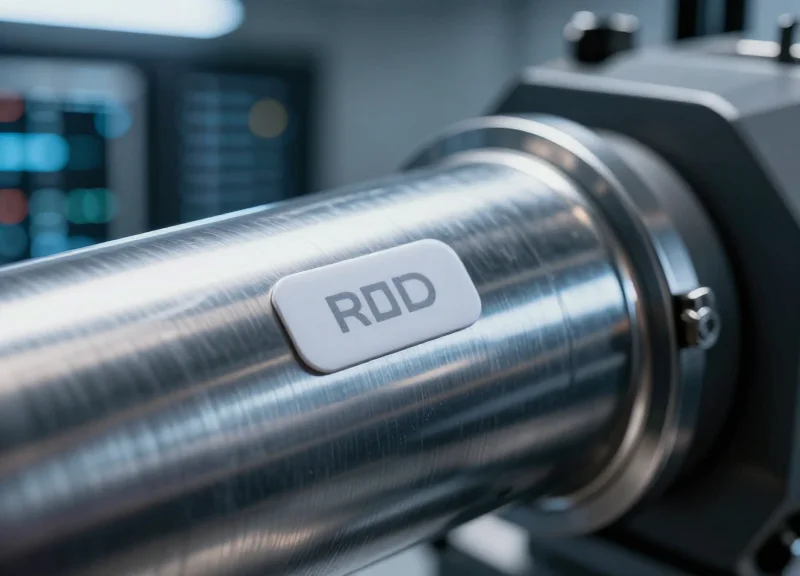
In the rapidly evolving landscape of 2026, efficient asset management is no longer a luxury—it is a prerequisite for operational excellence. However, tracking IT hardware and curved metallic assets has historically been a nightmare for RFID systems due to signal interference and physical adhesion challenges. This guide dives deep into the next generation of flexible on-metal RFID tags, specifically engineered to overcome these hurdles and provide seamless data capture for your most critical equipment.
Understanding the Physics: Why Metal and Curves Challenge RFID

Metal surfaces act as a barrier to standard RFID signals by reflecting radio frequency (RF) energy and generating parasitic eddy currents that oppose the tag's magnetic field, a phenomenon called detuning. When these tags are applied to curved assets, the mechanical strain physically alters the antenna's geometry, shifting its resonant frequency away from the reader's range and causing a total loss of signal. Modern flexible on-metal tags solve this by using specialized dielectric spacers and foldable antenna designs that maintain impedance stability regardless of the mounting surface's shape or conductivity.
| Environmental Factor | Effect on Standard Tag | Physics Mechanism | Impact on Performance |
|---|---|---|---|
| Metallic Backing | Signal Cancellation | Eddy Currents & Reflection | Read range drops to < 1 inch |
| Curved Geometry | Frequency Shifting | Inductance Variation | Tag becomes 'invisible' to readers |
| High Density (IT Racks) | RF Shadowing | Multipath Interference | Inconsistent inventory counts |
To understand the challenge, we must look at the 'Near-Field' vs 'Far-Field' interaction. On a flat metal surface, the metal acts as a ground plane. If a tag is too thin, the reflected wave is 180 degrees out of phase with the incident wave, effectively canceling the signal. This is why 2026-grade flexible tags utilize 'PIFA' (Planar Inverted-F Antenna) structures or specialized high-permittivity materials that create a 'buffer zone,' allowing the antenna to function effectively just millimeters from the metal surface.
Why does curvature affect the read range even on non-metal surfaces?
Curvature changes the physical length of the antenna traces relative to the reader's perspective. Even a slight bend can change the antenna's capacitance, detuning it from the global UHF standard (860-960 MHz) and requiring a tag with a 'Wideband' design to compensate.
What is the 'Eddy Current' effect in simple terms?
When an RF field hits metal, it induces circular loops of electrical current (Eddy currents). these loops create their own magnetic field that pushes back against the RFID reader's field, starving the tag of the energy it needs to wake up.
Can't I just use a thicker foam spacer?
While distance helps, it creates a profile that is easily snagged or knocked off. The 2026 engineering standard focuses on 'Refractive Index Engineering' within the tag material to achieve the same result in a low-profile, flexible form factor.
Expert Tip: When selecting tags for curved IT hardware like server blades or cylindrical pipes, always request the 'Curvature Detuning Profile.' A unique insight from recent 2026 laboratory testing shows that 'Antenna Elasticity' is now more critical than thickness; if the copper trace micro-fractures during application to a curve with a radius of less than 40mm, the tag may pass an initial read test but fail within 90 days due to thermal expansion and contraction.
Key Innovations in 2026 Flexible On-Metal RFID Technology
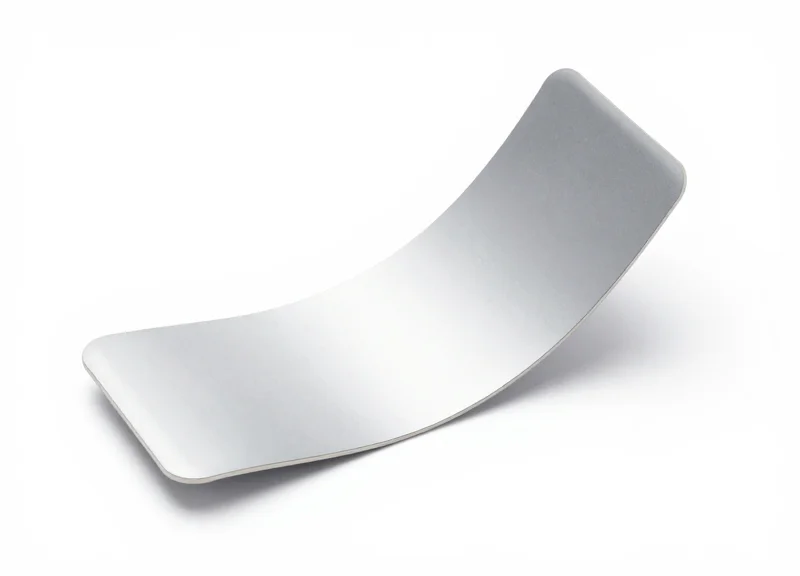
In 2026, the primary innovation in flexible on-metal RFID technology is the transition from bulky physical spacers to 'Nano-Ferrite Composite' substrates, which allow tags to maintain a thickness of under 0.8mm while achieving read ranges exceeding 9 meters. These advancements solve the legacy problem of 'detuning' by using high-permeability materials that effectively redirect electromagnetic flux away from the metallic surface and back into the antenna, even when the tag is wrapped around high-curvature assets like IT server cables or specialized medical canisters.
| Feature | 2024 Legacy Standard | 2026 Innovation Standard |
|---|---|---|
| Average Thickness | 1.2mm - 1.5mm | 0.5mm - 0.8mm |
| Minimum Bend Radius | 50mm | 15mm - 20mm |
| Read Range (on metal) | 3m - 5m | 8m - 12m |
| Substrate Material | Synthetic Foam / PET | Flexible Ferrite Hybrid / PI Film |
Beyond mere thinness, the 2026 generation of tags leverages 'Folded PIFA' (Planar Inverted-F Antenna) geometry. This design mimics the efficiency of traditional rigid PCB tags but is printed on high-performance polyimide (PI) films. This allows the tag to flex without micro-fracturing the conductive ink or copper traces, a common failure point in earlier iterations of flexible RFID.
- Adaptive Impedance Matching: Modern ICs now include self-tuning algorithms that compensate for the dielectric constant of the specific metal the tag is mounted on, whether it is high-conductivity copper or brushed aluminum.
- High-Permeability Nano-Coatings: A layer of synthetic ferrite powder suspended in a flexible polymer prevents the metal surface from absorbing the RF energy, effectively creating a 'virtual air gap' in a fraction of the space.
- Conformable Adhesion Systems: 2026 tags utilize 'Low-Surface Energy' (LSE) adhesives designed for curved powder-coated surfaces, ensuring the tag doesn't 'wing' or lift off at the edges over a 10-year lifecycle.
Expert Insight: The real 'game-changer' in 2026 is the integration of Digital Twin identifiers directly into the tag's silicon. While previous generations focused solely on the physical read, the latest flexible tags now include 'Context-Aware ICs.' These chips can detect if the tag's impedance changes significantly—a signal that the tag is peeling or the asset has been tampered with—transforming a simple tracking ID into a proactive health-monitoring sensor for IT infrastructure.
Top Use Cases: From Server Racks to Industrial Gas Cylinders

Flexible on-metal RFID tags serve as the critical interface between physical assets and digital twins in environments where rigid tags fail due to surface geometry or space constraints. By utilizing adaptive antennas and specialized foam or ferrite spacers, these tags maintain high read rates on non-planar metallic surfaces, ranging from the tight curvature of high-pressure gas cylinders to the sleek, recessed edges of enterprise server blades. In 2026, the primary value proposition has shifted from simple identification to enabling real-time edge computing visibility for assets that are frequently moved, serviced, or stacked in high-density configurations.
| Industry Sector | Primary Asset | Geometric Challenge | Strategic Benefit |
|---|---|---|---|
| IT Infrastructure | Blade Servers & Switches | Ultra-thin faceplates and recessed handles | Automated audit accuracy >99.9% without downtime |
| Healthcare/Medical | Oxygen & Specialty Gas Tanks | Extreme cylindrical curvature (R<50mm) | Real-time safety compliance and refill scheduling |
| Manufacturing | Pipes & Curved Moldings | Varying diameters and chemical exposure | Work-in-progress (WIP) tracking through finishing |
| Energy & Utilities | Pressure Vessels & Valves | Irregular convex surfaces and outdoor exposure | Digital maintenance logs and predictive inspections |
In the IT sector, the 2026 standard for data centers involves 'Zero-Touch Inventory.' Flexible tags are applied to the curved contours of laptops or the narrow side-panels of server chassis. Because these tags are thinner than their rigid predecessors, they do not interfere with the tight tolerances of rack sliding mechanisms, a common failure point for older RFID implementations.
Can flexible on-metal tags withstand industrial cleaning?
Yes, high-grade flexible tags in 2026 are often IP68 or IP69K rated, meaning they survive high-pressure washdowns and chemical sterilization common in medical gas and food processing industries.
Do these tags work on both convex and concave surfaces?
While most are optimized for convex surfaces like pipes, high-end 2026 models feature multi-axis antenna designs that maintain read range even when applied to slightly concave industrial recessed areas.
What is the typical read range for a flexible tag on a curved surface?
Depending on the curvature radius and tag size, you can expect 3 to 7 meters. Generally, the tighter the curve, the more the antenna detunes, though modern 'Adaptive-Tuning' chips mitigate this loss.
Expert Tip: For 2026 deployments, always account for the 'Arc-Gain' effect. When a flexible tag is wrapped around a small-diameter cylinder, the antenna's radiation pattern shifts from a standard dipole shape to a more omni-directional profile. This can actually be leveraged to increase read visibility in dense storage areas where assets are not perfectly aligned with the reader's line of sight.
Decoding Technical Specifications: Read Range and Memory
In 2026, the technical specifications of flexible on-metal RFID tags are defined by two primary metrics: Read Range, the maximum distance at which a reader can successfully energize and receive data from a tag on a metallic surface, and Memory Capacity, the onboard storage architecture (EPC, TID, and User Memory) that allows for local data persistence. Successful deployment on curved IT assets or industrial hardware requires balancing antenna gain—often limited by the tag’s flexible form factor—with high-sensitivity integrated circuits (ICs) that maintain signal integrity despite metallic detuning and multi-path interference.
| Material Type | Conductivity | Read Range Retention | 2026 Optimization Strategy |
|---|---|---|---|
| Aluminum | High | 65-75% | High-dielectric spacers to prevent eddy current dampening. |
| Stainless Steel (304/316) | Medium | 85-95% | Standard flexible ferrite or thin-film synthetic spacers. |
| Carbon Fiber | Variable/Conductive | 45-60% | Shielded antenna designs with high-sensitivity ICs. |
| Painted/Coated Steel | Low (Surface) | 90-100% | Adhesive-optimized backing for non-conductive layers. |
Expert Insight: In the 2026 landscape, we no longer look at 'Peak Read Range' in isolation. Instead, we evaluate 'Effective Operational Aperture.' Because curved assets like gas cylinders or server handles reflect signals unevenly, a tag with a 10-meter theoretical range on a flat plate might only provide a 4-meter reliable read when bent. Always prioritize ICs with 'Auto-Tune' capabilities that dynamically adjust to the impedance changes caused by the degree of curvature.
- EPC Memory (Electronic Product Code): The 96-bit or 128-bit standard for unique identification. In 2026, 128-bit is the baseline to accommodate global trade identification numbers (GTIN) and serialized asset data.
- TID (Tag Identifier): Factory-locked 48-bit to 96-bit identifiers that ensure tag authenticity and prevent cloning in the supply chain.
- User Memory: Crucial for offline data. 512-bit to 2K-bit capacities allow for storing maintenance logs directly on the asset, providing a 'Digital Twin' backup when the cloud is inaccessible.
Why does my flexible tag lose range when applied to a curve?
Bending the tag changes the physical geometry of the antenna, shifting its resonant frequency away from the standard 860-960 MHz range. This is known as detuning.
Can I use high-memory tags for real-time sensor data?
Yes, many 2026 flexible tags include User Memory sectors specifically designed for logging temperature or strain data without requiring a continuous network connection.
How does the reader power affect the read range specification?
Specifications are usually based on a 4-watt EIRP reader. Handheld readers typically offer 50-70% of the range found in fixed gateway portals.
For IT Hardware management specifically, memory allocation has become a security feature. Modern flexible tags allow for 'Block Permalocking,' where specific User Memory segments containing sensitive deployment data can be permanently locked after commissioning, preventing tampering while leaving other segments open for routine maintenance logs.
Adhesive Selection for Longevity and Curved Surface Stability
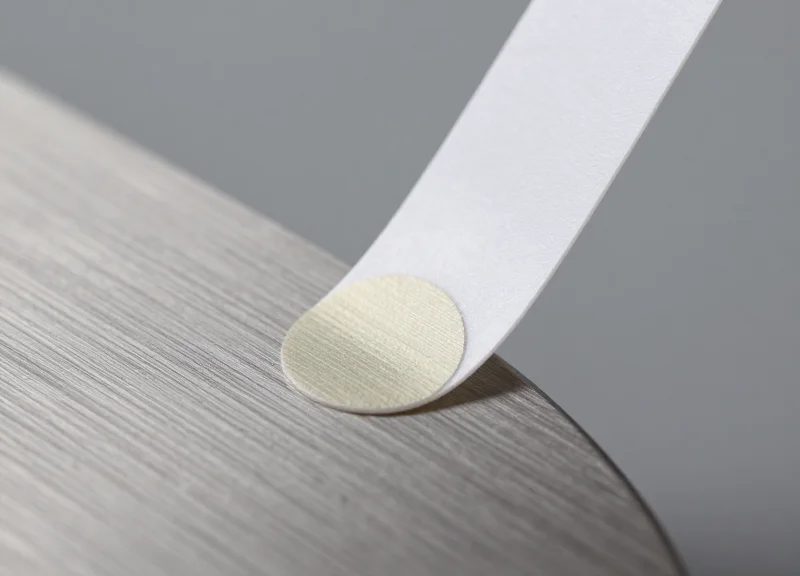
In 2026, adhesive technology has evolved beyond simple 'peel-and-stick' applications to become a sophisticated mechanical interface. For flexible on-metal RFID tags, the adhesive must solve the 'memory effect'—the physical tendency of a bent tag to return to its original flat shape. Without an industrial-grade high-tack acrylic or a specialized structural adhesive, the resulting 'flagging' (edge lifting) creates a leverage point where moisture, dust, and mechanical friction can lead to total tag failure. Choosing the correct adhesive requires balancing initial 'grab' with long-term chemical and thermal resistance.
| Adhesive Type | Primary Benefit | Best Surface Match | Curvature Suitability |
|---|---|---|---|
| High-Strength Acrylic (e.g., 3M 300LSE) | Superior bond to low surface energy (LSE) plastics and powder-coated metals. | Powder-coated server racks, painted cylinders. | Excellent for radii > 50mm |
| Modified Acrylic Transfer Tape | High initial tack; reaches 90% bond strength in minutes. | Stainless steel, aluminum, raw alloys. | High; resists edge lifting on tight curves. |
| Silicone-Based Pressure Sensitive | Extreme temperature resistance (-40°C to +200°C). | Engine components, high-heat industrial pipes. | Moderate; requires specific primers. |
The Veteran's Insight: The 'Differential Expansion' Factor. One often overlooked cause of RFID failure in 2026 is the Coefficient of Thermal Expansion (CTE) mismatch. Metal assets expand and contract significantly more than the polymer-based RFID tags attached to them. If your adhesive is too rigid, the bond will fracture during seasonal temperature shifts. Always specify an adhesive with a high 'elastic modulus' that can act as a shock absorber between the tag and the metal surface.
- Surface De-energizing: Clean the metal surface with a 70% Isopropyl Alcohol solution to remove machining oils and oxidation that prevent adhesive 'wet-out'.
- Uniform Pressure Application: Use a weighted roller or firm thumb pressure (minimum 15 psi) to ensure the adhesive flows into the microscopic valleys of the metal surface.
- The 72-Hour Dwell Period: While modern adhesives feel sticky immediately, they require 72 hours at room temperature to reach their maximum chemical cross-linking bond.
What happens if I apply the tag in freezing temperatures?
Most adhesives enter a 'glass state' at low temperatures and will not flow into the surface pores. This leads to a weak mechanical bond that will fail as soon as the asset vibrates or is bumped.
Can I use flexible RFID tags on curved plastic assets?
Yes, but you must use an LSE-optimized adhesive. Standard metal-mount adhesives are often designed for high surface energy metals and may peel off 'greasy' plastics like polyethylene or polypropylene.
Is a primer always necessary?
Primers are recommended for curvature radii under 25mm or for surfaces with high-performance coatings that repel standard adhesives.
Compatibility with RFID Printers and Encoding Systems
For a flexible on-metal RFID tag to be truly 'print-ready,' it must bypass the physical and electromagnetic barriers that typically hinder standard thermal transfer printers. Compatibility is defined by the tag's ability to pass through the printhead assembly without causing jams, the ability of the printer's internal antenna to encode the chip despite the tag's metallic shielding, and the sensor's capacity to detect tag boundaries for precise alignment. In 2026, the industry standard for high-performance flexible tags has shifted toward 'tapered-edge' designs, which prevent the 1.0mm to 1.5mm thickness of the tag from damaging delicate printheads.
| Feature | Standard RFID Tag | Flexible On-Metal Tag (2026) | Printer Requirement |
|---|---|---|---|
| Max Thickness | 0.2mm - 0.5mm | 0.8mm - 1.2mm | High-clearance printhead carrier |
| Sensing Method | Gap or Transmissive | Black Mark (Reflective) | Adjustable reflective sensor |
| Inlay Position | Centrally located | Offset for metal shielding | Software-defined encoding offset |
| Ribbon Type | Wax or Wax/Resin | Full Resin | High-heat thermal control |
Expert Insight: The 'Thickness Trap' and Printhead Longevity. A common mistake is forcing on-metal tags through desktop RFID printers. By 2026, leading manufacturers like Zebra and SATO have optimized 'Short-Pitch' encoding for these tags. Always ensure your printer supports a 'Media Thickness' setting of at least 1.1mm. If your tag lacks a tapered lead-in, you risk 'micro-impact' damage to the printhead's heating elements, which eventually leads to unreadable barcodes and voided warranties.
- Select the Right Ribbon (Resin is Mandatory): Flexible on-metal tags are often used in industrial environments. Use a high-grade resin ribbon to ensure the print doesn't smudge on the synthetic face-stock, which is typically more non-porous than standard paper tags.
- Calibrate the Reflective Sensor: Since metal-mount tags are opaque and often have a black mark on the liner, set your printer to 'Reflective' or 'Mark' sensing rather than 'Gap' sensing to ensure accurate 'Top of Form' alignment.
- Configure the Encoding Offset: Because the RFID chip in an on-metal tag is shielded, the printer's internal antenna may need a specific 'program position' (e.g., -5mm) to successfully reach the chip while the tag is under the printhead.
- Run a Low-Speed Test Batch: Set print speed to 2 or 3 inches per second (ips). The extra thickness requires a slower, more stable feed to maintain registration and ensure the thermal heat fully transfers the resin to the face-stock.
Can I use my existing office RFID printer?
Generally, no. Most standard office RFID printers cannot handle the 1mm+ thickness of on-metal tags. You need an industrial-grade printer with a high-clearance printhead assembly.
What happens if the encoding fails frequently?
This is usually due to the 'Shielding Effect.' Check if your tag is designed for 'Early Encoding' or 'Late Encoding' and adjust your printer's firmware settings to match the chip's physical location on the inlay.
Do flexible tags require special firmware?
Most 2026 models from major brands come with 'On-Metal' profiles pre-installed. Always update your driver to the latest version to access these optimized power and timing settings.
Environmental Durability: IP Ratings and Chemical Resistance
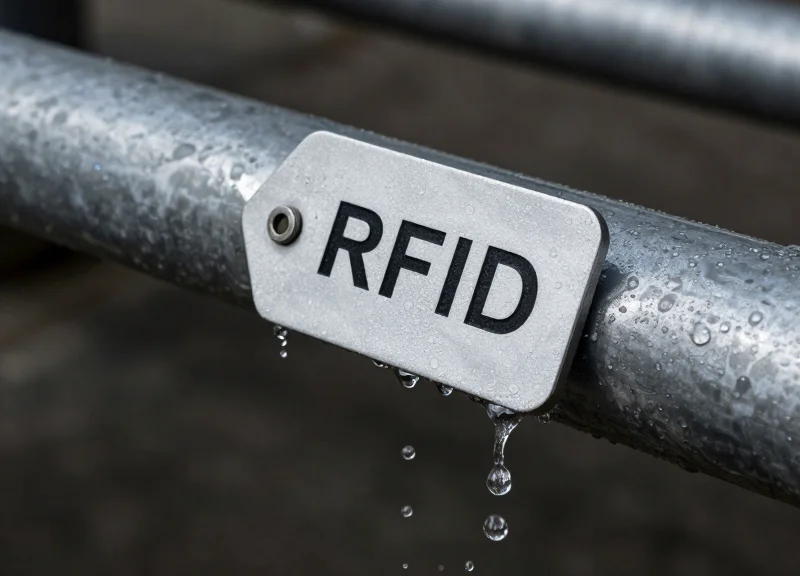
Environmental durability in 2026 flexible on-metal RFID tags refers to the composite ability of the tag's face-sheet, adhesive, and internal inlay to withstand external stressors without degrading RF performance. To ensure a 5-to-10-year lifespan on curved IT assets or industrial hardware, tags must be evaluated against two primary benchmarks: Ingress Protection (IP) ratings for solids and liquids, and chemical resistance profiles for cleaning agents and industrial fluids. For most IT and industrial environments, an IP68 rating is now the baseline, ensuring the tag is completely dust-tight and protected against prolonged immersion in water.
| IP Rating | Protection Level | Ideal Application Environment |
|---|---|---|
| IP67 | Dust-tight; survives 30min immersion | Standard IT server rooms and climate-controlled labs. |
| IP68 | Dust-tight; continuous submersion | Outdoor asset tracking and high-humidity manufacturing. |
| IP69K | High-pressure, high-temp washdown | Medical device sterilization and food-grade hardware. |
Beyond simple water ingress, the chemical composition of the face-sheet is critical. While standard PET (Polyethylene Terephthalate) is sufficient for general office use, high-density IT environments often undergo rigorous sterilization or cleaning. If your assets are exposed to Isopropyl Alcohol (IPA), bleach, or specialized coolants, a Polyimide (Kapton) or high-grade synthetic face-sheet is required. These materials prevent 'wicking,' where chemicals seep into the edges of the tag and dissolve the antenna-to-chip bond, a common failure point in lower-quality flexible tags.
- Expert Insight: The Curved-Surface Stress Factor: A unique 2026 reliability concern is 'Environmental Stress Cracking' (ESC). When a flexible tag is bent around a curved surface, the face-sheet is under constant mechanical tension. Exposure to even mild detergents can trigger micro-cracks in stressed plastics that wouldn't occur on a flat surface. Always specify 'Stress-Annealed' face-sheets for assets with a radius of less than 50mm to ensure the protective layer doesn't shatter over time.
Can flexible RFID tags survive immersion cooling in data centers?
Most IP68-rated flexible tags can survive synthetic oil immersion cooling, but you must verify that the adhesive is chemically compatible with the specific dielectric fluid to prevent the tag from floating off the server blade.
How does UV exposure affect outdoor curved assets?
UV radiation degrades standard polymers, making them brittle. For outdoor curved hardware, such as gas cylinders, ensure the tag has a UV-stabilized over-laminate to prevent the face-sheet from yellowing and cracking.
What is the 'Wipe Test' standard for chemical resistance?
Look for tags tested against MIL-STD-810H or specific ISO standards for chemical wipe-down, which ensures the printed barcode and RFID chip remain functional after 500+ cycles of abrasive cleaning.
Calculating ROI: Beyond the Initial Cost Per Tag
In 2026, the Return on Investment (ROI) for flexible on-metal RFID tags is no longer measured by the unit price of the hardware, but by the dramatic reduction in Total Cost of Ownership (TCO) achieved through automated lifecycle management. While a high-performance flexible tag may cost significantly more than a standard label, the ROI is realized through a 90% reduction in manual audit labor, a 30% increase in asset utilization, and the near-total elimination of 'ghost assets'—items that remain on the books but cannot be physically located.
| Metric | Manual/Barcode Method | Flexible On-Metal RFID |
|---|---|---|
| Audit Speed | 100 items per hour | 5,000+ items per hour |
| Inventory Accuracy | 75% - 85% (Human error prone) | 99.5% - 99.9% (Automated) |
| Search Time | Minutes to hours per item | Seconds (Geiger-counter mode) |
| Data Integrity | Point-in-time / Static | Real-time / Dynamic |
The Veteran's Insight: The 1:10:100 Rule of Asset Data. As an industry veteran, I advise clients to look at the 'Data Decay' cost. It costs $1 to capture asset data correctly at the point of tagging with a high-durability flexible tag. It costs $10 to correct that data during a manual audit when a cheap tag has fallen off a curved surface. However, it costs $100 or more in compliance fines or replacement costs if an asset is lost or missing during a critical audit. Flexible on-metal tags are an insurance policy against the $100 failure.
- Quantify Labor Savings: Calculate the annual man-hours spent on physical inventory. In IT environments with thousands of curved server handles or storage canisters, RFID typically reduces audit time from weeks to hours.
- Assess Asset Loss Prevention: Track the historical rate of 'lost' or 'misplaced' equipment. Multiplying the value of lost assets by the recovery rate enabled by RFID provides a direct financial gain.
- Factor in Compliance and Cybersecurity: For IT hardware, an untracked asset is a security risk. In 2026, the ROI includes avoiding the massive legal and brand-damage costs associated with data breaches from decommissioned but unaccounted-for hardware.
How long does it take to reach the break-even point?
Most enterprise deployments reach the break-even point within 12 to 18 months, primarily driven by labor savings and improved capital expenditure planning through better asset visibility.
Does the tag's durability affect the ROI?
Absolutely. If a tag fails or peels off a curved surface, the ROI resets to zero for that asset. Investing in high-quality adhesives and flexible layers ensures the ROI is sustained over the asset's entire 5-7 year lifespan.
Is software cost included in these ROI calculations?
Yes, a true ROI analysis should include the middleware and integration costs. However, the hardware (the tag) is the critical link; without reliable data capture on the metal surface, the software provides no value.
The Role of RFID in Sustainability and Circular Economy

In 2026, the strategic value of RFID has pivoted from simple inventory management to the core enabler of the Circular Economy. Flexible on-metal tags serve as a persistent 'Digital Product Passport' (DPP), providing a secure, immutable record of an asset’s origin, maintenance history, and material composition. By adhering to curved surfaces and complex IT hardware where rigid tags fail, these flexible solutions ensure that critical lifecycle data remains physically tethered to the asset until its final point of reclamation.
| Sustainability Pillar | RFID Contribution | Impact on 2026 Goals |
|---|---|---|
| Asset Life Extension | Automated tracking of maintenance cycles and predictive repairs. | Reduces hardware replacement rates by an estimated 15-20%. |
| Material Recovery | Encoding material types (e.g., tantalum, gold) for automated sorting. | Increases the purity of recycled rare-earth metals. |
| Regulatory Compliance | Audit-ready logs for E-waste directives and carbon footprint reporting. | Eliminates manual documentation errors and avoids non-compliance fines. |
Expert Insight: The 'Pre-Sorted Metadata' Advantage. A significant shift we are seeing in 2026 is the use of flexible RFID user memory to store 'End-of-Life' (EoL) instructions. While standard inventory data is temporary, sustainability metadata—such as hazardous material warnings or disassembly sequences—is stored in a non-volatile memory block. This allows automated recycling robots to scan a curved server chassis or industrial pipe and immediately determine the optimal recovery path without human intervention, drastically lowering the cost of certified green disposal.
How does RFID help with 2026 ESG reporting?
RFID provides real-time, high-granularity data on asset utilization and energy consumption patterns. This objective data serves as the 'Single Source of Truth' for ESG (Environmental, Social, and Governance) audits, proving that hardware is being used efficiently and retired responsibly.
Can RFID tags themselves be recycled?
Modern flexible tags are increasingly designed with eco-friendly substrates and 'wash-off' adhesives. In 2026, many manufacturers provide 'Green Tags' that use aluminum antennas and biodegradable face-sheets, ensuring the tracking mechanism doesn't become part of the e-waste problem.
Does tagging curved hardware improve sustainability?
Yes. Curved assets like specialized cooling units or server components often lack flat surfaces for traditional labels. Flexible tags ensure the 'identity' stays on the asset through high-heat or vibration-heavy cycles, preventing 'orphaned assets' that are discarded early because their specs or maintenance history were lost.
By integrating flexible on-metal tags into your 2026 procurement strategy, you are not just buying a tracking tool; you are installing a permanent accountability system. This transparency is essential for organizations aiming for Net Zero, as it transforms hardware from a disposable expense into a traceable, recoverable resource.
Buyer’s Checklist: Questions to Ask Your RFID Supplier
Selecting a flexible on-metal RFID tag supplier requires more than just comparing unit prices; it involves validating that the hardware can withstand the physical stresses of curved surfaces while maintaining RF performance near metal interference. To de-risk your deployment, you must evaluate a supplier's technical transparency, manufacturing consistency, and ability to provide documented performance data under varied environmental conditions. This checklist ensures your chosen partner can meet the rigorous demands of 2026-era IT asset management and industrial tracking.
What is the minimum recommended bend radius for this specific tag model?
Ensure the tag can adhere to your smallest diameter assets (like narrow conduit or small laptop batteries) without the antenna delaminating or the chip losing its connection to the strap.
Has the adhesive been tested for 'outgassing' and long-term shear strength on specific metals?
On-metal tags often fail not because of the chip, but because the adhesive loses its bond. Ask for data sheets showing performance on stainless steel, aluminum, or powder-coated surfaces common in IT hardware.
Can you provide the specific printer calibration settings for standard industrial RFID printers?
A high-quality supplier should provide ready-to-use pitch and power settings for popular brands like Zebra or SATO to prevent wasted tag stock during the initial setup phase.
What is the expected read range degradation when the tag is bent at a 45-degree angle?
Flexible antennas change their resonance when curved. Suppliers should provide a range spectrum showing how the read distance fluctuates when applied to curved vs. flat surfaces.
Do you offer serialized data encoding and custom face-sheet printing services?
Many organizations prefer pre-printed and pre-encoded tags to save on-site labor. Confirm if the supplier can handle complex GS1 encoding or human-readable barcodes that match the RFID data.
| Evaluation Criterion | Red Flag | Green Flag |
|---|---|---|
| Technical Documentation | Vague PDF with no RF charts | Comprehensive datasheets with orientation sensitivity graphs |
| Adhesive Options | One-size-fits-all approach | Options for high-tack, low-surface energy, or high-temp adhesives |
| Sample Availability | Charges high fees for generic samples | Provides 'Trial Kits' specifically for metal/curved surface testing |
| Supply Chain | No transparency on chip origins | Guaranteed silicon sourcing (e.g., Impinj or NXP genuine chips) |
Expert Tip: In 2026, the 'Hidden ROI' lies in Chip Origin Integrity. Many budget suppliers use 'Grade B' silicon or overstock chips that have higher variance in sensitivity. Always ask your supplier for a Batch Consistency Report. A 3dB variance between tags in the same roll might seem small, but in a high-density data center, it represents the difference between a 100% read rate and missing critical hardware during an audit. Demand a supplier that guarantees sensitivity variance of less than +/- 1dB across a production run.