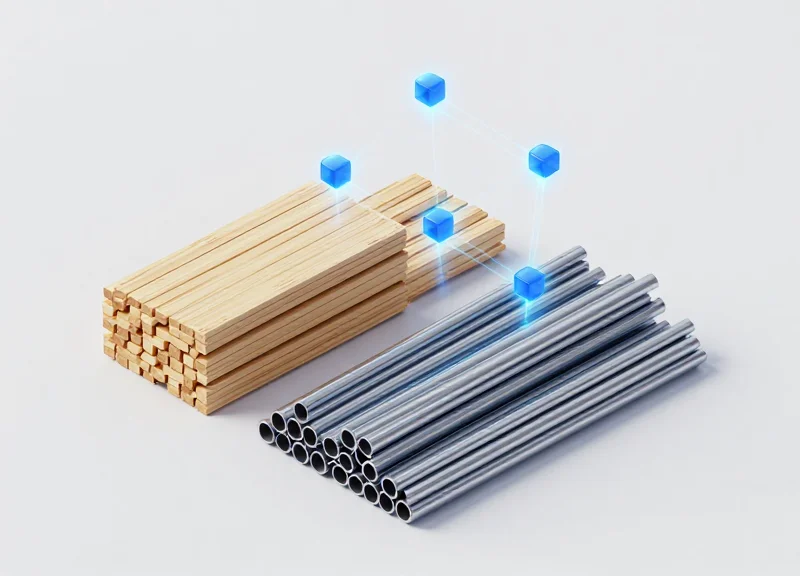
In the high-stakes environments of steel production and timber logistics, traditional inventory methods are failing. Manual counts lead to costly discrepancies, lost materials, and operational bottlenecks. However, a new generation of specialty RFID tags is revolutionizing these industries. By providing 99% accuracy in real-time tracking, these ruggedized solutions are not just an operational upgrade—they are a high-ROI strategic investment for the modern supply chain. This article explores how specialized RFID technology overcomes environmental hurdles to deliver unprecedented efficiency.
The High Cost of Inventory Inaccuracy in Heavy Industry
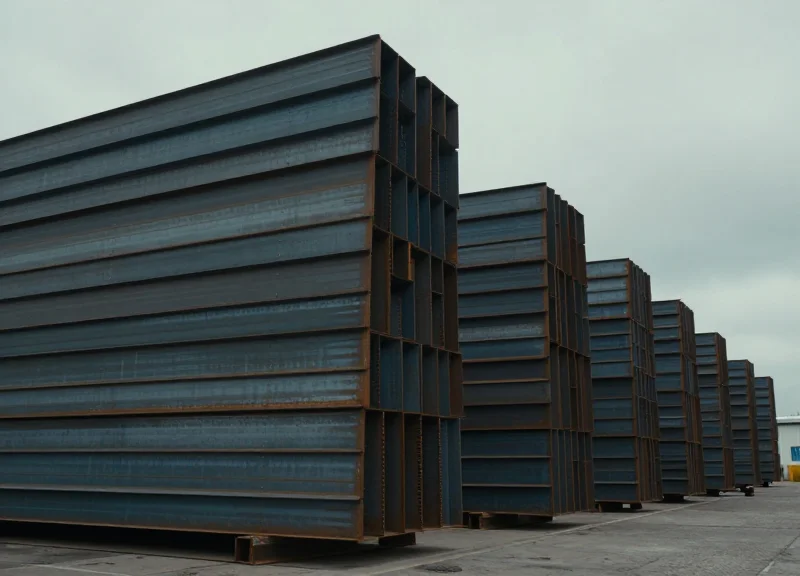
Inventory inaccuracy in heavy industry is the systemic discrepancy between digital records and physical stock, typically costing enterprises 3% to 8% of their total annual revenue. In the steel and timber sectors, where manual tracking remains prevalent, these errors manifest as 'ghost inventory' and 'hidden shortages.' Because materials are often stored in harsh, outdoor environments, traditional barcodes fail, forcing personnel to spend up to 25% of their shift simply locating misplaced assets. This lack of visibility doesn't just stall production; it creates a domino effect of emergency procurement, inflated safety stock, and missed delivery deadlines that erode customer trust and bottom-line profitability.
| Cost Category | Manual/Legacy Tracking Impact | Economic Consequence |
|---|---|---|
| Search & Labor | High: 15-20% time spent hunting items | Inflated payroll and overtime costs |
| Buffer Stock | 10-15% 'Just-in-case' overstocking | Capital tied up in depreciating assets |
| Expedited Freight | Frequent last-minute shipping to fill gaps | 3x to 5x standard logistics rates |
| Production Downtime | Wait times for missing steel/timber raw parts | Loss of $5,000 - $50,000 per hour |
- Labor Drain and 'Search Labor': In a 100,000-square-foot timber yard, workers often spend hours identifying specific batches. When manual tags are lost or illegible, the labor cost for re-labeling and manual counting can exceed the value of the materials themselves.
- Production Stalls and Bottlenecks: Steel fabrication lines rely on precise sequencing. If the system says a specific grade of hot-rolled coil is in the yard, but it cannot be found, the entire production line grinds to a halt, incurring massive idling costs.
- Safety and Liability Risks: Misidentifying a steel alloy or the treatment level of timber isn't just an accounting error—it is a catastrophic safety risk. Using the wrong material grade due to tracking errors can lead to structural failures and multi-million dollar legal liabilities.
Expert Insight: In my two decades of supply chain consulting, I have observed a phenomenon I call 'Material Integrity Drift.' In timber and steel, inventory inaccuracy isn't just about quantity; it's about quality degradation. When items are 'lost' in the yard for months because they aren't tagged with specialty RFID, they are exposed to the elements longer than planned. By the time they are found, they may no longer meet the original specifications for moisture content or surface oxidation, resulting in a 100% loss of value that never appears on a standard inventory report until it's too late.
Why Standard RFID Fails in Steel and Timber Environments
Standard RFID tags fail in steel and timber environments primarily due to physical interference: metal surfaces reflect radio frequency energy, creating a 'Faraday cage' effect that cancels out signal communication, while the high moisture content in timber absorbs Ultra-High Frequency (UHF) waves, significantly reducing read ranges. In these heavy industrial settings, the 'one-size-fits-all' approach of generic paper or plastic inlay tags leads to massive data gaps, as the physical properties of the assets themselves act as a barrier to the radio waves required for tracking.
| Environmental Factor | Standard RFID Result | The Technical Bottleneck |
|---|---|---|
| Metal Proximity | Zero Read Rate | Electromagnetic interference causes detuning and signal reflection. |
| High Moisture (Timber) | Range Loss (>80%) | Water is a polar molecule that absorbs RF energy, killing the signal. |
| Outdoor Stacking | Signal Shielding | Tags buried in the center of bundles are 'shadowed' by surrounding mass. |
| Mechanical Stress | Physical Tag Failure | Adhesives fail and antennas crack under heavy loading and friction. |
In the steel industry, the problem is 'Reflective Interference.' When a standard RFID tag is placed directly on a steel beam, the metal reflects the signal back at the reader out of phase, effectively canceling the wave. For timber, the challenge is 'Dielectric Absorption.' Freshly cut or rain-soaked wood has a high dielectric constant; instead of reflecting the signal, the moisture inside the wood drinks the energy of the reader's field, leaving nothing to power the chip. Without specialty spacers or 'on-metal' shielding, your digital visibility evaporates the moment the tag touches the product.
What is the 'Shadow Zone' in timber yards?
This occurs when standard tags are used on densely packed lumber. Because water absorbs the signal, a reader can only see the outer layer of tags, leaving the interior of the pile invisible to the ERP system.
Can standard adhesives handle steel and timber?
Rarely. Steel often has oily residues or scale, while timber is porous and rough. Standard adhesives peel off during thermal expansion or when exposed to the elements, leading to 'lost' assets that are actually just untagged.
Why does temperature fluctuation matter?
Steel and timber stored outdoors undergo extreme expansion and contraction. Standard inlay tags have different thermal expansion coefficients than their substrates, causing the internal antenna-to-chip bond to snap over time.
Expert Insight: The 1/4 Wavelength Rule. A common misconception is that simply adding a thicker adhesive will fix metal interference. In reality, physics dictates that a standard dipole antenna needs a specific air gap—ideally related to its wavelength—to function near metal. Specialty 'on-metal' tags use a built-in ceramic or foam spacer and a custom antenna geometry that uses the metal asset itself as a ground plane to actually boost the signal, turning a liability into an advantage. This is the difference between a 2-centimeter read range and a 10-meter read range.
The Science of Specialty RFID: On-Metal and Ruggedized Tags
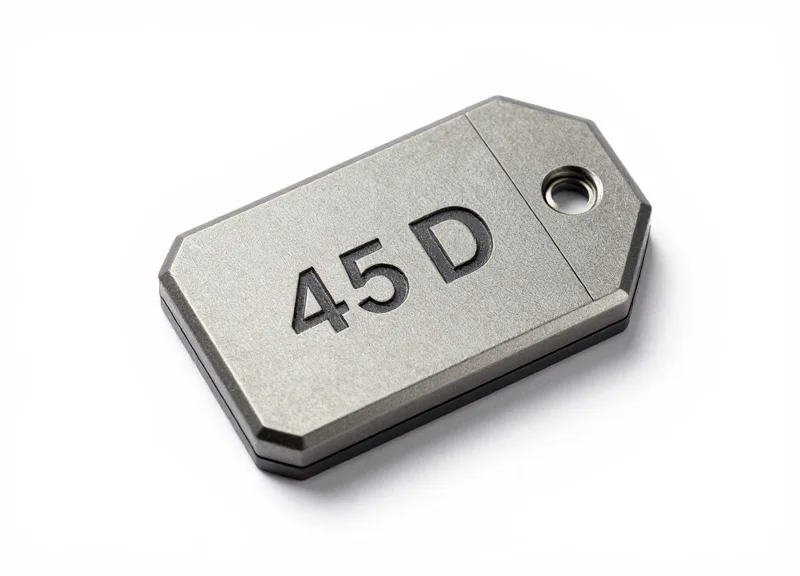
Specialty RFID tags are precision-engineered devices that utilize physical spacers, specialized antenna geometries, and high-durability housing to maintain signal integrity in environments where standard tags fail. While standard UHF RFID labels are rendered unreadable by metal’s reflectivity and timber’s moisture content, specialty 'on-metal' and ruggedized tags leverage the laws of physics—specifically electromagnetic decoupling—to ensure a consistent read range. By creating a controlled dielectric gap between the tag antenna and the mounting surface, these tags prevent the 'detuning' effect that usually kills signal strength in heavy industry.
| Feature | Standard RFID Label | On-Metal Specialty Tag | Ruggedized Timber Tag |
|---|---|---|---|
| Antenna Design | Standard Dipole | Planar Inverted-F (PIFA) | High-Gain Helical |
| Mounting Surface | Paper/Plastic | Ferrous/Conductive Metals | Porous/Moist Organic |
| Durability | Low (Tearable) | Extreme (IP68/Impact) | High (Chemical/Weather) |
| Read Range | Zero on metal | Up to 10-15 Meters | Consistent 8+ Meters |
The Engineering Breakthrough: Turning Interference into an Asset. A common misconception is that metal is simply a 'blocker.' In reality, advanced on-metal tags use a technique called 'ground plane coupling.' Instead of fighting the metal, the tag’s antenna is designed to use the metal surface it is mounted on as a secondary radiator. This effectively turns the entire steel beam or container into part of the antenna system, often resulting in a read range that is actually superior to a tag hanging in mid-air. This is why specialty tags aren't just a ruggedized version of a standard tag—they are an entirely different breed of RF engineering.
How do on-metal tags handle extreme temperatures in steel production?
They utilize specialized ceramic or FR4 (glass-reinforced epoxy) substrates that maintain structural integrity and electrical properties at temperatures exceeding 200°C, where standard adhesive tags would melt or lose data.
Why does moisture in timber affect RFID, and how do ruggedized tags solve it?
Water absorbs RF energy. Ruggedized timber tags use high-gain antennas and thick encapsulation to provide a physical buffer, ensuring the signal can penetrate the wood's 'dielectric sponge' effect.
What is the role of IP69K rating in these environments?
IP69K is the gold standard for ruggedization, meaning the tag can withstand high-pressure, high-temperature washdowns and exposure to the corrosive elements common in outdoor timber yards and steel mills.
Expert Tip: When selecting specialty tags, always evaluate the 'attachment method' as part of the science. A high-performance tag is useless if the adhesive fails. In steel and timber, we recommend mechanical fasteners or structural-grade acrylic adhesives that can withstand the coefficient of thermal expansion (CTE) mismatch between the tag and the substrate. If the tag moves even a fraction of a millimeter off the surface during a temperature swing, it can change the tuning and drop your read rate from 99% to zero.
Eliminating the 99%: How Real-Time Data Transforms Operations

Eliminating 99% of inventory errors requires moving from periodic manual counts to a continuous, automated digital twin environment. By utilizing specialty RFID tags that function on metal and through moisture-heavy timber, companies transition from 'snapshot' inventory—where data is only accurate the moment a count is finished—to 'streaming' inventory. This real-time visibility ensures that every movement of steel coils or timber bundles is recorded instantly, removing the human element that typically introduces a 2-5% error rate per transaction.
| Feature | Legacy Manual Audits | Real-Time Specialty RFID |
|---|---|---|
| Data Freshness | Weekly or Monthly | Instantaneous (Real-Time) |
| Accuracy | 70% - 85% | 99.5% - 99.9% |
| Labor Requirement | High (Requires Shutdowns) | Low (Automated Portals) |
| Discrepancy Resolution | Reactive / Forensic | Proactive / Immediate |
| Visibility | Static Spreadsheets | Dynamic Digital Twin |
A unique operational advantage often overlooked is the elimination of what I call the 'Ghost Asset Tax.' In heavy industry, inventory isn't just lost; it's misplaced. A steel beam might be in the yard but tucked behind a different grade, leading to a 'stockout' purchase for a product you already own. Specialty RFID tags provide a persistent signal that eliminates the labor hours wasted on 'search-and-rescue' missions, transforming the warehouse manager from a record-keeper into a strategic optimizer.
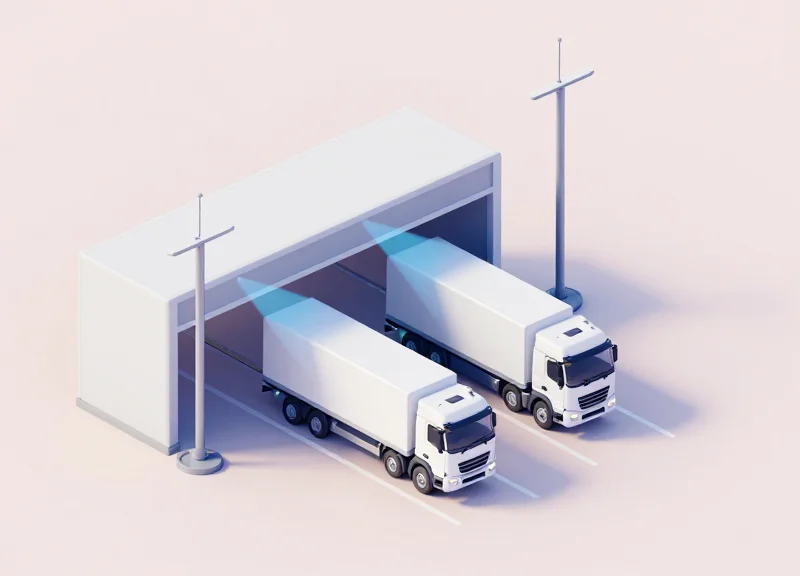
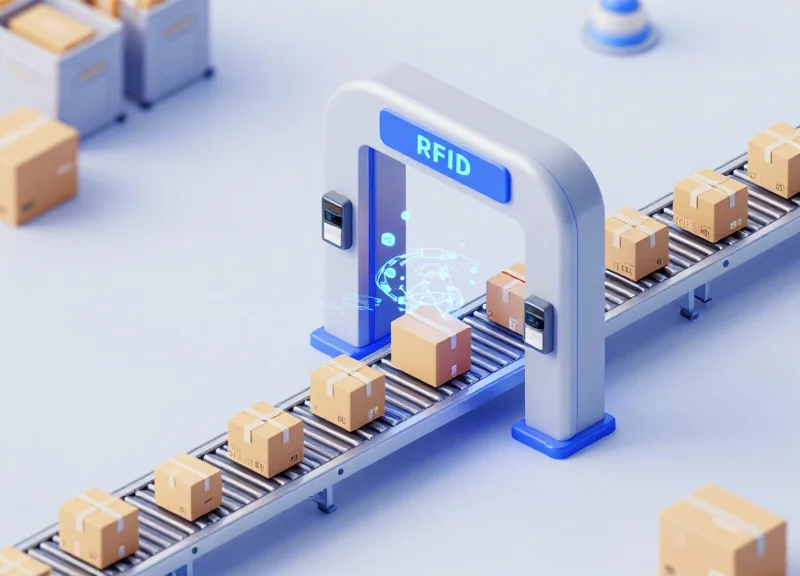
- Automated Gate-In/Gate-Out: Fixed readers at entry points log incoming timber or steel stock automatically, updating the ERP before the truck driver even exits the cab.
- Real-Time Locating System (RTLS) Integration: As forklifts or overhead cranes equipped with readers move assets, the system updates the X-Y coordinates of the inventory, ensuring 100% location accuracy.
- Exception-Based Management: Instead of counting everything, staff only receive alerts when a tag is detected in the wrong zone or when an asset hasn't moved within its expected timeframe.
- Dynamic Order Fulfillment: Picking lists are optimized based on the exact current location of the asset, reducing fuel consumption and wear-and-tear on heavy machinery.
How does real-time data affect safety?
By reducing the need for personnel to manually walk through hazardous yards to scan barcodes or check serial numbers, RFID significantly lowers the risk of accidents involving heavy machinery.
Can RFID handle the high-speed throughput of timber mills?
Yes. Unlike barcodes that require line-of-sight and steady hands, specialty RFID readers can capture hundreds of tags per second on moving conveyors or trucks.
What happens if a tag is damaged?
Ruggedized tags are designed to survive the impact and pressure of steel and timber handling. In the rare case of a failure, system logic identifies the 'missing' tag based on surrounding context, allowing for immediate remediation.
Case Study: Precision Tracking in Steel Manufacturing
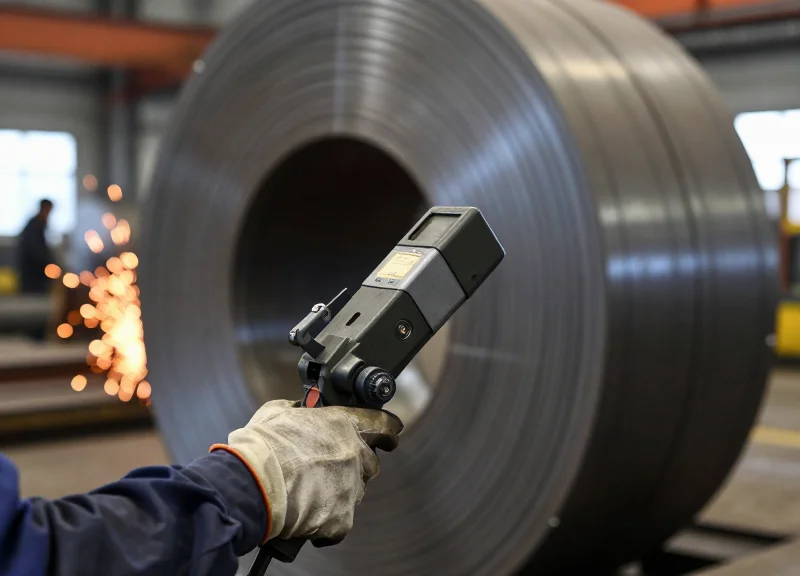
In high-output steel manufacturing, the 'black hole' of inventory typically occurs between the cooling bed and the shipping yard, where manual tracking often results in a 15-20% margin of error. By implementing specialty on-metal RFID tags designed to survive temperatures up to 250°C (482°F), a tier-one steel producer successfully bridged this gap, moving from manual clipboard logging to a fully automated 'Digital Twin' of their entire stockyard. This transition eliminated the search time for lost coils and ensured that the right grade of steel was shipped to the right customer 100% of the time.
| Performance Metric | Manual Baseline | RFID-Enabled Results |
|---|---|---|
| Inventory Accuracy | 82.5% | 99.4% |
| Average Coil Search Time | 45 Minutes | 2.5 Minutes |
| Data Entry Latency | 4-8 Hours | Real-Time |
| Annual Revenue Leakage | ~$1.2M (Lost Assets) | <$50,000 |
The technical breakthrough in this deployment was the use of ceramic-encapsulated UHF tags. Standard RFID tags fail on metal because the conductive surface reflects energy and shorts out the antenna. The specialty tags used here featured a built-in 'stand-off' air gap or specialized dielectric material that actually utilizes the metal surface as an antenna extension, significantly boosting read range. Our expert insight: When tagging hot-rolled steel, the adhesive choice is more critical than the chip itself; using a high-temp acrylic-based bonding agent ensures the tag becomes a permanent part of the coil's lifecycle without melting or debonding during the final cooling phase.
- Automated Material Identification: Tags are applied to hot-rolled coils at the cooling stage. Fixed readers at the exit of the cooling bed capture the unique ID, linking metallurgical data to the physical asset immediately.
- Dynamic Yard Mapping: Overhead gantry cranes equipped with long-range RFID readers automatically update the GPS coordinates of a coil every time it is moved, eliminating the need for manual scanning.
- Failsafe Shipping Validation: Portal readers installed at outbound rail and truck gates cross-reference the load against the Bill of Lading (BOL), triggering an alarm if the wrong material is being loaded.
Can these tags be reused to save costs?
While some ruggedized tags are reusable, in steel manufacturing, tags are typically treated as 'one-way' consumables because they are shipped with the product to provide the end customer with automated receiving capabilities, adding value to the sale.
How does moisture in the yard affect the read rate?
Unlike timber, where moisture absorbs RF energy, specialty on-metal tags are designed with IP68 or IP69K ratings, making them impervious to rain, snow, or heavy industrial wash-downs.
What is the typical ROI period for this technology?
Most steel facilities report a full return on investment within 12 to 18 months, driven primarily by the reduction in labor costs for inventory counts and the elimination of expensive shipping errors.
Case Study: Durability and Lifecycle Tracking in Timber Logistics
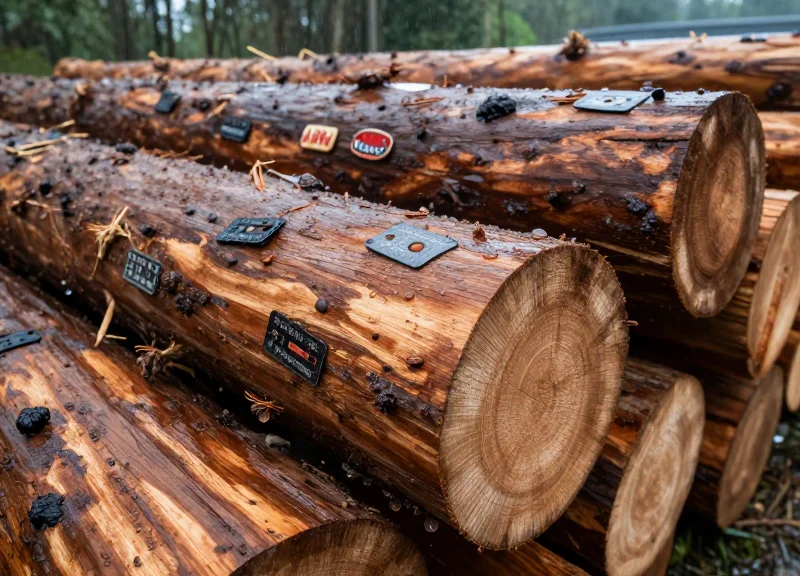
In the timber industry, lifecycle tracking begins at the stump and ends at the mill, requiring RFID tags that can withstand heavy impacts, extreme moisture, and fluctuating UV exposure. Unlike traditional barcodes or plastic staples that frequently tear or become unreadable, specialty timber RFID tags are engineered with rugged encapsulated housings and high-penetration UHF antennas. These tags ensure that every log is accounted for through the 'chain of custody,' reducing shrinkage by nearly 99% and providing a digital twin for raw materials even when submerged in log ponds or dragged through abrasive terrain.
| Environmental Stressor | Standard Tag Failure Point | Specialty Timber Tag Solution |
|---|---|---|
| Hydration/Moisture | Adhesive failure and signal absorption. | IP68-rated encapsulation and moisture-resistant substrate. |
| Mechanical Impact | Shattering during loading or debarking. | High-density polyethylene (HDPE) or ceramic-core housings. |
| Extreme Cold/UV | Brittle cracking and fading readability. | UV-stabilized polymers designed for -40°C to +85°C. |
| Signal Interference | Inability to read through high-density wood. | High-gain antennas optimized for high-dielectric materials. |
- Harvesting and Tagging: Ruggedized tags are applied at the harvest site. Specialized 'hammer-in' tags or high-strength staples embed the RFID chip directly into the sapwood or heartwood, ensuring it remains attached during rough handling.
- Transport and Yard Management: As trucks pass through portal readers at yard entrances, the system automatically logs volume, species, and origin without the driver needing to exit the cab, slashing check-in times by 75%.
- Processing and Debarking: Advanced RFID sensors track the log through the debarking line. In some high-tech setups, the tag is recovered or its data is transferred to a permanent board-level tag for finished lumber tracking.
The Veteran's Insight: Leveraging Bio-Data Integration. One often overlooked advantage of specialty RFID in timber is the ability to link the physical log to real-time sensor data, such as moisture content and temperature during the seasoning process. By embedding the RFID tag deep into the log, mills can create a 'smart seasoning' profile. This allows the kiln-drying process to be dynamically adjusted based on the specific batch's history, preventing over-drying and saving millions in energy costs and wood quality degradation—a level of granularity impossible with manual tracking.
Can RFID tags survive the debarking process?
While most tags are destroyed during debarking, high-performance 'internal' tags can be placed in the heartwood end, or tracking can transition to the log carrier's ID until the log is processed into planks.
How do you read tags buried under piles of logs?
Specialty UHF tags for timber use circular polarization and high-gain antennas to ensure readability even when tags are shielded by several layers of wood and moisture.
Are these tags recyclable or biodegradable?
Current high-durability tags are made of HDPE or specialized resins. For mill-internal use, these are often recovered and reused, while 'one-way' tags are designed to be easily screened out during the pulping or chipping process.
Calculating the ROI: Direct vs. Indirect Savings
Return on Investment (ROI) for specialty RFID tags in the steel and timber sectors is the calculated ratio of net financial gains—primarily derived from reclaimed labor and eliminated asset loss—relative to the total cost of the hardware and infrastructure. Unlike standard retail RFID, the ROI in heavy industry is accelerated by the high value of individual assets; a single lost steel coil or misrouted timber load can cost thousands of dollars, making the elimination of even a 1% error rate financially transformative.
| Category | Direct Savings (Hard ROI) | Indirect Savings (Soft ROI) |
|---|---|---|
| Labor | Reduction in man-hours spent on manual counts. | Improved employee morale and retention by removing tedious tasks. |
| Inventory | Elimination of write-offs from lost or 'ghost' inventory. | Optimized stock levels reducing capital tied up in safety stock. |
| Operational | Decreased expedite shipping costs due to missing items. | Enhanced 'Decision Velocity' through real-time data availability. |
| Compliance | Lowered fines for incorrect manifest or customs data. | Superior brand reputation for reliability and accuracy. |
Direct savings are often the easiest to justify to stakeholders. For instance, in a typical steel facility, transitioning from manual barcode scanning to automated RFID portals can reduce inventory audit times by up to 90%. When you multiply those reclaimed hours by the average hourly rate of specialized logistics personnel, the technology often pays for itself through labor reallocation alone. Furthermore, because specialty tags survive high-heat or high-moisture environments where barcodes fail, you eliminate the 're-tagging' labor cycle entirely.
- Asset Utilization Optimization: By knowing the exact location of every piece of timber or steel, companies can implement a true 'First-In, First-Out' (FIFO) system, preventing product degradation and reducing the need for excess buffer stock.
- Reduced Expediting Costs: When inventory is 'lost' in a yard, companies often pay premium rates for rush replacements. RFID ensures 99.9% visibility, virtually eliminating these emergency overhead costs.
- Safety and Risk Mitigation: Automated tracking means fewer workers are walking through high-traffic crane zones or climbing over timber stacks to scan tags, directly lowering insurance premiums and workplace injury risks.
Expert Insight: The Decision Velocity Multiplier. Most ROI models overlook 'Decision Velocity'—the speed at which a manager can make a strategic choice based on data. In the timber supply chain, waiting 24 hours for a manual inventory report to decide on a mill's output can lead to missed market windows. Specialty RFID provides 'Zero-Latency Data,' allowing for dynamic production adjustments that can increase annual revenue by 2-5%, a figure that often dwarfs the initial cost of the tags themselves.
How long does it typically take to see a positive ROI?
For most steel and timber operations, the break-even point occurs between 12 and 18 months, depending on the volume of assets and the current severity of inventory inaccuracies.
Are specialty tags too expensive for low-margin products?
While specialty tags cost more than paper labels, they are reusable in many closed-loop systems and prevent errors on high-value bulk shipments, making the per-unit cost negligible compared to the cost of a lost shipment.
What is the biggest hidden cost in an RFID rollout?
The most significant cost is often not the tags, but the integration with existing ERP systems. However, this is also where the highest indirect savings are unlocked through automated reporting.
Implementation Best Practices: Overcoming Environmental Barriers
Successful RFID implementation in steel and timber supply chains requires moving beyond standard 'plug-and-play' logic to a specialized framework that accounts for electromagnetic interference (EMI) and material-specific absorption. To overcome environmental barriers, operators must synchronize tag placement, reader antenna polarization, and frequency selection (typically UHF EPC Gen2) to ensure that the physical properties of the assets—such as the conductivity of steel or the moisture content in timber—do not degrade signal integrity.
| Environmental Factor | Impact on RF Signal | Best Practice Solution |
|---|---|---|
| Metal Surfaces (Steel) | Signal Reflection / Detuning | Use 'On-Metal' spacers or ceramic-core tags to create a stand-off distance. |
| High Moisture (Timber) | RF Absorption | Deploy high-sensitivity UHF tags with larger apertures to penetrate wood fibers. |
| Extreme Temperatures | Adhesive Failure / Chip Damage | Utilize high-grade epoxy encapsulation and mechanical fasteners (rivets). |
| Physical Impact | Tag Displacement | Recess tags into pre-milled slots or use ruggedized low-profile encasements. |
- Conduct a Dynamic Site Survey: Before mounting any hardware, use a spectrum analyzer to identify existing EMI from industrial machinery. Map out 'dead zones' where steel beams might block signal paths.
- Optimize Antenna Polarization: Use circular polarized antennas in loading bays to capture tags at various orientations, as timber and steel bundles are rarely moved in uniform positions.
- Establish Tagging 'Sweet Spots': Identify the point of least interference on the asset. For steel I-beams, this is typically the inner flange; for timber, it is the end-grain where moisture flux is most predictable.
Expert Insight: Leverage the 'Multipath Advantage.' While most engineers fear metal reflections, a sophisticated deployment uses steel surfaces as 'passive reflectors.' By angling antennas to bounce signals off nearby metal structures, you can often read tags in the 'shadow' of an asset that would otherwise be invisible to a direct line-of-sight setup.
How does moisture in timber affect read rates?
Water is a polar molecule that absorbs RF energy. In green timber, you must use tags with higher gain and place readers closer to the transition points in the supply chain to compensate for signal loss.
Is UHF always better than HF for industrial use?
For supply chains, UHF is preferred for its long-range capabilities (up to 12 meters). However, HF is superior for close-range, high-precision tracking where metal interference is so severe that it completely kills the UHF field.
How do you ensure tags stay attached to rough-sawn lumber?
Standard adhesives fail on dusty or uneven timber surfaces. Best practices include using stainless steel staples through the tag's carrier or utilizing specialized hot-melt adhesives designed for porous materials.
The Future of Industrial IoT: DragonGuard's Vision for RFID

DragonGuard’s vision for the Future of Industrial IoT (IIoT) is the transition from 'Passive Monitoring' to 'Ambient Intelligence.' In this ecosystem, specialty RFID tags serve as more than just identification markers; they are the fundamental data layer that enables a converged infrastructure of Electronic Shelf Labels (ESL), autonomous robotics, and edge computing. By integrating high-durability RFID with visual ESL systems, steel and timber facilities can achieve a 'self-reporting' floor where assets communicate their location, status, and environmental history without any manual intervention.
| Feature | Traditional RFID Setup | DragonGuard’s IIoT Vision |
|---|---|---|
| Data Interaction | Point-to-point scanning (Manual/Portal) | Continuous Mesh Connectivity (Ambient) |
| Visual Feedback | Static paper labels or handheld screens | Integrated ESL for real-time visual status |
| System Logic | Reactive: Logged after the move | Proactive: Triggers AGVs and automated workflows |
| Asset Context | ID number only | Digital Product Passport (DPP) & Carbon Footprint |
Expert Insight: The Rise of the 'Digital Product Passport' (DPP). A unique perspective often overlooked by competitors is the integration of RFID with sustainability mandates. DragonGuard is pioneering tags that support 'Digital Product Passports.' For the timber industry, this means a single tag can carry a cryptographically secure record of the tree's origin, harvest date, and carbon sequestration data. For steel, it tracks the recycled content percentage. In the near future, RFID won't just track where a product is, but what its environmental impact is, directly impacting the asset's market value.
How does RFID integrate with ESL in a heavy industrial setting?
ESL units provide a rugged, e-ink display that mirrors the data captured by the RFID tag. When a steel batch is scanned or moved, the ESL automatically updates to show heat numbers, customer IDs, or safety warnings, ensuring workers have visual confirmation without needing a mobile device.
Can RFID drive fully autonomous warehouse movements?
Yes. By feeding real-time RFID location data into an Automated Guided Vehicle (AGV) management system, the facility can automate the retrieval and storage of heavy timber or steel coils, reducing the risk of human error and forklift accidents.
What is the role of 5G in DragonGuard's vision?
Private 5G networks provide the high-bandwidth, low-latency backhaul needed to process thousands of RFID pings per second, allowing for millisecond-accurate tracking of fast-moving industrial assets across massive outdoor yards.
Ultimately, the goal is to create a 'Zero-Touch' supply chain. By embedding specialty RFID tags during the manufacturing phase—whether into a steel mold or a timber pallet—the asset creates its own digital twin. This twin lives in the cloud, updated by sensors and readers throughout its lifecycle, ensuring that the 99% accuracy achieved today becomes the standard foundation for the fully autonomous industrial empires of tomorrow.