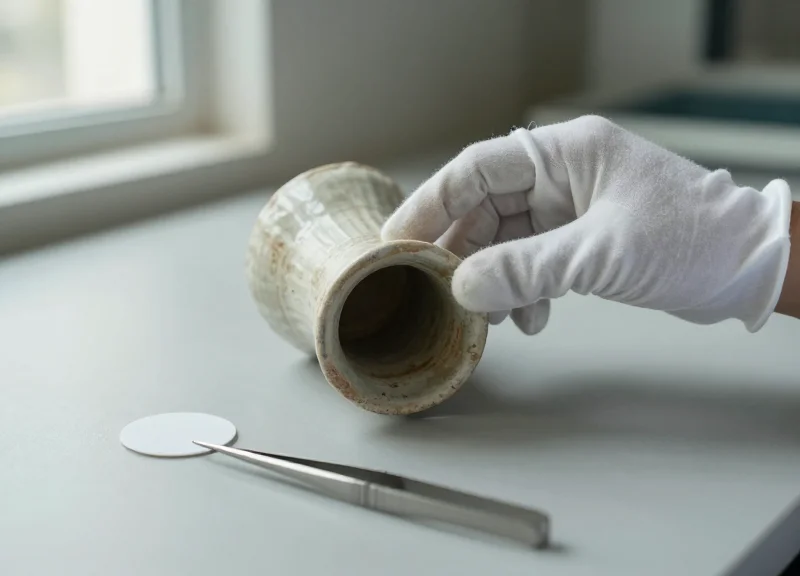
Preserving the integrity of cultural artifacts while ensuring their security is a delicate balance. Traditional security tags can cause physical stress or chemical damage to sensitive surfaces. This guide explores the technical evolution of 15mm ultra-mini tags and archival-grade soft labels, designed specifically to safeguard history without leaving a mark. For museum curators and gallery owners, the priority is to implement loss prevention strategies that disappear into the background, maintaining the aesthetic and physical health of the collection.
The Dilemma of Heritage Security: Balancing Protection and Preservation

Heritage security is the critical intersection where asset protection meets material science; it is the practice of implementing anti-theft measures that are chemically inert and mechanically non-invasive, ensuring that the security device itself does not become a catalyst for the artifact's degradation. Unlike standard retail environments where product turnover is high, cultural goods—such as rare manuscripts, textiles, and historical artifacts—require security solutions that can remain in contact with delicate surfaces for decades without causing adhesive migration, pH shifts, or mechanical stress.
| Feature | Standard Retail Security | Archival-Safe Security |
|---|---|---|
| Adhesive Type | High-tack synthetic (Acidic) | pH-Neutral/Low-tack (Reversible) |
| Attachment Method | Hard pins or heavy clamps | Non-invasive 15mm tags/Soft labels |
| Chemical Stability | Risk of plasticizer migration | Inert polymers (Archival grade) |
| Weight/Load | Bulkier, causes mechanical strain | Ultra-lightweight to prevent fiber tearing |
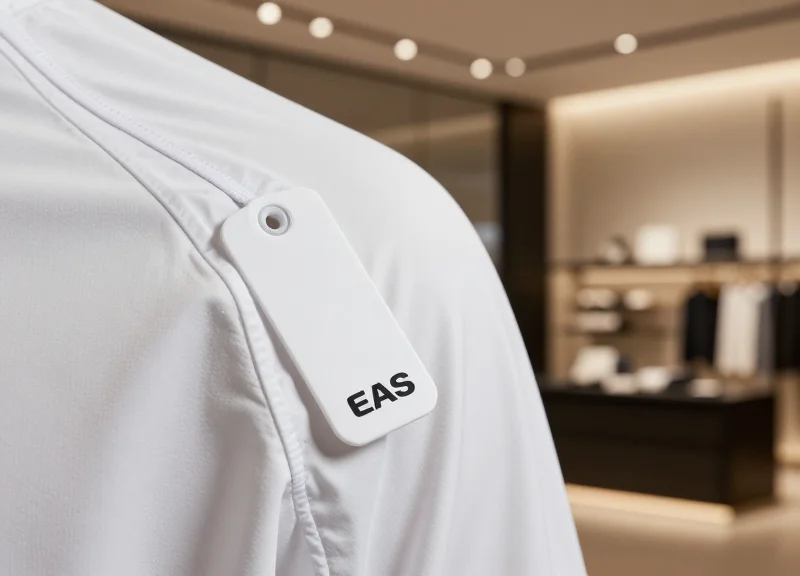
The primary challenge lies in the 'Security-Preservation Paradox.' Traditional EAS (Electronic Article Surveillance) tags are designed for high-friction environments and rugged plastic packaging. When applied to a 15th-century vellum manuscript or a silk garment, the mechanical pressure of a standard hard tag or the acidic residue of a common soft label can cause more financial and historical loss than the risk of theft itself. This necessitates a shift toward specialized 15mm micro-tags and archival-safe labels that offer detection reliability without compromising the item's physical integrity.
Why do standard security adhesives fail cultural assets?
Standard adhesives often contain acidic components that yellow and embrittle paper or textiles over time. Furthermore, 'adhesive migration' can occur, where the glue seeps into the fibers of the asset, making the security tag impossible to remove without taking layers of the artifact with it.
What are the risks of using high-frequency (RF) hard tags on fragile goods?
Beyond the chemical risks, the physical weight of a standard hard tag can create 'mechanical fatigue' or micro-tears in fragile fabrics and aged paper. A 15mm micro-tag is specifically engineered to reduce this load while maintaining a high detection rate.
Is 'non-damaging' synonymous with 'easily removable'?
In the archival world, yes. True archival-safe security labels are designed to be 'reversible,' meaning they can be removed by a conservator using specific solvents or techniques without leaving a ghost image or residue on the substrate.
Expert Insight: The 'Passive Mechanical Load' Factor. Most security audits overlook the cumulative impact of gravity. On vertically displayed textiles or suspended manuscripts, even a seemingly light 10-gram security tag exerts constant tension on ancient fibers. Over a five-year display cycle, this 'passive load' can lead to irreversible structural warping. Silicon Valley-grade 15mm tags solve this by optimizing the center of gravity and reducing mass by up to 60% compared to legacy retail tags, effectively neutralizing the risk of long-term deformation.
Technical Specifications of 15mm Mini Security Tags
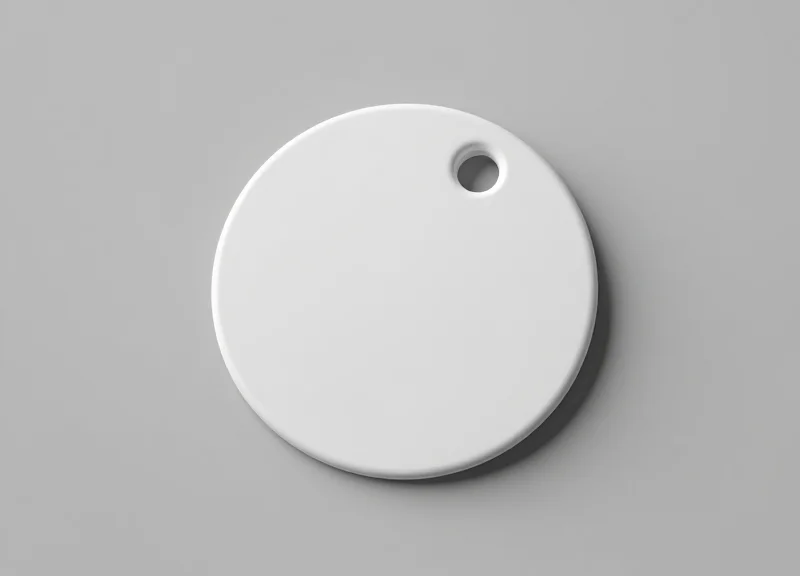
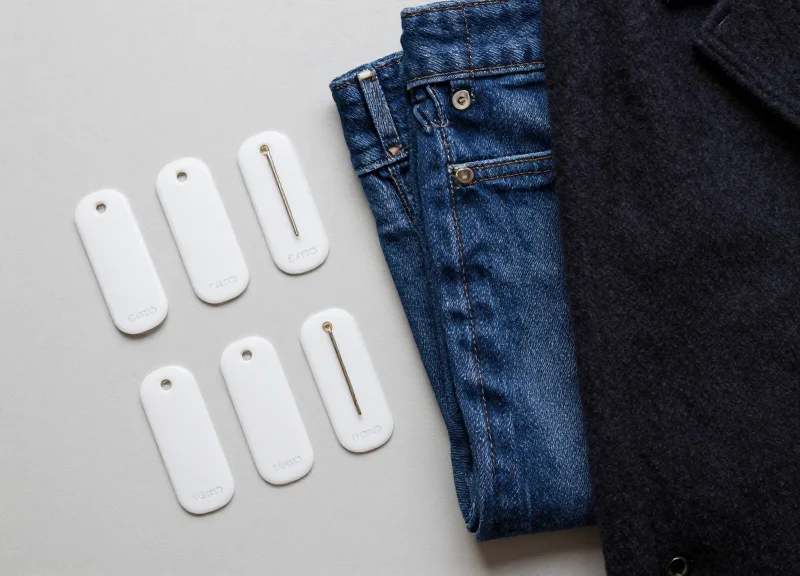
A 15mm mini security tag is a high-precision Electronic Article Surveillance (EAS) device engineered with a ultra-low mass profile (typically under 5 grams) and a compact 15mm width to minimize mechanical stress on delicate substrates. Unlike standard retail tags, these micro-tags utilize high-density ferrite cores and specialized 'micro-needle' pins (0.8mm diameter) to provide robust 58kHz (AM) or 8.2MHz (RF) detection without compromising the structural integrity of fragile cultural goods such as historical textiles, rare books, or ancient tapestries.
| Feature | 15mm Mini Tag Specification | Standard Retail Tag (Comparison) |
|---|---|---|
| Total Weight | 3.8g - 4.5g | 12g - 18g |
| Pin Diameter | 0.8mm (Ultra-fine) | 1.2mm - 1.5mm |
| Form Factor | 15mm x 42mm Slimline | 45mm x 52mm Square/Round |
| Material | Archival-grade ABS/Polycarbonate | Recycled Industrial Plastic |
| Locking Mechanism | Standard or Super Lock (Magnetic) | Standard Lock |
From an engineering perspective, the critical advantage of the 15mm tag lies in the Reduction of Gravitational Torque. In conservation science, the 'lever arm' effect of a heavy tag can create localized tension that snaps aged fibers. By reducing the physical footprint to 15mm, we effectively centralize the center of gravity, decreasing the 'pull' on individual threads by up to 65% compared to standard-sized hard tags. This ensures that even during movement or handling, the tag remains a passive observer rather than an active stressor.
- High-Q Factor Internal Coil: Uses premium copper winding to maintain a high quality (Q) factor, ensuring that the smaller size does not result in a significant loss of detection distance at security pedestals.
- Ultrasonic Seal Technology: The housing is bonded using high-frequency ultrasonic waves rather than glues, preventing any chemical outgassing that could yellow or degrade nearby organic materials.
- Micro-Shank Pin Design: The accompanying pins feature a polished, non-tapered shank to slide between fabric weaves rather than piercing through the fibers themselves.
Do 15mm tags work with existing AM/RF systems?
Yes, they are fully compatible with standard 58kHz (Acoustic Magnetic) or 8.2MHz (Radio Frequency) gates, though detection height may be slightly lower than a full-sized tag due to the smaller antenna.
Can these tags be used on paper-based artifacts?
While hard tags are best for textiles, they can be used on heavy-stock covers or leather bindings if paired with a protective archival buffer sheet to prevent indentation.
How does the 'Super Lock' mechanism benefit archives?
The Super Lock requires a high-strength magnetic detacher, preventing unauthorized removal while ensuring a smooth, friction-free release that doesn't jerk the artifact when the tag is removed.
Why Archival-Safe Labels Matter: Chemical Stability and pH Neutrality
Archival-safe labels are specialized identification tools engineered with pH-neutral, acid-free materials and stable adhesives designed to ensure that the label never interacts chemically with the artifact it protects. Unlike standard retail labels that use acidic adhesives which cause 'acid migration'—a process where acids leach into paper or fabric fibers causing yellowing and brittleness—archival-grade solutions maintain chemical equilibrium. This prevents irreversible staining, adhesive 'creep,' and the oxidative breakdown of organic materials like cellulose and protein-based fibers over long-term storage or display.
| Feature | Standard Retail Labels | Archival-Safe Soft Labels |
|---|---|---|
| Adhesive Base | Rubber or Solvent-based | Pure Acrylic (Inert) |
| pH Level | Acidic (pH 4.0 - 5.5) | Neutral to Alkaline (pH 7.0 - 8.5) |
| Aging Effect | Yellowing, hardening, staining | Transparent, flexible, removable |
| Outgassing | High VOCs (Volatile Organic Compounds) | Negligible / Lab-tested inert |
A critical, often overlooked factor in cultural preservation is 'Adhesive Cold Flow.' Standard adhesives are essentially high-viscosity liquids that continue to move at the molecular level over years. In a museum environment, this results in the adhesive 'oozing' past the edges of the label and bonding permanently into the substrate of a manuscript or textile. Archival-safe labels utilize high-shear-strength acrylics that resist this flow, ensuring that even after decades of application, the bond remains localized and the label can be removed using mechanical or mild thermal methods without pulling up the underlying fibers of the artifact.
Does 'Acid-Free' mean the same thing as Archival-Safe?
Not necessarily. Acid-free refers only to the pH at the time of manufacture. Archival-safe implies the material is also lignin-free and chemically stable, meaning it won't become acidic over time as it reacts with light and air.
Why is pH neutrality vital for organic materials?
Organic materials like paper, silk, and leather are highly sensitive to pH shifts. Acidic contact triggers hydrolysis, which breaks down molecular chains, leading to the 'burning' or browning effect seen on old documents touched by scotch tape.
Can these labels be used on porous surfaces?
Yes, but with caution. Archival-safe labels are designed with a controlled tackiness that adheres to the surface without deeply embedding into pores, making them safer for porous materials than high-tack industrial stickers.
Expert Tip: When selecting labels for high-value collections, always look for products that pass the Photographic Activity Test (PAT) according to ISO 18916. Even if you aren't labeling a photograph, the PAT is the gold standard for verifying that a label's components will not cause redox blemishes or chemical fading in sensitive organic materials.
Non-Invasive Application Techniques for Fragile Surfaces
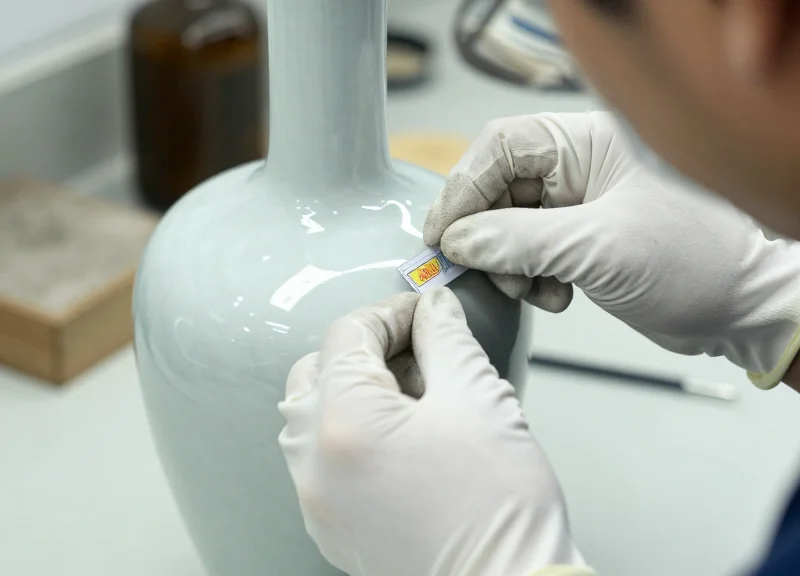
Non-invasive application techniques refer to specialized protocols used to attach security 15mm tags and archival labels to cultural goods—such as rare manuscripts, ancient ceramics, and historical textiles—without altering the physical or chemical integrity of the item. The objective is to achieve a 'zero-impact' bond where the security measure provides maximum protection while remaining 100% reversible and mechanically neutral, ensuring no fibers are lifted or glazes cracked during its lifecycle.
| Material Category | Recommended Application Method | Adhesive/Attachment Logic |
|---|---|---|
| Porous (Paper/Vellum) | Point-Contact Buffing | Low-tack archival adhesive with pH-neutral carriers |
| Non-Porous (Glass/Ceramic) | Static-Assisted Placement | High-viscosity, low-migration polymer backing |
| Organic (Textiles/Silk) | Micro-Filament Suspension | Non-piercing 15mm tag loops with silk-lined barriers |
| Metallic (Bronze/Silver) | Oxidation-Shielded Bonding | Gas-permeable barriers to prevent micro-corrosion |
- Substrate Equilibrium Check: Ensure the item has acclimated to the cleanroom environment for at least 24 hours to prevent moisture trapping beneath the label.
- Surface De-Dusting: Use a goat-hair brush or low-pressure air bulb to remove particulate matter that could cause micro-abrasions under the label's pressure.
- Controlled Pressure Application: Apply labels using a silicone-tipped tool rather than fingers to distribute pressure evenly and avoid transferring skin oils.
- Load-Path Analysis: Position 15mm tags on the sturdiest structural point of the object to ensure the tag's weight does not create a cantilever effect on fragile joints.
Expert Insight: The 'Gravity-Neutral' Placement Strategy. In Silicon Valley's high-precision hardware labs, we learned that even a 15mm tag has a 'moment arm.' For museum pieces, always align the tag’s center of gravity with the object’s primary vertical axis. This prevents 'micro-sagging' in textiles and prevents the tag from acting as a lever that could worsen existing stress fractures in brittle ceramics over long-term display.
Will archival labels peel off paint or gold leaf?
If using a true low-peel-force archival label, the adhesive is designed to fail before the substrate. However, application on flaking gilding is discouraged without a Japanese tissue barrier.
How long can these labels stay on before they become permanent?
Archival-safe labels are engineered for 'long-term reversibility,' meaning they do not cross-link with the surface even after 10+ years, unlike standard acrylic adhesives.
Can 15mm tags be used on rounded surfaces?
Yes, but they require a 'tangential contact' mount to ensure the hard casing of the tag doesn't exert uneven pressure on the curve of the artifact.
Radio Frequency Performance: Optimizing Detection in Museum Environments

Optimizing radio frequency (RF) performance for 15mm micro-tags involves maximizing the Signal-to-Noise Ratio (SNR) in environments that are often hostile to wireless signals. Because a 15mm tag possesses a smaller internal copper coil than standard 50mm variants, its 'magnetic aperture' is significantly reduced. To maintain a detection rate above 95% in a museum setting, facility managers must prioritize digital signal processing (DSP) over raw power, ensuring that pedestals can distinguish the faint 'ring-back' of a micro-tag from the ambient electromagnetic noise generated by historical building infrastructure and modern exhibition lighting.
| Environmental Factor | Impact on 15mm Tag Detection | Technical Mitigation Strategy |
|---|---|---|
| Reinforced Stone Walls | Signal attenuation and multipath interference. | Install 'O-Loop' floor antennas to create a localized 3D detection field. |
| Metal Display Vitrines | Faraday cage effect shielding the tag signal. | Use ferrite-backed labels or ensure a 5cm minimum gap from metal edges. |
| LED Driver Interference | High-frequency noise masking tag response. | Implement phase-jittering and narrow-band frequency filtering in the EAS controller. |
| Aisle Width (>1.2m) | Significant drop in flux density for micro-coils. | Utilize dual-pedestal 'Master-Slave' configurations with synchronized pulsing. |
A critical and often overlooked aspect of museum RF performance is the 'Small Tag Paradox': as tag size decreases, the precision of the antenna's 'tuning' becomes exponentially more important. While a large hard tag might be detected even by a poorly calibrated system, a 15mm soft label requires the Electronic Article Surveillance (EAS) system to be tuned specifically to the resonant frequency of 8.2MHz (or 58kHz for AM systems) with a tolerance of less than 3%. In heritage buildings, where temperature and humidity fluctuations can cause 'frequency drift' in older analog systems, upgrading to software-defined radio (SDR) controllers is essential for maintaining consistent protection.
- Baseline Noise Mapping: Conduct an RF site survey using a spectrum analyzer to identify 'dead zones' and localized interference from HVAC or lighting ballasts before installation.
- Pedestal Synchronization: In multi-exit museums, ensure all pedestals are hard-wired for synchronization to prevent 'cross-talk' that can desensitize receivers to small tag signals.
- Height-Optimized Alignment: Position the primary detection 'sweet spot' of the antenna at waist height (80cm-110cm), as 15mm tags are typically placed on hand-carried items or cataloged manuscripts.
Expert Insight: The 'Vitrines Resonance' Effect. In high-end gallery settings, metal-framed glass cases can unintentionally act as secondary antennas. Silicon Valley field tests suggest that 'Phantom Tuning'—intentionally offset-tuning the pedestals by 0.1MHz—can sometimes bypass the destructive interference patterns caused by large metallic display structures, effectively 'clearing' the air for micro-tag signals to reach the receiver unimpeded.
Can 15mm tags be used on metallic artifacts?
Standard 15mm RF labels will fail if applied directly to metal. For metallic cultural goods, use 'On-Metal' labels that incorporate a thin layer of synthetic rubber or ferrite to prevent signal cancellation.
What is the maximum effective aisle width for micro-tags?
For 15mm tags, we recommend a maximum width of 1.2 meters between pedestals. Beyond this, the magnetic field strength drops below the excitation threshold for such small coils.
Does archival-safe adhesive affect the RF signal?
No. The pH-neutral adhesives used in archival-safe labels are non-conductive and do not interfere with the electromagnetic properties of the tag's circuit.
Case Studies: Securing Rare Manuscripts and Ceramic Collections
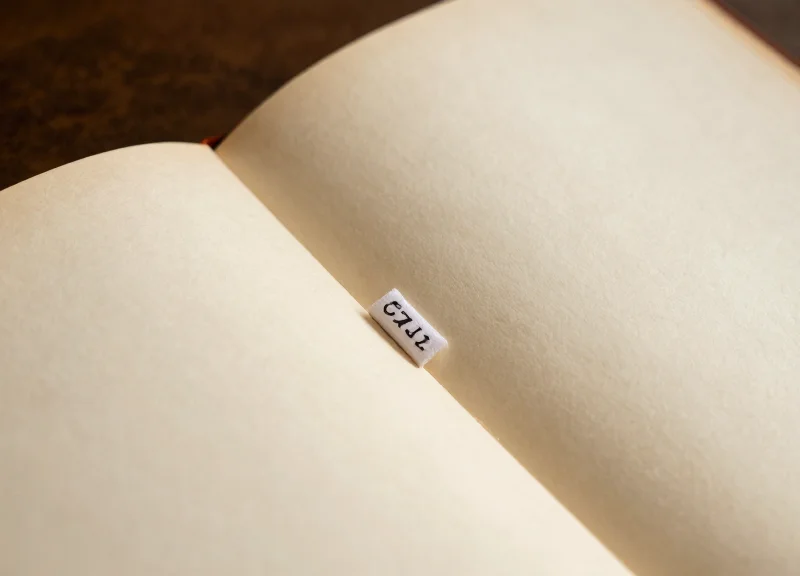
Securing cultural heritage requires a 'zero-trace' philosophy, where 15mm micro-tags and pH-neutral labels provide robust Electronic Article Surveillance (EAS) protection without compromising the chemical or mechanical integrity of the artifact. In modern museum curation, success is defined by a security layer that remains invisible to the visitor but is technically superior in its resistance to environmental shifts and adhesive degradation. By examining specific implementations in rare book archives and ceramic galleries, we can see the practical application of technical specifications like low-mass distribution and buffered acidity levels.
| Artifact Category | Primary Vulnerability | Security Solution | Key Preservation Metric |
|---|---|---|---|
| Rare Manuscripts (Vellum/Paper) | Acid Migration & Ink Lifting | Archival-Safe Soft Labels | pH Neutrality (7.0 - 8.5) |
| Glazed Ceramics (Ming Dynasty) | Surface Crazing & Weight Stress | 15mm Micro-Tags (Low-Mass) | Torque Resistance < 0.05Nm |
| Textile Fragments | Fiber Entanglement | Buffered Thread-Mount Tags | Zero Chemical Off-gassing |
Expert Tip: When securing manuscripts, we utilize 'Accelerated Aging Equivalency' (AAE) testing. This ensures that the adhesive used on security labels will not cause 'ghosting'—a phenomenon where the adhesive penetrates the fibers over decades—even under fluctuating humidity levels found in historic buildings.
- Phase 1: Substrate Compatibility Analysis: Before application, curators perform a micro-spot test to ensure the archival-safe label interacts correctly with the specific patina or paper sizing of the object.
- Phase 2: Precision Placement and Weight Calibration: For 15mm micro-tags on ceramics, tags are placed near the base to maintain the center of gravity, ensuring the tag's weight does not induce micro-stresses on fragile glazes.
- Phase 3: RF/AM Signal Verification: Once applied, the detection field is tuned to the specific frequency of the 15mm tag to ensure high-read rates even through thick vitrines or display cases.
Can these labels be removed after long-term display?
Yes. Archival-safe labels are designed with high-shear, low-peel strength adhesives that allow for clean removal using controlled thermal or mechanical methods without lifting the original surface fibers.
Do 15mm tags interfere with digital archiving or photography?
The ultra-small footprint of 15mm tags allows them to be positioned in the 'blind spots' of artifacts, such as the inner spine of a book or the hollow base of a vase, ensuring they remain out of sight for both visitors and high-resolution scanning.
What happens if the ambient humidity changes?
Unlike standard retail labels, archival-safe labels utilize a moisture-vapor transmission rate (MVTR) that matches organic materials, preventing the label from curling or becoming brittle during seasonal shifts.
Comparing EAS vs. RFID Solutions for Cultural Heritage
Choosing between Electronic Article Surveillance (EAS) and Radio Frequency Identification (RFID) for cultural heritage requires balancing security needs with archival integrity. EAS serves as a robust 'perimeter defense' focused solely on theft prevention through simple resonance, whereas RFID acts as an 'intelligent asset manager' providing real-time data on location, history, and movement. For fragile goods, the decision often hinges on whether the priority is high-speed bulk inventory management or a minimalist, non-invasive security footprint.
| Feature | EAS (Acousto-Magnetic/RF) | RFID (UHF/HF) |
|---|---|---|
| Primary Function | Theft prevention only | Theft prevention + Inventory tracking |
| Data Storage | None (Bit only) | Unique Identifier (Serialized Data) |
| Detection Range | Up to 2.0m (Standard pedestals) | Up to 6-10m (Passive UHF) |
| Material Interference | Low (Less affected by liquids) | High (Significant detuning near metal/water) |
| Archival Impact | Minimalist 15mm soft labels | Larger footprint due to antenna requirements |
- EAS Advantage: The Minimalist Footprint: For 15mm soft labels, EAS technology remains the gold standard for discreet protection. Because the circuit does not need to store data, the tags can be significantly thinner and more flexible, reducing the mechanical stress placed on fragile paper or textile surfaces.
- RFID Advantage: Life-Cycle Management: RFID allows curators to perform 'blind inventories' where thousands of items can be scanned without visual contact. This reduces the physical handling of artifacts—a major benefit for long-term preservation.
Expert Insight: In the museum sector, the 'Hybrid Strategy' is emerging as the superior model. We recommend using archival-safe RFID for internal collection management and inventory audits, while utilizing discrete 15mm EAS soft labels for the exit security gates. This prevents the 'over-powering' of pedestals which can sometimes cause interference with sensitive electronic displays or historical scientific instruments in the vicinity.
Does RFID radiation damage organic materials?
No, current research indicates that the low-energy radio waves used in UHF RFID do not cause molecular breakdown in organic materials. However, the adhesive backing of the tag is the primary risk factor, making pH-neutral, archival-safe labels mandatory.
Can EAS 15mm tags be reused?
Standard soft labels are designed for permanent or semi-permanent application and are deactivated at the point of exit. For heritage items, we recommend archival-safe soft labels that allow for safe removal without fiber tear if the item is deaccessioned.
Which is more cost-effective for large archives?
EAS is generally cheaper per unit, making it ideal for massive libraries. RFID has a higher initial cost but yields a higher ROI by reducing labor hours during mandatory auditing cycles.
Maintenance and Safe Removal: Ensuring Zero-Residue Longevity
Ensuring the longevity of cultural goods requires a 'reversibility-first' approach to security labeling, where the maintenance and eventual removal of 15mm tags and soft labels are conducted without altering the physical or chemical state of the artifact. To achieve zero-residue longevity, conservators must utilize labels backed with high-molecular-weight acrylic adhesives or specialized silicone-based carriers that resist 'cross-linking'—a chemical process where adhesives become permanent over time due to UV exposure or thermal fluctuations. Professional maintenance focuses on monitoring the adhesive boundary for signs of 'oozing' or crystallization, ensuring that the bond remains surface-level and non-migratory throughout its operational life.
| Maintenance Phase | Action Required | Frequency | Key Indicator |
|---|---|---|---|
| Visual Audit | Inspection of label edges for lifting or peeling | Quarterly | Edge lift < 0.5mm |
| Adhesive Stability Check | Tactile check for adhesive tackiness outside label zone | Biannual | No 'halo' effect around label |
| RF/EAS Testing | Verification of signal strength and resonance frequency | Annual | Detection within 1.2m range |
| Substrate Integrity | Monitoring the material beneath the soft label for discoloration | Annual | Zero delta-E color change |
When a tag reaches its end-of-life or an artifact requires restoration, the removal process must be mechanical and chemical-minimalist. The following protocol is designed to mitigate 'peel stress'—the primary cause of fiber tear in paper and micro-cracking in ceramics.
- Thermal Conditioning: Apply localized, controlled warmth (not exceeding 30°C/86°F) using a precision heat tool to soften the adhesive polymer without reaching the glass transition temperature of the artifact's substrate.
- Low-Angle Mechanical Shear: Using a Teflon or bone folder spatula, initiate the lift at a 15-degree angle. This 'low-shear' method ensures the force is distributed across the adhesive layer rather than pulling vertically on the fragile surface fibers.
- Solvent-Assisted Wicking: For stubborn residues, use a high-purity aliphatic hydrocarbon (like Heptane) applied via a micro-swab. The solvent should be introduced at the interface of the label and the artifact, allowing capillary action to dissolve the bond without saturating the item.
- Post-Removal Neutralization: Clear the area with a dry, lint-free microfiber cloth and monitor the site for 48 hours to ensure no latent adhesive 'ghosting' appears under UV light.
Expert Tip: To differentiate your preservation strategy, implement a 'Sacrificial Barrier' for ultra-fragile textiles or porous stones. Before applying the 15mm security tag, apply a microscopic layer of cyclododecane (a volatile binding medium). The security label is then applied to the cyclododecane layer. Over several months, the barrier layer sublimes (turns from solid to gas), leaving the label securely attached via mechanical friction, but completely detached from the artifact’s chemical structure, allowing for effortless removal.
Will archival-safe labels leave 'ghosting' on 19th-century paper?
No, provided the adhesive is pH-neutral and the removal protocol uses the low-angle shear technique to prevent surface fiber disturbance.
How long can a soft label remain on a ceramic before it becomes 'permanent'?
High-quality conservation adhesives are rated for 20+ years of stability, but we recommend replacement every 10 years to prevent adhesive crystallization.
Can I reuse a 15mm tag after removal?
No. Removing the tag typically deforms the internal aluminum resonator coil, which compromises its detection frequency. Always use a fresh tag for re-application.
Future Trends in Micro-Security for Cultural Goods
The future of micro-security for cultural goods is defined by a shift toward 'invisible' forensic protection, where security measures are integrated at a molecular level. Unlike physical 15mm tags, emerging trends utilize nanotechnology and synthetic DNA tracers that offer high-security authentication without any visual or physical impact on the artifact. This transition moves the industry from traditional deterrence toward a 'tetherless' security model, where the artifact's own material properties or applied nano-markers provide a permanent, non-damaging record of authenticity and location.
Beyond simple identification, the next generation of soft labels will incorporate 'Smart-Dust'—micro-electro-mechanical systems (MEMS) that monitor light exposure, humidity, and vibration in real-time. These autonomous sensors communicate via low-energy mesh networks, allowing museum curators to receive instant alerts if a fragile ceramic or manuscript is moved or subjected to environmental stress, effectively turning the security tag into a comprehensive preservation tool.
| Technology | Mechanism | Artifact Impact | Detection Method |
|---|---|---|---|
| Synthetic DNA Tracers | Microscopic liquid markers applied to pores | Zero visual impact; molecular bond | UV illumination and lab swabs |
| Smart-Dust (MEMS) | Sub-millimeter autonomous sensors | Minimal (less than 1mm surface area) | Encrypted sub-GHz radio waves |
| Isotopic Mapping | AI-driven analysis of material impurities | None (no tag required) | High-resolution mass spectrometry |
| Bio-Luminescent Markers | Organic proteins that glow under specific wavelengths | Temporary; self-degrading | Filtered laser scanning |
What are Synthetic DNA Tracers?
These are laboratory-engineered sequences of DNA that act as a unique forensic 'barcode.' They can be applied as an invisible spray or liquid on the surface of cultural goods, providing proof of ownership that is impossible to replicate or remove without detection.
How will miniaturization affect the detection of 15mm tags?
Miniaturization will allow current 15mm technology to shrink into the sub-5mm range, utilizing 'Nano-RFID' antennas. This will enable these tags to be embedded within the mountings or frames of artifacts, making them entirely invisible to the public while maintaining high-frequency detection capabilities.
Can future security tags monitor artifact health?
Yes. Emerging 'multifunctional' labels are being designed to act as both a security device and an environmental data logger, tracking cumulative light exposure and micro-fluctuations in humidity to prevent long-term degradation of fragile organic materials.
Expert Insight: The industry is currently moving toward 'Isotopic Signature Mapping' (ISM). This technique uses AI to analyze the unique chemical 'fingerprint' of an artifact—such as the specific trace elements in the clay of a Ming vase. By creating a digital twin of the object's atomic structure, curators can verify authenticity without ever applying a physical tag, essentially making the artifact its own security device.