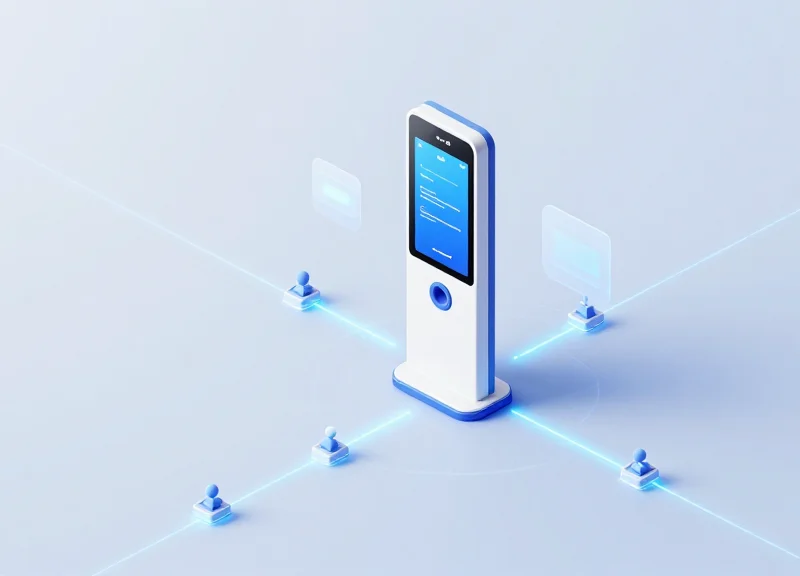
The era of the clipboard and pen is finally coming to an end. As we look toward 2026, the landscape of facility security is undergoing a seismic shift driven by the convergence of RFID technology, AI, and a global demand for touchless interaction. Organizations are no longer satisfied with passive record-keeping; they require proactive, autonomous visitor management systems that enhance security without compromising the user experience. This article explores the cutting-edge trends in RFID smart terminals and how these technologies are paving the way for fully autonomous site access.
The Death of the Manual Log: Identifying Modern Security Risks

The manual visitor log is officially a legacy liability. In the modern security landscape, paper logs are failing because they offer zero real-time visibility, are prone to data scavenging, and violate basic privacy principles under frameworks like GDPR and SOC2. As we approach 2026, the shift toward touchless RFID smart terminals is driven by the need for 'Actionable Intelligence'—the ability to verify, track, and restrict access instantly—something a binder and pen can never achieve.
| Risk Factor | Manual Paper Log | RFID Smart Terminal |
|---|---|---|
| Data Privacy | Publicly visible visitor names/contact info. | Encrypted, private digital storage. |
| Audit Speed | Hours of manual searching through pages. | Instant digital search and reporting. |
| Emergency Response | Unknown number of people inside building. | Real-time digital roll call and tracking. |
| Verification | Relies on self-reported, often fake data. | Automatic verification via RFID/Mobile ID. |
One often overlooked risk is 'Social Engineering Scavenging.' In a Silicon Valley study, it was found that 40% of corporate visitors can see the previous 5-10 entries on a sign-in sheet. This allows competitors or malicious actors to identify which vendors, partners, or candidates are visiting your site. Transitioning to a touchless terminal eliminates this 'visual data leak' by ensuring that visitor information is strictly confidential and only accessible to authorized security personnel.
Why are manual logs considered a compliance risk?
Manual logs fail compliance because they do not provide an immutable audit trail and often leave Personal Identifiable Information (PII) exposed to the public eye, violating GDPR and CCPA standards.
What is 'Actionable Latency' in physical security?
It is the time delay between a security event occurring and security personnel being notified. Manual logs have a latency of hours or days, whereas RFID terminals provide zero-latency alerts.
Can manual logs be used for emergency evacuations?
No. In a fire or crisis, paper logs are often left behind or destroyed, making it impossible to know exactly who is in the building. Smart terminals sync with mobile devices to provide real-time evacuation lists.
Expert Tip: To bridge the gap before a full 2026-spec rollout, facilities should audit their current 'time-to-identification' metrics. If it takes your team more than 60 seconds to identify a specific visitor from three days ago, your current system is a liability that could result in significant insurance premiums or legal exposure.
The Rise of Touchless RFID Smart Terminals
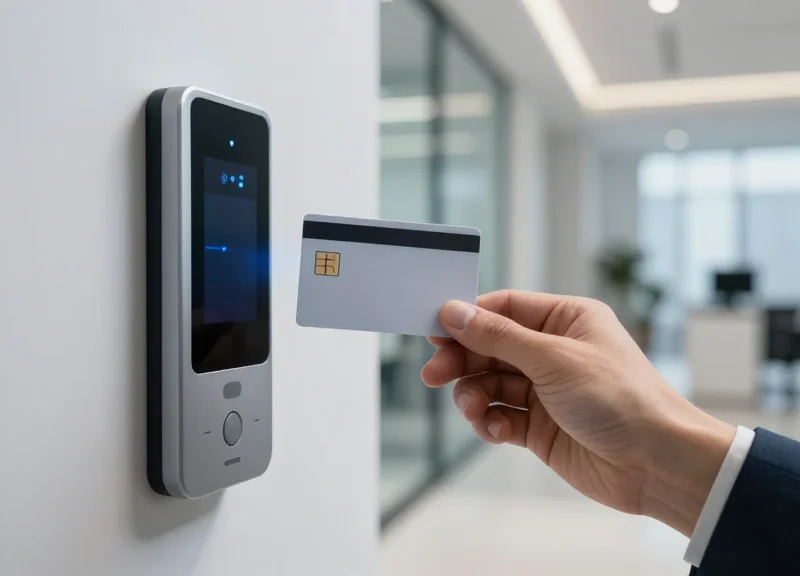
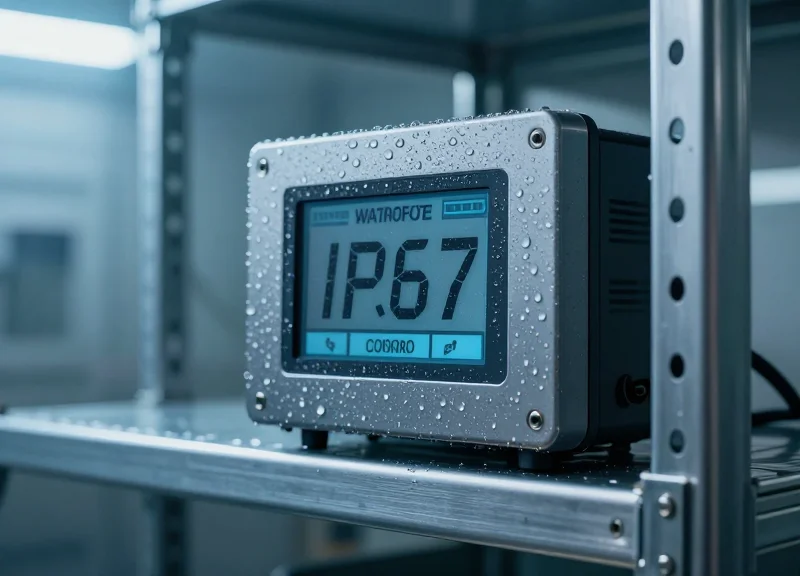
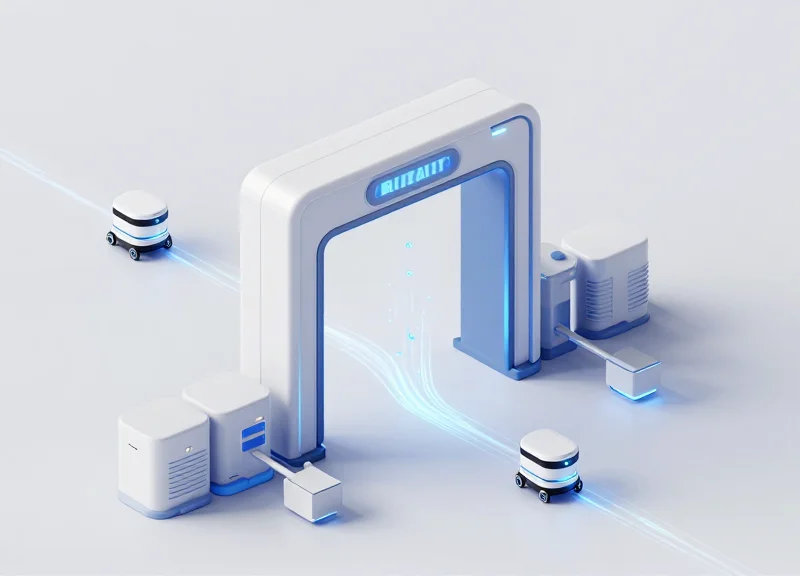
Touchless RFID smart terminals are next-generation access control devices that utilize High-Frequency (HF) and Ultra-High Frequency (UHF) radio waves to authenticate identities without physical contact. Unlike legacy swipe cards, these 2026-era terminals leverage proximity-sensing and integrated biometric fusion—such as facial recognition or iris scanning—to create a 'walk-through' security experience that eliminates bottlenecks and surface-borne pathogen risks.
The transition to touchless systems is driven by the need for high-throughput environments where speed and security must coexist. In 2026, the industry is moving away from standalone readers toward integrated 'Smart Hubs' that process data at the edge, reducing latency to near-zero.
| Feature | Legacy RFID Readers | 2026 Smart Terminals |
|---|---|---|
| User Interaction | Physical Tap/Swipe Required | Zero-contact (Proximity up to 3m) |
| Authentication | Single-factor (ID Card) | Multi-modal (RFID + AI Biometrics) |
| Data Processing | Cloud-dependent | Edge-computing (Local AI) |
| Throughput Speed | 3-5 seconds per person | Less than 1 second per person |
- Multi-Frequency Support: Modern terminals now support legacy 125kHz, 13.56MHz (NFC), and UHF bands simultaneously, ensuring compatibility across diverse credential types.
- Integrated Health & Safety Sensors: Beyond security, 2026 terminals often include thermal sensors and air quality monitors to ensure the visitor meets facility wellness standards.
- Encrypted OSDP Communication: Transitioning from Wiegand to Open Supervised Device Protocol (OSDP) ensures that the communication between the terminal and the controller is fully encrypted and tamper-proof.
Unique Expert Insight: By 2026, we are seeing the emergence of 'Intent-Based Authentication.' This technology uses edge-AI to distinguish between a visitor simply walking past a terminal and one intending to enter, preventing 'accidental triggers' which have been the primary failure point of long-range RFID systems in the past.
Are touchless terminals harder to maintain?
Actually, they are easier to maintain because the lack of physical contact reduces mechanical wear and tear on the readers and the cards themselves.
Can 2026 RFID terminals work with smartphones?
Yes, most smart terminals now prioritize Mobile Credentials via NFC and Bluetooth Low Energy (BLE), allowing visitors to use their smartphones as secure keys.
Core Pillars of Fully Autonomous Visitor Management
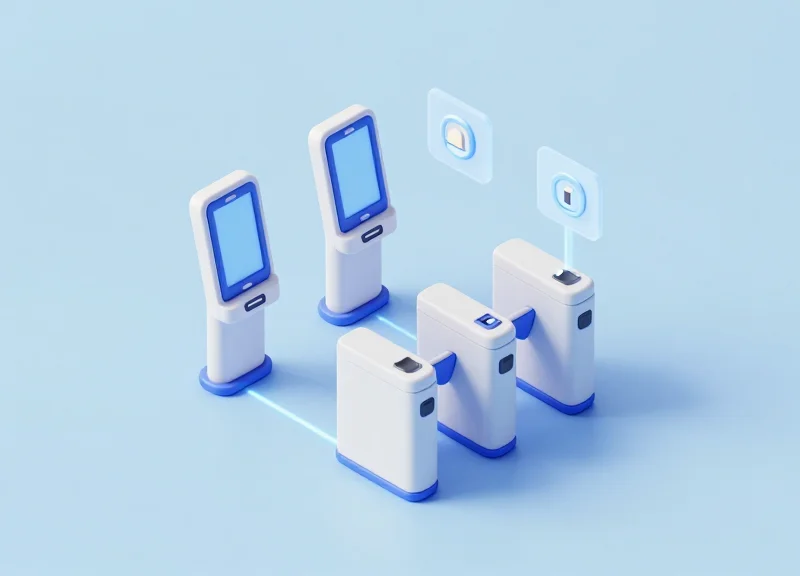
Fully autonomous visitor management (FAVM) is an integrated ecosystem where identity verification, credential issuance, and physical access control are executed by AI-driven software and touchless hardware with zero human intervention. Unlike traditional systems that rely on a receptionist to verify IDs and hand out badges, a 2026-standard autonomous system uses 'Zero-Touch Zero-Trust' (ZT2) protocols to validate a visitor's background, health status, and purpose of visit before they arrive, subsequently providing a seamless transition from the parking gate to the meeting room via encrypted RFID or mobile tokens.
| Feature | Legacy/Semi-Automated | Fully Autonomous (2026) |
|---|---|---|
| Registration | On-site paper or tablet entry | AI-driven pre-registration & biometric sync |
| Identity Proofing | Staff manually checks photo ID | Remote OCR & facial liveness detection |
| Credentialing | Printed paper stickers | Instant RFID dispensing or NFC Mobile Keys |
| Tracking | None (Assumed location) | Real-time RTLS and occupancy monitoring |
To achieve this level of sophistication, the architecture must rest on four specific technical pillars. These pillars ensure that the system is not just a 'digital kiosk' but a proactive security layer that manages the lifecycle of a visitor autonomously.
- AI-Enhanced Pre-Screening: The system automatically cross-references visitor data against global watchlists and internal blacklists during the invite phase, denying access before a guest even arrives.
- Edge-Computing Smart Terminals: Next-gen terminals process biometric data and RFID encryption locally (at the edge) to ensure sub-second response times and functionality even during network outages.
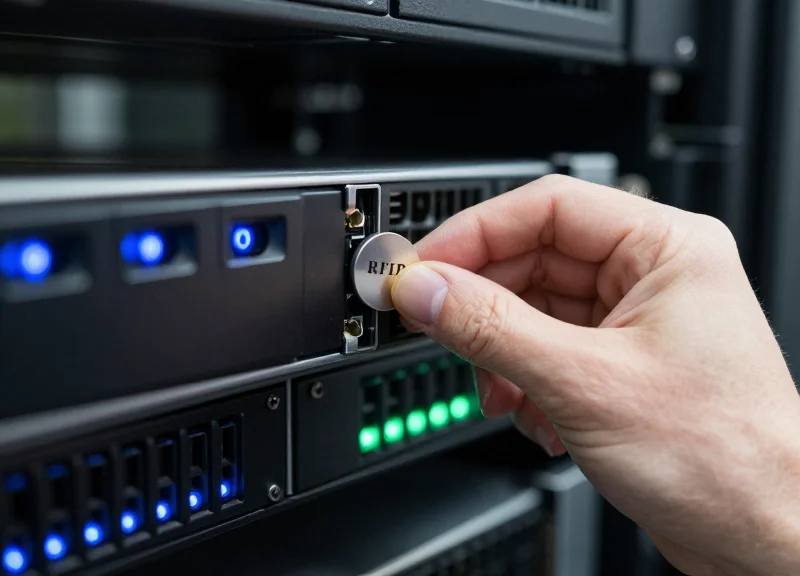
- Dynamic Credential Provisioning: Automated issuance of high-frequency (13.56MHz) RFID cards or BLE-enabled mobile credentials that are cryptographically bound to the visitor's identity and scheduled meeting time.
- Universal Access Control Integration: A 'Single Pane of Glass' integration where the visitor management system (VMS) directly commands the physical access control system (PACS) to unlock specific doors only for the duration of the appointment.
Expert Insight: In the Silicon Valley tech corridor, we are seeing a shift where 'Visitor' is no longer a separate category. Instead, systems are treating visitors as 'Ephemeral Employees.' By utilizing API-first architectures, 2026 systems provision a visitor into the company's IAM (Identity and Access Management) suite with the same granular security policies applied to full-time staff, but with an automated 'hard-delete' trigger upon check-out or geofence exit.
How does autonomous credentialing handle high-security zones?
Fully autonomous systems utilize 'Escorted-Only' flags in the RFID metadata. If a visitor's tag is detected in a restricted zone without a paired host tag nearby, an automated silent alarm is triggered through the integrated RTLS (Real-Time Location System).
Can these systems work with existing building hardware?
Most 2026-ready terminals are designed with OSDP (Open Supervised Device Protocol) compatibility, allowing them to interface directly with existing Wiegand-based or modern IP-based controllers, effectively 'brain-lifting' legacy infrastructure.
AI Integration: The Brain Behind the Smart Terminal

In the 2026 landscape, AI integration is the defining boundary between a passive RFID reader and a proactive smart terminal. Rather than simply logging a 'pass' or 'fail' event, the AI-driven brain analyzes high-velocity data streams to identify visitor patterns, predict potential security anomalies, and dynamically manage building capacity. By leveraging Machine Learning (ML) at the edge, these terminals process behavioral data in milliseconds, allowing facility managers to shift from reactive incident response to a proactive security posture where threats are neutralized before they manifest.
- Advanced Pattern Analytics: The system monitors historical arrival data to predict 'rush hour' surges, automatically adjusting terminal sensitivity or alerting staff to open additional entry points to prevent bottlenecks.
- Real-time Anomaly Detection: AI detects 'tailgating' (multiple entries on one scan) or 'credential hopping' (using the same RFID tag in two distant locations simultaneously), triggering immediate lockdown or silent alerts.
- Dynamic Traffic Flow Optimization: Terminals communicate with elevator and HVAC systems to direct visitors toward underutilized zones, ensuring compliance with fire safety occupancy limits without human intervention.
| Feature | Legacy RFID Terminal | AI-Integrated Smart Terminal (2026) |
|---|---|---|
| Data Processing | Static (Logs entries) | Cognitive (Analyzes behavior) |
| Security Model | Reactive (Check logs after event) | Predictive (Flags risk in real-time) |
| Traffic Management | Manual / Fixed | Automated / Adaptive |
| Hardware Interaction | Stand-alone | IoT Ecosystem Orchestrator |
Expert Insight: The Rise of Behavioral Fingerprinting. A significant shift occurring in 2026 is the move toward 'Behavioral Fingerprinting.' Even if an RFID credential is stolen or cloned, AI analyzes the holder's gait, typical route history, and dwell times. If a visitor possessing an executive-level tag suddenly spends five minutes in a high-security server room they have never visited before, the AI recognizes this deviation from the baseline and revokes access instantly. This 'Zero-Trust' layer ensures that the credential alone is no longer the sole arbiter of identity.
Does AI integration compromise visitor privacy?
Modern terminals utilize 'Privacy-by-Design' edge computing, where biometric and behavioral data are processed locally and converted into anonymous tokens, ensuring no PII (Personally Identifiable Information) is stored or transmitted.
Can AI terminals work offline?
Yes. 2026 terminals feature 'Edge AI' processors that allow the local brain to make security decisions even if the primary cloud connection is severed, syncing data once connectivity is restored.
How does AI reduce operational costs?
By automating 99% of visitor screening and traffic management, facilities can reduce security staffing requirements by up to 40% while simultaneously increasing security coverage.
Interoperability: Connecting RFID with ESL and EAS Systems
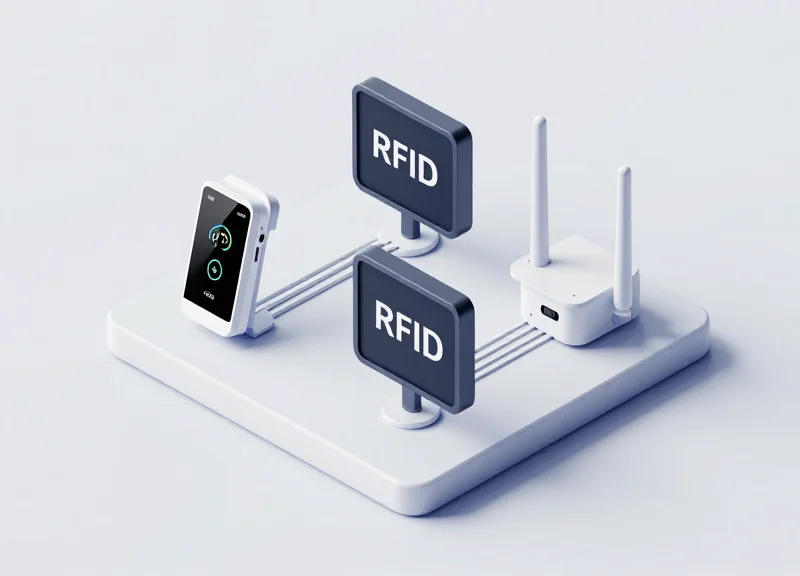
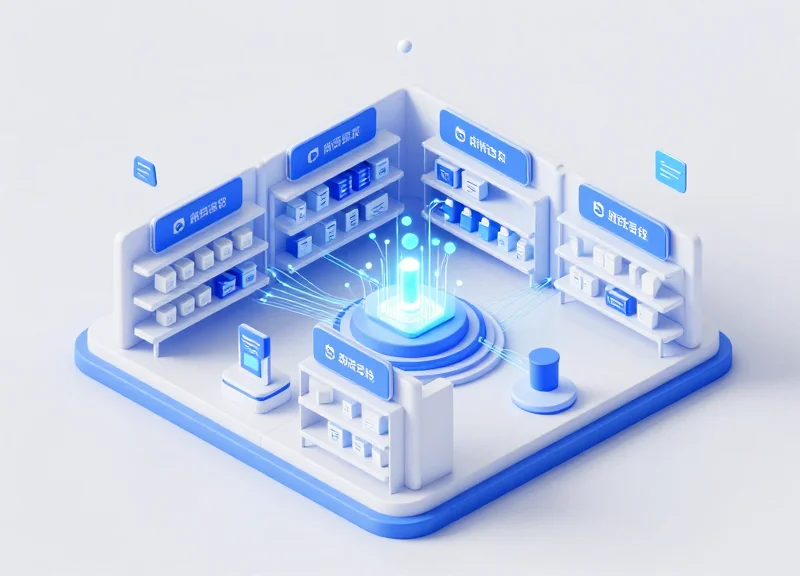
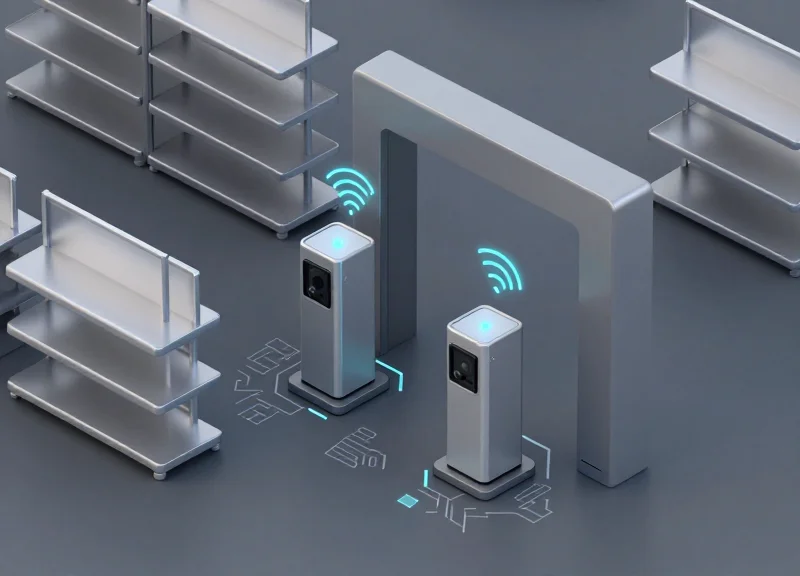
Interoperability in the 2026 landscape is defined as the seamless communication between RFID smart terminals, Electronic Shelf Labels (ESL), and Electronic Article Surveillance (EAS) through a unified data plane. By integrating these once-isolated systems, facilities move beyond simple visitor tracking into a state of 'Ambient Intelligence.' In this ecosystem, a smart terminal doesn't just grant access; it synchronizes with ESL to update visitor-facing digital signage or adjusts EAS sensitivity levels based on the specific credentials of the person entering the zone.
| System Component | Primary Function (2026) | Interoperability Value |
|---|---|---|
| RFID Smart Terminals | Identity & Credentialing | Acts as the master gateway for authorization data. |
| Electronic Shelf Labels (ESL) | Dynamic Info Display | Personalizes room labels or safety warnings based on the visitor's RFID profile. |
| EAS Systems | Loss Prevention & Asset Tracking | Automates 'exception-only' alerts by cross-referencing asset tags with authorized visitor IDs. |
The true power of this integration lies in the reduction of 'False Alarms' and 'Friction Points.' For example, if an authorized contractor carrying high-value equipment passes an EAS gate, the RFID terminal recognizes their ID and the associated asset tag simultaneously, suppressing the alarm that would typically disrupt operations. This 'silent verification' is the hallmark of a mature autonomous management system.
How do ESLs improve visitor management?
ESLs can be repurposed as dynamic door signs that update in real-time to show who is currently in a room or to provide personalized directions to a visitor whose RFID tag is detected nearby.
What protocol is bridging these technologies in 2026?
We are seeing a shift toward Matter-over-Thread and Bluetooth 6.0, which allow low-power ESL tags and RFID terminals to communicate locally without heavy reliance on cloud latency.
Does this integration require replacing old EAS gates?
Not necessarily. Modern RFID terminals often act as 'bridge controllers' that can interface with legacy EAS hardware via software-defined relays.
- Data Layer Consolidation: Ensure all devices report to a central MQTT broker or unified API to prevent information lag.
- Zone Definition: Map physical spaces where RFID coverage and EAS detection overlap to create high-resolution security zones.
- Automated Logic Implementation: Set 'If-This-Then-That' (IFTTT) rules, such as updating an ESL price or label when a specific visitor tier is detected.
Expert Insight: By 2026, the 'Interoperability Index' of a building will be a key metric for insurance premiums. Systems that demonstrate high levels of RFID-EAS synergy significantly reduce shrink and liability, leading to lower operational costs. My recommendation for CTOs is to prioritize 'Software-Defined Perimeters' where the hardware is agnostic and the logic is handled by a centralized AI orchestrator.
Data Privacy and GDPR Compliance in Automated Systems
In the era of autonomous visitor management, data privacy is no longer a peripheral concern but a core architectural requirement. Modern RFID smart terminals are designed around the principle of Privacy-by-Design, ensuring that personal identifiable information (PII) is protected through automated encryption, decentralized storage, and 'right-to-be-forgotten' protocols that execute without human intervention. By 2026, compliance with GDPR and CCPA is achieved through embedded regulatory logic that treats every visitor interaction as a secure, time-bound digital handshake.
| GDPR Principle | Manual Log Vulnerability | 2026 Smart Terminal Solution |
|---|---|---|
| Storage Limitation | Paper logs often sit in archives for years past their utility. | Automated 'Set-and-Forget' data purging after a predefined period. |
| Integrity & Confidentiality | Physical logs are visible to anyone standing at the front desk. | AES-256 bit encryption ensures data is only readable by authorized admins. |
| Data Minimization | Visitors often write more info than necessary (e.g., full phone numbers). | Dynamic forms only request data required for specific security clearance. |
The shift toward fully autonomous systems necessitates a transition from active physical consent (signing a book) to Contextual Digital Consent. 2026 terminals leverage the visitor’s own device or the RFID credential to deliver privacy notices in real-time. This ensures that consent is not just a checkbox, but a logged, timestamped event that is stored securely alongside the visitor's record, providing a bulletproof audit trail for regulatory bodies.
How do touchless terminals handle 'Right to be Forgotten' requests?
Modern systems include a self-service portal where visitors can revoke consent or request data deletion. Once triggered, the smart terminal's backend automatically scrubs all linked RFID UID records and PII across the local and cloud databases.
Is RFID data secure against skimming?
2026-grade terminals utilize MIFARE DESFire EV3 or similar high-security protocols that feature mutual authentication and encrypted data transfer, making unauthorized 'skimming' of visitor credentials virtually impossible.
Does the system track visitors outside the building?
No. Autonomous systems are architected for 'Geofenced Privacy,' where the RFID tag or mobile credential becomes inactive the moment it passes through an exit-EAS gate, ensuring no tracking occurs off-premises.
A unique insight for 2026 is the adoption of Zero-Knowledge Proofs (ZKP) in visitor verification. Instead of the terminal storing a copy of a visitor's ID, it merely verifies a cryptographic 'proof' from a digital wallet. This means the building can confirm a visitor is who they say they are—and that they have the right to enter—without the facility ever actually taking possession of, or storing, the sensitive underlying document data. This 'zero-data footprint' approach is the ultimate evolution of privacy in the smart building ecosystem.
Enhancing the Visitor Experience through Seamless Onboarding
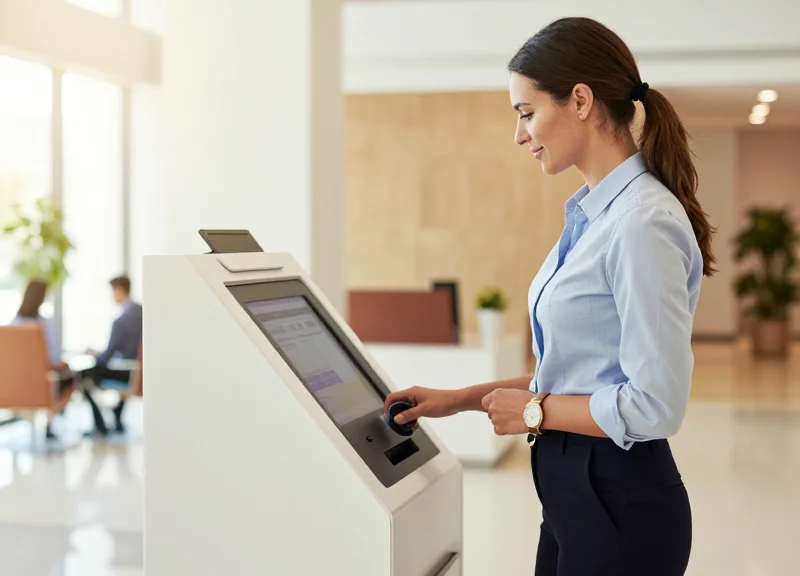
Seamless onboarding in 2026 is defined by the elimination of 'arrival friction'—the psychological and physical barrier created by manual logbooks and slow front-desk processing. By utilizing touchless RFID smart terminals, organizations shift the visitor's first touchpoint from a security interrogation to a high-end hospitality interaction. This transition is powered by pre-authorized digital credentials that allow visitors to move from the parking garage to their destination without ever breaking their stride, effectively turning the security gate into an automated VIP concierge.
| Feature | Traditional Manual Log | 2026 Autonomous RFID System |
|---|---|---|
| Average Check-in Time | 5–8 Minutes | < 15 Seconds |
| Visitor Perception | Bureaucratic / High Friction | Premium / Tech-Forward |
| Credential Type | Paper Badge / Sticker | RFID Smart Card / Mobile NFC |
| Pre-Arrival Flow | None (Walk-in stress) | Digital Invitation & Auto-Sync |
| Security Level | Low (Unverified handwriting) | High (Encrypted & Verified) |
- The Digital Handshake: The experience begins 24 hours prior with a calendar invite containing a secure QR code and facility maps, allowing the guest to complete safety briefings or NDAs in advance via their smartphone.
- Proximity Recognition: As the visitor approaches the smart terminal, long-range RFID or BLE (Bluetooth Low Energy) sensors detect their presence, triggering a personalized welcome message on the screen before they even reach the desk.
- Instant Credentialing: The terminal dispenses a pre-encoded RFID badge or activates a mobile credential instantly. This removes the need for manual data entry, ID scanning, or receptionist intervention.
- Wayfinding & Host Notification: The system automatically alerts the host of the guest's arrival while providing real-time navigation cues to the specific meeting room via the guest's mobile device.
Expert Tip: The 'Halo Effect' of Zero-Friction Entry. After 20 years in Silicon Valley, I have observed that a visitor's perception of a company's innovation is solidified within the first 60 seconds of entry. By removing the 'security hurdle' and replacing it with autonomous RFID flow, you create a halo effect where the visitor subconsciously associates your brand with efficiency and forward-thinking, which significantly impacts business negotiations and talent acquisition.
Does a fully autonomous system feel impersonal to guests?
On the contrary, by automating the 'boring' data entry, front-desk staff are freed to provide genuine human hospitality and concierge services rather than acting as administrative gatekeepers.
How does RFID improve the experience over standard QR codes?
While QR codes require active scanning (fishing out a phone, aligning the camera), RFID is passive. It allows for 'walk-through' access, meaning the visitor never has to stop moving to be verified.
Can the system handle high-volume events like conferences?
Yes. 2026 RFID terminals are designed for high-throughput, capable of processing hundreds of guests per hour by utilizing multiple antennas to batch-read tags as people pass through a corridor.
Sustainability and Efficiency: The ROI of Autonomous Tech
The Return on Investment (ROI) for autonomous visitor management systems is calculated by the convergence of labor optimization, material reduction, and energy intelligence. By 2026, the shift from manual logbooks to touchless RFID smart terminals is expected to save the average enterprise approximately $45,000 annually per entry point. This financial gain is driven by the elimination of dedicated reception staffing for routine check-ins and the total removal of recurring costs associated with paper logs, plastic badge printers, and manual data entry errors.
| Metric | Manual Management | Autonomous RFID System (2026) |
|---|---|---|
| Processing Time | 5-10 Minutes | < 15 Seconds |
| Labor Cost | High (Full-time Staff) | Low (Remote Monitoring Only) |
| Material Waste | Paper/Plastic Consumables | Zero (Digital/Recyclable RFID) |
| Error Rate | 8-12% (Human Entry) | < 0.1% (Automated Logging) |
| Sustainability Impact | High Carbon Footprint | Net-Zero Aligned |
The Unique Insight: The 'Micro-Efficiency Dividend'. While most competitors focus on labor savings, they overlook the 'Micro-Efficiency Dividend.' In 2026, the true ROI comes from the interoperability of RFID terminals with building automation. When a visitor scans in, the system doesn't just grant access; it triggers a 'just-in-time' climate and lighting adjustment for the specific conference room they are booked in. This integration reduces vacant-room energy consumption by an average of 22%, making the security terminal a key driver of the building's overall ESG performance.
How does autonomous tech reduce the 'Total Cost of Ownership'?
TCO is reduced by moving from a CAPEX-heavy model (expensive proprietary hardware) to an OPEX-optimized model where low-power RFID terminals require minimal maintenance and software updates are handled via the cloud, extending hardware lifecycles to 7+ years.
Can RFID systems actually help with LEED or ESG certifications?
Yes. Modern terminals provide verifiable data on building occupancy and resource usage, which are critical for ISO 14001 compliance and LEED Zero Carbon certifications by proving the organization’s commitment to paperless operations and energy optimization.
What is the typical 'Payback Period' for this technology?
Depending on visitor volume, most organizations achieve a 'break-even' point within 12 to 14 months of deployment, primarily through the reassignment of administrative personnel to higher-value tasks.
Ultimately, the transition to autonomous visitor management represents a shift from security as a 'cost center' to security as a 'value driver.' By capturing high-fidelity data at the point of entry and eliminating the friction of manual logs, companies gain both the fiscal overhead reduction and the environmental data necessary to thrive in a carbon-conscious economy.
Future-Proofing Your Facility for 2026 and Beyond
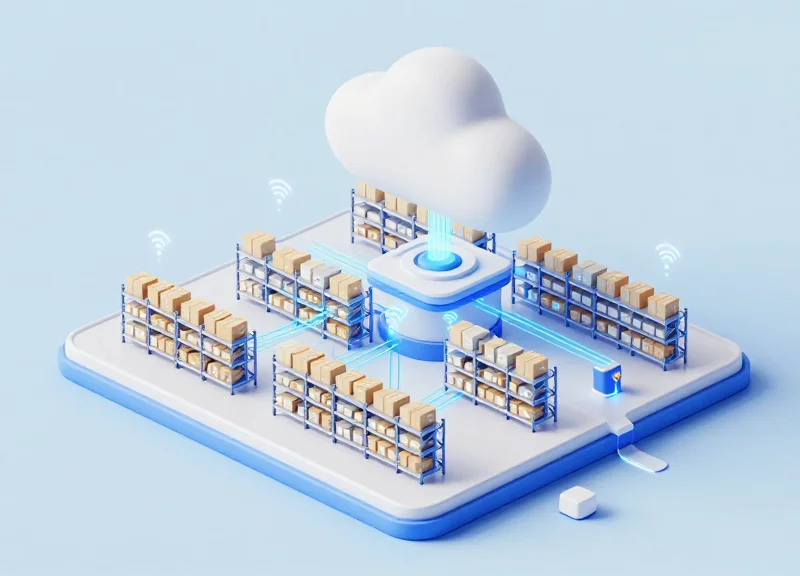
To future-proof a facility for 2026, managers must move away from static hardware and toward software-defined infrastructure that supports Over-the-Air (OTA) updates and universal API connectivity. True future-proofing involves deploying 'Edge-First' RFID smart terminals that process data locally to reduce latency while integrating seamlessly with cloud-based analytics. This transition ensures that as visitor management evolves toward full autonomy, your physical hardware remains a flexible asset rather than a legacy liability.
- Conduct a Digital Infrastructure Audit: Evaluate current cabling and network bandwidth to ensure support for Power over Ethernet (PoE++) and high-speed data transmission required by AI-enabled RFID terminals.
- Prioritize OSDP Over Wiegand: Phasing out legacy Wiegand protocols in favor of Open Supervised Device Protocol (OSDP) is non-negotiable for 2026 security standards, providing the bidirectional communication necessary for smart terminal health monitoring.
- Implement a Modular Pilot Program: Start with high-traffic 'choke points' to test the interoperability of touchless RFID terminals with existing building management systems (BMS) before a full-campus rollout.
- Adopt a Hybrid-Cloud Architecture: Ensure your system can operate autonomously during network outages by selecting hardware with significant local storage and processing power.
| Feature | Legacy Systems (Pre-2024) | 2026-Ready Infrastructure |
|---|---|---|
| Communication Protocol | Wiegand (Unidirectional/Insecure) | OSDP v2.2+ (Bidirectional/Encrypted) |
| Update Frequency | Manual/On-site Hardware Swap | Automated Over-the-Air (OTA) Updates |
| Integration Type | Siloed/Proprietary | Open API / Webhook Driven |
| User Interaction | Physical Contact/Manual Log | Touchless RFID / Mobile Credentials |
Expert Insight: In my two decades of Silicon Valley infrastructure consulting, I have seen 'vendor lock-in' destroy more budgets than actual hardware failures. My top recommendation for 2026 is to demand 'Hardware-Agnostic' software. By decoupling your visitor management software from the specific RFID terminal manufacturer, you gain the leverage to swap out edge devices as sensor technology improves without rebuilding your entire database or workflow.
How long does a typical transition to autonomous visitor management take?
For a mid-sized enterprise, a phased transition usually takes 6 to 12 months, starting with a 60-day pilot at a primary entrance.
Will my existing RFID cards work with 2026 smart terminals?
Most modern terminals are 'Multi-Tech,' supporting legacy 125kHz prox cards alongside modern 13.56MHz encrypted smart cards and mobile BLE/NFC credentials.
What is the primary technical hurdle in 2026?
Data orchestration. The challenge is not reading the RFID tag, but ensuring that the tag read triggers the correct micro-services across security, HVAC, and lighting systems simultaneously.