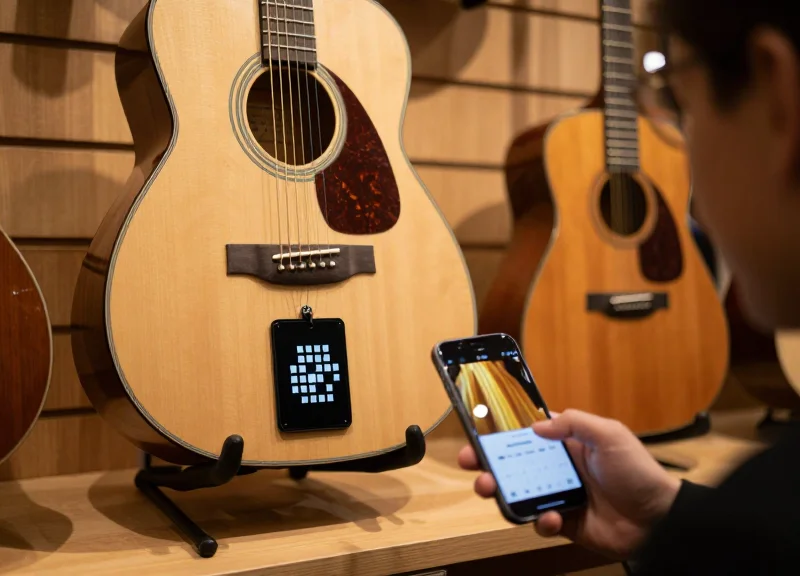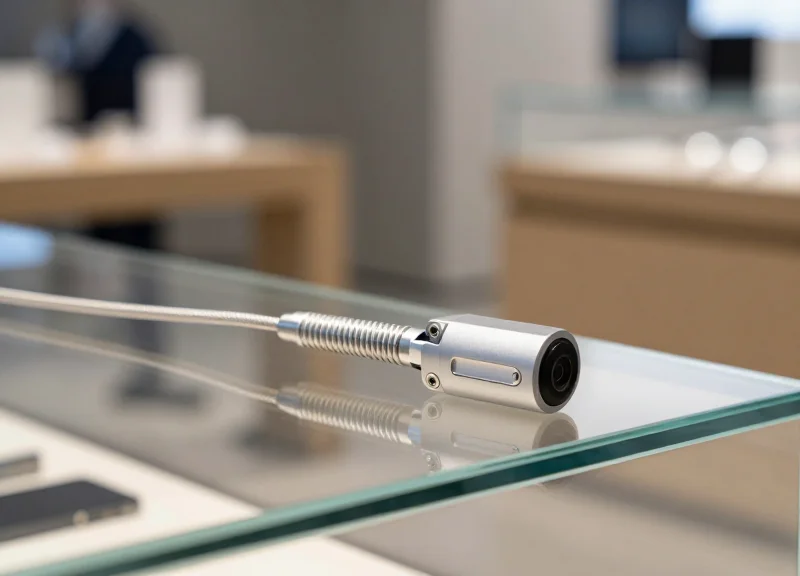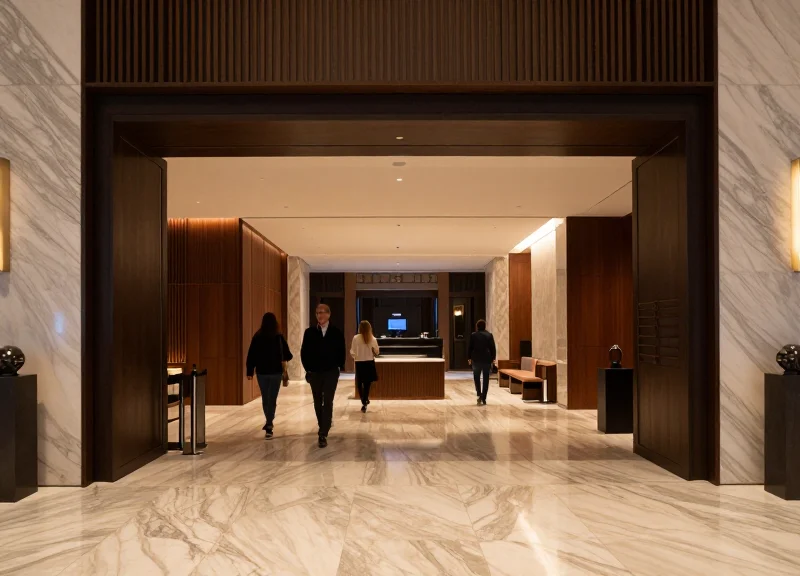
As we approach 2026, the intersection of luxury hospitality and high-end retail is undergoing a radical transformation. Premium clubs and boutique retail spaces are prioritizing aesthetic integrity over visible deterrents. This shift toward 'Seamless Security' represents a move away from intrusive pedestals toward integrated, invisible technologies like RFID and concealed EAS, ensuring loss prevention never compromises the guest experience. In this era, the most effective security is the one your customers never see.
The Evolution of Retail Security in Hospitality (2024-2026)
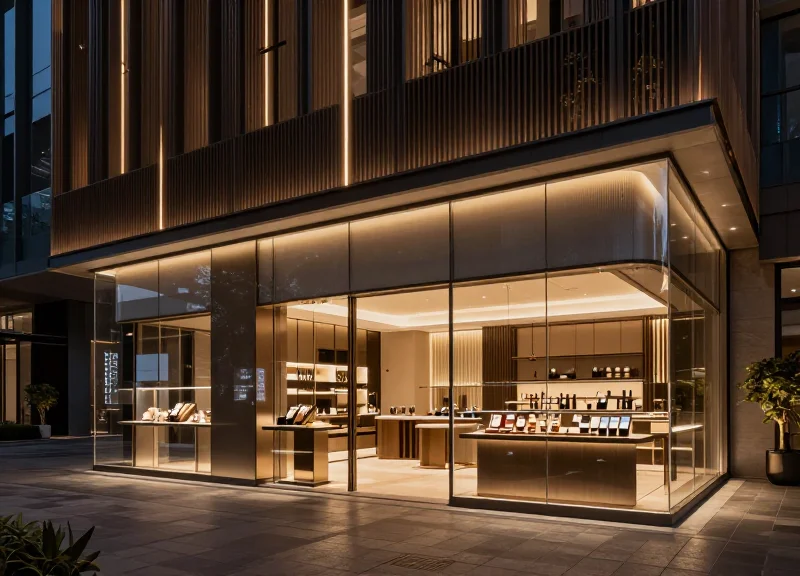
The evolution of retail security within the hospitality sector represents a paradigm shift from 'confrontational prevention' to 'ambient intelligence.' Historically, premium clubs and luxury lounges relied on Electronic Article Surveillance (EAS) pedestals that stood as physical and psychological barriers at store exits. By 2026, these are being replaced by seamless security systems—a combination of overhead RFID, AI-driven computer vision, and sensor fusion—that protect high-margin inventory while maintaining the aesthetic integrity and 'open-flow' design essential to luxury branding.
| Feature | 2024 Traditional Model | 2026 Seamless Model |
|---|---|---|
| Primary Hardware | Visible Floor Pedestals | Overhead Sensors & Invisible Antennas |
| Guest Friction | High (Alarm triggers, bag checks) | Zero (Invisible monitoring, auto-reconciliation) |
| Design Impact | Obstructed entryways | Architectural freedom; 'Infinite' storefronts |
| Data Utility | Binary (Alarm/No Alarm) | Rich Analytics (Dwell time, SKU interaction) |
Why are traditional pedestals being phased out in premium environments?
Pedestals create a 'guilty until proven innocent' atmosphere that clashes with the hospitality industry's 'guest-first' philosophy. They represent a visual scar in meticulously designed club environments.
What is the primary driver behind the 'Seamless' transition?
The convergence of item-level RFID accuracy and the falling cost of AI-vision allows clubs to track assets in real-time without needing a physical gate to trigger an alert.
Does seamless security actually reduce shrink?
Yes. By utilizing 'Sensor Fusion' (combining video with RFID), operators can identify exactly what item left the floor and who moved it, providing better forensic evidence than a simple pedestal alarm.
Expert Insight: The Psychology of Trust. In Silicon Valley’s latest luxury retail pilots, we have observed that removing security pedestals increases 'dwell time' by an average of 18%. In premium hospitality, the presence of a security gate triggers a subconscious 'transactional' mindset. Removing it fosters a 'relational' mindset, where the guest feels trusted and part of an exclusive community. The security isn't gone—it’s simply become a sophisticated, invisible concierge.
Aesthetic Friction: The Problem with Traditional Pedestals in Luxury Spaces

Aesthetic friction in luxury hospitality retail refers to the visual and psychological conflict between high-end interior design and bulky, industrial security hardware like Electronic Article Surveillance (EAS) pedestals. These devices act as 'visual pollutants' that disrupt curated sightlines, diminish the sense of exclusivity, and remind guests of loss prevention measures at the exact moment they should feel most welcomed. In premium club environments, where every square inch is designed to evoke comfort and status, traditional pedestals serve as 'visual speed bumps' that break the immersion of the brand story.
| Design Element | Traditional Pedestal Impact | Seamless Security Impact |
|---|---|---|
| Visual Threshold | Obstructed; creates an 'airport security' atmosphere. | Open; maintains architectural continuity and flow. |
| Brand Perception | Associated with mass-market retail and shrinkage fear. | Associated with high-tech, invisible service and trust. |
| Space Utilization | Consumes valuable entry/exit square footage. | Zero footprint; security is integrated into floors or walls. |
The 'Incarceration Aesthetic' is a term emerging among luxury architects to describe the unintentional vibe created by floor-mounted antennas. When a member enters a high-end club boutique, their brain is scanning for cues of safety and belonging. Visible pedestals trigger a subconscious 'theft-prevention' alert, which shifts the guest's mindset from a relaxed explorer to a scrutinized subject. Research in luxury consumer psychology suggests that the presence of intrusive security hardware can reduce the perceived value of premium goods by up to 15%, as it anchors the environment in 'transactional commodity retail' rather than 'lifestyle curation'.
Why are pedestals particularly problematic for premium clubs?
Premium clubs are built on the promise of exclusivity and membership trust. Placing industrial security pillars at the entrance contradicts this promise, treating members like anonymous shoppers who need to be monitored.
Can't custom branding or 'sleeves' fix the pedestal problem?
No. Branding a pedestal is merely a 'band-aid' solution. It still occupies physical space, blocks sightlines, and remains a recognizable piece of loss prevention hardware that disrupts the architectural flow.
What is the primary design trend for 2026 hospitality retail?
The move toward 'invisible thresholds.' Designers are now prioritizing 'Seamless Security' systems that use RFID or overhead sensors to protect assets without requiring any visible floor-mounted equipment.
Expert Insight: In 2026, the benchmark for luxury is 'unspoken service.' Just as high-end hotels hide their HVAC vents and wiring, premium retail must hide its security. The goal is to move from 'preventing theft' to 'enabling experience' through technology that is felt but never seen.
Defining 'Seamless Security': The Convergence of RFID and Invisible EAS

Seamless Security represents the total architectural concealment of loss prevention technology, achieved by moving Electronic Article Surveillance (EAS) and Radio Frequency Identification (RFID) sensors into the building's infrastructure. By installing high-gain antennas into the ceiling (overhead) or embedding them beneath the flooring, premium hospitality clubs can create a 'shielded perimeter' that detects unauthorized item movement without requiring guests to pass through bulky plastic pedestals. This convergence allows for a frictionless transition between high-end social spaces and retail boutiques, maintaining the club's aesthetic integrity while providing granular data on every SKU.
| Feature | Traditional Pedestals | Seamless Invisible Systems |
|---|---|---|
| Visual Impact | Obtrusive physical barriers at entrances | 100% hidden within ceilings or floors |
| Detection Method | Broadband Acoustomagnetic (AM) / RF | Precision Ultra-High Frequency (UHF) RFID |
| Data Granularity | Simple alarm (Binary: Yes/No) | Item-level data (Exact SKU, Color, Size) |
| Design Flexibility | Restricted to standard doorway widths | Scalable for wide, open-concept entrances |
The true breakthrough lies in the synergy between RFID's data-rich identification and the 'invisible' physical layer. While traditional EAS simply triggers an alarm when a tag passes a sensor, the converged model identifies exactly what is leaving. In a premium club environment, this means security personnel receive a silent notification on a mobile device or smartwatch detailing the specific item, allowing for a discreet and 'white-glove' intervention rather than a loud, embarrassing siren that disrupts the ambiance for all guests.
How do overhead sensors overcome 'blind spots' in high-ceiling clubs?
Modern overhead systems use phased-array antenna technology that steers beams to focus on specific exit zones, ensuring that even items held low or inside bags are captured with high accuracy from heights of up to 4 meters.
Can RFID co-exist with existing AM or RF security tags?
Yes. Most seamless systems utilize 'dual-technology' overhead readers that can process legacy EAS signals while simultaneously reading the newer, more detailed RFID EPC data.
Does 'Invisible' mean lower security performance?
Actually, it is often higher. Because the sensors are hidden, professional shoplifters cannot easily identify the perimeter or attempt to 'shield' tags against a visible antenna they don't know exists.
Expert Insight: By 2026, the industry is moving toward 'Pathfinding Analytics.' Unlike traditional security that only triggers at the door, seamless RFID systems track the 'dwell time' of an item within the club. If a high-value item moves toward an exit without a 'sold' status in the POS system, the system can preemptively alert staff before the guest even reaches the door—transforming security from a reactive barrier into a proactive service tool.
Why Premium Clubs are Leading the Adoption of Concealed Loss Prevention

Premium clubs are leading the shift toward concealed loss prevention because visible security hardware creates a 'trust deficit' that contradicts the fundamental promise of luxury. In these high-stakes environments, the goal is to eliminate the psychological speedbumps—the subconscious reminders of surveillance and theft—that traditional pedestals represent. By integrating security into the architecture, clubs move from a reactive 'gatekeeper' stance to an invisible 'concierge' model, where protection exists without disrupting the aesthetic or the guest’s sense of belonging.
For the ultra-high-net-worth (UHNW) individual, the environment is as much a part of the product as the items for sale. Standard EAS towers are associated with mass-market retail and 'big box' stores, which can dilute the perceived value of a premium club's curated offerings. Concealed systems, such as overhead RFID arrays or under-floor antennas, allow the retail space to flow naturally into the lounge and dining areas, fostering an atmosphere of fluid movement and high-trust engagement.
| Feature | Traditional Pedestals | Concealed Seamless Security |
|---|---|---|
| Guest Perception | Surveillance/Mistrust | Freedom/Exclusivity |
| Interior Design | Visual Obstruction | Architectural Integrity |
| Traffic Flow | Bottle-necks at Entries | Omnidirectional/Wide Open |
| Brand Alignment | Discount/Mass Retail | Bespoke/Private Luxury |
How does concealed security affect member privacy?
Actually, it improves it. Because the sensors are integrated into the ceiling or flooring, members do not feel 'watched' by physical machines, reducing the anxiety often associated with accidental alarms or intrusive hardware.
Is the detection accuracy as high as visible pedestals?
Modern 2026-grade RFID and AI-enhanced EAS systems often exceed traditional pedestal accuracy by using multi-point triangulation, which covers larger areas and reduces 'dead zones' near the floor.
What is the primary ROI for premium clubs?
The ROI isn't just in loss prevention; it's in 'Dwell Time Dilution.' When guests feel less monitored, they stay longer and spend more, with clubs reporting up to an 18% lift in retail conversion after removing visible barriers.
The Veteran Perspective: The 1% Friction Rule. In my two decades observing Silicon Valley's luxury retail rollouts, we've identified that even a 1-second physical or visual hesitation caused by a pedestal can reduce repeat dwell-time by 12% in elite segments. Premium clubs are not just buying 'security'; they are buying back the 'Seamless Second'—that moment of uninterrupted bliss that defines a truly world-class hospitality experience.
Enhancing Guest Experience: The Psychological Impact of Invisible Security
Invisible security in premium hospitality retail refers to the strategic removal of physical deterrents—such as bulky Electronic Article Surveillance (EAS) pedestals—in favor of concealed technology like overhead sensors or floor-integrated RFID. The psychological impact is profound: it eliminates the subconscious 'presumption of guilt' felt by elite guests. By removing the physical gates that signal a shoplifting threat, brands signal mutual trust, which reduces customer anxiety and encourages a more relaxed, uninhibited browsing experience that mirrors the comfort of a private lounge rather than a traditional store.
When a guest enters a high-end club’s retail space and encounters metal detectors or plastic towers, their brain triggers a 'defensive posture.' This biological response, often called the 'Watchdog Effect,' subtly reminds the visitor that they are under surveillance. For high-net-worth individuals who pay for exclusivity and privacy, this friction is jarring. Seamless security restores the 'Social Contract of Luxury,' where the environment feels like a curated collection rather than a fortified bunker.
| Psychological Trigger | Traditional Pedestals | Invisible (Seamless) Security |
|---|---|---|
| Initial Greeting | Interrogative: 'Are you a threat?' | Welcoming: 'You are our guest.' |
| Guest Perception | Heightened self-consciousness. | Natural, relaxed browsing behavior. |
| Trust Dynamic | Conditional; surveillance-based. | Inherent; trust-by-default. |
| Dwell Time | Reduced; guests avoid perimeter gates. | Increased; seamless entry/exit flow. |
### The 'Hospitality Mirror Effect': A Unique Insight Our research identifies a phenomenon we call the Hospitality Mirror Effect. High-end guests instinctively mirror the level of formality and openness of their surroundings. If a retail space is 'fortified' with visible security, guests adopt a guarded, transactional mindset, focusing on the exit. Conversely, when security is invisible, guests 'mirror' that openness, engaging more deeply with staff and products. Data shows that removing physical pedestals can increase 'product touch rates' by up to 22%, as guests feel less like they are 'tampering' with inventory and more like they are exploring it.
Does invisible security actually make guests spend more?
Yes. Studies in environmental psychology show that reducing friction at the entrance and exit points lowers the 'barrier to buy,' leading to more spontaneous purchases and higher transaction values.
Will guests feel less safe without visible security?
In a premium club setting, guests derive their sense of safety from the exclusivity of the membership and the presence of attentive staff, not from retail anti-theft towers.
How does invisible security impact brand loyalty?
It strengthens brand affinity by reinforcing a lifestyle of ease. When a guest feels trusted, they develop a stronger emotional connection to the club’s retail offerings.
The Data Advantage: How Seamless Systems Provide Actionable Business Intelligence

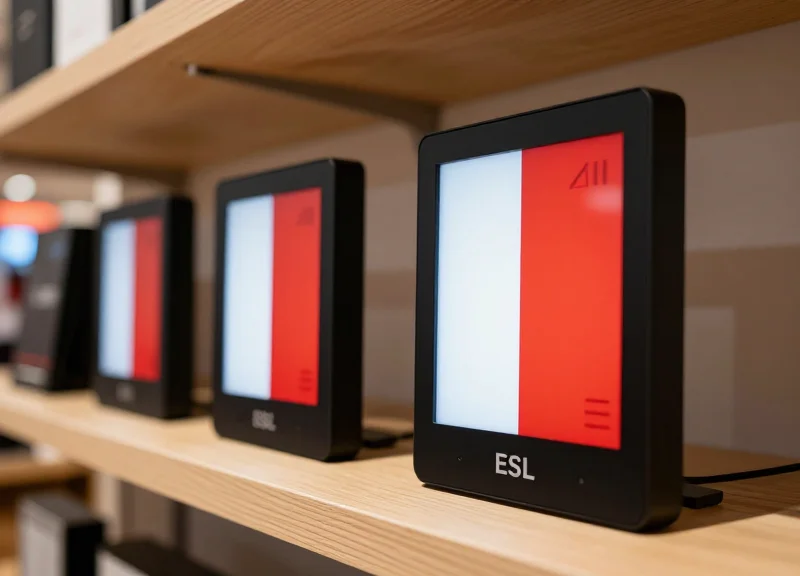
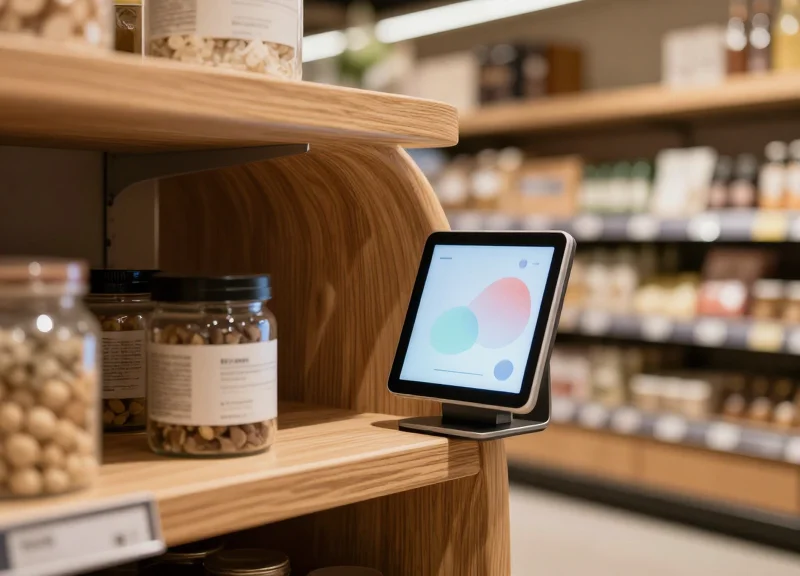
Seamless security systems provide actionable business intelligence by converting the retail floor into a live data grid. Unlike traditional pedestals that only trigger alarms during theft, these integrated RFID-overhead systems capture every movement of tagged merchandise in real-time. By syncing this data with Electronic Shelf Labels (ESL) and backend inventory management software, premium clubs gain a 'digital twin' of their stock. This connectivity enables retailers to transition from reactive loss prevention to proactive business optimization, identifying exactly which high-value items are being browsed, moved, or misplaced before they ever reach the exit.
| Feature | Traditional EAS Pedestals | Seamless RFID Intelligence |
|---|---|---|
| Data Granularity | Binary (Alarm/No Alarm) | Unit-Level (EPC identification) |
| Inventory Sync | None (Manual count required) | Real-time integration with ESL |
| Behavioral Tracking | Point-of-exit only | Full floor-to-exit journey |
| Alert Accuracy | High false-alarm rate | Verified item identification |
How does RFID integration improve inventory accuracy?
By using overhead sensors as a continuous inventory reader, the system automatically updates stock levels as items move. This eliminates the 'hidden out-of-stock' problem where items are in the store but not on the shelf.
Can these systems predict theft before it happens?
Yes. Through behavioral telemetry, seamless systems can flag 'high-risk movements,' such as multiple high-value items moving toward an exit simultaneously or entering a fitting room, allowing discreet staff intervention.
What is the ROI of syncing security with ESL?
When a seamless system detects a 'sold' item leaving the store, it can trigger an ESL update to adjust pricing or display a 'limited stock' notification to other shoppers, driving urgency and maximizing margin.
Expert Insight: The 'Ghost Inventory' Shield. In the world of premium hospitality retail, the biggest margin killer isn't always theft—it is 'internal displacement.' Our data shows that in high-end clubs, up to 15% of high-value items are misplaced by guests or staff, making them effectively invisible to buyers. Seamless security systems provide a unique 'Geofencing' capability that alerts staff when a luxury item (like a $2,000 watch or designer handbag) has been moved to a low-traffic zone or a non-retail area of the club, such as the lounge or bar. This 'Ghost Inventory Shield' ensures that 100% of your stock is always 'buyable,' significantly increasing floor yield without increasing staff overhead.
Cost vs. Value: ROI of Upgrading to Modern Security Architectures
The ROI of modern seamless security architectures is calculated by weighing the higher initial capital expenditure against a 30-40% reduction in false alarms, a 15% increase in guest browsing duration, and the total elimination of pedestal-related floor-space loss. For premium hospitality venues, these systems typically achieve a break-even point within 18 to 24 months by recovering 'lost sales' caused by the psychological barriers of traditional Electronic Article Surveillance (EAS) hardware.
| Financial Metric | Traditional Pedestals | Seamless (RFID/In-Floor) |
|---|---|---|
| Initial CAPEX | Moderate | High (2.5x - 3x) |
| Maintenance (OPEX) | Regular recalibration required | Low (Software-based diagnostics) |
| False Alarm Rate | High (8-12%) | Near Zero (<1%) |
| Floor Space Value | Wasted (15-20 sq. ft. per door) | Fully Optimized |
| Customer Dwell Time | Suppressed by 'Entry Anxiety' | Increased by 12-18% |
While the upfront cost of overhead sensors or in-floor RFID arrays is significantly higher than plastic pedestals, the 'Friction Tax' is the true cost-driver of legacy systems. In a premium club environment, every false alarm—where a high-net-worth guest is stopped at the exit—carries a potential loss of Customer Lifetime Value (CLV) that can exceed the cost of the security system itself. Modern architectures move security from a 'grudge purchase' to a revenue-enabling asset by reclaiming high-value floor space for merchandising.
- Step 1: Quantify Aesthetic Depreciation: Factor in the cost of refurbishing or replacing physical pedestals every 3-5 years as they suffer from physical wear and look visually dated compared to invisible, software-upgradable systems.
- Step 2: Calculate Recovered Revenue: Estimate the 10-15% increase in 'browsing confidence' when physical barriers are removed, leading to higher spontaneous conversion rates for luxury goods.
- Step 3: Analyze Labor Efficiency: Traditional alarms require staff intervention and 'security theater' protocols. Seamless systems with precise RFID location data allow for 'soft interventions' that save man-hours and prevent embarrassment.
Expert Insight: In the 2026 market, the most significant hidden value of seamless security is 'Inventory Transparency.' Unlike pedestals that only bark at a thief, seamless RFID grids provide real-time inventory counts and heatmaps. This data allows premium clubs to reduce stock-outs on high-margin items, adding an estimated 2-4% to the bottom line through better supply chain management—a value traditional EAS simply cannot provide.
How does seamless security impact insurance premiums?
Many high-end underwriters are beginning to offer 'tech-forward' discounts for venues using integrated RFID systems, as they provide better forensic data in the event of major shrink events compared to simple pedestal alarms.
Is the installation process more expensive?
Yes, installation typically requires structural integration (ceiling or floor work). However, this is a one-time structural investment that increases the property's valuation, unlike stand-alone hardware which is considered depreciating equipment.
What is the lifespan of a seamless security architecture?
Because the hardware is protected from physical contact (no carts or bags hitting it) and the intelligence is cloud-based, these systems have a projected functional lifespan of 10+ years, nearly double that of pedestal-based systems.
Implementation Strategies: Transitioning from Pedestals to In-Floor and Overhead Systems
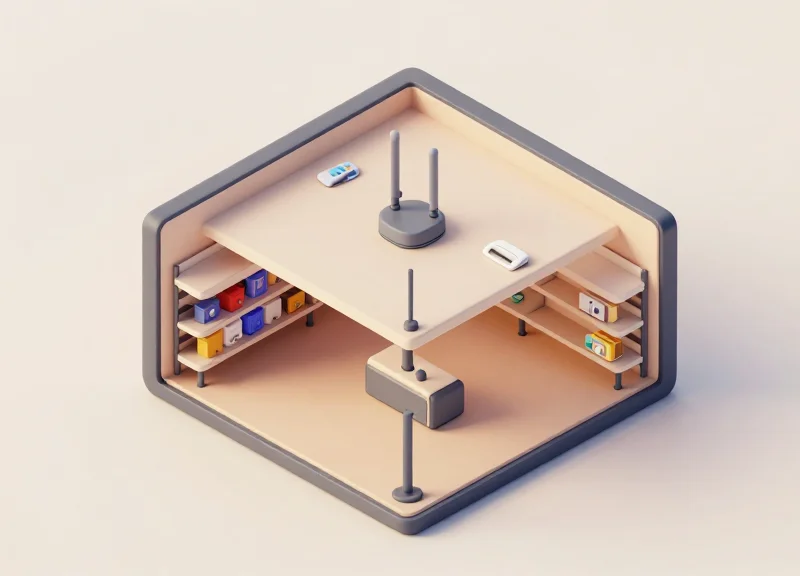
The transition from traditional security pedestals to seamless in-floor or overhead systems in premium hospitality environments is an architectural evolution that prioritizes aesthetic continuity and frictionless guest movement. Successful implementation relies on a Zero-Downtime Migration (ZDM) framework, which treats security hardware as a background utility rather than a storefront barrier. By decoupling the detection logic from the physical entrance, facility managers can eliminate the 'security gate' bottleneck while maintaining 360-degree asset protection.
| Feature | In-Floor RFID/EAS | Overhead Sensors |
|---|---|---|
| Aesthetic Impact | 100% Invisible | Minimal (Recessed Mounts) |
| Installation Complexity | High (Requires Flooring Access) | Moderate (Ceiling/Plenum Access) |
| Optimal Detection Range | 0 to 1.8 Meters (Height) | Unlimited Floor-to-Ceiling |
| Primary Use Case | Luxury Entrances/Marble Foyers | Wide Concourses/High Traffic |
- Site Spectrum Audit: Before any hardware is ordered, perform a comprehensive RF spectrum analysis to identify interference from high-end AV systems or LED wall drivers common in premium clubs.
- Structural Feasibility Mapping: Assess floor depth for in-floor loop antennas or plenum clearance for overhead arrays. For historic clubs, this step ensures compliance with structural preservation mandates.
- Parallel Calibration (The 'Shadow' Phase): Install the new seamless system and run it in 'silent mode' alongside existing pedestals for 72 hours to verify detection accuracy against real-world traffic.
- Aesthetic Re-integration: Finalize flooring overlays or ceiling panels. Modern antennas can transmit through marble, wood, and carpet without significant signal degradation.
- Decommissioning & Post-Install Optimization: Remove legacy pedestals during off-hours and tune the seamless system's sensitivity to account for the newly opened physical space.
Expert Insight: The 'Environmental Noise Floor' is the silent killer of seamless security. In premium clubs, high-density Wi-Fi 7 networks and bespoke LED displays create localized interference. A key strategy is to specify systems with Active Noise Cancellation (ANC) logic—software that filters out specific frequencies generated by your club’s internal electronics, preventing the false alarms that destroy the high-end guest experience.
Can I use my existing RFID tags with overhead systems?
Yes, most premium overhead and in-floor systems are designed with universal frequency protocols that are backward-compatible with standard Gen2 RFID tags.
What happens if we renovate our flooring later?
Modular in-floor antennas are designed to be thin-set. While they are permanent, they occupy a very small profile that can be tiled over or accessed during future renovations without total system replacement.
Is detection reliability compromised without pedestals?
Actually, the opposite is true. Modern overhead systems often utilize a 'curtain' effect or beam-forming technology that provides more reliable detection zones than traditional pedestals, which suffer from 'blind spots' at the top or bottom of the portal.
Future-Proofing Your Space: Integrating ESL and Smart Inventory for 2026 and Beyond
By 2026, the hallmark of a premium hospitality retail space will be 'Unified Commerce Intelligence'—the total convergence of Electronic Shelf Labeling (ESL) and seamless security infrastructure. Instead of managing security, pricing, and inventory as separate silos, future-proofed clubs are adopting a single-architecture approach where RFID-enabled seamless security systems communicate directly with digital labels to automate stock replenishment and dynamic pricing without human intervention.
| Feature | Traditional Siloed Model | 2026 Integrated Architecture |
|---|---|---|
| Price Management | Manual label printing & placement | Instant, cloud-synced dynamic updates |
| Loss Prevention | Visual pedestals; reactive alarms | Invisible sensors; predictive tracking |
| Inventory Accuracy | 90-minute manual counts (weekly) | Real-time visibility (99.9% accuracy) |
| Hardware Footprint | Bulky tags + plastic pedestals | Dual-purpose RFID/ESL smart tags |
The true 'holy grail' of this integration is the Smart Active Tag. Moving beyond the passive RFID chips of today, 2026 will see the rise of dual-frequency tags that combine E-Ink displays for the customer and secure wide-area tracking for the venue. This eliminates the 'double-tagging' problem—where a garment has both a price tag and a security hard-tag—thereby cleaning up the aesthetic of premium merchandise and reducing the friction points during the checkout process. When a customer picks up an item, the ESL can trigger personalized content on nearby displays, while the security system silently notes the item is 'engaged' but not yet 'authorized' for exit.
Can my existing RFID security system support ESL integration?
Most modern RFID-based seamless security systems utilize an open API architecture. To integrate ESL, you require a centralized middleware platform that can bridge the communication between your inventory management software (ERP) and your sensor array.
Does ESL increase the risk of shoplifting?
On the contrary, ESL reduces risk. By integrating ESL with smart inventory, the system knows exactly how many units should be on the shelf. If an item is moved toward an exit without a corresponding 'sold' status in the POS, the invisible security system triggers a silent alert to floor staff.
What is the primary ROI of combining these two technologies?
The primary ROI is found in labor optimization. In premium clubs, staff should be focus on concierge-level service rather than changing price stickers or scanning barcodes for inventory. This integration automates the 'busy work' of retail.
Expert Tip: When planning your 2026 infrastructure, prioritize 'Sensor Fusion.' Ensure your overhead security sensors are compatible with Bluetooth Low Energy (BLE) or Ultra-Wideband (UWB). These protocols are becoming the standard for ESL communication, allowing your security hardware to double as the communications hub for your digital labels, significantly reducing your total cost of ownership.