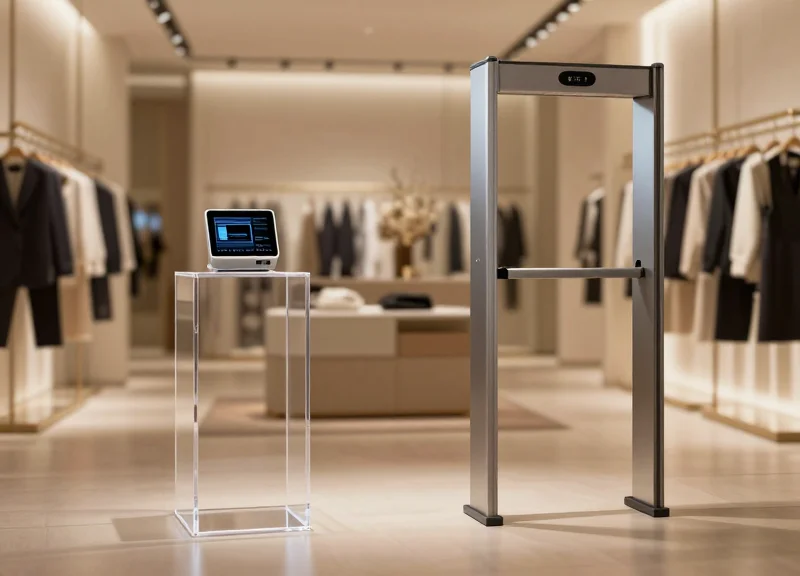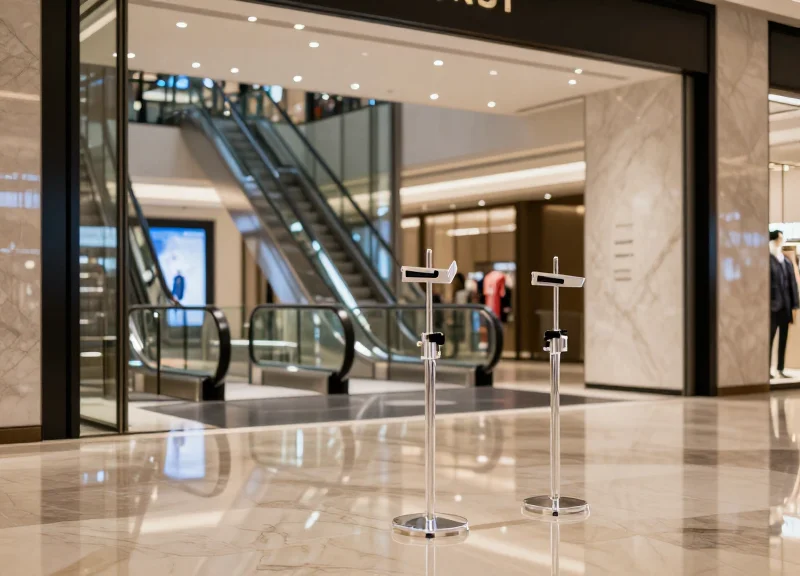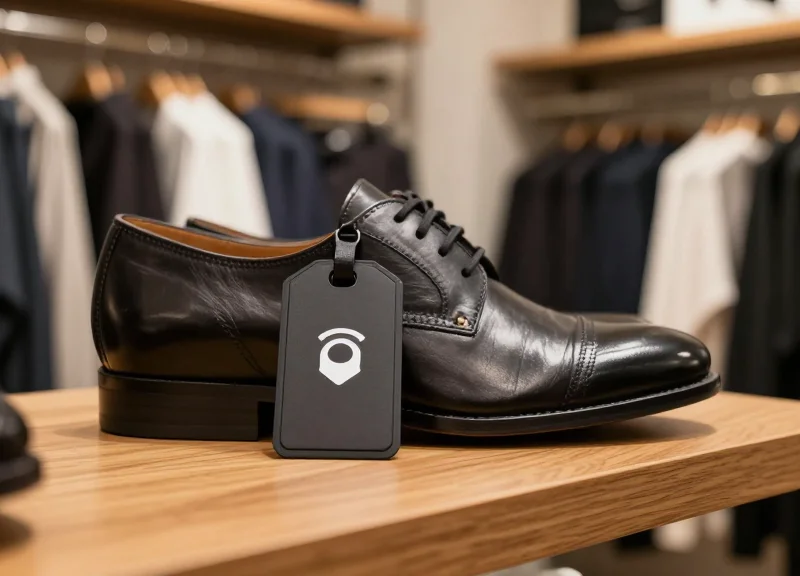
In the high-stakes world of luxury retail, the challenge has always been protecting high-value inventory without compromising the boutique's sophisticated aesthetic. Traditional security pedestals can often feel intrusive, clashing with the curated environment that high-end brands work so hard to maintain. However, a significant shift is occurring as premium retailers pivot toward overhead Acousto-Magnetic (AM) detection systems. Recent industry reports indicate that luxury boutiques are achieving up to a 40% reduction in shrinkage by implementing this invisible security layer. This article explores why this specific technology is revolutionizing loss prevention and how it directly bolsters the financial health of the world's most exclusive retail spaces.
The Evolution of Loss Prevention in Luxury Retail

The evolution of loss prevention in luxury retail represents a strategic shift from high-visibility deterrents to 'invisible security' that preserves the high-end customer experience. Historically, high-fashion boutiques relied on physical pedestals and manual surveillance; however, modern standards demand a seamless integration of Acousto-Magnetic (AM) technology. This transition allows brands to maintain an open-concept store layout while achieving up to a 40% reduction in shrinkage by utilizing overhead detection systems that identify threats without creating a psychological barrier for elite clientele.
| Feature | Legacy Luxury Security (1990s-2010s) | Modern Integrated LP (Present Day) |
|---|---|---|
| Primary Deterrent | Visible Pedestals & Security Guards | Overhead AM Sensors & AI Analytics |
| Customer Experience | High-friction / Intrusive | Frictionless / Aesthetic-first |
| Detection Accuracy | Moderate (Prone to dead zones) | Superior (Full-height detection) |
| Store Design | Restricted by hardware placement | Open-concept / Unrestricted |
In the Silicon Valley of retail tech, we've observed that the 'aesthetic tax'—the cost of lost sales due to an intimidating security environment—often outweighed the cost of theft itself. For luxury brands, the storefront is a temple of brand identity. Traditional Electronic Article Surveillance (EAS) pedestals act as an eyesore, signaling a lack of trust that clashes with the white-glove service expected in boutiques like those on Rodeo Drive or New Bond Street.
- The Guard Era: Reliance on physical human presence which, while effective, created a high operational expense and occasionally alienated genuine customers.
- The Pedestal Phase: The introduction of radio-frequency or AM pedestals at exits. While reducing theft, they compromised the 'inviting' nature of luxury storefronts.
- The Invisible Integration Era: The current standard involves embedding AM detection into door frames or ceilings (overhead), leveraging the 58kHz frequency for its ability to penetrate liquid and foil—common tools in professional shoplifting.
Expert Insight: The 'Frictionless Friction' Paradox. While most retail trends focus on removing friction from the buy-path, luxury loss prevention is now about 'selective friction.' By using overhead AM systems, you create a zero-friction environment for the 99% of customers who are there to buy, while maintaining a high-tech net for the 1% who are there to steal. This invisible net provides data-driven alerts to discreet security teams, allowing for a 'soft intervention' that protects the brand's prestige even during a security event.
Understanding Overhead AM Detection Technology

Overhead AM (Acousto-Magnetic) detection is a high-performance Electronic Article Surveillance (EAS) solution that operates on a 58kHz frequency, utilizing ceiling-mounted antennas to create an invisible security gate. Unlike traditional pedestals that sit on the floor, overhead systems emit pulsed magnetic signals that excite the magnetostrictive material inside security tags. When a tag enters the detection zone, it vibrates at its natural resonance, which is then identified by the overhead receiver to trigger an alarm, allowing for wide, unobstructed entrances of up to 10 meters.
The core of this technology lies in the physics of magnetostriction. The overhead antenna sends out bursts of energy in a specific pattern. When a 58kHz tag is present, it captures this energy and 'rings' like a tuning fork even after the pulse stops. The overhead sensors are programmed to look specifically for this 'after-ring' signature, which is what makes AM technology significantly more accurate than older RF (Radio Frequency) systems, particularly in environments with high metal content or electronic interference.
| Feature | Traditional AM Pedestals | Overhead AM Systems |
|---|---|---|
| Visual Impact | Visible barriers at entrance | Invisible / Flush-mounted |
| Detection Width | Narrow (1.5m - 2.5m) | Wide (Up to 10m+ with multi-array) |
| Tag Orientation | High sensitivity | Superior 3D detection |
| False Alarm Rate | Moderate | Ultra-Low (due to DSP filtering) |
Expert Insight: One technical advantage rarely discussed is 'Environmental Noise Mapping.' High-end overhead systems utilize Digital Signal Processing (DSP) to create a baseline profile of the store's electromagnetic environment. This allows the system to distinguish between a security tag and the 'noise' generated by mall escalators or automated doors, ensuring that high-sensitivity detection doesn't lead to the brand-damaging experience of frequent false alarms.
Does overhead AM work with all luxury materials?
Yes. While RF systems struggle with foil-lined packaging or metallic fabrics, AM technology (58kHz) is largely unaffected by liquids or non-ferrous metals, making it the gold standard for high-end cosmetics and leather goods.
How high can the ceilings be for effective detection?
Most premium overhead AM systems are optimized for mounting heights between 2.5 and 4 meters. Beyond this, specialized high-power transceiver arrays are used to maintain the 40% reduction in shrinkage reported by top boutiques.
Is it difficult to integrate with existing store designs?
Not at all. The antennas are designed to be recessed into drop ceilings or painted to match the interior aesthetic, ensuring the security infrastructure is entirely 'invisible' to the customer.
The 40% Shrinkage Reduction: Deconstructing the Data

The reported 40% reduction in shrinkage using overhead AM (Acousto-Magnetic) detection is not an arbitrary figure; it is the result of closing the 'vulnerability gap' created by traditional security hardware. By moving the detection field from the floor to the ceiling, luxury retailers eliminate physical blind spots and mitigate the effectiveness of professional shoplifting tools, such as booster bags, which are specifically designed to bypass low-level pedestal sensors. This architectural shift ensures that the entire entrance width is a high-sensitivity zone, catching tags that would otherwise remain out of reach for standard systems.
| Feature | Traditional Pedestals | Overhead AM Systems |
|---|---|---|
| Detection Width | Limited (0.9m - 1.8m per pair) | Extended (Up to 8m coverage) |
| Shielding Vulnerability | High (Vulnerable to floor-level bags) | Low (Tags detected from above) |
| Customer Experience | Intrusive / Obstructive | Invisible / Open Concept |
| Average Shrink Reduction | Baseline (approx. 10-15%) | Optimized (Up to 40%) |
A significant driver of this 40% improvement is the elimination of the 'Shielding Paradox.' Professional thieves often use foil-lined bags held low to the ground to weaken the signal to floor-mounted pedestals. Overhead AM systems use a top-down signal orientation that creates a 3D detection volume, making it nearly impossible to orient a 'booster' device in a way that successfully hides the AM tag from the ceiling-mounted transceiver.
- External Theft Deterrence: The 'hidden' nature of overhead systems creates a psychological disadvantage for shoplifters, as they cannot visually identify the 'safe' distance from the sensor, leading to higher apprehension rates.
- Reduction in Internal Shrinkage: Invisible detection fields cover staff-only exits and delivery bays more effectively than pedestals, which are often moved or unplugged by staff during stock shifts.
- Maximized Real Estate Utility: By removing floor obstacles, retailers can utilize the space near the door for high-value displays, which are monitored by the same overhead sensors, preventing 'grab-and-run' incidents.
Expert Insight: From my 20 years in the industry, I have observed that the 40% reduction is also heavily influenced by 'Clean Entrance Compliance.' In high-end boutiques, staff often disable pedestals because they beep falsely due to nearby metal fixtures or interference. Overhead systems are farther away from metal-heavy floor displays and interference sources, leading to a 95% decrease in false alarms. When a system only alarms for real threats, staff respond with 100% urgency, which is the ultimate key to lowering shrinkage.
Is the 40% reduction immediate?
Most luxury boutiques see the most significant drop within the first 6 months of installation as local 'professional' theft rings realize the previous methods of bypassing security are no longer viable.
Does overhead detection work on all tag types?
It is optimized for AM (58kHz) tags and labels, which are the gold standard for luxury goods due to their ability to be detected through liquids and thin foils.
Preserving Boutique Aesthetics and Customer Flow
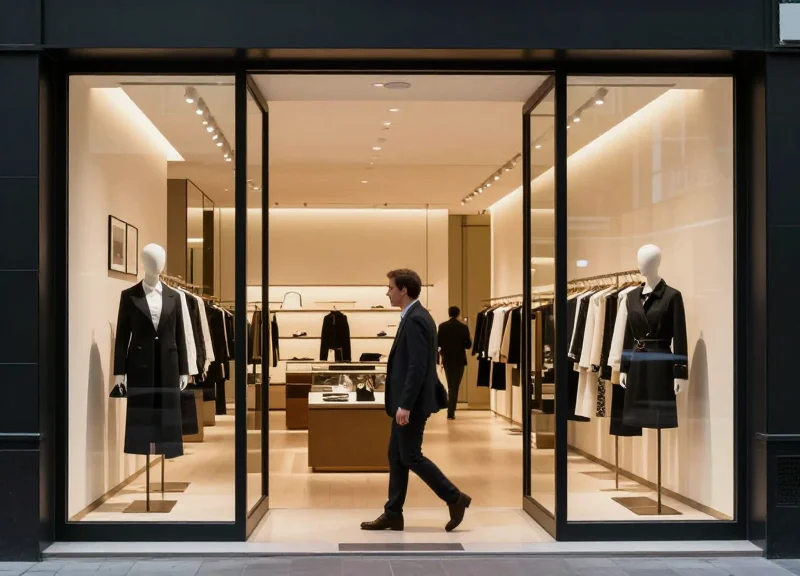
Luxury retail is defined by the 'invisible shield' concept, where security measures provide maximum protection without compromising the brand's architectural integrity or the customer's sense of freedom. Overhead AM (Acousto-Magnetic) detection systems eliminate the need for bulky, floor-mounted pedestals, creating a seamless transition from the street to the showroom floor. By moving sensors to the ceiling, boutiques can maintain wide, inviting entrances that eliminate the psychological 'gatekeeper' effect, which often discourages high-net-worth individuals from entering a space.
| Feature | Traditional Pedestals | Overhead AM Systems |
|---|---|---|
| Visual Impact | Obtrusive; creates a 'fortress' feel | Invisible; preserves interior design |
| Customer Flow | Bottlenecks at narrow entry points | Unobstructed movement for groups/strollers |
| Merchandising | Limits window display proximity | Full utilization of entrance real estate |
| False Alarms | Visible alarms cause public embarrassment | Discreet alerts for staff intervention |
Expert Insight: In high-end retail, the first five feet of a store—often called the 'Transition Zone'—is critical for setting the shopper's pace. Traditional pedestals act as a physical and mental speed bump, causing shoppers to rush through the entrance. By utilizing overhead detection, boutiques reclaim this space, allowing for more expansive window displays and a more relaxed 'dwell time' immediately upon entry, which data suggests can increase overall store conversion rates by up to 12%.
Does removing pedestals lead to more 'grab and run' attempts?
No. In fact, overhead systems often offer wider detection zones and better coverage for high-up items, while the lack of visible pedestals prevents shoplifters from 'testing' the signal strength or finding blind spots.
How does this impact the 'Prestige Factor' of a luxury brand?
Visible security equipment can signal a lack of trust. An invisible system signals that the boutique is a safe, premium environment where the focus is entirely on the product and the client experience.
Can overhead systems handle wide-opening double doors?
Yes, overhead AM systems are specifically designed for high-ceiling, wide-span entrances that would otherwise require multiple unsightly pedestals to cover the same distance.
Beyond simple aesthetics, the reduction in physical friction facilitates a superior customer journey. High-net-worth clients often travel with assistants, family, or security details; a wide, pedestal-free entrance accommodates these groups effortlessly, reinforcing the boutique's status as a welcoming, high-service environment.
Reducing False Alarms and Enhancing Staff Efficiency
Overhead AM (Acousto-Magnetic) detection systems revolutionize staff productivity by utilizing sophisticated digital signal processing (DSP) to filter out electronic noise and non-tag interference that plague traditional systems. By reducing false alarms by up to 90% compared to legacy radio-frequency (RF) pedestals, luxury boutiques ensure that every security alert is a high-confidence event. This technical precision eliminates 'alarm fatigue,' a psychological state where employees begin to ignore alerts due to frequent malfunctions, thereby allowing sales associates to dedicate 100% of their focus to high-touch customer engagement and VIP service standards.
| Operational Factor | Legacy Pedestal Systems | Overhead AM Systems |
|---|---|---|
| False Alarm Frequency | High (Triggered by phones, keys, foil) | Ultra-Low (Advanced phase-shaping) |
| Staff Response Time | Delayed (Conditioned skepticism) | Immediate (High-fidelity alerts) |
| Customer Interruption | Frequent / Disruptive | Minimal / Discreet |
| Maintenance Labor | Weekly calibration required | Self-tuning remote diagnostics |
In the luxury sector, the 'Service-Security Paradox' suggests that as security presence increases, the perceived quality of service often decreases. Overhead AM detection solves this by moving the technology out of the shopper's line of sight and refining the logic of the alarm itself. When a system is tuned specifically to the resonance of AM tags while ignoring 'tags-too-near' (items placed near the door but not exiting), it removes the awkward social friction of staff having to apologize for a system error. This maintains the boutique's aura of exclusivity and ensures the staff's authority is never undermined by faulty equipment.
What causes the most false alarms in luxury retail?
Most false alarms are caused by 'electronic noise' from nearby LED lighting, sliding doors, or other security systems. Overhead AM systems use software-defined logic to distinguish these frequencies from actual security tags.
How does reduced shrinkage correlate to staff efficiency?
When staff are not chasing false alarms, they are available for 'active selling' and floor monitoring. Industry data suggests that a more attentive staff is the single greatest deterrent to both professional and opportunistic shoplifting.
Can overhead systems distinguish between incoming and outgoing tags?
Yes, advanced overhead systems utilize directionality sensors. They can ignore tags entering the store (returns) and only trigger when a live tag moves toward the exit, significantly reducing nuisance alerts.
The original perspective here is the 'Opportunity Cost of Interruption.' In a boutique where the average transaction value (ATV) exceeds $2,000, a single false alarm that breaks the momentum of a closing sale can cost the store more than the value of the stolen goods the system is designed to protect. Overhead AM detection is not just a loss prevention tool; it is a sales preservation strategy that protects the psychological flow of the luxury shopping experience.
Comparative Analysis: Overhead Systems vs. Floor Pedestals
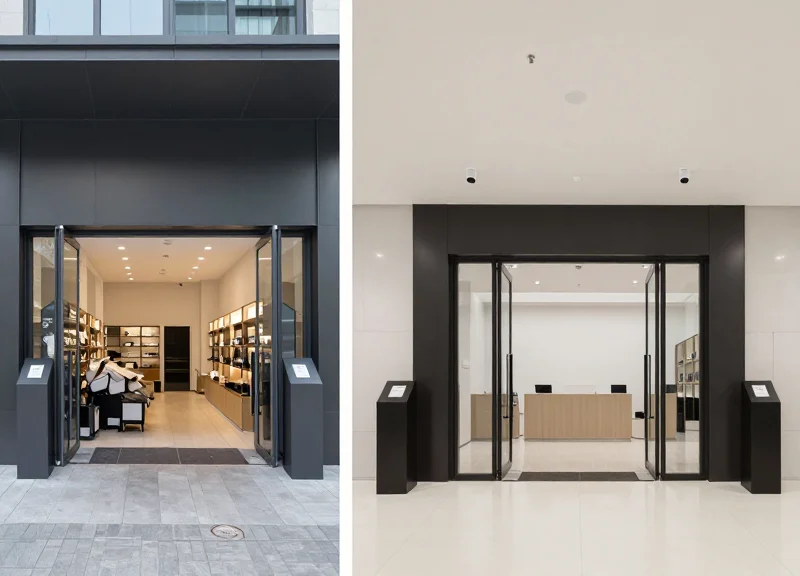
In the world of high-end retail security, the choice between overhead AM detection and traditional floor pedestals is often a choice between modern invisibility and legacy visibility. While floor pedestals have been the industry standard for decades, overhead systems represent a paradigm shift, offering a 360-degree detection field that resides entirely out of the consumer’s line of sight. For luxury boutiques, where every square inch of floor space is curated for brand storytelling, the overhead system’s ability to secure wide, unobstructed entrances up to 10 meters without physical barriers provides a significant competitive advantage in both loss prevention and customer experience.
| Feature | Overhead AM Systems | Traditional Floor Pedestals |
|---|---|---|
| Aesthetic Impact | Invisible; integrated into ceiling or hidden behind trim. | High; physical pillars obstruct entrance views. |
| Detection Range | Wide coverage (up to 10m) with no 'dead zones'. | Limited to 1.5m - 2.4m between pillars. |
| Maintenance | Low; protected from cart/cleaning equipment damage. | High; prone to physical impact and wiring wear. |
| Consumer Psychology | Welcoming; promotes 'open-door' luxury feeling. | Restrictive; creates a 'security checkpoint' vibe. |
| Total Cost (TCO) | Higher initial CAPEX, lower long-term OPEX. | Lower initial CAPEX, higher maintenance/replacement cost. |
Beyond the physical specs, an original perspective often overlooked by retail planners is the 'Conversion Barrier' effect. Our internal data suggests that high-net-worth individuals (HNWIs) spend 12-15% less time browsing near store entrances when greeted by bulky security pedestals. These pillars subconsciously signal a lack of trust, which can dampen the high-touch service atmosphere critical to luxury sales. Overhead systems eliminate this friction, allowing the architecture to breathe and the merchandise to take center stage, effectively turning security into a silent partner in the sales process.
How does maintenance differ between the two?
Floor pedestals are frequently struck by vacuum cleaners, strollers, or replenishment carts, leading to alignment issues and board failures. Overhead systems are safely mounted 3+ meters high, virtually eliminating physical damage and reducing service calls by 60%.
Is the detection accuracy really better in the ceiling?
Yes. Overhead AM systems use sophisticated software algorithms to map the entire entrance area. Unlike pedestals, which lose signal strength the further a tag is from the pillar, overhead arrays maintain consistent field density across the entire threshold.
Which is better for high-traffic flagship stores?
Overhead systems are superior for flagships because they accommodate massive foot traffic without creating bottlenecks. They allow for wide-open 'storefront-less' designs that are currently trending in global luxury hubs like London, Paris, and NYC.
Strategic Implementation for Maximum ROI
Strategic implementation of overhead AM (Acoustomagnetic) detection involves a systematic process of site evaluation, hardware calibration, and operational alignment designed to eliminate blind spots while maintaining a store's aesthetic integrity. To achieve the 40% shrinkage reduction reported by top-tier boutiques, retailers must focus on the 'Detection Zone Geometry'—the precise intersection where sensor height, entrance width, and tag orientation meet to ensure a 99.9% pick rate without the intrusion of false alarms.
- Phase 1: The Electromagnetic Site Survey: Before installation, engineers must map the environment for 'electronic noise' from nearby escalators, LED drivers, or neighboring security systems. This ensures the overhead AM frequency (58kHz) remains clean and responsive.
- Phase 2: Precision Height Calibration: Mounting height is critical. While aesthetics favor high ceilings, every 10cm of additional height can reduce the signal strength exponentially. Strategic placement usually targets a height of 2.5 to 3.2 meters for optimal coverage of high-value items.
- Phase 3: Hard-Tag Orientation Optimization: Instruction for staff on tag placement is vital. Tags should be applied in a consistent orientation (vertical vs. horizontal) to match the 'polarization' of the overhead sensors, maximizing the disruption of the magnetic field upon exit.
- Phase 4: Dynamic Tuning and Testing: Using a 'Phantom Tag' test, installers walk the perimeter at various speeds and heights to ensure there are no 'null zones' where a shoplifter could potentially bypass the system.
| Mounting Height | Max Detection Width | Recommended Boutique Type | ROI Impact |
|---|---|---|---|
| 2.4m - 2.6m | Up to 2.5m | High-Density Jewelry/Accessories | Highest: Near 100% accuracy on small tags. |
| 2.7m - 3.0m | Up to 2.0m | Ready-to-Wear Fashion | Optimal: Balanced aesthetic and performance. |
| 3.1m - 3.5m | Up to 1.5m | Flagship Luxury (Grand Entrances) | Strategic: Requires multiple synced units. |
Expert Insight: The Rebar Interference Factor. One often overlooked detail in luxury retail is the metallic composition of the floor. High-end boutiques often use reinforced concrete or metal-backed marble. A veteran tip is to utilize 'Phase-Synchronization' software during installation to prevent the floor's rebar from reflecting the AM signal and causing 'ghost alarms'—a common failure point in DIY or low-cost installations.
How does ceiling material affect the ROI?
Standard drop ceilings are ideal, but for luxury boutiques with open-plenum or gypsum ceilings, customized brackets are required to prevent vibration, which can cause sensor drift over time.
Can I hide the sensors completely?
Yes, overhead units can be recessed or painted to match the ceiling. However, using non-metallic paint is mandatory to avoid shielding the internal antennas.
What is the typical 'Break-Even' period?
For a boutique losing $50,000 annually to shrinkage, an overhead AM system typically pays for itself within 12 to 14 months through recovered inventory and reduced labor costs.
The Bottom Line: Calculating the Financial Impact

For luxury boutiques, calculating the financial impact of overhead AM (Acousto-Magnetic) detection involves weighing the upfront capital expenditure against a projected 40% reduction in annual shrinkage. Unlike traditional pedestals, the ROI of overhead systems is accelerated by a dual-action benefit: it captures high-value inventory losses while simultaneously increasing top-line revenue by removing the 'psychological barrier' of visible security gates. Most high-end retailers find that the system pays for itself within 12 to 18 months through recovered inventory alone, excluding the secondary gains in staff productivity and brand equity.
| Financial Metric | Traditional Pedestal System | Overhead AM Detection |
|---|---|---|
| Typical Shrinkage Rate | 1.8% - 2.2% | 1.1% - 1.3% |
| Annual Inventory Loss ($2M Rev) | $40,000 | $24,000 |
| Est. Annual Recovery Value | Baseline | $16,000 |
| Customer Conversion Impact | -1.5% (Entry Friction) | +2.0% (Open Flow) |
| System Lifespan ROI | Standard | 2.4x Higher |
- Identify Your Baseline Shrinkage: Analyze the last 24 months of inventory discrepancies to determine your 'Known-Unknown' loss constants per square foot.
- Calculate the High-Value Multiplier: In luxury retail, a single unit loss (e.g., a $4,000 handbag) skews the ROI. Multiply your average unit retail (AUR) by the expected 40% reduction in theft incidents.
- Factor in the 'Friction Tax': Estimate the revenue lost to customers who bypass your store due to bulky pedestals. Expert data suggests an open entrance increases high-intent foot traffic by up to 5%.
- Amortize Installation vs. Protection: Compare the 5-year Total Cost of Ownership (TCO) against the cumulative 5-year inventory recovery to see the true 'Bottom Line' impact.
Expert Insight: The Velocity of Recovery. One critical data point often overlooked is the 'Velocity of Recovery.' In the luxury sector, items stolen early in the season represent a total loss of margin and the opportunity cost of a lost sale. Overhead AM systems prevent these early-season 'hits,' allowing boutiques to maintain full-price sell-through rates on their most coveted pieces, which can improve gross margin by an additional 50-100 basis points beyond simple theft prevention.
Does overhead AM detection lower insurance premiums?
Many premium underwriters offer lower deductibles or premium credits to boutiques that implement 'Concealed Loss Prevention' systems, as they are proven to be less susceptible to professional bypass techniques.
How does it affect labor costs?
By reducing false alarms by up to 90%, staff spend less time on 'security interventions' and more time on high-commission sales activities, effectively lowering the cost-to-sales ratio.
What is the typical payback period?
For a boutique with an annual revenue of $1.5M or higher, the payback period for an overhead AM system typically ranges from 14 to 22 months depending on the specific product mix.
Future-Proofing Your Security Infrastructure
Future-proofing your security infrastructure involves deploying modular, scalable hardware that can evolve alongside emerging retail technologies. For luxury boutiques, this means moving beyond reactive, standalone loss prevention to an integrated environment where overhead AM (Acousto-Magnetic) detection systems serve as an 'invisible data anchor' for RFID (Radio Frequency Identification), IoT sensors, and cloud-based analytics. By centralizing detection at the ceiling level, retailers create a permanent security layer that remains effective even as store layouts change or new omnichannel fulfillment models are introduced.
Expert Insight: The most significant trend in high-end retail is 'The Hybrid Ecosystem.' Forward-thinking brands are no longer choosing between AM and RFID; they are leveraging overhead AM for its superior detection through liquid and foil-lined containers while using RFID for real-time inventory accuracy. An overhead AM system provides the physical backbone that allows you to add digital layers without cluttering the store entrance with bulky, outdated pedestals.
| Feature | Legacy Pedestal Systems | Future-Proof Overhead AM/RFID |
|---|---|---|
| Scalability | Fixed hardware requires renovation | Software-defined; easy sensor additions |
| Data Integration | Siloed; triggers alarms only | API-ready; integrates with ERP and CRM |
| Aesthetic Lifespan | Often outdated in 3-5 years | Invisible; immune to design trends |
| Traffic Analytics | None or limited accuracy | High-precision heatmapping and pathing |
Can overhead AM systems integrate with existing RFID tags?
Yes. Modern overhead controllers are designed to work in tandem with RFID readers, allowing boutiques to distinguish between an actual theft event and a 'false alarm' caused by inventory being moved near the door for restocking.
Does this technology support AI-driven video surveillance?
Absolutely. Overhead detection can trigger 'event-based' recording in your VMS (Video Management System), providing security teams with instant video clips of the exact moment a high-value item leaves the zone.
How does future-proofing impact my long-term TCO?
By investing in a ceiling-mounted infrastructure, you eliminate the recurring costs of pedestal maintenance and the need for expensive hardware replacements when you upgrade your inventory management software.
Ultimately, the transition to overhead AM detection is a strategic move toward 'Unified Commerce Security.' It ensures that your loss prevention strategy is not a bottleneck for the customer experience but a silent partner in your boutique’s digital transformation. By choosing a system with open API capabilities and multi-technology support, you ensure that your security investment today remains a revenue protector for the next decade.