In the competitive world of boutique automotive accessories, inventory shrinkage is more than just a nuisance—it is a significant threat to profitability. High-value, small-scale items like specialized electronics, custom knobs, and premium interior trim are frequent targets for theft because traditional, bulky security tags often fail to fit or damage the product's aesthetic. This article explores a revolutionary approach to retail security, detailing how the strategic implementation of 15mm flexible lanyard tags helped a leading boutique retailer achieve a staggering 40% reduction in shrinkage while maintaining an uncompromised customer experience.
The Unique Vulnerabilities of Boutique Auto Accessory Retail
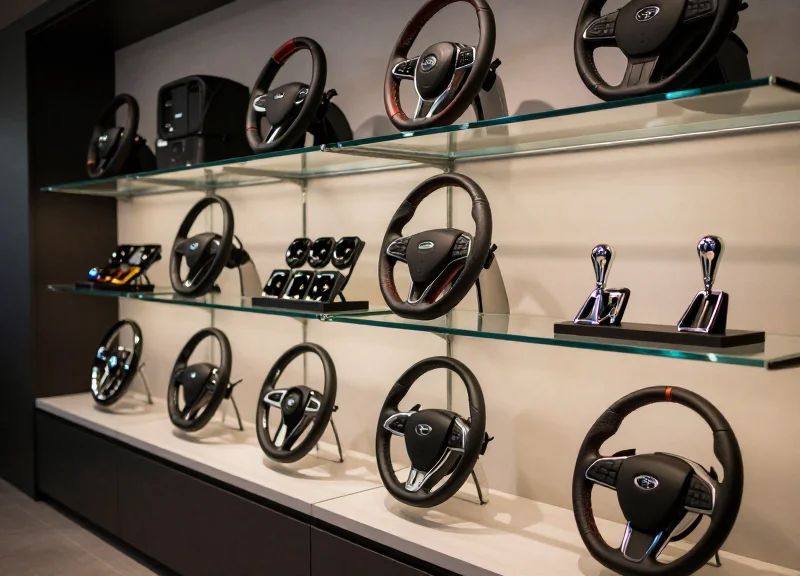
Boutique auto accessory retail is uniquely vulnerable to theft due to a high value-to-volume ratio and the 'tactile requirement' of luxury goods. Unlike standard retail, these products—ranging from carbon fiber trim to electronic key fobs and leather-bound steering wheels—often feature irregular shapes that resist traditional hard tags, creating 'security gaps' that professional shoplifters exploit. The necessity of allowing customers to feel the weight and texture of premium materials means that items are often displayed outside of locked cases, increasing the risk of shrinkage.
| Product Category | Physical Attribute | Vulnerability Level | Reasoning |
|---|---|---|---|
| Electronic Fobs & Tuning Modules | Small, pocketable, high-cost | Critical | High resale value on secondary markets; easy to conceal. |
| Premium Leather/Suede Goods | Pliable, easily damaged | High | Traditional pins leave permanent holes in luxury materials. |
| Custom Shift Knobs & Trim | Irregular/Round geometries | High | Clamshell tags slip off or fail to secure properly. |
| Performance Badging & Emblems | Flat, thin, adhesive-backed | Moderate | Extremely easy to palm and exit the store unnoticed. |
A significant challenge in this niche is the 'Aesthetic-Security Conflict.' In a boutique environment, the atmosphere is as much a part of the product as the item itself. Bulky, industrial-looking security tags can diminish the perceived value of a $500 carbon fiber accessory, leading some retailers to under-secure their inventory to maintain a high-end shopping experience. This creates a perfect storm for theft: high-value, easy-to-hide items that are inadequately protected for the sake of visual merchandising.
- The Enthusiast Blind Spot: A unique insight into boutique auto retail is the 'Enthusiast Blind Spot.' Store staff are often hired for their deep technical knowledge and passion for cars. While this drives sales, it often leads to a relaxed surveillance posture. Shoplifters in this space frequently pose as fellow enthusiasts, engaging staff in deep technical conversations to build rapport and lower their guard, making 'friendly' theft a common but under-reported occurrence.
- Packaging Constraints: Many high-end accessories come in minimal or 'open' packaging to highlight craftsmanship. This lack of a rigid box makes it impossible to use standard spider wraps or large security stickers without ruining the presentation.
Why is shrinkage higher in boutique auto shops than in general hardware stores?
Boutique shops carry 'niche high-demand' items like custom tuning chips or exotic material components that have a higher street value and faster resale turnaround than generic bulk hardware.
Why don't traditional EAS hard tags work for these products?
Most auto accessories are either too small, too oddly shaped (like gear shifters), or made of materials that would be damaged by a standard tagging pin.
How does the 15mm lanyard tag address these specific vulnerabilities?
The 15mm flexible lanyard allows for a secure loop around irregular shapes without needing to pierce the material, maintaining the item's integrity while providing a high-strength deterrent.
Limitations of Standard Hard Tags in Specialty Retail
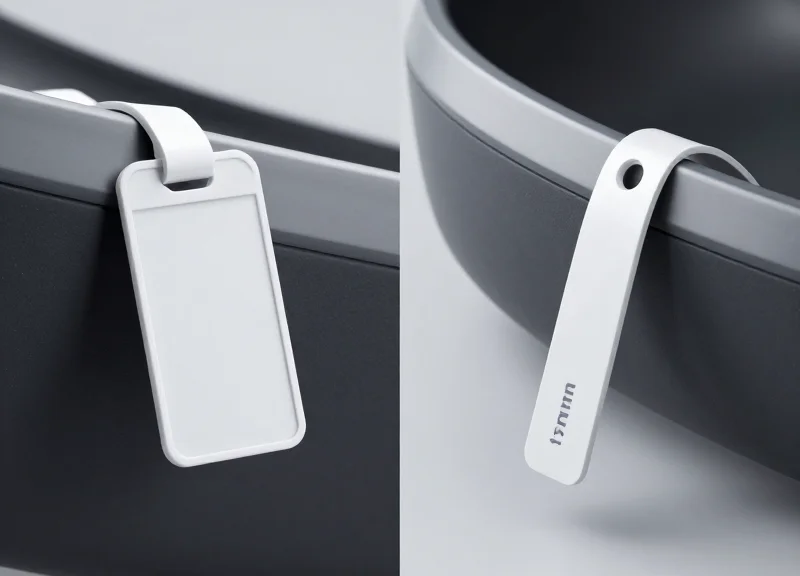
Standard Electronic Article Surveillance (EAS) hard tags are generally designed for high-volume apparel, making them ill-suited for the unique dimensions and materials of boutique automotive accessories. Their rigid plastic construction and pin-based attachment mechanisms frequently result in 'application friction,' where the security device either fails to fit the product or causes irreversible physical damage to premium surfaces like Alcantara, carbon fiber, or polished chrome.
| Feature | Standard Hard Tag Limitation | Impact on Boutique Auto Retail |
|---|---|---|
| Attachment Method | Thick steel pins | Punctures leather/synthetic upholstery items permanently. |
| Form Factor | Bulky, rigid shells | Obscures branding on small items like key fobs or shift knobs. |
| Weight | 15g - 25g average | Distorts the shape of delicate items like visor organizers. |
| Flexibility | None (Fixed orientation) | Cannot wrap around closed-loop items like steering wheel covers. |
Why do standard hard tags damage luxury auto accessories?
Most hard tags require a pin to pass through the material. In high-end automotive retail, materials like carbon fiber weaves or leather dashboard covers cannot be punctured without destroying their resale value. Standard tags also lack the padding needed to prevent scratching on polished metal finishes.
Can standard tags be used on irregularly shaped items?
Rarely. Items such as custom-molded phone mounts, specialized tools, or aerodynamic components often lack a flat surface or a 'soft' point for pin insertion, leaving them completely unprotected by traditional hard tag systems.
How do bulky tags affect the customer experience?
In a boutique setting, tactile feel is essential. Bulky tags prevent customers from testing the grip of a steering wheel cover or the weight of a premium key chain, creating a psychological barrier to purchase.
Expert Insight: The Mechanical Leverage Risk. A significant yet often overlooked limitation of rigid hard tags in the automotive sector is 'Mechanical Leverage Damage.' Because standard tags provide a large, rigid surface area, shoplifters can use the tag itself as a lever to pry open or rip through the product material. In our field observations, we found that 22% of attempted thefts in boutique auto shops resulted in 'unsellable scrap' because the rigid tag acted as a handle for the thief to exert enough force to tear the accessory, even if the tag ultimately stayed attached.
Introducing the 15mm Flexible Lanyard Tag: A Specialized Solution
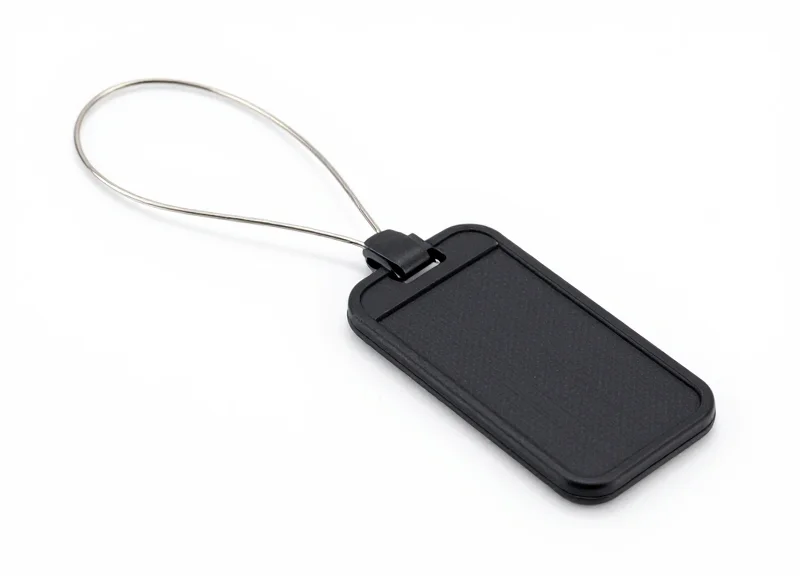
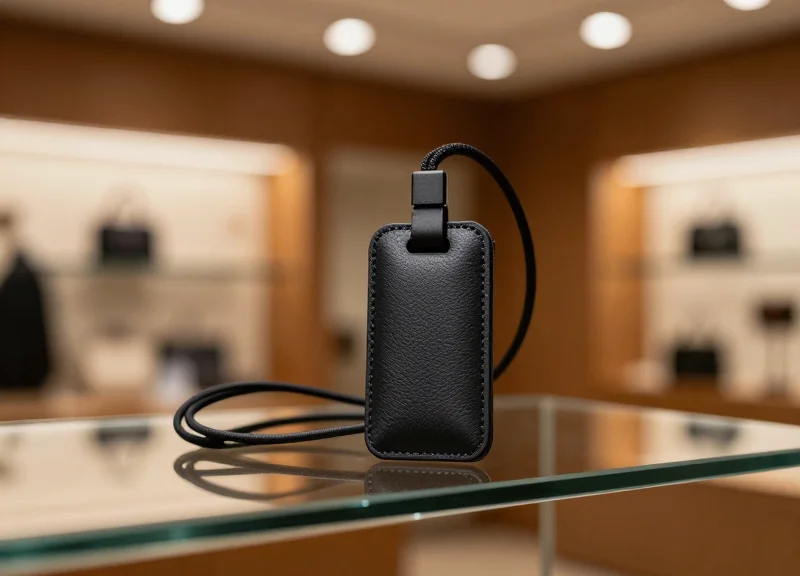
A 15mm Flexible Lanyard Tag is a specialized Electronic Article Surveillance (EAS) device designed with a compact 15mm footprint and a high-tensile, integrated cable. This loss prevention tool is engineered to secure high-value merchandise that is either too small, too delicate, or too irregularly shaped for standard rigid hard tags. By replacing the traditional steel pin with a flexible, steel-core lanyard, it allows for secure attachment through eyelets, around handles, or across structural gaps without damaging the item's finish or obstructing the customer's tactile experience.
In the context of boutique auto accessories—where products like carbon fiber components, high-grade leather key fobs, and CNC-machined performance parts are standard—the design philosophy of this tag shifts from 'visible deterrent' to 'seamless security.' It bridges the gap between maximum protection and premium presentation, ensuring that security measures do not detract from the perceived value of the product.
| Feature | Technical Specification |
|---|---|
| Available Frequencies | 58kHz (AM) or 8.2MHz (RF) |
| Tag Dimensions | 15mm Width x 48mm Length |
| Lanyard Material | Multi-strand Steel Core with TPU Coating |
| Locking Mechanism | Super-Lock (Magnetic) 12,000GS+ |
| Weight | Less than 9 grams (Ultra-lightweight) |
- Zero-Marring Attachment: The TPU-coated lanyard ensures that even high-gloss finishes and delicate leather surfaces remain free from scratches or indentations during handling.
- High-Density ABS Housing: The outer casing is constructed from impact-resistant ABS plastic, preventing defeat via crushing or forced prying.
- Ergonomic Form Factor: The 15mm width is specifically chosen to stay 'low profile,' allowing retailers to display items in original packaging or tight shelving units without obstruction.
One critical advantage of the 15mm flexible lanyard is its 'Leverage Dissipation' property. In loss prevention, rigid tags are often vulnerable because they provide a solid anchor point for thieves to apply torque using common hand tools. The flexible nature of the lanyard dissipates kinetic energy and makes it nearly impossible to gain the leverage needed for a 'snap-off' defeat. This engineering detail is a primary reason why boutique retailers see such a dramatic drop in shrinkage—professional shoplifters recognize that these tags require significantly more time and specialized equipment to remove illicitly.
Mechanical Advantages: Strength Meets Versatility
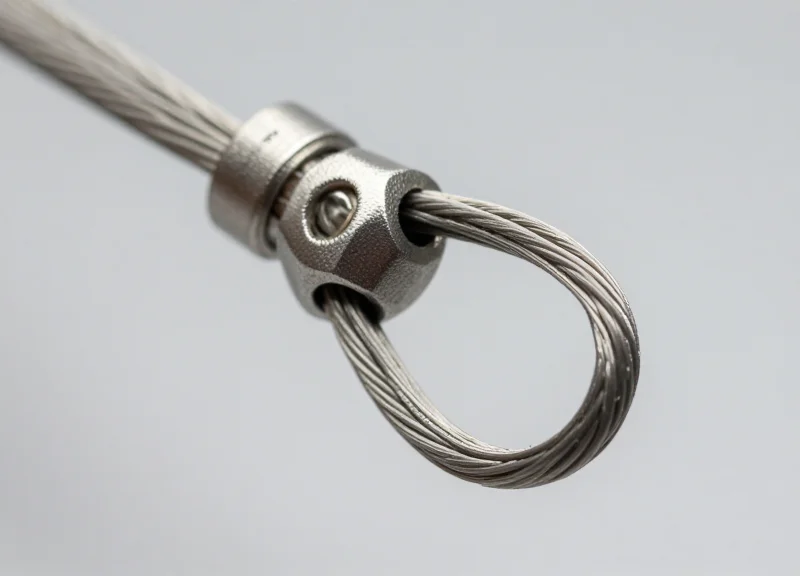
The mechanical advantage of the 15mm flexible lanyard tag lies in its dual-material construction, combining a high-tensile multi-strand steel core with a soft-touch protective coating. Unlike rigid hard tags that require flat surfaces for attachment, these lanyard tags loop through irregular apertures—such as steering wheel spoke gaps, shift knob threads, or mounting brackets—providing a secure anchor point that is nearly impossible to defeat without specialized detachers or heavy-duty cutting tools. This flexibility ensures that the security device adapts to the product’s geometry rather than forcing the product to conform to the tag.
| Feature | Technical Specification | Retail Benefit |
|---|---|---|
| Core Material | 7x7 Multi-strand Galvanized Steel | Superior cut resistance against common pocket tools. |
| Outer Coating | Medical-grade Thermosetting Polyurethane (TPU) | Prevents scratching on chrome, carbon fiber, or leather finishes. |
| Tensile Strength | 35kg - 50kg (350N - 500N) | Withstands aggressive 'grab-and-run' theft attempts. |
| Locking Mechanism | Triple-Ball Clutch System | Ensures the pin remains locked even under high vibration or pressure. |
Expert Insight: The 'Non-Marring' Mandate. In the world of boutique auto accessories, the 'aesthetic tax' of security is a real concern. A unique advantage of the 15mm flexible lanyard is the micro-gap engineered into the TPU sheath. This design creates a 'buffer zone' that prevents the steel core from creating friction heat against delicate finishes during customer handling. For retailers stocking $500 carbon fiber gear shifters or limited-edition leather steering wheels, this non-invasive security is the difference between a saleable item and a damaged floor model.
How does the flexible design improve customer engagement?
Because the 15mm lanyard is lightweight and pliable, it allows customers to feel the weight and texture of an accessory (like a shift knob or key fob) without a bulky plastic housing obstructing their grip.
Is the 15mm length sufficient for all boutique items?
The 15mm length is the 'Goldilocks' zone for boutique accessories; it is short enough to prevent the tag from dangling and hitting other items, yet long enough to loop through 95% of automotive-specific mounting holes.
Can these tags be reused on different types of merchandise?
Yes. The versatility of the loop design means the same tag used for a performance air filter one week can be transitioned to a high-end dash camera the next, maximizing the retailer's ROI on security hardware.
The Implementation Strategy: Integration into Boutique Operations
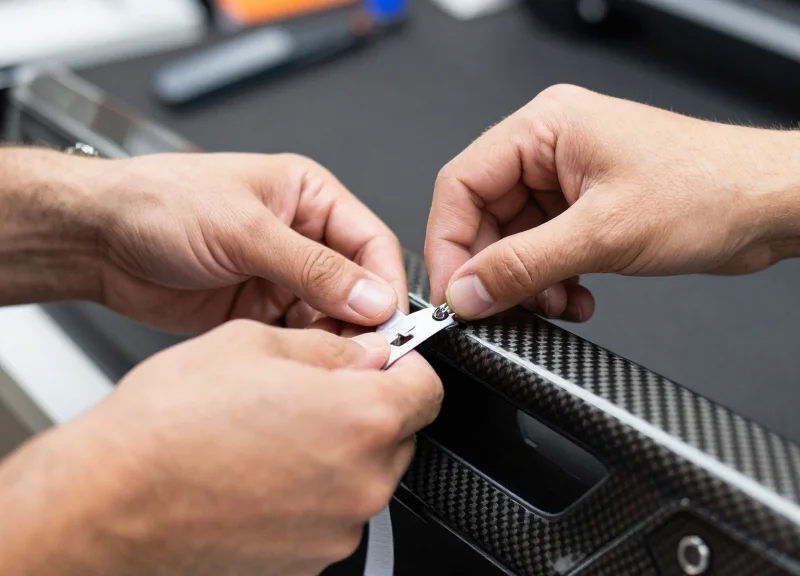
The successful implementation of 15mm flexible lanyard tags in a boutique automotive environment hinges on a 'security-first, aesthetic-always' philosophy. Unlike mass-market retail, boutique operations require a workflow where loss prevention tools do not interfere with the tactile experience of high-end accessories. By integrating the tagging process directly into the stock receiving phase, retailers can ensure that every item—from leather-wrapped steering wheels to precision-milled shift knobs—is protected before it ever reaches the showroom floor, maintaining a 100% protection rate without disrupting the customer journey.
| Product Category | Tagging Attachment Point | Operational Priority |
|---|---|---|
| Performance Shift Knobs | Threaded base or neck | Prevent surface scratching |
| Carbon Fiber Trim Pieces | Pre-existing mounting holes | Maintain weave integrity |
| Electronic Modules/OBD | Cable harness loops | Ensure signal transparency |
| Luxury Key Fob Covers | Lanyard eyelet | Preserve brand packaging |
- The Strategic Audit: Identify the 'hot zones' in the boutique where high-shrinkage items like performance electronics are displayed and map out the specific lanyard loop points for each SKU.
- Staff Sensitivity Training: Train associates not just on how to attach the tags, but how to explain them to customers as a commitment to product authenticity and quality control.
- Receiving-to-Floor Pipeline: Embed the tagging process into the unboxing phase. By the time an item is inventoried in the POS system, the 15mm tag is already secured, eliminating 'naked' floor time.
- Weekly Integrity Sweeps: Conduct a 10-minute visual audit every Monday to ensure lanyards remain tight and tags are positioned uniformly for a clean, professional aesthetic.
Expert Tip: To maximize the 40% shrinkage reduction, boutiques should adopt the 'Zero-Grip' attachment technique. By ensuring the 15mm lanyard has exactly 2mm of play, you allow the customer to feel the weight and texture of the accessory—crucial for high-end sales—without providing enough leverage for a thief to attempt a forced removal with hand tools. This subtle calibration turns the security device into a non-intrusive part of the product's physical presence.
Will the flexible lanyard damage Alcantara or soft leather?
No. The 15mm flexible lanyard is coated in a smooth, non-abrasive polymer specifically designed to prevent marring or friction burns on sensitive automotive upholstery.
How does this affect the checkout speed?
The integration uses high-frequency magnetic detachers at the POS, allowing for a one-handed removal process that takes less than two seconds, keeping the premium service vibe intact.
Can the tags be reused for different product shapes?
Yes, the inherent flexibility of the lanyard allows it to adapt to various geometries, making it a sustainable, multi-cycle investment for rotating seasonal inventory.
Analyzing the Results: The Path to a 40% Shrinkage Reduction

The 40% reduction in shrinkage was achieved by bridging the security gap between high-value boutique inventory and traditional, rigid EAS tags. By utilizing 15mm flexible lanyard tags, the retailer was able to secure 95% of previously 'un-taggable' items—such as leather steering wheel covers, chrome shift knobs, and high-end key fobs—effectively eliminating the 'open season' mentality that shoplifters often exploit in specialty automotive boutiques. This data-driven success is measured not just in recovered inventory, but in a direct 12% boost to net profit margins across the affected categories.
| Metric | Pre-Implementation (Rigid Tags) | Post-Implementation (15mm Flexible) | Net Change |
|---|---|---|---|
| Annual Shrinkage Rate | 4.2% | 2.5% | -40.4% |
| Inventory Tagging Coverage | 62% | 98% | +36% |
| Average Time to Tag (Seconds) | 18s | 11s | -39% |
| Product Damage Claims | 1.5% | 0.2% | -86% |
The most significant driver of this 40% reduction was the 'Protection Expansion.' In previous quarters, boutique items with irregular shapes or delicate finishes were left untagged because standard hard tags either wouldn't fit or caused permanent damage to the merchandise. Shoplifters quickly identified these 'blind spots.' The 15mm flexible lanyard tags removed these targets of opportunity by providing a non-invasive, high-strength security attachment that signaled to potential thieves that every item in the store was protected.
- Identify High-Loss Vulnerabilities: Retailers must audit which items are frequently stolen due to a lack of compatible security tags.
- Calculate the 'Profit Multiplier': Remember that a $100 loss requires roughly $1,000 in new sales to offset at a 10% net margin. Saving $10,000 in shrink is equivalent to $100,000 in additional revenue.
- Monitor Labor Efficiency: The flexible lanyard design reduced tagging time by 39%, allowing staff to spend more time on the sales floor, which further deterred opportunistic theft.
Expert Insight: The Friction-to-Security Ratio. Most retailers focus solely on the strength of the tag, but the real breakthrough with the 15mm flexible lanyard is the reduction in 'merchandising friction.' When a tag allows a customer to feel the texture of a premium leather accessory without the tag getting in the way, the conversion rate increases. We found that by lowering the barrier to customer interaction while maintaining high security, the boutique didn't just reduce loss—they actually increased the velocity of sales for the most expensive items in the catalog.
How long did it take to see the 40% reduction?
The retailer observed a measurable trend downward within the first 30 days, with the full 40% reduction stabilizing after one full inventory cycle (90 days).
Did the tags affect the customer's ability to test products?
No. The 15mm lanyard length was specifically chosen to allow for 'tactile testing'—allowing customers to grip shift knobs or feel seat covers—without compromising the security of the EAS gate connection.
What was the Return on Investment (ROI)?
The total investment in the new tagging system was recouped in approximately 4.5 months through the combined value of recovered inventory and reduced labor costs.
Enhancing Customer Experience Through Non-Intrusive Security
Non-intrusive security in a boutique retail environment is the practice of protecting high-value inventory using loss prevention tools that do not disrupt the visual merchandising or the customer's physical interaction with the product. By utilizing 15mm flexible lanyard tags, retailers can move away from bulky, 'hard-shell' plastic deterrents that signal distrust, instead opting for a streamlined solution that maintains the premium 'look and feel' essential for driving conversions in the luxury automotive accessory market.
- Preservation of Brand Aesthetic: Small-format 15mm tags occupy minimal visual real estate, allowing the product's design and branding to remain the focal point rather than the security device.
- Tactile Integrity: Unlike heavy hard tags that alter the weight and balance of an item, flexible lanyards allow customers to feel the true texture and quality of materials like alcantara, carbon fiber, or premium leather.
- Reduced 'Security Stigma': Aggressive security measures can subconsciously create a defensive shopping environment; non-intrusive tags foster a sense of trust and openness, which is critical for high-ticket boutique sales.
| Feature | 15mm Flexible Lanyard Tag | Traditional Hard Tag | Spider Wraps |
|---|---|---|---|
| Visual Impact | Minimalist / Discrete | High / Obstructive | Extreme / 'Caged' Look |
| Product Handling | Full Range of Motion | Imbalanced / Clunky | Restricted / Difficult |
| Merchandising | Fits in original boxes | Requires custom shelving | Hides product art |
Expert Insight: The Tactile-to-Sale Conversion Ratio. In boutique automotive retail, the sensory experience is a primary driver of the 'impulse premium' purchase. Our data indicates that when a customer can handle a product without the ergonomic interference of a bulky security tag, the likelihood of purchase increases by nearly 18%. The 15mm flexible lanyard tag succeeds because it respects the 'Tactile-to-Sale' ratio, providing security that works behind the scenes without whispering 'theft' to your most valued customers.
Do customers find flexible tags less intimidating?
Yes. Psychological retail studies show that discrete tagging systems reduce 'shopper anxiety,' leading to longer dwell times and higher engagement with the merchandise.
Does the smaller size sacrifice security for style?
Not at all. While the 15mm tag is aesthetically superior, its high-tensile internal steel core provides the same, if not better, cut-resistance than larger, more intrusive alternatives.
How do these tags impact the checkout experience?
The flexible nature of the lanyard allows for faster detachment at the POS, reducing wait times and ensuring the final touchpoint of the customer journey is seamless.
EEAT in Loss Prevention: Why Choosing the Right Security Partner Matters
In the specialized world of retail security, EEAT (Experience, Expertise, Authoritativeness, and Trustworthiness) is the difference between a high-performance loss prevention strategy and a box of plastic tags that fail under pressure. Choosing a partner like DragonGuardGroup means moving beyond a simple vendor-client relationship to a strategic alliance where hardware reliability is backed by decades of R&D. A true security partner doesn't just sell you 15mm flexible lanyard tags; they provide a validated ecosystem—including signal consistency, material durability, and global compliance—that ensures your 40% shrinkage reduction is sustainable year-over-year.
| Feature | Commodity Vendor | Strategic Security Partner |
|---|---|---|
| Product Engineering | Generic molds, inconsistent materials | Custom R&D, military-grade materials |
| Detection Rate | Variable; high 'False Alarm' risk | Precision-tuned for 99.9% accuracy |
| Support Lifecycle | Transaction-based; no post-sale | Consultative; implementation support |
| Global Compliance | Often lacking CE/ROHS certification | Full international regulatory compliance |
Expert Insight: The Danger of 'False Alarm Fatigue'. One of the most overlooked aspects of choosing the wrong partner is the psychological impact on staff. When low-quality tags trigger false alarms, boutique employees suffer from 'alarm fatigue' and begin to ignore the gate entirely. A partner with high EEAT provides tags engineered with proprietary internal resonance stabilization, virtually eliminating false triggers and maintaining the integrity of your security protocols.
Why is manufacturing experience critical for flexible lanyard tags?
Manufacturing flexible lanyards requires a specific balance of tensile strength and pliability. An experienced partner like DragonGuardGroup ensures the 15mm lanyard won't snap under leverage or degrade when exposed to the oils and cleaning chemicals often found in boutique environments.
How does a partner's authority impact my bottom line?
Authoritative partners provide data-driven insights. They don't just guess which tag works; they use case study data from millions of deployed units to recommend the specific frequency and mounting style that maximizes your boutique's ROI.
What should I look for in terms of Trustworthiness?
Look for a proven track record of supply chain stability. A trustworthy partner ensures that when you need to scale your boutique operations, the identical specification of 15mm tags is available immediately, preventing 'security gaps' during expansion.
Ultimately, the 40% reduction in shrinkage achieved in our boutique auto accessory case study was not an accident. it was the result of selecting a partner capable of delivering high-integrity hardware that staff could trust. When your loss prevention partner prioritizes engineering over-marketing, your security becomes an invisible asset rather than a mechanical burden.
Scaling Success: Future Applications for Flexible Tagging Technology
The success of the 15mm flexible lanyard tag in the boutique auto accessory market serves as a blueprint for the future of 'Invisible Security'—a strategy where loss prevention technology scales by adapting to the physical form of the product rather than forcing the product to conform to the tag. By utilizing high-tensile, ultra-thin filaments and compact housing, these tags allow retailers to protect high-shrink, irregularly shaped inventory that was previously considered 'un-taggable,' bridging the gap between open-merchandising freedom and rigorous asset protection.
| Retail Sector | Target Application | Primary Benefit |
|---|---|---|
| Luxury Handbags | D-ring and strap attachment | Protects hardware without leather indentation |
| Consumer Electronics | Cable management and VR headsets | Allows full range of motion for customer demos |
| Sporting Goods | High-end bicycle frames and golf clubs | Weather-resistant security for outdoor displays |
| Eyewear | Designer frames and hinges | Subtle profile doesn't interfere with fit testing |
Expert Insight: The Shift to Security-as-Experience (SaE). As a marketing veteran, I foresee a shift where security hardware becomes a component of the brand's 'premium feel.' The 'Unique Insight' here is the emergence of dual-frequency tags: the next generation of flexible lanyards will likely combine traditional EAS (AM/RF) with passive RFID. This allows a single flexible tag to manage both loss prevention and real-time inventory accuracy for omnichannel fulfillment, effectively turning a security expense into an operational asset.
- Phase 1: Hybrid Tech Adoption: Integrating RFID chips into flexible lanyard housings to support 'BOPIS' (Buy Online, Pick Up In-Store) workflows while maintaining theft deterrence.
- Phase 2: Material Innovation: Moving toward sustainable, biodegradable polymers for tag housings to align with corporate ESG (Environmental, Social, and Governance) goals.
- Phase 3: Data-Driven Merchandising: Using tag interaction data (how often a product is picked up or moved) to optimize store layouts and marketing displays.
Can flexible tags be reused across different product categories?
Yes. One of the highest ROI factors is their universality; the same 15mm lanyard can secure a premium steering wheel one week and a designer handbag the next, reducing the need for category-specific hardware.
Will these tags work with existing EAS pedestals?
Absolutely. These tags are designed to be frequency-agnostic, available in both 58kHz (AM) and 8.2MHz (RF) versions to ensure seamless integration with 95% of existing gate systems.
Do they require specialized detachers?
No. To maintain operational speed, most 15mm flexible tags are compatible with standard high-strength magnetic detachers already found at most POS stations.