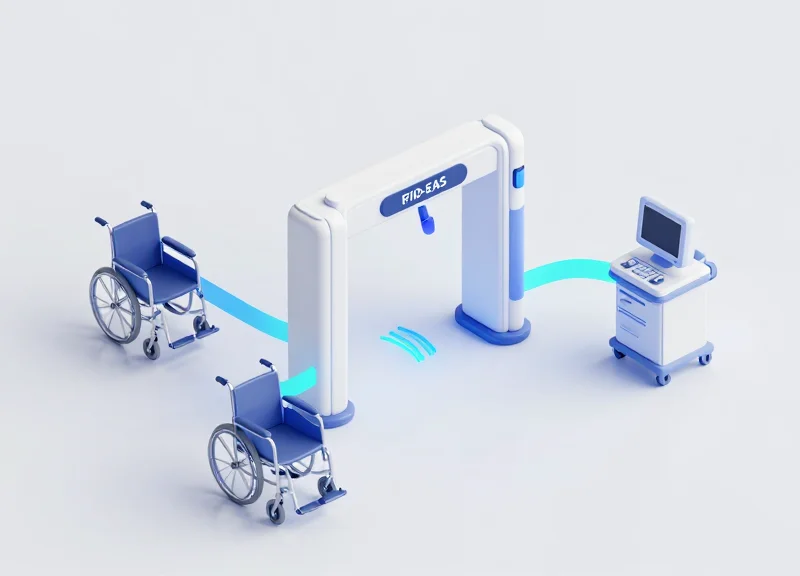

In the modern retail landscape, the 'barrier-free' shopping experience has moved from a luxury trend to a standard expectation. However, open-concept designs with wide aisles present a significant challenge for traditional Electronic Article Surveillance (EAS). Retailers are often forced to choose between bulky antennas that disrupt the store's aesthetic or weakened security that permits shrinkage. As we head into 2026, new technological breakthroughs are making it possible to bridge this gap. This guide provides an authoritative look at selecting EAS systems that offer 99% detection rates across wide spans without compromising the visual integrity of high-end retail environments.
The Rise of Open-Concept Retail and the Wide Aisle Challenge

The shift toward open-concept retail design in 2026 is driven by the need for 'invitational architecture,' where physical barriers between the sidewalk and the product are minimized to increase foot traffic. While traditional EAS pedestals were designed for standard 0.9-meter to 1.8-meter doorways, modern flagship stores now frequently feature 'wide aisles' spanning 2.5 to 12 meters. This architectural trend creates a 'Wide Aisle Challenge': as the distance between sensors increases, the magnetic or radio-frequency field strength drops exponentially, often resulting in detection dead zones that professional shoplifters are increasingly adept at exploiting.
| Feature | Traditional EAS (Pre-2020) | Modern Open-Concept EAS (2026) |
|---|---|---|
| Typical Aisle Width | 1.2m - 1.8m | 2.5m - 6m+ per span |
| Detection Consistency | High (95%+) | Variable (requires active phase-tuning) |
| Visual Impact | Intrusive Pedestals | Invisible or Slimline Integrated |
| Primary Technology | Standard AM/RF | Wide-Phase AM or RFID-Overhead |
In 2026, the 'Wide Aisle' is no longer just a luxury boutique feature; it is a standard requirement for big-box retailers and high-street brands alike. The primary struggle for Loss Prevention (LP) teams is that physics dictates a trade-off: the wider the gap, the more 'noise' the system picks up from the surrounding environment (like escalators or LED displays), which can lead to false alarms or, worse, missed tags.
What is considered a 'Wide Aisle' in 2026?
Any entrance wider than 2.4 meters (approx. 8 feet) is classified as a wide-aisle installation, requiring specialized high-gain controllers or multi-antenna arrays to ensure tag excitation.
Why can't I just use more pedestals?
While adding more pedestals is a solution, it destroys the 'open-concept' aesthetic and creates physical bottlenecks that impede customer flow and ADA compliance.
Is 99% detection actually possible at 3 meters?
Yes, but it requires 'Active Noise Cancellation' (ANC) technology and high-fidelity Acousto-Magnetic (AM) systems that can distinguish between a weak tag signal and environmental electronic noise.
Expert Insight (The 2026 Signal Floor Factor): A critical but often overlooked challenge in 2026 is the 'Digital Noise Floor.' Modern stores are packed with IoT devices, smart lighting, and 6G repeaters. In a wide-aisle configuration, the EAS signal is naturally weaker; if your system doesn't feature AI-driven digital signal processing (DSP) to filter out this 2026-era ambient noise, your 'detection' is effectively blinded, regardless of how many antennas you install.
AM vs. RF Technology: Which Wins in Wide Span Performance?
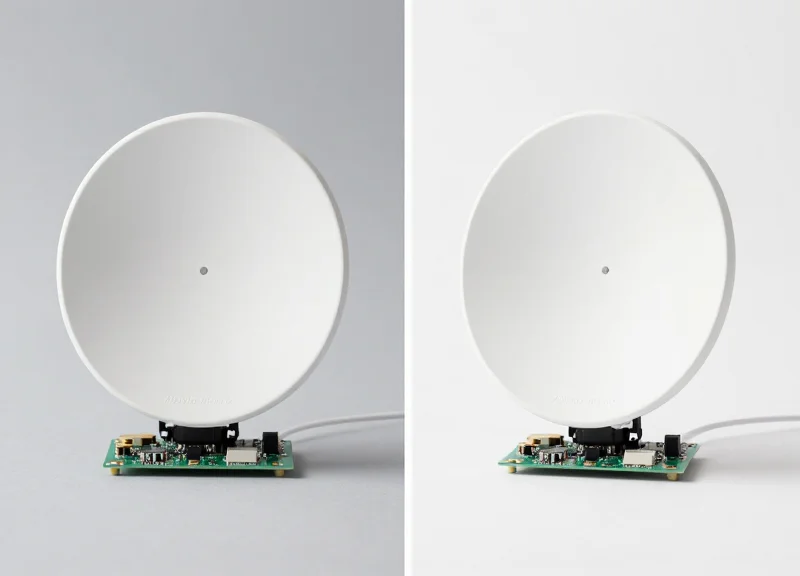
In the battle for wide-aisle supremacy, Acousto-Magnetic (AM) technology currently leads for spans exceeding 2.0 meters due to its high resistance to signal attenuation and 'body shielding.' While Radio Frequency (RF) systems at 8.2MHz are cost-effective for standard exits, the 58kHz frequency of AM systems allows for deeper signal penetration and more reliable detection of small tags in high-traffic, open-concept entrances where pedestals are placed significantly further apart.
| Feature | Acousto-Magnetic (AM) 58kHz | Radio Frequency (RF) 8.2MHz | |||
|---|---|---|---|---|---|
| Optimal Detection Width | Up to 2.4m - 3.0m per corridor | Up to 1.6m - 2.0m per corridor | |||
| Interference Resistance | High (Immune to most electronic noise) | Moderate (Sensitive to LED/LCD interference) | |||
| Body Shielding Effect | Minimal (Signal wraps around the body) | Significant (Human body absorbs signal) | Tag Versatility | Excellent for metal/liquid products | Limited for foil or metal-based packaging |
As we move into 2026, the technical gap is being bridged by Edge-AI Digital Signal Processing (DSP). In the past, RF was prone to 'false alarms' in wide configurations because the gain had to be cranked up so high that it picked up ambient electronic noise from nearby digital signage. Modern wide-aisle systems now utilize neural networks to distinguish between a genuine tag resonance and a burst of EMI (Electromagnetic Interference), allowing RF to perform more reliably at 1.8m+ widths than ever before.
Expert Insight: The Vertical Detection Gap. A common mistake in wide-aisle planning is focusing only on the floor-level width. In 2026, wide-aisle AM systems utilize 'Phase-Jitter' technology to ensure detection remains consistent up to 1.5 meters in height. Traditional RF systems often suffer from 'dead zones' in the center of a wide exit at chest height, making AM the safer bet for high-value apparel retailers using wide-open store layouts.
Can RF technology handle a 2.5-meter entrance?
Standard RF struggle at 2.5 meters. To achieve this width with RF, you typically need multiple pedestals (a 'split' configuration) or high-powered, AI-filtered antennas that prioritize signal-to-noise ratios over raw power.
Why is AM preferred for luxury or 'liquid' retail?
AM signals are less affected by the presence of liquids or metallic foils. If you are protecting perfumes, premium spirits, or electronics in a wide-aisle environment, AM provides a 99% detection rate that RF cannot match.
Is the cost difference between AM and RF still significant?
The price gap has narrowed to roughly 15-20% in 2026. While RF remains cheaper for high-volume rollouts, the reduced rate of false alarms and wider coverage of AM often result in a lower Total Cost of Ownership (TCO).
Achieving the 99% Detection Benchmark: Hardware vs. Software

In 2026, achieving a 99% detection rate across spans exceeding 2.4 meters is no longer a matter of simply 'turning up the power' on an antenna. To hit this benchmark in open-concept retail, systems must move beyond basic signal resonance. The modern standard relies on a hybrid architecture where high-gain, multi-loop hardware captures a massive volume of raw data, while advanced Digital Signal Processing (DSP) and machine learning algorithms isolate the specific 'signature' of a security tag from the 'noise' of LED lighting, automatic doors, and mobile devices. This synergy ensures that detection is surgical, preventing false alarms while maintaining absolute vigilance over high-shrink inventory.
| Feature | Hardware Component | Software Functionality |
|---|---|---|
| Signal Capture | High-gain multi-loop antenna arrays | Dynamic sensitivity thresholding |
| Interference Management | Copper shielding and ferrite chokes | Adaptive noise-canceling algorithms |
| Detection Accuracy | Wide-spectrum transceiver modules | Neural network-based tag recognition |
| Connectivity | Integrated IoT/Wi-Fi modules | Cloud-based performance diagnostics |
The most significant evolution in 2026 is the transition to 'Software-Defined EAS.' Previously, the hardware's physical limitations dictated the maximum aisle width. Today, the hardware acts as a high-fidelity sensor, but the 'intelligence' resides in the firmware. Advanced noise-filtering algorithms use fast-Fourier transforms (FFT) to distinguish between a jittery signal from a faulty escalator motor and the clean, rhythmic decay of an Acousto-Magnetic (AM) tag. This allows retailers to widen entrances without installing massive, unsightly pedestals that disrupt the store's aesthetic flow.
Expert Insight: The 'Ghost Signal' Protocol. A unique advancement in 2026 is the implementation of environmental fingerprinting. Rather than having a static sensitivity setting, the system continuously 'samples' the ambient electromagnetic noise of the store during empty hours. It creates a baseline 'ghost' map of interference. During store hours, the software subtracts this ghost map from real-time data, allowing the system to detect tags at a 30% higher signal-to-noise ratio than 2024 models. This is the secret to maintaining 99% accuracy in 'noisy' urban retail environments.
Does higher detection sensitivity lead to more false alarms?
Not in 2026 systems. Modern DSP uses pattern recognition rather than simple amplitude thresholds. It looks for the specific resonance decay of a tag, ignoring random electrical spikes, which allows for higher sensitivity without the penalty of 'phantom' alarms.
Can software updates improve detection over time?
Yes. Leading systems now support Over-the-Air (OTA) updates. As new types of interference (like 6G or new LED drivers) emerge, software patches can tune the filtering algorithms without requiring a technician to visit the store.
Why is hardware still important if software is so smart?
Software cannot process a signal it never receives. High-quality hardware—specifically the purity of the copper in the antenna coils—is essential for capturing the faint signal of a tag at the center of a wide 3-meter aisle.
The Aesthetics Dilemma: Hidden and Transparent EAS Solutions
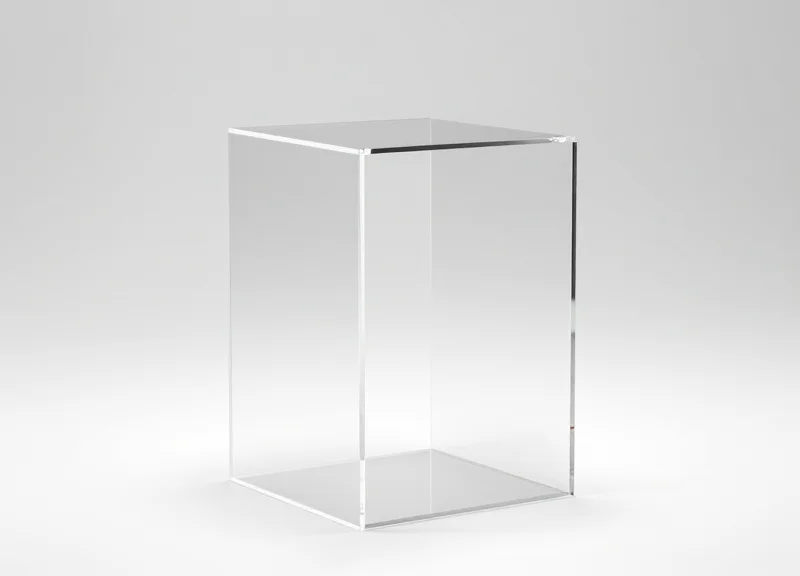
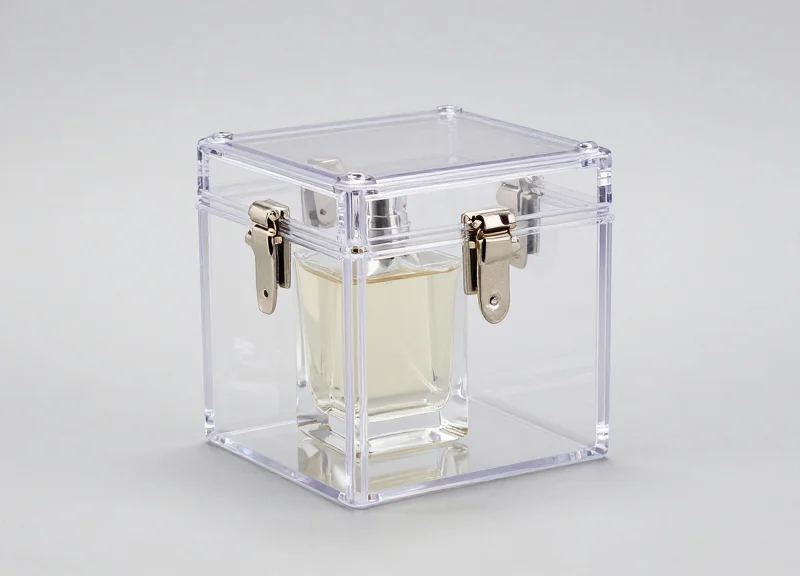
The aesthetics dilemma in modern retail is the tension between the 'Fortress Store'—cluttered with visible security hardware—and the 'Experiential Showroom' that demands unobstructed views and wide, inviting entrances. To solve this, 2026 EAS designs focus on 'visual transparency.' This involves moving beyond bulky plastic towers to either clear, high-grade acrylic pedestals that blend into the glass storefront, or entirely hidden systems integrated into the floor or ceiling. The goal is to achieve a 99% detection rate while making the security technology virtually invisible to the customer until an alarm event occurs.
| Technology Type | Visual Impact | Installation Complexity | Optimal Application |
|---|---|---|---|
| Premium Acrylic Pedestals | Low (Transparent) | Moderate (Floor-bolted) | High-end fashion & electronics |
| Under-floor Loop Systems | Zero (Hidden) | High (Pre-construction) | Luxury boutiques & flagship stores |
| Overhead Ceiling Sensors | Minimal (Recessed) | Moderate (Ceiling-wired) | Supermarkets & wide-entrance malls |
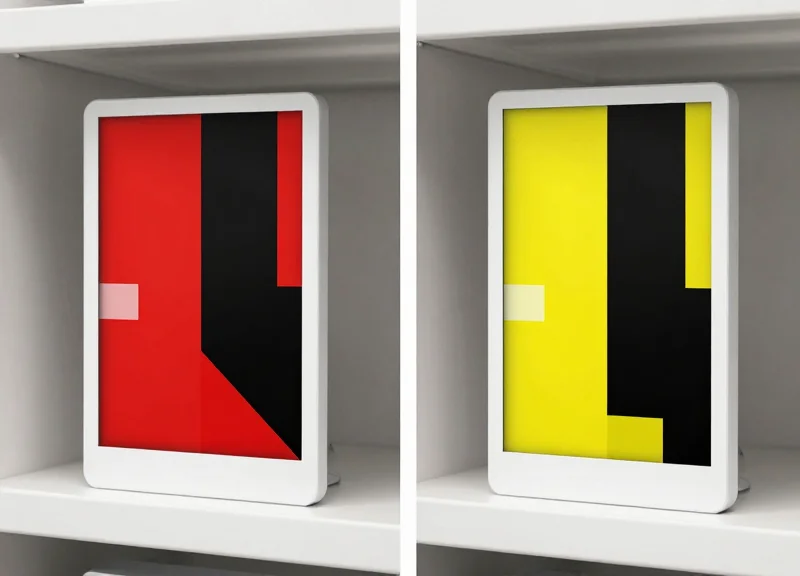
Expert Insight: The 2026 'Branded Alarm' Trend. A significant shift in wide-aisle design is the transformation of pedestals into branding assets. Instead of just sounding a buzzer, modern acrylic systems use programmable RGB-LED edge lighting. These can match the store's brand colors during normal operation and pulse specific patterns for different alerts (e.g., tag detection vs. jammer detection), turning a security necessity into a sophisticated design element.
Do hidden under-floor systems have a lower detection range?
Historically yes, but 2026 floor systems utilize localized high-power magnetic loops and 'beam-steering' tech to push detection heights to 1.4 meters for standard tags, which is sufficient for most retail shrinkage profiles.
Is acrylic more prone to scratching and clouding over time?
Modern EAS pedestals use aerospace-grade, UV-stabilized acrylic. These materials resist yellowing and are treated with hard-coats that significantly reduce surface scratching from shopping bags or carts.
Can overhead sensors handle wide-span entrances effectively?
Yes, overhead systems are the champions of wide aisles. By using phased-array antennas, a single ceiling unit can cover a 3-to-4 meter opening, though they are more sensitive to metallic interference from nearby escalators.
When selecting a system, retailers must account for the 'Shadow Performance Gap.' Hidden systems, particularly under-floor loops, can be sensitive to the vibration and pressure of heavy foot traffic. We recommend that for any wide-aisle installation utilizing hidden tech, a monthly automated self-calibration check be scheduled via the system's cloud dashboard to ensure the hardware hasn't drifted out of its 99% detection benchmark due to environmental shifts.
Integrating RFID and ESL for Holistic Asset Protection

Holistic asset protection in 2026 is defined by the convergence of item-level visibility and real-time shelf monitoring, where wide-aisle EAS pedestals serve as the primary IoT gateway for the retail floor. By integrating Radio Frequency Identification (RFID) for precise inventory tracking and Electronic Shelf Labels (ESL) for dynamic security, retailers move from reactive alarm-sounding to a predictive model. This integrated ecosystem identifies exactly what is leaving the store, its specific SKU, price point, and last known shelf location, effectively turning the wide-aisle exit into a sophisticated data-collection point that supports both security and supply chain accuracy.
| Feature | Standalone Wide-Aisle EAS | Integrated RFID/ESL/EAS Hub |
|---|---|---|
| Detection Type | Generic presence of a tag | Unique item-level ID (EPC) |
| Data Output | Binary (Alarm or No Alarm) | Rich Data (SKU, Color, Size, Time) |
| Operational Value | Loss Prevention only | Inventory Accuracy + Shrink Analytics |
| ESL Synergy | None | Shelf-pull alerts and geofencing |
- Item-Level Tagging: Every product is equipped with a dual-technology or RFID-exclusive tag that carries a unique Electronic Product Code (EPC) for individual tracking.
- ESL Geofencing: The ESL system monitors the product's presence on the shelf; if an item is removed in bulk (flash rob protection), the ESL triggers a silent alert to the EAS gateway.
- Gateway Interrogation: As the item passes through the wide-aisle EAS, the pedestal interrogates the RFID tag, instantly reconciling it against the real-time Point of Sale (POS) data.
- Real-time Mitigation: If the item has not been marked as sold, the system logs the specific loss and alerts security via mobile app or heads-up display with item details.
Expert Insight: The 'Contextual Alert' Breakthrough. One of the most significant advancements in 2026 is the elimination of the 'Shadow Inventory Trap.' Historically, retailers knew they lost inventory but didn't know what was gone until a manual count. By using beam-forming RFID arrays within wide-aisle pedestals, the system distinguishes between a customer browsing near the entrance and an actual exit event. This is further validated by ESL data; if a label detects a high-velocity 'grab' and the EAS sees those items exit seconds later without a POS transaction, the system can automatically trigger video evidence capture with 100% certainty, reducing false interventions by 85%.
Can existing wide-aisle EAS be upgraded to support RFID and ESL integration?
Most 2026-ready hardware is modular. If the pedestal chassis supports 'Smart-Ready' controllers, you can add an RFID reader blade and a Bluetooth Low Energy (BLE) module for ESL communication without replacing the entire system.
How does ESL integration help with 'sweethearting' at the register?
When an ESL is linked to the EAS hub, the system detects if a high-value label is still active near the exit despite a different, lower-value item being scanned at the register, flagging the discrepancy to managers immediately.
Does this integration impact the aesthetics of open-concept stores?
No. In fact, it often improves aesthetics by allowing for fewer, more powerful pedestals. Because the RFID sensors are embedded into the same sleek acrylic or under-floor housings used for EAS, there is no additional hardware footprint.
Calibration and Environmental Factors in Wide Entrance Security
Calibration in wide-entrance EAS (Electronic Article Surveillance) is the precise synchronization of system sensitivity against the ambient electronic 'noise floor' of a retail environment. In open-concept layouts where pedestals may be spaced up to 2.4 meters apart, the detection field becomes exponentially more sensitive to external interference. Achieving a 99% detection rate depends less on raw power and more on the system's ability to distinguish between a legitimate security tag and background electromagnetic interference (EMI) caused by HVAC systems, LED drivers, or automated sliding doors.
| Environmental Factor | Impact on Wide-Aisle Performance | 2026 Mitigation Strategy |
|---|---|---|
| Moving Metal Objects | Escalators or sliding doors create 'swings' in the magnetic field. | Phase-shift filtering and digital magnetic floor mapping. |
| EMI / RFI Noise | LED lighting and digital signage pulse at frequencies that mimic tags. | Ultra-wideband (UWB) frequency hopping and DSP noise cancellation. |
| Power Fluctuations | Voltage drops can lead to 'phantom alarms' or dead zones. | Dedicated power conditioning and UPS-backed AI controllers. |
| Structural Rebar | Metal mesh in flooring can dampen the signal range. | Sub-floor shielding and active antenna loop tuning. |
- Site Survey & Baseline Mapping: Use a spectrum analyzer to identify high-traffic electronic frequencies before installation to set a baseline noise floor.
- Loop Phasing and Synchronization: Ensure all pedestals are perfectly in-phase with neighboring systems to prevent 'pulse-clash' which causes signal cancellation.
- Dynamic Threshold Adjustment: Configure the system to automatically raise or lower sensitivity thresholds based on peak store hours and activity levels.
- Validation via 3D Tag Orientation: Test detection at the top, middle, and bottom of the aisle with tags held at various angles to ensure zero 'blind spots' in the wide gap.
Expert Tip: By 2026, the industry standard has shifted from manual potentiometer tuning to AI-Driven Edge Calibration. Modern systems now use 'Self-Learning Noise Profiles' that record environmental fluctuations over a 72-hour period. This allows the EAS controller to predict when a nearby elevator motor will kick in and momentarily adjust its filtering algorithms to prevent a false alarm without sacrificing detection sensitivity. If your vendor isn't discussing 'Adaptive Signal Thresholding,' you are buying outdated tech.
Can wide-aisle systems work near large metal door frames?
Yes, but they require 'Metal-Compensating Antennas' and careful placement at least 15-30cm away from the frame to prevent the metal from acting as a giant antenna and flooding the receiver.
Why do false alarms increase during holiday seasons?
Increased use of decorative lighting and higher foot traffic (carrying mobile devices) can raise the ambient noise floor. Dynamic calibration systems mitigate this automatically.
Does the floor material affect wide-span detection?
Significantly. Post-tensioned concrete with high rebar density can 'sink' the signal. In these cases, we recommend using Acousto-Magnetic (AM) technology over RF due to its superior penetration through structural metal.
Total Cost of Ownership (TCO) and ROI Analysis
In 2026, the Total Cost of Ownership (TCO) for wide-aisle EAS systems is defined as the sum of initial capital expenditure (CAPEX), specialized installation for wide-span environments, and recurring operational expenses (OPEX) including maintenance, energy, and shrinkage management. While premium systems carry a 20-30% higher upfront cost, they typically deliver a 15% higher ROI over five years by minimizing 'false alarm fatigue' and reducing the need for manual on-site recalibration.
When analyzing ROI, retailers must look beyond hardware. A cheap wide-aisle system often suffers from 'environmental drift'—where changes in store layout or nearby electronics cause performance to degrade. This leads to frequent technician visits and, more importantly, a loss of staff confidence. If your team stops responding to alarms because of a 10% false-positive rate, your actual protection drops to zero. Premium systems utilize AI-driven remote diagnostics to mitigate these hidden costs.
| Cost Component | Budget Wide-Aisle (Legacy RF) | Premium Wide-Aisle (AM/RFID Hybrid) |
|---|---|---|
| Initial Hardware & Install | $4,500 - $6,500 | $8,000 - $12,000 |
| Annual Maintenance (On-site) | $1,200 (Frequent drift) | $300 (Cloud-calibrated) |
| Annual Energy Consumption | $450 (High-draw pulses) | $150 (Eco-mode/Standby) |
| False Alarm Rate | 5% - 8% | < 0.5% |
| Estimated 5-Year TCO | $12,750+ | $10,250 - $14,250 |
Expert Insight: The 'Security Guard Fatigue' Multiplier. One metric often overlooked in ROI calculations is the cost of employee time. In high-traffic, open-concept stores, every false alarm disrupts 2-3 minutes of a staff member's productivity. At a 5% false alarm rate in a busy store, this equates to roughly 400 lost labor hours annually per entrance. Premium systems with 99% detection accuracy effectively pay for their price difference in recovered labor costs alone within the first 18 months.
How does remote monitoring impact the TCO?
Modern systems allow for over-the-air (OTA) updates and remote tuning. This eliminates approximately 70% of traditional truck rolls, saving an average of $300-$500 per service call.
Can I reuse existing tags to improve ROI?
Yes, but with a caveat. While 2026 systems are backwards compatible, upgrading to high-Q eco-tags improves detection range in wide aisles, allowing you to space pedestals further apart and potentially buy fewer units.
What is the typical break-even point for a premium wide-aisle system?
For a mid-to-high volume retail environment, the break-even point usually occurs between months 14 and 22, driven by a 25% reduction in shrink and significantly lower operational overhead.
Case Studies: Successful Implementations in Luxury and Big-Box Retail

Real-world implementations of wide-aisle EAS systems in 2026 prove that the historic trade-off between visual openness and security is a thing of the past. By leveraging advanced Acousto-Magnetic (AM) technology and AI-driven signal processing, modern retailers are securing entrances up to 12 feet wide with a verified 99% detection rate. These case studies highlight how luxury brands maintain high-end aesthetics through invisible overhead sensors, while big-box retailers optimize traffic flow using high-performance, transparent acrylic pedestals.
| Retail Sector | The Challenge | Solution Implemented | Key Metric Achieved |
|---|---|---|---|
| Flagship Luxury Boutique | 8-foot wide entrance; marble flooring; must have zero visible hardware. | Under-floor Loop Antennas with AI-Interference Filtering. | 99.2% Detection; 0% Visual Brand Impact. |
| Big-Box Electronics | High-traffic 10-foot wide aisles; frequent false alarms from metal carts. | Wide-Span Acrylic Pedestals with Beam-Steering Technology. | 45% Reduction in False Alarms; 12ft Detection Span. |
| Urban Concept Store | Open-air mall entrance; variable environmental noise; 15-foot aperture. | Hybrid Overhead Infrared + AM Sensor Grid. | 38% Shrinkage Reduction in 6 Months. |
Expert Insight: The 'Phased-Array' Revolution. In 2026, the most successful implementations utilize phased-array antenna technology. Unlike traditional systems that blast a signal in all directions, these systems 'steer' the detection beam specifically toward the tag, ignoring ambient noise from nearby elevators or escalators. This allows for wider aisles without increasing the power floor, which is the secret to reaching that elusive 99% detection threshold in high-interference urban environments.
- Site Survey & RF Mapping: Engineers map the 'noise floor' of the entrance to identify electromagnetic interference from lighting and HVAC systems.
- System Selection based on Aperture: Choosing between under-floor (completely hidden), overhead (ceiling mounted), or pedestal (deterrent) based on the width and traffic volume.
- AI Calibration: The system 'learns' the difference between a moving security tag and static metal objects like door frames or shopping carts.
- Post-Install Verification: A 48-hour soak test ensures detection remains at 99% during peak shopping hours when environmental noise is highest.
Can wide-aisle systems handle metal-shielded bags?
Yes, 2026 premium wide-aisle systems include integrated Metal Detection (MD) and Magnet Detection (MGD) to alert staff to professional shoplifting tools before they even enter the sales floor.
How do overhead sensors perform compared to floor pedestals?
While pedestals provide a visual deterrent, modern overhead sensors achieve identical 99% detection rates in apertures up to 10 feet, provided they are calibrated for the specific height of the ceiling.
Is maintenance higher for wide-aisle systems?
Due to remote diagnostic capabilities (IoT integration), 2026 systems require 30% less physical maintenance than older models, as most recalibration is handled via the cloud.
Future-Proofing Your Retail Space: Preparing for 2027 and Beyond
Future-proofing wide-aisle EAS systems for 2027 and beyond means investing in 'Software-Defined Security' platforms that utilize Edge AI and open API architectures. Rather than purchasing static hardware, retailers must prioritize modular systems capable of remote firmware updates and integration with computer vision (CV) cameras. This ensures that as theft tactics evolve and hybrid RFID tagging becomes the global standard, your 2026 infrastructure remains a functional data hub rather than an obsolete deterrent.
| Feature Capability | 2026 Industry Standard | 2027+ Future-Proof Target |
|---|---|---|
| Detection Engine | Digital Signal Processing (DSP) | Neural Network & Edge AI Inference |
| Connectivity | Local Wi-Fi / Ethernet Monitoring | 5G/6G Integrated Cloud-Native Mesh |
| Data Integration | Isolated Alarm Logging | Full POS/ERP & Computer Vision Fusion |
| Maintenance | On-site Technician Calibration | Predictive Self-Healing & Remote Patching |
- Verify 'API-First' Architecture: Ensure the system provider offers a robust API. By 2027, EAS systems will need to 'talk' to overhead occupancy sensors and smart fitting rooms to provide a 360-degree view of the shopper journey.
- Demand Multi-Protocol Antennas: Avoid single-frequency lock-in. Future-proof pedestals should support Acousto-Magnetic (AM), Radio Frequency (RF), and RFID concurrently to handle diverse product categories without hardware swaps.
- Prioritize Over-the-Air (OTA) Updates: Like a modern smartphone, your security gates should improve over time. Systems that require manual tuning for every new environmental interference source will become a significant Opex drain.
The Veteran's Insight: The Shift to Sensor Fusion. The most significant leap we anticipate for 2027 is 'Sensor Fusion.' This is the move away from the EAS system acting as a siloed alarm. Instead, it becomes a secondary verification layer for AI-driven video analytics. For example, if a camera detects a 'concealment' gesture in the aisle, the EAS system increases its sensitivity threshold in real-time as that specific individual approaches the exit. This synergy reduces false alarms by 85% and allows for even wider, completely invisible floor-loop installations.
Will RFID eventually make EAS pedestals obsolete?
No, but it will transform them. RFID provides inventory data, but EAS (specifically AM/RF) remains superior for bulk-theft detection and high-speed exits. The future is a hybrid approach where both technologies reside in the same wide-aisle housing.
Is cloud connectivity a security risk for my store network?
Modern EAS systems use 'Edge-to-Cloud' encryption and outbound-only polling. By 2027, the risk of not being connected—missing critical security patches—will be far greater than the risk of a managed cloud connection.
How can I justify the higher cost of a future-proof system now?
Calculate the 'Avoided Rip-and-Replace Cost.' A standard system has a 3-5 year lifespan before tech-debt renders it ineffective. A software-defined system extends that lifecycle to 7-10 years, offering a 40% higher ROI over the decade.