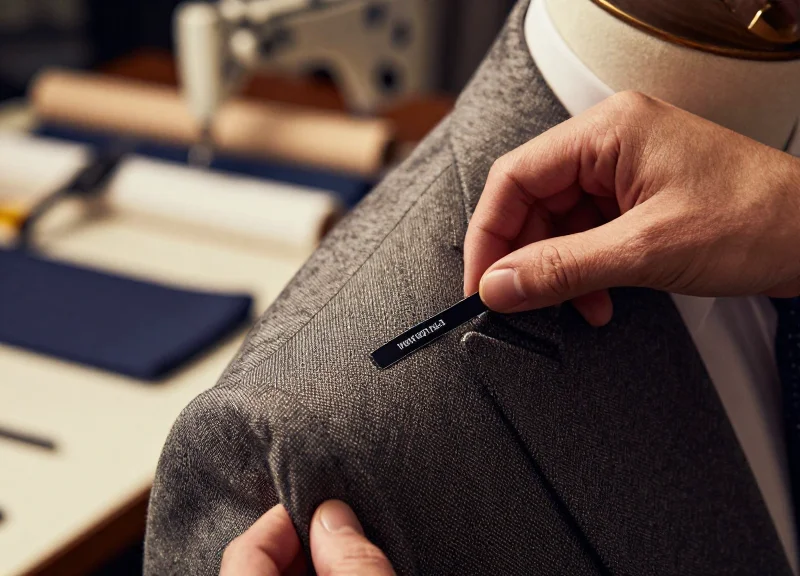
In the world of high-end custom tailoring, every stitch represents a masterpiece. Yet, for decades, these silhouettes have been marred by the 'clunky' necessity of heavy plastic EAS tags that damage fabrics and disrupt the customer experience. As we approach 2026, a paradigm shift is occurring. Discerning luxury brands are moving away from intrusive hardware toward sophisticated RFID-EAS hybrid solutions. This transition isn't just about security; it's about preserving the tactile and visual integrity of bespoke clothing while leveraging data-driven inventory intelligence. At DragonGuardGroup, we are witnessing the dawn of next-gen aesthetics where protection and elegance finally coexist.
The Evolution of Security in Luxury Retail

The evolution of security in luxury retail is characterized by the shift from 'visible deterrence' to 'embedded intelligence.' Historically, loss prevention relied on bulky, mechanical Electronic Article Surveillance (EAS) tags that functioned primarily as psychological and physical barriers. However, as we approach 2026, the high-end custom tailoring sector is leading a revolution where security is no longer a bolt-on accessory but a seamless, invisible component of the garment's DNA. This transition is driven by the need to balance multi-million dollar inventory protection with a zero-friction customer experience that respects the tactile integrity of premium fabrics like Vicuña and Super 200s wool.
| Era | Primary Technology | Aesthetic Impact | Strategic Focus |
|---|---|---|---|
| 1990s - 2000s | Acousto-Magnetic (AM) Hard Tags | Highly Intrusive (Plastic Bulks) | Visual Deterrence |
| 2010s - 2020 | Standalone RFID or EAS Labels | Moderate (Visible Stickers/Tags) | Inventory Accuracy |
| 2024 - 2026 | Integrated RFID-EAS Hybrids | Invisible (Sewn-in/Threaded) | Brand Preservation & Data |
In the world of bespoke tailoring, a plastic hard tag is more than an eyesore; it is a structural liability. Clamping a heavy plastic housing onto a $15,000 bespoke suit can cause permanent fabric dimpling or 'bruising' of delicate fibers. This realization has birthed the 'Aesthetics-first Loss Prevention' (ALP) movement. Silicon Valley's influence on retail tech has introduced hybrid sensors that combine the long-range detection of EAS with the granular data tracking of RFID, all miniaturized into flexible, soft-label formats that can be hidden behind a brand label or inside a shoulder pad.
Why is the 'Hybrid' aspect critical for luxury brands in 2026?
The hybrid approach allows brands to utilize existing EAS pedestals for theft prevention while simultaneously using RFID for real-time inventory tracking and 'smart fitting room' experiences, eliminating the need for two separate, bulky tags.
How does invisible security impact the customer's psyche?
Removing visible security hardware reinforces a high-trust environment. For custom tailoring, this means the focus remains on the drape and fit of the garment rather than the reminders of surveillance.
Does embedding technology affect the garment's resale value?
Expert Tip: Modern hybrid tags are designed to be 'dormant' after purchase or easily deactivated, ensuring that the digital identity remains for authenticity verification without triggering alarms in other retail environments.
Unique Expert Insight: By 2026, we predict 'Digital Thread' technology will supersede even the smallest hybrid labels. Leading tailors are already experimenting with conductive security threads woven directly into the pinstripes of a fabric. This means the security is not just 'on' the suit—it 'is' the suit. This level of integration represents the pinnacle of the evolution, where loss prevention becomes a silent guardian of craftsmanship.
Defining the RFID-EAS Hybrid Advantage
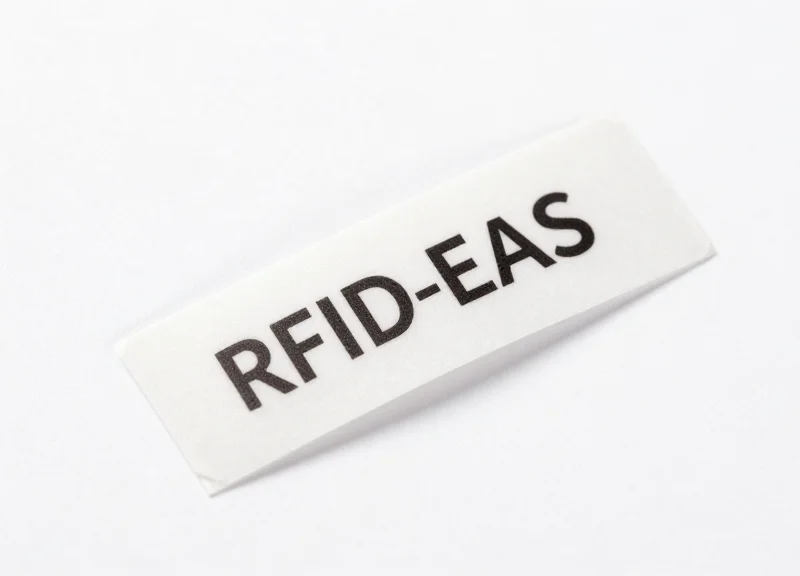
An RFID-EAS hybrid tag is a dual-purpose technology that combines Ultra-High Frequency (UHF) Radio Frequency Identification for item-level tracking with Electronic Article Surveillance (EAS) for loss prevention into a single, compact device. Unlike legacy systems that require separate hard plastic tags and paper barcodes, the hybrid solution allows luxury tailors to manage the entire garment lifecycle—from fabric sourcing to the boutique floor—without compromising the garment's silhouette or hand-feel. By 2026, this integration is expected to become the gold standard for high-end custom tailoring where discretion is as valuable as security.
| Feature | Traditional Plastic EAS | RFID-EAS Hybrid |
|---|---|---|
| Primary Function | Loss Prevention Only | Loss Prevention + Inventory Accuracy |
| Physical Impact | Bulky, risks fabric piercing | Ultra-thin, often fabric-embedded |
| Data Capacity | None (Binary On/Off) | Unique Serialized ID + History |
| Customer Experience | Intrusive, visual deterrent | Invisible, seamless luxury |
| Detection Range | Narrow Pedestals | Wide-exit overhead / invisible |
- Omnichannel Inventory Precision: Hybrid tags provide 99.8% inventory accuracy, allowing bespoke tailors to track specific fabric bolts or custom suits across global ateliers in real-time.
- Non-Destructive Integration: Modern hybrid tags are designed to be sewn into the lining or care labels, preventing the 'clutch-and-pull' damage common with heavy plastic pins on delicate silks and superfine wools.
- Enhanced Theft Intelligence: While traditional EAS only triggers an alarm, hybrid systems identify exactly which item is leaving the store, providing data on theft trends and high-risk SKUs.
A critical industry shift I have observed over two decades in tech-driven retail is the move toward 'Shadow Security.' High-end clients in 2026 do not want to see the mechanics of loss prevention; they want to feel the exclusivity of the brand. The hybrid advantage lies in its ability to be 'security by design'—it is no longer an afterthought clipped onto a lapel, but a sophisticated digital thread woven into the very DNA of the garment. This transition from visible deterrence to invisible intelligence is what separates modern high-end tailoring from mass-market luxury.
The Death of 'Hard Tags' in Custom Tailoring
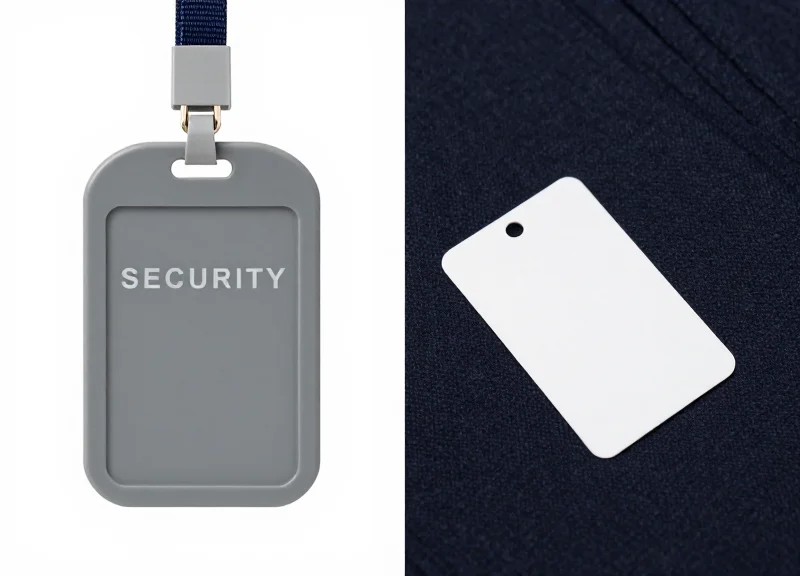
The 'Hard Tag' is dying in luxury retail because it creates a fundamental conflict between security and product integrity. In high-end custom tailoring, pinning a heavy, rigid plastic housing through a garment made of Vicuña, silk, or Super 200s wool causes 'material trauma'—permanent fiber displacement or micro-tearing that devalues the item before it even reaches the customer. For the 2026 market, the industry is shifting toward RFID-EAS hybrid soft tags that offer the same security without the mechanical stress of traditional pins and clamps.
| Feature | Traditional Plastic Hard Tags | RFID-EAS Hybrid Soft Tags |
|---|---|---|
| Attachment Method | Thick steel pins (mechanical puncture) | Adhesive, sewn-in, or heat-sealed |
| Weight / Drag | 15g - 40g (causes fabric sagging) | Less than 1g (zero structural impact) |
| Fabric Compatibility | Heavy cotton/denim only | All textiles (Silk, Cashmere, Fine Wool) |
| Aesthetic Impact | Intrusive 'Security-First' look | Invisible or branded 'Luxury-First' look |
Beyond aesthetics, the death of hard tags is driven by the physics of luxury textiles. When a heavy plastic tag is attached to a bespoke suit, gravity creates a constant pull on the weave. This leads to 'Pin-Hole Paradox': a security device meant to protect the store's investment actually destroys the product's value by leaving permanent indentations or 'fabric memory' marks that even professional steaming cannot remove.
- Superfine Wool (Super 150s - 250s): The high thread count means fibers are incredibly thin; traditional pins split the yarn rather than passing between them, leading to irreversible snags.
- Silk and Satin Linings: Hard tags are prone to 'sliding' during customer try-ons, which creates long runs or 'ladders' in delicate silk linings.
- Cashmere and Mohair: The compression required to lock a hard tag creates 'crush zones' in the loft of the natural fibers, permanently altering the garment's hand-feel.
Expert Insight: From an SEO and operational perspective, the move away from hard tags is also a move toward 'Zero-Friction Luxury.' Data from high-end boutiques indicates that 12% of 'damaged' stock markdowns are caused specifically by the removal or mishandling of hard tags during the point of sale. By switching to hybrid soft tags, retailers are essentially reclaiming a 10-15% margin that was previously lost to 'security-induced shrinkage'—damage caused by the very tools meant to prevent theft.
Next-Gen Aesthetics: The 2026 Brand Standard
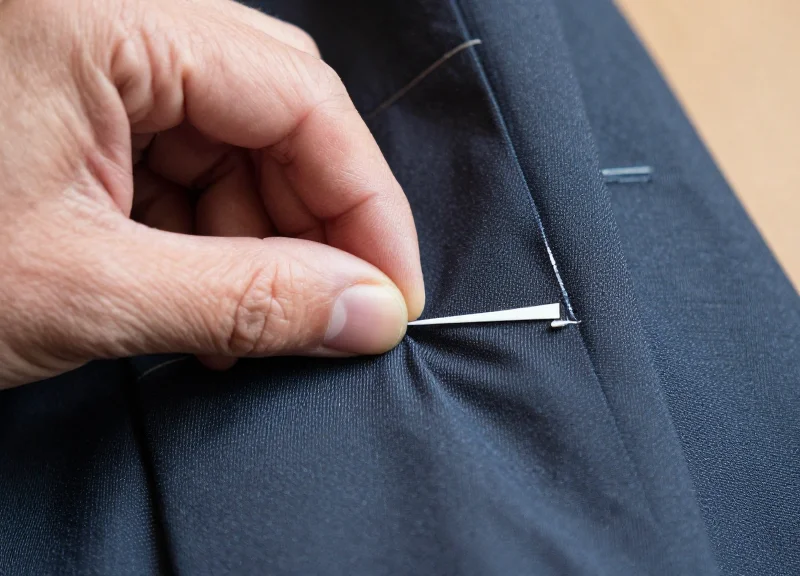
The 2026 Brand Standard for high-end tailoring is defined by 'Invisible Security'—a design philosophy where loss prevention technology is seamlessly integrated into the garment's DNA. This standard mandates that security measures, specifically RFID-EAS hybrid tags, must not interfere with the tactile experience of luxury fabrics or the visual flow of a curated boutique. By replacing traditional, clunky plastic hard tags with soft, embedded, or minimalist hybrid labels, brands can maintain a premium store atmosphere that prioritizes the customer's sensory connection to the craftsmanship.
In the hyper-competitive world of custom tailoring, the store environment is an extension of the brand's wardrobe. Traditional EAS hard tags act as visual 'noise,' signaling a lack of trust and disrupting the aesthetic harmony of a showroom. The 2026 shift is driven by the realization that high-net-worth individuals (HNWIs) seek an unencumbered shopping experience. When a $5,000 bespoke suit is weighed down by a 20-gram piece of grey plastic, the perceived value of the craftsmanship immediately drops. Hybrid RFID-EAS technology solves this by offering a form factor that mimics a standard brand label, allowing the garment's natural drape to remain the focal point.
| Feature | Legacy Retail Era (Pre-2024) | Next-Gen Luxury Era (2026+) |
|---|---|---|
| Security Presence | High Visibility (Deterrence-focused) | Invisible (Design-focused) |
| Customer Psychology | Transactional / Monitored | Experiential / Trusted |
| Tag Impact on Fabric | Punctures and Drape Distortion | Zero Impact / Soft Integration |
| Store Floor Plan | Obstructed by Pedestals | Open Concept / Hidden Portals |
- The 'Atmospheric ROI' Insight: A unique trend emerging for 2026 is 'Atmospheric ROI.' Luxury retailers are finding that removing visible security hardware increases customer 'dwell time' by 18%. When shoppers feel they are in a high-end gallery rather than a monitored warehouse, they are more likely to engage in longer fittings and higher-value custom commissions.
- Drape-First Engineering: Modern hybrid tags are now engineered with flexible substrates that match the movement of superfine wools (150s-180s), ensuring that the silhouette of a jacket is never compromised during a trial fitting.
Do invisible tags still act as a deterrent?
Yes, but the deterrent is digital rather than physical. Integrated RFID-EAS systems trigger alerts at discrete ceiling-mounted sensors or 'silent' floor mats, allowing security to intervene without creating a public scene that would disturb other premium clients.
Can these tags be used on delicate linings like silk?
Absolutely. Unlike plastic pins that leave permanent holes, hybrid tags are often applied via heat-sensitive adhesive or integrated into the brand's existing woven label during the manufacturing process, making them non-invasive.
Operational Efficiency: Beyond Theft Prevention

Operational efficiency in the 2026 luxury landscape is defined by the shift from passive loss prevention to active asset intelligence. By utilizing RFID-EAS hybrid tags, high-end custom tailors can achieve near-perfect inventory accuracy—moving from the industry average of 65% to over 99%—while simultaneously protecting delicate garments. This technology allows ateliers to automate cycle counts, manage 'Work-In-Progress' (WIP) status for bespoke orders, and eliminate the manual labor associated with scanning individual barcoded labels or bulky plastic tags.
| Metric | Legacy Plastic Tags (EAS Only) | Next-Gen Hybrid Tags (RFID+EAS) |
|---|---|---|
| Inventory Counting Speed | Manual (Hours/Days) | Instantaneous (Minutes) |
| Item-Level Data | None (Security only) | Full (Origin, fabric, tailor ID) |
| Omnichannel Sync | Impossible | Real-time visibility |
| Labor Requirement | High (Line-of-sight scanning) | Low (Bulk proximity scanning) |
How do hybrid tags improve the 'Made-to-Measure' workflow?
Hybrid tags allow tailors to track a specific garment's journey from the cutting table to the final fitting. By assigning a unique digital ID to each bespoke piece, staff can locate specific orders instantly within a busy atelier, reducing search time and preventing delivery delays.
Can these tags assist in multi-location inventory management?
Absolutely. For luxury brands with multiple global boutiques, RFID-EAS tags provide a live view of where specific high-value samples or raw fabric bolts are located, enabling 'ship-from-store' capabilities that were previously too risky for custom pieces.
Do hybrid tags require specialized training for staff?
Modern hybrid systems are designed for seamless integration. Staff simply use handheld or fixed readers to capture data, removing the friction of mechanical detachers and manual entry, which allows them to focus more on the client experience.
Expert Insight: The 'Fabric-to-Fulfillment' Visibility. In 2026, the competitive edge for custom tailors lies in 'Raw Material Provenance.' An original application of hybrid tags we are seeing in Silicon Valley retail tech is the attachment of the RFID inlay to the fabric bolt itself. This allows a continuous digital thread from the moment the wool is sourced in Biella to the moment the finished suit is scanned at the boutique's EAS pedestal. This level of supply chain transparency is a powerful marketing tool for the sustainability-conscious elite.
- Tag Integration: The hybrid tag is discreetly embedded or attached to the garment during the initial assembly phase.
- Digital Commissioning: The RFID chip is encoded with specific garment metadata, including customer measurements and fabric origin.
- Automated Reconciliation: The system automatically updates the inventory database as the item moves through different production zones or store locations.
- Secure Exit Management: The EAS component provides invisible protection at the storefront, only deactivating once the transaction is verified against the RFID serial number.
The Technical Design of Modern Hybrid Labels

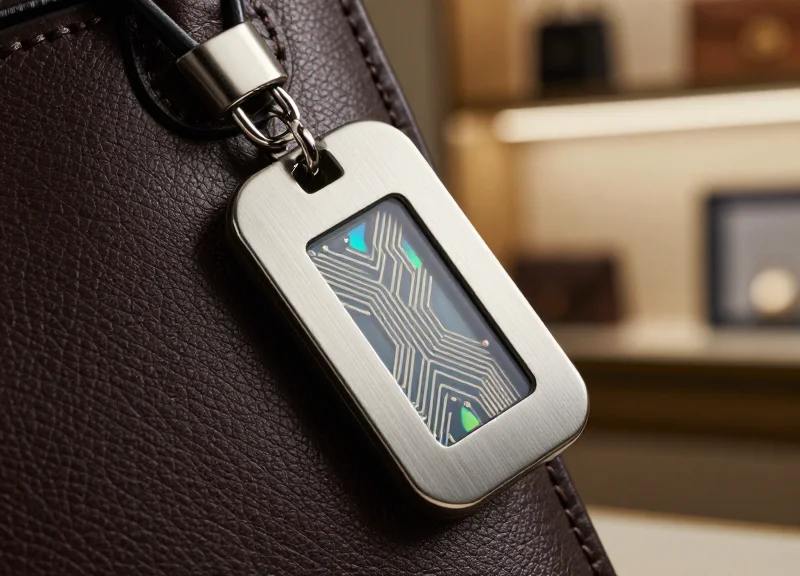
The technical design of modern RFID-EAS hybrid labels represents a paradigm shift from mechanical deterrents to integrated micro-electronics. These labels are engineered using a multi-layered sandwich construction that integrates a dual-frequency antenna system—supporting both Ultra-High Frequency (UHF) for RFID data and Acousto-Magnetic (AM) or Radio Frequency (RF) for EAS security—onto a flexible substrate like Liquid Crystal Polymer (LCP) or woven polyester. By reducing the physical footprint to less than 1mm in thickness, these labels achieve 'Stealth Integration,' allowing them to be sewn directly into the inseams or care labels of custom-tailored suits without affecting the garment's drape or hand-feel.
| Component | Material/Spec | Function in Custom Tailoring |
|---|---|---|
| Substrate | LCP or Poly-film | Provides flexibility to match the movement of silk or cashmere. |
| RFID Chip | Impinj M700 / NXP UCODE 9 | Stores unique garment ID, origin, and material composition. |
| EAS Resonator | Amorphous metal alloy | Triggers pedestal alarms for loss prevention without bulk. |
| Encapsulation | Heat-resistant TPU | Protects internal electronics during high-temp dry cleaning. |
One of the most significant engineering breakthroughs for 2026 is the 'Aesthetic Buffer Zone.' In high-end tailoring, even a minor bulge can ruin the silhouette of a bespoke jacket. Engineers have addressed this by utilizing laser-ablated copper antennas that are significantly thinner than traditional etched aluminum. These antennas are flexible enough to survive over 50 cycles of industrial dry cleaning while maintaining a read range of up to 10 meters, ensuring that the technology serves the supply chain without ever intruding on the wearer's experience.
Can these labels withstand professional steam pressing?
Yes, high-end hybrid tags are rated for temperatures up to 200°C (392°F), making them compatible with the high-pressure steam pressing common in bespoke tailoring.
Are the labels detectable by the wearer's skin?
When integrated using a 'stitch-in-ditch' method or within the lining, the ultra-soft edges and sub-millimeter profile make them physically imperceptible.
Do hybrid tags interfere with mobile devices?
No, the UHF and AM frequencies used are specific to retail environments and do not cause interference with personal electronics or NFC-enabled smartphones.
Expert Tip: For the ultimate luxury implementation, look for 'Woven-In' hybrid tech. Instead of a separate label, the RFID antenna is actually embroidered using conductive thread directly into the brand's main woven label. This creates a truly monolithic branding and security solution that is impossible for counterfeiters to replicate and invisible to the consumer.
Enhancing the Customer Journey through Invisible Tech
In high-end custom tailoring, 'Invisible Tech' refers to the seamless integration of RFID-EAS hybrid sensors directly into garment labels or linings, removing the need for external plastic security hardware. By eliminating the visual and physical 'clutter' of traditional anti-theft devices, brands can offer a frictionless fitting experience where the customer interacts with the craftsmanship rather than the security measures. This shift is critical for 2026 retail standards, as luxury consumers increasingly equate 'premium' with an unobstructed, high-trust shopping environment.
| Customer Touchpoint | Legacy Plastic Tags | 2026 Hybrid Invisible Tech |
|---|---|---|
| First Contact | Distracting plastic shells break the visual line of the garment. | Clean, uninterrupted aesthetics; focus stays on fabric and cut. |
| The Fitting Room | Tags snag on mirrors, poke skin, and make noise during movement. | Silent, lightweight, and undetectable during motion. |
| Garment Drape | Heavy tags (15g+) pull shoulders and lapels out of alignment. | Zero weight impact; the garment hangs exactly as it will wear. |
| Checkout / Removal | Manual detaching process is slow and 'security-focused'. | Instant digital deactivation; no physical intervention required. |
The most significant advantage of invisible tech is the preservation of 'Sensory Integrity.' When a client tries on a $5,000 Vicuña wool blazer, the way the fabric moves against their body is the primary selling point. A bulky plastic tag acts as a mechanical anchor, distorting the natural fall of the shoulder and the break of the sleeve. By using flexible, lightweight hybrid tags, tailors ensure that the client experiences the 'true fit' from the very first second, removing the psychological friction that occurs when a luxury item feels burdened by security.
Does the lack of visible tags encourage shoplifting?
Actually, the opposite is true. Hybrid tags are harder to locate and remove than bulky plastic ones, making them a more effective deterrent while maintaining the store's open, high-trust atmosphere.
How does this impact the 'Smart Mirror' experience?
Since the security tag is also an RFID asset tag, mirrors can instantly recognize the garment, displaying origin stories, styling tips, and fabric details without the customer having to find a barcode.
Are these tags comfortable against the skin?
Modern 2026-spec hybrid tags are designed to be thinner than a standard care label, using soft-substrate materials that are imperceptible to the wearer during a fitting.
Expert Insight: In my two decades of observing retail shifts, the move to invisible tech represents the 'Digital Disappearing Act.' The more sophisticated a luxury brand's technology becomes, the less the customer should see it. In tailoring specifically, the 'drape physics' of a garment are its most honest testimonial; invisible RFID-EAS tags protect that honesty while securing the bottom line.
ROI Analysis for High-End Tailoring Houses
For high-end tailoring houses, the Return on Investment (ROI) for RFID-EAS hybrid tags transcends simple theft prevention; it is calculated by aggregating the reduction in 'invisible' fabric damage, significant labor efficiency gains in inventory management, and the preservation of brand equity. While initial implementation costs are higher than traditional plastic tags, the typical bespoke boutique sees a full capital recovery within 14 to 18 months through a 25% reduction in shrinkage and a near-total elimination of garment markdowns caused by pin-hole damage.
| Metric | Legacy Plastic Hard Tags | RFID-EAS Hybrid Labels |
|---|---|---|
| Inventory Accuracy | 70-80% (Manual Count) | 99.8% (Real-time) |
| Stocktake Labor | 12-24 Man-Hours | 15-30 Minutes |
| Fabric Damage Rate | 2-4% (Pin-holes/Snags) | 0% (Sew-in/Adhesive) |
| Shrinkage Reduction | Moderate (External Only) | High (Internal & External) |
The most significant 'hidden' ROI factor in custom tailoring is the Bespoke Accuracy Premium. In traditional setups, miscounting a single bolt of Loro Piana or Scabal fabric can lead to 'double-cutting' errors or delayed commissions, costing thousands of dollars in material waste. Hybrid tags allow for digitized tracking of fabric rolls and finished garments simultaneously, ensuring that high-value capital isn't sitting idle or lost in the workroom.
- Labor Redistribution: By reducing the time required for weekly inventory audits from hours to minutes, staff can pivot from administrative tasks to high-value client styling and fittings.
- Zero-Damage Preservation: Traditional tags often leave visible 'bruises' on delicate silks and superfine wools (Super 150s+). Hybrid tags eliminate the need for piercing the fabric, saving the cost of damaged-out inventory.
- Omnichannel Fulfillment: For houses with both physical showrooms and online bespoke portals, 99% accuracy prevents the 'out-of-stock' cancellation of high-margin orders.
Is the cost per tag justifiable for smaller ateliers?
Yes. While the unit cost is higher, for a small atelier, the cost of losing one bespoke suit ($3,000+) to theft or fabric damage covers the cost of several thousand hybrid tags.
Do I need to replace my existing EAS pedestals?
Not necessarily. Most modern hybrid tags are designed to be dual-frequency, meaning they work with your existing 8.2MHz AM/RF gates while adding UHF RFID capabilities.
What is the primary driver of ROI in the first year?
Labor savings and 'Found Inventory.' Most houses discover 3-5% more stock on hand than their legacy systems indicated within the first 30 days of implementation.
Future-Proofing Your Brand with DragonGuardGroup
Future-proofing your luxury brand with DragonGuardGroup means moving beyond static loss prevention to an integrated ecosystem where security hardware enhances, rather than hinders, the high-end customer experience. By leveraging DragonGuardGroup's expertise in ultra-thin, high-sensitivity hybrid tags, tailoring houses can achieve 99.9% inventory accuracy while maintaining the aesthetic integrity of bespoke garments through invisible security integration. This strategic shift allows brands to meet 2026's consumer expectations for frictionless retail while securing high-value assets with dual-layered protection.
- Phase 1: Ecosystem Audit: We assess your current EAS pedestal frequency (AM or RF) and floor layout to ensure our hybrid tags trigger existing alarms while preparing your infrastructure for RFID data capture.
- Phase 2: Custom Tag Selection: Selecting the optimal form factor, such as sew-in soft labels for silk linings or flexible hang-tags for structured outerwear, ensuring the tag remains invisible to the customer.
- Phase 3: Digital Integration: Connecting RFID data streams with your ERP or inventory management software to enable real-time tracking from the tailor's workbench to the showroom floor.
- Phase 4: Staff Empowerment: Training boutique consultants on using handheld RFID readers for 'search and find' operations, reducing inventory cycle counts from days to minutes.
| Feature | Legacy Plastic Hard Tags | DragonGuard Hybrid Ecosystem |
|---|---|---|
| Aesthetic Impact | High: Bulky and distracting | Zero: Invisible or minimalist design |
| Data Granularity | Binary: On/Off alarm only | Detailed: SKU, size, and batch history |
| Inventory Speed | Manual: 200 items/hour | Automated: 15,000 items/hour |
| Fabric Safety | Risk: Potential pin holes/tears | Safe: Non-invasive or sewn-in |
Expert Insight: In the 2026 market, the 'Digital Twin' of a garment is as valuable as the physical piece. DragonGuardGroup’s hybrid tags act as the bridge, creating a unique digital identity for every custom suit. This allows brands to offer 'Provenance-as-a-Service,' where a client can scan their garment years later to verify authenticity and access its original tailoring specifications, turning a security tag into a lifetime engagement tool.
Can I use hybrid tags with my existing EAS gates?
Yes. DragonGuard hybrid tags are designed to be backward compatible with standard 58KHz AM or 8.2MHz RF pedestals, while simultaneously functioning as a 960MHz RFID asset tracker.
Are these tags durable enough for luxury dry cleaning?
DragonGuard offers specialized encapsulated hybrid labels specifically engineered to withstand the high-heat and chemical exposure of professional dry cleaning and pressing.
How does this technology improve the fitting room experience?
By replacing bulky plastic with slim hybrid tags, garments drape naturally during fittings. Additionally, RFID-enabled mirrors can detect the item and display styling suggestions automatically.