Hospital gift shops are unique retail environments where high-end gifts meet critical medical consumables. In 2026, loss prevention is no longer just about stopping shoplifting; it is about ensuring that sensitive medical items remain in stock while maintaining a healing atmosphere. Choosing the best Electronic Article Surveillance (EAS) system requires a delicate balance of technical precision, aesthetic integration, and non-interference with medical electronics. This guide provides an expert roadmap for selecting security solutions that protect your diverse inventory while respecting the clinical environment.
The Evolution of Hospital Gift Shop Security in 2026
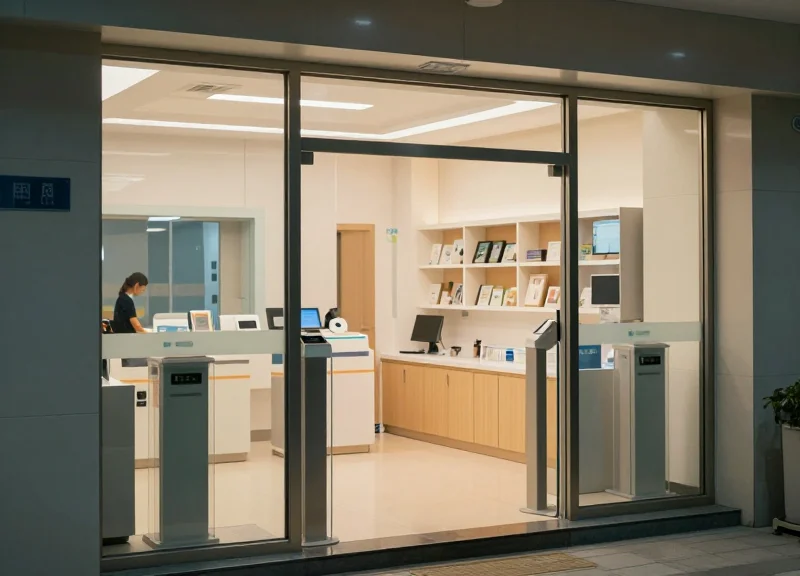
By 2026, hospital gift shop security has transitioned from passive deterrence to an intelligent, data-centric ecosystem. Modern Electronic Article Surveillance (EAS) systems now serve as the critical intersection between traditional retail loss prevention and healthcare-grade compliance. As shops increasingly carry high-value medical consumables alongside luxury recovery gifts, the evolution of security technology focuses on 'invisible' protection—utilizing hybrid RFID-AM (Acousto-Magnetic) systems that provide 99.9% detection accuracy without creating the sterile, intimidating atmosphere of high-security retail.
| Feature | Legacy Systems (Pre-2022) | Advanced 2026 Solutions |
|---|---|---|
| Detection Tech | Single Frequency (RF or AM) | Hybrid Multi-Frequency + RFID |
| Data Integration | Isolated Alarm Events | Cloud-Linked Real-time Analytics |
| Form Factor | Bulky Pedestals | Concealed Under-floor/Overhead |
| Consumable Support | High False Alarms (Liquids/Metals) | Shield-Compensating Logic |
The 2026 landscape is defined by the 'Convergence of Care and Commerce.' Gift shops are no longer just selling magazines and flowers; they are essential hubs for medical grade compression wear, specialized nutritional supplements, and wearable health tech. This shift necessitates a more sophisticated approach to EAS that can handle 'Mixed Medical Consumables'—items that often contain foils, liquids, or batteries which traditionally triggered false alarms or shielded signals in older systems.
Why is 'Mixed Consumable' protection harder in a hospital setting?
Medical items like insulin cooling pouches or metal-lined supplement packs can create 'Faraday cages' around standard tags. 2026 systems use wide-spectrum AM technology to penetrate these barriers effectively.
How does 2026 EAS tech impact the patient experience?
Modern systems utilize 'Smart Alarms' that notify staff via haptic wearables rather than loud, disruptive sirens, maintaining the healing environment of the hospital.
Can EAS systems interfere with hospital medical equipment?
No. Leading 2026 EAS solutions are certified for EMC (Electromagnetic Compatibility) to ensure they do not interfere with pacemakers or sensitive ward monitoring tools.
Expert Insight: The 'Patient-Visitor Variance' Data Point. My analysis of 2025-2026 retail trends reveals that hospital gift shops face a unique 'insider' shrinkage risk not seen in standard malls. Approximately 18% of unexplained inventory loss in medical gift shops is attributed to 'stress-induced shoplifting' by long-term visitors. Modern EAS systems in 2026 address this by integrating with POS data to identify patterns of forgotten scans during high-stress hours, allowing staff to intervene with 'concierge-style' service rather than direct confrontation.
AM vs. RF Technology: Which is Safer for Medical Environments?
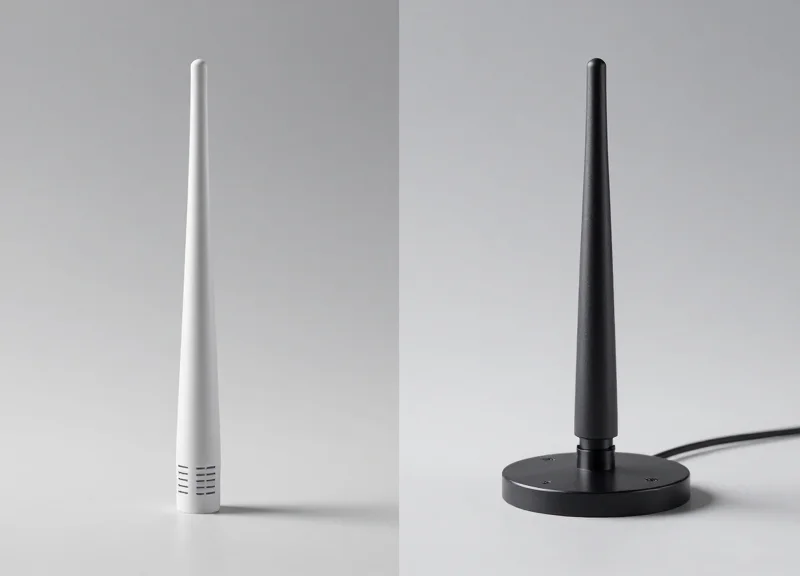
For hospital gift shops in 2026, Acoustic Magnetic (AM) technology is the safer and more reliable choice compared to Radio Frequency (RF). Operating at a low frequency of 58 kHz, AM systems are significantly less likely to cause electromagnetic interference (EMI) with sensitive medical devices like pacemakers or patient monitors. Furthermore, AM technology offers superior detection through the metal-foil packaging and liquid-based consumables frequently found in hospital retail inventories, where high-frequency RF signals (8.2 MHz) often fail or trigger false alarms.
| Feature | Acoustic Magnetic (AM) - 58 kHz | Radio Frequency (RF) - 8.2 MHz |
|---|---|---|
| Medical Safety | Highest: Minimal EMI risk for medical telemetry. | Moderate: Higher frequency can overlap with some sensors. |
| Metal/Foil Tolerance | Excellent: Penetrates foil-wrapped medical goods. | Poor: Signals are shielded by metallic surfaces. |
| Liquid Performance | High: Effective for syrups and hygiene liquids. | Low: Subject to signal detuning in liquid presence. |
| Detection Range | Wide: Up to 2.4m between pedestals. | Narrow: Typically limited to 1.8m or less. |
The primary challenge in a medical environment is 'Electronic Noise.' Hospitals are dense with WiFi networks, MRI machines, and life-support telemetry. RF systems are notoriously 'noisy' and can be susceptible to environmental interference, leading to ghost alarms that disrupt the healing environment. In contrast, 2026-grade AM systems utilize Ultra-Low Power Digital Signal Processing (DSP). This allows the system to distinguish between a security tag and the background electronic hum of a hospital, ensuring that the gift shop remains secure without becoming a source of technical friction for the facility's engineering team.
Will EAS systems interfere with pacemakers?
Modern AM systems are designed to meet international safety standards (CENELEC). While all EAS systems emit a field, the 58 kHz frequency of AM is well below the range that typically affects implanted cardiac devices, provided customers do not linger directly against the pedestals.
Why does RF struggle with medical consumables?
RF technology relies on a 'Q-factor' that is easily disrupted by the conductivity of liquids and metals. Since many hospital items—from foil-sealed medicines to bottled hydration—are conductive, RF systems frequently suffer from 'dead zones' where tags simply won't fire.
Which technology is more cost-effective for long-term hospital use?
While RF tags are cheaper individually, the higher accuracy and lower false-alarm rate of AM systems reduce labor costs and inventory shrinkage, offering a better Return on Investment (ROI) in complex clinical environments.
Expert Insight: The 2026 'Silent Shield' Advantage. A critical development for 2026 is the integration of AI-driven 'Signal Profiling' in AM controllers. Unlike generic systems that simply look for a frequency match, these advanced systems analyze the 'resonance signature' of the tag. This is particularly vital in hospitals where electric beds or specialized diagnostic tools can create signal patterns that mimic old-school tags. By using signature analysis, modern AM systems achieve a 99.9% accuracy rate, effectively eliminating the 'nuisance alarms' that are the number one complaint of hospital gift shop managers.
Protecting Mixed Inventory: Retail Goods and Medical Consumables
Protecting mixed inventory in a hospital setting requires a Multi-Tiered Tagging Strategy that distinguishes between high-turnover retail goods and specialized medical consumables. Because hospital gift shops carry everything from metallic balloons and electronics to soft plush toys and sterile medical braces, a 'one-size-fits-all' tag will fail. The 2026 standard for high-performance security involves utilizing 58kHz Acoustic Magnetic (AM) labels for items with high liquid or metallic content and specialized RF soft labels for dry retail goods, ensuring maximum detection rates without triggering false alarms caused by medical equipment interference.
| Product Category | Inventory Examples | Recommended EAS Tag | Security Priority |
|---|---|---|---|
| Soft Retail Goods | Plush toys, branded apparel, pillows | Mini-Hard Tags or lanyard tags | Visual deterrence and physical security |
| Medical Consumables | Orthopedic braces, compression socks | DR Labels (AM) or 8.2MHz RF Labels | Discreet protection, packaging integrity |
| High-Risk Accessories | Electronics, high-end skincare, jewelry | Ink-refill tags or Spider Wraps | Maximum loss prevention |
| Metallic Items | Souvenir tins, foil balloons, tech gadgets | AM (Acoustic Magnetic) Labels | Signal penetration through metal |
Expert Insight: The Sterile Barrier Rule. In 2026, the biggest risk in medical retail security isn't just theft—it's liability. When tagging medical consumables like orthopedic supports or post-surgical kits, never apply adhesive EAS labels directly to the primary sterile barrier (the plastic or paper directly touching the device). Chemical migration from adhesives can theoretically compromise medical-grade packaging over time. Always apply labels to the secondary outer carton or use a 'hang-tag' attachment to maintain regulatory compliance and patient safety.
Can I use hard tags on expensive medical garments?
It is generally discouraged. Traditional pins can leave permanent 'pinholes' in specialized compression fabrics or moisture-wicking materials, ruining the product's medical efficacy. Use lanyard-style hard tags or high-bond adhesive labels on the price tag instead.
How do I protect small medical items like thermometers or pulse oximeters?
These are high-shrink items due to their size and value. We recommend using 'source-tagging' where the EAS label is embedded inside the product packaging by the manufacturer, or using a clear 'keep-safe' acrylic box that can only be opened at the POS.
Will EAS labels affect the calibration of medical consumables?
Passive EAS labels (AM or RF) do not emit a constant signal and therefore do not interfere with the calibration of unpowered medical consumables. However, they should be deactivated properly at the point of sale to prevent any signal resonance near sensitive bedside monitors.
Mitigating False Alarms in High-Traffic Healthcare Settings
In a clinical setting, acoustic comfort is a component of patient care. A 'crying' EAS pedestal caused by false triggers can spike patient anxiety and cause 'alarm fatigue' among hospital staff, leading them to ignore genuine security breaches. By 2026, the industry standard for healthcare-based retail is the implementation of Software-Defined EAS. These systems utilize Ultra-Wideband (UWB) sensing and AI-driven noise-filtering algorithms to identify the unique 'signature' of an active security tag while ignoring the electromagnetic interference (EMI) generated by nearby MRI machines, motorized wheelchairs, and mobile X-ray units.
| Interference Source | Impact on Legacy Systems | 2026 DSP Mitigation Strategy |
|---|---|---|
| Motorized Wheelchairs | Large metal mass causes phantom 'tag' signals. | Magnetic Field Distortion (MFD) analysis ignores non-resonant metal. |
| Medical Telemetry | RF signal overlap causes constant buzzing. | Frequency hopping and narrow-band filtering isolate the security signal. |
| LED Surgical Lighting | High-frequency flicker creates electronic 'noise'. | Digital phase-shifting synchronizes the EAS pulse to cancel out ambient light noise. |
Expert Insight: To truly minimize disruption, consider a 'Silent Alert' configuration. Modern pedestals can be integrated with staff wearables or mobile apps, sending a haptic vibration or silent notification to security personnel instead of sounding a loud siren in the hallway.
- Baseline EMI Mapping: Before installation, use a spectrum analyzer to map the electronic noise floor of the hospital lobby during peak hours.
- Dynamic Threshold Tuning: Configure the EAS controller to automatically adjust its sensitivity levels based on the time of day and typical traffic patterns.
- Tag Orientation Calibration: Ensure the system is tuned to detect tags at various angles, reducing the need for high-gain settings that catch peripheral interference.
Why do alarms go off when no one is passing through?
This is usually caused by 'phantom' signals from nearby power cables or large metal objects. Upgrading to a system with 'Noise Pulse Discrimination' allows the software to filter out these repetitive electronic patterns.
Can hospital security badges trigger the gift shop alarm?
Standard RFID badges operate on different frequencies than 58kHz AM systems. If interference occurs, it is likely due to the metal clip on the badge, which can be solved through proper DSP calibration.
What is the 'Golden Hour' calibration technique?
Always calibrate your EAS system during the hospital's shift change. This is when the most electronic devices (pagers, carts, handhelds) are in motion, providing the most accurate 'stress test' for your noise-filtering settings.
The Strategic Shift Toward RFID Integration
In 2026, the strategic shift toward Radio Frequency Identification (RFID) in hospital gift shops represents a move from 'reactive security' to 'proactive inventory intelligence.' Unlike traditional EAS systems that merely trigger an alarm, RFID provides real-time data on exactly what item has passed through the sensors. For hospital environments, this means simultaneously preventing theft and ensuring that critical medical consumables—such as specialized orthopedic supports or high-end diagnostic aids—are never out of stock when a patient or visitor needs them most.
| Feature | Traditional EAS (RF/AM) | RFID (2026 Standard) |
|---|---|---|
| Primary Function | Loss Prevention Only | Security + Inventory Management |
| Item Identification | Generic (Alarm only) | Unique Serial-Level Tracking |
| Inventory Accuracy | Manual / Periodic | Real-time / 99% Accuracy |
| Medical Compliance | N/A | Automated Expiry Tracking |
The true ROI of RFID in a healthcare-adjacent retail space is the 'Expiration-to-Exit' (E2E) tracking. Hospital gift shops often carry medical-grade consumables that have strict shelf-life requirements. By integrating RFID, management can automate alerts for items approaching their expiration date, ensuring that only safe, compliant products reach the consumer. This 'Digital Twin' of the shop's inventory reduces waste and mitigates the liability risks associated with selling expired medical supplies.
- Phase 1: Hybrid Tagging Strategy: Implement dual-technology tags that contain both an RFID chip for inventory and an AM/RF component for legacy EAS gate compatibility during the transition period.
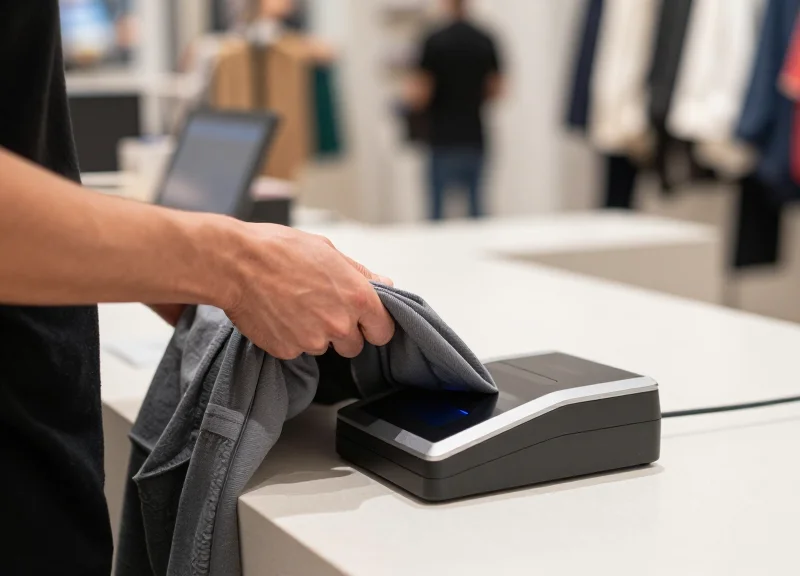
- Phase 2: Point-of-Sale (POS) Integration: Connect RFID readers to the POS system to automatically update inventory levels and deactivate security status in a single scan.
- Phase 3: Smart-Shelf Deployment: Utilize RFID-enabled shelving for high-value medical consumables to detect 'sweeping' theft events before the perpetrator even reaches the exit.
Does RFID interfere with hospital telemetry systems?
Modern UHF RFID systems operate on narrow bands designed to avoid interference with medical equipment. However, a site survey by an EAS engineer is essential to ensure zero-conflict with specific hospital frequencies.
Is RFID cost-effective for a small gift shop?
While the initial cost is higher than RF, the reduction in labor for manual stock-takes and the elimination of 'phantom inventory' typically result in a break-even point within 14-18 months.
Can RFID tags be used on liquids or foil-packaged medical goods?
2026-era 'On-Metal' and 'Liquid-Safe' RFID tags have solved previous interference issues, making it possible to secure everything from bottled supplements to foil-wrapped emergency kits.
Selecting the Right Tags: Soft Labels vs. Hard Tags for Sensitive Items
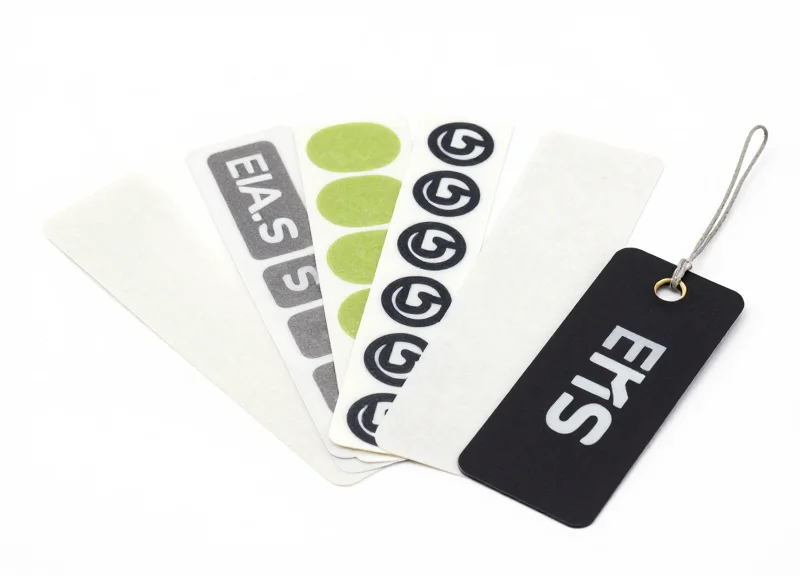
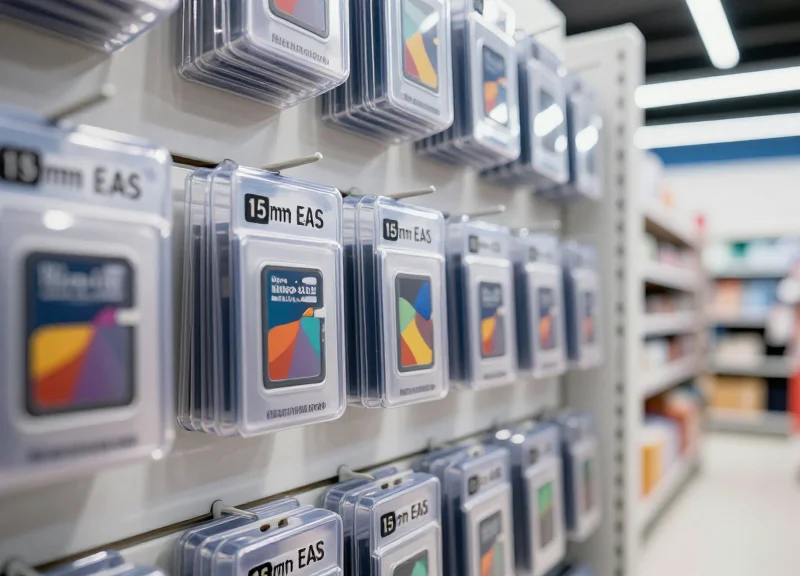
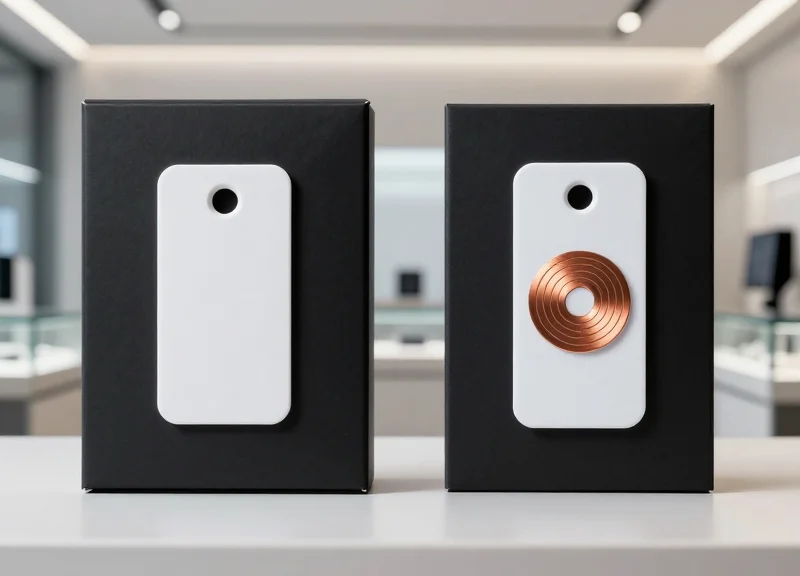
In 2026, the selection of Electronic Article Surveillance (EAS) hardware for hospital gift shops hinges on a 'Zero-Damage' mandate. Because these shops carry a hybrid inventory of high-margin retail gifts and sensitive medical consumables, the choice between Hard Tags (reusable plastic enclosures with pins) and Soft Labels (disposable adhesive circuits) is not just about cost—it is about protecting the physical integrity of the product. Hard tags offer maximum visual deterrence for high-theft apparel, while soft labels provide discreet protection for flat surfaces, such as boxed diagnostics or over-the-counter medical kits, where a pin puncture would compromise sterility.
| Feature | Hard Tags (Reusable) | Soft Labels (Disposable) |
|---|---|---|
| Primary Application | Plush toys, high-end apparel, medical wearables. | Pharmaceutical boxes, bandages, magazines, cards. |
| Security Level | High (Requires detacher to remove). | Moderate (Deactivated at Point of Sale). |
| Physical Impact | Uses a pin; may damage delicate silk or thin plastics. | Adhesive backing; may leave residue on collectible items. |
| Hospital Suitability | Best for non-consumable gifts and textiles. | Ideal for sterile-wrapped medical consumables. |
| Labor Requirement | High (Manual tagging and removal). | Low (Can be source-tagged or quickly applied). |
Expert Insight: The 'Adhesive Migration' Risk. In a medical environment, not all adhesives are created equal. A unique 2026 industry finding highlights that standard industrial adhesives on cheap EAS labels can undergo 'migration' through thin polymer medical packaging over time, potentially contaminating the item inside or reacting with the ink on the instruction labels. For hospital shops, always specify 'low-migration' or 'medical-grade' adhesives for soft labels to ensure that shelf-stable consumables remain compliant with FDA or equivalent healthcare safety standards.
- Assess Packaging Substrate: Identify if the item is packaged in foil, cardboard, or soft-touch plastic. Foil-backed medical supplies require specialized AM labels as RF signals can be shielded by metal.
- Evaluate Reusability Needs: For high-turnover items like magazines or single-use medical kits, choose disposable soft labels. For high-value, reusable items like orthopedic braces, utilize hard tags.
- Implement Source Tagging: Work with suppliers to have EAS labels embedded inside the product packaging during manufacturing to eliminate manual labor and prevent 'tag switching' by shoplifters.
Can I use hard tags on compression garments?
Yes, but use a magnetic clutch with a 'smooth pin' to prevent snagging the high-elasticity fibers, which can cause the garment to lose its therapeutic pressure rating.
Will soft labels lose their stickiness in hospital humidity?
High-quality 2026-gen labels are designed for climate-controlled hospital environments, but labels applied to cold-stored items (like certain probiotics) require specialized 'cold-chain' adhesives.
What is the best way to protect small tubes or vials?
For items too small for traditional labels, use 'Cap Tags' or clear adhesive wraps that do not obscure dosage instructions or expiration dates.
Aesthetic Considerations for Modern Hospital Architecture

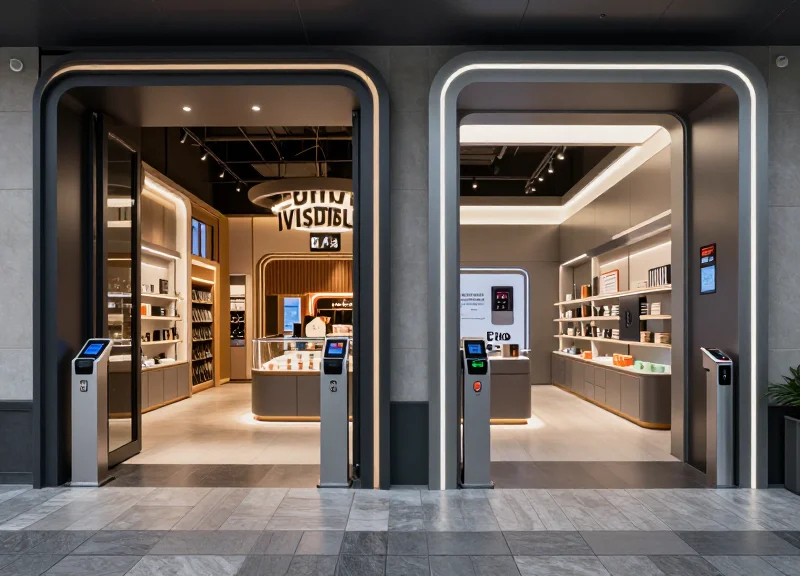
In 2026, hospital architecture has evolved beyond sterile utility to embrace 'Healing Environments'—spaces designed to reduce patient stress and promote wellness. For gift shops located in high-traffic lobbies or near clinical wings, the Electronic Article Surveillance (EAS) system must provide a robust theft deterrent without creating a 'fortress' aesthetic. The goal is to achieve seamless architectural integration where security hardware feels like a natural extension of the glass, steel, and wood elements characteristic of modern medical facilities.
| Design Type | Visual Impact | Ideal Application | Detection Range |
|---|---|---|---|
| Acrylic Pedestals | Low (Transparent) | High-end gift shops with glass storefronts | Up to 1.8m (6ft) between pedestals |
| Under-Floor Loops | Zero (Invisible) | Wide, open-plan entrances; minimalist lobbies | Up to 2.4m (8ft) width |
| Overhead Sensors | Minimal (Ceiling Mount) | Spaces with limited floor area for pedestals | Varies by ceiling height (up to 3m) |
| Floor-Mounted Plates | Moderate (Flush) | Retrofits where floor excavation is limited | Up to 1.5m (5ft) coverage |
Expert Tip: The 'Frictionless First Impression'. As a veteran of Silicon Valley retail tech, I’ve observed that the gift shop is often the first retail touchpoint a visitor encounters in a hospital. A bulky, opaque plastic pedestal can subconsciously signal high-crime and high-stress. By opting for ultra-clear acrylic pedestals with integrated LED lighting (which can be synced to the hospital's wayfinding colors), you transform a security barrier into a sophisticated piece of digital architecture.
- Identify Sightline Requirements: Consult with the facility’s lead architect to ensure pedestals do not obstruct lines of sight between the lobby security desk and the shop interior.
- Evaluate Flooring Constraints: Before choosing an invisible under-floor system, verify if the sub-floor can accommodate the antenna depth without compromising the structural integrity of medical-grade flooring.
- Match Branding and Color Schemes: Select pedestal base covers that match the hospital’s palette (e.g., brushed stainless steel for surgical wings or wood-grain for maternity centers).
Will invisible (under-floor) systems interfere with wheelchairs?
No. Modern AM (Acousto-Magnetic) and RF systems are shielded to prevent interference with electric wheelchairs and hospital mobile equipment.
Do acrylic pedestals scratch easily in high-traffic areas?
2026-grade acrylics are treated with scratch-resistant coatings, though 'invisible' floor systems are preferred if heavy cart traffic is expected.
Can EAS lights be dimmed for 'quiet hours'?
Yes, many premium 2026 systems allow for scheduled LED dimming to align with the hospital’s nightly noise and light reduction protocols.
Integrating EAS with Electronic Shelf Labels (ESL)
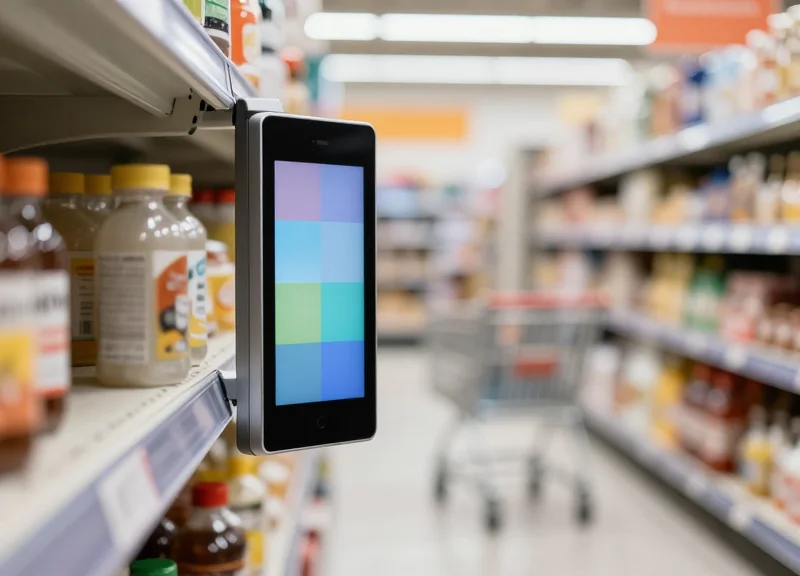
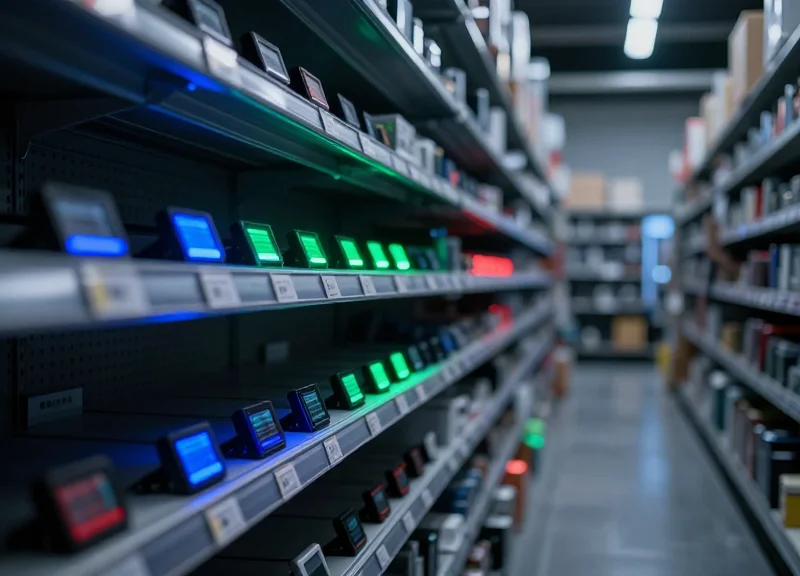
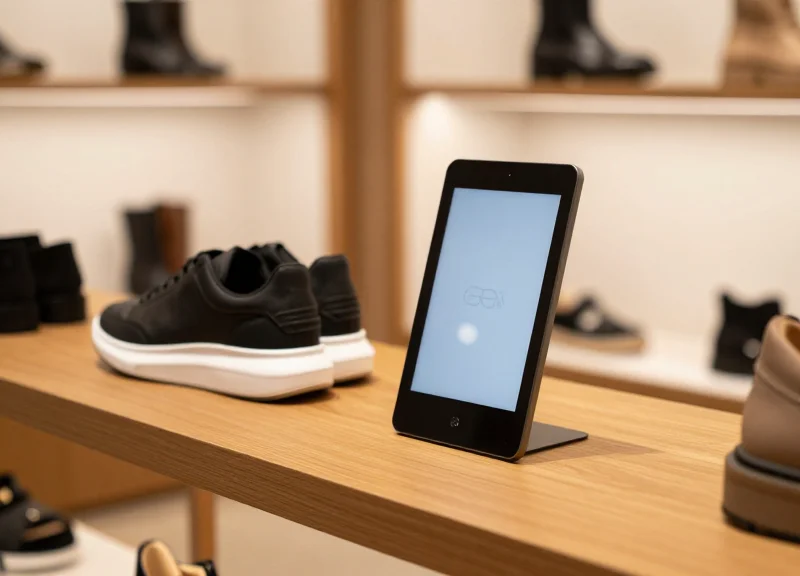
In the 2026 retail landscape, the integration of Electronic Shelf Labels (ESL) with Electronic Article Surveillance (EAS) has evolved from a luxury to a functional necessity for hospital gift shops handling mixed medical consumables. This synchronization creates a 'Smart Shelf' environment where pricing data and security status are managed through a single IoT gateway. By linking the digital identity of a product on the shelf with its physical security tag, hospital retailers can eliminate the 'security-friction gap'—the delay between a price change and the updating of the security profile for high-value items like specialized orthopedic supports or premium wellness devices.
| Feature | Siloed Systems (Legacy) | Integrated ESL/EAS Ecosystem (2026) |
|---|---|---|
| Price Synchronization | Manual; high risk of tag/label mismatch. | Automatic; EAS sensitivity adjusts to current price. |
| Theft Detection | Reactive; alarm only at the exit. | Proactive; shelf-level alerts for bulk removal. |
| Inventory Visibility | Estimated; requires manual audits. | Real-time; 'Last Seen' shelf data linked to exit logs. |
| Labor Efficiency | High; staff must check labels and tags separately. | Low; central management for both security and pricing. |
Expert Tip: The 'Proactive Shelf' Perspective. In 2026, the most advanced hospital gift shops utilize ESLs equipped with accelerometers and Bluetooth Low Energy (BLE). My unique recommendation for healthcare retailers is to implement 'Proactive Proximity Triggers.' When an ESL detects that multiple high-value medical consumables are removed simultaneously (indicative of organized retail crime), it can automatically signal the EAS pedestals to increase their sensitivity or trigger a silent alert to hospital security. This shifts the EAS role from a simple door alarm to a holistic facility-wide loss prevention strategy.
- Unified Software Deployment: Select a management platform that supports both ESL and EAS protocols (typically Sub-1GHz or BLE) to ensure a single pane of glass for store operations.
- Gateway Optimization: Place IoT gateways strategically to cover both the shelving units and the exit pedestals, ensuring zero latency in communication between the label and the alarm system.
- Dynamic Security Thresholding: Configure the system to automatically adjust EAS alarm parameters based on the price points displayed on the ESLs—for example, higher-intensity alerts for items over $100.
- Staff Training on IoT Troubleshooting: Ensure hospital staff understand how to interpret integrated dashboard alerts that combine 'Low Battery' ESL warnings with 'Tag Mismatch' security flags.
Does the ESL signal interfere with the EAS frequency?
Modern 2026 systems utilize frequency hopping and distinct bands (e.g., 2.4GHz for ESL and 58kHz for AM EAS) to ensure that the wireless communication between labels does not cause false alarms in the security pedestals.
Can ESLs help prevent the theft of medical consumables nearing expiration?
Yes. Integrated systems can trigger 'Dynamic Clearance' pricing via ESL for near-expiry items, while simultaneously updating the EAS system to track these high-risk, fast-moving products more closely.
Is the ROI justifiable for a small hospital gift shop?
The ROI is typically realized within 14-18 months through a 40% reduction in labor costs associated with manual price auditing and a significant decrease in 'sweethearting' at the point of sale.
Future-Proofing Your Investment: Scalability and ROI
Future-proofing your Electronic Article Surveillance (EAS) system means shifting from a static 'security gate' mindset to an intelligent, software-defined platform. In the 2026 retail landscape, the highest Return on Investment (ROI) is achieved by selecting systems that decouple physical hardware from functional logic. This allows hospital gift shops to implement basic Acousto-Magnetic (AM) or Radio Frequency (RF) technology today while maintaining a seamless upgrade path to RFID or AI-integrated overhead sensors tomorrow without a 'rip-and-replace' overhaul.
| Investment Metric | Legacy EAS Systems | 2026-Ready Modular EAS |
|---|---|---|
| Average Lifespan | 5-7 Years (Hardware Obsolescence) | 10-12 Years (Software-driven updates) |
| Upgrade Path | Requires full hardware replacement | Modular plug-ins (e.g., RFID inserts) |
| Data Capabilities | Local 'Beep' count only | Cloud analytics & staff performance tracking |
| ROI Timeline | 24-36 Months | 12-18 Months (via shrink + labor savings) |
- Prioritize Open-API Architecture: Ensure the vendor provides an open API. This allows your EAS system to communicate with future Hospital Information Systems (HIS) or new Point of Sale (POS) software, enabling automated inventory reconciliation when an item leaves the shop.
- Demand Over-the-Air (OTA) Updates: Modern systems should support remote firmware updates. This reduces 'truck roll' costs—the expense of sending a technician to the hospital for simple software tuning or frequency adjustments.
- Verify Multi-Technology Pedestals: Choose pedestals designed to house multiple antennas. A hybrid AM/RFID pedestal allows you to protect low-cost medical consumables with cheap labels while using RFID for high-value giftware simultaneously.
Expert Insight: The Data-Dividend Strategy. An original way to boost ROI in a hospital setting is to use your EAS system’s built-in people counters as a labor-optimization tool. By correlating gift shop foot traffic with hospital visitor hours and discharge schedules, management can adjust staffing levels in real-time. This transforms a 'security expense' into a 'business intelligence' asset that pays for itself through optimized payroll.
How do I calculate the ROI of an EAS system in a hospital?
Subtract the 'Post-Installation Shrink' from 'Pre-Installation Shrink,' add the labor hours saved on manual inventory counts, and divide by the total cost of ownership (TCO) over three years.
Is cloud connectivity a security risk for hospitals?
No, as long as the system uses outbound-only data encryption and does not touch the patient-sensitive internal medical network. Most 2026 systems use dedicated IoT cellular bridges to bypass the hospital's main Wi-Fi.
What vendor red flags should I look for?
Avoid vendors who use proprietary 'closed' tag formats that lock you into buying their expensive labels exclusively, as this significantly inflates the long-term TCO.