In the high-stakes world of multi-store retail, shrinkage isn't just a line item—it's a profit killer. As theft tactics evolve, legacy security systems often fall short, leaving retailers vulnerable. This article explores a transformative approach to loss prevention: streamlining your Acousto-Magnetic (AM) system upgrade. We delve into how modernizing your EAS infrastructure can lead to a documented 40% reduction in shrinkage, ensuring your bottom line remains protected while enhancing the customer experience through smarter, more efficient security deployments.
The Current State of Retail Shrinkage: Why AM Systems Matter

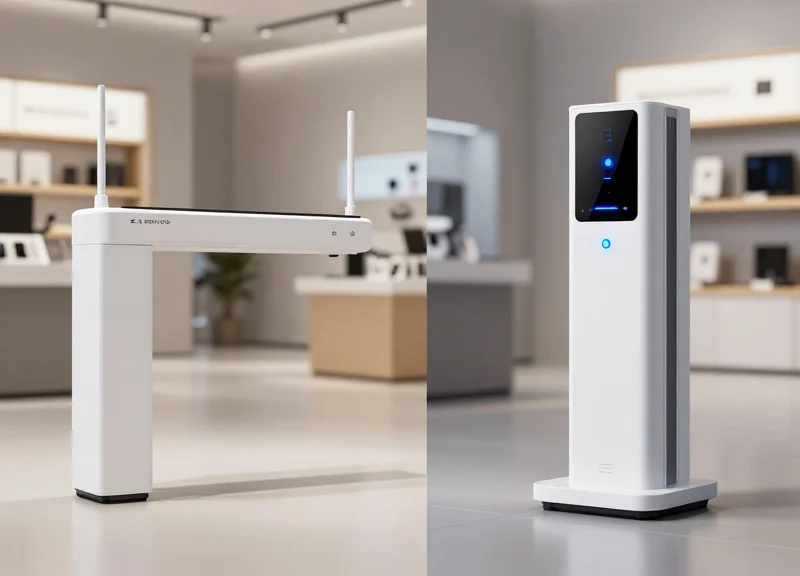
Retail shrinkage has evolved from simple shoplifting into a $112 billion global crisis, driven largely by Organized Retail Crime (ORC) and increasingly sophisticated theft methods. In this high-stakes environment, Acousto-Magnetic (AM) systems serve as the critical infrastructure for loss prevention. Unlike legacy technologies, AM systems utilize a 58 kHz frequency that provides superior detection through foil-lined bags and around metallic objects, ensuring that multi-store retailers can protect diverse inventory types without the high false-alarm rates that plague lesser systems.
For multi-store retailers, the challenge is not just the volume of theft, but the consistency of protection across various layouts. The current state of retail requires a shift from passive monitoring to active deterrence. A streamlined AM upgrade provides the technical precision needed to maintain wide aisle entrances—essential for modern customer experience—while maintaining a rigorous security perimeter that can reduce shrinkage by up to 40%.
| Feature | Acousto-Magnetic (AM) | Radio Frequency (RF) |
|---|---|---|
| Detection Width | Up to 2.4m or more per pedestal | Generally limited to 1.8m |
| Metallic Interference | High Resistance (works near foil/liquids) | Low Resistance (easily shielded) |
| Tag Deactivation | High-speed, distance deactivation | Requires proximity or physical contact |
| False Alarm Rate | Extremely Low | Moderate to High |
How does AM technology specifically combat Organized Retail Crime (ORC)?
ORC groups often use 'booster bags' lined with foil to bypass standard security. AM systems operate at a frequency that penetrates these shields more effectively than RF, triggering alarms that would otherwise be suppressed.
Why is AM preferred for multi-store retailers over other systems?
Scalability and reliability. Multi-store environments often have varied electromagnetic noise; AM is more stable across different architectural environments, leading to fewer maintenance calls and consistent performance.
The Veteran's Insight: The 'Security Fatigue' Tax. In my 20 years of retail consulting, I have found that the most significant hidden cost of outdated systems isn't the theft itself, but 'Security Fatigue.' When systems produce frequent false positives, staff eventually stop checking alarms. A streamlined AM upgrade eliminates this 'noise,' effectively retraining your employees to respond to every alert with urgency. This restoration of human vigilance is the secret driver behind that 40% shrinkage reduction.
Identifying the Breaking Point: Signs Your Legacy EAS Needs an Upgrade
The 'breaking point' for a legacy Electronic Article Surveillance (EAS) system occurs when the operational technical debt—composed of maintenance costs, false alarms, and missed detections—surpasses the cost of a modern Acousto-Magnetic (AM) system. For multi-store retailers, this threshold is typically crossed when staff stop responding to alarms due to 'alert fatigue' or when the system's detection rate falls below 80% on high-value items. Identifying these symptoms early prevents the 'invisible shrink' that occurs when security measures become a decorative rather than functional deterrent.
| Symptom of Legacy Failure | Technical Cause | Business Impact (ROI Drain) |
|---|---|---|
| Chronic False Alarms | Signal interference/Tag resonance drift | Staff desensitization and poor customer experience |
| Narrow Pedestal Spacing | Weak signal processing capabilities | Reduced ADA compliance and inhibited customer flow |
| Intermittent Dead Zones | Component degradation in pedestals | High-value shrinkage via 'blind spots' in coverage |
| Frequent Service Calls | End-of-life hardware components | Escalating OpEx that masks the true cost of ownership |
Expert Insight: Most retailers overlook the 'Maintenance-to-Value Ratio' (MVR). A Silicon Valley standard for hardware lifecycles suggests that if your annual maintenance and repair costs for a legacy system exceed 15-20% of the CAPEX for a new AM installation, you are effectively subsidizing your own losses. Modern AM systems utilize digital signal processing (DSP) to filter out ambient noise, meaning they don't just work better—they require 60% less manual recalibration than systems installed 5+ years ago.
Why are false alarms considered a high-risk security threat?
False alarms cause 'alert fatigue,' leading store associates to ignore genuine theft events. When a system 'cries wolf,' security protocols are rarely followed, rendering the entire investment useless.
Does environmental noise affect legacy systems more than new ones?
Yes. Older RF and AM systems lack the advanced filtering to distinguish between a security tag and electronic noise from LED lighting or nearby checkout kiosks, leading to constant instability.
Can legacy systems detect tags through foil-lined bags?
Most legacy systems, particularly RF-based ones, are easily shielded by 'booster bags.' Upgrading to modern AM technology provides superior penetration and detection against these professional shoplifting tactics.
- Step 1: The Tag-Check Audit: Walk through the pedestals with a known active tag at different heights. If the system fails to trigger at any level, the hardware sensitivity is degraded.
- Step 2: Log Alarm Frequency: Track the number of 'phantom alarms' over a 7-day period. Anything more than two per day per pedestal indicates environmental interference your current system cannot handle.
- Step 3: Analyze Service Ticket History: Review the last 12 months of repairs. If you have called a technician more than twice for the same entrance, the system has reached terminal technical debt.
The Science of AM Technology: Superiority in High-End Retail Environments
Acousto-Magnetic (AM) technology at 58kHz represents the pinnacle of Electronic Article Surveillance (EAS) for high-end retail because it utilizes magnetostrictive principles to ensure high detection rates even in the presence of liquids, foils, and metals. Unlike Radio Frequency (RF) systems, which operate at higher frequencies (8.2MHz) and are easily shielded or absorbed, AM signals are less susceptible to environmental 'noise,' allowing for wider pedestal spacing and the protection of complex product categories like luxury cosmetics, bottled spirits, and premium electronics.
| Feature | AM Technology (58kHz) | RF Technology (8.2MHz) |
|---|---|---|
| Signal Penetration | High (Effective through liquids & foils) | Low (Easily blocked by metal or water) |
| Detection Range | Up to 2.4m - 3m between pedestals | Typically 1.2m - 1.8m maximum |
| False Alarm Rate | Near-zero (Pulse-listen mechanism) | Higher (Susceptible to ambient noise) |
| Tag Aesthetics | Small, 3D strips/slim profile | Flat, but often larger surface area |
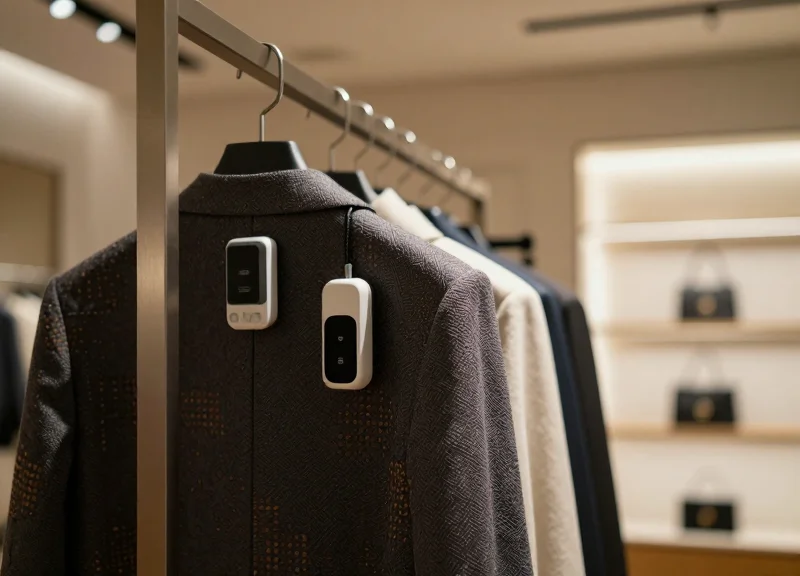
The technical brilliance of AM lies in its 'pulse-listen' cycle. The system emits a 58kHz burst that excites the amorphous metallic strips within a tag, causing them to vibrate mechanically at a specific resonance. When the pulse stops, the tag continues to oscillate, creating a unique 'ring-down' signal. The pedestals listen for this specific mechanical echo during the quiet intervals between pulses. This temporal separation makes AM nearly immune to the electronic interference that frequently plagues RF systems in modern stores filled with LED screens, digital signage, and high-density Wi-Fi routers.
Why is AM better for high-end cosmetics?
Premium cosmetics often contain foil-based packaging or high water content. RF signals are absorbed by water and reflected by foil, rendering tags invisible. AM tags penetrate these materials, ensuring consistent detection of high-shrink items.
How does AM affect store aesthetics?
High-end retailers prefer wide, welcoming entrances. Because AM has a superior detection range, pedestals can be placed further apart (up to 3 meters) or even hidden in the floor or door frames, maintaining a luxury brand's visual appeal.
Can AM tags be deactivated more reliably?
Yes. AM deactivators verify the tag presence before sending a deactivation pulse, ensuring a higher success rate at the Point of Sale and reducing embarrassing 'false alarms' for legitimate customers leaving the store.
Expert Insight: In my 20 years of retail tech analysis, the most overlooked advantage of AM is its 'Phase Coherence.' Because the tag's response is mechanical rather than purely electronic, it acts as a high-Q resonator. This means it can distinguish itself from the chaotic electromagnetic environment of a modern smart-store with pinpoint accuracy. For multi-store retailers aiming for that 40% shrinkage reduction, this reliability translates directly into staff trust; when an AM alarm sounds, it is almost certainly a legitimate event, eliminating the 'alarm fatigue' that causes employees to ignore legacy RF systems.
Streamlining the Transition: Best Practices for Multi-Store Deployments

Streamlining an AM (Acousto-Magnetic) system transition involves a synchronized rollout strategy that integrates site-specific audits, standardized installation protocols, and post-deployment validation to ensure 100% uptime. For multi-store retailers, the objective is to replace legacy EAS hardware with minimal disruption to foot traffic, utilizing a 'swing-deployment' model where security coverage remains active throughout the installation window.
- The Tech-Stack Audit: Conduct a comprehensive site survey for every location to identify electrical interference zones and floor-plan constraints before hardware arrives on-site.
- The Pilot Store 'Stress Test': Deploy the upgrade in 2-3 high-shrinkage locations first to refine the installation SOP and identify regional environmental variables.
- Overnight 'Invisible' Implementation: Execute hardware swaps during non-operational hours to prevent customer flow bottlenecks and ensure the system is calibrated by store opening.
- Centralized Remote Tuning: Utilize cloud-connected AM controllers to allow central office engineers to fine-tune sensitivity levels across the entire fleet simultaneously.
| Feature | Traditional Rollout | Optimized Streamlined Rollout |
|---|---|---|
| Deployment Speed | 12-18 Months | 4-6 Months |
| Store Downtime | 4-8 Hours (During Day) | Zero (Overnight/Phased) |
| Protection Gap | High (System Offline) | None (Parallel Syncing) |
| Success Rate | Variable per site | Standardized (99.9% Validation) |
A unique strategic advantage in modern AM upgrades is the 'Parallel Synchronization' method. Instead of a hard cutover, legacy pedestals are kept active while new sensors are calibrated. This ensures there is never a 'blind window' for shoplifters to exploit. Furthermore, by integrating the AM system with the store's existing Wi-Fi or IoT mesh, Loss Prevention teams can receive real-time health alerts, transforming a security gate into a data-driven asset.
How do we handle different floor plans in a national rollout?
We use a 'Modular Configuration' approach where the pedestal placement is adjusted based on entrance width, but the core electronics and software settings remain standardized for easy remote management.
Will the new AM system interfere with existing RFID inventory tags?
No. AM technology operates at 58kHz, which is physically distinct from UHF RFID frequencies (860-960MHz), allowing both systems to coexist without performance degradation.
What is the primary cause of rollout delays?
Poor electrical grounding at the site level is the #1 delay factor. Pre-deployment audits must include a 'clean power' assessment to avoid ghost alarms post-installation.
Quantifying the 40% Reduction: A Data-Driven Look at ROI

A 40% reduction in shrinkage represents more than just a lower loss percentage; it is a fundamental shift in a retailer's profitability model. By upgrading from legacy EAS to streamlined AM systems, retailers move from a defensive 'loss mitigation' stance to an offensive 'margin protection' strategy. Quantifying this ROI involves measuring the delta between current loss rates and post-upgrade performance, then factoring in the Net Present Value (NPV) of recovered inventory and reduced labor costs associated with managing false alarms.
| Metric | Legacy EAS Baseline | Modernized AM System | Financial Impact |
|---|---|---|---|
| Average Shrinkage Rate | 2.5% of Sales | 1.5% of Sales (40% Red.) | Direct 1% Margin Boost |
| False Alarm Frequency | 12 per day/store | <1 per day/store | 85% reduction in labor waste |
| Detection Accuracy | 65-70% | 95%+ | Higher deterrent value |
| Annual Loss per $10M Rev | $250,000 | $150,000 | $100,000 Savings/Store |
To calculate the true ROI of a multi-store AM rollout, finance teams must look at the Net Present Value (NPV) over a five-year lifecycle. When shrinkage drops by 40%, the recovered capital is not just the cost of goods sold (COGS); it includes the opportunity cost of the sale. If a $100 item with a 40% gross margin is stolen, the retailer loses $100 in potential revenue, not just the $60 wholesale cost. A modernized system ensures that high-velocity, high-margin items remain on the shelf, effectively acting as a sales catalyst by maintaining stock integrity.
What is the 'Hidden Yield' of AM upgrades?
Beyond direct loss prevention, the 'Hidden Yield' refers to the increase in sales generated by improved On-Shelf Availability (OSA). When theft is reduced by 40%, items that would have been 'ghost inventory' remain available for purchase, often leading to a 1-2% lift in top-line revenue that traditional ROI models often overlook.
How does reduced false alarm rates impact NPV?
False alarms are a massive drain on operational expenditure (OPEX). Every false alarm requires a staff member to stop their task and engage a customer. Reducing these by 80-90% frees up hundreds of labor hours per store annually, which are redirected toward customer service and active selling.
What is the typical payback period for a multi-store AM upgrade?
For high-shrink environments, the payback period (Breakeven Point) is typically reached within 14 to 22 months, depending on the volume of high-margin inventory protected and the speed of the deployment.
Expert Tip: When presenting this to the C-suite, emphasize the 'Cost of Inaction.' If your competitors are reducing shrinkage by 40% while your legacy systems remain stagnant, the delta in operational efficiency becomes a competitive disadvantage that compounds year-over-year. A streamlined upgrade isn't just a security purchase; it's a strategic capital allocation for long-term margin expansion.
Integration Synergy: Connecting AM Systems with RFID and ESL

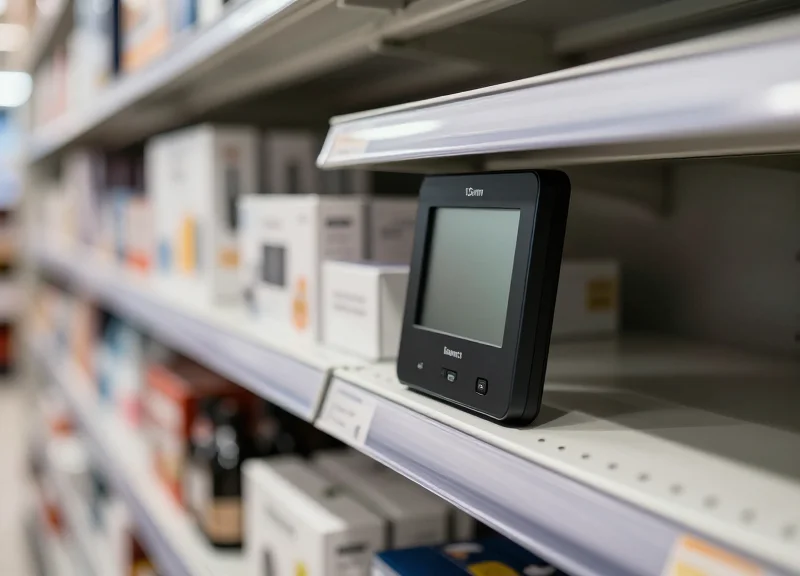
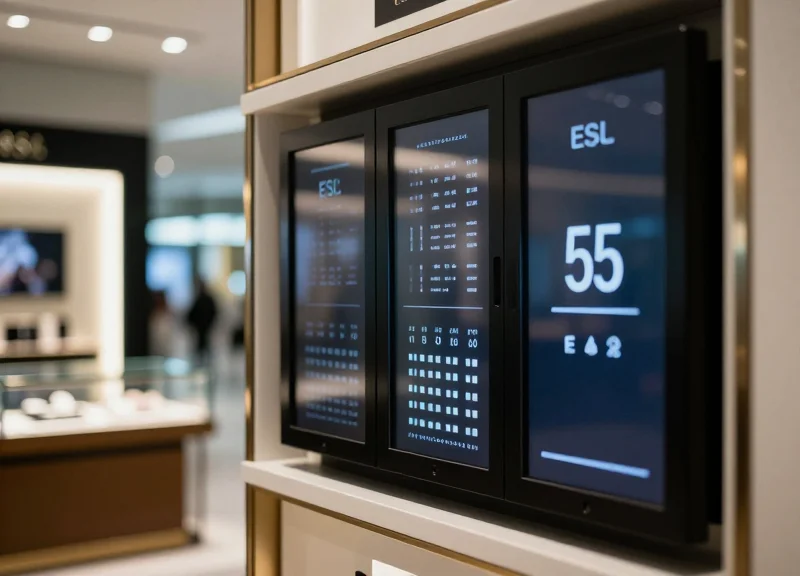
Modern Acousto-Magnetic (AM) upgrades serve as the foundational backbone for a connected retail environment. By integrating AM security systems with Radio Frequency Identification (RFID) for inventory management and Electronic Shelf Labels (ESL) for dynamic pricing, retailers move beyond basic loss prevention to a state of total operational visibility. This synergy allows for the 'Triangulation of Truth'—where security events, inventory levels, and pricing data are synchronized to eliminate the data silos that typically hide up to 3% of revenue leakage in multi-store environments.
| Technology | Primary Function | Synergistic Benefit |
|---|---|---|
| AM Systems | Detection & Deterrence | Provides the high-security gate for all physical assets at the store perimeter. |
| RFID | Item-Level Visibility | Feeds real-time data to the AM system to identify exactly which SKU triggered an alarm. |
| ESL | Dynamic Pricing | Ensures price-point accuracy and can trigger security alerts for high-value price changes. |
- Unified Data Stream: Modern AM controllers can now ingest RFID data, allowing security teams to see not just that an alarm went off, but that it was a 'Size 10 Leather Jacket' that left the premises.
- Automated Inventory Reconciliation: When the AM system detects a loss, the RFID database is automatically updated, triggering an immediate replenishment order if stock falls below a threshold.
- Dynamic Protection via ESL: Advanced integrations allow ESLs to change color or flash when a corresponding AM-tagged item is moved from a secure zone without being deactivated, providing a visual cue for staff.
Expert Tip: The most significant ROI multiplier in 2024 is the 'Invisible Pedestal' approach. By utilizing overhead AM/RFID sensors and connecting them to ESL displays, retailers can create open-concept storefronts that maintain 99% detection rates while removing the physical barriers that often psychologically deter premium customers.
Will RFID replace AM technology entirely?
No. While RFID is excellent for inventory, it lacks the raw detection power of 58kHz AM signals near metallic objects or liquids. The best strategy is a hybrid approach where AM provides the 'shield' and RFID provides the 'intel'.
How does ESL reduce shrinkage?
ESL reduces 'administrative shrinkage'—errors in pricing that lead to checkout friction and potential internal fraud. When connected to the AM system, it ensures the item's digital twin is always synchronized with its physical location.
Is a full rip-and-replace required for integration?
Not necessarily. Many legacy-compatible AM upgrades now feature modular ports or cloud-based APIs that allow for the incremental addition of RFID and ESL capabilities as budget permits.
Avoiding Implementation Pitfalls: Lessons from Industry Leaders
Avoiding implementation pitfalls in AM (Acousto-Magnetic) upgrades involves moving beyond simple hardware placement to address complex environmental interference and system synchronization across multi-store environments. Industry leaders ensure a 40% shrinkage reduction by prioritizing site-specific electromagnetic audits and technician-led phase tuning to prevent 'blind spots' and false alarms that erode customer trust and security efficacy. Success is not found in the hardware alone, but in the meticulous calibration of that hardware to its specific architectural surroundings.
| Common Pitfall | Impact on ROI | Industry Leader Solution |
|---|---|---|
| Inadequate Phase Synchronization | Interference between adjacent store systems causing 'dead zones'. | Implementing cross-brand synchronization protocols and GPS-timed oscillators. |
| Ignoring Structural Metal | Metal door frames or rebar 'sucking' the magnetic field, reducing range. | Utilizing shielded cabling and ferrite-backed pedestal mounts to focus the field. |
| Broad-Brush Calibration | Inconsistent detection rates across diverse geographic store footprints. | Cloud-based remote tuning and automated daily system health checks. |
| Tag-to-Hardware Mismatch | Low-quality AM tags failing to resonate with high-performance pedestals. | Rigorous QA testing of tag 'Q-factor' to ensure resonance at exactly 58kHz. |
The 'Silent Killer' of ROI: LED Interference. A unique insight often overlooked by junior installers is the 'Noise Floor' elevation caused by modern high-efficiency LED drivers and Variable Frequency Drives (VFDs) in HVAC systems. Industry leaders utilize Spectral Analysis during the site survey to map the electromagnetic environment. If the noise floor is too high, even the best AM system will fail to trigger. Addressing this requires active noise filtering and, in some cases, frequency shifting—a technical nuance that separates a failed rollout from a 40% reduction success story.
Why do systems often experience 'Ghost Alarms' during peak hours?
Ghost alarms are typically caused by increased electromagnetic noise from automatic doors, digital signage, and escalators that are more active during store hours. Leaders solve this by tuning the system's sensitivity thresholds specifically for peak-load periods.
Can global retailers use the same hardware in every country?
While the core 58kHz technology is global, local power frequencies (50Hz vs 60Hz) affect synchronization. Implementation leaders use multi-voltage, auto-sensing power supplies to ensure hardware compatibility across a global footprint.
How does improper cabling lead to system failure?
AM systems are highly sensitive. Using unshielded or poorly routed cables near high-voltage lines creates signal induction, which mimics the signal of a security tag, causing constant false alarms or rendering the system deaf.
- Pre-Installation Spectral Audit: Use a spectrum analyzer to identify external noise sources before selecting pedestal placement.
- Dynamic Phase Tuning: Sync the AM pulse with the local power grid to ensure it doesn't clash with neighboring EAS systems.
- Integrative Staff Training: Ensure loss prevention teams understand 'Alarm Fatigue' and the importance of responding to every legitimate trigger to maintain the system's deterrent value.
Cost-Benefit Analysis: The Long-Term Savings of Modern AM Hardware

A comprehensive Cost-Benefit Analysis (CBA) for modern Acousto-Magnetic (AM) hardware shifts the focus from initial Capital Expenditure (CapEx) to a 10-year Total Cost of Ownership (TCO) model. Unlike legacy systems that require frequent on-site technician visits for manual re-tuning, modern AM antennas utilize digital signal processing (DSP) and remote connectivity to drastically reduce Operational Expenditure (OpEx). By accounting for energy efficiency, reduced false-alarm fatigue, and a hardware lifespan that exceeds 10 years, multi-store retailers can realize a net-positive ROI that extends far beyond simple shrinkage reduction.
| Feature Metric | Legacy AM Systems (10+ Years) | Modern High-Efficiency AM |
|---|---|---|
| Annual Maintenance Calls | 2-4 (Physical Tuning) | 0-1 (Remote Adjustment) |
| Power Consumption | 60W - 100W per pedestal | 15W - 30W (Eco-mode support) |
| False Alarm Rate | Moderate (Analog Interference) | Near-Zero (Digital Filtering) |
| Expected Lifespan | 5-7 Years | 10-12+ Years |
| Remote Diagnostics | Unavailable | Standard via IoT Cloud |
- Phase 1: Maintenance Cost Compression: Legacy systems drift over time due to environmental interference, requiring manual calibration. Modern systems use auto-tuning algorithms, reducing technician dispatch costs by up to 70% annually.
- Phase 2: Energy Expenditure Reduction: Modern power supplies are 50-70% more efficient than older transformers. For a 100-store chain, this energy savings alone can contribute thousands of dollars to the bottom line over a five-year period.
- Phase 3: Labor Optimization: High false-alarm rates in legacy systems lead to 'alarm fatigue,' where staff ignore valid alerts. Modern precision reduces these incidents, ensuring staff only react to real threats, thereby protecting payroll productivity.
Expert Insight: The 'Ghost Cost' of legacy hardware isn't just the repair bill; it's the degradation of the deterrent effect. When a system is out of sync or frequently alarming falsely, professional shoplifters notice the staff's lack of response. Upgrading to modern hardware restores the psychological barrier, which is a primary driver of that 40% shrinkage reduction.
How long is the typical payback period for a modern AM upgrade?
For multi-store retailers with moderate to high shrinkage, the payback period typically ranges from 12 to 18 months when factoring in both loss prevention and OpEx savings.
Can modern AM hardware be integrated with existing store networks?
Yes, modern systems feature RJ45 or Wi-Fi connectivity, allowing for centralized health monitoring and data analytics without the need for additional proprietary cabling.
What is the primary factor in hardware longevity?
Thermal management and the move to solid-state components. Modern antennas generate significantly less heat, which is the primary killer of legacy analog capacitors and boards.
The DragonGuard Advantage: Expert Partnership in Loss Prevention
The DragonGuard advantage lies in moving beyond simple hardware procurement to a strategic partnership model that prioritizes 'Total Protection Ecosystems.' Unlike generic vendors, DragonGuard specializes in large-scale multi-store deployments, offering bespoke Acousto-Magnetic (AM) solutions that integrate seamlessly with existing loss prevention workflows. By leveraging advanced field-mapping technology and customized antenna tuning, we eliminate the common 'dead zones' that allow shrinkage to occur, ensuring that every square inch of your retail exit is a hardened barrier against theft.
- Bespoke Security Architecture: We do not believe in one-size-fits-all. Every store layout is analyzed for electromagnetic interference and traffic flow before a single antenna is installed.
- End-to-End Project Management: From initial site survey to post-installation calibration, DragonGuard manages the entire lifecycle, reducing the burden on your internal IT and operations teams.
- Global Scalability, Local Expertise: Our ability to standardize security protocols across hundreds of international locations while respecting local compliance ensures brand consistency and protection.
| Feature | Generic Security Vendors | The DragonGuard Advantage |
|---|---|---|
| Installation Quality | Subcontracted third-parties | Specialized EAS certified engineers |
| System Calibration | Standard factory settings | Site-specific electromagnetic tuning |
| Downtime Guarantee | Variable response times | Proactive monitoring and rapid support |
| Shrinkage Focus | Basic theft detection | Advanced analytics and ROI maximization |
One unique insight we offer is our 'Electromagnetic Noise Floor Analysis.' Many retailers experience false alarms due to poorly shielded wiring or nearby electronics. DragonGuard engineers use proprietary diagnostic tools to map the electrical environment of your store, adjusting the digital signal processing (DSP) of our AM systems to ignore interference while maintaining maximum sensitivity to active tags. This precision is what drives the 40% reduction in shrinkage; it's not just about catching thieves, it's about building a system so reliable that staff trust every alarm.
How does DragonGuard ensure a 40% shrinkage reduction?
We achieve this through a combination of ultra-sensitive AM hardware, precision floor-mapping to eliminate blind spots, and staff training modules that ensure your team knows exactly how to respond to system alerts.
Can DragonGuard handle upgrades for existing stores without closing them?
Yes. Our implementation teams specialize in 'Invisible Upgrades,' performing hardware swaps and cabling during off-peak hours or through phased night-installs to ensure zero impact on customer traffic.
Does DragonGuard provide data analytics for loss prevention?
Absolutely. Our modern AM systems can be equipped with people-counting and alarm-logging software, providing HQ with a dashboard of security performance across all store locations.