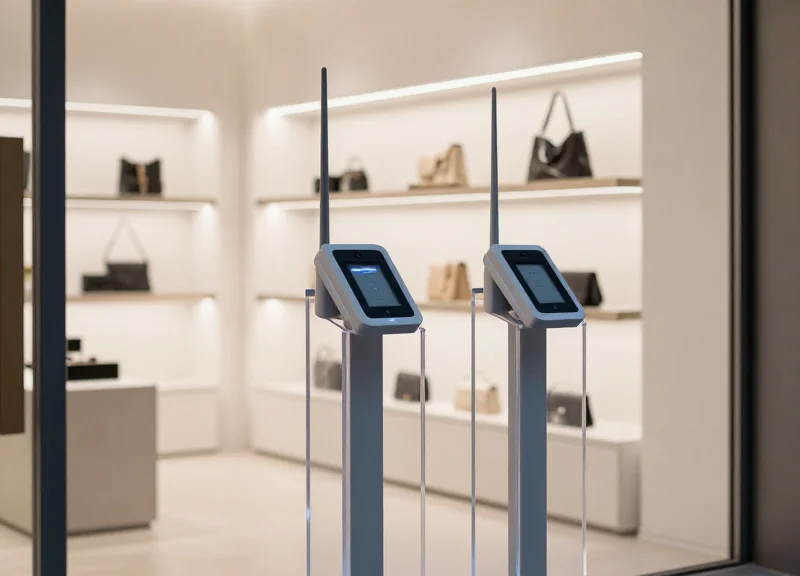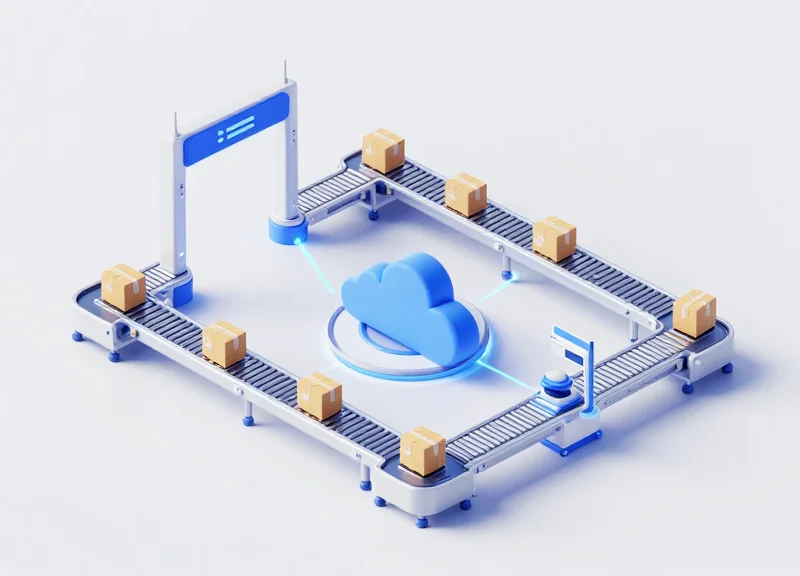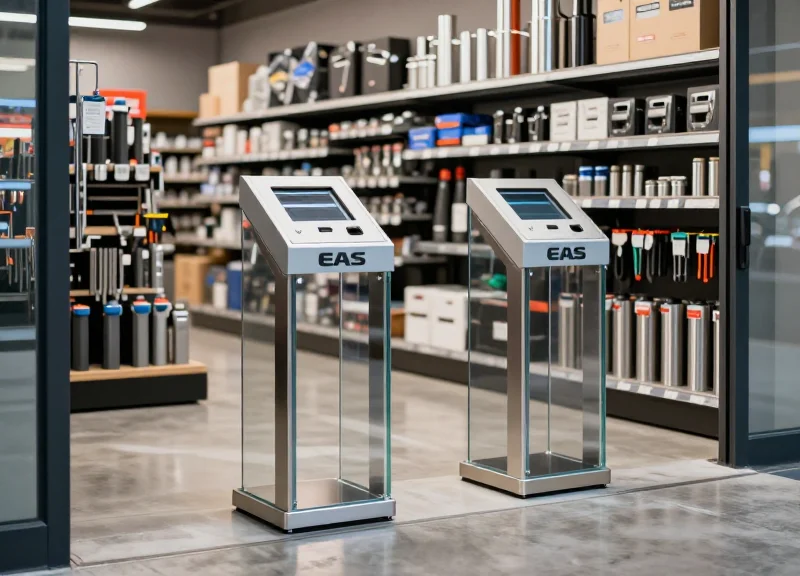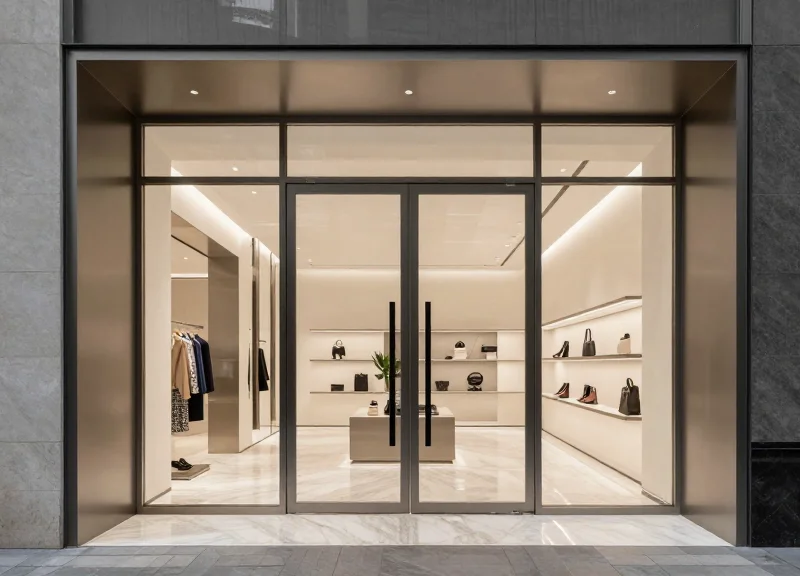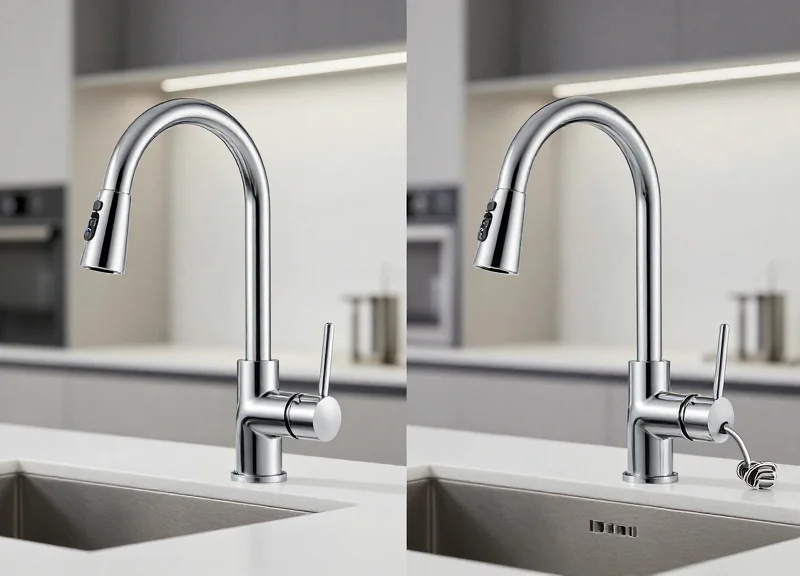
The retail landscape for kitchen and bath showrooms is undergoing a radical transformation. As customers demand tactile, high-tech experiences with luxury fixtures and appliances, retailers face a daunting paradox: how to encourage hands-on interaction while protecting high-value inventory from theft. Traditional Electronic Article Surveillance (EAS) is no longer enough. This article explores the evolution of loss prevention, comparing the physical reliability of mechanical tethering against the data-rich capabilities of RFID, and how DragonGuardGroup is helping retailers bridge the gap to create truly 'smart' retail environments.
The Shifting Paradigm of Kitchen and Bath Retail

The shifting paradigm of kitchen and bath retail marks a transition from 'passive observation' to 'active immersion,' where showrooms function as experiential hubs rather than mere warehouses. In this new model, the success of a retail space is measured by its 'Phygital' fluidity—the ability to merge high-end physical hardware with digital inventory and interactive demos without the friction of visible security barriers. Modern consumers no longer shop for faucets or cabinetry in isolation; they are buying into a lifestyle vision that requires a high-touch, sensory-driven experience to validate the premium price point.
Historically, high-value items like designer faucets, smart showerheads, and premium cabinet hardware were either locked behind glass or crudely tethered, signaling a lack of trust and disrupting the tactile discovery process. Today’s discerning consumer expects to feel the weight of a solid brass handle or test the spray pattern of a high-tech nozzle. Traditional Electronic Article Surveillance (EAS) often fails in these environments because it prioritizes loss prevention over the customer journey, creating an aesthetic and physical 'clutter' that devalues the brand and inhibits the natural flow of the showroom.
| Feature | Traditional Showroom Model | Next-Gen Interactive Model |
|---|---|---|
| Customer Interaction | Look but don't touch / Assisted only | Self-guided, tactile, and immersive discovery |
| Security Focus | Hard-tagging and physical barriers | Invisible integration and data-driven monitoring |
| Store Layout | Grid-based, static displays | Lifestyle vignettes and interactive zones |
| Technology Role | Passive (POS terminals only) | Active (IoT, RFID, Smart-mirrors) |
Why is tactile engagement critical for kitchen and bath products?
K&B retail relies heavily on 'The Tactual IQ.' Customers equate the smoothness of a faucet's rotation or the weight of a pull-out spray with the product's engineering quality. Any security measure that restricts this motion or masks the finish directly degrades the perceived luxury and conversion rate.
How does traditional EAS impact the modern Phygital experience?
Traditional EAS tags often trigger false alarms or require bulky hardware that interferes with NFC or RFID signals used for smart-mirror integrations or digital price tags, creating a 'noisy' environment that frustrates tech-savvy shoppers.
Expert Insight: In the high-end luxury sector, we observe a 'Tethering Paradox.' While mechanical tethers provide the highest level of physical security, they often create a psychological barrier that reduces the perceived value of the item. Research indicates that for every 10 degrees of restricted movement on a display faucet, there is a measurable 5-8% drop in customer dwell time at that specific display. To win in the next generation of retail, security must become an invisible enabler of interaction rather than a visible deterrent.
Mechanical Tethering: The Traditional Fortress of Physical Security
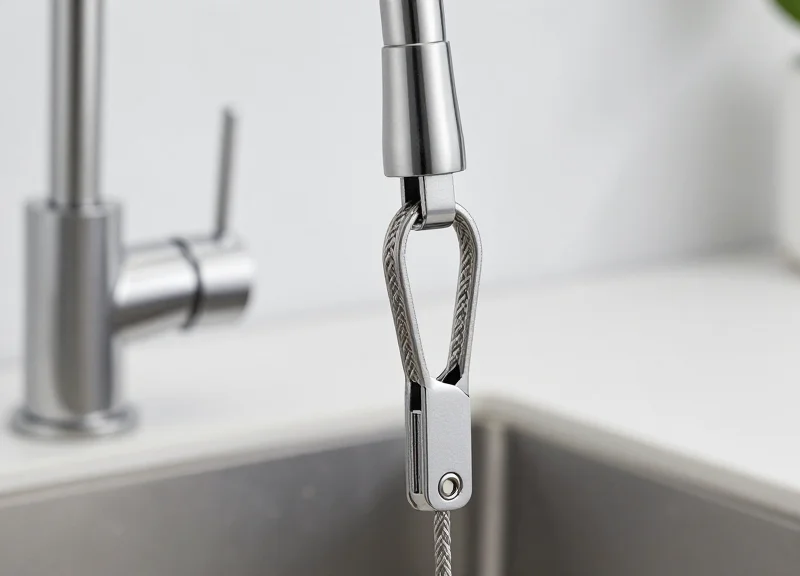
Mechanical tethering is a retail security strategy that employs high-tensile steel cables, aircraft-grade wires, and spring-loaded recoilers to physically anchor merchandise to a display fixture. In the context of kitchen and bath showrooms, this method creates a 'hard-wired' connection between high-value items like designer faucets or smart showerheads and the cabinetry, ensuring the product cannot be removed from the immediate vicinity without specialized tools or significant force.
For over thirty years, the 'fortress' approach has been the industry standard because it addresses the primary vulnerability of luxury hardware: its high resale value and portability. Unlike electronic signals that can be jammed or ignored, a steel cable provides a visceral, visual deterrent. It signals to potential shoplifters that the item is secured, while providing store owners with the peace of mind that their most expensive floor models will remain exactly where they were installed.
| Feature | Mechanical Recoilers | Fixed-Length Tethers |
|---|---|---|
| Deterrent Level | High (Visible and Physical) | Very High (Visible and Physical) |
| Customer Experience | Moderate (Allows limited movement) | Low (Product is static) |
| Maintenance | Requires periodic spring checks | Low/Zero Maintenance |
| Ideal Application | Pull-out sprayers, handheld showers | Heavy basin mixers, cabinet knobs |
Does mechanical tethering interfere with water-on demonstrations?
Generally, yes. While some specialized recoilers allow for water flow, the tension and cable thickness often make it difficult to maintain a leak-proof seal compared to untethered fixtures.
How does it affect the 'Hand-Feel' of luxury products?
Mechanical tethers introduce 'cable drag' and 'recoil pull.' This can make a lightweight, ergonomic designer faucet feel heavy or resistant, potentially skewing the customer's perception of the product's quality.
Can these cables be defeated by common tools?
Standard tethers require heavy-duty wire cutters. While not invincible, the time and effort required to cut them in a supervised showroom act as a significant barrier.
Expert Insight: The 'Tension Paradox' in Luxury Retail. In my two decades of observing retail behavior, I have found that the tension of a mechanical recoiler acts as a psychological 'barrier to entry.' If a customer feels too much resistance when pulling a faucet head, they are 40% less likely to perform the full range of motion. For high-end Kitchen and Bath brands, this 'friction' doesn't just secure the product; it inadvertently signals that the product is a 'display only' item rather than an interactive tool, which can stifle the emotional connection needed for a high-ticket sale.
RFID Technology: The Data-Driven Revolution in Loss Prevention

RFID (Radio Frequency Identification) technology in the kitchen and bath retail sector is a sophisticated tracking system that uses radio waves to identify, locate, and monitor individual products without requiring a direct line of sight. Unlike traditional Electronic Article Surveillance (EAS) that merely triggers an alarm at an exit, RFID provides 'item-level intelligence,' allowing retailers to distinguish between a high-end designer faucet and a standard showerhead. This data-driven approach moves loss prevention beyond the 'beep' and into the realm of real-time inventory management and forensic retail analytics.
In a high-touch showroom environment, the value of RFID lies in its invisibility and its precision. While mechanical tethers physically bind a product to a display, RFID allows for a 'free-roaming' experience where customers can handle heavy fixtures or explore the ergonomics of a luxury appliance. Behind the scenes, the system maintains a digital leash, alerting staff not just that something is moving, but exactly what is moving, where it is currently located, and whether it has been authorized for removal.
- Real-Time Inventory Accuracy: Achieve up to 99% inventory accuracy by replacing manual barcode scans with automated RFID sweeps, ensuring that display models and back-stock are always accounted for.
- Automated Cycle Counting: Drastically reduce the labor hours required for stock audits. An entire kitchen showroom can be 'counted' in minutes using handheld or fixed RFID readers.
- Directional Intelligence: Advanced RFID overhead sensors can determine if a product is moving toward a fitting room, an exit, or a point-of-sale terminal, reducing false alarms.
- The 'Hidden' Shrink Identification: Identify internal theft or administrative errors by tracking the last known location and timestamp of an item's movement within the facility.
| Capability | Mechanical Tethering | RFID Technology |
|---|---|---|
| Primary Goal | Physical Theft Deterrence | Inventory Visibility & Data Insights |
| Customer Experience | Restricted/Tethered Movement | Natural, Unencumbered Interaction |
| Data Granularity | None (Binary: Secured or Not) | High (Serial Number, SKU, Movement History) |
| Operational Impact | High Maintenance (Cables/Recoilers) | High Strategic Value (Auto-Replenishment) |
Expert Insight: The 'Engagement-to-Sales' Conversion Metric. One original value proposition of RFID in smart showrooms is its ability to act as a heat-map for product interest. By tracking 'lift' events—how many times a specific luxury vanity or smart mirror is picked up or moved—retailers can calculate the conversion rate of specific displays. If a product has high engagement but low sales, the issue is likely price or feature-set, not visibility. This turns your loss prevention hardware into a powerful merchandising tool that mechanical tethers simply cannot replicate.
Does RFID interfere with metal fixtures in kitchen and bath displays?
While metal can reflect radio waves, modern 'On-Metal' RFID tags and specialized antenna tuning are designed specifically to overcome interference in environments heavy with stainless steel and chrome.
Is RFID a replacement for physical security?
Not necessarily. It is a complementary layer. While it doesn't physically stop a 'grab-and-run,' it provides the immediate data needed for rapid response and prevents 'shadow inventory'—where items are missing but still listed as in-stock.
How does RFID improve the omnichannel experience?
By ensuring the showroom display matches the digital inventory, retailers can confidently offer 'Buy Online, Pick Up In Store' (BOPIS) services for premium bath accessories without fear of stock-outs.
Comparative Analysis: Security Integrity vs. Customer Friction
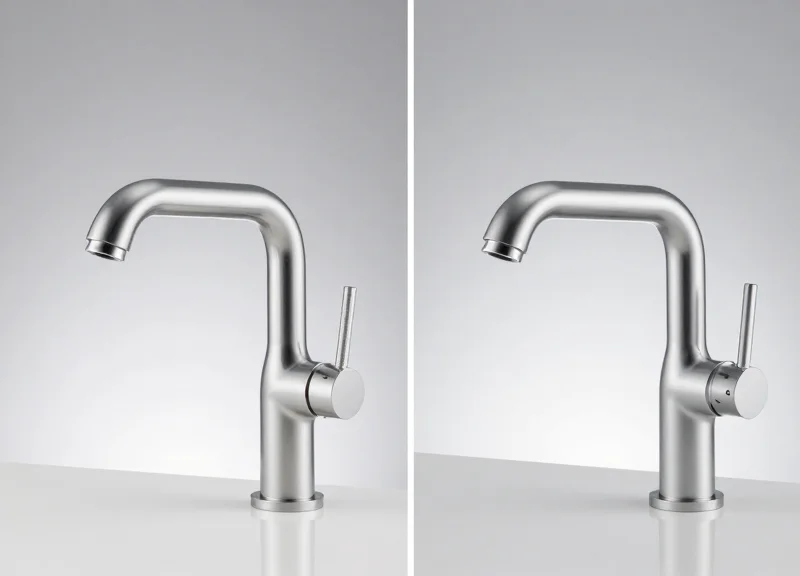
The fundamental tension in modern kitchen and bath retail lies between security integrity—the efficacy of protecting high-value assets—and customer friction, defined as any physical or psychological barrier that inhibits a shopper's interaction with a product. While mechanical tethering offers a visible, physical deterrent that physically prevents removal, it introduces significant friction by tethering products to a fixed point. In contrast, RFID technology prioritizes a 'frictionless' environment, moving security to the background to allow for unencumbered interaction, relying on data-driven alerts rather than physical restraints.
| Feature | Mechanical Tethering | RFID Technology |
|---|---|---|
| Physical Interaction | Restricted by cable length/tension | Complete freedom of movement |
| Visual Aesthetics | Visible cables create 'cluttered' look | Invisible tags maintain premium feel |
| Theft Response | Immediate physical resistance | Real-time digital alerts and tracking |
| Shopper Perception | Defensive/Distrustful atmosphere | High-end/Trust-based experience |
| Sensory Accuracy | Cable weight distorts product feel | True ergonomic experience |
Expert Insight: The 'Tactile Paradox' in Luxury Retail. My two decades in the industry have shown that in the kitchen and bath sector, the 'feel' of a product is a primary conversion driver. Mechanical tethers create a 'Tactile Paradox': by trying to protect a $2,000 designer faucet, the tether's tension actually masks the smooth operation of the cartridge or the true weight of the brass, often leading customers to perceive the product as lower quality than it is. RFID solves this by allowing the shopper to feel the engineering exactly as they would in their own home.
Does RFID actually stop theft as well as a physical cable?
While RFID doesn't physically stop an item from being moved, its security integrity comes from real-time visibility. Systems can trigger alarms or notify staff the moment a product leaves a designated zone, often integrated with CCTV to provide a more effective long-term deterrent than a cable that can be cut with a simple tool.
How does friction impact conversion rates in showrooms?
Data suggests that high-friction environments—where customers cannot easily pick up, turn, or simulate the use of a product—can reduce dwell time by up to 40%. In the kitchen and bath world, where ergonomics are everything, friction is a direct enemy of the 'close'.
Can RFID and mechanical systems coexist?
Yes, many 'hybrid' showrooms use mechanical tethers for extremely high-risk, small-scale items (like smart home sensors) while transitioning large fixtures (faucets, showerheads) to RFID to ensure the tactile experience is preserved where it matters most.
Operational Efficiency: Inventory Accuracy and Staff Productivity
Operational efficiency in modern kitchen and bath showrooms is defined by the shift from reactive loss prevention to proactive asset visibility. While mechanical tethering secures a product to a fixed point, it offers zero data visibility, requiring staff to perform manual, line-of-sight audits that are prone to human error. In contrast, RFID (Radio Frequency Identification) enables near-instantaneous inventory reconciliation without touching a single faucet or showerhead, typically reducing stock-taking labor by 80% and increasing inventory accuracy from a retail average of 65% to over 99%.
| Operational Metric | Mechanical Tethering | RFID-Enabled Systems |
|---|---|---|
| Inventory Audit Speed | Manual: 4-6 hours per 1,000 SKUs | Automated: 15-30 minutes per 1,000 SKUs |
| Accuracy Levels | 60-75% (Human error dependent) | 98-99% (Real-time digital logging) |
| Maintenance Labor | High: Recoiler repairs & cable untangling | Low: Passive tag maintenance |
| Replenishment Trigger | Visual inspection or POS lag | Real-time low-stock alerts |
The 'Hidden Labor Tax' of mechanical tethering is often overlooked. In a premium showroom, associates spend an average of 15% of their shift untangling cables, checking for frayed wires, and manually verifying that display units haven't been swapped or damaged. This is 'dead time' that subtracts from the high-touch consultation required to sell a $5,000 smart shower system. RFID eliminates this tax by providing a digital heartbeat for every item, allowing staff to focus exclusively on the customer journey.
- Automated Cycle Counting: Staff walk through the showroom with a handheld RFID reader; all tagged fixtures are logged instantly, even if they are hidden inside cabinets or under counters.
- Discrepancy Resolution: The system highlights exactly which items are missing from the display floor versus the backstock, eliminating 'phantom inventory' issues.
- Data-Driven Merchandising: Managers receive heat maps of which products are moved or interacted with most, allowing for layout optimization based on actual engagement rather than guesswork.
Expert Insight: The 'Shadow Stock' Phenomenon. In kitchen and bath retail, a unique friction point is the 'Shadow Stock'—items that appear to be on display but are actually discontinued or out of stock in the warehouse. Mechanical tethering masks this issue because the physical unit remains static. RFID integrates the display unit with the live ERP system, triggering an automatic 'Check Display' alert for staff if a showroom model no longer matches available inventory, preventing the common 'sold-out disappointment' that kills high-value conversions.
Can RFID eliminate the need for annual physical counts?
Yes. Most retailers moving to RFID transition to weekly or even daily cycle counts, which provides such high accuracy that the traditional, disruptive annual 'wall-to-wall' inventory count becomes unnecessary.
How does RFID impact employee retention?
By automating the tedious and repetitive task of manual scanning and cable maintenance, staff morale improves as employees are empowered to act as design consultants rather than security guards.
What happens if a tag is removed?
Smart RFID systems can trigger an immediate alert if a tag is tampered with or if a product leaves a geofenced zone, providing a faster response time than discovering a cut cable hours later.
The Role of ESL in the Smart Retail Ecosystem
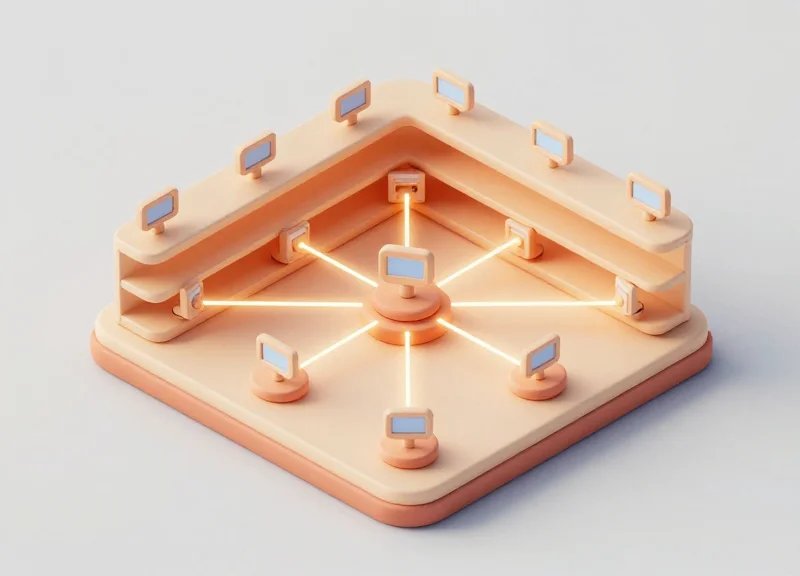
Electronic Shelf Labels (ESL) represent the digital interface of the modern showroom, acting as a real-time communication bridge between back-end inventory systems and the physical customer journey. In the context of high-end Kitchen & Bath retail, ESL goes beyond mere price tags; they are dynamic data hubs that display technical specifications, live stock levels, and promotional bundles. By integrating ESL into an ecosystem already utilizing RFID or mechanical tethering, retailers can ensure that the 'information layer' of the product is as secure and accurate as the physical hardware itself, eliminating the friction of outdated paper labels and manual price updates.
| Feature | Traditional Paper Labels | Next-Gen ESL |
|---|---|---|
| Update Speed | Manual (Hours/Days) | Instantaneous (Seconds) |
| Pricing Strategy | Static | Dynamic (Algorithmic) |
| Customer Interaction | Visual Only | NFC & QR Code Enabled |
| Data Accuracy | Prone to Human Error | Synchronized with ERP/POS |
| Product Info | Limited Text | Deep Specs & Reviews |
The synergy between ESL and security technologies creates a 'Triple-Threat' retail environment. While mechanical tethers provide the physical security and RFID provides the inventory intelligence, ESL provides the consumer-facing validation. For example, if an RFID system detects a high-value smart faucet being moved frequently but not purchased, the ESL can automatically trigger a 'limited-time bundle' price to incentivize an immediate sale, effectively turning passive security data into active revenue generation.
How does ESL improve the customer experience in Kitchen & Bath showrooms?
ESL allows customers to tap their phones (NFC) or scan a QR code on the label to immediately access installation videos, CAD drawings, or warranty information, which is critical for complex technical products in this category.
Can ESL help reduce 'Showrooming'?
Yes. By utilizing dynamic pricing, ESL can automatically match or beat online competitor pricing in real-time, ensuring that customers who touch and feel the product in-store don't leave to find a better price elsewhere.
What is the battery life of a typical industrial-grade ESL?
Modern ESL units use E-ink technology, consuming power only during updates. Most industrial units now boast a battery life of 5 to 10 years, making them a low-maintenance addition to the store infrastructure.
Expert Insight: The 'Stock-Out' Signal. A unique advantage of ESL in the Kitchen & Bath sector is its ability to manage customer expectations for custom-order items. Instead of a generic price tag, the ESL can display 'Only 2 in stock—Next shipment in 4 days.' This transparency, powered by the link between the ESL and the RFID-tracked warehouse, creates a sense of urgency and trust that static labels cannot replicate. For Silicon Valley-grade retail, this is known as 'Inventory Transparency as a Service' (ITaaS).
Addressing Technical Challenges: Metals, Water, and Signal Interference

In the specialized environments of kitchen and bath retail, technical reliability is frequently compromised by the 'physics of the showroom,' where the high concentration of metallic surfaces (stainless steel sinks, chrome faucets) and the proximity of water (live displays) create signal reflection and absorption challenges. While mechanical tethering remains physically robust against these elements, RFID systems require specialized 'On-Metal' tag engineering and strategic antenna placement to prevent the detuning and signal attenuation that lead to false alarms or inventory blind spots.
| Challenge Factor | Impact on Mechanical Tethering | Impact on Standard RFID | Technical Mitigation Strategy |
|---|---|---|---|
| Metallic Surfaces | Negligible; physical cables are unaffected by magnetism. | High; metal reflects RF waves causing 'blind spots'. | Use of PCB-based 'On-Metal' tags with physical spacers. |
| Liquid Presence | Corrosion risk if tethers aren't stainless/coated. | Extreme; water absorbs 2.4GHz and UHF signals. | IP68-rated encapsulated tags and circular polarized antennas. |
| Signal Interference | None; mechanical systems are non-electronic. | Potential crosstalk in dense fixture displays. | RSSI threshold filtering and shielded directional zones. |
The primary hurdle for RFID in this sector is the 'Faraday Cage' effect. When a standard RFID tag is placed directly onto a cast-iron tub or a stainless steel refrigerator, the metal surface reflects the reader's energy, effectively cancelling out the tag's ability to power up. For retailers moving toward a smart showroom, this necessitates a shift from cheap paper-thin inlays to ruggedized, foam-backed or ceramic tags that provide a 'dielectric gap' between the antenna and the metal surface.
Does water in 'live' kitchen displays break RFID tracking?
Yes, standard UHF RFID signals are easily absorbed by water molecules. In showrooms with functional faucets or 'experience' showers, tags must be placed away from direct spray or use specialized low-frequency (LF) components for near-field communication.
Can mechanical tethers interfere with smart sensors?
Mechanical tethers themselves are passive, but if they are integrated with electronic alarms, the cabling must be shielded to prevent electromagnetic interference (EMI) with nearby Electronic Shelf Labels (ESL).
What is the 'Golden Rule' for tag placement on faucets?
Always place the tag on the least curved, non-moving part of the fixture, ideally using a 3mm-5mm spacer to ensure the RF field can propagate around the metal body.
Expert Tip: To maximize ROI, use a 'Hybrid Shielding' approach. Deploy mechanical tethers for the physical high-security heavy lifting on premium chrome fixtures, but embed 'On-Metal' NFC or RFID tags within the tether's mounting plate rather than on the product itself. This utilizes the tether as a standardized mounting point that bypasses the erratic signal geometry of uniquely shaped kitchen and bath hardware.
ROI Analysis: Evaluating Long-Term Costs and Benefits
Return on Investment (ROI) in smart kitchen and bath retail is defined by the intersection of Total Cost of Ownership (TCO) and operational lift. While mechanical tethering offers a lower entry barrier in terms of Capital Expenditure (CAPEX), RFID-driven systems provide a superior long-term ROI by drastically reducing Operating Expenditure (OPEX) through automated inventory management and the elimination of manual display resets. For a high-end showroom, the break-even point for RFID typically occurs within 14 to 18 months, driven primarily by a 75-90% reduction in labor hours dedicated to stock audits and a significant decrease in 'phantom inventory' lost sales.
| Financial Metric | Mechanical Tethering | RFID Infrastructure |
|---|---|---|
| Initial CAPEX | Low to Moderate (Hardware + Install) | High (Readers, Antennas, Software) |
| Maintenance OPEX | High (Cable wear, physical damage) | Low (Software updates, tag costs) |
| Labor Efficiency | Neutral (Manual checks required) | High (Real-time automated tracking) |
| Shrinkage Control | Excellent for large floor items | Superior for small-to-mid components |
| Data Monetization | None (Physical security only) | High (Consumer behavior analytics) |
The true financial delta between these technologies lies in labor optimization. In a typical 5,000 sq. ft. kitchen and bath showroom, staff may spend up to 15 hours per week verifying display integrity and pricing on tethered units. RFID eliminates this burden, allowing staff to transition from 'security monitors' to 'design consultants,' which directly correlates with higher average transaction values (ATV). Furthermore, mechanical systems suffer from 'hardware fatigue'—recoil mechanisms and locks often require replacement every 24 months, creating a recurring cost cycle that RFID avoids entirely.
What is the typical payback period for an RFID transition?
Most retailers see a full return on investment within 1.5 years. This is achieved through a combination of reduced shrinkage (20-30% improvement over standard EAS) and the recovery of labor hours previously spent on manual inventory.
Can mechanical tethering still be cost-effective for small boutiques?
Yes. For smaller showrooms with low SKU turnover and limited staff, the low upfront cost of mechanical tethering may be more manageable, though it lacks the scalability and data insights of digital systems.
How does RFID affect insurance premiums?
Many enterprise-level insurers offer premium credits for retailers who implement item-level RFID tracking, as it provides a verifiable audit trail that mechanical systems cannot match.
The Veteran's Insight: The 'Data Dividend' is the Secret ROI Multiplier. Beyond theft and labor, the most overlooked financial benefit of RFID in kitchen and bath retail is the reduction of 'dead stock' and 'out-of-stock' scenarios. By having 99% inventory accuracy, retailers can reduce their on-hand safety stock by 10-15%, freeing up significant working capital. In my 20 years in Silicon Valley retail tech, I’ve seen that the companies that win don't just use technology to stop theft; they use it to optimize their balance sheet. RFID allows you to treat your floor samples as live data points, turning a security expense into a business intelligence asset.
Hybrid Solutions: The Best of Both Worlds?
A hybrid retail security solution in the kitchen and bath sector integrates the 'hard' physical deterrence of mechanical tethering with the 'soft' data intelligence of RFID. While mechanical systems excel at preventing high-velocity theft in open-display environments, RFID provides the granular visibility needed for modern omnichannel inventory management. By layering these technologies, retailers create a 'security-plus-intelligence' ecosystem: the tether ensures the premium faucet or smart showerhead stays on the pedestal, while the RFID tag captures every lift, dwell time, and cross-merchandising opportunity, turning a loss-prevention tool into a powerful marketing engine.
| Feature | Mechanical Only | RFID Only | Hybrid Approach |
|---|---|---|---|
| Physical Security | High (Active Deterrence) | Low (Passive Tracking) | Highest (Dual Layer) |
| Data Capture | None (Blind System) | High (Granular Analytics) | High (Interactions + Security) |
| Customer Experience | Restrictive Movement | Total Freedom | Guided Freedom |
| Primary Value | Shrinkage Reduction | Inventory Accuracy | Strategic Store Optimization |
The true power of a hybrid system lies in the 'Contextual Engagement' it enables. In a smart bathroom showroom, a mechanical tether can be equipped with a sensor that detects when a product is lifted. This physical movement triggers the RFID reader to identify the specific SKU and immediately push high-definition content—such as installation videos or finish options—to a nearby digital display. This synergy ensures that the security hardware is not just a 'shackle' for the product, but a gateway to a deeper digital interaction.
Does the mechanical tethering hardware interfere with RFID read rates?
While metal tethers can cause signal reflection, modern hybrid designs use non-conductive cabling or strategic tag placement (decoupled from the metal mount) to ensure 99% read accuracy even in high-interference kitchen environments.
Is the ROI justifiable for smaller showrooms?
Hybrid solutions are most cost-effective for 'High-Value, High-Interaction' zones. By focusing hybrid deployments on top-tier smart fixtures rather than the entire inventory, smaller retailers can see a 20-30% lift in conversion rates through better data-driven merchandising.
How does hybrid help with 'internal' shrinkage?
Mechanical tethers stop external grab-and-run incidents, while RFID provides an electronic audit trail of staff interactions and stock movement, significantly reducing internal administrative errors and 'back-door' losses.
Expert Insight: The 'Shadow Interaction' Metric. Traditional mechanical systems only tell you if an item is still there; RFID tells you how many people considered it. Our data suggests that hybrid systems reveal 'Shadow Interactions'—products that are frequently handled but rarely purchased. In the kitchen and bath industry, this often indicates a price-point mismatch or a confusing installation requirement. Without the hybrid data layer, a retailer might keep a low-performing but high-security item on the floor for months, unaware that it is actually a 'friction point' in the customer journey.
Strategic Implementation: Moving Toward a Smarter Showroom
Strategic implementation of a smart showroom involves a phased migration from passive Electronic Article Surveillance (EAS) to an active, data-driven environment. In the kitchen and bath sector—where items range from small brass fittings to massive stone vanities—this requires a 'Zone-Based' architecture. By layering mechanical tethering for high-value physical security with RFID for inventory intelligence, retailers can eliminate friction in the customer journey while capturing granular behavioral data that was previously invisible.
- Conduct a High-Fidelity Asset Audit: Catalog your inventory by 'Interaction Value.' Identify items that require physical handling (e.g., premium faucets) for mechanical tethering and high-turnover items (e.g., hardware) for RFID tagging.
- Establish the Infrastructure Backbone: Ensure your showroom has robust Wi-Fi 6 or LoRaWAN coverage. Kitchen environments with heavy tiling and metallic cabinetry often require more access points to prevent 'dead zones' for RFID readers.
- Launch a 'Tether-to-Screen' Pilot: Start with a single high-margin category. Implement mechanical tethers that, when pulled, trigger adjacent digital displays to show product specifications or installation videos.
- Integrate Security Data with CRM: Connect your security alerts to your sales floor tablets. When a mechanical tether is engaged, staff should receive a notification to offer assistance, turning a security event into a service opportunity.
| Implementation Phase | Key Objective | Typical Timeline |
|---|---|---|
| Phase 1: Foundation | Network hardening and legacy EAS removal | 2–4 Weeks |
| Phase 2: Hybrid Integration | Deploying RFID for stock and tethers for displays | 4–8 Weeks |
| Phase 3: Data Optimization | Syncing security pings with analytics platforms | 8–12 Weeks |
Expert Insight: The 'Tether-to-Screen' Interaction. A unique advantage for the kitchen and bath industry is utilizing mechanical tethers as 'Intent Sensors.' In my 20 years of retail tech, I've seen that a customer who handles a faucet for more than 15 seconds has a 60% higher conversion rate. By syncing the mechanical tether's movement with your digital signage, you create a responsive environment that educates the customer the moment they touch the product, effectively bridging the gap between physical interaction and digital conversion.
Will smart security slow down the checkout process?
No. In fact, RFID-based systems allow for bulk-scanning of items, which can speed up the final transaction by up to 75% compared to manual barcode scanning.
How do we handle false alarms in a high-traffic showroom?
Modern smart systems use 'Confidence Scoring' algorithms that distinguish between a customer genuinely testing a product's range of motion and an actual security breach.
Can we reuse existing mechanical tethers?
Often yes, by retrofitting them with IoT sensors that communicate with your central smart hub, though dedicated smart tethers offer better data accuracy.