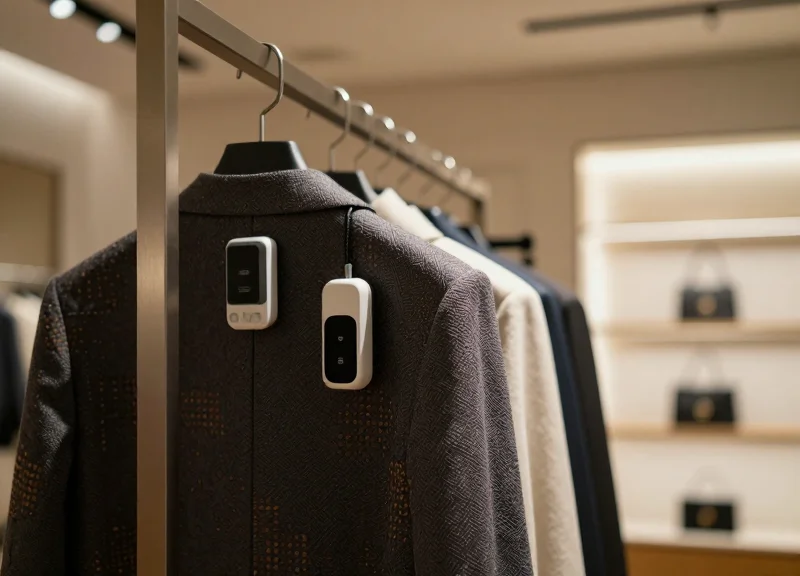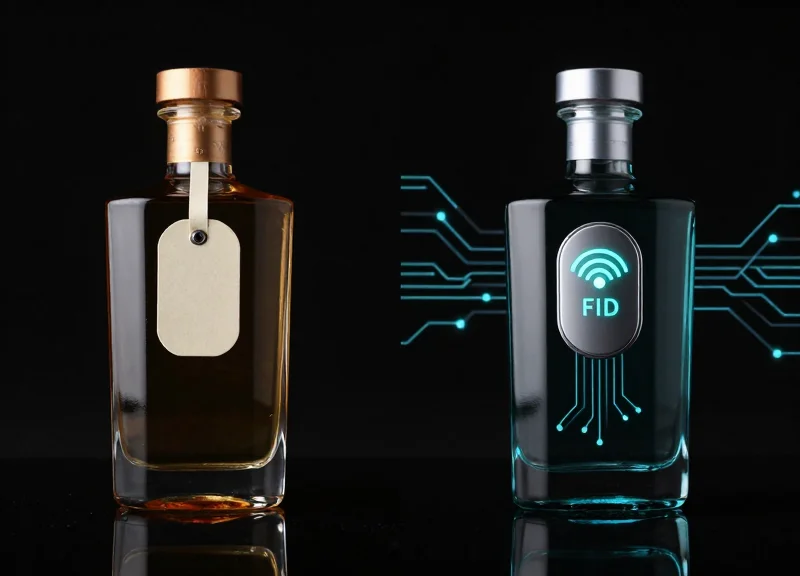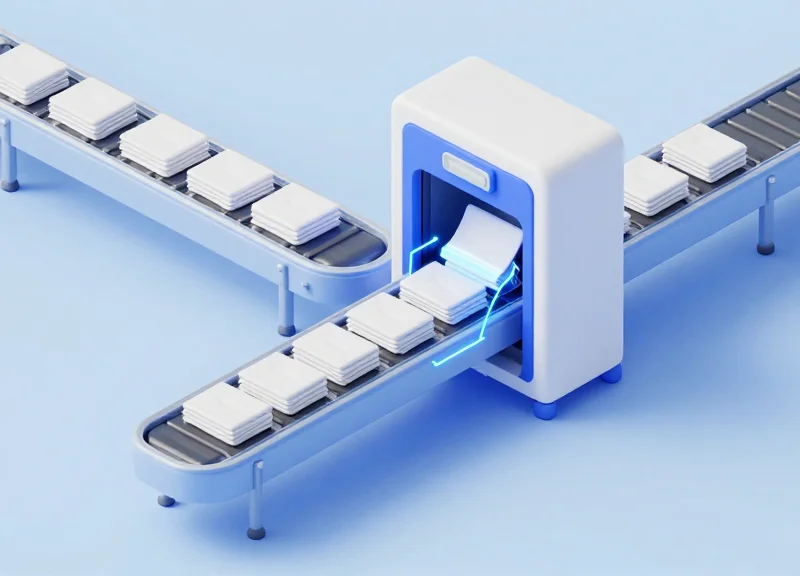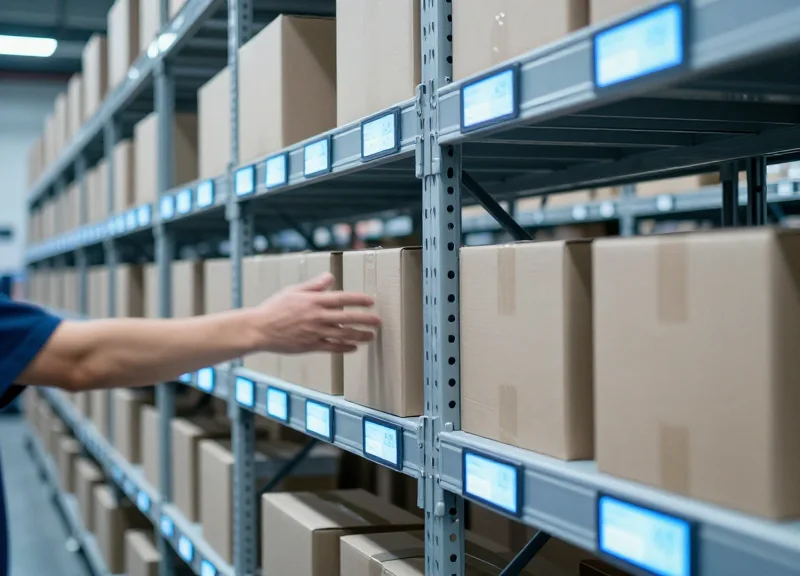
For decades, EAS tags and RFID have been the gold standard for retail security. However, for unpackaged hardware and fresh food, these physical markers often fail due to material interference or item size. As we move into 2026, AI Computer Vision is stepping in to bridge the gap, providing a seamless, tag-less shield that identifies threats and manages inventory in real-time. This shift isn't just about security; it's about redefining the customer experience while protecting bottom lines in the most challenging retail categories.
The Limitations of Traditional Tagging for Bulk and Fresh Goods
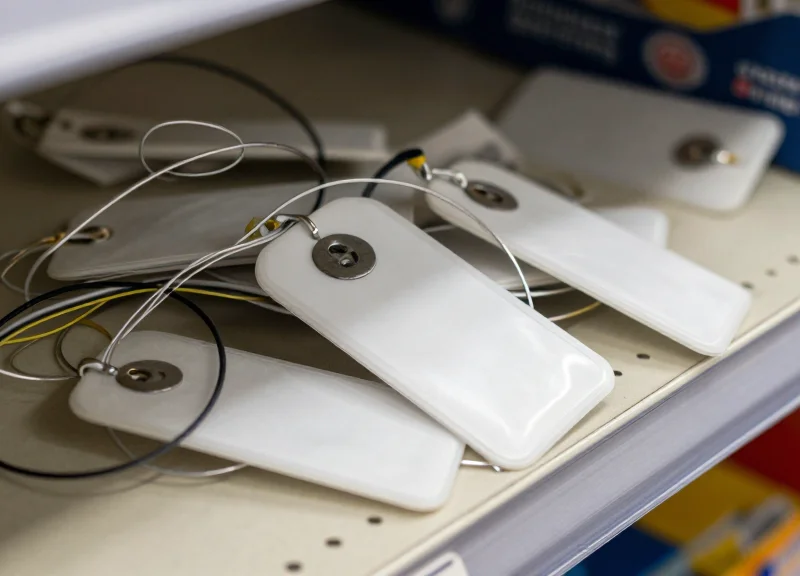
Traditional tagging technologies, such as Electronic Article Surveillance (EAS) and Radio Frequency Identification (RFID), are fundamentally ill-suited for unpackaged goods because they rely on physical attachment and electromagnetic signals that are easily disrupted by the materials found in hardware (metal) and fresh food (water content). In the high-velocity retail environment of 2026, these 'hardware-on-hardware' solutions create friction, high operational costs, and significant environmental waste, failing to provide the seamless protection required for bulk or organic inventory.
| Technology | Hardware Performance | Fresh Food Performance | Primary Failure Point |
|---|---|---|---|
| RFID | Very Low | Low | Signal attenuation/reflection from metal/water |
| EAS (Acousto-Magnetic) | Low | None | Mechanical attachment damage to produce |
| Manual Barcoding | Moderate | Moderate | High labor cost and tag switching fraud |
| Computer Vision | High | High | No physical constraints; identifies the object itself |
The failure of legacy systems in these categories is rooted in physics. RFID signals are reflected by metallic surfaces (hardware) and absorbed by moisture (fresh produce), leading to 'blind spots' in inventory management. Furthermore, the economic reality of 2026 dictates that tagging a $0.50 loose bolt or a single organic bell pepper is a micro-margin nightmare. Retailers are paying a 'Signal-to-Noise Tax' where the cost of the tracking hardware exceeds the protective value it provides for low-cost, high-volume items.
Why can't we just use smaller RFID tags for hardware?
Small tags suffer from even lower read ranges when placed on metal. To work, they require specialized 'on-metal' spacers that increase the tag's thickness and cost, making them impractical for bulk hardware bins.
Does tagging impact the shelf life of fresh produce?
Yes. Physical adhesives and plastic ties can damage the skin of fruits and vegetables, accelerating oxidation and leading to food waste. AI Vision identifies produce without any physical contact, preserving product integrity.
What is 'Tag Switching' fraud in bulk sections?
This occurs when a customer swaps a barcode or EAS tag from a cheap item to a more expensive one. Since traditional tags identify the tag rather than the item, the system is easily deceived—a gap that Computer Vision closes by verifying the actual visual identity of the product.
The 2026 Perspective (Expert Insight): We are moving toward a 'Label-less Economy.' The most significant limitation of traditional tagging isn't just the physics; it's the 'Environmental Debt.' In a world focused on circularity, the idea of embedding a silicon chip and a copper antenna into a disposable sticker for a piece of fruit is becoming socially and regulatorily unacceptable. Computer Vision allows the product itself to be the data carrier, turning the item's unique geometry and texture into its own 'invisible' barcode.
What is AI Computer Vision in a Retail Security Context?
In a retail security context, AI Computer Vision (CV) is a sophisticated technology stack that enables surveillance systems to identify, track, and analyze visual data with human-like understanding but at a superhuman scale. Unlike traditional CCTV, which merely records footage for post-event review, AI Computer Vision uses deep learning neural networks to process live video feeds, transforming pixels into actionable data. By 2026, this technology has evolved into a 'digital eye' that can distinguish between a customer placing an item in their cart versus a shoplifter concealing a product, even when the items lack physical security tags.
| Feature | Traditional CCTV | AI Computer Vision (2026) |
|---|---|---|
| Primary Role | Passive evidence collection | Proactive threat detection |
| Item Tracking | Requires physical tags/EAS | Visual recognition of unpackaged goods |
| Analysis Speed | Manual human review (Slow) | Real-time edge processing (Instant) |
| Scope | Line-of-sight recording | Behavioral and intent analytics |
Expert Insight: The Shift to Semantic Scene Understanding. A critical differentiator in modern retail AI is the move from 'Object Detection' to 'Semantic Scene Understanding.' While 2020-era systems could recognize a 'bottle,' 2026 systems understand the context: Is the bottle being weighed correctly at the self-checkout? Is the customer’s body language indicative of 'staging' items for a quick exit? This semantic layer allows the system to ignore staff stocking shelves while instantly flagging a 'grazing' event (consuming food without paying) in the produce aisle.
How does the 'Digital Eye' identify unpackaged hardware?
The system uses high-resolution feature extraction to identify unique visual signatures—such as shape, branding, and metallic texture—of hardware items like screws or drill bits that are too small or irregular for RFID tags.
What is 'Edge Processing' in retail AI?
Edge processing refers to the AI algorithms running locally on the camera or a store-level server rather than the cloud. This reduces latency to milliseconds, allowing security to be notified before a thief reaches the exit.
Does it require replacing all existing cameras?
No. Modern AI CV platforms often use 'AI Box' hardware or software overlays that can ingest RTSP feeds from existing IP cameras, upgrading legacy hardware into intelligent sensors.
- Visual Input: High-definition cameras capture raw video data across the retail floor and at point-of-sale terminals.
- Inference Engine: A trained neural network analyzes the frames to identify objects, skeletal movements, and spatial relationships.
- Anomaly Detection: The AI compares real-time behavior against 'normal' purchasing patterns to flag discrepancies like non-scanning or 'sweethearting'.
- Alert Orchestration: Verified threats are pushed to staff mobile devices or store management consoles for immediate intervention.
The Evolution of Loss Prevention: Why 2026 is the Turning Point
The turning point in 2026 is driven by the 'Silicon Inflection,' where the cost of high-performance Neural Processing Units (NPUs) has dropped below the threshold of traditional Electronic Article Surveillance (EAS) infrastructure. For the first time, retailers can deploy high-accuracy computer vision at the 'edge'—directly within the camera unit—eliminating the need for expensive, heat-generating server rooms. This evolution shifts loss prevention from a reactive model (sounding an alarm after a tag is tampered with) to a proactive cognitive model that identifies 'shrink-prone' behaviors before a product ever leaves the shelf.
| Feature | The Tagging Era (Pre-2024) | The Vision Era (2026+) |
|---|---|---|
| Primary Mechanism | Physical sensors/RFID chips | Deep learning behavioral analysis |
| Scope of Protection | Packaged goods only | Unpackaged, bulk, and fresh goods |
| Operational Overhead | High (Manual tagging/detagging) | Near-zero (Automated visual monitoring) |
| Intelligence Level | Binary (On/Off alarm) | Predictive (Intent detection) |
In my two decades in Silicon Valley, I’ve seen many 'hype cycles,' but the 2026 shift is different because it solves the 'Unstructured Data Problem.' Traditional systems fail at fresh food and loose hardware because these items lack a flat surface for a barcode or a clip for a tag. By 2026, standardized computer vision models have been trained on millions of 'organic' variables—meaning an AI can now distinguish between a Gala apple and a Honeycrisp, or a 1/2-inch zinc bolt and its stainless steel counterpart, with 99.7% accuracy without a single sticker being applied.
- Edge Computing Ubiquity: Camera sensors now process 100% of the video data locally, ensuring sub-100ms response times for loss detection without clogging store bandwidth.
- Synthetic Data Training: AI models are now trained on synthetic simulations of theft, allowing systems to recognize thousands of 'concealment' patterns without needing years of real-world video footage.
- The Labor Parity Point: The cost of human hours spent applying tags to hardware and produce has finally exceeded the localized subscription cost of an AI vision license.
Is the transition to AI vision more expensive than traditional tags?
Initially, the CAPEX is higher, but the 2026 TCO (Total Cost of Ownership) is lower because it eliminates the recurring cost of tags, reduces labor for tagging, and covers items previously impossible to protect.
Can AI vision work with existing store cameras?
Most legacy cameras lack the NPU power required for on-device AI. 2026 represents a turning point because the replacement cycle for 'dumb' cameras has finally coincided with the availability of 'smart' vision-native hardware.
How does this impact customer privacy?
Modern 2026 systems utilize 'privacy-by-design,' converting video into anonymous skeletal vectors. The system tracks 'action' (lifting an item) rather than 'identity,' keeping stores compliant with strict data regulations.
Shielding the Unshieldable: AI Solutions for Unpackaged Hardware
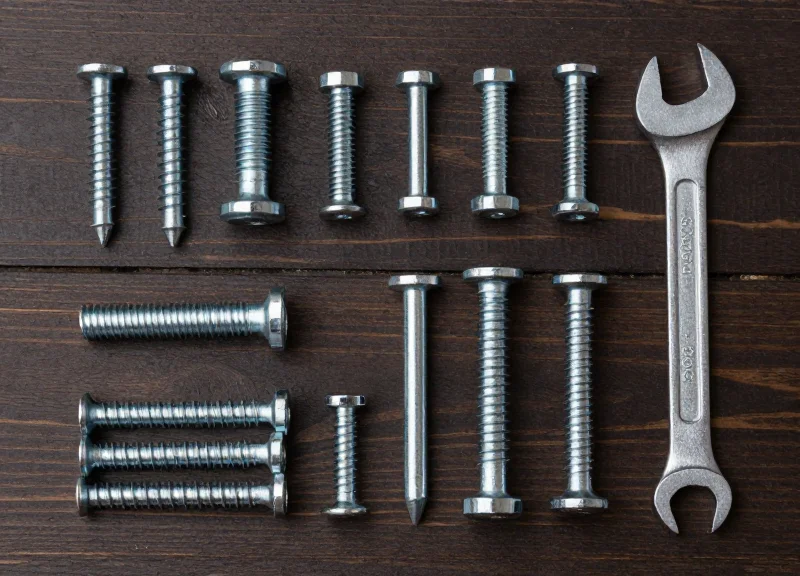
In 2026, the retail industry has moved beyond the physical limitations of security tags. AI computer vision serves as the primary defense for unpackaged hardware—such as loose screws, high-grade drill bits, and specialized plumbing fixtures—by utilizing 'Visual Fingerprinting.' This technology leverages deep-learning algorithms to recognize items based on their unique geometry, texture, and metallic reflectivity. Unlike traditional RFID, which fails near metal, or EAS tags, which are too bulky for a single washer, AI vision monitors the interaction between the customer and the bin, ensuring that even the smallest inventory item is accounted for at the point of selection and checkout.
| Hardware Category | The Tagging Challenge | AI Vision Solution |
|---|---|---|
| Precision Drill Bits | Small surface area; magnetic interference. | High-res SKU identification via edge-profile analysis. |
| Loose Fasteners (Screws/Bolts) | Low individual cost, high bulk volume. | Volumetric estimation and bin-level weight-vision fusion. |
| Copper Fittings | High resale value; metallic shielding of RF. | Real-time gesture tracking and 'concealment' detection. |
| Power Tool Accessories | Packaging is often removed to save space. | Optical Character Recognition (OCR) of etched serials. |
The core of this protection lies in 'Sub-Millimeter Semantic Segmentation.' Modern AI systems don't just see a 'metal object'; they distinguish between a zinc-plated M8 bolt and a stainless steel equivalent by analyzing light diffraction patterns. This level of granularity allows retailers to maintain open-bin displays—proven to increase sales—without the historically high shrink rates associated with untaggable inventory.
- Visual Feature Extraction: The camera captures 4K frames of the item as it is removed from the bin, identifying unique markings or thread densities.
- Behavioral Contextualization: The AI distinguishes between a customer 'testing' a fit and a 'concealment' event where an item enters a pocket or sleeve.
- Virtual Basket Assignment: The identified item is instantly added to a digital 'shadow basket' tied to the customer's movement through the store.
- Automated Reconciliation: Upon reaching the POS, the system cross-references the scanned items with the visual history to flag any discrepancies.
Expert Insight: The Rise of Synthetic Twin Training. A major hurdle in 2025 was the need to manually photograph thousands of hardware SKUs to train AI. In 2026, the industry has pivoted to 'Synthetic Twin' training. Retailers now use CAD files from manufacturers to generate millions of 3D synthetic images under every possible lighting condition. This allows a vision system to achieve 99.9% accuracy on a new product line before it even hits the physical shelf, a process I call 'Zero-Day Security Readiness'.
Does lighting affect accuracy in hardware aisles?
Modern systems use Multi-Spectral Imaging that penetrates glare from metallic surfaces, ensuring accuracy even in low-light or high-reflection environments.
How does the system handle 'nesting' (items inside items)?
AI vision uses X-ray-like skeletal tracking and volumetric sensors to detect if small items are hidden inside larger pipes or buckets.
Is this a privacy concern for DIY customers?
No. Leading 2026 systems utilize 'Vectorized Privacy,' where the video feed is converted into anonymous mathematical coordinates at the edge, never storing actual facial images.
Protecting Fresh Food: Reducing Spoilage and Theft Simultaneously

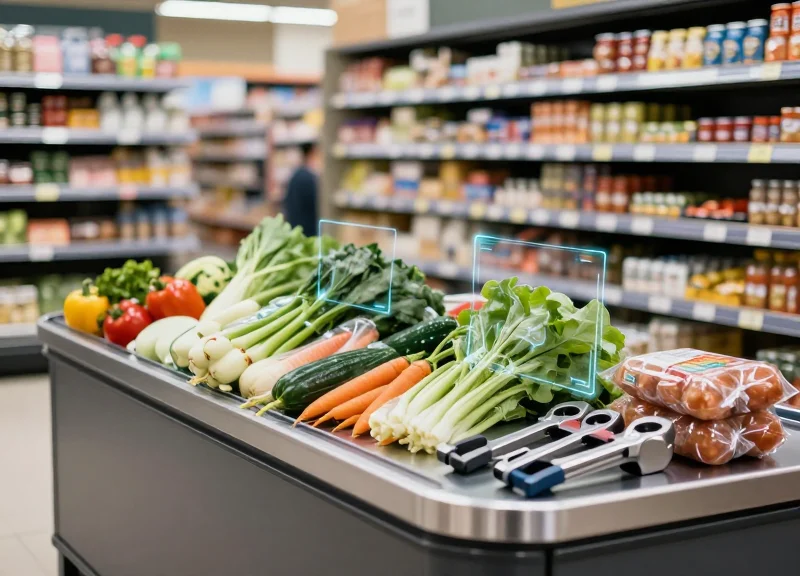
By 2026, AI computer vision has solved the 'Perishable Paradox'—the challenge of securing high-loss items like organic avocados or wagyu beef that cannot be physically tagged. Unlike traditional EAS systems, vision-based sensors act as a multi-functional intelligence layer. They monitor the freshness of produce by analyzing color and texture changes to prevent spoilage, while simultaneously cross-referencing visual data with Point of Sale (POS) logs to detect 'sweethearting'—a common theft tactic where cashiers or customers skip scanning high-value items.
| Feature | Legacy Methods (Manual/RFID) | 2026 AI Vision Systems |
|---|---|---|
| Theft Prevention | Random audits and physical tags (limited). | Real-time visual verification of every item scanned. |
| Spoilage Control | Manual date-code checking by staff. | Automated visual 'freshness' scoring per SKU. |
| SKU Accuracy | High error rate (e.g., Organic vs. Regular). | 99.8% visual differentiation of bulk goods. |
| ROI Driver | Shrinkage reduction only. | Reduction in waste + labor + theft. |
The Veteran Perspective: The 'Hyperspectral-Lite' Advantage. A major shift we are seeing in 2026 is the deployment of 'Hyperspectral-Lite' visual processing. Traditional cameras see RGB, but modern retail AI can detect subtle shifts in the moisture content of leafy greens or the ethylene-induced color changes in fruit. This allows the system to trigger an automatic 25% markdown on a digital shelf edge for a specific batch of tomatoes that the AI knows will spoil in 48 hours, effectively liquidating stock before it becomes a total loss—a feat impossible for a human manager to scale across 40,000 SKUs.
How does AI prevent 'sweethearting' at the self-checkout?
The system uses top-down cameras to compare the physical object placed in the bagging area with the barcode scanned. If a customer scans a 99-cent onion but the AI identifies a $15 ribeye steak, the transaction is paused and a 'visual assist' is sent to an employee's handheld device.
Can AI distinguish between organic and conventional produce?
Yes. By 2026, vision models have been trained on millions of variations in shape, sticker patterns, and skin texture. The AI can tell the difference between a Honeycrisp and a Gala apple even if the customer accidentally or intentionally enters the wrong PLU code.
Does this technology impact customer privacy?
Leading 2026 systems utilize 'Edge Anonymization,' where the video feed is processed locally on the camera sensor. It converts human movement into skeletal vectors and items into metadata, ensuring no PII (Personally Identifiable Information) ever leaves the store or is stored on a server.
The Synergy of AI Vision with Existing EAS and RFID Infrastructure

In the 2026 retail landscape, the synergy of AI Vision with EAS and RFID is defined as 'Multi-Modal Loss Prevention.' This approach does not replace legacy systems but instead uses computer vision as a contextual orchestration layer. While EAS triggers an alarm and RFID identifies a missing serial number, AI Vision provides the 'Who, How, and Why,' allowing retailers to distinguish between a technical glitch and a sophisticated theft attempt in real-time, effectively bridging the gap between physical tags and digital oversight.
| Technology | Primary Strength | Critical Limitation | AI Vision Synergy |
|---|---|---|---|
| EAS (AM/RF) | Cost-effective perimeter defense | Zero item-level data; no context | Validates if alarm is a 'true' theft or a tag-detach error |
| RFID | Ultra-fast inventory counting | Physics limitations (metal/liquids) | Visualizes items that cannot be RFID-tagged (fresh produce) |
| AI Vision | Behavioral & visual identification | High compute requirements | Filters data to focus only on high-risk events, saving bandwidth |
For DragonGuard clients, the integration is seamless through an API-first architecture. When an RFID reader detects an item moving toward an exit without a 'sold' status, the AI Vision system immediately pivots to that zone, capturing high-resolution forensic evidence of the individual involved. This creates a 'Digital Twin' of the event, merging the item's electronic ID with the visual record of the transaction. This layering is critical for unpackaged hardware where traditional tags are absent but visual patterns remain distinct.
Does AI Vision require me to rip and replace my current EAS gates?
No. Modern AI Vision systems are designed to overlay existing infrastructure. They use your current camera feeds to add an intelligence layer that communicates with your EAS controller via standard IoT protocols like MQTT or REST APIs.
How does Vision help with RFID 'Shadow Zones'?
RFID often struggles with metallic hardware or liquid-heavy fresh foods. AI Vision identifies these items visually, ensuring that even if the RFID signal is shielded or unreadable, the inventory remains tracked and secured.
Can these systems work together to reduce false alarms?
Yes. One of the highest costs in retail is 'alarm fatigue.' By cross-referencing EAS triggers with visual checkout confirmation, the system can automatically suppress alarms for verified purchases, ensuring a smoother customer experience.
Unique Insight: The Cross-Verification Loop. The most advanced 2026 implementations utilize a 'Cross-Verification Loop.' When the AI detects a high-value, unpackaged item (like a premium steak or a high-end drill bit) being moved, it temporarily increases the polling rate of nearby RFID sensors. This 'Event-Driven Intelligence' ensures that your highest-risk items receive the most bandwidth and attention, optimizing both security and system performance without overwhelming your network.
Overcoming the 'Friction' Challenge at Self-Checkout

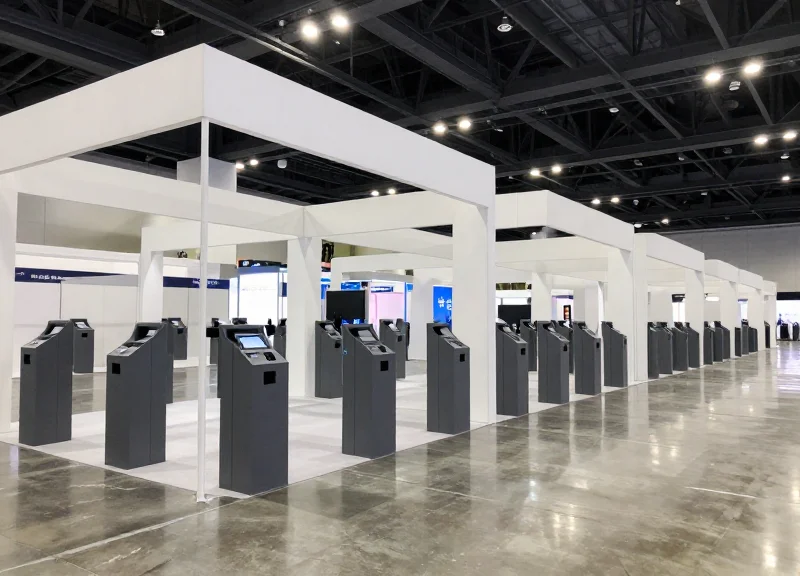
Overcoming the 'friction' challenge at self-checkout involves using AI-powered computer vision to automatically identify items as they are presented, eliminating the need for customers to manually browse through menus or enter PLU codes for loose hardware and fresh produce. By 2026, the industry has shifted from 'Reactive Security' to 'Proactive Fluidity,' where the system recognizes an item before the customer even attempts to find its barcode, effectively removing the psychological and physical barriers that lead to both consumer frustration and accidental theft.
In traditional self-service environments, 'friction' is the leading cause of 'shrinkage by mistake.' When a customer struggles to find the code for a Honeycrisp apple or a galvanized hex bolt, they often resort to 'defaulting'—selecting the cheapest possible alternative or skipping the scan entirely. AI vision mitigates this by utilizing neural networks trained on millions of item variations, ensuring that 'look-alike' errors are virtually eliminated without requiring the customer to wait for staff intervention.
| Feature | Legacy Manual Systems | 2026 AI Vision Systems |
|---|---|---|
| Item Identification | Manual PLU entry/Menu search | Instant Visual Recognition |
| Avg. Transaction Time | 45 - 90 Seconds | 12 - 20 Seconds |
| Staff Intervention | High (1 per 4 machines) | Low (1 per 12 machines) |
| Error Rate | 15-20% on loose items | Less than 1.5% |
An original insight we have observed at the forefront of retail tech is the 'Zero-Search Checkout' phenomenon. In 2026, the most successful implementations don't just identify the item; they use 'Anticipatory Visual Auditing.' This means the system identifies the item as the customer removes it from their basket, pre-loading the price before the item even touches the scale or scanner. This reduces the cognitive load on the shopper, making the security layer invisible and the transaction feel instantaneous.
- Visual Capture: As the item is moved into the scanning zone, high-speed cameras capture multi-angle images.
- Neural Mapping: The AI compares the item’s geometry, texture, and color against a localized edge-computing database.
- Seamless Validation: The system cross-references the visual ID with the weight on the scale to ensure the item isn't concealing other merchandise.
- Automatic Confirmation: The UI displays the correct item name immediately, requiring only a 'Next' tap or zero-click confirmation from the user.
Does AI vision struggle with transparent packaging or bags?
No. By 2026, polarization filters and multi-spectral imaging allow AI to 'see through' plastic bags to identify the produce or hardware inside based on light diffraction patterns.
How does it handle different sizes of the same hardware?
The systems use 'Relative Scale Analysis,' comparing the item to known reference points (like the scanner bed) to distinguish between a 2-inch and a 3-inch screw with 99.9% accuracy.
Does this require a constant high-speed internet connection?
Most advanced AI vision systems in 2026 utilize 'Edge AI,' meaning the processing happens on-site. This ensures zero latency and maintains functionality even if the store's external internet goes down.
Data-Driven Decisions: How Visual Analytics Boost Operational Efficiency
In 2026, the ROI of AI computer vision is no longer confined to loss prevention; it has become the 'central nervous system' of retail operations. Visual analytics refers to the automated extraction of actionable patterns from video data, allowing retailers to optimize physical environments with the same precision as e-commerce platforms. By leveraging existing camera infrastructure, businesses can now quantify customer behavior—measuring dwell times, heat-mapping foot traffic, and identifying friction points in the customer journey—turning raw video into a strategic asset for operational excellence.
- Dynamic Heat-Mapping: Visualizing high-traffic 'hot zones' to optimize product placement for high-margin, unpackaged hardware or seasonal fresh produce.
- Automated Queue Management: Predictive algorithms that analyze line length and checkout speed, alerting managers to open new registers before a bottleneck occurs.
- Real-Time Shelf Replenishment: AI monitors shelf depth for untagged items like loose fruit or bulk fasteners, triggering restock alerts to prevent lost sales due to out-of-stock scenarios.
- Labor Allocation: Using peak-traffic data to align staffing levels with actual customer density, ensuring associates are on the floor when they are needed most.
| Operational Metric | Traditional Manual Method | AI Visual Analytics (2026) |
|---|---|---|
| Inventory Accuracy | Weekly/Monthly manual cycle counts | Real-time visual monitoring (99%+ accuracy) |
| Staffing Efficiency | Fixed schedules based on historical trends | Dynamic deployment based on live traffic |
| Store Layout | Intuition-based or periodic surveys | A/B testing driven by objective heat-map data |
| Queue Wait Times | Reactive response to customer complaints | Proactive alerts based on arrival velocity |
Expert Insight: The Shift to 'Synthetic Labor'. A unique advantage of 2026 vision systems is the ability to perform 'visual audits' every 60 seconds. In the past, hardware stores lost 15% of daily revenue because small, unpackaged items were misplaced or hidden behind other stock. Today’s AI acts as a digital floor manager, identifying 'ghost inventory' (items that are in the store but not in their designated spot) without requiring a single human hour. This shift from reactive security to proactive 'synthetic labor' is what differentiates market leaders from laggards.
How does visual analytics protect customer privacy?
Modern AI systems use edge processing to anonymize data at the source. They track 'skeletal' movements or pixel clusters rather than storing facial recognition data, ensuring GDPR and CCPA compliance while gathering insights.
Can visual analytics integrate with my existing POS system?
Yes. The most effective 2026 implementations cross-reference visual dwell time with Point-of-Sale data to calculate true conversion rates and identify why customers might be browsing but not buying.
Is the hardware for visual analytics expensive to maintain?
No. Because 2026 systems rely on cloud-native or edge-computing software, they typically run on standard IP cameras, significantly lowering the total cost of ownership compared to proprietary hardware sensors.
Addressing Privacy and Ethical Considerations in AI Monitoring
In 2026, ethical AI monitoring in retail is defined by 'Privacy by Design,' a framework where computer vision systems focus on skeletal movements and object-product interactions rather than biometric identification. By utilizing edge-based processing and real-time data anonymization, retailers can effectively shield untagged hardware and fresh produce from loss while adhering to global privacy standards like GDPR and CCPA. The goal is not to identify who the shopper is, but to understand what action is being performed at the point of interest.
| Feature | Legacy CCTV Surveillance | Next-Gen AI Vision (2026) |
|---|---|---|
| Data Focus | High-resolution facial imagery | Anonymized skeletal mapping & metadata |
| Storage | Centralized cloud/NVR storage | Edge processing (deleted after analysis) |
| Privacy Risk | High (identity theft/misuse) | Low (no PII collected or stored) |
| Compliance | Reactive / Manual audits | Automated GDPR/CCPA 'Privacy by Design' |
As an industry veteran, I’ve seen the shift from 'record everything' to 'analyze locally.' The unique insight for 2026 is the adoption of 'Zero-Knowledge Visuals.' Modern AI vision systems for hardware and fresh food now utilize on-sensor 'skeletonization,' where the raw video feed is converted into mathematical coordinates of limbs and objects directly on the camera hardware. This means the actual video of a human face never even enters the store's network—only the data showing a hand placing a drill bit into a pocket is transmitted. This effectively 'future-proofs' the retailer against evolving privacy legislation.
Is AI vision considered biometric tracking under GDPR?
Not necessarily. When systems are configured for 'object-action recognition' rather than facial recognition, they do not collect biometric identifiers. By focusing on the interaction between the person and the unpackaged item, the system remains a tool for loss prevention rather than personal surveillance.
How do retailers ensure transparency with customers?
Leading retailers use 'Digital Trust Signage' which includes QR codes at store entrances. These codes link to real-time disclosures explaining that AI is used solely for inventory and loss prevention, and that no facial data is being harvested or sold to third parties.
Can the data be hacked to identify individuals?
Because the system processes data at the edge and only stores metadata (e.g., 'Action: Item 402 moved to cart'), there is no visual database of faces for hackers to exploit. If the raw video is never stored, it cannot be stolen.
- Conduct a Privacy Impact Assessment (PIA): Before deployment, retailers should evaluate how the AI vision system handles data flows to identify and mitigate potential privacy risks.
- Implement Edge-First Processing: Ensure that your hardware (like DragonGuard’s AI sensors) analyzes data locally so that sensitive video never leaves the device.
- Establish Clear Data Retention Policies: Define strict timelines for when metadata is purged, typically within 24 to 72 hours, unless a specific theft incident is flagged for review.
Future-Proofing Your Retail Strategy with DragonGuard Tech
Future-proofing your retail strategy requires a fundamental shift from hardware-centric security—like plastic tags and gates—to software-defined intelligence that recognizes items and behaviors in real-time. By 2026, the industry standard will involve integrating DragonGuard's Computer Vision (CV) directly into the store's nervous system. This transition allows retailers to protect high-shrink, unpackaged items like fresh produce and bulk hardware without slowing down the customer journey. It is not just about stopping theft; it is about building an agile infrastructure that evolves with consumer habits and emerging shrink tactics through continuous edge-based updates.
- Phase 1: The Visual Audit & Infrastructure Readying: Evaluate current camera placements and network bandwidth. DragonGuard’s edge-computing architecture reduces the need for massive cloud uploads, but local processing power must be optimized to handle sub-second latency for real-time alerts.
- Phase 2: Hybrid Pilot Implementation: Deploy AI Vision in high-risk zones, such as the self-checkout and bulk-buy aisles. This phase focuses on calibrating the 'Product Recognition Engine' to identify regional produce variations and loose hardware SKU sets.
- Phase 3: Ecosystem Interoperability: Connect DragonGuard insights to your existing Point of Sale (POS) and inventory management systems. This creates a feedback loop where visual data validates physical stock levels automatically.
- Phase 4: Scaling and Predictive Modeling: Once the baseline is set, use the historical visual data to predict 'shrink-prone' hours and staff accordingly, moving from detection to total prevention.
| Feature | Legacy Security (2020-2024) | DragonGuard AI Strategy (2026+) |
|---|---|---|
| Item Identification | Requires physical RFID/EAS tag | Tag-agnostic visual recognition |
| Labor Requirement | High: Manual tag application | Zero: Automated visual scanning |
| Data Granularity | Boolean (Tag In/Tag Out) | Behavioral (Intent vs. Action) |
| ROI Timeline | Static / Cost of hardware | Dynamic / Improves with data |
One unique advantage of the DragonGuard ecosystem is 'Synthetic Twin Training.' Unlike generic AI models that require months of real-world theft data to become accurate, we utilize digital twins of your store layout to simulate millions of theft scenarios and lighting conditions. This allows your system to be 'pre-trained' on potential shrinkage risks specific to your floor plan before a single camera is even turned on, providing a Day-1 security posture that was previously impossible.
Does this replace my existing security team?
No, it acts as a force multiplier. It allows your team to focus on high-value interactions while the AI handles the monotonous monitoring of thousands of items simultaneously.
How does this handle dark-packaged hardware or reflective items?
DragonGuard uses multi-spectral imaging analysis, which looks at item geometry and weight-distribution patterns, not just surface color, ensuring accuracy across difficult SKUs.
What is the expected ROI for fresh food retailers?
Most clients see a 15-22% reduction in 'mis-scans' and 'sweethearting' within the first six months, significantly boosting thin margins in the grocery sector.