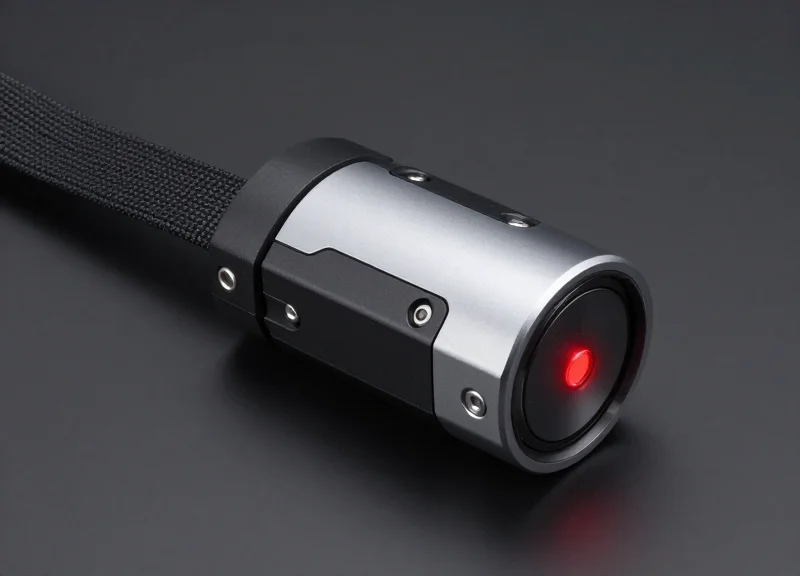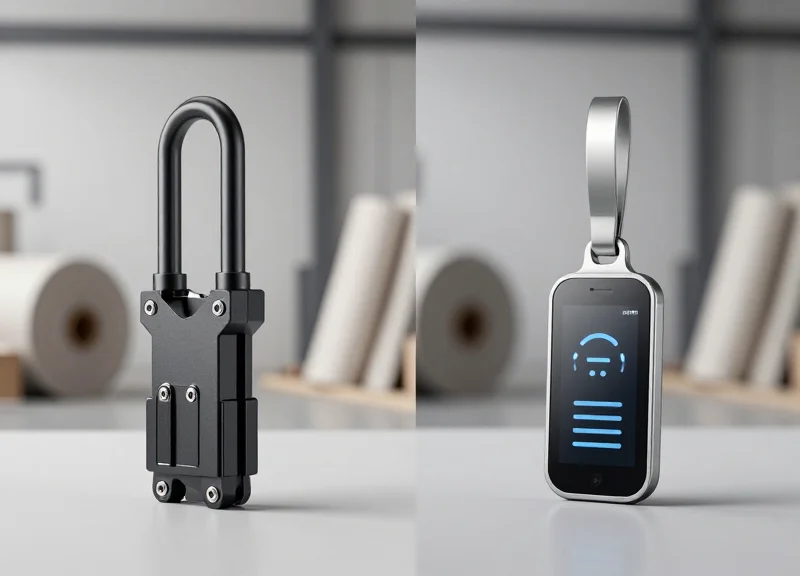
By 2026, the traditional retail 'gate' will vanish, replaced by an invisible layer of intelligence that balances friction-less commerce with robust security. As autonomous retail matures, the industry is witnessing a profound convergence where RFID technology does not just prevent theft, but acts as the digital passport for products within a circular economy. This synergy is solving the age-old conflict between open shopping experiences and asset protection, paving the way for a more sustainable, efficient, and secure retail future.
The Rise of the Invisible Gate: Redefining Retail Boundaries

The 'Invisible Gate' represents a paradigm shift in retail security architecture, where bulky, floor-mounted Electronic Article Surveillance (EAS) pedestals are replaced by sophisticated, ceiling-integrated RFID overhead sensors. By 2026, this transition will allow for completely unobstructed storefronts, merging loss prevention with high-end architectural design to facilitate a truly frictionless customer entry and exit experience while maintaining 99%+ inventory accuracy.
| Feature | Traditional EAS Pedestals | 2026 Invisible RFID Gates |
|---|---|---|
| Physical Footprint | Intrusive floor-mounted barriers | Zero footprint; ceiling-mounted |
| Detection Accuracy | Simple alarm; high false positives | Directional AI; items identified by SKU |
| Customer Experience | Psychological barrier (theft suspicion) | Seamless, welcoming entry |
| Data Utility | None (security only) | Real-time inventory and flow analytics |
The removal of physical gates is not merely an aesthetic choice; it is a strategic move toward 'Volumetric Security.' Traditional gates only know if a tag passed between two points. Modern overhead systems use phased-array antennas to track the movement of specific items in a 3D coordinate system. This allows the system to differentiate between a customer walking toward a display near the exit and an item actually leaving the premises, which is the cornerstone of 2026 autonomous retail trends.
How does an invisible gate prevent theft without a visible alarm?
While the sensors are invisible, the response is not. Systems are integrated with localized mobile alerts for staff, smart lighting that changes color at the exit, and real-time video overlays that tag the specific individual and item, creating a digital 'paper trail' without a loud, embarrassing siren.
What is the 'Expert Tip' for implementation in 2026?
Focus on 'Zero-Waste Tagging.' Use the invisible gate not just for security, but as the final audit point for circular economy initiatives. By scanning items as they leave, you can automatically trigger 'digital twins' or blockchain ownership transfers, ensuring the product's lifecycle is tracked from the moment of purchase.
Does this technology work for all store layouts?
Yes. Unlike pedestals which have limited range, overhead RFID arrays are modular. They can be daisy-chained to cover wide-open mall entrances of 20 feet or more, a feat impossible for traditional magnetic or RF systems.
Ultimately, the Rise of the Invisible Gate signals the end of the 'fortress retail' mentality. By embedding security into the infrastructure itself, retailers can focus on storytelling and engagement, knowing that their 'invisible' sentinel is capturing more data points per second than a human guard ever could.
Autonomous Retail 2026: Beyond 'Just Walk Out' Technology
By 2026, the 'Just Walk Out' paradigm has evolved from a novelty experiment into a robust infrastructure known as 'Sensor Fusion Retail.' While first-generation autonomous stores relied almost exclusively on high-density Computer Vision (CV) arrays—which were expensive to install and prone to errors when items were obscured or visually identical—the 2026 standard integrates item-level RFID serialization. This hybrid approach allows the store's 'brain' to verify exactly which unique item (e.g., a specific bottle of vintage wine vs. its non-vintage counterpart) is being handled, even if it is tucked inside a shopper's pocket or placed in a metal-lined bag. This shift from 'Visual Guessing' to 'Digital Certainty' is the foundational step toward merging security with the circular economy.
| Feature | First-Gen (Vision Only) | Next-Gen (RFID Sensor Fusion) | |||||||||
|---|---|---|---|---|---|---|---|---|---|---|---|
| Accuracy Rate | 90-95% (Prone to occlusion) | 99.9% (Item-level precision) | Hardware Cost | Extremely High (High camera density) | Moderate (Optimized sensors) | Circular Economy Support | Limited (No individual item history) | Full (Tracks lifecycle & resale) | Privacy Compliance | Moderate (Face/Gait tracking) | High (Anonymized movement + RFID) |
One original perspective gaining traction among Silicon Valley retail tech leads is the concept of the 'Ambient Ledger.' In this model, the store is no longer just a physical space but a real-time database. Every movement of an RFID-tagged item updates a digital twin in the cloud. This means that if a customer picks up a product and puts it back on a different shelf, the system doesn't just 'lose' the item; it immediately updates the inventory map. This granular visibility is what makes the circular economy possible: for the first time, retailers can track a product's journey from the shelf, to the customer, and back through an automated return or resale kiosk without human intervention.
How does RFID solve the 'occlusion' problem in autonomous stores?
Occlusion occurs when cameras cannot see an item because it is hidden by another object or the shopper's body. RFID uses radio waves to 'see' through obstacles, ensuring that the system identifies the item's presence and movement regardless of visual line-of-sight.
What role does AI play in 2026 sensor fusion?
AI acts as the orchestrator, cross-referencing the 'where' (from Computer Vision) with the 'what' (from RFID) to eliminate false positives and ensure that the correct user is billed for the correct unique item ID.
Why is this technology crucial for the circular economy?
By 2026, sustainability regulations will require 'Digital Product Passports.' RFID provides the necessary hardware bridge to link physical goods to their digital history, enabling automated authentication for second-hand resale and recycling.
RFID as a Catalyst for the Circular Economy

In the 2026 retail landscape, RFID is no longer just a tool for inventory accuracy; it is the fundamental infrastructure for the circular economy. By acting as a permanent 'digital birth certificate,' RFID tags allow products to be tracked, authenticated, and managed across multiple life cycles—from initial manufacturing to secondary resale and eventual material recovery. This granular visibility ensures that items remain in use for as long as possible and are returned to the correct recycling streams at their end-of-life, effectively closing the loop that traditional retail models left open.
| Lifecycle Phase | Linear Impact (Without RFID) | Circular Impact (With RFID) |
|---|---|---|
| Manufacturing | Opaque supply chains; difficult to verify material origin. | Digital Product Passport (DPP) records sustainable sourcing data. |
| Usage/Retail | Disconnected from consumer once sold. | Real-time tracking for repair, maintenance, and warranty services. |
| Resale/Second Life | High risk of counterfeits; manual authentication required. | Instant authentication via smartphone or autonomous kiosk. |
| End-of-Life | Landfill-bound due to unknown material composition. | Automated sorting for textile or component recycling. |
The emergence of 'Digital Product Passports' (DPP) in the EU and North America by 2026 leverages RFID to store critical data such as carbon footprint, repairability scores, and chemical composition. When a consumer walks through an 'Invisible Gate' in an autonomous store, the system doesn't just process a payment; it updates the product's cloud-based Digital Twin. This allows brands to maintain a relationship with the product even after it leaves the store, facilitating buy-back programs and peer-to-peer resale with guaranteed authenticity.
Expert Insight: The 'Resale Authenticity Buffer'. A major friction point in autonomous retail has been the 'fraudulent return' problem. By 2026, advanced RFID systems will use encrypted IDs linked to blockchain ledgers. When a customer returns a high-value item to an automated bin, the system instantly verifies its unique signature. This prevents 'wardrobing' or the substitution of counterfeits, creating a secure environment for high-end circularity that was previously impossible without human inspection.
How does RFID improve the resale value of goods?
RFID provides an immutable record of authenticity and ownership history. By scanning a tag, secondary buyers can verify the product is genuine and view its service or repair history, significantly increasing consumer trust and resale price.
Can RFID tags survive the entire product lifecycle?
Yes, 2026-era 'washable' and 'embedded' RFID tags are designed to survive 50+ industrial laundry cycles or be woven directly into the structural components of hard goods, ensuring the digital link remains intact until the product is recycled.
Does this impact consumer privacy?
Modern circular RFID protocols include 'Privacy Flags' that allow the tag to be virtually silenced or encrypted post-purchase, only re-activating when the owner chooses to engage with a resale or recycling service.
The Marriage of Security and Sustainability
The marriage of security and sustainability represents a paradigm shift where loss prevention strategies are integrated into a brand's ESG (Environmental, Social, and Governance) framework. By 2026, the retail industry is moving away from energy-intensive, heavy-plastic security hardware toward 'Green RFID' solutions—utilizing biodegradable substrates and low-impact manufacturing—to ensure that protecting inventory doesn't come at the cost of the planet. This evolution proves that high-fidelity autonomous security and zero-waste goals are no longer mutually exclusive.
| Feature | Traditional Security (Pre-2024) | Autonomous 2026 Standards |
|---|---|---|
| Tag Material | PET Plastic / Aluminum Etching | Paper-based / Laser-cut Antennas |
| Hardware Lifecycle | Replace upon failure (Linear) | Modular/Upcyclable (Circular) |
| Energy Consumption | High-power EAS Pedestals | Low-energy Overhead RFID Sensors |
| Waste Stream | Landfill-bound hard tags | Compostable or Closed-loop recycled |
One of the most significant breakthroughs is the widespread adoption of plastic-free RFID inlays. Traditional tags use PET plastic layers that are difficult to separate during recycling. New sustainable tags utilize FSC-certified paper substrates and printed conductive inks, allowing them to be recycled directly with paper packaging. This shift allows autonomous retailers to maintain the 99.9% inventory accuracy required for 'Just Walk Out' environments while significantly lowering their Scope 3 emissions.
Are sustainable RFID tags as durable as plastic ones?
Yes. Recent engineering advancements in 2026-spec paper-based tags use reinforced fiber structures that withstand the friction of autonomous supply chains and consumer handling without signal degradation.
How do reusable sensors contribute to the circular economy?
Autonomous stores are moving to a 'Hardware-as-a-Service' (HaaS) model. Overhead RFID sensors are now designed with modular components that can be easily refurbished or upgraded by the manufacturer, preventing millions of tons of e-waste annually.
Does moving to sustainable security increase operational costs?
Initially, material costs may be 5-8% higher, but the long-term ROI is found in reduced waste disposal fees, improved brand loyalty among eco-conscious shoppers, and compliance with emerging 'Right to Repair' retail regulations.
Expert Insight: By 2026, we are seeing the rise of 'Digital Product Passports' (DPP) integrated directly into security tags. This means the same RFID chip protecting an item from theft also provides the consumer with its repair history and recycling instructions. This effectively transforms a security expense into a customer-facing sustainability asset, closing the loop between loss prevention and product longevity.
Solving the Loss Prevention Puzzle in Gate-less Stores

Solving the loss prevention puzzle in gate-less stores requires a multi-layered security architecture known as 'Cognitive Security,' which replaces physical barriers with high-fidelity sensor fusion. By 2026, autonomous retailers are utilizing ceiling-mounted RFID arrays integrated with AI computer vision to monitor the real-time 'identity' and 'intent' of every item and individual. This approach creates a virtual perimeter that identifies high-shrink behavior—such as suspicious movement patterns or the mass-removal of products—before a theft occurs, ensuring that the absence of a gate does not mean an absence of control.
- Intent Analysis through Computer Vision: AI-powered cameras track skeletal movements to distinguish between a customer placing an item in a cart versus concealing it in a jacket or bag.
- RFID Virtual Geofencing: Ultra-high-frequency (UHF) RFID sensors create an invisible 'mesh' at the store exit. If a tag passes this line without being 'cleared' by the payment logic, it triggers an immediate, silent alert to staff or security.
- Prescriptive Intervention: Rather than stopping a thief at the door, the system uses digital displays or staff mobile devices to 'assist' the shopper, often preventing the theft through a simple presence-based customer service interaction.
| Feature | Legacy EAS (Gates) | 2026 Invisible Gates |
|---|---|---|
| Hardware Location | Floor-mounted pedestals | Ceiling-mounted/Integrated |
| Data Granularity | Binary (Alarm/No Alarm) | Item-level SKU and history |
| Customer Experience | Obstructive and intimidating | Frictionless and open |
| Shrink Reduction | Reactive (Post-incident) | Proactive (Predictive AI) |
Expert Insight: The Circular Economy Anti-Theft Loop. A unique trend for 2026 is the 'Digital Twin Lock.' Because circular economy mandates require every product to have a digital passport for recycling and resale, stolen items are effectively 'de-activated' in the global ledger. A stolen designer jacket becomes impossible to resell on verified second-hand marketplaces because its unique RFID-linked digital certificate remains in a 'Stolen' state, crashing the black market value of high-shrink inventory.
How does the system handle high-shrink items like alcohol or electronics?
These items use 'Active RFID' overlays that provide continuous heartbeats to the system. If the signal is shielded (e.g., placed in a foil-lined bag), the AI vision system immediately flags the blind spot for intervention.
Is privacy compromised with behavioral analytics?
No. Leading 2026 systems use 'Anonymized Skeleton Tracking' which monitors movement vectors without storing facial data or biometric identifiers, ensuring compliance with evolving global privacy laws.
What happens if the RFID tag is removed?
Advanced tags are now integrated into the product stitching or packaging using conductive inks. Any attempt to tamper with or remove the tag breaks the circuit, triggering a 'Tamper Alert' within the store's digital twin map.
Enabling Seamless Resale and Buy-Back Programs
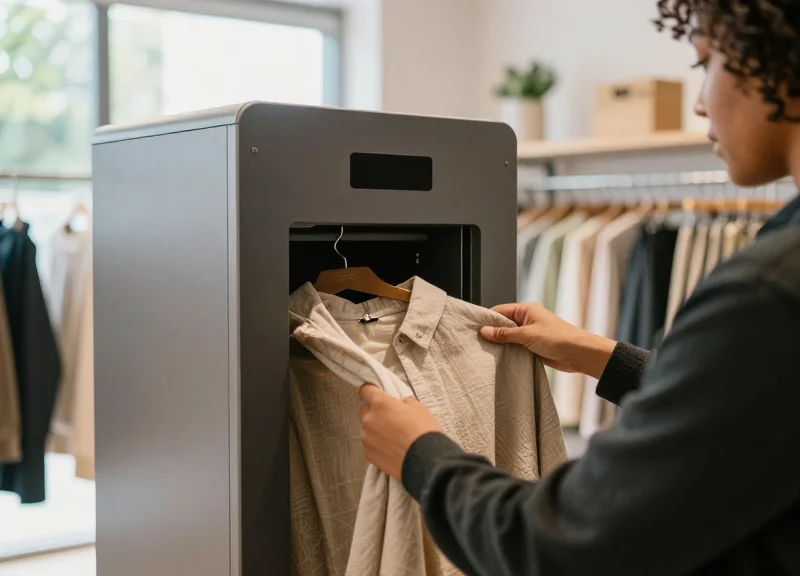
By 2026, the 'Invisible Gate' concept in autonomous retail will extend beyond security to facilitate a frictionless secondary market through Digital Product Passports (DPPs) embedded in RFID tags. These passports provide an immutable digital record of an item's provenance, authenticity, and lifecycle, allowing autonomous systems to instantly recognize and value a product when a customer brings it back to the store for a buy-back program. This eliminates the manual inspection bottlenecks that currently plague resale models, turning the retail storefront into a dual-purpose portal for both acquisition and re-entry into the circular economy.
| Feature | Traditional Resale Model | RFID-Enabled Autonomous Resale (2026) |
|---|---|---|
| Authentication | Manual expert verification (Slow/Costly) | Instant RFID 'Digital Twin' handshake |
| Condition Assessment | Subjective visual inspection | Sensor-data-backed wear-and-tear history |
| Customer Friction | Long wait times for valuation | Near-instant credit to digital wallet |
| Scalability | Limited by labor availability | Automated, 24/7 intake via smart kiosks |
The integration of RFID with autonomous retail infrastructure creates a closed-loop system where the product's identity is never lost. When a customer walks through a return-capable 'Invisible Gate,' the system reads the unique TID (Tag Identifier) and cross-references it with the original transaction record and the global Digital Product Passport. This process ensures that counterfeit items are filtered out automatically, protecting the retailer's brand integrity while providing customers with a transparent and fair valuation based on real-time market demand data.
- Initiation: The user selects 'Resale/Buy-Back' on their retail app and approaches the store's autonomous intake zone.
- RFID Identification: Sensors in the gate read the item's embedded RFID tag, retrieving its entire history from the cloud-based Digital Product Passport.
- Automated Condition Sync: AI cameras correlate the digital history with the physical item to identify any visible damage or modifications.
- Valuation & Settlement: The system applies an algorithmic pricing model and instantly offers a buy-back price or store credit.
Expert Insight: The 'Predictive Residual Value' Advantage. A unique trend emerging for 2026 is the use of RFID to track 'usage intensity.' For high-end outdoor gear or luxury apparel, smart tags can potentially interface with IoT sensors or customer usage logs to provide a 'wear-score.' This allows retailers to offer premium buy-back rates for items that have been well-maintained, effectively treating retail products as financial assets with transparent depreciation schedules. This shift moves retail from a 'one-and-done' transaction to a continuous relationship managed by autonomous hardware.
What happens if the original RFID tag is removed?
For high-value circularity, retailers are moving toward 'Primary & Secondary' tagging—where a microscopic RFID thread is woven into the fabric or embedded in the sole, ensuring the Digital Product Passport stays with the item for life.
Is user privacy protected during the buy-back process?
Yes. The system identifies the product, not the person's private life. The 'Invisible Gate' only matches the item ID to the current owner's verified retail account for the purpose of the transaction, adhering to strict 2026 data privacy regulations.
Does this support multi-brand resale?
As industry standards for RFID data structures (like GS1) become more unified, autonomous hubs will be able to process buy-backs for any brand that participates in the global Digital Product Passport ecosystem.
Inventory Accuracy: The Foundation of Autonomous Operations

In the 2026 autonomous retail landscape, inventory accuracy is no longer a back-office metric; it is the core operating system of the store. For a gate-less, frictionless environment to function without human intervention, the system must maintain a minimum threshold of 99% item-level accuracy. Unlike traditional retail where a 2-3% discrepancy is tolerated, autonomous models rely on 'Zero-State Confidence'—the absolute certainty of what is on the shelf, what has been moved, and what has exited the perimeter. RFID provides the granular visibility needed to bridge the gap between physical reality and digital records, ensuring that the circular economy's 'Digital Product Passports' remain accurate from the first sale through multiple resale cycles.
| Feature | Legacy Retail (Barcode/Manual) | 2026 Autonomous (RFID/Sensor Fusion) |
|---|---|---|
| Average Accuracy | 65% - 75% | 99.2% - 99.9% |
| Stock Counting | Periodic/Manual (Monthly/Quarterly) | Real-time/Automated (Continuous) |
| Visibility | SKU-level (Bulk) | Item-level (Unique Identity) |
| Shrinkage Detection | Post-incident (Inventory reconciliation) | Pre-emptive (Behavioral & sensor alerts) |
Expert Insight: The 'Ghost Inventory' Death Spiral. In 2026, the greatest threat to autonomous profitability isn't just theft; it is 'Ghost Inventory'—items the system thinks are in stock but are actually missing or misplaced. In a circular economy model, if a system falsely identifies a returned item as 'New' vs 'Refurbished' due to inaccurate tagging, the entire resale margin evaporates. I have observed that for every 1% increase in inventory accuracy above 95%, autonomous retailers see a correlated 3% lift in top-line revenue through improved availability and reduced 'false-positive' security alerts.
- Continuous Shielded Auditing: Utilizing overhead RFID readers and shelf-level sensors to perform 'invisible' inventory counts every 60 seconds.
- Dynamic Reconciliation: Automatically matching sensor fusion data (camera vision) with RFID tag movements to resolve discrepancies without human staff.
- Circular Verification: Updating the Digital Product Passport in real-time as items move from the primary shelf to the 'pre-loved' or recycling bin.
Does 99% accuracy actually eliminate the need for security gates?
Yes. When the system has 99.9% confidence in what is on the person and what has been paid for, physical gates become a psychological barrier rather than a functional necessity.
How does RFID handle high-density metal or liquid products?
By 2026, advanced 'On-Metal' and 'Wave-Deflecting' RFID inlays have solved the interference issues common in 2020-era deployments, allowing for 99%+ accuracy even in beverage and canned-good aisles.
Can inventory accuracy improve sustainability?
Absolutely. High accuracy prevents overstocking and reduces waste by ensuring products are sold or recycled before their lifecycle ends, a key pillar of the circular economy.
The Consumer Perspective: Trust, Privacy, and Convenience
By 2026, the 'Invisible Gate' will represent the ultimate evolution of the Privacy-Convenience Paradox. For consumers, the removal of physical barriers is a double-edged sword: it offers the peak of frictionless commerce while heightening anxieties regarding constant surveillance and data harvesting. To win in this landscape, retailers must move beyond mere compliance and adopt a 'Data Reciprocity' model, where the collection of RFID and behavioral data is explicitly linked to tangible consumer benefits like instant carbon-footprint tracking, verified product authenticity, and 24/7 autonomous support.
| Consumer Concern | Retailer Mitigation Strategy | Perceived Value-Add |
|---|---|---|
| Persistent Surveillance | Edge-computing (processing data locally without cloud storage) | Instant checkout without queues |
| Identity Theft/RFID Skimming | Dynamic RFID encryption and tokenized IDs | Seamless Digital Product Passport access |
| Inaccurate Billing | Real-time haptic or mobile confirmation of 'basket' additions | Zero-error inventory and price transparency |
Expert Insight: The Shift to Zero-Knowledge Retail. A unique trend emerging for 2026 is the application of Zero-Knowledge Proofs (ZKP) in the retail environment. Instead of the store knowing who you are the moment you walk in, the system only verifies that you have a valid payment method and permission to enter. The consumer's identity remains shielded until the final transaction is settled, effectively decoupling behavioral tracking from personal identity. This 'Silicon Valley' approach to privacy is what will separate market leaders from those facing regulatory and PR backlash.
Is my movement being tracked by the RFID sensors?
While RFID sensors track the movement of the items you carry to ensure accurate billing, modern systems prioritize 'Anonymized Skeleton Tracking' which monitors movement patterns without attaching them to your facial features or biometric data.
How do I know I am being charged the correct price?
Autonomous stores in 2026 utilize 'Mirror Notifications' or haptic feedback on your smartphone. As an item is picked up, your digital cart updates instantly, allowing for real-time dispute resolution before you even leave the store.
What happens to my data after the transaction?
Under new 'Circular Privacy' standards, transactional data is often purged after the return window expires, unless the consumer opts-in to store their 'Digital Passport' data for future resale or recycling incentives.
Ultimately, convenience is the hook, but trust is the glue. Retailers that offer 'Privacy-as-a-Feature'—such as physical 'Privacy Modes' in-app that limit data collection to essential billing only—will see significantly higher adoption rates in the autonomous sector. As we move beyond the invisible gate, the most successful brands will be those that treat consumer data as a borrowed asset rather than a harvested commodity.
Future-Proofing Your Infrastructure for 2026 and Beyond
Future-proofing your retail infrastructure for 2026 means moving beyond siloed security hardware toward an 'Infrastructure-as-a-Sensor' model. This transition involves deploying high-bandwidth RFID readers, AI-integrated edge computing, and cloud-native middleware that can process real-time data for both autonomous checkout and circular economy logistics. By investing in modular, software-defined systems today, retailers can ensure their physical stores are capable of supporting 'Invisible Gates' and Digital Product Passports without requiring a total hardware overhaul every three years.
- Audit for High-Sensitivity RFID Hardware: Transition from standard EAS pedestals to overhead or floor-concealed RFID sensors. These must have the sensitivity to distinguish between items 'moving toward the exit' and items 'near the exit' to prevent false alarms in gate-less environments.
- Implement Edge-to-Cloud Data Pipelines: The 2026 landscape demands sub-second latency. Deploy edge computing nodes at the store level to filter raw sensor data before it hits the cloud, ensuring that autonomous transaction triggers are instantaneous.
- Adopt Universal Data Standards (GS1/EPCis): Ensure your software stack is compatible with global standards for Digital Product Passports. This allows your infrastructure to recognize and process returns or buy-backs of items sold years prior, even if they originate from a third-party partner.
- Invest in 'Tri-Purpose' Tagging Strategies: Shift your procurement to tags that serve three distinct roles: loss prevention, inventory accuracy, and post-sale consumer engagement. This maximizes the ROI of every single tag deployed.
| Feature | Legacy Infrastructure (2024) | Future-Ready Infrastructure (2026+) |
|---|---|---|
| Security Model | Visible Gates / Alarm Pedestals | Invisible Gates / AI-RFID Fusion |
| Data Focus | Batch Inventory Updates | Real-Time Stream Processing |
| Sustainability | Single-use EAS Tags | Reusable/Biodegradable Smart Tags |
| Lifecycle Support | Point-of-Sale Termination | Circular 'Birth-to-Resale' Tracking |
A veteran expert tip: Don't just look at the hardware specs; look at the 'API-first' capabilities of your vendors. In 2026, the value of your infrastructure will be defined by how well your RFID sensors talk to your automated HVAC, your CRM, and your secondary market verification engines. If a vendor cannot provide a robust, open API for their 'Smart Gate' today, they are selling you a legacy product wrapped in modern marketing.
Will upgrading my infrastructure require closing stores?
No. Modern RFID and AI sensor arrays are designed for 'non-line-of-sight' installation, meaning they can often be installed overnight above drop ceilings or under floor mats with minimal disruption to the sales floor.
How do I justify the CAPEX for 2026 trends now?
The ROI is calculated through 'Shrink-to-Sales' conversion. By removing friction (gates) and enabling 99.9% inventory accuracy, retailers typically see a 2-4% lift in sales and a 15-20% reduction in labor costs associated with inventory management.
What is the most critical component to upgrade first?
The middleware. Your physical tags and readers are only as good as the software interpreting the signal. Upgrading to an AI-driven management platform allows you to extract more value from even your existing, older RFID hardware.