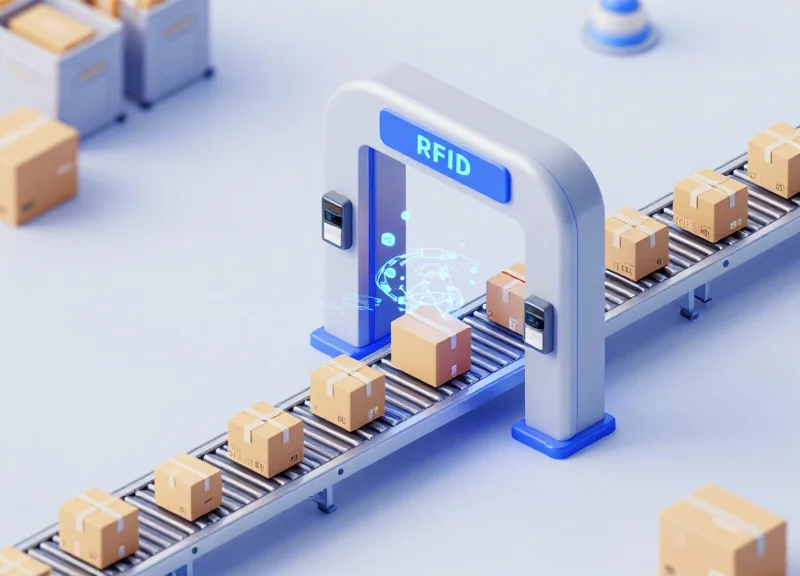
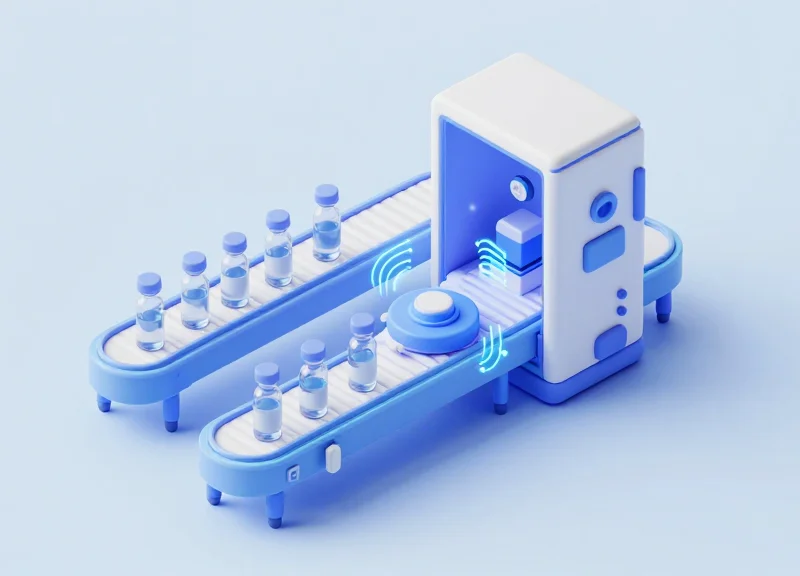
In the high-stakes world of pharmaceutical logistics, inventory accuracy is the difference between operational excellence and costly compliance failures. For years, the industry faced a physical barrier: liquids. Because water and saline solutions absorb Radio Frequency (RF) energy, standard RFID tags often fail in liquid-dense environments, leading to 'blind spots' in the supply chain. Today, however, breakthroughs in optimized RFID shielding and tag design have pushed detection rates to a staggering 99.9%. This article explores the technical innovations and strategic ROI benefits of deploying specialized RFID solutions tailored for the pharmaceutical sector's most challenging environments.
The Physics of Failure: Why Liquids Are RFID's Greatest Enemy

In pharmaceutical logistics, the primary reason RFID systems fail is due to the electromagnetic properties of aqueous solutions. Passive UHF RFID operates in the 860-960 MHz range, where water acts as a significant 'RF sink.' Because water molecules are polar, they attempt to align with the rapidly oscillating electric field of the RFID signal. This molecular friction converts the radio frequency energy into minute amounts of heat, a process known as dielectric heating. Consequently, the signal intended to power the RFID tag is absorbed before it reaches the chip, or the backscatter signal is too weak to return to the reader, resulting in data gaps and 'blind spots' in the supply chain.
| Material Medium | Dielectric Constant (εr) | RF Impact Level | Effect on Signal |
|---|---|---|---|
| Air / Vacuum | 1.0 | Negligible | Optimal propagation |
| Polyethylene (Plastic) | 2.2 - 2.4 | Low | Minor detuning |
| Pure Water | 80.1 | Extreme | Significant absorption/refraction |
| Pharma Saline (IV) | 75 - 85 | Critical | High attenuation + Ionic loss |
A critical, often overlooked factor in pharmaceutical ROI is the 'Loss Tangent.' While many generic guides discuss water generally, pharmaceutical grade liquids like saline or protein-heavy biologics contain ions and conductive particles. This increases the liquid's conductivity, leading to 'Ionic Loss.' In these environments, the RF signal doesn't just dissipate; it is actively shielded by the conductive properties of the solution. This creates a 'Faraday-like' effect within the bottle, making it nearly impossible for standard tags to harvest enough energy to wake up the integrated circuit (IC).
Why can't we just increase the reader power to penetrate liquids?
Increasing power (RSSI) often backfires due to multipath interference. The signal reflects off liquid surfaces and metal infrastructure, creating 'null zones' where waves cancel each other out, potentially decreasing read rates despite higher output.
How does liquid affect the RFID tag's antenna design?
Liquids cause 'detuning.' The high dielectric constant of the liquid shifts the resonant frequency of the antenna away from the 900MHz band, rendering even high-quality tags deaf to the reader's signal.
Does the container shape influence signal failure?
Yes. Cylindrical glass or plastic vials can act as dielectric resonators or lenses, refracting the signal away from the tag's inlay depending on the angle of incidence.
Expert Insight: To achieve 99.9% detection, one must stop treating the tag and the liquid as separate entities. In liquid-dense environments, the liquid itself becomes part of the antenna system. Optimized shielding and spacing are not just about protection; they are about managing the electromagnetic boundary layer to ensure the tag remains 'impedance matched' even when submerged in a high-dielectric field.
Quantifying the Cost of Inaccuracy in Pharma Logistics
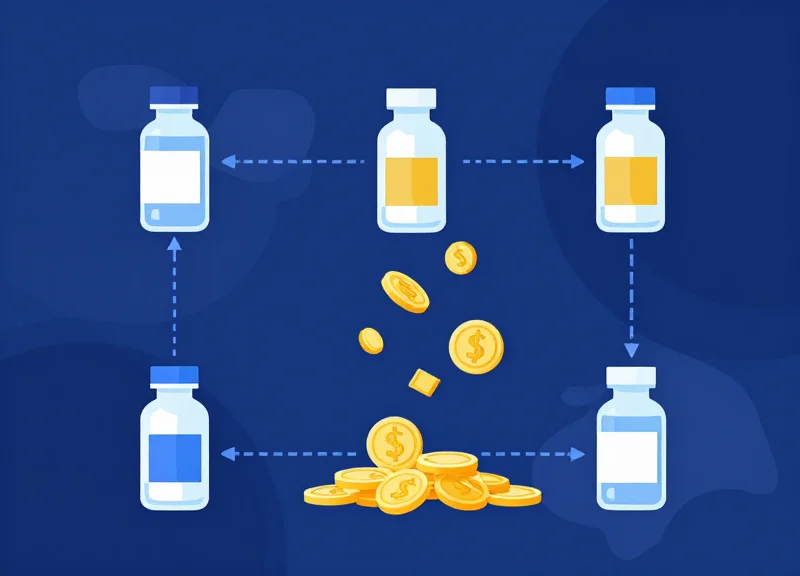
The cost of inaccuracy in pharmaceutical logistics is defined as the 'Invisibility Tax'—a compounding financial drain where a mere 5% to 10% failure in RFID read rates results in millions of dollars in lost inventory, expired assets, and logistical friction. In liquid-dense environments, where standard RFID tags often fail, this inaccuracy doesn't just represent a missing data point; it represents a systemic failure to protect high-value biologics and life-saving medications that have strict shelf lives and rigorous chain-of-custody requirements.
| Loss Category | Impact of 90% Accuracy (Legacy) | Impact of 99.9% Accuracy (Optimized) |
|---|---|---|
| Inventory Shrinkage | High: Manual reconciliation required; 3-5% annual loss. | Negligible: Real-time visibility eliminates 'ghost inventory'. |
| Expiration Management | Reactive: First-in, Last-out errors common. | Proactive: Automated alerts prevent $100k+ batch losses. |
| Regulatory Fines | High Risk: Gaps in DSCSA compliance audit trails. | Zero Risk: Immutable, 99.9% accurate electronic records. |
| Labor Overhead | High: Manual barcode scanning and cycle counts. | Low: Hands-free, automated gate/shelf tracking. |
Expert Insight: The 'Double Loss' Phenomenon. In the pharmaceutical sector, the cost of a missed read is rarely just the cost of the vial. It is a 'Double Loss': the physical manufacturing cost plus the massive opportunity cost of a delayed clinical trial or a missed patient delivery. In specialized medicine, a single missed pallet of liquid-dense biologics can set a Phase III trial back by weeks, costing the organization upwards of $50,000 per day in operational burn.
How does poor RFID detection affect inventory shrinkage?
When liquids absorb RF signals, tags go 'dark,' leading to ghost inventory. This forces facilities to overstock by 15-20% to compensate for uncertainty, tying up working capital and increasing the risk of medications expiring before use.
What is the ROI of moving from 95% to 99.9% accuracy?
While a 4.9% jump seems small, it represents the elimination of 'edge case' failures that typically occur during high-volume shipments. For a mid-sized distributor, this precision can save $2M+ annually in reclaimed labor and reduced write-offs.
Does inaccuracy impact DSCSA compliance?
Absolutely. The Drug Supply Chain Security Act (DSCSA) requires unit-level traceability. Inaccurate reads create 'broken links' in the chain of custody, which can lead to shipment rejections by dispensers and heavy federal penalties.
The Breakthrough: Engineering Optimized RFID Shielding
Optimized RFID shielding is a specialized engineering approach that utilizes multi-layer composite materials to create a 'RF-friendly' buffer between a tag and liquid-dense containers. Unlike standard labels that suffer from signal absorption, optimized shielding employs dielectric spacers and reflective backplanes to manipulate electromagnetic waves. By controlling the refractive index and preventing the liquid from 'damping' the antenna's resonance, this technology achieves near-perfect 99.9% detection rates in environments previously deemed unreachable by UHF RFID.
The core of this breakthrough lies in material science. Standard tags fail because aqueous solutions—common in vaccines and biologics—absorb Ultra-High Frequency (UHF) energy, converting it into heat rather than reflecting it back to the reader. To overcome this, engineers developed a 'Faraday-optimized' substrate. This substrate uses a specific thickness of synthetic polymers or ceramic-filled resins that physically distance the antenna from the liquid, effectively 'tricking' the radio waves into behaving as if they are in a vacuum or open air.
| Feature | Standard RFID Tag | Optimized Shielded RFID |
|---|---|---|
| Signal Interaction | Absorption (Signal Loss) | Reflected Redirection |
| Read Range in Liquid | 0.5m - 1m (Unreliable) | 5m - 9m (Consistent) |
| Accuracy Rate | 65% - 82% | 99.9%+ |
| Material Composition | Paper/PET Inlay | Dielectric Spacer + Metallic Foil |
Expert Insight: The 1/4 Wavelength Principle. A critical engineering secret in high-ROI pharmaceutical deployments is the use of 'Quarter-Wave' spacing. By precisely calibrating the shield thickness to one-quarter of the signal's wavelength, engineers create constructive interference. This doesn't just block the liquid's negative influence; it actually amplifies the reflected signal strength, turning the shield into a passive booster for the antenna.
- Substrate Selection: Choosing materials with low dielectric constants to minimize signal delay and energy loss.
- Geometric Tuning: Designing the shield footprint to be slightly larger than the antenna to prevent 'edge-wrap' signal bleed into the liquid.
- Impedance Matching: Modifying the IC chip's impedance to account for the proximity of the metallic shielding layer, ensuring maximum power transfer.
- Environmental Sealing: Applying medical-grade adhesives that maintain the shield-to-tag bond during cryogenic storage or high-humidity transport.
Can shielding work with glass and plastic containers?
Yes, optimized shielding is designed to negate the dielectric interference of both borosilicate glass and high-density plastics commonly used in pharma.
Does the shielding add significant bulk to the packaging?
Modern engineered shields are ultra-thin, often adding less than 1mm of thickness, making them compatible with existing automated labeling lines.
Is this solution cost-effective for high-volume items?
While the per-unit cost is higher than standard tags, the ROI is realized through the total elimination of manual audits and the prevention of high-value product loss.
Achieving 99.9% Detection: Hardware and Tag Placement Strategies
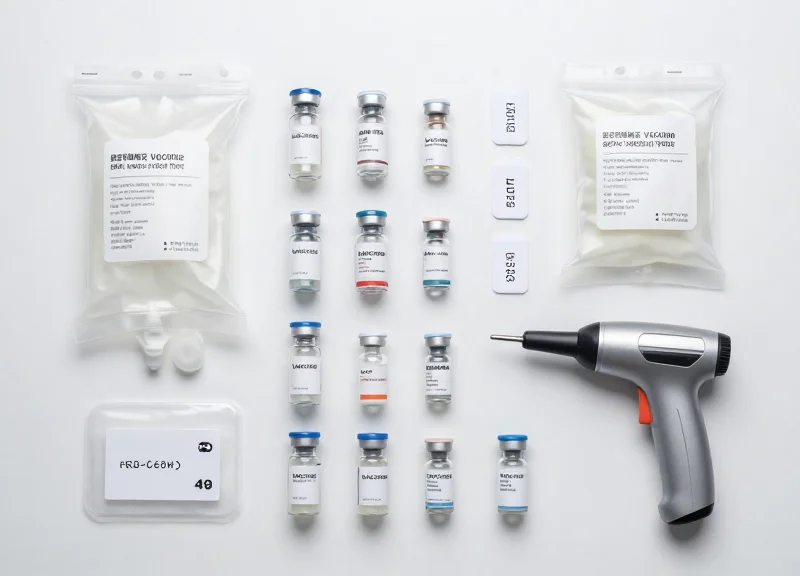
Reaching the 99.9% detection threshold in aqueous environments demands a departure from standard RFID inlay application toward 'on-liquid' hardware architectures. These specialized tags incorporate high-performance spacers—often composed of synthetic foam or PET layers—to create a physical buffer between the RFID antenna and the liquid surface. This buffer mitigates the detuning effect caused by the high dielectric constant of water-based solutions, ensuring the antenna maintains its resonant frequency for consistent signal capture and backscatter performance.
| Component | Optimized Specification | Impact on Read Rate |
|---|---|---|
| Tag Geometry | Flag or Spacer-backed On-Liquid Tag | Prevents signal absorption and maintains antenna resonance. |
| Antenna Polarization | Circular Polarization (Dual-Axis) | Reduces orientation sensitivity in high-density case packing. |
| Placement Offset | 5mm Minimum Dielectric Gap | Dramatically increases the 'read window' for UHF signals in vials. |
- Liquid-Dielectric Mapping: Assess the specific gravity and chemical composition of the pharmaceutical product to determine the degree of RF absorption and required tag sensitivity.
- Tag Geometry Selection: Utilize tags that physically project away from the container (Flag) or use a dielectric foam spacer to isolate the chip from the liquid's ground-plane effect.
- Spatial Diversity Alignment: Position tags in a non-linear, staggered pattern across cases to prevent 'shadowing,' where outer vials physically block the signal to the inner core.
- Reader Sensitivity Tuning: Optimize reader power levels to penetrate the outer shielding without creating excessive multipath interference from metal equipment.
Expert Insight: The 'Shadow Effect' is the primary killer of 99.9% accuracy. In a crate of 100 vials, the center-most units are often masked by the 'RF Wall' created by the outer ring of liquid. To achieve near-perfect detection, we implement 'Staggered Verticality'—alternating the height of tag placement on adjacent vials. This breaks the uniform barrier of liquid, allowing RF waves to 'snake' through the gaps and reach the internal layers of the shipment.
Does bottle shape affect detection?
Yes. Cylindrical glass vials create a lensing effect; tags should be placed on the flattest possible surface or as a 'flag' to maintain a consistent angle of incidence for the reader signal.
Why use circular polarization over linear?
Linear polarization requires the tag and antenna to be perfectly aligned; circular polarization radiates in a corkscrew pattern, ensuring the signal hits the tag regardless of the bottle's rotation inside the carton.
ROI Analysis: From Manual Counting to Automated Precision
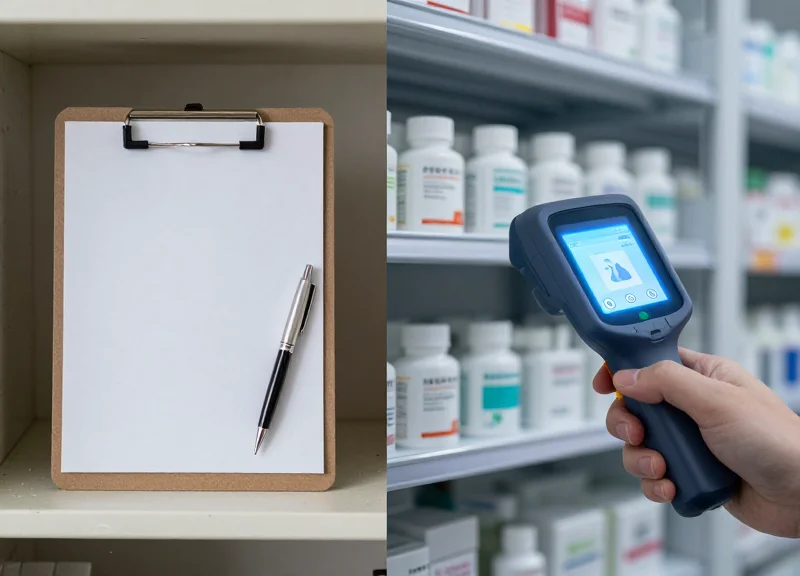
Transitioning from manual counting to automated RFID precision transforms pharmaceutical logistics from a cost center into a competitive advantage. By achieving a 99.9% detection rate in liquid-dense environments through optimized shielding, organizations can reduce inventory cycle times by over 90%, slash labor expenses, and eliminate the 3-5% annual revenue loss typically attributed to human error, inventory shrinkage, and undocumented waste.
| Operational Metric | Manual Counting Processes | Optimized RFID (99.9% Accuracy) |
|---|---|---|
| Time to Audit 1,000 Liquid Vials | 4.5 - 6.0 Hours | Less than 60 Seconds |
| Average Inventory Accuracy | 92.0% - 95.0% | 99.9% |
| Labor Cost per Audit Cycle | High (Multiple Personnel) | Minimal (Single Operator) |
| Data Latency | Days/Weeks (Reactive) | Real-time (Proactive) |
| Shrinkage & Expiry Loss | High (Human Oversight) | Near Zero (Automated Alerts) |
- Direct Labor Reallocation: Automated precision allows facilities to reallocate skilled labor from repetitive scanning tasks to high-value clinical or logistics management, effectively increasing operational throughput without adding headcount.
- Elimination of Write-offs: In liquid-dense environments, 'lost' inventory often hides behind signal interference. Optimized shielding ensures every vial is accounted for, preventing unnecessary re-ordering and reducing write-offs of expensive biologics.
- Automated FEFO Compliance: Precision tracking enables First-Expired-First-Out (FEFO) automation, ensuring that liquid medications with short shelf lives are utilized before expiration, saving millions in wasted stock.
Expert Insight: Beyond the immediate labor savings, the most significant ROI driver in modern pharma is 'Compliance Insurance.' Manual tracking errors frequently trigger expensive Corrective and Preventive Actions (CAPA) or regulatory audits. A 99.9% read rate provides an immutable digital audit trail that protects against the massive financial and reputational risks associated with regulatory non-compliance.
What is the typical payback period for optimized RFID shielding?
Most pharmaceutical enterprises achieve full ROI within 12 to 18 months. The timeline is accelerated in environments handling high-value biologics where even a 1% improvement in accuracy saves hundreds of thousands of dollars.
Does specialized shielding increase the total cost of ownership?
While the initial hardware investment is higher than standard RFID, the total cost of ownership is lower because it eliminates the 'hidden costs' of manual reconciliation and the 5-10% failure rate typical of non-optimized systems in liquid environments.
Compliance and Safety: Meeting DSCSA Standards with RFID
RFID technology serves as the primary catalyst for achieving full compliance with the Drug Supply Chain Security Act (DSCSA), providing the automated, unit-level serialization and interoperable data exchange necessary to secure the pharmaceutical supply chain. By utilizing optimized RFID shielding to overcome liquid interference, manufacturers and distributors can ensure that every individual unit—not just the pallet—is tracked with 99.9% accuracy, satisfying the FDA's mandate for an electronic, interoperable system to identify and trace certain prescription drugs as they are distributed in the United States.
| DSCSA Requirement | RFID Solution Capability | Impact on Safety/Compliance |
|---|---|---|
| Unit-Level Serialization | Unique EPC encoding per vial/bottle | Prevents counterfeit entry into the chain |
| Interoperable Tracing | Standardized EPCIS data exchange | Seamless data flow between trading partners |
| Verification & Validation | Instantaneous bulk scanning | Rapid detection of illegitimate products |
| Prompt Recall Management | Granular location history | Reduces scope of recalls, protecting patients |
Expert Insight: The 'Compliance Gap' in Liquid Logistics. Most pharmaceutical companies overlook the fact that DSCSA compliance is binary: you are either 100% compliant or you are in violation. In liquid-dense environments, standard RFID tags often fail, resulting in a 'compliance gap' where 5-10% of inventory remains invisible. Achieving a 99.9% detection rate isn't just an operational metric; it is a legal safeguard. Without optimized shielding, a pallet of biologics might pass a checkpoint with several 'ghost' units that technically do not exist in the digital ledger, creating a massive liability during FDA audits.
- Identify and Label: Apply high-performance, liquid-compatible RFID tags at the point of manufacture to establish the initial electronic pedigree.
- Automated Data Capture: Use shielded portals to capture serial numbers at every transition point, eliminating the manual 'scan-per-item' labor.
- EPCIS Integration: Upload captured data to an Electronic Product Code Information Services (EPCIS) repository for real-time stakeholder access.
- Exception Management: Flag any discrepancies between physical counts and digital records instantly to isolate potentially compromised or counterfeit products.
Does DSCSA specifically require RFID?
While the FDA remains technology-agnostic, RFID is the only viable method for achieving the unit-level, high-speed automated tracking required for the 2024 interoperability milestones.
How does RFID improve patient safety during a recall?
RFID allows for 'surgical recalls.' Instead of pulling an entire lot, pharmacies can identify the specific individual units that are expired or compromised, ensuring patients have uninterrupted access to safe medication.
What are the penalties for non-compliance?
Failure to meet DSCSA standards can result in significant fines, license suspension, and the inability to legally distribute products within the U.S. market.
Integration Challenges: Connecting RFID Data with ERP Systems

Connecting high-accuracy RFID data to Enterprise Resource Planning (ERP) systems is the final hurdle in realizing pharmaceutical ROI. While optimized shielding ensures that 99.9% of tags are physically detected in liquid-dense environments, the real value lies in 'Data Orchestration'—the process of cleaning, filtering, and mapping those billions of radio frequency pings into structured business events. Without a sophisticated integration layer, the sheer volume of data from 99.9% detection rates can overwhelm legacy ERP databases, leading to system latency and 'data noise' that obscures rather than clarifies inventory status.
| Integration Method | Data Latency | Implementation Complexity | Ideal Use Case |
|---|---|---|---|
| RESTful APIs | Low | Moderate | Modern cloud-based ERPs (NetSuite, SAP S/4HANA) |
| MQTT / Pub-Sub | Ultra-Low | High | Real-time pharmaceutical cold chain monitoring |
| Dedicated Middleware | Moderate | High | Complex multi-site global distribution centers |
| Direct Database Write | High | Low | Small-scale, localized lab environments |
A unique insight from decades of Silicon Valley systems architecture: avoid 'The Log Bloom.' When you achieve 99.9% detection accuracy, your readers are capturing data at a rate traditional ERPs were never designed to handle. Instead of pushing every 'ping' to the cloud, implement 'Semantic Edge Filtering.' This means the RFID reader or edge gateway only communicates to the ERP when a state change occurs (e.g., an item moving from 'Storage' to 'Pick Zone'). This reduces data traffic by up to 95% while maintaining 100% records accuracy for DSCSA compliance.
- Hardware Abstraction Layer: Standardize data from various RFID readers into a single protocol (like LLRP) before it reaches the software layer.
- Data De-duplication: Filter out redundant reads from multiple overlapping antennas to ensure one physical item equals one digital record.
- Semantic Mapping: Associate unique RFID Tag IDs with pharmaceutical-specific metadata such as GTIN, Batch Number, and Expiration Date.
- ERP Synchronization: Trigger automated workflows in systems like SAP or Oracle based on verified physical movement, such as automated goods receipt.
How do we prevent ERP data bloat?
Use middleware to aggregate raw tag reads into 'Business Events.' Only sync summarized movements rather than raw frequency pings.
What happens if the network goes down?
Implement 'Store-and-Forward' logic at the edge. The RFID gateway caches reads locally and synchronizes with the ERP once the connection is restored.
Is RFID data secure during ERP transfer?
Yes, standard practice involves TLS 1.3 encryption for all data in transit and OAuth 2.0 for API authentication to ensure pharmaceutical data integrity.
Future Trends: The Role of ESL and RFID in the Smart Pharmacy
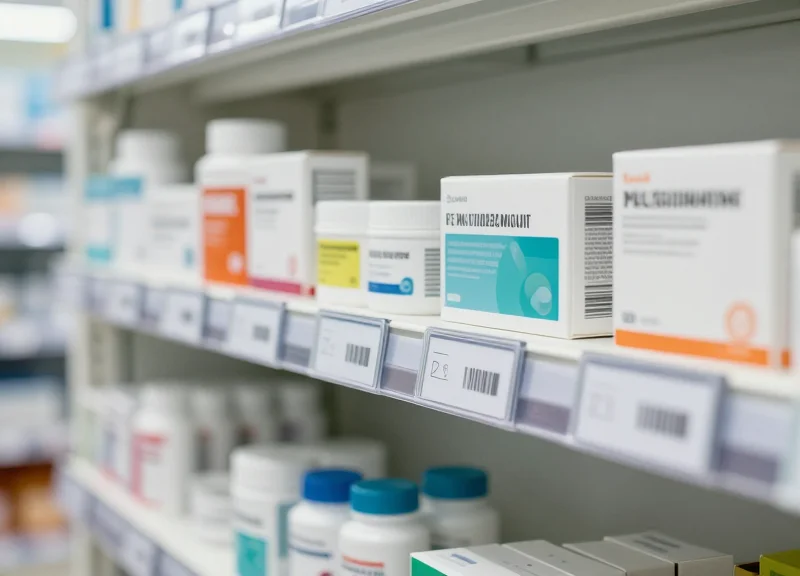
The future of pharmaceutical retail and hospital pharmacy management lies in the synergy between Electronic Shelf Labels (ESL) and Radio Frequency Identification (RFID). While RFID provides the 99.9% detection accuracy required for liquid-dense inventory, ESL acts as the user-facing interface, translating backend data into actionable, real-time information. This combination transforms the pharmacy from a storage facility into a 'Smart Pharmacy'—a context-aware ecosystem where every medication's location, expiration, and environmental condition are continuously monitored and displayed without human intervention.
| Feature | Traditional Pharmacy | RFID + ESL Smart Pharmacy |
|---|---|---|
| Inventory Updates | Manual, periodic counting | Real-time, continuous monitoring |
| Pick Accuracy | Relies on visual barcode checks | Pick-to-light (ESL) + RFID verification |
| Cold Chain Integrity | Manual temperature logs | Automated alerts on ESL via RFID sensors |
| Pricing/Compliance | Paper labels, prone to error | Dynamic, synchronized digital updates |
The most significant evolution in this space is the development of 'Pick-to-Light' systems optimized for high-value liquid biologics. When a pharmacist receives a prescription order, the RFID system identifies the exact unit's location, and the corresponding ESL flashes a specific LED color. This drastically reduces the time spent searching through refrigerated units and virtually eliminates selection errors, which is critical for treatments where dosage and formulation look-alikes are common.
- Automated Expiration Management: Future systems will use RFID data to automatically trigger 'clearance' pricing or removal alerts on ESLs as liquid medications approach their use-by date, preventing the distribution of expired goods.
- Interoperable Cold Chain Monitoring: Next-gen RFID tags with integrated temperature sensors will communicate directly with ESLs to show a 'Freshness Index' on the shelf, ensuring the efficacy of temperature-sensitive liquids.
- Patient-Centric Interaction: NFC-enabled ESLs will allow patients to tap their smartphones against a shelf label to receive personalized medication guides or dosage instructions based on the specific RFID-tracked batch.
Expert Tip: To maximize ROI, look for 'Unified Infrastructure' solutions where the same access points manage both ESL and RFID signals. This reduces hardware footprint and maintenance costs while ensuring that the high-frequency demands of RFID reading don't interfere with ESL update cycles, especially in shielding-heavy environments.
How does liquid density affect the ESL-RFID connection?
While liquids can absorb RFID signals, ESLs typically use lower-frequency or different protocols like Zigbee or BLE. The trend is moving toward integrated tags where the ESL acts as a signal booster or relay for the RFID data.
Is the investment in both technologies justifiable?
Yes, because the labor savings from automated auditing and the reduction in 'shrinkage' (lost or expired medication) typically result in a full ROI within 14 to 22 months for high-volume pharmacies.
Can ESLs display DSCSA compliance data?
Absolutely. Modern ESLs can pull the unique electronic product code (EPC) from the RFID tag and display the required serialization data or a QR code for quick regulatory inspection.