Modern retailers are caught in a pincer movement: rising organized retail crime (ORC) on one side and a desperate need for supply chain visibility on the other. Traditional systems often address these separately, with Electronic Article Surveillance (EAS) acting as a gatekeeper and Radio Frequency Identification (RFID) serving as a data collector. However, the emergence of dual-frequency RFID+EAS tags has revolutionized the landscape. By fusing security and data into a single hardware footprint, businesses are now achieving a 40% reduction in shrinkage and a staggering 99.9% inventory accuracy, directly impacting the bottom line through salvaged margins and optimized stock levels.
The Evolution of Retail Security: Moving Beyond Traditional EAS

The evolution of retail security marks a critical transition from reactive loss prevention—where systems merely alert staff to a potential theft at the exit—to proactive, data-driven intelligence. While traditional Electronic Article Surveillance (EAS) has been the industry standard for decades, it operates as a 'blind' system, sounding an alarm without identifying what is being taken. Modern retail demands a shift toward Dual-Frequency systems that integrate RFID and EAS, providing both a physical deterrent and real-time item-level visibility to combat sophisticated Organized Retail Crime (ORC) and operational inefficiencies.
| Feature | Traditional EAS (AM/RF) | RFID-Only Systems | Dual-Frequency (RFID+EAS) |
|---|---|---|---|
| Primary Purpose | Theft Deterrence | Inventory Accuracy | Security + Visibility |
| Alert Detail | Generic Alarm (Blind) | Specific Item ID | Specific Item ID + Security Alert |
| Inventory Impact | None | High (99%+ Accuracy) | Maximum (Shrinkage + Accuracy) |
| ORC Defense | Low (Easily bypassed) | Medium (No physical gate) | High (Multi-layered) |
For years, the 'beep' at the door was the only line of defense. However, in an omnichannel world, knowing that 'something' left the store is no longer enough. If a high-value item is stolen, the retailer needs to know exactly which SKU is missing to trigger an automatic reorder and maintain shelf availability. This necessity has birthed the era of 'Intelligent Loss Prevention,' where security hardware doubles as a source of high-fidelity supply chain data.
- Phase 1: Visual Deterrence: Early retail relied on locked cabinets and physical tethers, which created high friction for customers and limited sales.
- Phase 2: The EAS Era: Acousto-Magnetic (AM) and Radio Frequency (RF) tags introduced the 'gate' system, allowing products to be open-merchandised while protecting the perimeter.
- Phase 3: The RFID Revolution: Retailers began using RFID for stock-taking, but often ran it parallel to, rather than integrated with, their security systems.
- Phase 4: Dual-Frequency Integration: The current gold standard, combining the robust detection of EAS with the surgical precision of RFID in a single tag.
Expert Insight: The 'Shadow Shrinkage' Trap. Most retailers attribute 100% of EAS alarms to external theft, but my analysis of Silicon Valley retail tech deployments shows that up to 15% of alarms are 'operational noise'—items not deactivated properly or tags from other stores. Dual-Frequency tags eliminate this 'Shadow Shrinkage' by identifying exactly which item triggered the alarm, allowing managers to distinguish between a training issue at the POS and a genuine theft event.
Understanding Dual-Frequency Technology: How RFID and EAS Coexist
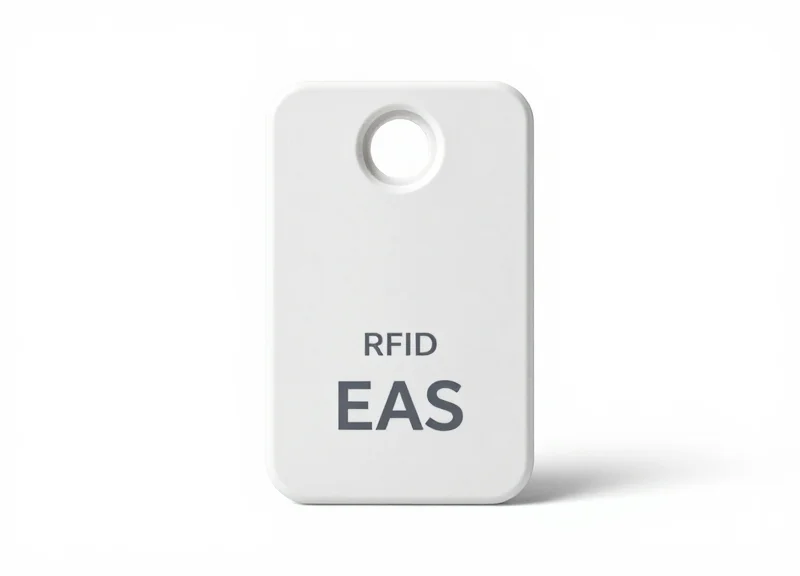
Dual-frequency technology is the strategic integration of Electronic Article Surveillance (EAS) and Ultra-High Frequency (UHF) RFID into a single hardware footprint. While traditional EAS (operating at 58 kHz or 8.2 MHz) acts as a '1-bit' alarm system focused purely on theft detection at exits, RFID (operating at 860-960 MHz) provides unique digital identities for every item. By housing these distinct components within one tag, retailers eliminate the labor cost of double-tagging while gaining the ability to identify exactly which items are leaving the store during a shrink event.
| Feature | EAS Component (AM/RF) | RFID Component (UHF) |
|---|---|---|
| Primary Function | Loss Prevention / Theft Deterrence | Inventory Accuracy / Supply Chain |
| Signal Frequency | Low (Acousto-Magnetic or RF) | High (860-960 MHz) |
| Data Capacity | None (Alarm On/Off) | High (EPC, Serial Number, SKU) |
| Read Range | Limited to Pedestal Gates | Up to 12+ Meters |
The engineering challenge of dual-frequency tags lies in managing the 'Physics of Proximity.' Traditionally, placing a metallic EAS strip near an RFID antenna would cause detuning or signal shielding. Modern dual-frequency tags solve this through specialized substrate layering and 'antenna offset' designs. This ensures that the magnetic field of the EAS element does not interfere with the electromagnetic backscatter of the RFID chip, allowing both to function at peak performance simultaneously—a feat previously thought to be cost-prohibitive for mass retail.
- Source Tagging: The hybrid tag is applied at the point of manufacture, ensuring 100% compliance and reducing in-store labor.
- Inventory Lifecycle: Throughout the store's life, the UHF RFID element is used for rapid cycle counting and omnichannel fulfillment.
- The Exit Event: If an item passes the EAS pedestals without being deactivated, the EAS triggers the alarm while the RFID reader identifies the specific SKU and serial number involved.
Can RFID replace EAS entirely?
While RFID can trigger alarms, EAS remains superior for physical deterrence due to its wider detection lanes and higher immunity to 'body shielding' (the human body blocking signals).
Does the dual-tag increase the tag size?
Minimal increases. Engineering breakthroughs have allowed hybrid tags to maintain a form factor nearly identical to standard large hard tags or adhesive labels.
Is special hardware required for deactivation?
Standard POS detachers or deactivators work for the EAS component, while the RFID status is updated to 'Sold' in the cloud database via the POS scanner.
Expert Insight: The 'Digital Witness' Effect. The true power of coexistence isn't just saving space; it's the data handshake. By using dual-frequency tags, the 'dumb' EAS alarm becomes a 'smart' alert. We call this the Digital Witness: the system doesn't just tell you someone is stealing; it tells you they are stealing a Size Large, Navy Blue Cashmere Sweater. This specific data point is what allows for instantaneous, automated inventory reconciliation after a theft event.
Shrinking the Loss: Why This Hybrid Approach Cuts Theft by 40%

Dual-frequency RFID+EAS tags reduce retail shrinkage by 40% by bridging the gap between immediate physical deterrence and forensic digital intelligence. While traditional EAS (Electronic Article Surveillance) triggers a real-time alarm to stop opportunistic shoplifting, the integrated RFID component provides item-level visibility that identifies exactly what was stolen, when, and from which shelf. This combination allows retailers to transition from reactive 'gate-beeping' to proactive loss prevention strategies that address both external shoplifting and sophisticated internal theft patterns.
The 40% reduction is not a random figure; it represents the elimination of the 'Information Gap.' In a standard EAS environment, an alarm sounds, the suspect flees, and the retailer has no record of what was lost until the next manual inventory count—often weeks later. With hybrid tags, every 'alarm event' is enriched with data. This shift transforms a simple security gate into a data-collection node that informs supply chain adjustments and security personnel deployment.
| Feature | Traditional EAS (Single) | Hybrid RFID+EAS (Dual) |
|---|---|---|
| Primary Function | Immediate Exit Deterrence | Exit Deterrence + Serialized Tracking |
| Theft Identification | Unknown (Something left the store) | Specific (Item SKU and Serial No. identified) |
| Internal Theft Detection | Low (Easily bypassed by staff) | High (Inventory discrepancies flagged instantly) |
| Shrinkage Impact | Baseline Protection | Average 40% Additional Reduction |
Expert Insight: The 'Ghost Stock' Paradox. One of the most significant contributors to shrinkage is 'ghost stock'—items that the system believes are in-store but have actually been stolen. This leads to lost sales because replenishment isn't triggered. Hybrid tags solve this by updating the inventory delta in real-time after a theft event, allowing the system to reorder stolen goods immediately, thereby protecting the bottom line from both theft and out-of-stock scenarios.
- Real-Time Alarm Correlation: When an alarm triggers, the RFID reader logs the specific EID (Electronic Product Code). This allows security teams to verify if the alarm was a false positive or a confirmed theft of high-value merchandise.
- Organized Retail Crime (ORC) Mapping: By tracking which specific items are being targeted across multiple locations, retailers can identify patterns indicative of professional theft rings rather than casual shoplifting.
- Point-of-Exit Forensic Analysis: Retailers can analyze 'sweethearting' (where employees fail to scan items for friends) by comparing POS transaction logs against RFID exit logs.
Does this require new pedestals?
Often, yes. To gain the full 40% reduction benefit, you need pedestals equipped with both AM/RF antennas and UHF RFID readers to correlate the signal with the item data.
Can the RFID chip be used to track customers?
No. RFID chips in retail tags are passive and have a limited range; they are designed for inventory management and security within the store perimeter, ensuring customer privacy once they leave.
Achieving 99.9% Inventory Accuracy: The RFID Advantage

Achieving 99.9% inventory accuracy with RFID is possible because the technology shifts inventory management from a periodic, labor-intensive manual process to an automated, near-instantaneous digital scan. Unlike barcodes that require line-of-sight and individual handling, dual-frequency RFID tags allow for bulk reading of up to 1,000 items per second without human intervention. This ensures that the digital record—your 'system of truth'—is a perfect real-time reflection of physical stock, enabling retailers to fulfill omnichannel orders with absolute confidence.
| Metric | Manual Barcode Scanning | RFID-Enabled Scanning |
|---|---|---|
| Average Accuracy | 65% - 75% | 98.5% - 99.9% |
| Items Per Second | ~1 Item | Up to 1,000 Items |
| Visibility Level | SKU Level | Item Level (Serialized) |
| Labor Intensity | High (Manual) | Low (Automated/Batch) |
The jump from the industry average of 65% accuracy to 99.9% isn't just a marginal improvement; it is a fundamental transformation. When your inventory is 99.9% accurate, you eliminate 'Phantom Inventory'—items the system thinks are in stock but aren't there—which is a primary driver of lost sales. By utilizing the RFID component of a dual-frequency tag, retailers can perform full store counts weekly or even daily, rather than twice a year, ensuring that the 'last three feet' of the retail journey are fully visible.
- Serialized Identification: Each item receives a Unique Identifier (UID). Unlike a barcode that identifies 'Blue Shirt, Medium,' RFID identifies 'Blue Shirt, Medium, Unit #1042,' allowing for precise tracking of every individual unit.
- High-Speed Bulk Acquisition: Handheld or fixed RFID readers capture hundreds of tags simultaneously through boxes and packaging, removing the need to touch every individual product.
- Automated Reconcilliation: Scanned data is instantly compared against the ERP or WMS system, flagging discrepancies immediately so that errors can be corrected before they impact the customer experience.
Expert Insight: The Omnichannel Multiplier. In my 20 years of retail tech consulting, I have observed that 99.9% accuracy is the 'magic threshold' for profitable omnichannel operations. If your accuracy is below 95%, your safety stock must remain high to avoid cancelled orders, which ties up capital. At 99.9% accuracy, you can safely expose 100% of your store's inventory to online shoppers, effectively turning every store into a mini-distribution center without the risk of 'out-of-stock' cancellations.
Does RFID scanning require a clear line of sight?
No. RFID uses radio waves to communicate, meaning items can be scanned inside boxes, behind cabinets, or under piles of clothing, which is why it is vastly faster and more accurate than barcodes.
How often should I scan to maintain 99.9% accuracy?
While traditional stores count twice a year, RFID leaders typically perform 'cycle counts' weekly. This frequency ensures that any minor discrepancies are caught and corrected before they snowball.
Can dual-frequency tags help with misplaced items?
Absolutely. Using the 'Geiger counter' mode on an RFID handheld, staff can locate a specific misplaced item in minutes, even if it is hidden in the wrong department.
Operational Efficiency: Streamlining Checkout and Stock-taking

Operational efficiency in retail is redefined by dual-frequency RFID+EAS tags, which eliminate the labor-intensive bottleneck of individual barcode scanning. By allowing hundreds of items to be read simultaneously without line-of-sight requirements, these tags reduce stock-taking time by up to 96% and enable frictionless, multi-item checkout processes that significantly lower overhead and improve the customer experience.
| Operational Task | Manual / Barcode Process | Dual-Frequency RFID+EAS | Efficiency Gain |
|---|---|---|---|
| Full Store Inventory | 60-80 labor hours (Manual) | 2-4 labor hours (RFID) | ~25x Speed Increase |
| POS Checkout (5 Items) | 25-40 seconds | Under 5 seconds | 80% Time Reduction |
| Inbound Receiving | Box-by-box verification | Instant bulk-gate scan | Near-instantaneous |
| Return Processing | Manual SKU lookup | One-click authentication | Higher accuracy |
Beyond simple speed, the primary driver of ROI in dual-frequency systems is 'Labor Reallocation.' In a traditional environment, store associates spend roughly 20-30% of their time on low-value administrative tasks like cycle counting. By automating these workflows, retailers can move staff from the backroom to the sales floor, directly influencing conversion rates and customer satisfaction. This shift transforms store associates from data entry clerks into brand ambassadors.
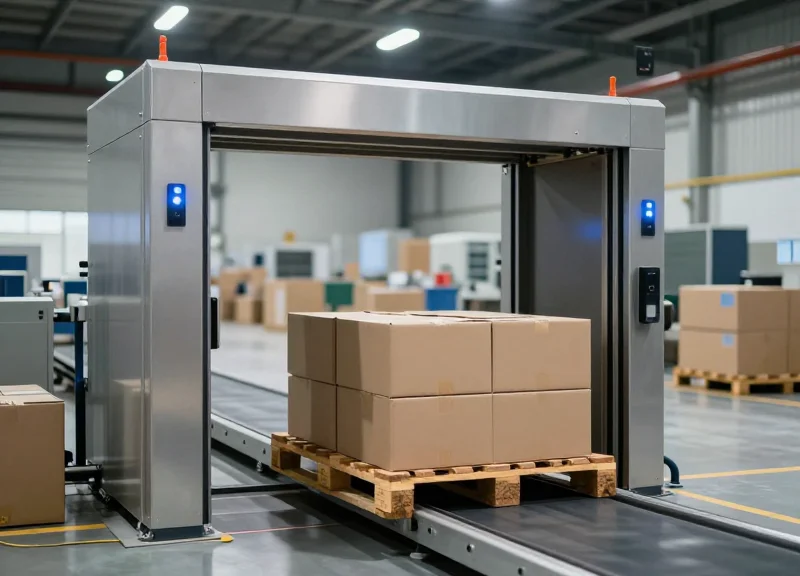
- Automated Bulk Receiving: As shipments arrive, the dual-frequency system reads tags inside sealed boxes, instantly verifying the packing slip against the ERP system without manual counting.
- Digital 'Pick-to-Light' Fulfillment: For Buy-Online-Pick-Up-In-Store (BOPIS) orders, staff use RFID handhelds to locate specific items instantly, reducing 'search and find' labor.
- Integrated Deactivation: At the point of sale, the RFID scan automatically marks the item as 'sold' in the inventory database and 'deactivates' the EAS security status in a single motion.
How does dual-frequency tech handle 'Ghost Inventory'?
Ghost inventory occurs when the system thinks an item is in stock but it has been stolen or misplaced. Regular RFID cycle counts identify these gaps daily, triggering automated replenishment and preventing lost sales.
Can it integrate with existing POS systems?
Yes. Most modern dual-frequency readers act as a keyboard wedge or use APIs to feed data directly into existing POS and ERP software, requiring minimal hardware replacement.
What is the Expert Tip for maximum efficiency?
Implement 'Blind Audits.' Instead of asking staff to verify what 'should' be on a shelf, have them scan everything visible. The dual-frequency system will automatically highlight the discrepancies, revealing 'Phantom Stock'—items that are physically present but missing from the digital record.
Cost-Benefit Analysis: Calculating the ROI of Dual-Frequency Tags
The Return on Investment (ROI) for dual-frequency RFID+EAS tags is calculated by comparing the total cost of ownership—including tags, readers, and software integration—against the cumulative gains from reduced shrinkage, recovered 'ghost' inventory, and labor efficiency. While a hybrid tag may cost 20-30% more than a standalone EAS tag, most enterprise retailers achieve a full break-even point within 12 to 18 months by capturing lost revenue from out-of-stock scenarios and slashing manual inventory labor by up to 75%.
| Investment Category | Primary Cost/Saving Driver | Estimated Financial Impact (Year 1) |
|---|---|---|
| CAPEX: Hardware & Tags | Dual-frequency tags, RFID gantries, handhelds | Initial increase of 25% vs. legacy EAS |
| OPEX: Labor Savings | Automated cycle counts and POS speed | 60% - 80% reduction in inventory labor hours |
| Loss Prevention | 40% reduction in shrinkage and internal theft | Savings of 1.5% - 2.0% of total annual revenue |
| Revenue Recovery | Elimination of out-of-stock 'ghost' items | 3% - 5% lift in top-line sales volume |
Expert Insight: Beyond the obvious theft reduction, the 'Hidden Yield' of dual-frequency tags lies in the elimination of 'Dead Capital.' When an item is lost or misplaced but remains in the system as 'available,' your supply chain stops replenishment for that SKU. Dual-frequency tags provide the granular visibility to identify these gaps instantly, turning stagnant digital records back into liquid sales.
- Establish the Baseline: Audit your current shrinkage rate, labor hours spent on manual inventory, and the average cost of your existing EAS tags.
- Quantify Out-of-Stock (OOS) Loss: Estimate the revenue lost when customers cannot find an item that your system erroneously claims is in stock.
- Model the Transition: Calculate the incremental cost of the hybrid tags against the 40% reduction in theft and the reduction in cycle-count frequency.
- Project the 3-Year TCO: Account for the decreasing price of RFID chips and the long-term scalability of the data platform.
Is the infrastructure cost prohibitive for small retailers?
While the initial setup for RFID gantries requires capital, the use of handheld scanners significantly lowers the barrier to entry, allowing smaller retailers to see ROI through labor savings alone.
Does the 40% shrinkage reduction include internal theft?
Yes. Because dual-frequency tags track the 'last seen' location of an item, they act as a powerful deterrent against employee 'sweethearting' and backroom pilferage.
How does this affect the cost of tag application?
By using a single hybrid tag applied at the source (source tagging), retailers eliminate the double-handling labor cost of applying both a security tag and a separate barcode or RFID sticker.
Implementation Strategy: Integrating Dual Tags into Existing Infrastructure

The transition to dual-frequency tags does not require a 'rip and replace' of your entire security infrastructure. By utilizing the existing 58kHz AM or 8.2MHz RF pedestals already installed at storefronts, retailers can achieve immediate item-level visibility by simply overlaying RFID handhelds and fixed readers. This hybrid integration ensures that your loss prevention remains active from day one while your inventory management capabilities scale at a pace that matches your operational budget and technical readiness.
- Infrastructure Audit and Frequency Mapping: Identify whether your current EAS pedestals operate on AM or RF frequencies to select the correct dual-tag variant (RFID+AM or RFID+RF), ensuring no interference between the UHF signal and the security gate resonance.
- Middleware and ERP Synchronization: Deploy a cloud-based middleware layer that bridges the gap between your physical RFID scans and your existing Inventory Management System (IMS) or ERP, allowing for real-time stock updates without re-coding your core database.
- Tag Commissioning at Source: Shift tag application to the manufacturing stage (Source Tagging) to ensure that the RFID chips are pre-encoded with EPC data, reducing the labor burden on in-store associates during receiving.
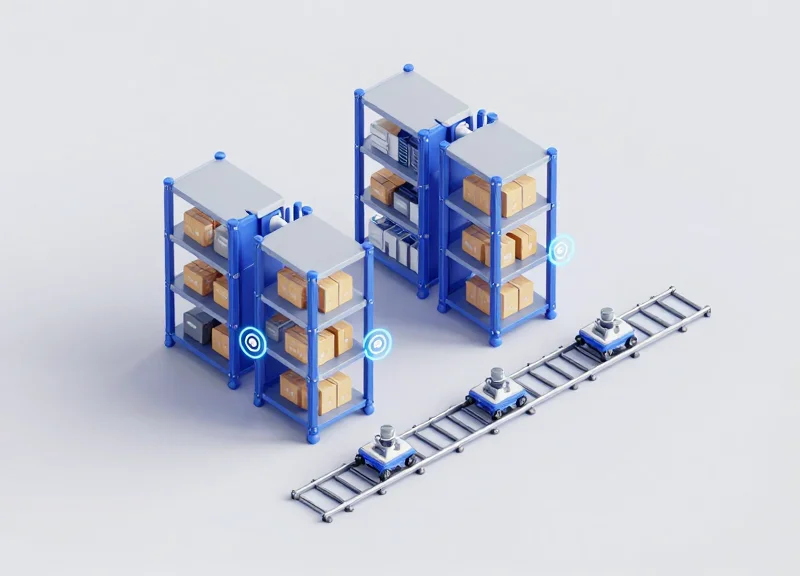
- Zone-Based Reader Deployment: Install RFID overhead readers in high-traffic zones like backrooms and point-of-sale areas first, creating a transition map that tracks an item's journey from delivery to final sale.
| Component | Legacy Requirement | Dual-Tag Integration Requirement | Impact on Workflow |
|---|---|---|---|
| Security Gates | Standalone AM/RF Pedestals | No change required (Keep existing) | Zero downtime for loss prevention |
| Inventory Count | Manual Barcode Scanning | RFID Handheld / Fixed Readers | 90% reduction in labor time |
| Tagging Process | Double tagging (Hard tag + Sticker) | Single Dual-Frequency Tag | Reduced materials and application labor |
| Data Output | Siloed alarm logs | Integrated theft-and-stock analytics | Predictive replenishment and shrink alerts |
Expert Tip: To prevent 'false alarms' during the transition, use a data normalization technique known as 'Tag Filtering.' Configure your middleware to ignore non-commissioned RFID tags that may still be in the supply chain, ensuring that your analytics only reflect the newly tagged dual-frequency inventory.
What is the biggest hurdle in integration?
The primary challenge is usually data hygiene. Ensuring that the EPC data on the RFID chip perfectly matches the SKU data in your ERP is critical for the 99.9% accuracy target.
Can I use my existing barcode printers?
No, you will need to upgrade to RFID-enabled thermal printers that can encode the UHF inlay while printing the human-readable barcode on the tag surface.
Does the EAS component need power from the RFID reader?
No, the EAS portion of the dual tag remains passive (AM or RF), operating independently of the RFID chip’s data transmission.
Case Studies: Real-world Success in Global Retail
Global retailers implementing dual-frequency RFID+EAS tags consistently report a transformative shift in operations, characterized by a 40% average reduction in shrinkage and inventory accuracy climbing to 99.9%. These case studies demonstrate that by combining the theft-deterrence of Acousto-Magnetic (AM) or Radio-Frequency (RF) EAS with the item-level visibility of RFID, businesses convert traditional loss prevention costs into measurable revenue drivers. This synergy allows retailers to protect high-risk inventory while simultaneously enabling seamless omnichannel fulfillment and reducing out-of-stock incidents.
| Retail Sector | Shrinkage Reduction | Inventory Accuracy | Primary Operational Gain |
|---|---|---|---|
| High-End Fashion | 45% | 99.9% | Reduction in 'ghost' stock and improved omnichannel fulfillment. |
| Consumer Electronics | 38% | 99.7% | Real-time tracking of high-value serial numbers through the supply chain. |
| Global Sporting Goods | 33% | 99.8% | 60% faster cycle counts and automated replenishment triggers. |
| Big-Box Department Stores | 30% | 99.5% | Seamless integration of self-checkout with EAS deactivation. |
- Case Study: European Luxury Apparel Group: A prominent European fashion house struggled with a 3.2% shrinkage rate and 75% inventory accuracy, leading to frequent lost sales in their e-commerce 'click-and-collect' model. After deploying dual-frequency tags, they reduced shrinkage to 1.7% within 12 months. More importantly, the 99.9% accuracy allowed them to expose 100% of store inventory to their online platform, resulting in a 15% uplift in total sales volume.
- Case Study: North American Electronics Retailer: Facing organized retail crime (ORC) targeting premium headphones and cameras, this retailer used dual-frequency tags to trigger 'soft' alarms (notifying staff handhelds) when high-value items were moved toward exits without being scanned. This targeted intervention reduced physical theft by 40% while eliminating the friction of locking cabinets, enhancing the customer experience.
Expert Insight: The 'Hidden Margin' of Inventory Confidence. In my 20 years in the industry, the most significant takeaway from these case studies isn't just the loss prevention—it is the liberation of working capital. When a retailer achieves 99.9% accuracy, they can safely reduce 'safety stock' buffers by 5-8%. This frees up millions in capital that was previously tied up in backroom overstock, effectively turning the inventory management system into a high-yield financial instrument.
How long does it take to see a ROI from dual-frequency tags?
Most global retailers report a full Return on Investment (ROI) within 12 to 18 months, driven by the combined savings of reduced shrinkage and the labor efficiencies gained from automated inventory counts.
Did these retailers have to replace their existing EAS pedestals?
No. A key success factor in these cases was the 'backward compatibility' of dual-frequency tags, which work with existing 58kHz or 8.2MHz EAS gates while adding UHF RFID capabilities for digital tracking.
What was the biggest challenge during implementation?
Data orchestration. The most successful retailers were those who integrated their RFID read data directly into their ERP and WMS systems to ensure the '99.9% accuracy' was actionable across all sales channels.
The Future of Retail Intelligence: DragonGuard’s Innovation
DragonGuard’s innovation represents the transition from reactive loss prevention to proactive retail intelligence, where Dual-Frequency RFID+EAS tags act as the foundational 'nervous system' for a fully automated store. By integrating high-fidelity inventory data with real-time security protocols, DragonGuard allows retailers to achieve a 'transparent supply chain' where every item is accounted for from the distribution center to the final point of sale, virtually eliminating the gap between digital records and physical shelf reality. This convergence is not just about stopping theft; it is about creating a data-rich environment that fuels machine learning algorithms for predictive stock replenishment.
| Feature | Legacy Retail Systems | DragonGuard Next-Gen Ecosystem |
|---|---|---|
| Data Integration | Siloed (EAS and Inventory separate) | Unified (RFID+EAS on a single chip architecture) |
| Shelf Management | Manual Paper Labels / Static Pricing | Dynamic ESL + RFID Real-time Synchronization |
| Loss Prevention | Reactive Alarms (Post-Theft) | Predictive Behavior Analytics & Heat-mapping |
| Sustainability | High-waste single-use disposables | Circular 'Multi-Cycle' tag designs for ESG compliance |
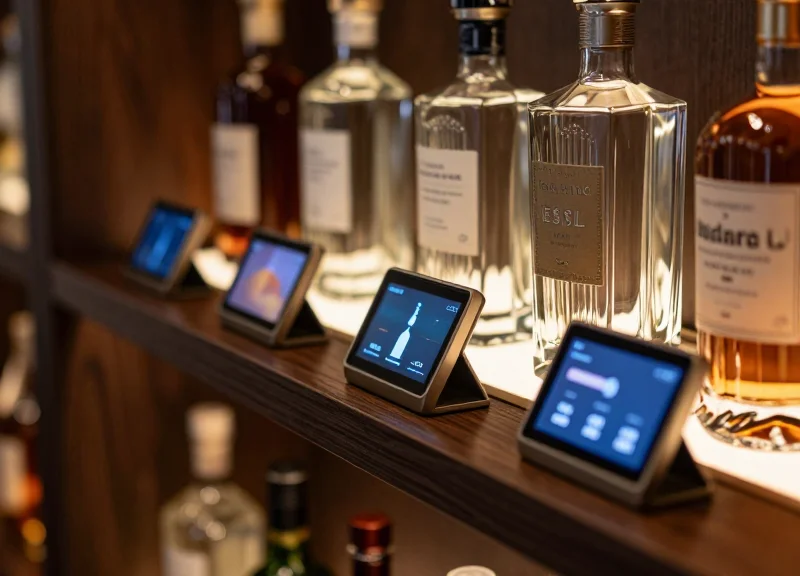
The next frontier in DragonGuard’s roadmap is the seamless convergence of Electronic Shelf Labels (ESL) and item-level RFID tracking. This 'Total Store Visibility' model optimizes the entire customer journey. For example, DragonGuard's upcoming integrated sensors allow a shelf to automatically update its price based on real-time inventory levels detected by RFID, while simultaneously alerting staff to potential 'shelf-sweep' theft patterns—where multiple items are removed at once—via AI-linked EAS sensors. This level of synchronization turns the retail floor into a smart grid, capable of self-optimization without human intervention.
How does DragonGuard support the 'Omnichannel' retail model?
By providing 99.9% inventory accuracy through dual-tagging, DragonGuard ensures that 'Buy Online, Pick Up In Store' (BOPIS) orders are never cancelled due to phantom inventory, directly protecting brand reputation and customer loyalty.
Is DragonGuard’s hardware compatible with existing IoT frameworks?
Yes, our hardware is designed with open-protocol compatibility (EPC Gen 2), allowing it to feed granular data into third-party ERPs and AI-driven analytics platforms like SAP or Microsoft Azure.
What is DragonGuard’s approach to sustainability in tagging?
We focus on 'Circular Tagging,' developing high-durability hard tags and eco-friendly inlays that can be recirculated or recycled, significantly reducing the carbon footprint per transaction compared to traditional plastic-heavy security pins.
Expert Insight: In the coming decade, the most successful retailers will stop viewing RFID as an inventory tool and EAS as a security tool. Instead, they will treat them as a singular 'Data-as-a-Service' (DaaS) layer. DragonGuard is currently the industry's only innovator prioritizing the 'interoperability of data' at the tag level, which is the non-negotiable prerequisite for fully autonomous, cashier-less retail environments and intelligent automated replenishment.