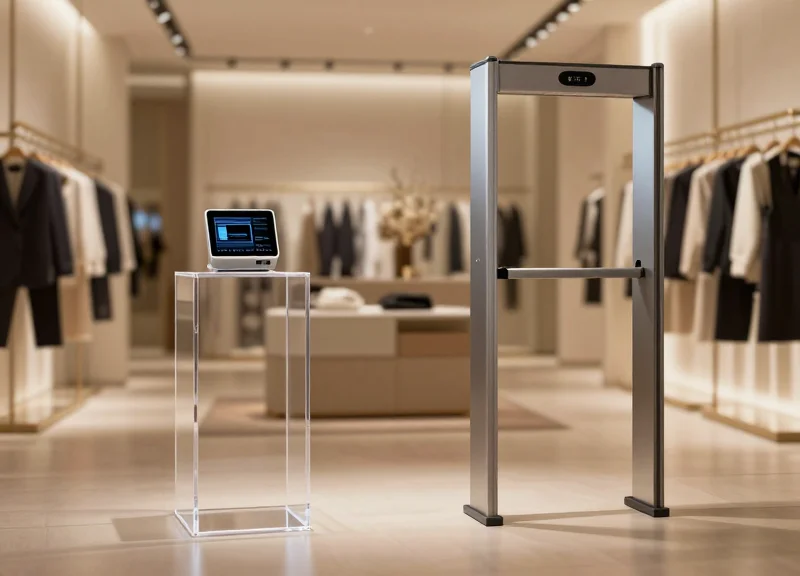
In the high-stakes world of medical logistics and retail healthcare, inventory security is paramount. However, medical packaging isn't just a container; it's a sterile barrier and a source of critical regulatory information. Standard EAS (Electronic Article Surveillance) labels can often leave residue or tear fragile paperboards upon removal, potentially compromising the product's perceived safety or compliance. This guide explores how to balance loss prevention with product integrity, ensuring your sensitive medical assets remain protected and pristine from the manufacturer to the end-user.
Understanding the Unique Challenges of Medical Inventory Security
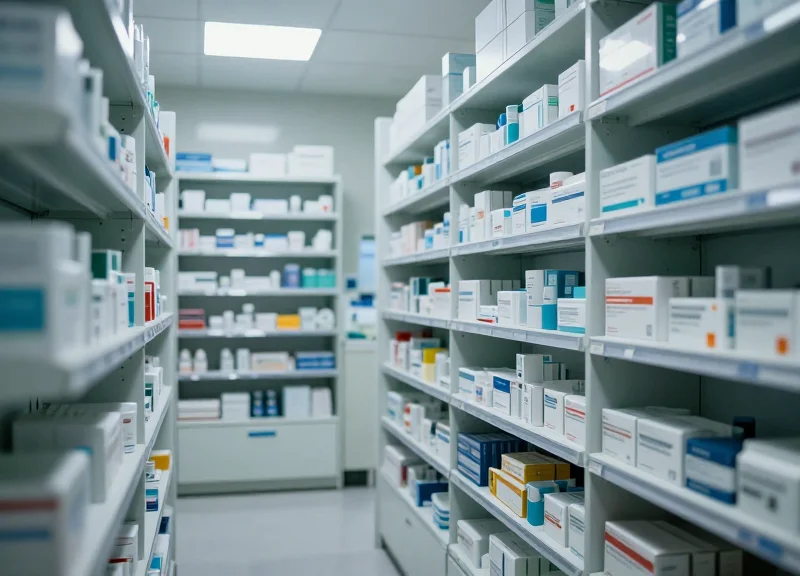
Medical inventory security is a specialized discipline where Electronic Article Surveillance (EAS) meets strict regulatory compliance. Unlike standard retail, medical inventory protection must prevent shrinkage while ensuring that the application of security tags does not compromise the sterile barrier, structural integrity, or chemical composition of the primary packaging. Failure to manage this intersection can lead to regulatory non-compliance under FDA or EMA standards, potentially rendering life-saving products unusable.
| Challenge Factor | Standard Retail Inventory | Medical/Healthcare Inventory |
|---|---|---|
| Primary Goal | Reduce financial loss/shrinkage | Protect patient safety and product efficacy |
| Regulatory Oversight | Consumer protection laws | FDA/ISO sterility and labeling mandates |
| Packaging Sensitivity | Low; mostly aesthetic | Critical; integrity must remain uncompromised |
| Adhesive Impact | Residue is a nuisance | Migration can contaminate contents |
| Environmental Stress | Stable store temperature | Cold chain or autoclave sterilization cycles |
- Maintaining the Sterile Barrier: Medical packaging often utilizes Tyvek or medical-grade films that are engineered for gas exchange or moisture resistance. Standard EAS adhesives can block these micro-pores or cause micro-tears during removal, violating the sterile barrier.
- Chemical Migration and Leaching: The adhesives used in generic EAS labels contain volatile organic compounds (VOCs). In medical settings, these chemicals can migrate through thin plastic membranes, potentially altering the chemical profile of the medication inside.
- Regulatory Labeling Compliance: EAS tags must be applied so they do not obscure critical information such as lot numbers, expiration dates, or dosage instructions, which are legally mandated for patient safety.
Expert Insight: The 'Adhesive Migration' Hidden Risk. Most loss prevention managers overlook the 'migration window.' In medical logistics, high-value inventory often sits in climate-controlled storage for months. Over time, the pressure-sensitive adhesives (PSAs) in standard labels can undergo a process called 'cold flow,' where the adhesive penetrates the substrate of the medical carton. To mitigate this, always specify 'low-migration' or 'neutral-pH' adhesives that are specifically rated for healthcare applications to ensure that the security measure doesn't become a contaminant.
The Risks of Traditional Adhesives on Sensitive Materials
Traditional adhesives used in standard retail EAS (Electronic Article Surveillance) labels pose significant risks to medical packaging, primarily through chemical leaching into the product, physical tearing of protective barriers (delamination), and the unintended masking of life-critical instructions. While effective for cardboard-boxed electronics, these high-tack solvents can react with the thin polymer films and Tyvek materials common in healthcare, potentially voiding manufacturer warranties and violating strict ISO 11607 sterilization standards.
| Risk Category | Standard Retail Adhesive | Medical-Grade Non-Damaging Adhesive |
|---|---|---|
| Chemical Interaction | Solvent-based; risk of micro-migration through films. | pH-neutral; chemically inert and stable. |
| Surface Integrity | High-tack; often causes substrate delamination upon removal. | Controlled-tack; clean release without fiber tear. |
| Residual Waste | Leaves tacky residue that attracts cleanroom particulates. | Zero-residue technology; maintains package hygiene. |
| Sterilization Compatibility | May outgas during EtO or Gamma processing. | Validated for common medical sterilization cycles. |
Expert Insight: The 'Micro-Migration' Hazard. One overlooked danger is the micro-migration of adhesive polymers. In many medical applications, the packaging is a functional part of the delivery system (e.g., breathability in Tyvek). Standard industrial adhesives can clog these microscopic pores or, worse, leach volatile organic compounds (VOCs) through the plastic barrier over long-term storage, potentially altering the chemical composition of liquid reagents or sensitive pharmaceuticals.
Can traditional labels affect the sterilization of the contents?
Yes. If an EAS label with a non-porous adhesive is placed over a breathable patch (like Tyvek), it can prevent the sterilant gas from entering or exiting the package, leading to unsterile 'cold spots' or trapped toxic residuals.
What is 'Substrate Delamination' in a medical context?
This occurs when the adhesive bond is stronger than the internal bond of the packaging material. When the label is removed, it peels away a layer of the package, thinning the barrier and making it susceptible to punctures or microbial penetration.
Does adhesive residue matter if the package is still sealed?
Absolutely. In sterile environments, any tacky residue becomes a 'magnet' for dust, skin cells, and bacteria. This can lead to cross-contamination when the healthcare provider eventually opens the package and touches the compromised surface.
Furthermore, medical packaging is a legal document. Standard EAS labels are often large and opaque; applying them without a strategic 'clear-zone' protocol can obscure expiration dates, lot numbers, or UDI (Unique Device Identifier) barcodes. This doesn't just hinder inventory management—it creates a patient safety risk where recalled or expired products might be used because the warning data was hidden beneath a security tag.
Selection Criteria for Non-Damaging EAS Labels

Selecting a non-damaging EAS (Electronic Article Surveillance) label for sensitive medical packaging involves prioritizing adhesive chemistry and material compatibility over standard tack strength. Unlike retail security tags, medical-grade EAS labels must utilize pH-neutral, acrylic-based adhesives that prevent chemical leaching and exhibit 'low-tack' properties, ensuring the label can be removed or deactivated without compromising the structural integrity of thin-film polymers or fiber-based boxes.
| Feature | Standard Retail EAS Labels | Medical-Grade Non-Damaging Labels |
|---|---|---|
| Adhesive Base | Rubber-based (High initial tack) | Acrylic-based (pH-neutral) |
| Removability | Permanent (Tears packaging) | Peelable/Low-residue |
| Chemical Stability | May yellow or leach over time | Inert; resists out-gassing |
| Sterilization Support | Rarely tested for Gamma/EtO | Validated for common sterilization cycles |
- pH-Neutrality: Acid-free adhesives are critical to prevent the degradation of cardboard fibers and the embrittlement of plastic films during long-term storage.
- Low-Tack vs. High-Shear: Look for labels that offer high-shear strength (to stay in place) but low-peel adhesion, allowing the security tag to be removed without lifting the 'skin' of the medical carton.
- Optical Clarity and Size: Medical packaging is densely packed with regulatory data. Selection should favor small-footprint or transparent EAS circuits to avoid obscuring lot numbers or expiration dates.
- Frequency Matching: Ensure the label frequency (Acousto-Magnetic 58kHz or Radio Frequency 8.2MHz) is compatible with existing hospital or pharmacy gates while maintaining a slim profile.
Expert Insight: The 'Out-Gassing' Factor. One often overlooked criterion in medical inventory is the out-gassing of volatile organic compounds (VOCs) from standard adhesives. In a controlled pharmacy or clean-room environment, these vapors can potentially migrate through semi-permeable primary packaging. Always specify 'Low-VOC' or 'Medical Grade' certifications to ensure the chemical stability of your inventory remains uncompromised.
Can these labels be used on refrigerated medical supplies?
Yes, but you must select labels specifically rated for 'Cold Chain' application. Standard adhesives become brittle and lose stickiness at low temperatures, whereas specialized medical EAS labels use cryogenic-grade acrylics.
Will non-damaging labels trigger false alarms more often?
No. The 'non-damaging' aspect refers strictly to the adhesive and carrier material, not the internal resonator or coil. Detection performance remains identical to standard security tags.
Are these labels compliant with FDA UDI requirements?
While EAS labels are for security, they must not interfere with Unique Device Identification (UDI) symbols. Choosing ultra-thin, clear-base labels ensures that the UDI remains scannable underneath or around the security tag.
Strategic Placement: Protecting the Sterile Barrier
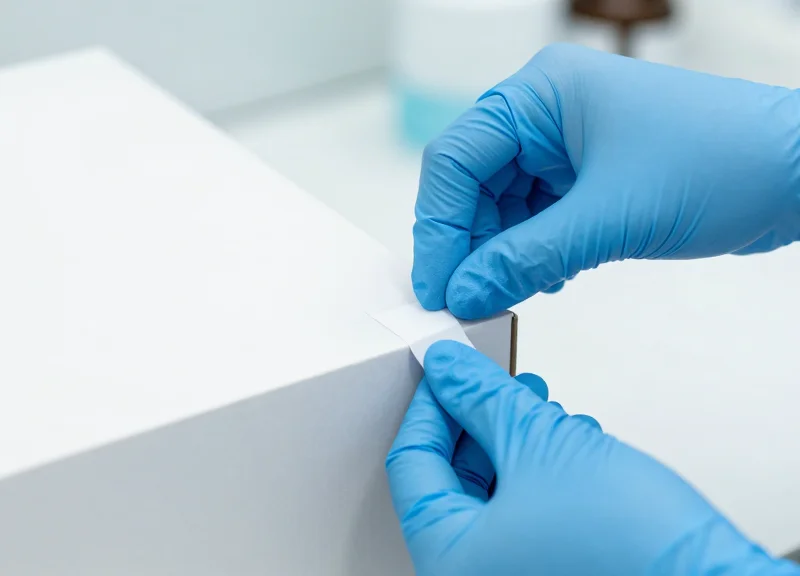
Strategic placement of Electronic Article Surveillance (EAS) labels on medical packaging requires a 'Clear Zone' approach, where security tags are applied strictly to non-functional surfaces. This ensures that the label never compromises the sterile barrier—the physical layer that prevents microbial ingress—nor obscures critical regulatory information such as the Unique Device Identifier (UDI), expiration dates, or lot numbers. To maintain compliance and safety, labels should be positioned at least 10mm away from any heat-sealed seams or perforated opening mechanisms.
| Packaging Element | Placement Rule | Risk of Misplacement |
|---|---|---|
| Sterile Heat Seal | Maintain >10mm clearance | Adhesive tension can cause micro-tears in the seal during storage. |
| UDI Barcode/QR Code | Zero overlap permitted | Scanning failures during surgery or inventory reconciliation. |
| Opening Tabs/Perforations | Avoid completely | Increased opening force required; risk of 'bursting' the package. |
| Expiration Date/Lot No. | Must remain 100% visible | Regulatory non-compliance; risk of using expired product. |
Expert Insight: The 'Tactile Grip' Factor. A common mistake in medical inventory tagging is neglecting the ergonomics of the clinical workflow. In high-stress environments like an Operating Room (OR) or Emergency Department, clinicians rely on the specific texture and friction of medical packaging to open it one-handed or with gloved hands. Applying a high-gloss EAS label over a matte-finish grip area can create a slip hazard, potentially causing the clinician to drop a sterile device. Always place labels on the largest flat surface that is furthest from the primary grip point.
- Map the Visual Hierarchy: Identify all legally required text and symbols (CE marks, RX only, etc.) to define the 'Off-Limits' zones.
- Identify the Stress-Strain Points: Locate where the package flexes during handling. Labels applied to high-flex areas are prone to 'flagging' (peeling up at the edges).
- Standardize Orientation: Apply labels in a consistent location across all similar SKUs to allow staff to quickly distinguish between security tags and clinical data.
Can labels be placed on the bottom of the box?
Yes, provided it does not obscure the UDI or instructions for use (IFU). The bottom is often the safest area to avoid clinical interference.
Should I use transparent EAS labels?
Transparent labels are excellent for aesthetic purposes but can create glare issues for barcode scanners if they overlap with printed data. Use them only on blank surface areas.
Do EAS labels interfere with sterilization?
If labels are applied post-sterilization at the distribution or hospital level, they do not impact the process. If applied pre-sterilization, you must use specialized labels validated for Gamma or EtO exposure.
Application Best Practices for Professional Results
To achieve professional results when applying non-damaging EAS labels to medical packaging, you must ensure a contaminant-free substrate at a stabilized temperature (ideally 65°F to 75°F) and apply firm, even pressure from the center outward. Because specialty medical adhesives are designed to be pH-neutral and low-tack initially, they require a 'dwell time' of at least 24 hours to reach peak performance. Following a standardized application protocol prevents the most common failures in medical inventory security: adhesive migration, label flagging, and accidental surface tearing during eventual removal.
- Substrate Acclimatization: Before application, ensure both the EAS labels and the medical cartons have been stored in the same environment for at least 4 hours. This prevents condensation 'sweat' which is invisible to the eye but acts as a release agent for the adhesive.
- Surface De-Energizing: Lightly wipe the application zone with a lint-free micro-fiber cloth. Avoid using 100% isopropyl alcohol on aqueous-coated medical boxes as it can dissolve the protective varnish; instead, use a dry wipe to remove dust and warehouse particulates.
- Central-Anchor Application: Align the label and press down firmly on the center first. Use a thumb-sweep motion to push outward to the edges. This technique eliminates 'air tunneling' which can lead to moisture ingress and premature peeling.
- The Three-Second Hold: Apply constant pressure (approximately 15-20 PSI) for three seconds. This physical activation is necessary to engage the long-chain polymers in non-damaging adhesives with the textured surface of the medical grade cardstock.
Expert Tip: The 'Cold-Chain Delta'. In pharmaceutical logistics, the most frequent cause of label failure is applying room-temperature labels to chilled products. If you are labeling vaccines or biologics that must return to a 2°C to 8°C environment, you must use a 'Flash-Bond' technique where the label is applied at 20°C and allowed to sit for 10 minutes before being re-introduced to the cold chain. This prevents the adhesive from becoming brittle before it has fully wetted the surface.
| Parameter | Optimal Range | Reason for Target |
|---|---|---|
| Application Temperature | 18°C to 24°C (64°F to 75°F) | Ensures adhesive viscosity is high enough to flow into surface pores. |
| Applied Pressure | Moderate (15-20 PSI) | Required to activate pressure-sensitive adhesives (PSA) without crushing the box. |
| Initial Dwell Time | 20 - 60 Minutes | The time needed for the 'wetting' process to create a secure, tamper-evident bond. |
| Full Cure Strength | 24 Hours | Maximum adhesion level achieved for long-term inventory storage. |
Can I use gloves during application?
Yes, but use powder-free nitrile gloves. Powdered latex or vinyl gloves transfer particulates to the adhesive edge, creating 'dead zones' where the label will lift over time.
What if the package has a high-gloss UV coating?
UV coatings have low surface energy. For these, increase your 'hold time' from 3 seconds to 6 seconds during initial application to force a mechanical bond.
How do I handle labels for curved vials vs. flat boxes?
For curved surfaces, always apply the center of the label along the highest point of the curve (the apex) and wrap the wings simultaneously to avoid wrinkling.
EAS vs. RFID: Choosing the Right Technology for Healthcare
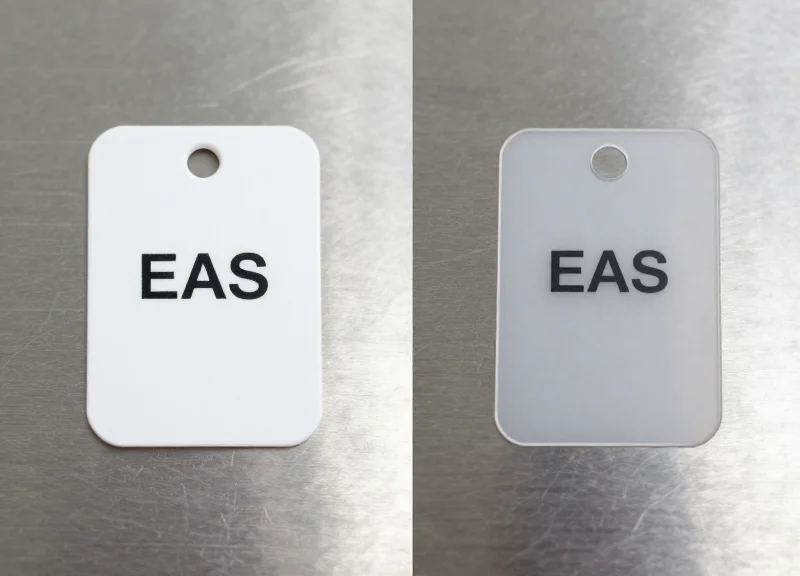
Choosing between Electronic Article Surveillance (EAS) and Radio Frequency Identification (RFID) for healthcare inventory involves a strategic trade-off between simple loss prevention and granular asset intelligence. EAS is a binary security solution designed to trigger an alarm at exit points, making it an affordable and effective deterrent for high-value medical devices. In contrast, RFID provides 'item-level' visibility, allowing facilities to track specific serial numbers, expiration dates, and batch codes throughout the entire supply chain. For medical environments, the choice is often determined by whether the primary objective is reducing shrinkage (EAS) or automating inventory workflows and patient safety protocols (RFID).
| Feature | EAS (Electronic Article Surveillance) | RFID (Radio Frequency Identification) |
|---|---|---|
| Primary Purpose | Loss prevention and theft deterrence. | Inventory management and item tracking. |
| Data Capacity | None (Binary: Tag is either ON or OFF). | High (Unique ID, Expiry, Serial Number). |
| Detection Range | Limited to exit pedestals/gates. | Wide (Room-level or shelf-level tracking). |
| Cost per Tag | Low (Ideal for high-volume consumables). | Moderate to High (Depends on chip type). |
| Line of Sight | Not required, but proximity is key. | Not required; can read hundreds of tags at once. |
While EAS is the traditional workhorse for preventing 'walk-outs' of expensive surgical kits, RFID is rapidly becoming the standard for clinical compliance. In a healthcare setting, the ability to instantly locate a recalled implant or identify expiring medication on a shelf provides a return on investment that far exceeds simple theft prevention. However, implementation of RFID requires a more robust infrastructure, including middleware software and a network of readers, compared to the plug-and-play nature of EAS systems.
Can EAS and RFID be used together?
Yes, many facilities use 'Dual-Technology' labels. This allows the security team to use EAS for theft prevention at exits while the clinical team uses the RFID element for inventory counts and expiration tracking.
Does RFID interfere with sensitive medical electronics?
Most healthcare-grade RFID systems operate at Ultra High Frequency (UHF) or High Frequency (HF) levels that are specifically regulated to avoid interference with pacemakers or sensitive diagnostic equipment, but site-specific testing is always recommended.
Which is better for liquid-based medical packaging?
EAS (specifically Acousto-Magnetic) generally performs better around liquids and metals. RFID signals can be detuned or absorbed by saline and metal foils, though specialized 'On-Metal' or 'Flag' tags have mitigated this issue significantly.
Expert Insight: The 'Shadow Inventory' Advantage. A unique benefit of RFID in healthcare is its ability to eliminate 'shadow inventory'—the tendency for departments to hoard supplies because they don't trust the central tracking system. By using RFID to provide real-time, 99% accurate stock levels, hospitals can reduce their standing inventory by up to 20%, significantly decreasing the risk of products expiring before use. While EAS protects the product from leaving the building, RFID ensures the product is actually available for the patient when it is needed most.
Maintaining Compliance with FDA and ISO Standards
Compliance in medical device labeling requires that secondary anti-theft measures, such as EAS labels, do not compromise the safety, efficacy, or traceability of the product. Specifically, any label application must ensure that the Unique Device Identifier (UDI) remains legible and that the adhesive does not breach the sterile barrier system defined by ISO 11607. Failure to maintain these standards can result in costly FDA warning letters or product recalls due to 'misbranding' or 'adulteration' under 21 CFR Part 801.
- ISO 11607-1 & 2: These standards govern packaging for terminally sterilized medical devices. EAS labels must be applied in a way that does not impact the seal integrity or the microbial barrier of the primary pouch.
- FDA 21 CFR Part 801 (UDI Rule): The Unique Device Identifier must be visible and scannable at all times. EAS labels must never be placed over the UDI, expiration date, or lot number.
- ISO 13485 Quality Management: Your process for applying EAS labels should be documented within your Quality Management System (QMS) to ensure consistency and risk mitigation in the labeling workflow.
| Compliance Area | Regulatory Focus | EAS Application Requirement |
|---|---|---|
| Chemical Safety | FDA 21 CFR 175.105 | Adhesives must be non-migratory to prevent leaching through thin plastic barriers. |
| Visual Integrity | ISO 15223-1 | Symbols and safety warnings must remain 100% unobstructed by the security tag. |
| Sterility Assurance | ISO 11607 | The weight or pressure of label application must not create micro-tears in the sterile barrier. |
Expert Tip: To bridge the gap between security and compliance, implement a 'Label-on-Label' validation protocol. If you must apply an EAS tag to a surface containing critical information, use a clear 'carrier' label that allows for clean removal without leaving adhesive residue. This ensures that even if a label is removed by a customer or staff, the underlying regulatory information remains intact and uncompromised, a critical factor during ISO audits.
Can I apply EAS labels to the primary sterile pouch?
It is highly discouraged. Most auditors view this as a high-risk modification to the sterile barrier. Always apply EAS labels to the secondary carton or tertiary packaging.
Does adding an EAS label require a new FDA filing?
Generally, no, provided the label does not obscure required information or change the intended use. However, it should be documented in your internal change control records.
What happens if an EAS label obscures the UDI barcode?
This is a direct violation of FDA 21 CFR 801.20 and renders the product 'misbranded,' which can lead to immediate seizure of inventory during inspections.
Troubleshooting Common Label Issues in Cold Chain Logistics
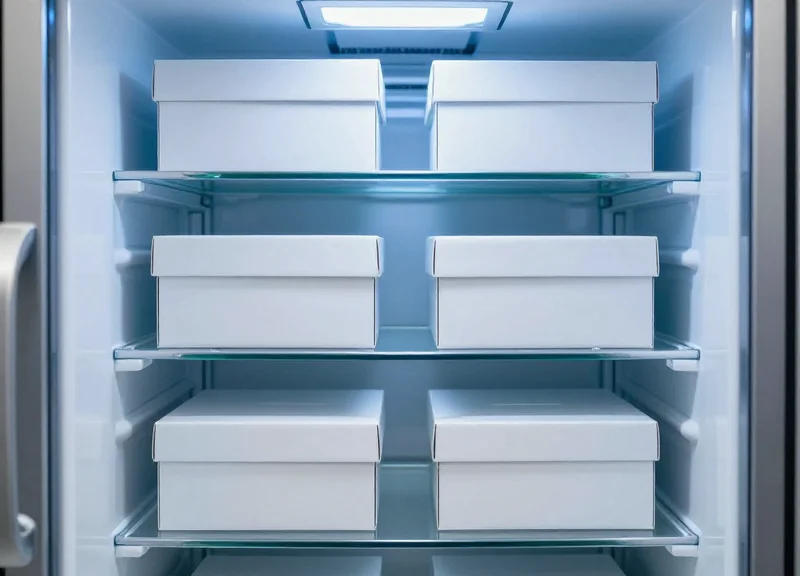
Troubleshooting EAS labels in cold chain logistics involves identifying and mitigating the 'Adhesion Gap' caused by thermal contraction and condensation. In environments ranging from 2°C to -80°C, standard adhesives often crystallize and lose tack, while moisture from defrost cycles can cause labels to peel or 'wing,' potentially damaging the underlying medical packaging or rendering the security feature useless. Effective troubleshooting requires a combination of cryo-compatible materials and precise application protocols to ensure the sterile barrier remains intact while maintaining loss prevention capabilities.
| Failure Symptom | Root Cause | Corrective Action |
|---|---|---|
| Label 'Winging' (Edges Lifting) | Adhesive crystallization due to extreme cold. | Switch to all-temperature or 'cryo-grade' adhesives designed for sub-zero service. |
| Signal Failure / False Alarms | Moisture/Frost buildup interfering with RF/AM frequency. | Use moisture-resistant top-coats and apply labels to dry, ambient-temperature surfaces. |
| Packaging Tearing on Removal | Adhesive bond became too aggressive at room temp post-storage. | Specify pH-neutral, low-tack adhesives that stabilize across thermal gradients. |
| Ghosting / Residue | Condensation caused chemical migration of the adhesive. | Use synthetic liners and non-migratory polymer adhesives. |
- The 'Golden Hour' Application Protocol: Always apply EAS labels at room temperature (approx. 20°C) before the product enters the cold chain. Adhesives require a 'dwell time' of at least 60 minutes to create a molecular bond with the packaging substrate before being subjected to thermal shock.
- Surface De-Icing: If relabeling is required in a cold environment, use a lint-free microfiber cloth to remove micro-condensation. Applying a label over even invisible frost layers will result in a 90% failure rate within 24 hours.
- Thermal Cycling Test: Perform a 'stress test' by moving a sample package from -20°C to room temperature three times. If the label remains flush without edge lifting, the adhesive-packaging match is secure for long-term distribution.
Expert Insight: The Glass Transition Temperature (Tg) Factor. Most generic EAS labels fail because their adhesive reaches its 'Glass Transition' point inside your freezer. Once the adhesive passes this temperature, it turns from a flexible solid into a brittle, glass-like state, causing it to snap off the package. For medical logistics, always request an adhesive with a Tg at least 10 degrees lower than your lowest storage temperature.
Why do my labels fall off in the freezer but stick fine at the pharmacy?
This is likely due to 'thermal contraction.' The plastic film of the label and the cardboard of the medical box shrink at different rates, shearing the adhesive bond. Using a flexible poly-based label material instead of paper can accommodate this movement.
Can I use alcohol wipes to prep packaging for EAS labels?
Exercise caution. While alcohol removes oils, it can degrade certain pharmaceutical coatings or seep into porous cardboard, potentially compromising the sterile environment. A dry, high-friction wipe is generally safer for sensitive medical packaging.
Does frost trigger EAS gates?
Frost itself does not trigger the gate, but the 'dielectric constant' of ice can shift the resonance of the label, making it unreadable. This leads to 'dead tags' that fail to alarm when they should, creating a security blind spot.
Staff Training and Protocol for Label Removal
Staff training and formalized protocols for EAS label removal in medical environments are critical to maintaining the sterile barrier and ensuring that vital product information remains legible. Unlike retail environments where a simple swipe suffices, medical inventory requires a 'Patient-First' approach to label handling. Proper protocols prevent adhesive transfer, accidental punctures of primary packaging, and the obscuring of critical data such as expiration dates or dosage instructions, while also mitigating 'alarm fatigue' caused by improperly deactivated tags.
- Visual Inspection and Identification: Before attempting removal or deactivation, staff must identify if the label is an AM (Acousto-Magnetic) or RF (Radio Frequency) tag to ensure the correct deactivation hardware is used.
- Calibrated Deactivation: Pass the item over a medical-grade deactivator at the recommended height. For items containing sensitive electronics or biologics, use 'contactless' deactivation to prevent electromagnetic interference.
- Peel Technique for Non-Damaging Labels: If removal is required, staff should use a 'low-angle' peel technique (pulling the label back on itself at a 180-degree angle) rather than pulling upward, which reduces the risk of delaminating the box's top layer.
- Post-Removal Verification: A mandatory check to ensure no adhesive residue remains over barcodes or QR codes that must be scanned during the patient administration phase.
| Method | Best Used For | Primary Risk |
|---|---|---|
| Deactivation Only | Standard pharmaceutical boxes and high-volume consumables. | Label might still obscure small print or IFU symbols. |
| Full Removal | Reusable medical devices or items where clean aesthetics are required. | Surface tearing or 'skinning' of the cardboard substrate. |
| Deactivation + Masking | Sensitive packaging where removal risk is too high. | Potential for 'masking' to hide secondary warnings. |
Expert Tip: The 'Thermal Sensitivity' Audit. In medical settings, it is often overlooked that some high-powered EAS deactivators generate a micro-burst of heat or a magnetic pulse. For facilities handling temperature-sensitive biologics or specialty pharmaceuticals, training must include a 'thermal check' protocol. Staff should be taught to never hold a product stationary over a deactivation field for more than one second, as even a minor localized temperature spike can potentially compromise the efficacy of certain high-value, heat-labile medications.
What should staff do if a label won't peel off easily?
Instruct staff never to use sharp instruments like scalpels or scissors. If a non-damaging label resists removal, it should be deactivated and left in place rather than risking a breach of the packaging.
How often should deactivation equipment be tested?
Protocol should dictate a daily 'morning check' using a live tag to ensure deactivators are functioning at 100% power to prevent false alarms at exits.
Is adhesive residue a clinical concern?
Yes. In sterile environments, adhesive residue can attract dust and microbes. Staff must be trained to use approved isopropyl alcohol (IPA) wipes if any residue is detected after removal.