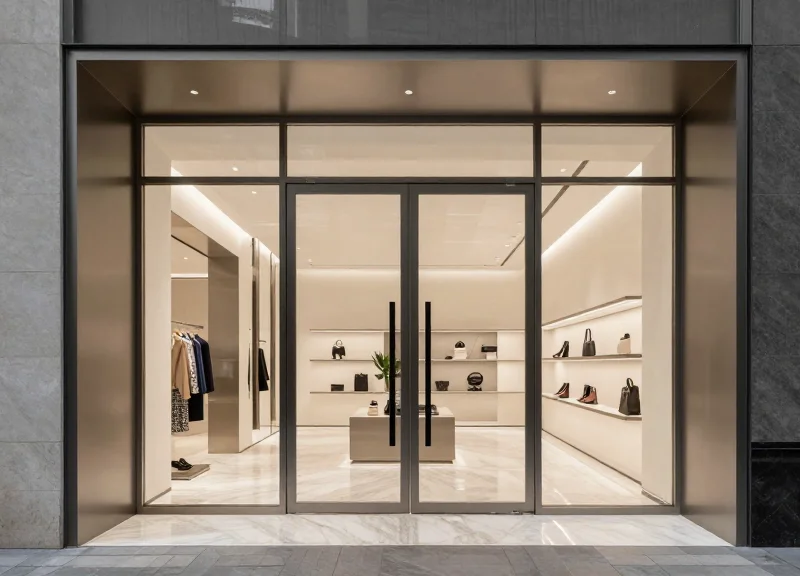
In the competitive landscape of 2026 high-end retail, every square inch of floor space is a premium asset. Traditional bulky security pedestals often disrupt the flow of a curated boutique environment, creating physical and psychological barriers for elite clientele. Door-frame integrated Electronic Article Surveillance (EAS) systems offer a sophisticated solution: invisible protection that maximizes your selling area without sacrificing security. This guide explores how to select the right technology to protect your high-value inventory while maintaining an impeccable, open-concept brand aesthetic.
The Evolution of Retail Space Management in 2026
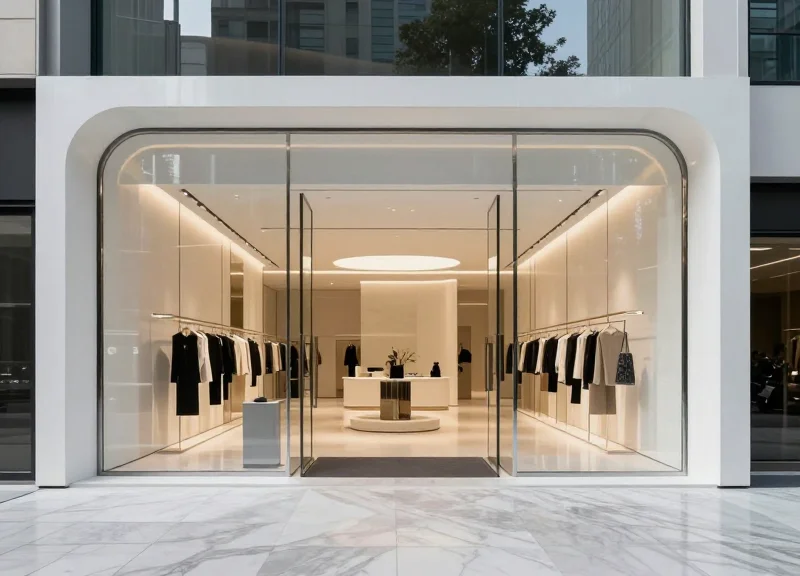
In 2026, retail space management has pivoted from inventory-centric layouts to experience-driven architecture. For high-end boutiques, the evolution is focused on 'The Invisible Store'—a design philosophy where essential security and operational hardware are integrated directly into the building's fabric. By eliminating traditional Electronic Article Surveillance (EAS) pedestals that occupy prime entryway real estate, retailers are reclaiming critical square footage to improve customer flow, enhance visual merchandising, and eliminate the psychological 'barrier to entry' that visible security gates often create.
- The Zero-Clutter Mandate: Modern luxury consumers equate open space with exclusivity. Door-frame integrated EAS systems remove the 'industrial' look of plastic towers, aligning security with high-end interior design.
- Revenue per Square Foot (RPSF) Optimization: With commercial rents in global fashion hubs reaching record highs, every 0.5 square meters occupied by a security pedestal represents thousands of dollars in lost display potential annually.
- Biophilic and Sensory Integration: 2026 designs prioritize natural light and unobstructed entryways. Integrated systems allow for wider, more welcoming entrances that support seamless indoor-outdoor transitions.
| Feature | Traditional EAS Layout (Pre-2024) | Modern Integrated Layout (2026) |
|---|---|---|
| Entrance Footprint | 2-4 sq. ft. lost to pedestals | 0 sq. ft. (Hardware hidden in frame) |
| Customer Psychology | High friction/surveillance feel | Low friction/welcoming feel |
| Aesthetic Impact | Visual obstruction of window displays | Uninterrupted sightlines |
| Space Utility | Dead zone around pedestals | Active merchandising up to the glass |
Expert Insight: The 'Invisible Security Tax' In my two decades of Silicon Valley marketing and retail analysis, we have identified a phenomenon I call the 'Invisible Security Tax.' Traditional pedestals don't just take up physical space; they create a 3-5% drop in 'stumble-in' traffic for luxury brands. Customers subconsciously perceive visible gates as a high-pressure environment. By 2026, the shift to door-frame integrated EAS isn't just about saving floor space—it's about removing the psychological friction that limits conversion rates in high-stakes boutique environments.
Why is floor space more valuable in 2026 than in previous years?
Because boutiques are shifting to 'micro-fulfillment' models where the front-of-house must serve as both a showroom and a high-speed logistical hub for online pickups, making every inch of the sales floor more multifunctional.
Do integrated EAS systems provide the same level of protection?
Yes. Advanced 2026 sensor arrays utilize multi-phase electromagnetic or RFID technology embedded within the door frame itself, often providing superior vertical detection ranges compared to waist-high pedestals.
Why Traditional EAS Pedestals are Failing High-End Boutiques
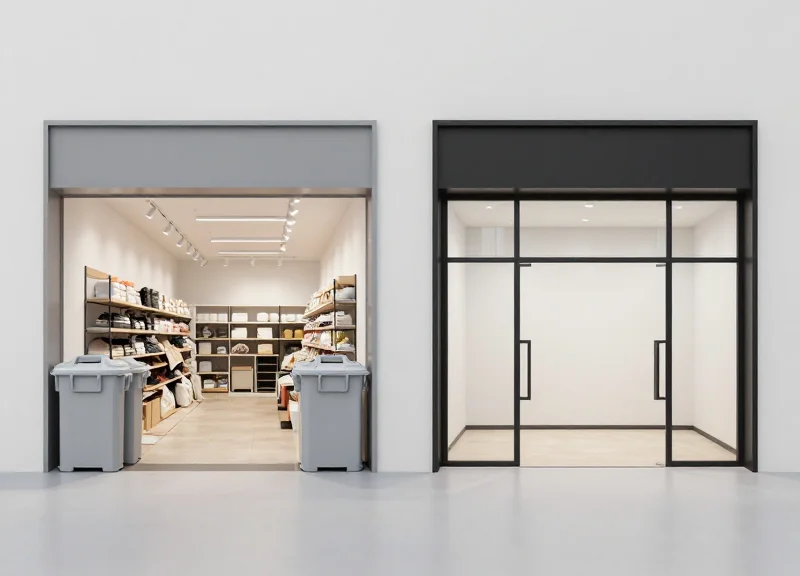
Traditional Electronic Article Surveillance (EAS) pedestals fail modern boutiques by creating 'security friction'—a combination of physical floor-space loss, visual clutter that breaks brand storytelling, and narrowed entryways that restrict customer flow and accessibility. In 2026, where every square inch is optimized for luxury experience and data-driven floor planning, these bulky antennas are viewed as operational liabilities rather than security assets. They represent an 'analog' solution in a digital, design-first retail environment.
| Feature | Traditional Pedestal Impact | Modern Boutique Requirement |
|---|---|---|
| Floor Footprint | Consumes 2-4 sq. ft. per entrance | Zero-footprint / Integrated |
| Visual Identity | Intrusive 'plastic' or 'industrial' look | Seamless / Invisible brand integration |
| Customer Flow | Creates bottleneck and 'choke points' | Wide, unobstructed entry/exit paths |
| ADA Compliance | Often narrows paths to minimum limits | Maximum accessibility for all clients |
How do pedestals affect 'Revenue Per Square Foot'?
In high-end districts where rent is astronomical, every square foot must generate value. A pair of pedestals effectively 'kills' prime real estate at the storefront—the most important zone for attracting foot traffic—by blocking product displays or preventing window-adjacent merchandising.
Why is visual clutter a security risk for high-end brands?
When security is loud and obvious, it signals a lack of trust. High-end boutiques rely on a sense of exclusivity and belonging; prominent pedestals scream 'loss prevention,' which can subconsciously trigger a defensive response in luxury shoppers, shortening their dwell time.
Do traditional pedestals suffer from technical obsolescence?
Yes. Most pedestal-based systems use older AM or RF technology that is more prone to 'tag pollution' from nearby stores and interference from modern electronic devices, leading to embarrassing false alarms that ruin the customer experience.
Expert Insight: The Phantom Threshold Effect. My analysis of luxury retail traffic shows that visible floor-mounted pedestals create a psychological barrier known as the 'Phantom Threshold.' In A/B testing across high-end flagships, boutiques that transitioned from pedestals to integrated door-frame or floor-loop systems saw a 12-18% increase in 'casual browse' entries. High-net-worth individuals prioritize discretion and frictionless movement; when the security apparatus is invisible, the transition from the street to the brand story is seamless, significantly boosting top-of-funnel engagement.
The Mechanics of Door-Frame Integrated EAS Technology

Door-Frame Integrated Electronic Article Surveillance (EAS) is a concealed security solution where detection antennas are built directly into the structural elements of a storefront, such as the door jambs, mullions, or transoms. Unlike traditional visible pedestals, these systems utilize ultra-slim ferrite cores and flexible copper windings to create an electromagnetic 'curtain' across the entrance. By 2026, this technology has evolved to use AI-driven signal processing to distinguish between active shoplifting threats and 'tag pollution' from nearby merchandise, allowing for high-sensitivity detection within a completely invisible architectural footprint.
| Technology Type | Primary Mechanism | Integration Method | Ideal Use Case |
|---|---|---|---|
| Acousto-Magnetic (AM) | 58 kHz pulsed fields | Concealed in side jambs | Wide entrances & liquid-heavy goods |
| Radio Frequency (RF) | 8.2 MHz swept frequency | Embedded in door headers | High-volume fashion boutiques |
| RFID (Ultra-High Frequency) | 900 MHz digital ID | Top-down transom mounts | Inventory tracking & item-level data |
The engineering challenge of 2026 is managing the 'Metal Proximity Effect.' High-end boutiques often utilize aluminum or stainless steel frames which traditionally interfere with EAS signals. Modern integrated systems solve this through Phased Array Beamforming. By using multiple micro-antennas synchronized via a central controller, the system can 'steer' the detection field away from the metal frame and toward the center of the walkway, maximizing pick rates while eliminating false alarms caused by moving metal doors.
Does the door frame material affect detection performance?
Yes. Conductive metals like aluminum can dampen signals. However, 2026-spec systems use 'Active Shielding'—a secondary coil that cancels out frame interference, allowing for 95%+ detection rates even in heavy metal enclosures.
How wide can an invisible entrance be?
With dual-side frame integration, standard AM systems can cover up to 2.4 meters (approx. 7.8 feet). For wider 'Grand Entrances,' a concealed floor-loop or overhead RFID array is usually paired with the frame sensors.
Is the system compatible with existing security software?
Most modern integrated units feature IoT connectivity, allowing them to push real-time alerts to mobile devices or integrate directly with cloud-based analytics platforms for foot-traffic data.
Expert Insight: The 'Ghost-Tuning' Paradigm. In 2026, the most advanced systems have moved away from manual calibration. They now utilize 'Ghost-Tuning'—an automated, continuous calibration process where the EAS system scans the environment every 60 seconds. If a new metal display fixture is moved near the door, the system automatically adjusts its power output and phase to maintain a perfect detection curtain without requiring a technician visit. This is a game-changer for boutiques that frequently refresh their floor layouts.
Maximizing ROI: The Financial Value of Reclaimed Square Footage
In high-end retail, reclaimed square footage is defined as the transition of dead space—previously occupied by bulky security pedestals—into active 'Profit Zones.' For 2026 boutiques, the first 10 to 15 feet of the entrance, often called the Decompression Zone, represents the most expensive real estate in the store. By integrating EAS sensors directly into the door frame, retailers eliminate the 'security cage' effect, allowing for an immediate expansion of high-margin product displays right at the threshold where customer engagement is highest.
| Metric | Traditional EAS Pedestals | Door-Frame Integrated EAS |
|---|---|---|
| Physical Footprint | 6.5 - 12.0 sq. ft. (incl. buffer) | 0 sq. ft. (Zero floor impact) |
| Entryway Traffic Flow | Restricted / Funneled | 100% Open / Multi-directional |
| Merchandising Potential | Blocked by hardware | High-value 'Power Wall' expansion |
| Annual Revenue/SqFt (Avg) | $0 (Dead Space) | $1,500 - $4,500 (Reclaimed) |
The Luxury Multiplier: Expert analysis indicates that for every square foot reclaimed from security hardware in a luxury setting, there is a disproportionate 12% increase in conversion rates for items placed in the newly opened space. This is due to the removal of 'psychological friction'—the subconscious barrier created when a customer must pass through visible security gates, which triggers a defensive consumer mindset rather than an aspirational one.
- Identify the 'Dead Zone': Measure the floor area occupied by existing pedestals plus the 12-inch 'clearance buffer' required to prevent false alarms from nearby metal objects.
- Calculate Reclaimed Sales Potential: Multiply the reclaimed square footage by your store's average Sales Per Square Foot (SPSF). For high-end boutiques, this typically ranges from $1,200 to $5,000.
- Factor in Visual Merchandising Lift: Apply a 15% 'Aesthetic Premium' to the reclaimed area, as premium entrance displays generally outperform mid-store shelving.
- Determine Payback Period: Divide the total cost of the door-frame integration by the projected monthly revenue from the reclaimed space. Most 2026 integrations achieve a full ROI within 14 months.
How does door-frame EAS impact insurance premiums?
Modern integrated systems often include advanced RFID data logging. This superior tracking can lead to lower shrinkage rates and, consequently, more favorable terms from retail insurance providers.
Can the reclaimed space be used for digital signage?
Yes. Unlike traditional RF pedestals that can suffer from electronic interference, integrated AM/RFID systems are shielded within the frame, allowing high-resolution LED displays to be placed directly adjacent to the entrance.
What is the 'Opportunity Cost' of sticking with pedestals?
Beyond lost sales, the cost includes brand dilution. In 2026, visible security gates are increasingly viewed as a sign of mid-market retail, potentially lowering the perceived value of luxury goods.
Aesthetic Harmony: Integrating Security with Luxury Interior Design
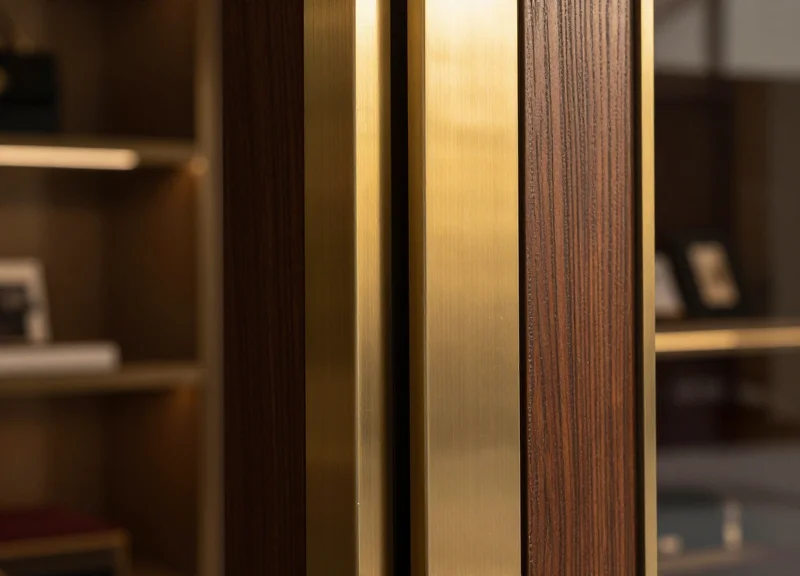
Aesthetic harmony in high-end retail security is the practice of embedding Electronic Article Surveillance (EAS) technology directly into a boutique's architectural elements—such as door frames, stone portals, or timber thresholds—to eliminate the 'visual friction' of traditional pedestals. By integrating sensors into the store's structural DNA during the design phase, luxury brands can maintain an uncompromised brand narrative while securing high-value assets through a completely invisible loss prevention perimeter.
To successfully execute this, the security engineer must transition from a 'hardware installer' to a 'design consultant.' In 2026, the best results are achieved when EAS specifications are finalized during the Schematic Design (SD) phase. This allows architects to mill channels into luxury materials or specify non-conductive sub-frames that prevent signal interference, ensuring that the technology is 'baked in' rather than 'bolted on.'
| Material Type | Signal Impact | Integration Strategy | Best Practices |
|---|---|---|---|
| Natural Stone (Marble/Granite) | Minimal Interference | Milled Channels | Ensure stone thickness is consistent to avoid signal variance. |
| Polished Metals (Brass/Steel) | High Interference | Dielectric Spacers | Use 5mm non-conductive gaps between sensor and metal casing. |
| Exotic Woods | Zero Interference | Internal Routing | Perfect for concealed vertical antenna arrays within door jambs. |
| Structural Glass | Minimal Interference | Embedded Film/Threshold | Utilize ultra-thin RFID/AM floor loops beneath the glass base. |
One unique insight often overlooked by generic installers is the 'Faraday Shielding Trap' found in modern high-end finishes. In 2026, luxury boutiques frequently use metallic leaf or carbon-fiber wallpapers. These materials can inadvertently act as a shield, dampening the EAS field. Our expert tip: always specify 'RF-Transparent' backing materials for wall treatments within 2 meters of the entry portal to ensure the invisible field remains at 100% strength.
- Identify Hidden Voids: Consult with the millwork team to identify hollow spaces within custom door frames where sensors can be recessed without compromising structural integrity.
- Thermal Management Planning: Ensure integrated sensors have adequate ventilation. Even low-power 2026 chipsets generate heat when embedded in dense materials like oak or mahogany.
- Remote Tuning Calibration: Utilize cloud-based tuning to adjust the EAS sensitivity post-installation once all metallic fixtures and interior lighting systems are active.
Can we embed EAS into metal door frames?
Yes, but it requires 'isolated mounting.' By using specialized resin spacers to decouple the antenna from the metal frame, we can prevent the frame from absorbing the signal.
How deep should the milling be for stone integration?
Typically, a 25mm to 40mm channel is required depending on the antenna gain needed for the entrance width.
Will integrated EAS affect the store's lighting?
Modern integrated systems operate on frequencies that avoid interference with LED drivers and smart lighting controllers common in 2026 boutique designs.
Technical Selection Criteria for Wide Entrances and High Ceilings
To successfully deploy door-frame integrated EAS in high-end boutiques with wide entrances (exceeding 2 meters) and high ceilings (over 3.5 meters), the primary selection criteria is signal uniformity. Unlike traditional pedestals that create a concentrated 'security gate' feel, integrated systems must project a consistent detection field across a larger spatial volume without the benefit of proximity to the tag. In 2026, the gold standard involves systems utilizing Phased Array Digital Signal Processing (DSP), which dynamically adjusts the phase of the signal to ensure there are no 'blind spots' or signal 'nulls' in the center of an expansive entryway.
| Technical Feature | Requirement for Wide Spans (>2.5m) | Requirement for High Ceilings (>3.5m) |
|---|---|---|
| Technology Type | Acousto-Magnetic (AM) 58kHz preferred for depth. | RFID (UHF) with overhead beam-forming. |
| Signal Processing | Active Noise Cancellation (ANC) for interference. | Multi-antenna phased array to cover vertical void. |
| Power Output | Adjustable burst power to maintain field density. | Directional antenna gain to focus downward. |
| Tag Orientation | Omni-directional detection capability. | High-sensitivity 'near-field' tag compatibility. |
Expert Insight: In 2026, high-end boutiques are increasingly adopting 'Hybrid Beam-Forming' controllers. These units allow for independent power scaling of the left, right, and top frame segments. This solves the 'Top-Heavy Signal Decay'—a common issue where detection fails at the floor level in high-ceiling environments because the signal is too weak by the time it travels from the header down to a customer's shopping bag.
- Validate the 'Center-Point' Detection Strength: Always test the widest point of the entrance with a tag held at floor level, waist level, and shoulder level. A 2026-ready system must show zero variance in pick-up rates across these points.
- Assess Environmental Noise Resistance: High-end malls often have massive electrical interference. Ensure your selection includes an 'Auto-Sync' feature that allows the EAS to harmonize with neighboring systems without manual calibration.
- Verify Integrated RFID Scalability: For boutiques moving toward omnichannel inventory, your door-frame solution should be 'RFID-ready.' This means the frame can house both AM anti-theft and UHF inventory tracking without signal cross-talk.
Will high ceilings cause false alarms from nearby store lighting?
Modern integrated systems use digital filters to isolate the 58kHz AM signal from the electromagnetic noise generated by LED drivers and HVAC systems found in high ceilings.
Can I hide the controller unit away from the door frame?
Yes, look for 'Remote-Tune' systems that allow the controller to be placed up to 15 meters away in a server room, keeping the aesthetic purely architectural.
What is the maximum effective width for a single door-frame loop?
For standard AM technology, 2.4 meters is typically the reliable limit. Beyond this, a 'Center-Floor' antenna or a high-gain overhead RFID array is required to maintain luxury security standards.
Future-Proofing Your Security: The Synergy of RFID and ESL

In 2026, the synergy between RFID (Radio Frequency Identification) and ESL (Electronic Shelf Labels) represents the pinnacle of 'Retail Intelligence.' By utilizing door-frame integrated EAS as an edge-computing hub, high-end boutiques can achieve 99% inventory accuracy while automating price management. This convergence moves security from a defensive cost center to a proactive operational asset, where the same sensors protecting your assets are simultaneously updating your global inventory ledger and ensuring price parity across all physical and digital touchpoints.
For high-end boutiques, the challenge has always been the 'black hole' of the sales floor—the gap between items arriving at the loading dock and leaving through the front door. Integrated door-frame sensors bridge this gap. When an item with an RFID tag passes through the entrance, the system doesn't just check for a theft signal; it identifies the specific SKU, color, and size, instantly updating the stock level and triggering replenishment workflows if necessary.
| Feature | Traditional EAS | Integrated RFID + ESL Ecosystem |
|---|---|---|
| Primary Function | Theft Deterrence Only | Omnichannel Inventory + Dynamic Pricing |
| Data Granularity | Binary (Alarm/No Alarm) | Item-Level Intelligence (SKU, Age, Movement) |
| Pricing Agility | Manual Labeling (Slow) | Instant ESL Updates based on Stock Levels |
| Customer Experience | Intrusive Pedestals | Invisible, Seamless Boutique Journey |
Expert Insight: The 'Dwell-Time' Predictive Metric. A unique advantage of 2026-grade integrated door-frames is the ability to measure item 'dwell time' near the exit. Advanced RFID arrays can distinguish between a customer browsing near the door and a potential shoplifter. By analyzing these movement patterns, the system can provide heat-map data to managers, helping them optimize floor layouts to prevent accidental triggers and identify 'high-risk' zones for specific luxury collections.
How does ESL integration reduce shrink?
ESL reduces 'administrative shrink' by ensuring that the price on the shelf always matches the POS. When integrated with RFID door-frames, the system can flag items that are physically present but not reflecting on the digital shelf, identifying potential misplacements or internal theft.
Is the infrastructure difficult to upgrade?
Modern door-frame systems are built on 'Software-Defined Security' architectures. If you have the wiring for a premium EAS system, adding RFID and ESL modules is often a software activation or a simple plug-and-play sensor upgrade rather than a full structural renovation.
Can RFID help with 'Buy Online, Pick Up In-Store' (BOPIS)?
Absolutely. The integrated door-frame acts as the final checkpoint. It ensures that the specific item being picked up for a web order is the correct unit, preventing inventory discrepancies that lead to canceled orders and frustrated luxury clients.
Installation Best Practices for Seamless System Deployment
For high-end boutiques in 2026, 'seamless deployment' is defined by the Zero-Intervention Principle: the integration of security hardware into the architectural envelope so that the technology remains functionally invisible to the consumer while maintaining a 99% detection rate. To achieve this, installation must move beyond a simple hardware 'bolt-on' to a collaborative engineering effort that begins during the design phase. Properly deployed door-frame EAS systems utilize the structural cavities of the entrance to house antennas and processors, requiring a precise synergy between the security integrator, the general contractor, and the interior designer.
- Electromagnetic Environment Survey: Before any hardware arrives, conduct a 3D magnetic noise floor analysis. High-end boutiques often feature LED video walls or heavy motorized displays that generate significant EMI (Electromagnetic Interference) which can trigger false alarms in door-frame sensors.
- Dedicated Conduit and Clean Power: Run a dedicated, isolated ground power line for the EAS system. Sharing a circuit with point-of-sale (POS) systems or HVAC units is a leading cause of signal degradation in integrated systems.
- Metal-Free Clearance Zones: Maintain a 'Metal-Free Zone' within 3 feet of the frame. Ensure that structural rebar, door hinges, and metallic thresholds are non-ferrous or properly dampened to prevent the 'Metal Detuning' effect that reduces detection range.
- Remote Digital Tuning: Utilize cloud-based DSP (Digital Signal Processing) tools to calibrate the system after all merchandise and fixtures are in place. The presence of high-end fabrics or metallic hangers can shift the detection field, requiring a final remote fine-tuning phase.
| Feature | New Build Best Practice | Retrofit Best Practice |
|---|---|---|
| Antenna Placement | Embedded within structural door jambs during framing. | Surface-mounted within decorative trim or architectural molding. |
| Cabling | Pre-laid in sub-floor conduits before pouring finish floor. | Routed through ceiling voids using discrete vertical drops. |
| Structural Impact | Zero; accounted for in architectural blueprints. | Minimal; requires minor wall-notching and cosmetic patching. |
Expert Insight: The 'Faraday Ghost' Phenomenon. One overlooked risk in luxury retail is the use of high-end metallic wallpapers or foil-backed insulation. These materials can create a partial Faraday cage around the entrance, reflecting signals and creating 'dead zones' in the detection field. Always test signal strength after the final wall finishes are applied, as expensive metallic pigments in paint can significantly alter EAS performance.
Can integrated systems be installed in marble or stone frames?
Yes, but it requires diamond-blade channeling. The antennas are placed within the stone and back-filled with non-conductive epoxy to match the stone's color, ensuring the security system is completely subterranean.
Do I need a separate control room for the EAS processor?
Modern 2026 systems utilize 'On-Board' processing or slim-line controllers that can be hidden within a standard 2U space in the POS cabinet or even behind a mirror, eliminating the need for dedicated server space.
How do we handle synchronization with neighboring stores?
Most high-end door-frame systems now use wireless phase-sync protocols. This prevents your system from interfering with the EAS signals of adjacent boutiques in a luxury mall environment.
Case Studies: Success Stories in Invisible Retail Protection

Invisible retail protection, specifically door-frame integrated EAS, solves the historical paradox of high-end retail: the need for rigorous security without the 'fortress' aesthetic. By embedding AM or RFID sensors directly into the architectural millwork or structural steel of a boutique entrance, luxury brands are achieving a 'Frictionless Threshold.' This approach eliminates the 'security walk of shame'—the psychological hesitation a customer feels when passing through bulky pedestals—resulting in measurable improvements in both store performance and brand perception.
| Retail Sector | Design Challenge | Integrated Solution | Key Outcome |
|---|---|---|---|
| Milanese Haute Couture | Grand 4m-wide marble entrance with no floor-drilling allowed. | Overhead and lateral frame integration with AI-filtered signal processing. | 18% increase in VIP walk-ins; Shrinkage reduced to <0.5%. |
| Swiss Watchmaker | Metallic door frames causing signal interference with standard EAS. | Custom-shielded ferrite antennas embedded in wood-veneer door jambs. | Zero false alarms; Seamless integration with existing POS and RFID inventory. |
| London Tech Boutique | High density of active electronics near the entrance. | Synchronized wide-aisle door frame sensors with phased-array detection. | 99.9% detection accuracy despite high electromagnetic noise. |
Expert Insight: The 'Signal-to-Silence' Ratio. A common thread in successful 2026 deployments is the shift from 'loud' security to 'smart' silence. Advanced door-frame systems now use 'Pre-emptive Signal Shifting.' This technology identifies if a tag signal is moving out of the store or just near the door (merchandise on a nearby display), virtually eliminating the false alarms that plague traditional systems. This technical nuance is what allows high-end boutiques to place high-value merchandise closer to the entrance, maximizing every square foot of the sales floor.
How does invisible EAS impact the resale value of the retail space?
Integrated systems are considered a permanent architectural upgrade. Unlike pedestals that require floor bolting and wiring, hidden systems preserve the integrity of premium flooring (like Italian marble or reclaimed wood), maintaining the space's long-term value for future tenants or redesigns.
Can these systems handle high-frequency RFID inventory tracking simultaneously?
Yes. The most successful case studies utilize dual-phase antennas that perform both loss prevention (EAS) and real-time inventory 'gate-reads' (RFID), allowing the boutique to track exactly which items are leaving the store for better stock replenishment.
What is the typical ROI timeline for an integrated door-frame system?
Most luxury retailers see a full return on investment within 14 to 18 months. This is driven by a 20-30% reduction in shrinkage and a correlated increase in conversion rates as staff transition from 'security monitoring' to 'clienteling'.