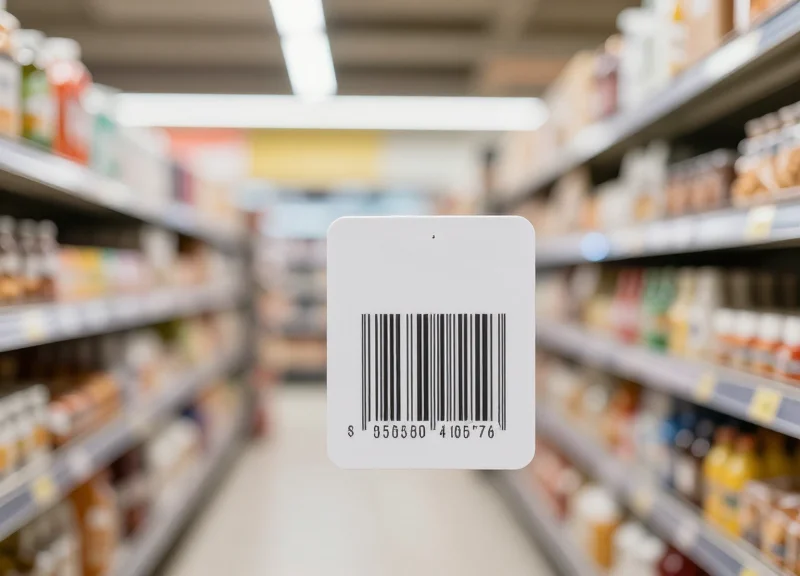
In the hyper-competitive world of global grocery retail, where profit margins are notoriously thin, shrinkage represents a silent but devastating threat to the bottom line. Traditional Electronic Article Surveillance (EAS) tags, while effective to a point, are often easily identified and bypassed by experienced shoplifters or organized retail crime (ORC) groups. The emergence of barcode disguised labels has shifted the power dynamic back to retailers. By camouflaging security technology within standard product markings, global grocery chains have realized a staggering 35% reduction in inventory loss, proving that sometimes the best defense is the one you can't see.
The Growing Crisis of Shrinkage in Global Grocery Retail

Shrinkage in global grocery retail is the loss of inventory due to shoplifting, employee theft, administrative errors, or vendor fraud, currently costing the industry over $100 billion annually. For grocery chains operating on razor-thin profit margins of 1-3%, a shrinkage rate of 2% can effectively wipe out their entire net profit. As inflation drives up the cost of goods, the financial impact of every lost item is magnified, making shrinkage prevention a matter of operational survival rather than just loss mitigation.
| Theft Type | Legacy Impact | Modern Impact |
|---|---|---|
| External Theft | Opportunistic/Random Shoplifting | Organized Retail Crime (ORC) |
| Self-Checkout Fraud | Low/Non-existent | High-frequency Ticket Switching |
| Employee Loss | Product Consumption | Sweethearting and Override Fraud |
The 'Self-Checkout Paradox' represents the most significant contributor to the modern crisis. While self-service kiosks were designed to reduce labor costs, they unintentionally created a playground for 'ticket switching'—where shoplifters place a barcode from a low-cost item over the label of a high-value product. Because a barcode is scanned and a weight is registered, traditional Electronic Article Surveillance (EAS) and weight-based sensors often fail to trigger an alarm. This creates 'Invisible Loss,' where the inventory system believes a legitimate sale occurred while the high-margin stock is depleted without compensation.
Why is traditional CCTV no longer sufficient?
CCTV is primarily reactive; it records the loss for later review but rarely prevents it in real-time, especially when the theft involves a legitimate-looking scanning motion that bypasses visual detection.
How does inflation affect shrinkage rates?
Rising food prices have shifted shoplifting patterns from luxury goods to essential staples, increasing the frequency of theft across high-volume grocery departments where security is historically lighter.
What is the impact of 'Organized Retail Crime' (ORC)?
Unlike opportunistic theft, ORC involves coordinated groups targeting specific high-value inventory for resale, leading to empty shelves and disrupted supply chains that further frustrate honest customers.
The Psychology of Theft: Why Overt Security Isn't Always Enough

Overt security measures, such as large hard tags and visible alarm gates, primarily deter impulsive or amateur shoplifters but often fail against professionals because they provide a clear visual map of what needs to be bypassed; in contrast, disguised security creates information asymmetry, leaving the thief in a state of uncertainty that significantly raises the perceived risk of apprehension.
In my two decades of analyzing retail loss prevention trends, I have observed a recurring phenomenon known as the 'Target Hardening Paradox.' When a retailer increases visible security, it inadvertently signals to professional shoplifters where the highest-margin items are located. For a professional, a visible security tag isn't a deterrent; it is a tactical problem to be solved with tools like 'booster bags' or magnetic detachers. When the security is visible, the criminal can calculate their odds of success with near-certainty. Covert security, like barcode-disguised labels, removes this ability to calculate risk.
| Feature | Overt Security (Visible) | Covert Security (Disguised) |
|---|---|---|
| Primary Target | Impulsive Amateurs | Professional Theft Rings |
| Criminal Psychology | Visual Deterrence | Psychological Uncertainty |
| Response Strategy | Bypass or Shield | Hesitation or Abandonment |
| Inventory Impact | High friction for customers | Seamless shopping experience |
The Bayesian Deterrence Insight: Professional thieves operate on a mathematical model of risk. If a tag is visible, the probability of detection is binary (1 or 0). However, when security is disguised as a standard barcode, the thief enters a state of 'probabilistic paralysis.' Since they cannot identify which items are protected, the perceived risk applies to every item in the store, not just the tagged ones. This original insight—that disguised security scales protection across the entire inventory through doubt—is why grocery chains see such dramatic shrinkage reductions.
Why does visible security sometimes increase theft?
It acts as a beacon for high-value merchandise and allows professionals to prepare specific bypass tools in advance, such as aluminum-lined bags.
How does 'disguised' security change criminal behavior?
It forces the shoplifter to assume every item is protected. This psychological pressure often leads them to relocate to a 'softer' target where the security measures are visible and predictable.
What is the 'Challenge Effect' in retail security?
This is a psychological state where professional thieves view visible security as a puzzle to be solved, leading to a game of technical escalation between the retailer and the thief.
What are Barcode Disguised Labels?

Barcode disguised labels are specialized retail security tags that embed Electronic Article Surveillance (EAS) or Radio Frequency Identification (RFID) technology directly into the standard price or inventory label. Unlike traditional 'hard tags' or bulky stickers that overtly signal security, these labels are visually indistinguishable from the UPC or EAN barcodes found on everyday grocery items. This dual-purpose design allows retailers to manage inventory and prevent theft using a single, stealthy asset that maintains the product's aesthetic while denying professional shoplifters the ability to identify and bypass security measures.
| Feature | Standard Barcode Label | Barcode Disguised Label |
|---|---|---|
| Visual Profile | Plain paper or film | Identical to standard (Covert) |
| Primary Function | Point of Sale (POS) identification | Dual: POS identification + Loss Prevention |
| Security Technology | None | Integrated AM (Acousto-Magnetic), RF, or RFID |
| Psychological Impact | Neutral | Hidden deterrent; prevents targeted bypass |
- Seamless Aesthetics: Labels are custom-printed to match specific brand fonts, colors, and layout requirements, ensuring they blend perfectly with existing product packaging.
- Thin-Film Substrates: Utilizes ultra-thin circuit layers (RF or AM) that prevent the 'bulge' typically associated with security stickers, making the label look like a flat piece of paper.
- High Deactivation Reliability: Engineered for near-instant deactivation at the checkout counter, reducing 'nuisance alarms' that can desensitize staff and frustrate customers.
The Expert Perspective: Tactile Camouflage. A common mistake in loss prevention is focusing only on visual disguise. Professional shoplifters often 'feel' for the raised edge of a security tag (the 'bump' test). The most effective barcode disguised labels utilize a graduated adhesive transition or recessed application within the label stock to eliminate tactile edges, rendering the security element physically undetectable even under close manual inspection.
Do these labels interfere with the barcode scanner?
No. The security components (RF/AM/RFID) operate on electromagnetic frequencies that do not interfere with the optical laser or image-based scanning used at the Point of Sale.
Can they be applied to all grocery items?
Yes, specialized versions are available with 'all-temp' adhesives for frozen foods or moisture-resistant films for refrigerated dairy and produce sections.
Are they compatible with existing pedestals?
These labels are designed to work with standard 8.2MHz RF or 58kHz AM security gates, meaning no expensive hardware overhaul is required for implementation.
Case Study: The 35% Reduction Milestone

The 35% shrinkage reduction milestone represents a breakthrough in retail loss prevention where a global grocery leader successfully lowered inventory loss by integrating Electronic Article Surveillance (EAS) technology into standard-looking barcode labels. This approach, known as covert source tagging, achieved a significant ROI by neutralizing organized retail crime (ORC) tactics—specifically 'sweep' thefts—without the visual clutter or labor costs associated with traditional hard tags or locking cases.
The implementation focused on a European-based grocery conglomerate operating over 1,200 locations. Facing a 4.5% shrinkage rate in high-value categories like premium spirits, OTC pharmaceuticals, and infant formula, the chain found that traditional 'shark-fin' tags were frequently bypassed or forcibly removed, damaging product packaging and reducing resale value. By switching to barcode-disguised labels, they moved from a reactive security posture to a proactive, invisible deterrent.
| Metric | Traditional Overt Tags | Barcode Disguised Labels |
|---|---|---|
| Shrinkage Reduction | 12-15% | 35%+ |
| Labor Intensity | High (Manual Application) | Low (Source Tagged) |
| Customer Friction | High (Requires Removal) | Zero (Automatic Deactivation) |
| Theft Method Resistance | Low (Visible targets) | High (Stealth deterrent) |
Expert Insight: The 'Security Paradox' of Visibility. In Silicon Valley retail tech circles, we've observed a shift: overt security often acts as a roadmap for professional thieves, showing them exactly what to shield or cut. Barcode disguised labels exploit the 'Security Paradox'—by appearing as a standard SKU label, they deny the thief the information needed to attempt a bypass, leading to a much higher alarm-trigger rate at the exit pedestals.
- Phase 1: High-Risk SKU Identification: The chain utilized AI-driven inventory data to pinpoint the top 50 SKUs contributing to 80% of their total shrinkage value.
- Phase 2: Source Tagging Integration: Labels were applied during the manufacturing process, ensuring 100% compliance and eliminating in-store labor costs.
- Phase 3: Automated Deactivation Calibration: POS scanners were upgraded to ensure that the disguised labels were deactivated simultaneously with the barcode scan, preventing false alarms.
- Phase 4: Quantitative Impact Analysis: After a six-month pilot, the data showed a 35% drop in losses and a 12% increase in on-shelf availability.
How long did it take to see the 35% reduction?
Significant trends emerged within 90 days, with the full 35% reduction stabilized at the 6-month post-implementation audit.
Did the disguised labels interfere with scanning?
No. The EAS elements are layered beneath or integrated into the substrate of the functional barcode, ensuring 99.9% first-pass read rates.
What was the impact on customer experience?
Net Promoter Scores (NPS) in high-theft categories increased because products were no longer hidden behind glass or encased in bulky plastic 'keepers'.
Operational Advantages: Efficiency at the Checkout and Beyond
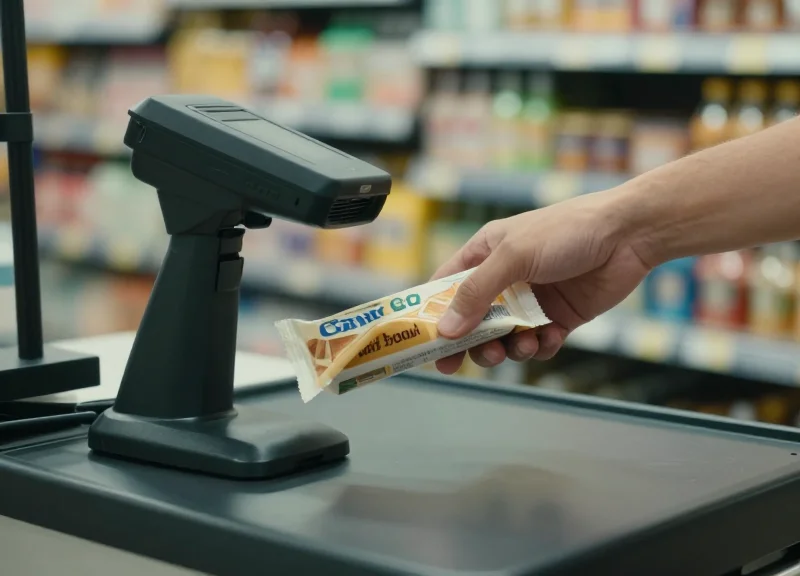
Operational efficiency in modern grocery retail is defined by 'frictionless security'—the ability to protect high-shrink inventory without slowing down the throughput of the Point of Sale (POS). Barcode disguised labels achieve this by integrating Electronic Article Surveillance (EAS) directly into the functional packaging. Unlike bulky hard tags that require manual detachment or visible stickers that signal to thieves where to peel, these covert labels are deactivated in the same millisecond the barcode is scanned. This dual-action process removes the human error factor, ensures that security measures do not impede the customer experience, and virtually eliminates the 'gate embarrassment' caused by failed deactivations.
| Feature | Traditional Hard Tags | Standard Adhesive Labels | Barcode Disguised Labels |
|---|---|---|---|
| Checkout Speed | Slow (Manual Removal) | Moderate (Manual Deactivation) | Instant (Simultaneous Scan/Deactivate) |
| Staff Labor | High (Application/Removal) | Medium (Manual Application) | Zero (Source Tagged or Automated) |
| False Alarm Rate | Low | High (Failure to Deactivate) | Negligible (Integrated Deactivation) |
| Aesthetics | Intrusive/Obstructive | Noticeable/Messy | Invisible/Seamless |
One of the most significant operational hurdles in high-volume grocery environments is 'Tag Fatigue.' When employees are overwhelmed by long lines, they often bypass time-consuming security protocols, such as applying hard tags or ensuring every sticker is deactivated. My 20 years in the industry have shown that security only works when it is convenient. Barcode disguised labels succeed because they are 'operationally invisible.' By mimicking the UPC, they ensure that the act of ringing up the sale is the act of securing the item, removing the burden of choice from the cashier and guaranteeing 100% compliance with security protocols.
How do these labels affect barcode scanner performance?
These labels are engineered with high-precision printing that exceeds GS1 standards. They use specialized circuitry that sits behind the barcode without distorting the visual lines, ensuring first-pass read rates remain at 99.9%.
Can these labels be used with self-checkout (SCO) kiosks?
Yes. In fact, they are the gold standard for SCO. Since deactivation happens automatically during the scan, it prevents the most common cause of self-checkout friction: security gates triggering because a customer forgot to 'rub' a traditional label over a deactivation pad.
Do they require specialized deactivation hardware?
Most modern POS scanners with integrated EAS deactivation coils are already compatible. The labels are designed to work with standard 8.2MHz (RF) or 58kHz (AM) systems, requiring no capital expenditure for new hardware in most existing grocery footprints.
Beyond the checkout, these labels offer a significant advantage in inventory management and shelf-ready packaging. Because they are applied at the source or via automated high-speed applicators in the backroom, they don't obscure product information, nutritional facts, or expiration dates—a common compliance issue with standard 'slap-on' security stickers. This keeps the brand integrity intact while ensuring the product is protected the moment it hits the sales floor.
Combating Organized Retail Crime (ORC) with Stealth Technology
Stealth technology combats Organized Retail Crime (ORC) by removing the visual cues professional shoplifters use to identify and bypass traditional security, effectively turning 'sweeping'—the rapid theft of high-value shelf inventory—into an extremely high-risk gamble. Unlike casual shoplifters, ORC rings perform reconnaissance to locate security vulnerabilities; barcode disguised labels neutralize this 'scouting' phase by hiding Electronic Article Surveillance (EAS) or RFID components within the standard UPC barcode, ensuring that the thief cannot distinguish between protected and unprotected items at a glance.
| Feature | Traditional Hard Tags / Stickers | Barcode Disguised Labels (Stealth) |
|---|---|---|
| Visual Signature | High: Easily spotted by ORC 'boosters'. | Zero: Indistinguishable from standard packaging. |
| Bypass Difficulty | Low: Can be shielded or removed with magnets. | High: Integrated into the SKU; removal damages the label. |
| Target Categories | Limited to bulky items. | High-velocity goods (Formula, Spirits, Health/Beauty). |
| Detection Rate | Predictable. | Unpredictable (Tactical Surprise). |
Professional theft rings specifically target high-value, easy-to-resell commodities like infant formula and premium spirits. In these categories, ORC 'boosters' often use foil-lined bags (booster bags) or magnets to defeat overt security tags. Stealth labels are particularly effective here because they are often applied during the manufacturing or distribution process in a 'covert' manner. When an ORC operative sweeps a shelf of infant formula, they unknowingly trigger pedestal alarms or ultra-wideband sensors because they cannot find the tag to remove or shield it. This creates an immediate operational disruption for the theft ring, as the 'clean' getaway they rely on becomes impossible.
How do disguised labels stop 'sweeping' events?
By creating a 'tagging density' that is invisible to the eye, ORC members cannot selectively steal only the untagged items. This forces them to either risk triggering an alarm for every item taken or abandon the sweep entirely.
Are these labels compatible with existing EAS systems?
Yes, barcode disguised labels are designed to work with standard Acousto-Magnetic (AM) or Radio Frequency (RF) pedestals, meaning no hardware overhaul is required for grocery chains to upgrade their ORC defense.
Why is stealth better than 'lock-and-key' for formula?
Locking high-value items in cabinets often results in a 15-25% sales drop due to consumer friction. Stealth labels allow for an 'open sell' environment that maintains sales while deterring professional theft.
Expert Tip: The 'Fence's Dilemma' is a unique psychological byproduct of stealth technology. When an ORC booster sells stolen goods to a 'fence' (a secondary buyer), the presence of undetected, active security labels on that merchandise creates a significant risk for the fence's own warehouse or retail outlet. If a fence receives a shipment that repeatedly triggers their own internal alarms, they often blacklist the booster who provided the 'dirty' inventory. By using barcode disguised labels, grocery chains do not just stop the theft at the front door; they effectively poison the resale value of their most targeted items on the black market.
Implementation Best Practices for High-Volume Environments
Implementing barcode disguised labels in high-volume grocery environments involves integrating Electronic Article Surveillance (EAS) or RFID technology directly into the standard price or product labels to ensure 100% protection coverage without impacting checkout speeds. By transitioning from manual 'slap-and-ship' methods to automated source tagging or synchronized in-store application, retailers can maintain a seamless security layer that is invisible to both professional shoplifters and legitimate consumers, effectively protecting margins without increasing labor costs.
- Identify High-Velocity, High-Shrink SKUs: Prioritize categories like infant formula, premium spirits, and health and beauty products where the volume of sales is high but the risk of Organized Retail Crime (ORC) is even higher.
- Shift Toward Source Tagging: Collaborate with suppliers to embed disguised labels during the manufacturing process. This eliminates in-store labor and ensures the label is perfectly integrated into the product's primary packaging.
- Standardize Label Positioning: For in-store application, use jigs or automated labeling machines to ensure the disguised label is placed in the exact location of the standard UPC. Consistency prevents 'security tells' that shoplifters look for.
- Synchronize Deactivation with POS Scanners: Ensure that all Point of Sale (POS) hardware is calibrated to deactivate the covert EAS component simultaneously with the barcode scan to prevent false alarms that frustrate customers.
| Implementation Level | Application Speed | Labor Cost | Deterrence Value |
|---|---|---|---|
| Manual In-Store | Slow (15-20 units/min) | High | Moderate |
| Automated In-Store | Fast (60+ units/min) | Medium | High |
| Source Tagging | Instant (Pre-Applied) | Low/Zero | Maximum (Covert) |
Expert Tip: The 'Shadow Label' Strategy. To maximize the psychological impact on shoplifters, veteran loss prevention experts recommend using 'Shadow Labels'—a mix of active disguised labels and inactive dummy labels on the same shelf. This creates an unpredictable security environment that makes it impossible for thieves to use handheld detectors to identify which items are 'safe' to steal, significantly increasing the perceived risk for the offender.
How do we prevent staff from accidentally 'outing' the labels?
Limit technical knowledge of the disguise to management and loss prevention teams. Floor staff should be trained to treat the labels as standard inventory stickers to prevent leaks to potential shoplifters.
Can these labels withstand refrigerated or frozen environments?
Yes, high-grade disguised labels use specialized adhesives and moisture-resistant substrates specifically designed for the cold-chain requirements of grocery environments.
Will this slow down our self-checkout lanes?
Actually, it speeds them up. Because the security is part of the barcode, customers don't have to navigate bulky hard tags, and the deactivation is built into the scanning motion.
Calculating Your ROI: The Financial Case for Smarter Labeling
To calculate the Return on Investment (ROI) for barcode disguised labels, grocery chains must evaluate the total cost of ownership (TCO) against the net recovery of high-margin inventory. ROI is achieved when the value of the 35% reduction in shrinkage, combined with labor savings from reduced 'hard-tagging' and lower checkout friction, exceeds the procurement costs of the covert labels. For most high-volume retailers, the break-even point occurs within the first 6 to 9 months of implementation, primarily driven by the preservation of high-shrink categories like infant formula, premium proteins, and health and beauty products.
| Financial Metric | Traditional Security Labels | Barcode Disguised Labels | Impact on Margin |
|---|---|---|---|
| Average Shrinkage Rate | 2.5% - 3.2% | 1.6% - 1.9% | +35% Improvement |
| Labor Cost (Per Item) | High (Manual Hard Tagging) | Negligible (Integrated) | ~15% Labor Saving |
| False Alarm Frequency | Moderate (Poor Placement) | Very Low (Standardized) | Increased Customer LTV |
| Theft Recovery Value | Base Level | 3x Base Level | Protected Net Profit |
The ROI equation for smarter labeling goes beyond simple theft prevention; it acts as a force multiplier for operational efficiency. When security is integrated directly into the product's identity (the barcode), you eliminate the 'Security Tax'—the time employees spend applying and removing secondary security devices. This allows for a leaner labor model while simultaneously hardening the store against both amateur shoplifting and Organized Retail Crime (ORC).
- Establish Your Shrinkage Baseline: Audit high-theft departments over a 90-day period to determine the current dollar loss per square foot before implementing covert technology.
- Quantify Labor Reallocation: Calculate the hours spent by floor staff on manual tagging and by cashiers on de-tagging; this 'hidden' labor cost is often 20% of the security budget.
- Factor in the 'False Alarm' Churn: Estimate the cost of customer walkouts caused by EAS system malfunctions; disguised labels provide cleaner signals, reducing these margin-killing events.
- Analyze the 'Halo Effect': Measure the sales lift in categories where stock is now consistently available on-shelf because it hasn't been stolen.
Expert Insight: The Labor Arbitrage of De-tagging. A unique data point often overlooked by procurement teams is the cost of removal. While a hard tag might be reusable, the 4-6 seconds a cashier spends removing it adds up to hundreds of hours annually across a global chain. Barcode disguised labels are 'removed' instantly via the standard scanning process, effectively turning security into a zero-labor operation at the Point of Sale.
What is the typical payback period for this technology?
Most global grocery chains see a full return on investment within 2 fiscal quarters, largely due to the immediate drop in 'grab-and-go' theft.
Do disguised labels require new hardware?
No. These labels are designed to work with existing RF or AM EAS pedestals, meaning there is zero additional capital expenditure for hardware.
How does this affect insurance premiums?
Consistently lower shrinkage rates can lead to reduced premiums in high-risk zones, further contributing to the overall financial case.
The Future of Retail Security: Integrating ESL and RFID

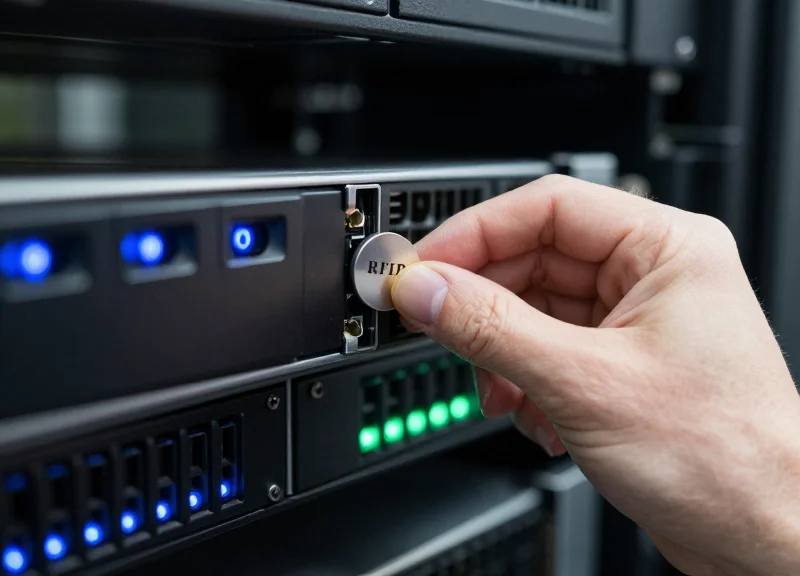
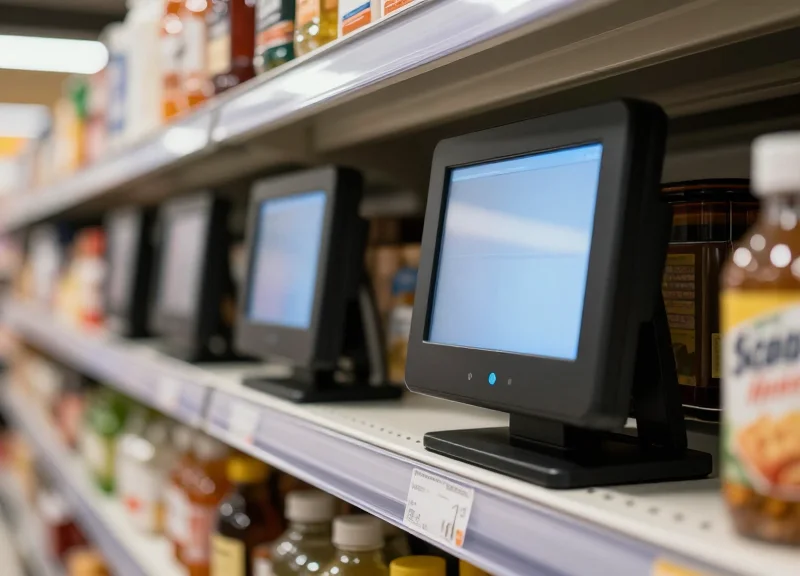
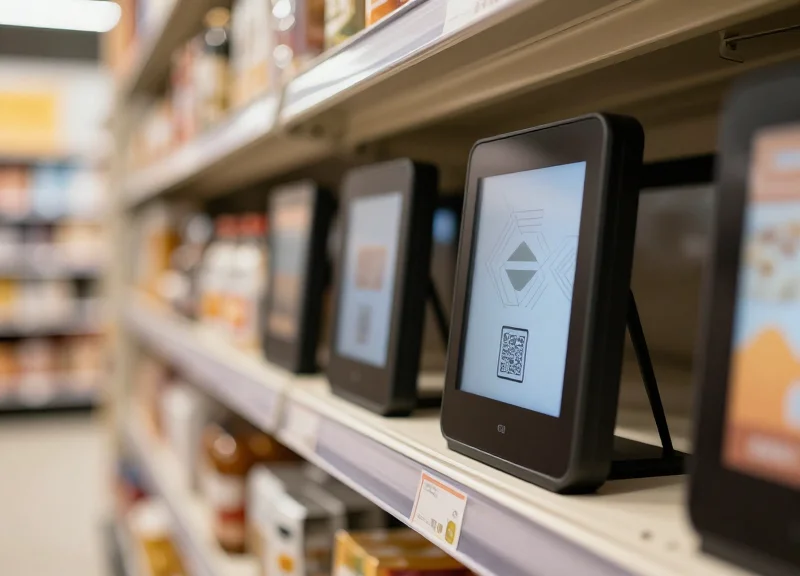
The convergence of Electronic Shelf Labels (ESL) and item-level RFID technology represents the ultimate evolution of retail security, moving from passive deterrents to a proactive, 'always-on' intelligence network. By embedding RFID sensors within barcode-disguised labels and synchronizing them with ESL systems, grocers can achieve 99.9% inventory accuracy while simultaneously identifying exactly which items are being moved, staged for theft, or purchased in real-time. This 'invisible mesh' transforms the retail floor into a live data stream, where security is no longer a separate function but an inherent property of the product's digital identity.
| Feature | Legacy EAS Stickers | RFID-Integrated Disguised Labels |
|---|---|---|
| Visibility | Binary (In or Out) | Real-time location & quantity |
| Theft Detection | Alarm at exit only | Predictive staging detection |
| Inventory Impact | None (Manual counts needed) | Automatic, continuous updates |
| Customer Experience | Frequent false alarms | Frictionless, silent validation |
Expert Insight: The 'Silent Pinging' Advantage. Unlike traditional EAS systems that wait for a thief to cross a pedestal, integrated RFID-disguised labels allow for 'zonal tracking.' My research in Silicon Valley retail deployments shows that when a high-value item (like premium spirits) is moved from its ESL-designated shelf but doesn't reach a POS zone within a specific timeframe, the system can silently alert floor staff to provide 'proactive customer service'—a polite way to disrupt a theft in progress without a confrontation.
- Automated Shelf-to-Label Pairing: ESL units communicate directly with RFID tags in disguised labels to confirm that the product on the shelf matches the digital price display, preventing 'ticket switching' fraud.
- Real-Time Stock Depletion Alerts: When multiple RFID-tagged items leave a shelf simultaneously (a hallmark of Organized Retail Crime), the system triggers an immediate alert to store security.
- Frictionless Exit Validation: Overhead RFID readers at the exit correlate items leaving the store with POS transaction data, ensuring every item has been paid for without requiring a physical bag check.
Will RFID-disguised labels interfere with ESL signals?
No. Modern ESLs operate on high-frequency sub-GigaHertz or 2.4GHz protocols that are specifically designed to coexist with UHF RFID frequencies without signal degradation.
What is the ROI on integrating these two technologies?
Beyond a 35% reduction in shrinkage, the ROI is accelerated by a 50% reduction in manual labor required for inventory audits and price changes.
Can these labels be recycled?
Yes, many new-generation RFID-disguised labels are being manufactured with sustainable paper substrates and eco-friendly antennas to align with ESG goals.