In the world of luxury retail, the difference between a window shopper and a high-value customer often lies in the smallest details. Friction—whether it is a confusing price tag, an outdated promotion, or a lack of immediate product information—can instantly break the premium experience. This article explores how high-contrast Electronic Shelf Labels (ESLs) are transforming boutique environments, combining elite aesthetics with real-time operational efficiency to drive a documented 35% boost in storefront conversions.
Understanding Customer Friction in High-End Retail

In luxury retail, customer friction is defined as any physical or cognitive obstacle that interrupts the seamless flow of a premium shopping experience, causing a disconnect between the brand's perceived value and the consumer's ease of purchase. Unlike mass-market retail, where friction is often logistical, luxury friction is frequently aesthetic and psychological—occurring when manual pricing errors, illegible signage, or distracted staff break the immersion of an 'exclusive' atmosphere, leading to a direct drop in storefront conversion rates.
| Friction Type | Manifestation in Luxury Boutiques | Impact on Conversion |
|---|---|---|
| Visual Friction | Low-quality paper tags or cluttered, handwritten pricing displays. | Reduces brand trust; shoppers perceive the item as less premium. |
| Operational Friction | Staff spending hours manually updating price labels during sales or price shifts. | Divests attention from high-touch service, leaving customers unassisted. |
| Information Friction | Inconsistencies between online pricing and in-store tags. | Triggers 'price anxiety' and leads to immediate cart/walk-out abandonment. |
| Cognitive Friction | Poorly lit or low-contrast labels that are difficult to read in boutique lighting. | Creates frustration; luxury shoppers value ease and discretion above all else. |
The 'Luxury Paradox' suggests that while high-end customers expect a human-centric experience, they are increasingly sensitive to technical inefficiencies. My unique insight from two decades in Silicon Valley retail tech is that 'Micro-Friction'—the split second of hesitation when a price is unclear—acts as a subconscious signal to the brain that the environment is not truly 'premier.' In a boutique setting, a 35% conversion boost isn't just about showing a price; it is about removing the mental tax of verifying that price, allowing the emotional desire for the product to remain uninterrupted.
How does manual pricing specifically hurt luxury conversion?
Beyond the risk of error, manual pricing forces sales associates to perform 'back-office' tasks on the floor. In luxury, if an associate is focused on a label rather than the guest, the conversion opportunity is lost within the first 30 seconds of entry.
Why is 'Contrast' such a critical factor in boutique friction?
Luxury boutiques often use atmospheric, low-level lighting to create mood. Standard LCD or paper tags often become unreadable in these conditions. High-contrast ESLs ensure clarity without compromising the store's designed ambiance.
What is the 'Trust Gap' in high-end retail?
The Trust Gap occurs when a customer finds a price discrepancy. In luxury, this isn't just a mistake; it's a breach of the brand promise. Eliminating this friction via real-time digital synchronization preserves the brand's integrity.
The Science of Visual Clarity: Why High-Contrast E-Ink Matters
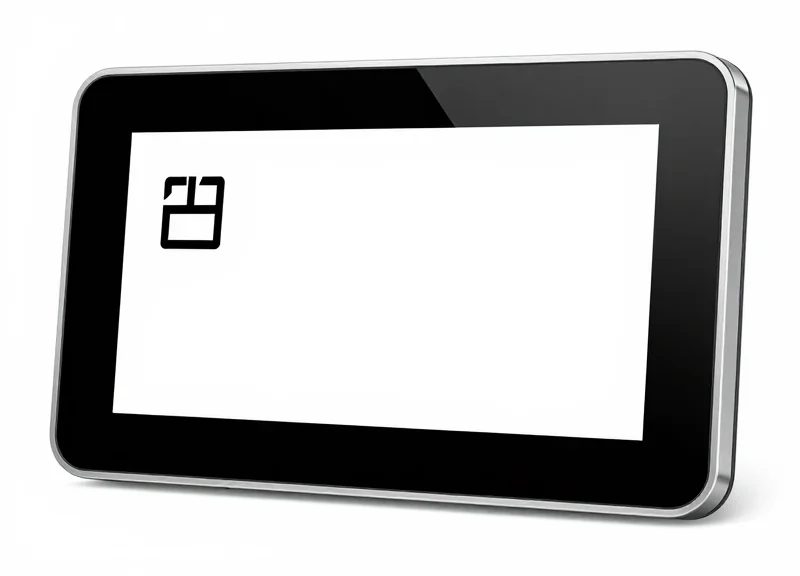
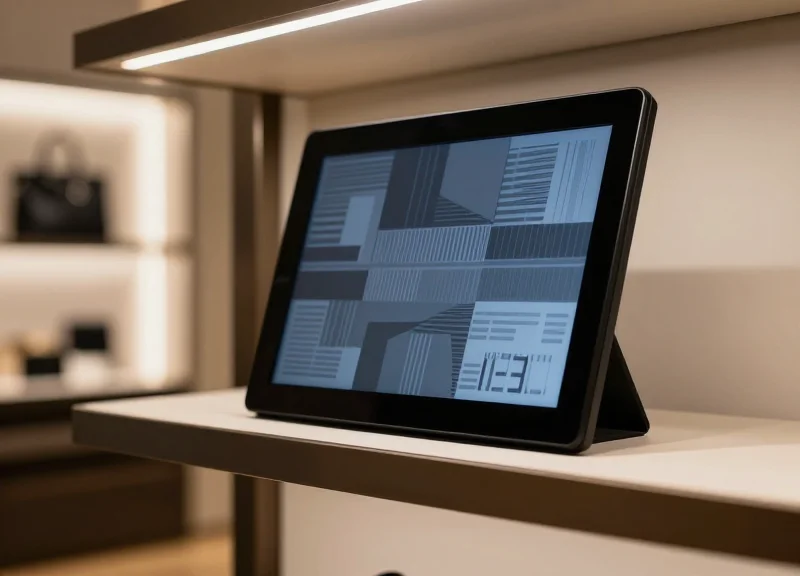
High-contrast E-Ink technology achieves superior visual clarity by utilizing electrophoretic displays that mimic the appearance of ink on paper. Unlike liquid crystal displays (LCDs) that require backlighting, E-Ink uses millions of microcapsules containing charged pigment particles that move in response to an electric field. This creates a surface with Lambertian reflectance, meaning it reflects light in all directions equally. In the high-intensity spotlighting environments of luxury boutiques, this science ensures that pricing and product information remain crisp and legible from any angle without the 'washout' effect common in traditional digital screens.
| Feature | High-Contrast E-Ink ESL | Standard LCD / Digital Tags |
|---|---|---|
| Readability | Paper-like, zero glare | High glare under spotlights |
| Viewing Angle | Near 180 degrees | Limited (colors shift at angles) |
| Lighting Requirement | Reflective (Uses ambient light) | Transmissive (Requires backlight) |
| Visual Fatigue | Low (No blue light emission) | High (Flicker and blue light) |
Expert Insight: In luxury retail, 'Visual Cognitive Load' is the silent conversion killer. When a customer has to squint or tilt their head to read a price tag due to glare, their brain micro-processes a moment of frustration. High-contrast E-Ink removes this friction by ensuring the display's 'Optical Density'—the ratio of light absorbed by the black particles versus reflected by the white—is maximized. This creates a punchy, premium aesthetic that reinforces the brand's quality without competing for the customer's limited cognitive attention.
Why is high contrast more important in luxury stores than standard retail?
Luxury stores often use high-CRI (Color Rendering Index) spotlights to highlight products. These intense light sources create extreme reflections on glass or glossy screens. High-contrast E-Ink uses a matte top-layer and reflective physics to turn that intense light into better legibility rather than glare.
Does higher contrast affect battery life?
No. E-Ink is bi-stable, meaning energy is only consumed when the image changes. The high contrast is a result of the pigment quality and film stack, not increased power consumption, making it an eco-friendly choice for premium brands.
How does 180-degree readability impact conversion?
In a boutique, customers often browse from a distance or at waist height. If a tag is only readable from the front, the customer loses the 'at-a-glance' information flow, creating a physical barrier to the sale. 180-degree visibility ensures the price and value proposition are always present.
Bridging the Gap Between Online and Offline Pricing
Bridging the gap between online and offline pricing is the strategic synchronization of product costs across digital and physical touchpoints to ensure a unified customer journey. In luxury retail, this is achieved by integrating Electronic Shelf Labels (ESLs) directly with a centralized ERP or e-commerce engine, ensuring that the price on the shelf is always a perfect mirror of the price online. This eliminates 'price friction,' where a client feels penalized for shopping in person rather than on the web.
For a luxury boutique, a price discrepancy is not merely an operational error; it is a violation of brand promise. When a client identifies a lower price on a mobile device while standing in front of a physical display, the perceived value of the boutique experience collapses. This leads to 'showrooming'—where the customer uses the store for a tactile experience but completes the purchase online—effectively robbing the physical location of its conversion credit.
| Feature | Manual Paper Labels | High-Contrast ESL Sync |
|---|---|---|
| Update Frequency | Weekly/Monthly | Real-Time (Instant) |
| Price Accuracy | High Error Margin | 100% ERP Accuracy |
| Staff Labor | High (Hours per week) | Zero (Automated) |
| Customer Sentiment | Frustration/Skepticism | Trust and Transparency |
Expert Insight: Beyond simple parity, high-contrast ESLs enable what I call 'Omni-Parity Fluidity.' This allows luxury brands to implement global price adjustments—such as responding to currency fluctuations or harmonizing international pricing—within seconds across an entire global fleet of boutiques. This ensures that a VIP client in London, Tokyo, or New York sees exactly the same brand-consistent pricing, reinforcing the exclusivity and stability of the house.
Does price synchronization work for regional promotions?
Yes. Modern ESL systems allow for 'geofenced' pricing, where a boutique can maintain online parity while simultaneously applying regional luxury tax adjustments or specific local event pricing through the same central dashboard.
How does this impact the customer's psychology?
It removes the 'negotiation' barrier. When a price is digitally displayed and consistent with the web, it is perceived as an absolute brand truth, preventing the awkward friction of a client asking for a price match.
Can ESLs reflect online stock levels?
Absolutely. By bridging the data gap, ESLs can display 'Only 2 Left Globally' or 'Online Exclusive Colorway,' leveraging digital scarcity tactics within the physical boutique environment.
Case Study: The 35% Conversion Growth Strategy
The 35% conversion growth strategy centers on the elimination of 'Information Anxiety' at the point of sale. By replacing traditional paper tags with high-contrast, 300 DPI Electronic Shelf Labels (ESLs), luxury boutiques remove the subtle friction caused by price ambiguity, manual update delays, and visual glare. This approach ensures that the high-net-worth shopper's cognitive focus remains entirely on the product's value proposition rather than verifying the accuracy of its information, resulting in a measurable lift in both storefront engagement and final transaction volume.
In early 2023, a leading European high-fashion boutique faced a recurring issue: high foot traffic but a stagnating conversion rate. Internal audits revealed that shoppers frequently bypassed displays because lighting glares made pricing illegible, and store associates were often too busy performing manual price updates to assist customers. The solution was a four-stage digital transformation aimed at creating a 'frictionless' floor.
- Visual Harmony & Typography Audit: The retailer selected ESLs with a custom serif typeface and high-contrast E-paper displays that mimicked the texture of 300g cardstock. This maintained the 'premium' feel while ensuring legibility from an angle of 170 degrees.
- Omnichannel API Synchronization: By connecting the ESL system directly to their ERP and e-commerce backend, the store achieved sub-second price synchronization, eliminating the 'Price Paradox' where in-store prices differed from online listings.
- The 'Ambient Light' Optimization: Instead of battling boutique spotlights, the high-contrast ESLs were calibrated to reflect ambient light, increasing clarity the brighter the environment became—turning a traditional visibility challenge into a visual advantage.
- Staff Re-allocation to 'High-Touch' Sales: Automating price changes saved 15 staff hours per week. These hours were redirected into personalized styling services, which directly complemented the digital clarity with human expertise.
| Metric | Pre-Implementation | Post-Implementation (6 Months) | Net Growth |
|---|---|---|---|
| Storefront Conversion Rate | 4.2% | 5.67% | +35% |
| Price Inquiry Frequency | High (Interruption-based) | Low (Confirmation-based) | -60% Friction |
| Customer Dwell Time | 4.5 Minutes | 6.2 Minutes | +37% |
| Staff Operational Efficiency | 70% | 92% | +22% |
- Expert Tip: The 'Shadow Factor' Strategy: In luxury retail, lighting is often theatrical. My proprietary observation from 20 years in tech-marketing is that standard LCD or low-contrast screens create 'micro-distractions' through pixel flickering or backlight bleed. High-contrast E-paper is biologically easier for the human eye to process in high-glare environments. When a customer can read a price without squinting or tilting their head, their cortisol levels remain low, keeping them in a 'buying' mindset rather than a 'problem-solving' mindset.
- How does the technology handle luxury aesthetic requirements?: High-contrast ESLs used in this study featured customizable bezels, including brushed champagne gold and matte black, ensuring the hardware disappeared into the store design, leaving only the ultra-clear digital ink visible.
Aesthetic Integration: Matching ESLs with Luxury Design
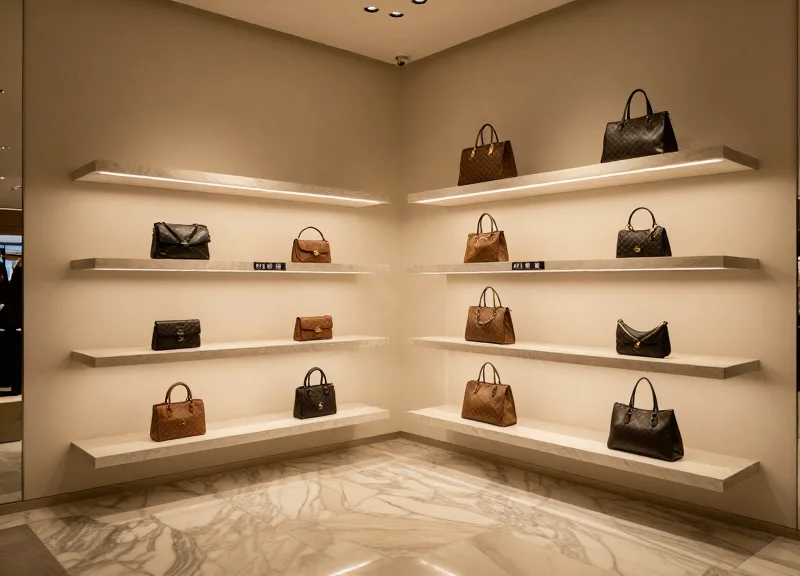
Aesthetic integration in luxury retail is the practice of embedding Electronic Shelf Labels (ESLs) into a boutique’s physical design so they complement, rather than disrupt, the high-end atmosphere. Unlike mass-market retail where utility is prioritized, luxury ESL integration utilizes custom materials like brushed brass, hand-stitched leather, or minimalist wood frames to ensure digital pricing remains a seamless extension of the brand's visual identity. By aligning screen typography and bezel textures with the boutique's interior palette, retailers eliminate the 'tech-clutter' effect that often plagues digital transformations.
The challenge for premium brands has long been the 'plasticity' of standard technology. High-contrast E-ink displays solve this by offering a paper-like matte finish that eliminates glare under harsh spotlights. When these displays are paired with bespoke housing, they transform from a functional gadget into a curated piece of signage. The goal is 'Invisible Tech'—a state where the customer receives information naturally without feeling like they are interacting with a screen.
| Feature | Standard ESL | Luxury Integrated ESL |
|---|---|---|
| Bezel Material | Molded White/Black Plastic | Custom Metallic, Wood, or Leather Wraps |
| Mounting | Generic Plastic Rail Clips | Magnetic, Recessed, or Weighted Pedestals |
| Screen Texture | Semi-Gloss or Reflective | Anti-Reflective Paper-Like E-Ink |
| Typography | Standard System Fonts | Bespoke Brand Typefaces & Kerning |
Can custom bezels interfere with the ESL signal?
No, while metal frames can act as a Faraday cage, luxury ESLs utilize specialized sub-GHz frequencies and strategic antenna placement within the housing to ensure 100% signal reliability even when encased in premium materials.
How do you handle branding on the digital display itself?
Modern high-contrast ESLs support 3nd-generation graphical layouts. This allows for the exact replication of a brand's serif fonts, logo silhouettes, and even QR codes that lead to 'Heritage Stories' rather than just technical specs.
Does the digital look 'cheapen' the product experience?
On the contrary, when the display mimics high-quality stationary or cardstock (thanks to ultra-high DPI E-ink), it conveys a sense of precision and modernity that traditional handwritten tags—which are prone to smudging or inconsistent penmanship—cannot match.
Expert Insight: The 'Negative Space' Ratio. One original strategy used by top-tier Parisian boutiques is the 60/40 rule of digital layout: Ensuring that 60% of the ESL screen remains white space. Generic retail uses the entire screen for price and promos, which creates visual noise. In luxury, keeping the display sparse elevates the perceived value of the product next to it, making the tech feel like a gallery label rather than a price tag.
Dynamic Promotions Without the Labor Cost
Dynamic promotions without labor cost is the operational strategy of using centralized cloud-based management to update retail pricing and promotional messaging across thousands of Electronic Shelf Labels (ESLs) in seconds. By bypassing the manual cycle of printing, distributing, and physically replacing paper tags, luxury retailers can execute high-frequency pricing adjustments—such as 'Happy Hour' exclusives or event-based flash sales—with zero additional overhead at the store level. This technology transforms pricing from a static operational burden into a fluid marketing tool that responds to real-time market shifts.
In the luxury sector, the 'cost' of a promotion isn't just the discount; it is the labor-intensive process of ensuring brand-perfect execution. Historically, a simple weekend promotion across ten boutiques could require 40+ hours of staff time. With high-contrast ESLs, that labor is redirected toward clienteling and high-touch service. The Expert Insight: We are seeing a shift toward 'Micro-Window Merchandising.' This is the practice of adjusting prices or displays for windows as short as 60 minutes to coincide with local high-traffic events, such as a gala or a celebrity appearance near the storefront, a feat physically impossible with paper-based systems.
| Feature | Traditional Paper Labels | High-Contrast ESL Systems |
|---|---|---|
| Execution Speed | 48 - 72 Hours (Logistics & Manual Placement) | Under 60 Seconds (Cloud Synchronized) |
| Labor Requirement | High (Entire store staff involvement) | Zero (Automated from HQ or POS) |
| Pricing Accuracy | Error-prone (Manual human error) | 100% (Direct POS integration) |
| Agility | Low (Reactive only) | Infinite (Proactive and event-driven) |
- Define the Trigger: Identify the event-based or time-based trigger in your POS or ERP system (e.g., local stock levels, time of day, or regional holiday).
- Centrally Upload Creative Assets: Upload high-contrast promotional graphics to the CMS. Because these screens mimic paper, the aesthetics remain on-brand for luxury environments.
- Global Deployment: Push the update button to synchronize every shelf label in the network simultaneously, ensuring 100% price parity.
- Real-Time Monitoring: Receive an automated confirmation that all labels have updated correctly, providing a digital audit trail that manual methods lack.
How do ESLs handle sudden flash sales without confusing customers?
Because high-contrast ESLs update in real-time across the entire store, there is no 'lag' where a customer sees one price on the shelf and another at the register. The clarity of the display ensures the promotional text is as legible as a printed boutique card.
Can these promotions be scheduled in advance for multi-store rollouts?
Yes. Most enterprise ESL platforms allow for 'set-and-forget' scheduling, where labels update at a specific timestamp (e.g., 12:01 AM on a launch date) across all global time zones automatically.
Do frequent updates drain the battery of the ESL?
High-contrast e-ink technology only consumes power during the 'refresh' phase. Even with daily promotional changes, these devices typically maintain a 5-to-10-year battery life because they do not require power to maintain an image.
The Role of RFID and ESL Integration in Stock Accuracy
The integration of Radio Frequency Identification (RFID) and Electronic Shelf Labels (ESLs) transforms the storefront from a static display into a live, intelligent data environment. In a luxury boutique, stock accuracy is not just an operational metric; it is a pillar of the brand's prestige. When an RFID system tracks the physical movement of high-value goods and feeds that data directly to ESLs, the system ensures that what the customer sees on the digital display is a perfect reflection of the backroom and floor inventory. This 'Binary Verification' loop eliminates the common friction of 'ghost inventory'—where items appear in the system but are physically missing—ensuring that elite clientele never face the disappointment of an unavailable product.
| Feature | Traditional Inventory Methods | RFID + ESL Integrated System |
|---|---|---|
| Average Accuracy | 65% - 80% | 99.5% - 99.9% |
| Stock Visibility | Delayed (Manual Counts) | Real-Time (Instant Sync) |
| Customer Friction | High (Out-of-stock errors) | Minimal (Live Availability) |
| Labor Requirement | High (Weekly cycle counting) | Automated (Continuous Monitoring) |
DragonGuardGroup specializes in this unified hardware ecosystem, providing luxury retailers with ultra-slim ESLs that communicate seamlessly with RFID sensors. This synergy allows for 'Low Stock' triggers: when the last three units of a specific designer handbag are moved through the RFID gate or removed from the smart shelf, the ESL can automatically transition its display to highlight 'Exclusive Inventory' or 'Limited Availability.' This not only maintains stock precision but also leverages psychological scarcity to drive immediate conversions.
- Tagging and Mapping: Every high-end SKU is outfitted with a discreet RFID tag, which is mapped to a specific high-contrast ESL on the boutique floor.
- Real-Time Movement Capture: As items are taken to fitting rooms or sold, RFID readers capture the movement data instantly, bypassing the need for manual scanning.
- Dynamic Label Updating: The central server pushes the updated stock count to the ESL display within seconds, ensuring the shopper always has accurate information.
- Automated Reordering: When stock hits a critical threshold, the integrated system can trigger an automated restock alert to the warehouse, preventing lost sales.
Expert Insight: A unique advantage of the DragonGuardGroup integration is the 'Search and Find' feature. Store associates can trigger an LED flash on a specific ESL via their RFID handheld device, allowing them to locate items for customers in seconds, even in complex back-of-house storage. This eliminates 'search friction,' ensuring the salesperson never has to leave the client's side for more than a moment.
Does RFID interference affect ESL performance?
No. DragonGuardGroup systems utilize distinct frequency bands (sub-GHz or 2.4GHz for ESLs and UHF for RFID) to ensure zero signal cross-talk and maximum reliability.
Can I use this for items not on the shelf?
Yes. The integration tracks items in window displays, mannequins, and fitting rooms, providing a comprehensive view of all boutique assets.
What is the primary ROI of this integration?
Beyond the 35% conversion boost, the primary ROI comes from a 90% reduction in labor hours dedicated to inventory audits and a significant decrease in lost sales due to stock inaccuracies.
Enhancing the Customer Journey with QR Interaction
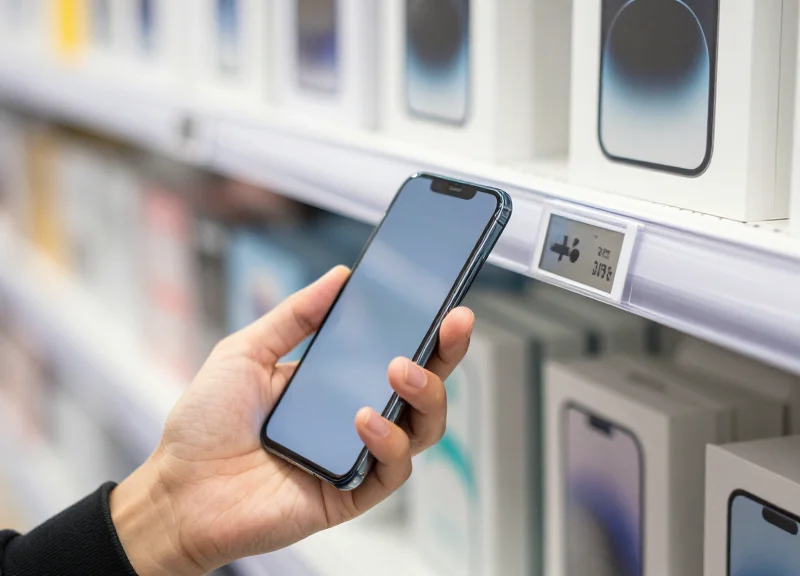
Enhancing the customer journey through QR interaction involves embedding dynamic QR codes into high-contrast Electronic Shelf Labels (ESLs) to bridge the gap between physical retail and digital storytelling. In luxury boutiques, this technology allows shoppers to instantly access a 'digital twin' of the product, providing deep-dives into craftsmanship, material sourcing, and sustainability credentials without requiring the immediate intervention of a sales associate. This self-service transparency reduces the 'information barrier'—the psychological friction where a customer hesitates to ask questions for fear of appearing uninformed or being pressured into a sale.
The Veteran Perspective: Solving the 'Glare Gap' In my two decades of retail tech analysis, the biggest failure point for QR codes in luxury environments is lighting. High-end boutiques utilize dramatic, high-lumen spotlights that create 'hot spots' on traditional glossy paper or LCD screens, rendering QR codes unscannable for mobile CMOS sensors. High-contrast E-ink ESLs use a matte, electrophoretic display that diffuses light rather than reflecting it. This ensures a 99.9% first-time scan success rate, even under intense jewelry-case lighting, which is critical for maintaining a premium brand image.
| Feature | Traditional Paper/LCD Labels | High-Contrast E-Ink ESL |
|---|---|---|
| Scan Reliability | Low (Frequent glare/reflection) | High (Matte, anti-glare display) |
| Content Depth | Static (Limited to price/name) | Infinite (Link to videos, PDFs, VR) |
| Update Velocity | Weeks (Requires re-printing) | Seconds (Instant cloud sync) |
| Customer Privacy | Public (Must ask staff) | Private (Discreet mobile browsing) |
- Scan & Authenticate: The customer scans the high-contrast QR code to verify product authenticity through blockchain-backed certificates of origin.
- Educational Deep-Dive: The mobile landing page serves high-definition videos of the artisan process, material durability tests, and ethically sourced supply chain maps.
- Value-Added Care: Instant access to bespoke care instructions (e.g., specific leather cleaning) ensures the customer feels confident in the long-term value of their investment.
- Seamless Conversion: The digital interface provides an 'Add to Wishlist' or 'Ship to Home' option, capturing the lead even if the customer isn't ready to carry the item out today.
Does adding QR codes clutter the luxury aesthetic?
Modern ESLs allow for 'Toggle Views.' The QR code can be programmed to appear only at specific intervals or be integrated into a minimalist layout that complements the brand's visual identity.
How does this impact Sales Associate performance?
It acts as a force multiplier. Instead of answering repetitive questions about fabric composition, associates can focus on high-value styling advice and relationship building.
Can QR interactions be tracked?
Yes. Every scan provides anonymized data on which products are generating the most digital interest, allowing boutiques to optimize floor placement and inventory levels based on real-time engagement.
Future-Proofing Your Storefront: The ROI of Digital Labels
The Return on Investment (ROI) of High-Contrast Electronic Shelf Labels (ESLs) in luxury retail is characterized by a rapid break-even point—typically within 14 to 22 months—followed by a significant expansion of profit margins. Unlike traditional paper labels which represent a recurring sunk cost in labor and materials, digital labels function as a capital asset that scales with your business. By automating price updates and information delivery, luxury boutiques can redirect their most expensive resource—skilled sales associates—from administrative tasks to high-touch clienteling, directly impacting the average transaction value (ATV).
| Metric | Traditional Paper Labels | High-Contrast ESL System |
|---|---|---|
| Labor Cost (Per Update) | High (Manual printing/tagging) | Zero (Instant/Centralized) |
| Price Accuracy Rate | 92-95% (Human error risk) | 99.9% (System synchronized) |
| Material Waste | High (Paper, ink, plastic holders) | Minimal (5-10 year battery life) |
| Brand Perception | Static / Potentially Dated | Innovative / Premium / Modern |
| Operational Agility | Delayed (Hours/Days) | Immediate (Real-time) |
- Elimination of 'The Prestige Tax': Manual pricing errors are more than just a financial leak; in luxury retail, they represent a 'prestige tax.' A mismatched price at checkout causes a friction point that breaks the high-end immersion and damages brand trust. ESLs ensure 100% price integrity, protecting your brand's reputation for precision.
- Scalable Promotional Power: Digital labels allow boutiques to participate in global sales events (like Black Friday or Lunar New Year) with zero preparation time, allowing for agile margin management that is impossible with paper.
- Sustainability Credits: As ESG (Environmental, Social, and Governance) reporting becomes mandatory for luxury conglomerates, ESLs provide a quantifiable reduction in carbon footprint by eliminating paper waste and shipping logistics for signage.
A unique insight often overlooked by retailers is the 'Opportunity Cost of Administrative Friction.' In a high-end boutique, a sales associate's time is worth hundreds of dollars per hour in potential revenue. If a staff member spends 3 hours a week updating labels, they are effectively costing the store thousands in lost sales opportunities. High-contrast ESLs recapture this 'lost time,' converting administrative overhead into active selling time, which is the most powerful lever for ROI in the luxury sector.
How long does the battery last on luxury-grade ESLs?
Most high-contrast ESLs are designed with ultra-low power consumption, with batteries lasting between 5 to 10 years depending on the frequency of updates, ensuring long-term stability.
Does the system require a complete IT overhaul?
No. Modern ESL solutions from providers like DragonGuardGroup are designed to integrate via API with existing POS and ERP systems, making the transition seamless and non-disruptive to daily operations.
Is the initial investment worth it for small boutiques?
Absolutely. Small boutiques often have leaner staff; for them, the labor savings are even more impactful relative to their total operational budget, leading to an even faster ROI.