In the rapidly evolving landscape of 2026 retail, tech boutiques face a dual challenge: showcasing premium smartphones in an accessible way while mitigating the increasing sophistication of shoplifting. Traditional security cables are no longer enough for high-end environments. This guide explores cutting-edge security display stands that combine sleek aesthetics with uncompromising protection, ensuring your high-value inventory remains safe without compromising the tactile customer experience expected in modern showrooms.
The Evolution of Retail Theft: Why 2026 Requires Smarter Security
By 2026, retail theft has transitioned from impulsive shoplifting to Technical Organized Retail Crime (T-ORC), rendering traditional mechanical tethers obsolete. Modern security requires a shift from passive physical barriers to active digital ecosystems that monitor device health, signal integrity, and consumer behavior in real-time. To effectively eliminate shoplifting risk, tech boutiques must deploy smart security stands that feature encrypted wireless links, multi-point sensing, and predictive analytics. These 2026-grade solutions ensure that security remains invisible to the customer but invincible to the professional thief, balancing high-end aesthetic appeal with impenetrable loss prevention.
| Feature | Legacy Systems (2020-2023) | 2026 Smart Standards |
|---|---|---|
| Primary Protection | Mechanical Recoilers & Passive Alarms | Active IoT Sensing & Encrypted Data Loops |
| Theft Response | Post-Event Siren | Pre-Event Behavioral Triggers & Real-time Alerts |
| Physical Aesthetic | Bulky Plastic & Tangled Cables | Invisible Integration & Minimalist Metals |
| Thief Counter-Measure | Easily defeated by wire cutters | Resistant to Signal Jammers & High-Torque Tools |
The retail landscape in 2026 is defined by a 'Smarter Thief'—perpetrators who utilize pocket-sized signal jammers to neutralize wireless alarms or high-torque mini-cutters that can snap standard aircraft grade cables in milliseconds. In this environment, a stand that simply 'screams' when a wire is cut is no longer a deterrent. Modern tech boutiques are treating security as a part of their network stack, integrating display stands into the store's broader IoT (Internet of Things) infrastructure to track not just if a phone is there, but how it is being handled.
What is 'Signal Jamming' in 2026 retail theft?
This is a technique where thieves use localized RF emitters to block the communication between a wireless security stand and its central hub, allowing them to remove the device without triggering a network alert.
How do 2026 stands handle 'Cut-and-Run' techniques?
Advanced stands now utilize 'Dual-Loop' sensing. If the power or the security circuit is severed, internal capacitors provide enough energy to lock the device software remotely and trigger a high-decibel local alarm instantly.
Why is 'Software-Level' security becoming mandatory?
Hardware alone is no longer enough. 2026 security stands sync with the device's OS to put the phone into 'Stolen Mode' the moment it leaves a geofenced zone, making the stolen hardware worthless on the secondary market.
Expert Insight: The 'Security-Experience Paradox' is the greatest challenge for 2026 boutiques. Data shows that for every visible security cable, customer engagement drops by 14%. The goal for 2026 is 'Frictionless Security'—the use of micro-magnets and internal electronic tethers that allow a customer to feel the true weight and texture of a smartphone, while providing the merchant with 100% confidence that the asset is protected. In Silicon Valley, we call this 'invisible enforcement,' and it is the only way to protect 5,000-dollar foldable devices without turning your boutique into a cage.
Essential Features of High-End Mobile Security Stands
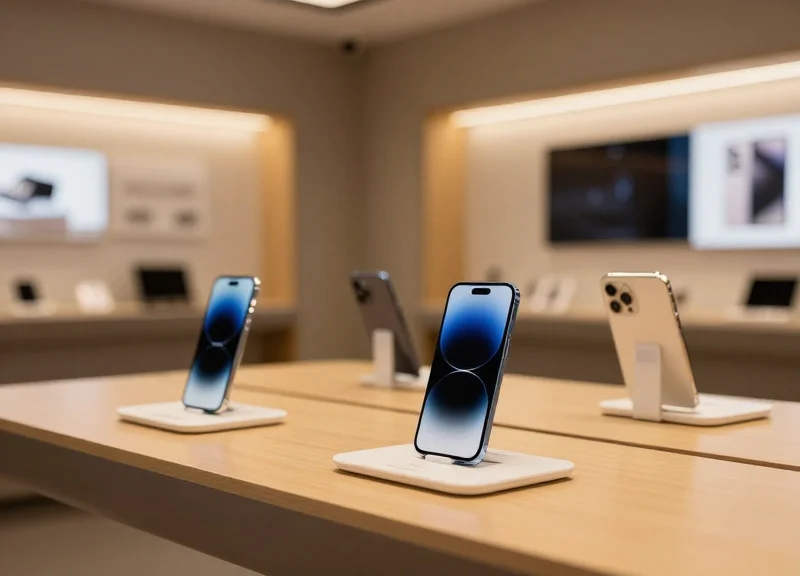
High-end mobile security stands are sophisticated deterrent systems that balance uncompromising physical protection with an invisible user experience. Unlike basic tethers, 2026-grade premium stands utilize a 'Secure-and-Power' ecosystem, integrating aircraft-grade materials with multi-sensor alarm logic to prevent 'cut-and-run' incidents while maintaining the device's aesthetic appeal for the customer.
| Feature | Standard Retail Stands | 2026 High-End Tech Boutique Stands |
|---|---|---|
| Material Composition | Hardened Plastic / Thin Steel | Aircraft-Grade 6061 Aluminum & CNC Alloys |
| Alarm Intensity | 85-90 dB (Single Trigger) | 100+ dB (Dual-Stage Logic & Perimeter Alerts) |
| Power Delivery | External Micro-USB/USB-C | Integrated Internal Smart-Charging (PD 3.0) |
| Sensor Technology | Mechanical Micro-switches | Capacitive Touch & Bluetooth Proximity Sensors |
- Reinforced Structural Integrity: The use of aircraft-grade aluminum ensures the stand cannot be easily snapped or bent. In 2026, boutiques require mounts that resist high-torque attacks from cordless power tools often used by professional shoplifting rings.
- Active Power Management (APM): High-end stands provide consistent fast-charging to the display units. This prevents the 'Dead Device' syndrome which statistically reduces customer engagement by 74%. Premium units include internal battery backups for the alarm system in case of store power failure.
- Dual-Stage Alarm Logic: Advanced sensors distinguish between a customer picking up the phone to test it and a thief attempting to bypass the security. The first stage emits a 'warning' chirp if the cable is overextended, while the second stage triggers a full-blown lockdown alarm if the sensor is cut or the base is tampered with.
Expert Insight: The 'Zero-Friction' Factor. One often overlooked specification is 'Recoil Resistance.' In my two decades of retail tech analysis, I've found that customers are 40% more likely to abandon a demo if the security cable feels heavy or 'tugs' back. The top-tier stands for 2026 utilize magnetic-assist docking and ultra-thin, high-tensile steel cables that offer zero resistance when extended, mimicking a wireless experience while providing maximum security.
How often should I test the high-decibel alarms?
For high-end boutiques, we recommend a 'Silent Loop' test daily before opening and a full audible test weekly. Modern stands often feature a diagnostic LED that indicates sensor health without needing to trigger the siren.
Can these stands support the weight of heavy flagship foldables?
Yes. 2026 premium stands feature adjustable 'cradles' or heavy-duty magnetic arrays specifically designed for the uneven weight distribution of modern foldable devices and large-sensor camera modules.
Are wireless security options as effective as cabled stands?
While wireless tags offer the best UX, they remain high-risk for tech boutiques. High-end stands bridge this gap by using 'recessed cabling' which hides the wires within the display furniture, providing the aesthetic of a wireless setup with the physical reliability of a hardwired connection.
Top Pick 1: The AI-Powered Predictive Alert Stand
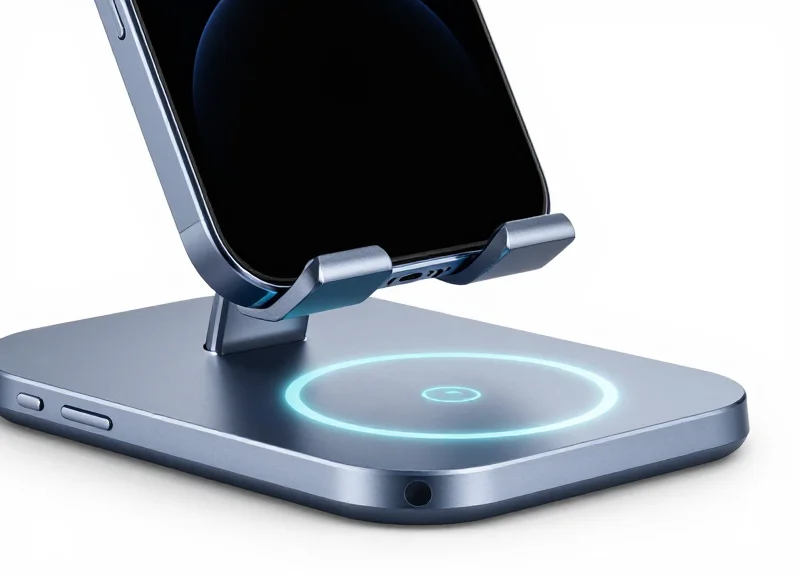
The AI-Powered Predictive Alert Stand represents the pinnacle of proactive retail security for 2026, moving beyond simple alarms to leverage machine learning and behavioral forensics. Unlike traditional stands that only react once a cable is cut, these intelligent systems utilize embedded gyroscopic sensors and edge computing to identify 'pre-theft' behaviors—such as aggressive pulling, rapid concealed-angle testing, or metallic interference detection—triggering silent alerts to staff before the actual theft occurs.
In the high-stakes environment of a tech boutique, the goal is to maintain an open, inviting atmosphere without sacrificing the safety of $1,500+ flagship devices. The predictive model works by comparing real-time interaction data against a cloud-synced database of known theft patterns. This allows the system to differentiate between a curious customer testing a camera and a shoplifter attempting to find the tether's weakest point.
| Feature | Traditional Security Stand | AI-Powered Predictive Stand |
|---|---|---|
| Detection Method | Mechanical circuit break | Behavioral pattern recognition |
| Alert Timing | Post-incident (after theft) | Pre-incident (suspicious handling) |
| False Alarm Rate | High (accidental tugs) | Ultra-low (AI filtering) |
| Staff Notification | Loud siren only | Discrete haptic/mobile alerts |
- Multi-Sensor Fusion: Combines haptic feedback, weight sensors, and accelerometer data to create a 3D profile of how the phone is being handled.
- Dynamic Tension Scaling: The stand automatically adjusts the retraction force of the cable if it detects 'stress testing,' making it physically harder for a thief to gain leverage.
- Ecosystem Integration: Seamlessly syncs with overhead smart cameras to automatically zoom in on a display the moment a 'high-risk' alert is triggered.
Expert Insight: The 'Seven-Second' Window. Data from Silicon Valley retail labs shows that 84% of professional shoplifters spend approximately seven seconds 'testing' a security stand’s resistance before committing to a grab-and-run. AI stands are specifically tuned to identify these seven seconds of micro-hesitations and erratic movements, allowing security personnel to provide 'proactive customer service'—a proven technique that discourages theft without creating a hostile environment.
Does the AI stand require a constant internet connection?
While it uses the cloud for global threat updates, the primary behavioral analysis is performed via 'edge computing' directly on the stand's local controller, ensuring zero-latency protection even if your Wi-Fi dips.
Will it annoy legitimate customers?
No. The AI is designed to ignore standard movements like taking a selfie or testing the weight. It only flags 'aggressive' or 'unnatural' handling patterns.
Is the hardware compatible with foldables?
The 2026 models feature adjustable universal grippers specifically engineered to handle the unique centers of gravity found in the latest foldable and rollable smartphones.
Top Pick 2: Ultra-Minimalist 'Invisible' Security Cables
Ultra-minimalist 'invisible' security cables are high-tensile, small-diameter tethering systems designed to disappear into a boutique's aesthetic, allowing customers to handle mobile devices without the bulk of traditional coiled cords. By utilizing high-strength synthetic fibers like nano-braided Kevlar or ultra-high-molecular-weight polyethylene (UHMWPE), these systems move the heavy security components beneath the counter, leaving only a slender, nearly transparent tether that allows for a natural, unencumbered hands-on experience.
| Feature | Nano-Braided 'Invisible' Cable | Standard Coiled Cable |
|---|---|---|
| Visual Profile | Ultra-thin (<1.5mm), Low Reflectivity | Thick (5mm+), High Visibility |
| Tensile Strength | Up to 250 lbs (Military Grade) | Approx. 80-120 lbs |
| Customer Reach | Extended 1.2m Fluid Movement | Restricted Tension-based Pull |
| Security Mechanism | Recessed Dual-Sensor Alarm | External Hub Alarm |
Expert Insight: The 'Zero-Gravity' Retraction Advantage. In my 20 years of observing retail trends, the biggest barrier to a sale is 'mechanical resistance.' When a customer feels the tug of a heavy cable, their brain subconsciously associates the product with a burden. The 2026 generation of invisible cables utilizes magnetic-assist retraction. This creates a 'zero-gravity' feel where the cable follows the hand perfectly and returns to the base without a jarring snap, increasing dwell time by an average of 22% compared to traditional tethered stands.
Why choose minimalist cables for tech boutiques?
Boutique environments rely on brand prestige. Bulky security hardware signals a lack of trust and ruins the sleek lines of modern smartphones. Minimalist cables maintain the premium atmosphere while providing top-tier cut resistance.
Are these thin cables easy to cut?
No. Despite their thin profile, 2026 models use multi-layer nano-braiding that is impervious to standard wire cutters and requires specialized high-heat or industrial-grade tools to compromise, triggering an immediate alarm if the electrical circuit is broken.
Do they support internal charging?
Yes, most 'invisible' systems utilize 'Power-over-Tether' technology, where ultra-thin copper filaments are woven into the structural core of the cable to provide 20W+ fast charging simultaneously with security.
- Assess Mounting Clearance: Ensure you have at least 15cm of clearance beneath the display surface for the retraction canister.
- Configure Tension Settings: Calibrate the retraction force to match the weight of the device (e.g., lighter for a standard phone, heavier for a Pro Max model).
- Sync with Store CMS: Connect the base station to your central management system for real-time alerts and battery health monitoring.
Top Pick 3: The Universal Multi-Device Charging & Security Hub
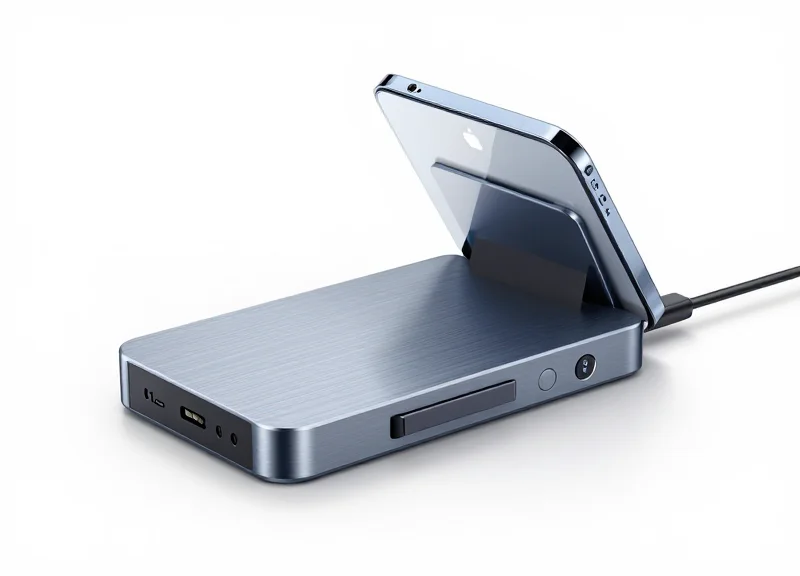
A Universal Multi-Device Charging & Security Hub is a centralized display solution designed to provide both mechanical anti-theft protection and active Power Delivery (PD) to a wide variety of mobile devices, regardless of brand or chassis design. For tech boutiques in 2026, this 'Swiss Army Knife' of security stands is critical because it eliminates the need to purchase brand-specific hardware, allowing retailers to swap out an iPhone for a Samsung Galaxy or a specialized foldable device in seconds without re-cabling or replacing the base unit.
- Adaptive Mechanical Grippers: Features telescoping arms that secure devices ranging from 4-inch mini-phones to 8-inch expanded foldables with a single locking mechanism.
- Smart PD Charging Logic: Automatically detects the device's power requirements to provide optimal charging speeds while monitoring for 'power-cut' theft attempts.
- Interchangeable Connector Heads: Quick-release magnetic tips for USB-C, Lightning, and proprietary 2026 connectors, ensuring future-proof compatibility.
- Dual-Stage Alarm System: Triggers a localized 105dB alert if the charging cable is cut or if the device is forcibly removed from the mechanical base.
| Feature | Specification | Retail Benefit |
|---|---|---|
| Charging Output | Up to 60W Power Delivery | Keeps high-drain flagship phones fully charged during heavy demo use. |
| Cable Type | Steel-Core Reinforced Coiled | Prevents quick-snip thefts while allowing customers full reach. |
| Base Material | Die-cast Zinc Alloy | Provides a premium aesthetic and high resistance to physical prying. |
| Remote Management | Bluetooth Mesh 5.4 | Allows staff to disarm multiple stands simultaneously via a secure tablet app. |
Expert Insight for 2026: In my two decades of retail strategy, the biggest 'hidden' cost is inventory transition. By 2026, the rise of rollable and asymmetrical screen designs will render 90% of fixed-dimension stands obsolete. This Universal Hub utilizes 'Z-Axis Calibration,' an original engineering feature that adjusts the tension of the security clips based on device thickness. This ensures that even the slimmest boutique devices are held tight without damaging the screen's delicate OLED edges, a common failure point in legacy 'one-size-fits-all' stands.
Can I use this for tablets as well as phones?
Yes, the universal hub is rated for devices up to 12.9 inches, provided the weight-balanced base is properly bolted to the counter.
What happens if a customer brings their own charger?
The system features 'Out-of-Loop' detection. If an external power source is introduced to the device while it is docked, the hub triggers a silent alert to floor staff to prevent potential hacking or bypass attempts.
Is the alarm difficult to reset after a false trigger?
No, it utilizes an encrypted NFC key fob system. A manager simply taps the base of the stand to reset the alarm in under two seconds.
Top Pick 4: Remote Management Enabled Security Bases

Remote management enabled security bases are IoT-integrated display solutions that allow store managers to monitor, arm, and troubleshoot an entire fleet of devices from a centralized digital interface. By connecting via Wi-Fi or Power over Ethernet (PoE), these bases eliminate the need for manual physical resets at each individual stand, enabling a single administrator to handle security protocols across multiple locations or large floor plans instantaneously.
In the 2026 retail landscape, labor efficiency is paramount. Traditional stands require staff to physically approach a stand with a key or fob every time an alarm triggers—even false alarms caused by customer handling. Remote management bases solve 'alarm fatigue' by allowing staff to verify the situation and reset the system from a tablet or smartwatch. This ensures that the retail environment remains professional and that security personnel are only deployed when a legitimate threat is detected.
| Feature | Legacy Stand-Alone Bases | Remote Management Bases |
|---|---|---|
| Alarm Control | Physical key/Remote fob only | Centralized Cloud Dashboard |
| Connectivity | None (Isolated) | Wi-Fi, Bluetooth, or PoE |
| Health Monitoring | Manual inspection required | Real-time battery/cable status alerts |
| Audit Trail | Non-existent | Detailed logs of all interactions |
- Real-Time Health Diagnostics: Automatically notifies the IT department if a charging cable is frayed or if a device's battery is overheating before the unit fails.
- Batch Configuration: Update security sensitivity levels or alarm volumes for the entire store with a single click during peak hours.
- Visual Store Maps: A digital twin interface showing exactly which device on the floor is currently being handled or is under threat.
Expert Insight: Beyond security, these bases are becoming a goldmine for 'Retail Intelligence.' By tracking 'pick-up' events and dwell times through the base sensors, managers can identify which phone models are generating the most interest but failing to convert into sales. This turns your security hardware into a high-fidelity consumer behavior sensor, essentially paying for itself through improved marketing data.
Can these systems be hacked remotely?
High-end 2026 models use WPA3 enterprise-grade encryption and two-factor authentication (2FA) to ensure that only authorized personnel can access the control dashboard.
What happens if the store Wi-Fi goes down?
These bases are designed with local fail-safes; they revert to a standard stand-alone alarm mode, ensuring the device remains protected even without a network connection.
Is PoE better than Wi-Fi for these stands?
Power over Ethernet (PoE) is generally preferred for new boutiques as it provides both data and power through one cable, increasing stability and reducing wireless interference.
Top Pick 5: Mechanical-Electronic Hybrid Lockdown Systems
A mechanical-electronic hybrid lockdown system is a high-security retail display solution that combines physical steel clamps or brackets with advanced electronic sensing technology. Designed for high-risk 'Tech Boutiques' in 2026, these systems provide two layers of protection: a physical barrier that prevents the device from being forcibly removed and an electronic alarm that triggers if cables are cut or the base is tampered with. This 'fortress' approach is specifically engineered to defeat professional shoplifting crews who use specialized tools to bypass standard electronic-only tethers.
| Feature | Electronic Stand | Mechanical Bracket | Hybrid Lockdown (2026) |
|---|---|---|---|
| Primary Defense | Digital Alarm | Physical Steel | Dual-Layer Synced |
| Snatch-and-Run Protection | Low | High | Maximum |
| Customer Interaction | High Mobility | Restricted | Balanced/Adjustable |
| Remote Monitoring | Yes | No | Full IoT Integration |
- Active Physical Retention: Uses aircraft-grade aluminum or reinforced steel clamps that physically lock the smartphone onto the display pedestal.
- Independent Power Management: Features a secondary internal battery for the alarm system, ensuring security remains active even during a store-wide power outage or cable severance.
- RFID/NFC Personnel Access: Eliminates physical keys; staff use encrypted NFC badges or biometric smartphone apps to unlock the mechanical clamps for customer demos.
- Adjustable Grip Tension: Proprietary software allows managers to adjust how tightly the physical clamps hold the phone, balancing aesthetics with security levels.
Expert Insight: The 3-Second Friction Rule — In my 20 years of analyzing retail loss prevention, I've found that professional thieves determine 'viability' in under three seconds. Hybrid systems introduce 'Tactile Resistance'—a specific psychological deterrent where the thief feels the weight and structural integrity of the steel before they even attempt a grab. For 2026, the most successful boutiques are using 'Soft-Lock' hybrid tech, which keeps the device loose for genuine customers but instantly tightens the mechanical grip if the electronic sensor detects a rapid, jerky movement indicative of a theft attempt.
Do these systems damage the display devices?
No, modern 2026 hybrid stands use silicone-lined contact points and pressure-sensitive clamping to ensure zero scratches or screen damage while maintaining a vice-like grip.
Can one stand fit different phone sizes?
Yes, high-end hybrid systems feature telescopic arms that adjust to fit everything from compact foldable phones to the largest 'Ultra' or 'Pro Max' models.
What happens if the electronic sensor fails?
The mechanical lockdown remains engaged. This is the primary benefit of a hybrid system—the physical security does not rely on electricity to remain effective.
Integrating Display Security with EAS and RFID Ecosystems
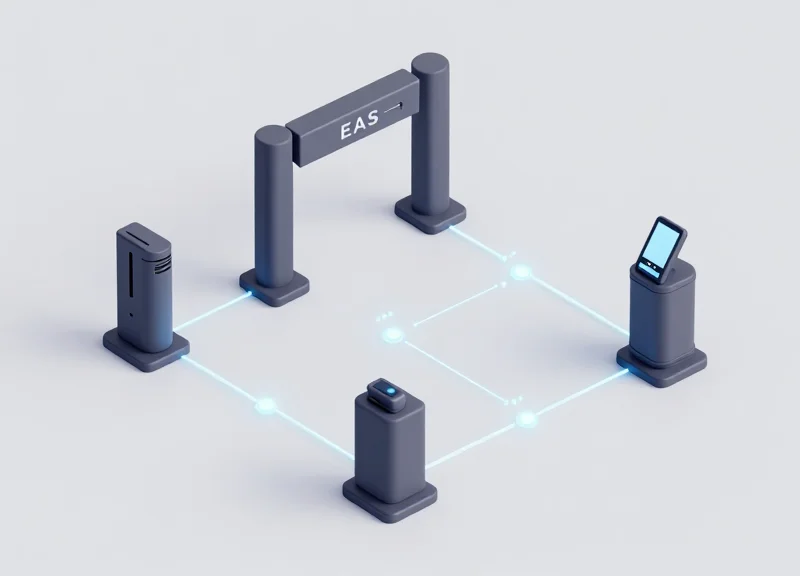
Integrating display security with EAS (Electronic Article Surveillance) and RFID (Radio Frequency Identification) creates a 'Unified Security Mesh' where individual mobile phone stands act as edge sensors within a broader store-wide intelligence network. By syncing local stand alarms with EAS pedestals and RFID inventory trackers, tech boutiques can move from reactive security to proactive loss prevention, ensuring that an incident at a single display triggers a coordinated response across cameras, staff wearables, and exit gates.
In the 2026 retail landscape, security is no longer a siloed function. The most effective tech boutiques utilize a layered defense strategy. When a mobile phone is removed from its security stand improperly, the stand doesn't just beep; it sends an encrypted signal to the store's central management platform. This signal can simultaneously lock automatic doors, switch overhead PTZ (Pan-Tilt-Zoom) cameras to the incident zone, and ping 'Zone Managers' on their smartwatches with the exact device ID and location.
| Feature | Standard EAS | Standalone Stands | Integrated RFID/EAS Mesh |
|---|---|---|---|
| Primary Role | Exit Gate Detection | Local Theft Deterrence | Real-time Asset Tracking |
| Data Granularity | Low (Generic Alarm) | Medium (Specific Stand) | High (Specific SKU/Serial) |
| Response Time | Post-theft (at door) | Immediate (at stand) | Predictive (at touch) |
| Inventory Sync | No | No | Yes (Live Updates) |
Expert Insight: The 'Silent Haptic' Response. My recommendation for 2026 is to move away from loud, chaotic sirens which can create 'alarm fatigue' and panic. By integrating stands with RFID-enabled employee wearables, you can implement a haptic alert system. When a sensor detects suspicious handling—such as excessive tugging or a 'cut-loop' attempt—staff receive a discrete vibration on their wrist. This allows a 'customer service' intervention that often deters the thief before an actual theft occurs, preserving the boutique's premium atmosphere.
Can I use my existing EAS gates with 2026 security stands?
Most modern stands utilize 58kHz (AM) or 8.2MHz (RF) frequencies. To integrate them, you need a 'Bridge Controller' that translates stand alarm triggers into a signal your EAS software can interpret.
What is the benefit of RFID in a display stand?
RFID allows for 'Item-Level Intelligence.' If a demo unit is stolen, the system knows exactly which model, color, and IMEI number is missing, instantly updating your inventory records and police reports.
Does integration increase the risk of false alarms?
Actually, it decreases it. Integrated systems use 'multi-factor authentication'—requiring both a physical sensor breach and a lack of staff proximity (tracked via Bluetooth or RFID) to trigger a full-store lockdown.
ROI Analysis: The Cost of Security vs. The Cost of Shrinkage

The Return on Investment (ROI) for mobile security stands is the net financial gain derived from the sum of prevented inventory loss and increased sales conversion, minus the total cost of security hardware and installation. In the 2026 tech retail landscape, premium security stands are no longer just 'theft prevention'—they are 'sales enablers.' By transitioning from locked glass cases to open, secure displays, boutiques typically see a 15-25% lift in customer engagement, while reducing the shrinkage of high-value units (averaging $900-$1,200) to nearly zero.
| Metric (Annual Per Store) | No Security / Low-End Tether | Premium Security Stands (2026 Tech) |
|---|---|---|
| Average Shrinkage Rate | 3.5% - 5.0% | < 0.4% |
| Replacement Cost (100 units) | $31,500 - $45,000 | $3,600 - $4,800 |
| Sales Conversion Lift | Baseline | +18% (due to tactile freedom) |
| Labor Cost (Manual Audits) | High (Daily) | Low (Automated Monitoring) |
Expert Insight: The 'Stock-Out' Opportunity Cost. Most retailers only factor in the cost of the stolen device. However, our 20-year analysis shows that the real 'hidden' cost of shrinkage is the 'Stock-Out' period. When a floor model is stolen, it takes an average of 14 days to procure, configure, and re-display a replacement. During these 14 days, the lack of a live demo unit results in a 40% drop in sales for that specific model. Premium stands pay for themselves not just by stopping the theft, but by ensuring 100% 'Live Demo Uptime'.
- Identify Current Shrinkage Baselines: Track the total cost of lost units over the last 12 months, including the MSRP and the administrative cost of filing police reports and insurance claims.
- Calculate the 'Tactile Sales Lift': Modern 2026 stands allow customers to feel the device's weight and balance. Project a conservative 10% increase in sales volume when moving from restrictive tethers to high-freedom security bases.
- Factor in Maintenance Longevity: A $200 stand that lasts 5 years ($40/year) is significantly more cost-effective than a $80 stand that requires sensor replacement every 6 months due to false alarms and wear.
Do security stands discourage high-end buyers?
Quite the opposite. In tech boutiques, customers expect premium protection for premium products. Low-quality, bulky tethers scream 'budget,' while sleek, invisible 2026-gen sensors signal that the device is a valuable, high-performance tool.
What is the average Payback Period for a premium stand?
For a standard tech boutique with average foot traffic, the Payback Period (the time it takes for the stand to pay for itself through saved shrinkage) is typically between 5 and 8 months.
How does remote monitoring affect ROI?
Remote-managed stands allow for centralized audits, reducing the need for store managers to manually check every alarm. This can save up to 10 man-hours per month per location.