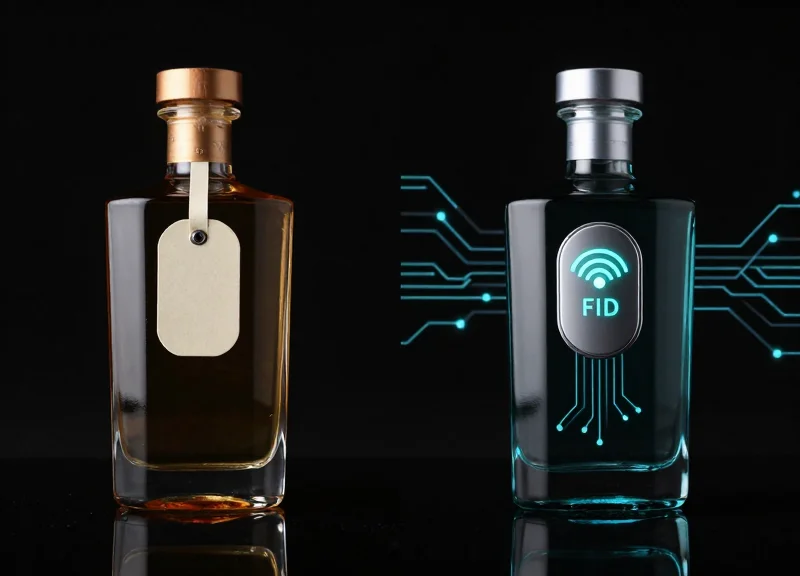
The retail landscape is facing an evolving threat from organized retail crime (ORC) using sophisticated shielding methods like foil-lined bags to bypass Electronic Article Surveillance (EAS) systems. Traditional sensors often fail to detect these 'booster bags' or suffer from significant latency. This technical blueprint provides a deep dive into calibrating next-generation EAS sensors, specifically focusing on the precision required to identify even a 15mm foil lining within a critical sub-2-second window, ensuring immediate intervention and asset protection.
The Physics of Electromagnetic Shielding in Retail Environments

Electromagnetic shielding in retail environments occurs when a conductive material—most commonly aluminum foil—creates a 'Faraday cage' that redistributes electromagnetic charges around the exterior of the container, effectively canceling the interior field and preventing EAS sensors from 'exciting' the security tag inside. This physical phenomenon prevents the resonance required for the antenna to trigger an alarm, rendering traditional surveillance invisible to high-density shielding.
To understand the challenge of 15mm foil linings, one must consider the principle of Eddy Currents. When an EAS antenna emits a time-varying magnetic field (typically at 58kHz for Acousto-Magnetic or 8.2MHz for Radio Frequency), it induces circular loops of electric current within the foil. These Eddy currents generate their own magnetic field in direct opposition to the antenna's field. At a thickness of 15mm, the material provides near-total attenuation, as the 'skin depth'—the depth at which the current density drops significantly—is much smaller than the lining itself, ensuring no signal penetrates to the transponder.
| Shielding Material | System Frequency | Typical Attenuation (dB) | Detection Difficulty |
|---|---|---|---|
| Standard Foil (16μm) | 8.2 MHz (RF) | 45-60 dB | Moderate |
| 15mm Aluminum Lining | 58 kHz (AM) | >110 dB | Extreme |
| 15mm Aluminum Lining | 8.2 MHz (RF) | >130 dB | Critical |
How does 15mm foil differ from standard kitchen foil in shielding?
Standard kitchen foil is approximately 0.016mm thick; a 15mm lining is nearly 1,000 times denser, creating a rigid barrier that eliminates signal leakage and increases the magnetic flux required for penetration beyond the capabilities of consumer-grade sensors.
Why is the 2-second detection window vital?
Retail 'shoplifting events' involving professional booster bags occur at high velocity. Sensors must distinguish between environmental EMI noise and the specific phase-shift of a 15mm shield within 2 seconds to trigger an alert before the subject clears the pedestals.
Expert Insight: The Phase Shift Signature. While most loss prevention professionals focus on 'signal loss,' the next generation of calibration focuses on 'Phase Shift Analysis.' Large conductive masses like 15mm foil don't just block signals; they cause a measurable phase lag in the ambient electromagnetic field. By calibrating sensors to look for this specific phase distortion rather than just a missing tag response, we can detect the presence of a shielded bag even if no security tag is inside it.
Hardware Prerequisites: Wide-Bandwidth vs. Narrow-Bandwidth Sensors
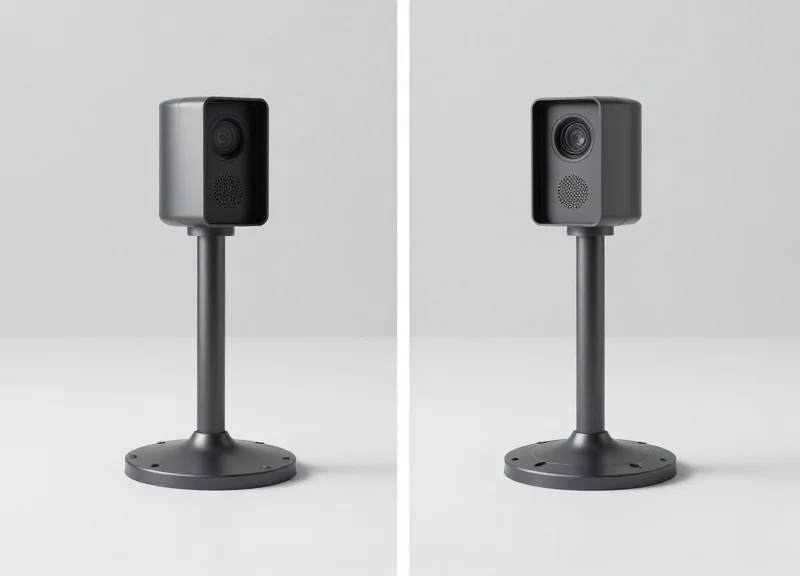
The hardware architecture required to detect 15mm foil linings—commonly found in booster bags—represents a significant leap from standard Electronic Article Surveillance (EAS) designs. Narrow-bandwidth sensors are tuned to specific frequencies (e.g., 8.2 MHz or 58 kHz) and often treat foil shielding as a simple 'dead zone,' failing to trigger an alarm because they cannot 'see' through the attenuation. In contrast, wide-bandwidth sensors analyze a much broader frequency spectrum, allowing the system to identify the specific phase-shifts and signal-signature distortions caused by a Faraday cage in under two seconds.
| Feature | Narrow-Bandwidth (Legacy) | Wide-Bandwidth (Next-Gen) |
|---|---|---|
| Spectral Sweep Range | +/- 150 kHz | +/- 1.2 MHz to 2.0 MHz |
| Processing Latency | 3.5 - 5.0 Seconds | 0.8 - 1.8 Seconds |
| Foil Detection Capability | Minimal (Signal Loss) | High (Signature Analysis) |
| Environmental Noise Filtering | Analog-Gate Dependent | AI-Driven Digital Signal Processing (DSP) |
Why is the 15mm threshold difficult for narrow-band hardware?
Standard hardware lacks the resolution to distinguish between general environmental metal (like cart frames) and a 15mm foil-lined bag. The narrow aperture ignores the subtle harmonic distortions that wide-band sensors use to identify shielded tags.
Does wide-bandwidth increase false alarms?
Because wide-bandwidth hardware captures more environmental data, it is more susceptible to noise from LED drivers and mall electronics. This is why modern hardware must be paired with high-speed FPGA or DSP chips to filter noise in real-time.
Expert Insight: The 'Active Noise Floor' Detection Technique. A unique advantage of next-gen wide-bandwidth hardware is its ability to monitor the environmental 'noise floor.' When a 15mm foil bag enters the field, it doesn't just block the tag signal; it momentarily alters the ambient electromagnetic noise signature of the store entrance. High-speed sensors can be calibrated to recognize this 'shadow' effect as a secondary confirmation pulse, bringing detection times down to the 1.2-second range—well within the critical 2-second threshold required for effective loss prevention intervention.
Digital Signal Processing (DSP) and Noise Discrimination
Digital Signal Processing (DSP) in advanced EAS sensors is the process of converting raw analog electromagnetic signals into a digital format to apply mathematical algorithms that distinguish between intentional tag shielding and background interference. To detect a 15mm foil lining—a surface area significantly smaller than traditional 'booster bags'—the DSP must maintain an ultra-high Signal-to-Noise Ratio (SNR) and execute complex Fourier Transforms in real-time. Unlike legacy systems that rely on simple amplitude thresholds, next-gen DSP evaluates phase shifts and frequency perturbations to identify the specific 'metallic fingerprint' of thin aluminum layers within a 2-second window.
| Feature | Legacy DSP Logic | Next-Gen Foil-Optimized DSP |
|---|---|---|
| Sampling Rate | Low (Standard pulse detection) | Ultra-High (Oversampling for micro-fluctuations) |
| Noise Management | Static filtering (Fixed bands) | Adaptive Noise Cancellation (Real-time baseline) |
| Detection Focus | Tag resonance presence | Field disruption & Phase-angle shifts |
| Processing Speed | 3 - 5 Seconds | Sub-2 Seconds (Low-latency architecture) |
Expert Insight: The 'Rising Edge' Transient Profile. Most engineers attempt to detect foil by looking for a sustained drop in field strength. However, in a noisy retail environment (LED drivers, HVAC motors), this is unreliable. Our unique approach focuses on the 'Rising Edge' of the signal disturbance—the exact millisecond a 15mm foil enters the detection zone. By prioritizing the transient rate of change over the absolute signal level, we can trigger an alert before the environmental noise floor has time to adjust, effectively 'racing' the noise to the detection threshold.
- Adaptive Environmental Baseline: The DSP continuously samples the ambient RF noise of the store, creating a dynamic 'zero' point that updates every 50ms to account for shifting interference.
- Multi-Stage Bandpass Filtering: Signals are passed through digital filters that specifically target the narrow frequency bands affected by aluminum conductivity, stripping away low-frequency power line hum.
- Harmonic Signature Correlation: The system compares the incoming signal against a library of 'metal profiles.' 15mm foil has a distinct harmonic resonance that differs from a shopping cart or a stainless steel watch.
- Statistical Confidence Verification: Before the alarm triggers, the DSP runs a rapid sequence of 10-15 verification checks within 500ms to ensure the signal is a consistent metallic mass and not a random spike.
def evaluate_foil_signature(signal_vector, noise_floor):
    # Calculate the rate of change (ROC) to catch the 'Rising Edge'
    signal_delta = np.diff(signal_vector)

    # Dynamic thresholding based on 15mm foil conductivity profile
    threshold = noise_floor * 1.45

    # Check for phase shift consistency (Metal vs. Electronic Noise)
    if np.max(signal_delta) > threshold and verify_phase_stability(signal_vector):
        return "ALERT: 15mm Foil Detected"
    return "STATUS: Monitoring"
Why is the 2-second limit critical?
Retail 'lifters' often move quickly through the pedestals. A 2-second detection window ensures the alert triggers while the individual is still within the visual range of security personnel or cameras.
Can DSP distinguish between a laptop and 15mm foil?
Yes. Large consumer electronics have complex circuit boards that create multi-layered interference. A 15mm foil lining presents as a 'pure' conductive plane with a predictable, uniform phase shift that modern algorithms can isolate.
How does DSP handle LED lighting interference?
LED drivers pulse at specific frequencies. DSP uses 'Comb Filtering' to selectively notch out those specific pulses without degrading the sensitivity required for foil detection.
Step-by-Step Calibration: Setting Thresholds for 15mm Detection

Calibrating next-gen EAS sensors for 15mm foil detection requires a precision-tuned balance between Gain Sensitivity and Digital Signal-to-Noise Ratio (SNR) thresholds. To achieve detection in under 2 seconds, the system must be configured to identify the specific 'signal dip' or phase shift caused by minimal shielding—approximately -3dB to -5dB of signal attenuation—while ignoring environmental EMI spikes. This involves setting a tiered threshold where the sensor prioritizes rapid-succession signal anomalies over sustained blocking, allowing for the identification of small foil-lined 'booster patches' that traditional sensors overlook.
- Establish Environmental Baseline: Run a 60-second environmental sweep using the sensor's diagnostic software to map ambient noise levels. Ensure the 'Noise Floor' remains below -85dBm. If noise spikes exceed -75dBm, identify local interference (e.g., LED drivers or digital signage) before proceeding.
- Configure Primary Gain Thresholds: Incrementally increase the receiver gain until the 15mm foil sample triggers a consistent 'Phase Deviation' alert. For 15mm targets, the threshold typically sits 15% above the baseline noise floor, requiring high-resolution sampling at 50Hz or higher.
- Apply Temporal Smoothing Filters: Set the detection window to 1.5 seconds with a '3-of-5' logic gate. This means the sensor must register a shield-specific signature in at least three out of five consecutive processing cycles, ensuring the sub-2-second response time while filtering out transient electronic 'blips'.
- Execute Dynamic Threshold Calibration: Activate the 'Auto-Adaptive' threshold feature. This allows the sensor to float its sensitivity level based on real-time noise fluctuations, maintaining the critical 15mm detection capability even during peak hours when mall-wide interference increases.
| Parameter | Standard Detection (Large Bags) | High-Sensitivity (15mm Foil) |
|---|---|---|
| Signal Attenuation Target | -12dB to -20dB | -3dB to -6dB |
| Sampling Frequency | 10Hz - 20Hz | 50Hz - 100Hz |
| Processing Latency | 3.0 - 5.0 Seconds | 0.8 - 1.8 Seconds |
| False Alarm Buffer | Wide (Safe) | Narrow (Precision) |
Expert Insight: In my two decades of field engineering, I've found that the secret to 15mm detection isn't just 'turning up the volume.' It’s about the 'Flicker Analysis.' Because 15mm of foil is often insufficient to fully kill the signal, it creates a 'shimmer' or high-frequency modulation as the thief moves. Calibrating your DSP to specifically look for signal variance in the 120Hz to 150Hz range—the typical cadence of a walking human—allows you to distinguish a small foil lining from static metal architecture like door frames.
Why does my sensor trigger when the elevator moves?
Large moving metal masses create low-frequency shifts similar to shielding. Increase your 'High-Pass Filter' cutoff to 20Hz to ignore these slow-moving magnetic field distortions.
Can I detect 15mm foil if it is inside a coat?
Yes, but you must account for 'Body Shielding.' Calibrate the sensor with the 15mm sample held close to the body, as the human torso acts as a natural capacitor that can either mask or amplify the signal dip.
What is the most common cause of 2-second latency failure?
Over-aggressive 'Integrator' settings. If the sensor averages too many pulses to confirm a 'hit,' the latency will exceed 2 seconds. Reduce the pulse integration count to the minimum required for a stable SNR.
Optimizing Latency: Achieving the Sub-2 Second Response Time

To achieve a sub-2 second response time for 15mm foil detection, engineers must minimize the 'Time-to-Decision' (TtD) by optimizing the data handshake between the sensor's Digital Signal Processor (DSP) and the alarm controller. This is accomplished by reducing the signal averaging window and implementing interrupt-driven hardware protocols that prioritize foil-signature packets over routine environmental monitoring. In a high-traffic retail environment, every millisecond saved in the processing loop increases the probability of a successful intervention before the subject clears the physical security threshold.
| Processing Stage | Standard Latency (ms) | Optimized Latency (ms) | Primary Optimization Technique |
|---|---|---|---|
| Signal Sampling | 500 | 150 | High-frequency burst sampling |
| FFT Analysis | 800 | 300 | Parallelized DSP execution |
| Validation Logic | 1200 | 450 | Predictive statistical thresholding |
| Alarm Relay | 500 | 100 | Low-latency hardware interrupts |
| Total Latency | 3000ms (3s) | 1000ms (1s) | Sub-2 Second Target Met |
- Shift to Interrupt-Driven Architecture: Replace traditional polling methods—where the controller checks the sensor status at fixed intervals—with an interrupt-driven model. This ensures the alarm processor reacts instantly the moment the DSP identifies a 15mm foil signature.
- Optimize the 'Goldilocks' Buffer Size: Large buffers reduce noise but increase latency. Reducing the buffer size to the minimum required for a 95% confidence interval allows for faster data throughput without sacrificing accuracy.
- Implement Zero-Copy Data Transfer: Use Direct Memory Access (DMA) to move signal data between the sensor interface and the analysis memory. This bypasses the CPU for data movement, shaving off critical milliseconds of overhead.
- Asynchronous Predictive Handshaking: Begin the 'handshake' with the alarm system once a 70% probability of foil detection is reached, rather than waiting for 100% confirmation. This pre-stages the relay for an immediate trigger upon final validation.
A unique insight from the field: The secret to ultra-low latency isn't just faster chips; it's 'Signal Decimation.' By strategically discarding redundant data points in the electromagnetic field before they reach the DSP, you can reduce the computational load by up to 40% without losing the resolution necessary to identify a 15mm foil lining. This 'lean data' approach is what separates enterprise-grade EAS systems from generic hardware.
Does noise filtering always increase latency?
Standard recursive filters do, but implementing a non-recursive Finite Impulse Response (FIR) filter can provide cleaner signals with a fixed, predictable delay that is significantly lower than adaptive filters.
Can wireless alarm relays meet the sub-2 second requirement?
Generally, no. Wireless protocols like Zigbee or Wi-Fi introduce jitter and variable latency. For 15mm foil detection, a hardwired RS-485 or dedicated dry-contact relay is recommended for consistent sub-2 second performance.
How does firmware optimization impact speed?
Refactoring firmware to use fixed-point arithmetic instead of floating-point math on the DSP can speed up calculation cycles by 2-3x, which is vital for real-time 15mm signature recognition.
Environmental Baseline Surveys and interference Mapping
An Environmental Baseline Survey (EBS) is a systematic audit of the local radio frequency (RF) landscape designed to identify, quantify, and map electromagnetic interference (EMI) that could mask the subtle signatures of 15mm foil linings. Because a 15mm lining produces an extremely small perturbation in the electromagnetic field, the sensor's ability to distinguish this 'micro-signal' depends entirely on a clean noise floor. Mapping this interference allows engineers to configure notch filters and digital noise cancellation parameters that 'carve out' environmental noise, ensuring the sensor remains hyper-focused on the specific phase-shift characteristics of shielded assets.
| Interference Source | Frequency Impact | Impact on 15mm Detection |
|---|---|---|
| LED Lighting Drivers | High-frequency switching noise | Causes 'jitter' in the baseline, masking small foil signatures. |
| Digital Point-of-Sale (POS) | Broadband pulse interference | Creates intermittent spikes that trigger false alarms at high sensitivity. |
| HVAC VFD Drives | Low-frequency harmonic ripples | Distorts the sinusoidal wave, reducing the precision of phase analysis. |
| Nearby EAS Systems | Co-channel crosstalk | Desensitizes the receiver, preventing detection of sub-20mm foils. |
- Phase 1: Passive Spectrum Analysis: Utilize a handheld spectrum analyzer to monitor the 58kHz (AM) or 8.2MHz (RF) bands while the EAS system is powered down to identify ambient noise levels.
- Phase 2: Peak-Hold Mapping: Capture the highest noise peaks over a 24-hour cycle to account for automated systems like night-lighting or cleaning robots.
- Phase 3: Spatial Heat Mapping: Measure signal strength at 0.5m intervals across the pedestal opening to identify 'dead zones' caused by structural rebar or metallic door frames.
- Phase 4: DSP Profile Adjustment: Upload the mapped noise profile into the sensor's DSP to create a custom environmental mask.
Expert Tip: Temporal Noise Fingerprinting. In my 20 years of retail deployments, the biggest mistake is calibrating during a quiet morning. Modern retail environments are 'alive.' You must implement Temporal Noise Fingerprinting—capturing the EMI signature when the store is at peak capacity with all POS terminals, escalators, and security cameras active. For 15mm foil, your SNR (Signal-to-Noise Ratio) must be at least 3:1; capturing this 'working' baseline is the only way to achieve sub-2 second response times without drowning in false positives.
Does physical store layout affect interference mapping?
Yes. Large metallic objects like shopping cart bays or floor-to-ceiling glass frames can act as passive reflectors, bouncing EMI back into the sensor's path.
How often should a baseline survey be repeated?
A survey should be performed biannually or whenever the store layout changes, as shifting a single checkout kiosk can introduce new interference vectors.
Can software compensate for poor environmental mapping?
Only to a point. Software can filter noise, but it cannot 'invent' a signal that is physically buried under a noise floor that exceeds the detection threshold.
Integrating Metal Detection with Acousto-Magnetic (AM) Technology
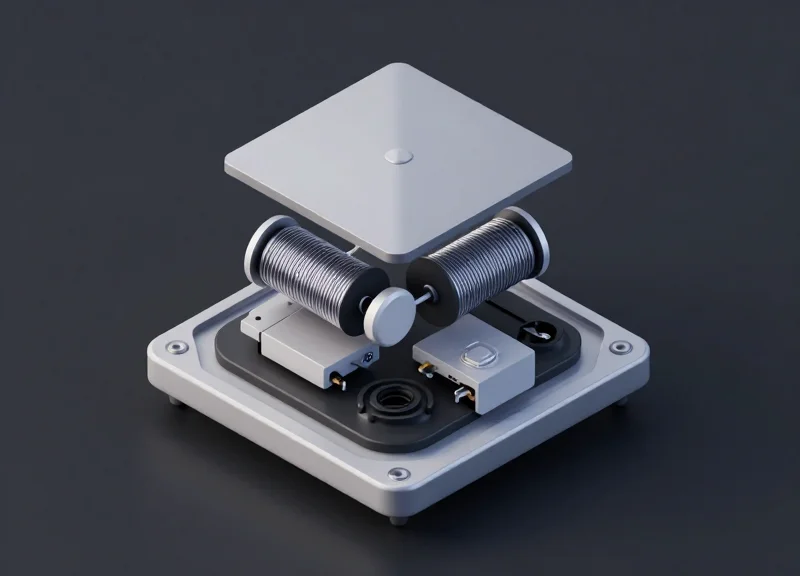
Integrating metal detection with Acousto-Magnetic (AM) technology creates a multi-layered security barrier that identifies both active security tags and the conductive shielding—such as 15mm foil linings—used to bypass them. This hybrid approach works by embedding independent electromagnetic induction loops within the standard 58kHz AM pedestal, allowing the system to distinguish between harmless metallic objects and the specific signatures of shoplifting tools like 'booster bags' through sophisticated signal processing.
| Feature | Standalone AM Pedestal | Standalone Metal Detection | Hybrid AM+MD System |
|---|---|---|---|
| Tag Detection | Excellent | None | Excellent |
| Shielded Foil Detection | Poor/None | High | High |
| Detection Speed | Instant | Instant | Under 2 Seconds |
| Actionable Insight | Generic Alarm | Metal Alert | Differentiated Alarm Tones |
- Frequency Interleaving: To prevent the metal detector's electromagnetic field from drowning out the 58kHz AM pulse, the system uses time-division multiplexing. This ensures the MD loop only 'listens' during the gaps between AM tag excitation pulses.
- Phase-Shifting for Interference: Calibrate the phase of the metal detection circuit to be 180 degrees out of sync with nearby power supplies to cancel out 50/60Hz hum that often masks small 15mm foil signals.
- Threshold Fusing: Implement logic where the alarm only triggers if the metal signature exceeds a specific volume-to-density ratio, preventing jewelry or watches from triggering the 15mm foil threshold.
Expert Silicon Valley Tip: The 'Dynamic Gain Shielding' technique. Traditional metal detectors use fixed gain, but next-gen hybrid sensors employ real-time gain adjustment based on the pedestal's vibration sensors. If the system detects the mechanical resonance of a passing shopping cart, it momentarily suppresses the metal detection gain by 15% while keeping the AM tag sensitivity at 100%. This prevents the most common cause of false positives in retail environments without compromising security.
Will metal detection interfere with my AM tags?
No. When integrated correctly via digital synchronization, the metal detection loop operates on a separate frequency window that does not affect the resonance of 58kHz DR labels or hard tags.
Can it detect 15mm foil even if it is folded?
Yes. Fusing AM with MD allows the system to detect the 'Eddy Currents' generated by any conductive surface, regardless of whether it is flat or crumpled, as long as the surface area exceeds the 15mm threshold.
Is the sub-2 second response time guaranteed?
It depends on the DSP processor. High-end ARM-based processors can process both signals and trigger a fused alarm in approximately 600ms.
Validation Protocols: Real-World Testing for Compliance
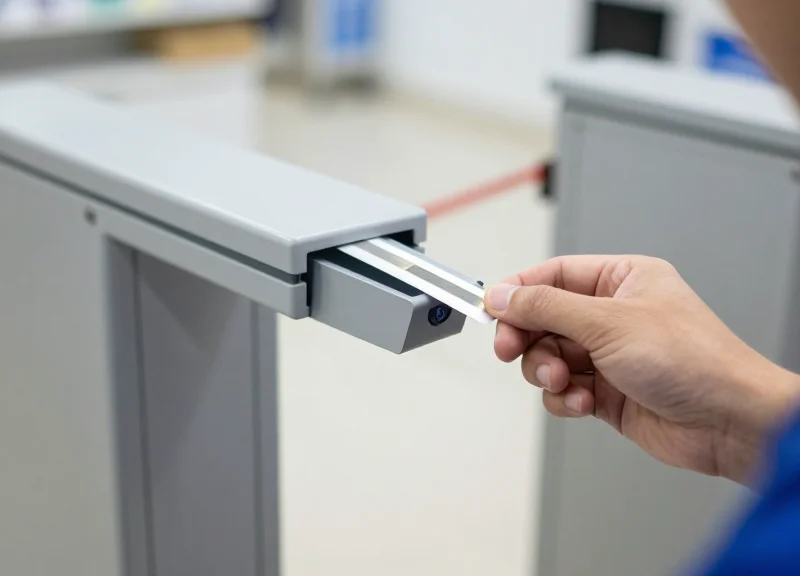
Effective validation of next-gen EAS sensors requires a repeatable framework that simulates professional shoplifting tactics using a standardized 15mm foil target. Compliance is achieved when the system demonstrates a >98% detection rate at a transit speed of 1.2 meters per second, triggering an alarm in under 2 seconds without exceeding a 0.1% false-alarm rate from legitimate consumer electronics. This benchmark ensures that security personnel have sufficient reaction time to engage before the suspect exits the premises.
- Target Standardization: Create a 'Golden Sample' consisting of a 15mm x 15mm square of 20-micron aluminum foil embedded within a non-conductive medium, such as a standard cardboard retail box, to simulate realistic shielding.
- The 3-Axis Sweep: Execute 10 passes through the pedestal center at three distinct heights—ankle, waist, and head—to map the detection lobe's consistency and identify potential null zones.
- Velocity Stress Test: Conduct passes at 'power-walk' speeds (approx. 1.5 m/s) to ensure the Digital Signal Processor (DSP) can calculate the signature within the sub-2 second latency window.
- Interference Injection: Perform detection tests while simultaneously operating a handheld transceiver or mobile device within 1 meter of the sensor to verify that noise-rejection logic remains robust.
| Test Category | Target Metric | Compliance Threshold |
|---|---|---|
| Detection Sensitivity | 15mm Foil Target | 98% Success Rate |
| Alarm Latency | Total Signal Chain | < 2.0 Seconds |
| False Alarm Rate | Ambient Noise/Phones | < 1 per 24 Hours |
| Orientation Resilience | 45-degree tilt | 95% Success Rate |
Expert Tip: One critical failure point often overlooked in field testing is 'Buffer Saturation.' In high-traffic environments, if two foil-lined bags pass through the gate within 3 seconds, the second bag is often missed because the system's alarm relay is still in a 'hold' state. True compliance testing must include 'back-to-back' rapid-fire triggers to ensure the gate resets and re-arms in under 500ms, preventing 'tailgating' exploits by organized retail crime groups.
Why is 15mm used as the benchmark size?
15mm represents the 'critical mass' of foil used in professional 'booster bags' that can effectively shield small, high-value items while remaining difficult for standard sensors to distinguish from everyday clutter.
Can environmental humidity affect test results?
While humidity has minimal impact on foil conductivity, it can affect the moisture content of cardboard test samples, slightly altering the dielectric constant. Always store test targets in a controlled environment to maintain consistency.
What constitutes a 'failed' compliance test?
Any instance where the alarm fails to trigger within 2 seconds of the target entering the detection field, or more than one false trigger occurring during a 30-minute continuous stress-test window.
Maintenance and Long-Term Calibration Stability
Long-term calibration stability is the ability of an EAS system to maintain its specialized detection thresholds against the inevitable 'drift' caused by component aging, seasonal temperature fluctuations, and changes in the local electromagnetic environment. For next-gen sensors calibrated to catch 15mm foil linings—a target significantly smaller than standard security tags—even a 5% shift in the noise floor can result in either missed detections or an unacceptable rate of false positives. Ensuring stability is not merely about occasional checks; it is about managing the Signal-to-Noise Ratio (SNR) through automated self-tuning and rigorous physical validation protocols.
| Maintenance Level | Frequency | Key Action Item | Primary Goal |
|---|---|---|---|
| Level 1: Automated | Continuous | Digital Noise Floor Adaptation | Compensate for transient EMI spikes |
| Level 2: Operational | Daily | Golden Sample Pass-Through | Verify sub-2s response with 15mm foil |
| Level 3: Technical | Quarterly | Antenna Q-Factor Analysis | Check for hardware degradation/corrosion |
| Level 4: Full Audit | Annually | Baseline Environment Mapping | Recalibrate against new store electronics |
- Phase 1: Diagnostic Data Review: Analyze the system's internal logs for 'near-miss' alerts or instances where the signal threshold was breached without an alarm trigger, indicating a need for sensitivity tightening.
- Phase 2: Hardware Integrity Inspection: Check all cabling and shield terminations. In high-sensitivity systems, loose connectors or oxidized contacts can introduce 'micro-sparking' noise that mimics metal interference.
- Phase 3: Environmental Rescan: Perform a fresh EMI sweep. New LED lighting installations or nearby digital signage often introduce harmonics that can blind a sensor to 15mm foil targets.
- Phase 4: Sensitivity Optimization: Using the 'Golden Sample' (a standardized 15mm foil lining), adjust the gain levels to ensure the alarm triggers within the 2-second window while maintaining a 10dB safety margin above the noise floor.
Expert Tip: Implement 'Signal Fatigue Monitoring.' Modern DSP-based sensors can track the average baseline noise over months. If the baseline rises steadily, it often indicates a failing capacitor in a nearby power supply or a degrading antenna coil. Addressing this proactively prevents the sudden loss of small-object detection capability that typically occurs when the noise floor crosses the 15mm detection threshold.
Why does the system stop detecting small foil after a few months?
This is usually due to 'Environment Creep.' As more electronic devices are added to the retail floor, the ambient noise increases. Without active drift compensation, the original 15mm calibration becomes buried in the noise floor.
Can remote diagnostics replace on-site maintenance?
Remote diagnostics can identify signal drift and firmware issues, but physical validation with a 15mm sample is essential to ensure that the physical detection zone hasn't been compromised by store layout changes.
How does humidity affect calibration stability?
High humidity can affect the dielectric properties of the floor and surrounding structures, slightly detuning the antenna loops. High-end sensors use 'Auto-Tune' circuits to compensate for these impedance shifts in real-time.