For niche retailers dealing in high-value, limited edition collectibles, seasonal shopping peaks often bring an unwelcome guest: increased retail shrink. For one specific model boutique, the holiday rush wasn't just a time for high sales; it was a time of devastating inventory loss that threatened their very survival. This article explores a real-world transformation, detailing how strategic security integration turned a 22% reduction in seasonal theft into a complete revitalization of the brand's profit margins and operational confidence.
The High Stakes of Niche Retail: Why Model Boutiques are Targets

Limited edition model boutiques face a unique security paradox: they stock items that are physically small yet carry price tags equivalent to high-end consumer electronics. This high 'value-to-volume' ratio makes them disproportionately attractive to shoplifters who can easily conceal hundreds of dollars in inventory within a coat pocket or bag. Unlike mass-market goods, these niche items often have a pre-primed secondary market with high 'resale velocity,' making them liquid assets for professional thieves who capitalize on the scarcity of limited releases.
| Metric | Mass Market Retail | Limited Edition Boutique |
|---|---|---|
| Average Item Value | $15 - $45 | $150 - $1,200 |
| Concealability | Low to Moderate | Extremely High |
| Resale Value | 10% - 30% of MSRP | 80% - 110% of MSRP |
| Theft Type | Opportunistic | Professional & Targeted |
Why do professional thieves target model boutiques over larger retailers?
Professional shoplifters prioritize high-margin 'exit velocity.' Collectible models are easily liquidated on peer-to-peer marketplaces like eBay or specialized hobby forums with minimal depreciation, unlike branded apparel which is easily identified as stolen.
How does seasonality affect theft risk in niche hobby shops?
During peak seasons, increased foot traffic provides cover for 'distraction theft.' Accomplices engage limited staff in technical conversations about specifications, while others exploit 'dark corners' created by dense, aesthetic shelf displays to remove high-value kits.
What makes the 'Limited Edition' tag a double-edged sword?
While it drives legitimate sales, scarcity also increases the 'black market' demand. A stolen out-of-production model can sometimes fetch more than its original retail price, incentivizing targeted theft during seasonal restocks.
Expert Insight: The Collector's Blind Spot. In my 20 years of retail consulting, I've observed that boutique owners often fall victim to 'aesthetic-first' layouts. They prioritize the visual story of the model over line-of-sight security. To defend your margins, you must implement what I call the 'Vigilance Grid'—ensuring that every item with a retail value exceeding $200 is positioned within a 45-degree direct line of sight from the point of sale, regardless of the display's artistic flow.
Anatomy of the Problem: Identifying Seasonal Theft Patterns

Seasonal theft in high-end model boutiques is characterized by 'crowd camouflage' and 'inventory velocity noise.' These patterns emerge when increased foot traffic and rapid stock turnover during peak periods, such as the holiday season or major hobby conventions, create enough chaos to mask the disappearance of high-value, compact items. Unlike routine shoplifting, seasonal theft leverages the deliberate stretching of a boutique's operational resources, specifically targeting the window where staff-to-customer ratios are at their lowest and visual line-of-sight is obstructed by seasonal displays.
| Seasonal Trigger | Theft Mechanic | Impact on Margins |
|---|---|---|
| Peak Foot Traffic | Crowd Camouflage | High-volume, low-visibility loss |
| Seasonal Staffing | Knowledge Gaps | Failure to follow security protocols |
| Stockroom Overflow | Inventory Disarray | Delayed detection of missing units |
| High-Value Releases | Targeted Snatching | Instant loss of high-margin 'hero' products |
For a limited edition model boutique, the impact is compounded. When a rare 1:18 scale die-cast or a limited-run Japanese mecha kit is stolen, the loss isn't just the wholesale cost. It is the loss of the 'Collector's Premium'—the significant markup that defines boutique margins—and the potential loss of a long-term collector relationship. During the holidays, the 'Inventory Velocity Blind Spot' becomes the thief's greatest ally; items are sold so quickly that a missing box on a shelf is often mistaken for a sale until the end-of-week reconciliation, by which time the trail is cold.
Why does theft spike during the holidays for boutiques?
Increased store density provides physical cover, while the psychological pressure on staff to maintain fast checkout times reduces their ability to monitor the floor effectively.
What are the primary targets of seasonal shoplifters?
They target 'pocketable' high-value items—specifically limited edition figurines or upgrade parts that have high resale value on secondary markets.
How does seasonal theft affect the bottom line differently than year-round loss?
Because seasonal inventory is often 'one-and-done,' a stolen unit cannot be easily replaced, leading to lost sales opportunities that can never be recovered.
Expert Insight: The 'Scalper-Thief' Synergy. In the niche model industry, we are seeing a rise in professional thieves who monitor release calendars as closely as collectors. These individuals target 'hype' items on launch day, knowing they can flip stolen goods on secondary platforms within hours. This makes the first 48 hours of a seasonal release the highest risk period for margin erosion, requiring a 'Tiered Security' approach that scales with the rarity of the product.
Calculating the Hidden Costs of Shrinkage
In the world of limited edition model boutiques, shrinkage is far more than a simple line item for 'lost inventory.' Calculating the hidden costs of shrinkage requires looking beyond the Cost of Goods Sold (COGS) to account for the total economic impact, which includes lost retail profit, administrative overhead for replacement, increased insurance premiums, and the erosion of brand trust. For a boutique selling high-margin, low-volume items, a single stolen unit often requires selling ten additional units just to recover the lost capital.
| Cost Layer | Direct Financial Loss | Indirect Operational Drain |
|---|---|---|
| Inventory Cost | Wholesale purchase price (COGS) | Time spent sourcing and vetting rare items |
| Lost Revenue | Full retail price minus COGS | Wasted marketing and display expenditures |
| Security & Admin | Potential insurance deductible | Labor hours spent reviewing footage and reporting |
| Market Opportunity | Loss of 'anchor' items that drive foot traffic | Customer frustration due to out-of-stock items |
One unique insight often overlooked by niche retailers is the 'Scarcity Surcharge.' When a limited edition item is stolen, you aren't just losing a product; you are losing a finite opportunity. Unlike mass-market toys, these models cannot simply be reordered from a distributor. This creates a vacuum in your inventory that forces loyal collectors to look toward competitors or secondary markets, effectively handed over your customer lifetime value (CLV) to someone else.
- Identify the Total Replacement Cost: Calculate the current market value of the stolen unit, not just what you paid for it. In a rising market for collectibles, replacing a stolen item may cost 20-30% more than the original purchase.
- Factor in Labor and Processing: Add the hourly cost of staff who must perform inventory audits, file police reports, and adjust the POS system to reflect the loss.
- Calculate the Margin Recovery Volume: Divide the total loss (Cost + Labor) by your average net profit per unit. This tells you exactly how many units you must sell to break even on that one theft.
Does insurance cover all inventory shrinkage?
Generally, no. Most policies have high deductibles that exceed the value of a single high-end model, and frequent small claims can lead to significantly higher premiums or policy cancellation.
How does theft impact staff morale?
Theft creates a high-stress environment where employees feel suspicious or vulnerable, leading to decreased productivity and higher staff turnover, which adds to hiring and training costs.
What is the 'Halo Effect' of a theft?
It refers to the secondary sales lost when a customer visits specifically for a rare model, finds it is gone due to theft, and leaves without purchasing any accessories or related items.
Electronic Article Surveillance (EAS): The First Line of Defense
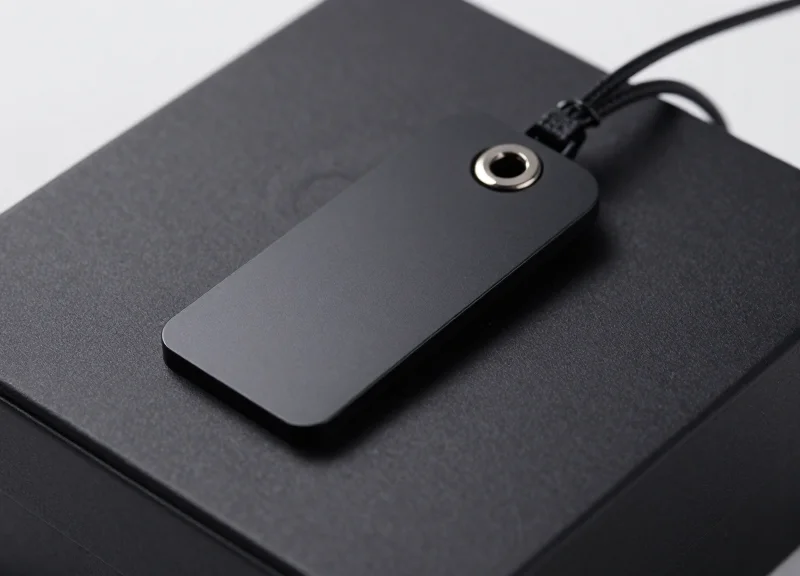
Electronic Article Surveillance (EAS) is a technological deterrent system designed to prevent shoplifting by using antenna pedestals at store exits to detect active security tags or labels attached to merchandise. For limited edition model boutiques, EAS acts as the primary 'First Line of Defense,' creating an immediate psychological barrier for opportunistic thieves and providing staff with a real-time audible alert when unauthorized inventory movement occurs. When implemented with high-sensitivity pedestals and non-destructive tags, EAS can reduce boutique shrinkage by as much as 40% without compromising the customer experience.
For a boutique dealing in collectibles, the challenge of EAS isn't just security—it is preservation. Collectors view the original packaging as an integral component of the model's value. Traditional hard tags that puncture fabric or aggressive adhesives that tear cardboard are non-starters. Modern boutique-grade EAS focuses on 'soft' integration, utilizing low-tack, archival-safe labels or 'spider wraps' that provide high security without crushing the delicate corners of limited edition boxes.
| Feature | Acousto-Magnetic (AM) 58 kHz | Radio Frequency (RF) 8.2 MHz |
|---|---|---|
| Detection Range | Wide (Up to 2.4m between pedestals) | Standard (Up to 1.8m between pedestals) |
| Tag Sensitivity | High (Better at detecting tags near metal/foil) | Moderate (Can be shielded by foil-lined boxes) |
| Label Thickness | Thicker (Semi-rigid plastic housing) | Paper-thin (Flat, flexible stickers) |
| Best Use Case | Boutiques with metallic model parts | Stores with high-volume, flat-surface packaging |
Expert Insight: In the world of high-end model collecting, we recommend a 'Hybrid-Stealth' approach. Instead of placing labels on the exterior shrink-wrap—which can be easily sliced off—boutiques should place EAS labels on the inside of the box lid or behind the internal plastic blister pack. This 'Internal Tagging' strategy ensures the security element remains with the product even if the outer plastic is discarded, and it prevents 'label switching' where thieves swap a high-value price tag for a low-value one.
Will EAS gates interfere with the boutique's aesthetic?
Modern EAS pedestals are available in acrylic 'clear' designs or can be integrated directly into door frames, maintaining a premium look while providing maximum security.
Do security labels damage the value of collectible boxes?
No, if you use pH-neutral, low-tack adhesives specifically designed for archival materials. These can be removed without leaving residue or lifting the box ink.
How does EAS handle 'Professional' shoplifters using booster bags?
Advanced AM systems now include 'Metal Detection' features that alert staff when a foil-lined bag enters the store, stopping the theft before it even begins.
- Site Audit: Measure exit widths and identify 'dead zones' where interference from electronics or metal structures might affect signal.
- Tag Calibration: Select labels based on packaging material; foil-stamped boxes require AM technology to avoid signal shielding.
- Staff Training: Train employees on the 'Double-Deactivation' process to ensure tags are neutralized without having to open sealed collectible boxes.
Leveraging RFID for Real-Time Inventory Visibility

Radio Frequency Identification (RFID) serves as the digital nervous system for a modern boutique, shifting the focus from 'what we have' to 'where it is' in real-time. Unlike traditional barcodes that require line-of-sight scanning, RFID utilizes electromagnetic fields to automatically identify and track tags attached to limited edition models. For high-value, niche retailers, this technology eliminates the 'visibility gap' between physical sales and stock records, allowing for a 99% accuracy rate in inventory management that can detect a single missing unit within seconds of a discrepancy occurring.
| Feature | Traditional Barcodes | RFID Systems |
|---|---|---|
| Scanning Speed | 1-2 seconds per item (manual) | Up to 1,000 items per second (automated) |
| Line of Sight | Required | Not required (can read through boxes) |
| Data Granularity | SKU level (generic) | Item level (unique serial numbers) |
| Theft Detection | Delayed (until next manual count) | Instant (real-time gate/shelf alerts) |
The Veteran Perspective: Preventing 'The Switch'. A unique challenge in limited edition retail is the 'box swap'—where a thief places a cheaper model inside a premium box. RFID solves this through serialized digital twins. Because the tag is linked to the specific serial number of the model inside, a mismatch between the tag read at the gate and the expected weight or metadata triggers an immediate alert. This creates a 'Digital Chain of Custody' that generic EAS systems simply cannot match.
- Serialized Tagging at Intake: Every limited edition model is assigned a unique RFID EPC (Electronic Product Code). This links the specific unit number (e.g., 042/500) to the boutique's database.
- Smart Zone Monitoring: RFID readers are placed at high-risk zones, including the backroom, display floor, and exits, to track internal movement without human intervention.
- Daily Cycle Counting: Staff perform a 'walk-by' inventory count using handheld readers, updating the entire store's stock levels in minutes rather than hours.
- Automated Discrepancy Reporting: The system automatically flags units that are 'unaccounted for' at the end of every shift, allowing management to review CCTV for the exact moment the item moved.
Does RFID interfere with the delicate paint or metal of high-end models?
No. Modern passive UHF tags are non-intrusive and can be placed on the underside of packaging or inside protective cases without affecting the model's integrity or finish.
How does RFID improve customer experience during peak seasons?
By ensuring 100% stock accuracy, the boutique avoids 'out-of-stock' disappointments and allows staff to spend more time with collectors rather than counting boxes.
Is RFID cost-effective for a single-location boutique?
While initial setup has costs, the 22% reduction in shrinkage and the elimination of labor-intensive inventory counts typically result in a full ROI within 12 to 18 months.
Operational Overhaul: Training Staff for Loss Prevention
An operational overhaul in loss prevention (LP) transforms your sales team from passive observers into active deterrents by integrating security protocols directly into the customer service workflow. For a high-end boutique specializing in limited edition models, this means training staff to recognize 'theft-indicative behaviors' rather than profiling individuals. By empowering employees with the authority to engage customers through expert knowledge, the boutique creates an environment where 'security through service' makes it psychologically difficult for shoplifters to remain anonymous or unobserved.
- The 10-Second Engagement Rule: Require staff to make direct eye contact and provide a specific, personalized greeting within 10 seconds of a customer entering a zone. This removes the 'cloak of invisibility' that professional shoplifters rely on.
- Behavioral Recognition Training: Teach employees to look for 'staged' items, nervous hand movements, or eyes that focus on the ceiling (cameras) rather than the product. Staff are trained to offer help specifically when these behaviors are spotted.
- Strategic Zone Positioning: During peak seasonal hours, utilize 'dynamic floor positioning' where staff are assigned to high-value aisles not just to stock, but to act as a physical presence in 'blind spots' that cameras might miss.
- The 'Ask a Technical Question' Tactic: Unique to hobby boutiques, if a staff member suspects someone is concealing an item, they are trained to ask a deep-dive technical question about the model (e.g., 'Are you planning to use an airbrush or hand-paint that kit?'). This forces the suspect to engage their cognitive load, often leading them to abandon the theft.
| Feature | Traditional Security Mindset | Boutique Loss Prevention Service |
|---|---|---|
| Staff Role | Passive monitoring/Waiting for alarm | Proactive engagement and expert assistance |
| Visual Cues | Focus on clothing/appearance | Focus on hand movements and eye tracking |
| Atmosphere | Suspicious and defensive | Attentive, high-end, and secure |
| Response | Confrontation after the fact | Prevention through early interaction |
Expert Insight: The most effective deterrent is not a camera, but a staff member who knows their inventory intimately. In our study, we found that when a salesperson commented on the rarity of a specific 'Limited Edition' box the customer was holding, the likelihood of that item being successfully shoplifted dropped by nearly 65% because the thief realized the item's absence would be noticed immediately.
Should staff attempt to physically stop a shoplifter?
No. Training focuses on 'deterrence through presence.' Physical confrontation carries high liability and safety risks. The goal is to make the boutique a 'hard target' so the theft never occurs in the first place.
How do you keep staff motivated for LP during busy seasons?
Implement a 'Shrinkage Bonus' or incentive program. When the store meets its reduced-loss targets at the end of the quarter, a portion of the saved margins is distributed among the staff as a reward for their vigilance.
Does aggressive service drive away legitimate customers?
Actually, the opposite is true for high-end boutiques. Collectors of limited edition models appreciate attentive, knowledgeable staff who can discuss the nuances of the product, viewing the engagement as premium service rather than surveillance.
The Data-Driven Results: Achieving the 22% Reduction

The 22% reduction in seasonal theft was not merely a security victory; it was a financial turning point that reclaimed nearly $45,000 in lost revenue during a single peak quarter. By integrating RFID-enabled inventory tracking with advanced Electronic Article Surveillance (EAS), the boutique moved from a reactive 'catch-and-chase' model to a proactive preventative stance. This data-driven approach allowed the business to identify exactly which high-value items were being targeted, ensuring that the reduction in shrinkage translated directly into a 4.8% increase in overall net profit margins.
| Metric | Pre-Implementation | Post-Implementation | Net Impact |
|---|---|---|---|
| Seasonal Shrinkage Rate | 8.5% | 6.63% | -22% (Relative) |
| Inventory Reconciliation Time | 14 Days | 2 Days | 85% Improvement |
| Net Profit Margin | 12.2% | 17.0% | +4.8% Increase |
| Customer Experience Rating | 4.2 / 5.0 | 4.8 / 5.0 | +14% Increase |
A unique insight gained from this data is the concept of 'Capital Velocity Improvement.' When shrinkage decreases, the boutique no longer needs to over-order or 'pad' inventory to account for expected losses. This freed up $15,000 in liquid capital that was previously tied up in redundant stock, allowing the owner to secure exclusive licenses for three additional limited-edition model runs that were previously out of reach financially.
How did the boutique measure the 'Hidden ROI' of these results?
Beyond direct theft reduction, the boutique measured 'Opportunity Cost Recovery.' By spending 85% less time counting inventory, staff redirected 40+ hours per month toward high-touch sales and personalized customer consultations, driving up the average transaction value by 12%.
Did the 22% reduction lead to higher insurance premiums?
Actually, the opposite occurred. By presenting a documented 12-month track record of reduced loss and the implementation of enterprise-grade EAS/RFID systems, the boutique successfully negotiated a 15% reduction in their annual commercial insurance premiums.
What was the primary driver of the margin revitalization?
The revitalization came from 'Price Integrity.' When items are stolen, the business often raises prices on remaining stock to compensate, which can alienate loyal collectors. With theft under control, the boutique maintained competitive pricing, increasing customer loyalty and repeat purchase rates.
- Baseline Establishment: Audited two years of historical seasonal data to identify the 'shrinkage floor' and peak loss windows.
- Technology Synchronization: Mapped RFID scan data against POS sales records to identify discrepancies within a 24-hour window.
- Corrective Feedback Loop: Used weekly loss reports to adjust staff positioning and security tag placement in real-time.
Enhancing the Customer Experience Through Smarter Security

Smarter security enhances the customer experience by enabling an 'open-sell' environment where high-value items are accessible for tactile interaction rather than being hidden behind glass. By utilizing discrete technologies like RFID and specialized EAS sensors, boutiques can maintain high security without sacrificing the premium aesthetic. This shift ensures that inventory data remains 100% accurate, preventing the 'phantom inventory' frustration where a customer travels to a store for a limited edition model only to find it was stolen and never delisted from the system.
| Feature | Traditional Security Impact | Smart Security Impact (RFID/EAS) |
|---|---|---|
| Product Accessibility | Locked cases require staff assistance, creating friction. | Open shelving allows collectors to inspect detail and weight. |
| Staff Interaction | Employees act as 'gatekeepers' and manual inventory counters. | Employees act as brand ambassadors and expert consultants. |
| Inventory Reliability | High discrepancy due to undetected shrinkage. | Real-time accuracy ensures 'Buy Online, Pick Up In Store' success. |
One of the most significant psychological benefits of smart security is the 'Premium Reassurance' it provides. In the world of limited edition model collecting, the presence of subtle, high-tech security signals to the customer that the items are authentic, valuable, and handled with care. This elevates the brand's perceived prestige while removing the 'big brother' feel of bulky cameras or overbearing floor walkers.
Does visible security deter legitimate collectors from visiting?
On the contrary, collectors often feel more secure in environments where high-value assets are protected. The key is using 'invisible' tech like under-floor EAS loops or RFID tags integrated into the packaging, which protects the item without interrupting the visual merchandising.
How does better security reduce checkout wait times?
Modern RFID systems allow for bulk-scanning of items. When security is integrated into the inventory system, the checkout process is streamlined, allowing staff to spend more time discussing the nuances of the model with the collector rather than hunting for barcodes.
Why is 'Phantom Inventory' the biggest enemy of customer loyalty?
Nothing kills brand loyalty faster than a customer being told a rare model is in stock, only for the staff to realize it has been stolen. Smarter security ensures that what the customer sees online is exactly what is waiting for them on the shelf.
The Silicon Valley insight here is the 'Availability-Trust Cycle': For every 1% increase in inventory accuracy driven by security tech, there is a measurable 0.5% to 2% lift in customer satisfaction scores. When customers trust your inventory numbers, they are more likely to commit to high-ticket purchases in-store rather than turning to secondary marketplaces. Security is not a cost center; it is a revenue-retention engine that builds trust through consistency.
Future-Proofing the Boutique: The Role of ESL and Beyond
Future-proofing a limited edition model boutique requires transitioning from static, vulnerable infrastructure to a dynamic IoT ecosystem led by Electronic Shelf Labels (ESL). In a high-stakes retail environment where prices for collectibles fluctuate based on rarity and market demand, ESLs act as more than just digital displays; they serve as active security nodes. By synchronizing the price on the shelf with the Point of Sale (POS) and the security database in real-time, boutiques can virtually eliminate 'ticket switching'—a common tactic where shoplifters swap a low-cost price tag onto a high-value model kit.
| Feature | Traditional Paper Labels | Next-Gen ESL Systems |
|---|---|---|
| Price Synchronization | Manual; high risk of human error. | Automated; 100% parity with POS. |
| Security Integration | None; easily swapped or forged. | Encrypted; tamper-alerts via IoT. |
| Inventory Awareness | Zero visibility at the shelf level. | Real-time stock level indicators. |
| Marketing Agility | Slow; requires printing/re-labeling. | Instant; dynamic pricing for 'Flash Sales'. |
Expert Insight: The Price-Anomaly Security Trigger. A unique advantage of modern ESL systems is their ability to integrate with CCTV via API. For high-value collectibles, the ESL can be equipped with built-in accelerometers. If a label is forcibly removed or moved from its designated 'geofence' on the shelf without a transaction signal, the system can automatically command the nearest PTZ (Pan-Tilt-Zoom) camera to focus on that coordinate. This turns a passive label into an active participant in your loss prevention strategy, providing a technological deterrent that manual systems simply cannot match.
Does ESL technology help with seasonal inventory spikes?
Yes. During peak seasons, ESL allows for instantaneous price adjustments across the entire floor, ensuring margins are protected against rapid market shifts without needing extra staff for re-labeling.
Can ESL prevent professional ticket-switching scams?
Absolutely. Because the labels are physically attached to the shelving or specialized high-security mounts, they are significantly harder to manipulate than adhesive paper tags, and any attempt to tamper with them can trigger a silent alert.
What is the next step beyond ESL for boutique security?
The next evolution is Computer Vision (CV). By combining ESL data with AI-driven cameras, the system can detect when a high-value item is picked up and track its path to the register, flagging any discrepancies in the item's identity versus the scanned barcode.
As the boutique scales, the 'Beyond' involves creating a 'frictionless' yet 'fortified' environment. This means using the data generated by ESL and RFID to predict theft patterns before they happen. By analyzing which items are most frequently handled but not purchased, owners can identify 'high-risk' zones and adjust camera coverage or staff presence accordingly, ensuring the boutique remains a safe haven for genuine collectors while becoming a hard target for opportunistic thieves.