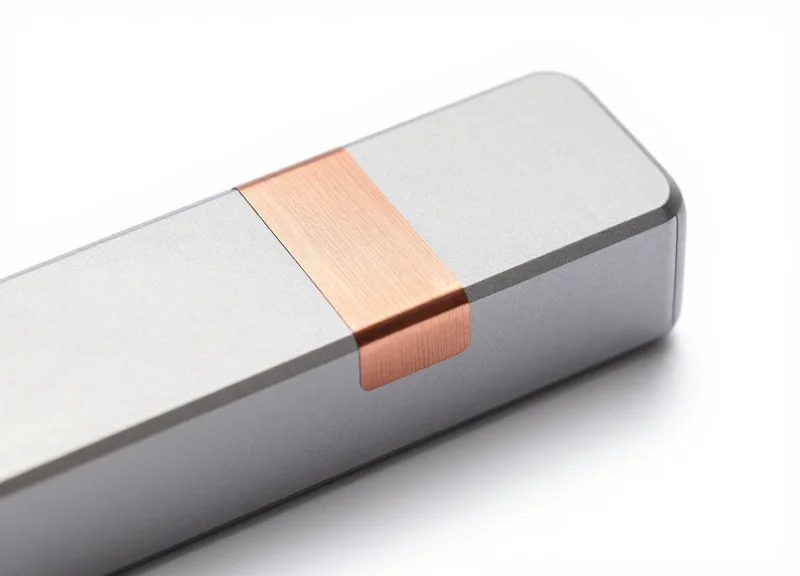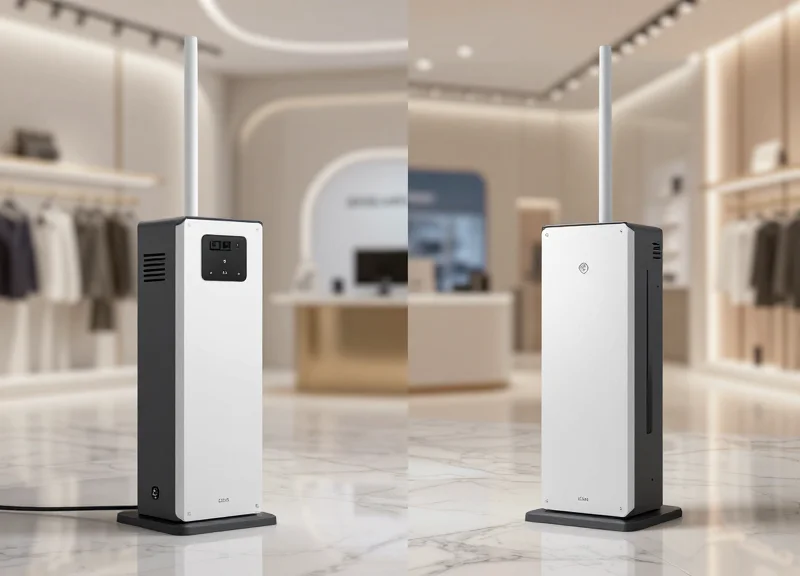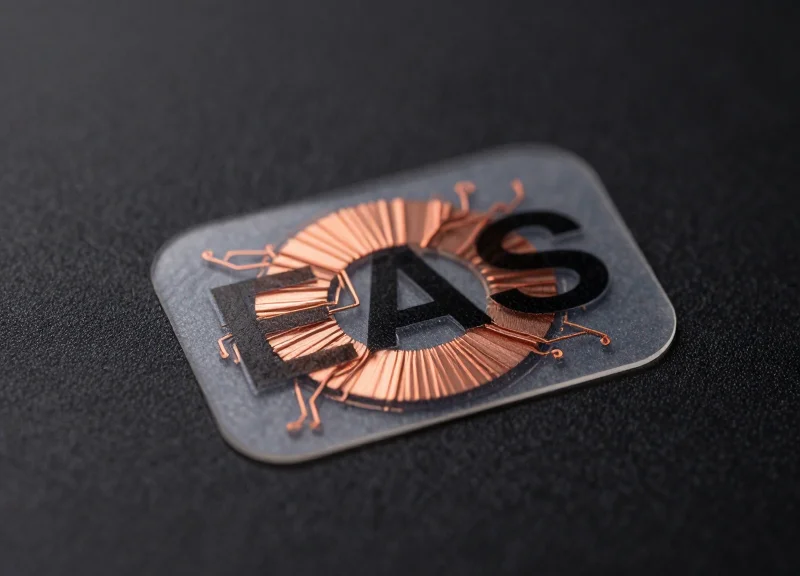
As the vape industry matures toward 2026, retail shrinkage remains a critical challenge, especially with the trend toward ultra-compact devices and premium e-liquid pods. Traditional bulky security tags are no longer viable for sleek 15mm micro-packaging. This guide provides an authoritative look at how procurement managers can select high-performance EAS (Electronic Article Surveillance) soft labels that offer maximum protection without compromising product aesthetics or customer experience.
The Evolution of Vape Retail Security in 2026
By 2026, vape retail security has transitioned from obstructive, bulky plastic tags to ultra-discreet, high-frequency 15mm micro-EAS soft labels that protect high-margin inventory without compromising brand aesthetics. This evolution is driven by the 'Value Density' phenomenon: as devices become more compact and e-liquid formulations more premium, the retail value per square inch has skyrocketed. In this landscape, traditional 40x40mm labels are no longer viable as they obscure critical regulatory warnings and branding on modern, miniaturized packaging.
| Feature | 2020 Security Standard | 2026 Security Standard |
|---|---|---|
| Primary Label Size | 40mm x 40mm (Standard RF) | 15mm x 15mm (Micro-RF/Hybrid) |
| Value Density Focus | Bulk Mod Systems | Disposables & High-Potency Pods |
| Detection Accuracy | 85% (High False Alarms) | 99.2% (AI-Filtered Gating) |
| Application Method | Manual Hand-Labeling | Source Tagging & Automated Application |
The shift toward 15mm micro-labels represents a strategic pivot in loss prevention. Historically, retailers accepted a degree of 'visual friction'—the idea that a visible security tag acts as a deterrent. However, 2026 consumer behavior data suggests that Gen Z and Millennial shoppers prioritize the unboxing experience and tactile feel. Large labels are now viewed as a sign of a 'low-trust' environment, potentially driving customers toward online alternatives. The 15mm form factor solves this by providing invisible security that maintains the premium 'tech-gadget' allure of modern vape hardware.
Why has organized retail crime (ORC) targeted vape shops more in 2026?
Vape products possess high liquidity and 'resale velocity.' Small, high-value items like 15mm micro-pods are easily concealed and command 70-80% of retail value on secondary markets, necessitating tighter, more discrete security.
Can 15mm labels perform as well as larger 40mm labels?
Yes. Advanced 2026 EAS technology utilizes higher-Q factor circuits within smaller footprints, allowing 15mm labels to achieve the same detection range as older, larger tags when paired with modern digital pedestals.
Is source tagging becoming the norm for vape manufacturers?
Absolutely. To optimize the supply chain, top-tier vape brands are now embedding 15mm soft labels directly into the packaging during the printing process to ensure 100% floor-ready security.
Expert Insight: In my two decades of loss prevention strategy, I have seen 'shrink' patterns migrate toward the smallest items. My 2026 recommendation for vape procurement officers is the 'Invisible Shield' approach: use 15mm micro-labels not just for theft prevention, but as a data point for RFID-linked inventory management. This dual-purpose utility justifies the slightly higher unit cost of micro-EAS technology by reducing stockouts and audit times.
Understanding the 15mm Micro-Product Challenge
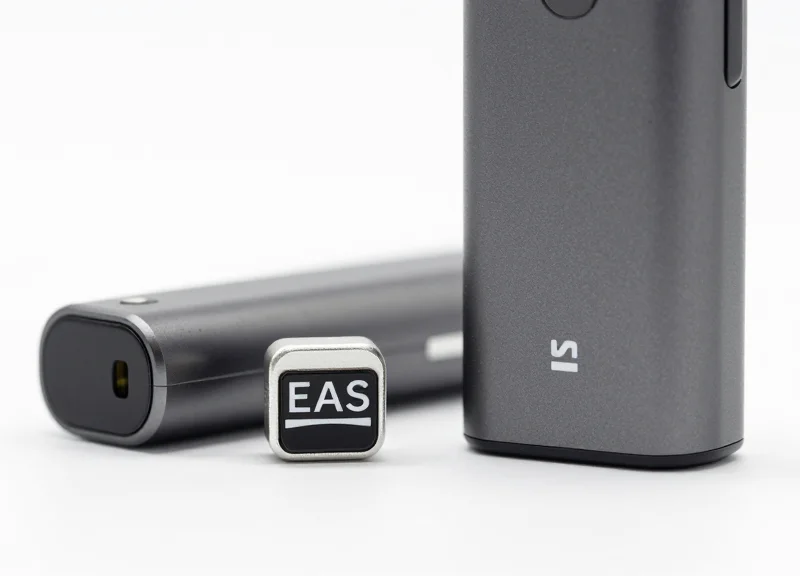
In the context of 2026 retail security, the '15mm Micro-Product Challenge' refers to the technical failure of standard Electronic Article Surveillance (EAS) labels when applied to ultra-compact vape packaging, such as pod cartridges and disposable pens. Traditional 40x40mm labels are physically incompatible with these surfaces, leading to 'label overhang' which triggers peeling, or 'frequency shifting' where the bending of the internal circuit alters its resonance, rendering the security gate blind to the product.
| Feature | Standard 40mm RF Label | 2026 Micro 15mm Label |
|---|---|---|
| Minimum Surface Width | 42mm | 15mm |
| Signal Detection Range | 1.2m - 1.5m | 0.8m - 1.1m (Optimized) |
| Bending Tolerance | Low (Fractures Circuit) | High (Flexible Substrate) |
| Deactivation Height | 10cm - 15cm | 5cm - 8cm |
The Engineering Bottleneck: Signal Density vs. Surface Area. As an industry veteran, I’ve observed that the primary hurdle is the 'Q Factor' of the induction coil. In a 15mm footprint, the surface area for the aluminum or copper etched circuit is reduced by over 70%. Without advanced high-permeability materials, this reduction usually results in a signal too weak for standard pedestals to pick up amidst the electronic noise of a modern vape shop (LED displays, liquid chillers, etc.).
- The 'Curvature Frequency Shift' Insight: Unique to 2026 procurement is the understanding of Curvature Frequency Shifting. When a micro-label is applied to a cylindrical 15mm vape pen, the capacitance of the circuit changes based on the arc. Premium 15mm labels are now 'pre-tuned' to 8.5MHz so that when they are wrapped/bent, they settle into the standard 8.2MHz frequency.
- Adhesive Fatigue in High-Temperature Environments: Vape shops often have higher ambient temperatures due to testing pods and display lighting. Standard adhesives fail on 15mm surfaces because the 'memory' of the plastic label wants to straighten out, causing the edges to lift (flagging). Micro-labels require high-tack, solvent-based adhesives.
Can I use standard 40mm labels on 15mm boxes if I fold them?
No. Folding an EAS label snaps the aluminum bridge or creates a secondary capacitor effect that kills the signal. You will have a 0% detection rate.
Do 15mm labels work with AM (58kHz) systems?
Acousto-Magnetic (AM) labels are inherently thicker because of the ferrite strips. While 'micro' AM labels exist, they are generally 25mm+; for true 15mm applications, RF (Radio Frequency) technology is currently the only viable path.
Why does my gate alarm randomly with micro-labels?
This is likely 'vulture-alarming' caused by low signal-to-noise ratios. Because 15mm labels have smaller coils, your gates must be tuned specifically to increase sensitivity without pulling in environmental interference.
Acousto-Magnetic (AM) vs. Radio Frequency (RF) for Vapes
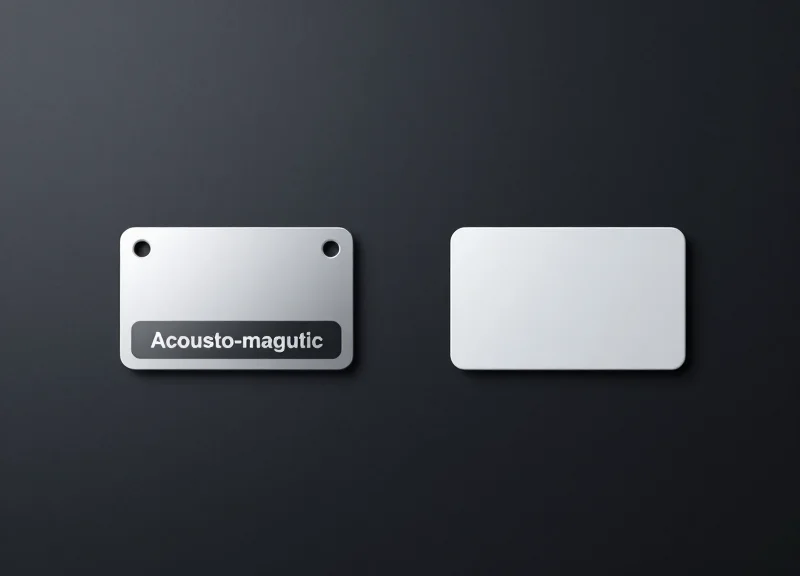
For modern vape retail, the choice between Acousto-Magnetic (AM) 58kHz and Radio Frequency (RF) 8.2MHz technology is decided by physics: AM technology is the superior choice for vapes because its lower frequency signal can penetrate the metallic heating coils and liquid-filled pods that typically cause 'detuning' or signal shielding in RF systems. While RF is cost-effective for apparel, it frequently fails when applied directly to the high-density, metal-heavy packaging of 15mm micro-vape products.
| Feature | AM (Acousto-Magnetic) 58kHz | RF (Radio Frequency) 8.2MHz |
|---|---|---|
| Metal Interference | Low: Works near coils and batteries | High: Signal often shielded by metal |
| Liquid Resistance | Excellent: Unaffected by e-juice | Poor: Liquids absorb RF energy |
| Detection Width | Up to 2.0m (Wide entrance) | Up to 1.2m (Narrower entrance) |
| Label Size | Thicker but narrow (e.g., 45x10mm) | Flat but wide (e.g., 40x40mm) |
| Deactivation | Non-contact (Up to 15cm) | Requires contact or near-contact |
The '15mm micro-product' challenge exacerbates the weaknesses of RF. Because RF labels rely on a flat, spiraled antenna, shrinking them to fit a 15mm side-panel significantly reduces their 'Q factor' (quality of resonance), leading to massive drop-offs in detection rates. AM labels, conversely, use a vibrating metallic strip that maintains a stable frequency even when the form factor is narrowed, making them the only viable 2026 standard for high-value disposables and pod systems.
Why does RF technology trigger false alarms in vape shops?
RF systems are highly sensitive to electromagnetic interference (EMI) from LED displays and electronic vape testing stations, common in modern shops. This leads to 'phantom' alarms that frustrate customers.
Can I use AM labels on internal battery components?
Yes. AM signals are better at 'bleeding' around the edges of internal lithium batteries, whereas RF labels are often completely neutralized if placed directly over a battery cell.
Which technology is more future-proof for 2026?
AM is currently more future-proof for micro-products due to the development of 'Dr. Label' and high-performance 58kHz micro-resonators that fit the slim profiles of next-gen vapes.
Expert Procurement Tip: In 2026, we are seeing a shift toward 'Liquid-Stable' AM resonators. If your shop stocks high-VG (Vegetable Glycerin) e-liquids, ensure your labels are rated for high-viscosity environments. Standard cheap labels can suffer from 'mechanical dampening' if the adhesive leeches into the label housing, but premium AM micro-labels use a plastic 'housing' that protects the vibrating strip, ensuring a 99.9% alarm rate regardless of the product's internal contents.
Key Selection Criteria: Adhesive Quality and Deactivation Reliability
For 15mm micro-EAS labels, the primary selection criteria revolve around 'high-tack' initial adhesion to glossy, curved vape packaging and a high 'deactivation success rate' that prevents embarrassing false alarms at the exit. Because vape products are small and often have silicone or plastic coatings, the adhesive must resist 'lifting' at the edges, while the internal resonator must be sensitive enough to deactivate completely at standard checkout heights despite its reduced surface area.
| Adhesive Attribute | Requirement for Vapes | Impact on Shop ROI |
|---|---|---|
| Initial Tack | High (Instant Bond) | Prevents immediate removal by shoplifters. |
| Mandrel Performance | Excellent (for 5mm-10mm radii) | Ensures labels stay on cylindrical vape pens/pods. |
| Deactivation Height | 6 to 8 inches (15-20cm) | Reduces 'Nuisance Alarms' and improves checkout flow. |
| Residue Level | Zero Transfer | Maintains premium feel of high-end mods and accessories. |
Expert Tip: The 'Deactivation Dead Zone' is a unique challenge for 2026 micro-labels. Due to the smaller induction coil in 15mm labels, they require a more concentrated electromagnetic pulse than standard 40mm labels. When procuring, always specify 'Low-Energy Deactivation' compatibility. Without this, your staff may pass a product over the deactivator, think it is neutralized, and trigger a false alarm, which leads to 'security fatigue' where staff eventually ignore real alarms.
- The Peel Test: Apply the label to your glossiest box and wait 24 hours. If it can be peeled off without tearing the top layer of the packaging, the adhesive is insufficient for high-shrink environments.
- The Speed-of-Pass Check: Test the label over your deactivator at a rapid movement speed. High-quality 15mm labels must deactivate in under 0.1 seconds to keep up with busy retail peaks.
- The Curved Surface Stress Test: Apply labels to small-diameter pods. If the edges 'flag' or lift within 48 hours, the label's carrier material is too stiff for micro-product applications.
Why do 15mm labels often fail to deactivate?
Smaller labels have a smaller 'sweet spot.' If the magnetic material isn't perfectly aligned with the deactivation field, it won't demagnetize, causing a false alarm at the gate.
Can I use standard adhesive labels for vapes?
No. Most standard labels use general-purpose adhesives that fail on the UV coatings and recycled boards common in 2026 vape packaging. You need high-tack rubber-based adhesives.
Does temperature affect adhesive reliability?
Yes. Vape shops often have fluctuating temperatures due to high-power lighting or proximity to entry doors. Ensure labels are rated for temperatures between 10°C and 40°C to prevent adhesive drying.
Discreet Protection: Internal vs. External Label Placement
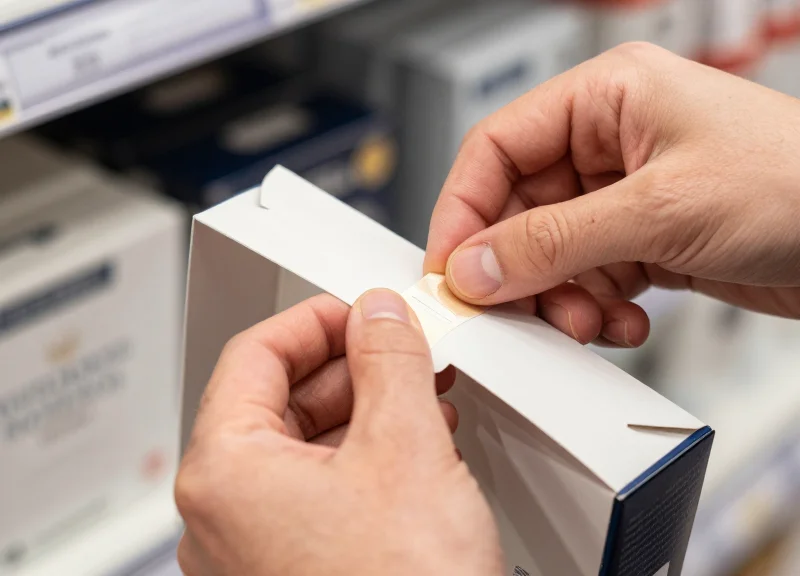
For 2026 vape retailers, the decision to place EAS soft labels internally or externally is a high-stakes trade-off between psychological deterrence and product presentation. External placement serves as a 'visual warning' that can reduce theft attempts by up to 40%, whereas internal placement—hiding the 15mm label inside the box or under the insert—prevents 'label peeling' by shoplifters while maintaining the premium look of high-end hardware. The ideal strategy for 15mm micro-products often involves a hybrid approach based on the specific SKU's value density and packaging material.
| Feature | External Placement | Internal Placement |
|---|---|---|
| Primary Benefit | Active Theft Deterrence | Brand Integrity & Tamper Proofing |
| Theft Risk | Labels can be peeled off in-store | Harder to locate and remove |
| Labor Cost | Low (Fast, automated application) | Higher (Requires opening/resealing) |
| Signal Accuracy | Highest (Zero interference from box) | Variable (Subject to 'Faraday' effects) |
A unique insight for 2026 procurement is the 'Shadow Application' technique. As vape hardware becomes more compact, many manufacturers are now designing 'EAS-ready' secondary packaging. These boxes feature a specific 16mm recessed cavity beneath the cardboard insert. By placing the 15mm label here, the signal remains strong because it is separated from the metallic elements of the vape device by a consistent 2mm air gap, effectively bypassing the signal-damping 'skin effect' often found in liquid-heavy e-juice pods.
- Identify High-Risk SKUs: Apply external labels to lower-cost disposables where visual deterrence is the primary goal.
- Utilize Under-Cap Placement: For bottled e-liquids, placing the 15mm label on the underside of the bottle base (within the concave) hides it from view while maintaining a clear signal path.
- Avoid Metallic Overlays: Never place labels (internal or external) directly over foil-stamped logos, as the metallic ink can de-tune the 15mm frequency.
- Validate Deactivation: Ensure internal labels can still be deactivated through the packaging at the POS without damaging the product.
Can labels be placed inside the battery compartment?
No. The metallic shielding of the battery will completely kill the EAS signal. Use the packaging insert instead.
Does internal placement affect the 15mm signal range?
Slightly. Expect a 5-10% reduction in detection width at the pedestal compared to external placement.
What is the 'Double-Label' strategy?
Retailers use a dummy external label that is easily removed and a hidden internal 15mm label that catches the shoplifter at the door.
Evaluating Supplier Manufacturing Standards (EEAT Compliance)
Evaluating supplier manufacturing standards in 2026 requires looking beyond unit price to the Experience, Expertise, Authoritativeness, and Trustworthiness (EEAT) of the production facility. For 15mm micro-labels used in the vape industry, a compliant supplier must hold updated ISO 9001:2015 certifications and demonstrate strict adherence to REACH and RoHS directives. High-quality manufacturers utilize automated optical inspection (AOI) to ensure that the miniature 58kHz or 8.2MHz circuits are perfectly aligned, as even a sub-millimeter deviation can render a micro-label undetectable by shop pedestals.
| Certification/Standard | Relevance to Vape Retail | 2026 Procurement Impact |
|---|---|---|
| ISO 9001:2015 | Quality Management Systems | Ensures batch-to-batch consistency in adhesive and signal strength. |
| RoHS & REACH | Chemical Safety Compliance | Guarantees labels don't contain hazardous substances that interact with e-liquids. |
| CE/ETSI EN 300 330 | Radio Spectrum Standards | Ensures the labels comply with EU/Global signal interference laws. |
| GRS (Global Recycled Standard) | Sustainability | Critical for brands meeting 2026 'Green Retail' mandates for disposable packaging. |
- Request a Process Capability Index (CPK) Report: A reliable supplier should provide a CPK report showing a value of 1.33 or higher. This proves their manufacturing process is stable enough to produce 15mm labels within strict technical tolerances consistently.
- Verify Signal Decay Rates: Ask for 'accelerated aging' test results. In 2026, premium labels must maintain at least 95% signal strength after 12 months of storage in variable humidity environments typical of vape warehouses.
- Audit the Clean-Room Protocol: Micro-labels are sensitive to dust. Ensure the facility uses at least a Class 100,000 clean-room for the etching and lamination phases to prevent circuit shorts.
Expert Tip: The 'Micro-Drift' Audit. In the 15mm format, the most common failure is 'frequency drift' caused by poor lamination tension. Ask your supplier if they use real-time frequency monitoring on the production line. If they only test samples at the end of the day, your risk of receiving 'dead' labels increases by 15%.
Does the manufacturer provide a Certificate of Analysis (COA) per batch?
Yes, a reputable supplier will provide a COA confirming that the specific batch of 15mm labels meets the frequency and adhesive specifications ordered.
Are these labels compatible with 2026 high-speed deactivators?
Standard labels often fail at high-speed checkout. Ensure the manufacturer has tested the labels against 'Enhanced Pulse' deactivation technology common in modern vape boutiques.
How does the supplier handle 'Signal Shielding' in vapes?
Top-tier manufacturers offer 'Ferrite-backed' options or specialized spacing within the label to prevent the metal in vape batteries from grounding the EAS signal.
Cost-Benefit Analysis: Bulk Procurement Strategies

In the high-margin, high-shrinkage environment of 2026 vape retail, the most effective bulk procurement strategy for EAS soft labels transitions from a 'price-per-unit' model to a 'Total Cost of Ownership' (TCO) model. While high-volume orders (typically 100,000+ units) can reduce individual label costs to as low as $0.015, the true value is found in the label's 'active detection yield'—ensuring that the labels actually fire at the pedestals and deactivate cleanly at the POS to avoid customer friction and labor waste.
| Procurement Metric | Economy Labels (Tier 3) | Premium 15mm Labels (Tier 1) |
|---|---|---|
| Average Unit Cost | $0.012 - $0.018 | $0.022 - $0.030 |
| Failure Rate (DOA) | 3.5% - 5.0% | < 0.5% |
| Deactivation Speed | 1.5 - 2.0 Seconds | < 0.5 Seconds |
| Detection Accuracy | 70% - 80% | 95% - 99% |
| Net Annual ROI | Moderate (High false alarms) | High (Consistent loss reduction) |
Expert Tip: The 'Deactivation Latency Tax' is the most overlooked expense in vape shop operations. In a high-traffic store, a 15mm label that requires two passes over the deactivator adds roughly 3 seconds to every transaction. Across 50,000 transactions annually, this equates to over 40 hours of lost labor productivity. Investing in higher-quality labels with faster resonance response often pays for itself solely through labor savings, even before considering shrinkage reduction.
- Determine Your 'Break-Even' Shrinkage Point: Calculate the retail value of the products saved per 1,000 labels. If a single $60 vape mod is saved by a $0.03 label, that label has paid for 2,000 other labels.
- Audit the 'Dead-on-Arrival' (DOA) Rate: Request a 500-unit sample from bulk suppliers and test for resonance. A 5% failure rate effectively increases your bulk price by 5% and decreases security exponentially.
- Implement Just-in-Time (JIT) Inventory: EAS adhesives degrade over time. In 2026, the optimal strategy is quarterly bulk contracts with monthly staggered deliveries to ensure maximum adhesive tackiness.
Why should I avoid the cheapest generic labels?
Generic labels often use thinner circuit etching that fails when placed near the batteries and metallic coils found in vapes, leading to 'silent' theft where the alarm never triggers.
Does quantity always lower the price?
Price floors usually hit at 500,000 units. For mid-sized vape chains, the sweet spot for negotiation is the 100k-unit mark, where you can demand higher QC certifications without the extreme volume.
How do 15mm labels impact checkout speed?
Premium 15mm micro-labels utilize high-grade capacitors that deactivate instantly. This prevents 're-tagging' or false alarms when customers exit, which are the #1 cause of poor customer reviews in retail security.
Future-Proofing Your Vape Shop with RFID Integration

Future-proofing your vape shop in 2026 requires transitioning from simple Electronic Article Surveillance (EAS) to a 'Dual-Core' strategy that integrates Radio Frequency Identification (RFID). By utilizing hybrid 15mm soft labels, retailers can simultaneously deter theft via existing security gates and achieve 99.9% inventory accuracy through unit-level tracking. This integration eliminates the need for redundant labeling, allowing a single 15mm footprint to serve both loss prevention and supply chain management functions.
| Feature | Standard 15mm EAS Label | Hybrid RFID-EAS 15mm Label |
|---|---|---|
| Primary Function | Theft Deterrence Only | Theft Deterrence + Inventory Tracking |
| Data Capacity | None (Bit-based) | Unique Serial ID (EPC Global) |
| Stock Take Speed | Manual / Barcode (Slow) | Bulk Scanning (Near-Instant) |
| Omnichannel Readiness | Low | High (Real-time stock sync) |
The evolution of the 15mm form factor is particularly significant for vape shops dealing with micro-products like replacement coils and 10ml e-liquids. Historically, RFID inlays were too bulky for these items; however, 2026 manufacturing standards have achieved the 'Micro-Inlay' breakthrough. These labels now house a condensed aluminum etched antenna that maintains a high read range despite the proximity to liquid or metallic hardware components.
Can I use RFID labels with my existing RF security gates?
Yes. Hybrid labels are designed with dual frequencies—typically 8.2MHz for EAS detection and 860-960MHz for UHF RFID—ensuring they trigger your current pedestals while being readable by handheld RFID scanners.
Does liquid in e-juice interfere with RFID performance?
Modern 'on-metal' or 'liquid-tuned' 15mm RFID labels use a specialized spacer or antenna tuning to prevent signal absorption, ensuring 100% read rates even when applied directly to e-liquid bottles.
How does RFID integration improve ROI?
Beyond reducing shrinkage, RFID cuts labor costs by enabling 'Zero-Touch' inventory audits, where a staff member can scan an entire shelf of hundreds of items in seconds without moving a single box.
The Veteran’s Insight: The 'Ghost Stock' Solution. The most overlooked benefit of RFID integration in the vape industry is the elimination of 'Ghost Stock'—items showing as 'In Stock' in your POS system that were actually stolen or misplaced. By 2026, top-tier vape retailers will use RFID-enabled 15mm labels to perform daily 'cycle counts.' This ensures that your online storefront never displays a product for click-and-collect that isn't physically on the shelf, drastically improving customer retention and preventing the lost-sale ripple effect.