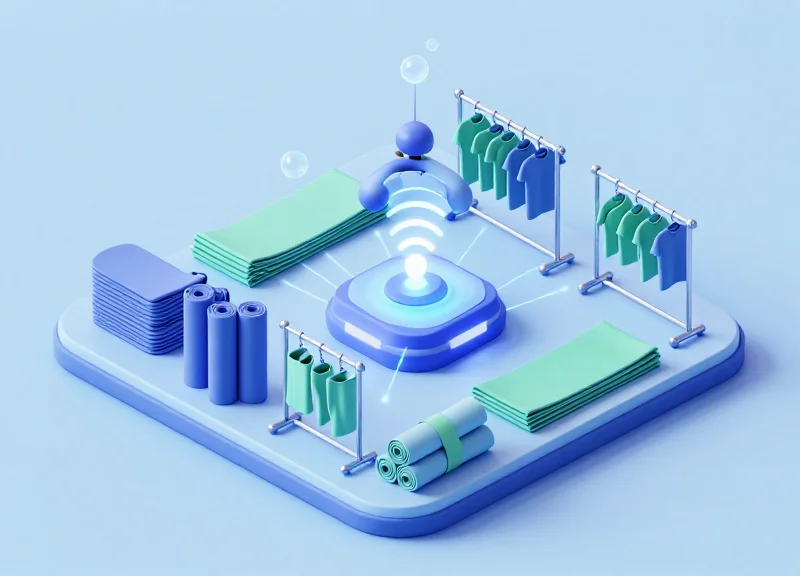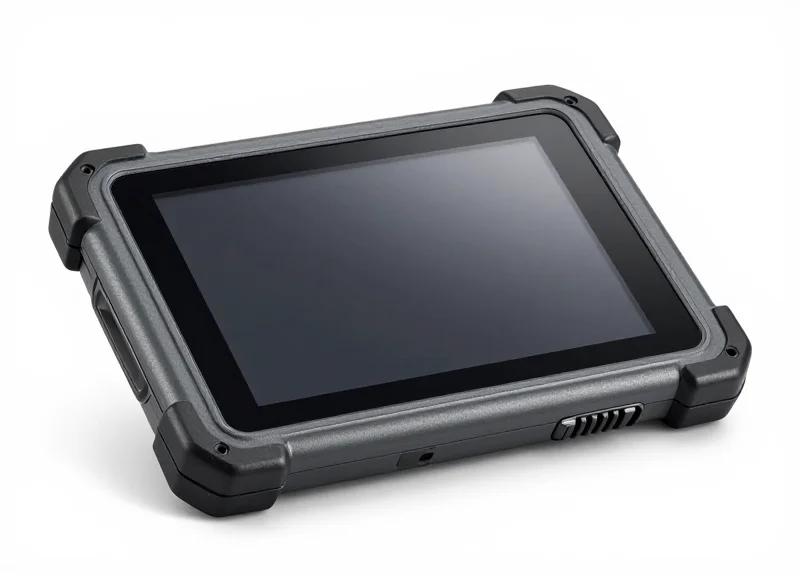
As the retail landscape shifts toward radical transparency, 2026 marks a pivotal year for ESG mandates. Integrating a robust RFID ecosystem is no longer just about inventory accuracy—it is the backbone of carbon-neutral operations. This guide explores how to navigate the complex selection process to ensure your technology stack aligns with global sustainability benchmarks while driving operational excellence and meeting consumer demands for ethical commerce.
The Evolution of RFID in the 2026 ESG Landscape
By 2026, Radio Frequency Identification (RFID) has transcended its origins as a mere logistical tool for inventory accuracy to become the foundational 'digital nervous system' for global ESG (Environmental, Social, and Governance) strategies. In the carbon-neutral retail landscape, RFID now serves as the primary mechanism for authenticating sustainability claims, providing the granular data necessary to track an item's carbon footprint from the factory floor to the end-of-life recycling center. This evolution represents a shift from 'Stock-Keeping' to 'Impact-Tracking,' where every tag acts as a dynamic record of a product's environmental and ethical journey.
| Feature | Legacy RFID (Pre-2022) | ESG-Integrated RFID (2026) |
|---|---|---|
| Primary Objective | Inventory Accuracy & Shrinkage | Carbon Neutrality & Circularity |
| Data Scope | SKU & Location | LCA Data, Labor Ethics, Material Origin |
| Lifecycle Role | Point of Sale (End of use) | Recommerce & Recycling (Continuous use) |
| Compliance | Internal Efficiency | DPP & CSRD Regulatory Mandates |
The catalyst for this shift has been the emergence of the Digital Product Passport (DPP) mandates. Retailers are no longer just managing boxes; they are managing 'Atomic Carbon Attribution.' This is the 2026 gold standard where RFID tags provide a unique digital ID that links to a cloud-based ledger, documenting the specific kilowatt-hours consumed and the exact water usage associated with that specific serialized item. This level of transparency is no longer optional; it is a prerequisite for market access in regions with strict climate disclosure laws.
How does RFID support the 'Circular Economy' in 2026?
RFID tags now facilitate automated sorting in recycling facilities and simplify the 'buy-back' or 're-commerce' process by instantly verifying product authenticity and previous ownership history.
What is 'Atomic Carbon Attribution'?
It is an expert-level methodology where RFID data is used to calculate the real-time energy cost of moving an individual item through the supply chain, rather than relying on less accurate batch averages.
Is 2026 RFID hardware different from previous generations?
Yes, the 2026 ecosystem prioritizes eco-friendly tags, including plastic-free paper substrates and energy-harvesting sensors that eliminate the need for traditional battery components in active tags.
Expert Insight: The most successful retailers in 2026 are using RFID not just for compliance, but as a brand storytelling device. By allowing consumers to scan a product and see its verified 'Net Zero' journey, companies are seeing a 22% increase in brand loyalty among Gen Z and Alpha cohorts. The tag is no longer a sticker; it is a certificate of trust.
Defining the Core Pillars of a Carbon-Neutral RFID Ecosystem

A carbon-neutral RFID ecosystem is a holistic framework comprising eco-friendly tag materials, energy-harvesting hardware, and carbon-aware software designed to achieve net-zero emissions across the retail lifecycle. Unlike legacy systems focused solely on inventory accuracy, this 2026-standard ecosystem prioritizes the reduction of Scope 3 emissions by utilizing plastic-free substrates, recyclable aluminum antennas, and optimized data transmission protocols that minimize server-side energy consumption.
| Component | Traditional RFID (Pre-2024) | Carbon-Neutral Ecosystem (2026) |
|---|---|---|
| Tag Substrate | PET/Plastic Film | FSC-Certified Paper or Bio-polymers |
| Antenna Material | Etched Copper/Silver | Printed Aluminum or Graphene Ink |
| Reader Power | Constant High-Power AC | PoE+ with Dynamic Idle & AI Power Scaling |
| Data Architecture | Full-Stream Cloud Sync | Edge-Filtering with Carbon Orchestration |
- Material Circularity: The foundation lies in the 'Inlay-to-Earth' philosophy. By 2026, leading ecosystems have moved away from PET-based inlays toward wood-pulp-based substrates that are 100% recyclable in standard paper streams, eliminating the microplastic burden of trillions of discarded tags.
- Energy-Optimized Infrastructure: This pillar focuses on the 'Active Energy' footprint of readers. Modern systems utilize localized motion sensors and AI to activate antennas only when items are in motion, reducing the electricity consumption of fixed reader gates by up to 40%.
- Carbon-Aware Software Intelligence: Beyond inventory counts, the software layer now calculates the carbon ROI per SKU. It identifies bottlenecks where high transport emissions occur, allowing retailers to pivot logistics in real-time to lower-carbon routes.
Unique Silicon Valley Insight: The 'Invisible' Carbon Debt. Most sustainability officers overlook the carbon cost of data processing. Every tag read generates data that travels to a data center, consuming electricity. The most advanced 2026 ecosystems utilize 'Edge-Filtering'—processing 90% of the raw RF signal locally on the reader. This reduces the data payload sent to the cloud by a factor of ten, significantly lowering the carbon footprint of the retailer's digital infrastructure.
Are plastic-free RFID tags durable enough for global shipping?
Yes. Current 2026-spec paper-based inlays utilize reinforced cellulose fibers that provide moisture resistance and tensile strength comparable to traditional PET, ensuring performance from factory to storefront.
Does a carbon-neutral ecosystem increase the Total Cost of Ownership (TCO)?
Initially, material costs may be 3-5% higher, but the TCO is often lower due to reduced energy consumption and the elimination of specialized recycling fees for hazardous electronic waste.
How does software assist in ESG reporting?
Modern RFID software provides automated 'Carbon Certificates' for every batch of goods, using blockchain-verified data to simplify annual ESG compliance and auditing.
Selecting Eco-Friendly RFID Tags and Inlays

Selecting eco-friendly RFID tags and inlays involves prioritizing plastic-free substrates, such as FSC-certified paper or wood fiber, and replacing traditional aluminum-etched antennas with laser-cut or additive-printed conductive inks. By 2026, the industry standard for a carbon-neutral ecosystem requires tags that avoid PET (polyethylene terephthalate) carriers and utilize water-based adhesives, ensuring the entire unit is either compostable or easily separable during the cardboard recycling process. Reducing the material mass of the inlay by up to 40% through innovative geometric designs is the current benchmark for minimizing embedded carbon.
| Feature | Legacy RFID Tags | 2026 Eco-Friendly Standard |
|---|---|---|
| Substrate Material | PET / Plastic Film | FSC-Paper / Bio-degradable Polymers |
| Antenna Manufacturing | Acid Etching (Chemical Waste) | Laser-Cut or Printed (Zero-Waste) |
| Adhesive Base | Solvent-Based Acrylics | Water-Based / Recyclable Adhesives |
| Recyclability | Difficult to separate (Contaminant) | Fully compatible with paper streams |
Expert Insight: The 'Sacrificial Layer' Trap. Many retailers overlook the waste generated during the application process. While a tag itself may be paper-based, the siliconized release liner (the backing paper) often accounts for 50% of the total waste by weight. To achieve true carbon neutrality in 2026, firms should prioritize 'Linerless RFID' technology or established closed-loop liner recovery programs that prevent tons of silicone-coated waste from entering landfills annually.
- Audit the Substrate Composition: Verify that the carrier material is 100% plastic-free. Modern paper inlays have reached parity with PET in terms of durability for indoor retail environments.
- Assess Antenna Production Methods: Favor laser-cut aluminum or silver-ink printing. Unlike traditional chemical etching, these methods eliminate hazardous liquid waste and significantly reduce water consumption.
- Validate Recyclability Certifications: Look for CTP (Centre Technique du Papier) or similar certifications that prove the tag does not interfere with the pulpability of cardboard packaging.
- Analyze Life Cycle Assessment (LCA) Data: Require vendors to provide an ISO 14040/44 compliant LCA to compare the CO2e (carbon dioxide equivalent) per 1,000 tags.
Will eco-friendly tags affect read range and performance?
No. Modern paper-based antennas are engineered to match the RF performance of legacy PET tags, maintaining high sensitivity and read rates for inventory management.
Are biodegradable tags more expensive?
While there is a slight premium (typically 5-10%), the total cost of ownership is often lower when factoring in carbon credits and reduced waste disposal fees in regulated markets.
Can these tags withstand high-humidity environments?
Advanced bio-coatings now protect paper inlays against moisture, making them suitable for 90% of standard retail supply chain applications.
Optimizing Supply Chain Transparency through Real-Time Tracking

Optimizing supply chain transparency through real-time RFID tracking involves the deployment of automated data capture systems that monitor goods from raw material origin to the final consumer. In the 2026 ESG landscape, this transparency serves as the backbone for 'Digital Product Passports' (DPP), allowing retailers to verify ethical labor practices and calculate precise carbon footprints at every node of the logistics network. By replacing manual audits with autonomous sensor data, organizations can achieve 99.9% inventory accuracy while simultaneously satisfying strict global sustainability reporting requirements.
- Establish the Digital Twin: Link every unique RFID-tagged item to a cloud-based digital twin that hosts all sustainability credentials and origin data.
- Deploy Fixed and Mobile Reading Points: Install fixed overhead readers at logistics hubs and mobile readers in retail stores to capture real-time movement without human intervention.
- Integrate with Carbon Accounting Software: Feed transit data directly into ESG platforms to automate Scope 3 emissions calculations based on distance and transport mode.
- Enable Consumer Verification: Provide customer-facing portals where shoppers can scan items to view the item's life cycle, from source to shelf.
| Feature | Legacy Batch Tracking | 2026 RFID-ESG Tracking |
|---|---|---|
| Data Granularity | Pallet or Case level | Individual Item level |
| Carbon Reporting | Annual estimates | Real-time dynamic updates |
| Provenance Proof | Manual certificates | Immutable digital trail |
| Efficiency Impact | High labor, high error | Autonomous, low error |
Expert Insight: Dynamic Carbon Twinning. In 2026, the industry is moving beyond 'static logs' toward what I call 'Dynamic Carbon Twinning.' This approach doesn't just record where an item is; it assigns a real-time carbon 'weight' to every movement. If a shipment is rerouted through a less efficient hub, the digital twin automatically updates the product's environmental impact score. This allows retailers to make split-second routing decisions based on carbon budgets rather than just fuel costs, effectively turning the supply chain into a live ESG optimization engine.
How does real-time tracking help with Scope 3 emissions?
RFID provides the exact distance and duration an item spends in transport. By integrating this with the carrier's fuel data, companies can move from industry averages to primary data, which is essential for high-integrity ESG reporting.
Can RFID verify ethical sourcing?
Yes. By tagging items at the source (e.g., a sustainable farm or factory), the RFID tag acts as an 'anchor' for ethical certifications, ensuring the item in the customer's hand is the same one that was certified at origin.
Is the data gathered by RFID secure?
Modern RFID ecosystems utilize blockchain or encrypted cloud ledgers to ensure that the transparency data cannot be tampered with, providing a 'single source of truth' for auditors.
Reducing Operational Waste with Precision Inventory Management

In 2026, the mantra for carbon-neutral retail is 'zero excess.' Precision inventory management, powered by high-fidelity RFID ecosystems, reduces operational waste by eliminating the 10-15% 'buffer stock' typically held due to data inaccuracies. By maintaining a 99.8% item-level accuracy rate, retailers can transition from reactive over-ordering to a 'Just-in-Time' model that prevents billions of dollars in unsold goods from reaching landfills. This shift is not just an operational win; it is a critical ESG milestone that minimizes the raw material consumption and carbon emissions associated with the production of redundant inventory.
| Inventory Metric | Legacy Retail (Manual Scan) | RFID-Enabled ESG Strategy |
|---|---|---|
| Stock Accuracy | 65% - 75% | 98.5% - 99.9% |
| Average Safety Stock | 15% - 25% Surplus | 3% - 5% Precision Buffer |
| Product Lifecycle Waste | High (Write-offs/Landfill) | Minimal (Dynamic Markdown/Redistribution) |
| Carbon Footprint per SKU | 1.4x (Due to re-shipping & overproduction) | 1.0x (Optimized fulfillment & low waste) |
A unique insight often overlooked by industry standard guides is the concept of the 'Carbon Echo' caused by Ghost Inventory. Ghost Inventory refers to items listed in the digital ledger that do not exist in physical reality. In traditional systems, these digital errors trigger automated replenishment orders, forcing the manufacturing of unnecessary products and the activation of carbon-heavy logistics. By providing a real-time 'Ground Truth,' an RFID ecosystem eliminates the Carbon Echo, ensuring that every watt of energy spent in production and shipping is tied to a verifiable consumer need.
- Identify and Eliminate Ghost Inventory: Use periodic RFID audits to reconcile digital records with physical shelf stock, stopping the cycle of unnecessary re-ordering.
- Implement Dynamic Redistribution: Leverage real-time visibility to move slow-moving stock from one store to a high-demand location instead of ordering new units.
- Optimize Reverse Logistics: Use RFID tags to instantly verify returned items, allowing them to enter the 'resellable' pool immediately and reducing the 30% of returns that often end up as waste.
How does RFID directly reduce landfill contributions?
By increasing visibility, retailers can implement precision markdowns earlier in a product's lifecycle, ensuring items are sold to consumers rather than being incinerated or discarded due to expiration or seasonal irrelevance.
Can RFID help with 'Circular' retail models?
Yes. RFID acts as a digital birth certificate, tracking the item through its first life and facilitating easier sorting and material recovery during the recycling or resale phase.
What is the ROI of waste reduction via RFID?
Beyond ESG compliance, retailers typically see a 2-4% lift in top-line sales and a 15% reduction in carrying costs within the first 18 months of deployment.
Energy Efficiency in RFID Readers and Infrastructure
Energy-efficient RFID infrastructure in 2026 focuses on minimizing 'idle-state' power consumption and maximizing the read-per-watt ratio. For carbon-neutral retail operations, this involves deploying fixed readers with Power-over-Ethernet (PoE+) capabilities and integrated edge computing, which reduces the need for energy-intensive constant backhaul to central servers. By prioritizing hardware with smart duty cycles, retailers can reduce their infrastructure's electrical footprint by up to 40% without compromising data accuracy.
| Feature | Legacy RFID Infrastructure | 2026 ESG-Optimized Infrastructure |
|---|---|---|
| Power Delivery | AC Wall Adapters (High Loss) | Ultra-Efficient PoE+ (802.3at) |
| Idle Consumption | Always-On (15W - 30W) | Smart Sleep/Deep Standby (< 2W) |
| Processing Location | Cloud-Heavy (High Latency/Energy) | Edge-Native (Localized Filtering) |
| Antenna Management | Manual/Constant Power | Dynamic Power Scaling (DPS) |
Expert Insight: The Energy-to-Read (EtR) Metric. In 2026, leading sustainability officers are moving beyond simple wattage ratings to the EtR metric. This measures the total milliwatts consumed per 1,000 successful tag reads. Selecting hardware that optimizes EtR allows retailers to scale their RFID deployments horizontally across thousands of stores while keeping the aggregate carbon footprint within strict ESG compliance bounds.
- Traffic-Adaptive Power Modulation: Modern readers use motion sensors or 'heartbeat' pings to modulate power. In a retail setting, the reader operates at 10% power when no movement is detected, instantly scaling to 100% when a customer or employee enters the zone.
- Edge-Based Data Filtering: By processing tag data locally at the reader level, systems avoid sending 'junk' data (redundant pings) to the cloud. This significantly reduces the energy consumption of network switches and data center cooling.
- Long-Lifecycle Hardware: Energy efficiency also includes the 'embodied carbon' of the device. Choosing modular readers with replaceable components ensures a 10+ year lifespan, reducing the environmental impact of electronic waste.
- Audit Current Draw: Use smart PDUs (Power Distribution Units) to measure the real-time energy draw of your existing reader network.
- Implement Firmware Deep-Sleep: Update reader firmware to enable low-power states during non-operational store hours.
- Transition to PoE Infrastructure: Centralize power management through high-efficiency network switches to eliminate inefficient AC/DC localized adapters.
Do energy-efficient RFID readers have shorter read ranges?
No. Modern Dynamic Power Scaling allows readers to maintain maximum range during active scans while dropping power only during idle periods, ensuring no loss in performance.
Is PoE more efficient than standard wall outlets?
Yes. Centralized PoE power supplies are generally 15-20% more efficient at converting power than the individual low-cost 'wall-wart' transformers used in legacy setups.
How does edge computing save energy?
It reduces the volume of data transmitted over Wi-Fi or Cellular networks. Transmitting data is energy-intensive; by filtering 99% of redundant reads at the edge, the total network energy load drops significantly.
Integrating RFID with ESL for a Holistic Green Retail Strategy

The integration of Radio Frequency Identification (RFID) with Electronic Shelf Labels (ESL) represents the pinnacle of 'Digital Circularity' in modern retail. By synchronizing precise item-level inventory data from RFID with the dynamic display capabilities of ESL, retailers create a unified IoT ecosystem that eliminates the need for millions of tons of adhesive paper labels while providing the transparency required for carbon-neutral operations. This synergy allows for automated, real-time communication between the product's physical presence and its digital representation on the shelf edge.
| Sustainability Metric | Traditional Manual Labeling | Integrated RFID + ESL Ecosystem |
|---|---|---|
| Paper & Chemical Waste | High: Constant re-printing and adhesive disposal. | Zero: Digital updates last for 5-10 years per unit. |
| Operational Carbon | High: Fuel for label transport; labor-intensive energy. | Low: Centralized digital updates via sub-GHz or BLE. |
| Waste Prevention | Reactive: Items often expire before discovery. | Proactive: Automated price drops based on RFID age data. |
A unique strategic advantage of this 2026 integration model is 'Synchronized Perishable Management' (SPM). Unlike standard inventory systems, an RFID-enabled ESL system can detect when a specific batch of products is nearing its 'best before' date. It can then automatically trigger a graduated discount on the ESL screen, ensuring the product is sold rather than sent to a landfill. This direct intervention in the waste cycle significantly reduces Scope 3 emissions associated with organic waste decomposition.
Do ESL systems consume significant electricity?
Modern ESLs use e-paper technology, which only consumes power during image refreshes. When integrated with low-power RFID readers, the total energy footprint is often lower than the carbon cost of manufacturing, transporting, and disposing of traditional paper labels.
Can RFID and ESL share the same communication infrastructure?
Yes, 2026-gen retail hubs now utilize unified wireless protocols (like Bluetooth 5.4 with PAwR) to manage both RFID data backhaul and ESL updates, reducing the need for redundant hardware and lowering the total embodied carbon of the store's IT infrastructure.
How does this integration improve recycling accuracy?
By scanning an RFID tag at an ESL-linked 'Smart Bin,' consumers can receive instant instructions on the ESL display regarding the specific recyclability of the product packaging, closing the loop on the circular economy.
Navigating 2026 Regulatory Compliance and ESG Standards
By 2026, RFID technology will transition from an operational luxury to a regulatory requirement for carbon-neutral retail. Global frameworks, led by the EU’s Ecodesign for Sustainable Products Regulation (ESPR), mandate a Digital Product Passport (DPP) that requires every item to carry a unique, machine-readable identifier. RFID is the gold standard for this 'bridge,' enabling retailers to automate the collection of lifecycle data—from raw material sourcing to end-of-life recycling—necessary for compliance with the Corporate Sustainability Reporting Directive (CSRD) and evolving SEC climate disclosure rules.
| Regulation | Region | RFID Requirement / Impact | 2026 Deadline Focus |
|---|---|---|---|
| EU Digital Product Passport (DPP) | European Union | Mandatory unique ID for circularity data. | Textiles and electronics must have scannable ID tags. |
| CSRD (Sustainability Reporting) | Global/EU | Granular data on Scope 3 carbon emissions. | Audited reporting on supply chain carbon intensity. |
| SEC Climate Disclosures | United States | Tracking physical assets for climate risk. | Phased-in reporting for large accelerated filers. |
| GS1 Digital Link Standard | Global | Transitioning from 1D barcodes to 2D/RFID. | Universal web-enabled data structure compatibility. |
Veteran Insider Tip: The 'Embodied Carbon' Ledger. In my 20 years in Silicon Valley, the biggest mistake I've seen is viewing compliance as a static snapshot. In 2026, an RFID tag should be treated as a 'living ledger.' Use a system that supports GS1 Digital Link, allowing the same RFID chip to serve as a point-of-sale trigger, a consumer engagement tool, and a secure portal to the product's real-time carbon footprint data. This 'single source of truth' eliminates the high costs of redundant data management.
- Audit Data Interoperability: Ensure your RFID software (middleware) can export data in formats compatible with ESG reporting platforms like EcoVadis or SAP Sustainability Control Tower.
- Implement Item-Level Traceability: Shift from batch-level tracking to unique item-level identification to meet the granular requirements of the 2026 Digital Product Passport.
- Verify Eco-Tag Certifications: Confirm that your RFID inlays meet ISO 14001 or equivalent environmental management standards to avoid 'Greenwashing' penalties under the new EU Green Claims Directive.
Is RFID mandatory for the Digital Product Passport?
While the regulation is 'technology neutral,' RFID is the only scalable solution that allows for high-speed, bulk data capture without line-of-sight, making it the practical choice for meeting DPP mandates.
How does RFID help with Scope 3 emission reporting?
Scope 3 emissions occur in the value chain. RFID provides the 'chain of custody' data required to prove where a product was manufactured and how far it traveled, allowing for precise carbon calculations rather than broad estimates.
What happens if our RFID system doesn't meet 2026 standards?
Retailers face significant 'non-compliance' fines and potential import bans in regions like the EU, along with reputational damage as consumers increasingly demand verified ESG transparency.
Vendor Selection: Vetting Partners for Sustainability
Selecting a sustainable RFID partner in 2026 requires looking beyond the 'green' marketing on a datasheet. Effective vetting involves a deep-dive audit into the vendor's manufacturing energy mix, the recyclability of their tag substrates, and their commitment to the 'Digital Product Passport' (DPP) framework. A truly sustainable vendor does not just sell efficient hardware; they operate a transparent supply chain that minimizes the 'Carbon Debt' your organization inherits the moment a reader is plugged in or a tag is applied to a garment.
| Selection Criteria | Standard RFID Provider | ESG-Leading Partner (2026) |
|---|---|---|
| Tag Substrate | Standard PET/Plastic films | Forest Stewardship Council (FSC) paper or ocean-bound plastics |
| Carbon Transparency | Annual corporate sustainability report | Product-level Life Cycle Assessment (LCA) and real-time DPP access |
| Hardware End-of-Life | No formal return policy | Certified take-back and 're-manufacturing' programs |
| Energy Management | Regulatory compliance only | Manufacturing facilities powered by 100% renewable energy |
Expert Insight: The 'Silicon-to-Solder' Audit. While most retailers focus on the tag's material, the real ESG impact is hidden in the semiconductor fabrication process. In 2026, top-tier retailers are now requesting the 'Energy Intensity' data of the specific wafer fab where the RFID ICs (integrated circuits) are manufactured. A chip produced in a fab powered by a coal-heavy grid can have a carbon footprint 4x higher than one produced in a green-energy facility, regardless of how 'eco-friendly' the tag's paper inlay looks.
- Validate Material Traceability: Ensure the vendor provides certified proof of origin for antennas and substrates. For 2026 compliance, verify that aluminum etchings are produced using closed-loop water systems to prevent chemical runoff.
- Assess Circularity Capabilities: Inquire about the vendor’s ability to handle high-volume 'tag harvesting' or their chemical recycling processes for multi-layer PET tags.
- Review ESG Ratings and Certifications: Look for a minimum Gold rating from EcoVadis and verify that their ISO 14001 (Environmental Management) and ISO 50001 (Energy Management) certifications are current and audited by a third party.
- Evaluate Software Interoperability: Sustainability data is useless if it's siloed. Select vendors whose middleware supports open standards (like EPCIS 2.0) to easily export carbon data to your enterprise ESG reporting platform.
Does the vendor provide Scope 3 data for their products?
Leading vendors now provide automated API feeds that deliver the precise carbon footprint of every SKU delivered, allowing your ESG team to automate Scope 3 reporting.
What is a 'Take-Back' program in RFID?
This is a service where the vendor re-collects used readers and fixed infrastructure for refurbishing or responsible recycling, ensuring hardware doesn't contribute to e-waste.
How do I verify the vendor's labor ethics?
Request a Social Responsibility audit report, such as a SEDEX/SMETA 4-pillar audit, to ensure fair wages and safe conditions throughout their global assembly sites.
Measuring ROI: The Financial Value of ESG-Focused RFID

In 2026, the Return on Investment (ROI) for ESG-focused RFID systems is measured through a 'Triple Bottom Line' lens: Profit, People, and Planet. Beyond the traditional 25% increase in inventory accuracy, the financial value of sustainable RFID lies in 'Cost-Avoidance' and 'Value-Creation.' Cost-avoidance stems from mitigating carbon taxes and plastic-waste penalties, while value-creation is driven by the 10-15% premium consumers are willing to pay for brands with verifiable supply chain transparency. Integrating sustainable RFID isn't just a compliance cost; it is a strategic asset that reduces total cost of ownership (TCO) by lowering energy consumption and enabling circular economy revenue streams.
| ROI Driver | Traditional RFID Impact | ESG-Focused RFID Impact (2026) |
|---|---|---|
| Regulatory Compliance | High risk of non-compliance fines. | Automatic data for Digital Product Passports (DPP). |
| Energy Costs | Standard consumption (higher OpEx). | Low-power silicon reduces energy costs by 30%. |
| Waste Management | Non-recyclable tags add to landfill costs. | Sustainable substrates reduce disposal fees. |
| Brand Valuation | Neutral/Incremental growth. | High growth via verified sustainability claims. |
### The 'Carbon-per-Read' Metric: A New KPI for 2026 To truly differentiate your financial reporting, move beyond 'Cost-per-Tag' and adopt the Carbon-per-Read (CpR) metric. This original KPI measures the total electrical and material carbon footprint of an RFID read event against the inventory accuracy gained. By optimizing for a lower CpR, retailers can directly translate technical efficiency into carbon credits, which, by 2026, will represent a liquid asset on the corporate balance sheet. This metric allows CFOs to treat RFID infrastructure as a carbon-mitigation investment rather than a simple hardware expense.
- Phase 1: Direct Operational Savings: Calculate the immediate reduction in overstocking (typically 10-15%) and the associated decrease in warehouse footprint and climate control costs.
- Phase 2: Labor and Efficiency Gains: Quantify the man-hours saved in manual audits and DPP compliance reporting, which are 80% faster with item-level RFID tracking.
- Phase 3: Circularity Dividends: Project revenue from resale and recycling programs enabled by the unique identification of items throughout their post-purchase lifecycle.
What is the typical payback period for ESG-focused RFID?
Most retailers see a full return on investment within 14 to 18 months, driven primarily by inventory optimization and reduced markdowns.
Can sustainable RFID tags really reduce insurance premiums?
Yes. By providing a transparent audit trail of every item, retailers can lower their risk profile for supply chain disruptions and product recalls, often resulting in 3-5% lower insurance costs.
How does RFID affect Scope 3 emission reporting?
It provides the granular, item-level data necessary to verify the carbon footprint of transport and logistics partners, turning estimated data into hard facts.