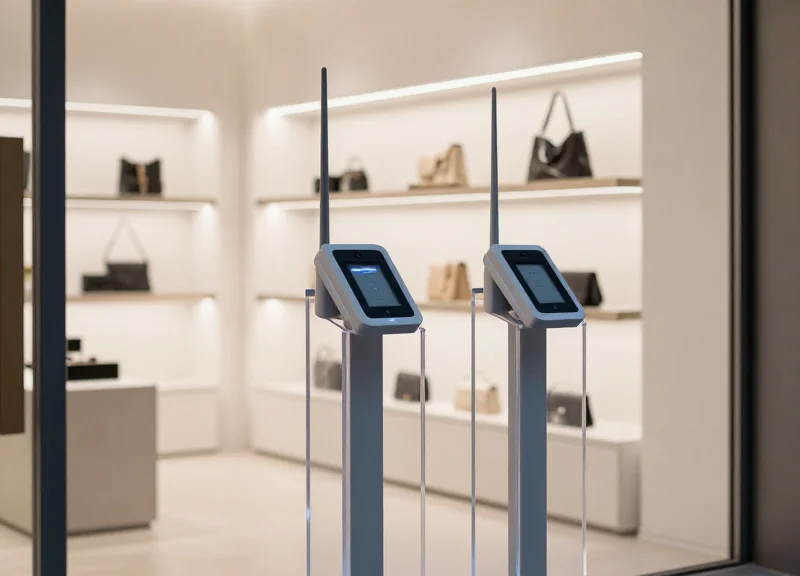
As we approach 2026, the retail landscape for high-end electronics is shifting from simple loss prevention to an integrated customer experience model. High-end retailers face a unique paradox: they must provide an immersive, hands-on experience for premium laptops while protecting high-value inventory from increasingly sophisticated theft techniques. Simply chaining a device to a table is no longer sufficient; it damages brand perception and hinders sales. This guide outlines the essential selection criteria for laptop display security that balances uncompromising protection with the aesthetic and functional demands of the next generation of retail.
The Evolution of Retail Security in the 2026 High-End Market
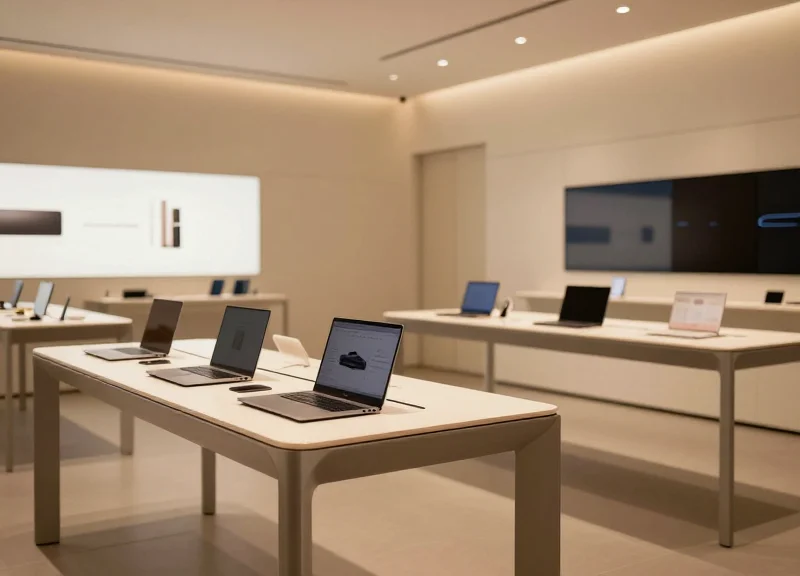
By 2026, high-end retail security for laptops has pivoted from 'asset containment' to 'experience enablement.' In the luxury tier, traditional heavy-gauge steel cables and bulky plastic clamps are being replaced by 'Invisible Tethers'—a sophisticated blend of ultra-thin fiber-optic sensors and AI-driven spatial monitoring. This evolution ensures that the friction between a customer and a $4,000 workstation is eliminated, allowing for a natural, unencumbered trial experience that is critical for driving high-ticket conversions in a post-digital storefront.
| Feature | Legacy Retail Security (2020-2023) | Advanced Retail Security (2026+) |
|---|---|---|
| Primary Mechanism | Mechanical Recoilers & Clamps | Smart-Sensors & Electronic Handshakes |
| User Experience | Restricted movement; 'Tug' feeling | Full-range mobility; Zero-gravity feel |
| Visual Impact | High clutter; detracts from design | Minimalist/Integrated; complements device |
| Loss Prevention | Reactive (Siren on cut) | Proactive (AI behavior analysis & proximity) |
The 'Aesthetic Tax' is a concept I've seen destroy luxury brands: when the security hardware looks cheaper than the product it protects, it devalues the brand in the eyes of the consumer. In 2026, the elite retailers are adopting 'Atmospheric Security.' This involves the use of electromagnetic docking stations that charge and secure devices without visible wires, coupled with sub-millisecond alarm triggers that distinguish between a curious shopper and an organized retail crime (ORC) threat through edge-computing analysis.
Why is 'Zero-Friction' security mandatory for high-end retailers in 2026?
Modern shoppers expect a 'living room' experience. If a laptop is tethered by a heavy cable, they cannot test its weight, ergonomics, or portability, which are the primary selling points of premium hardware.
What role does AI play in 2026 display security?
AI monitors 'dwell time' and 'handling patterns.' If a device is moved in a way that mimics a theft attempt—such as a rapid exit trajectory—the system can lockdown or alert staff before the perimeter is even breached.
How does security integration affect retail ROI?
Data shows that removing physical barriers increases 'time-on-device' by 40%, which directly correlates to a 22% increase in sales closing rates for premium laptop models.
Criterion 1: Minimalist Aesthetics and Invisible Protection
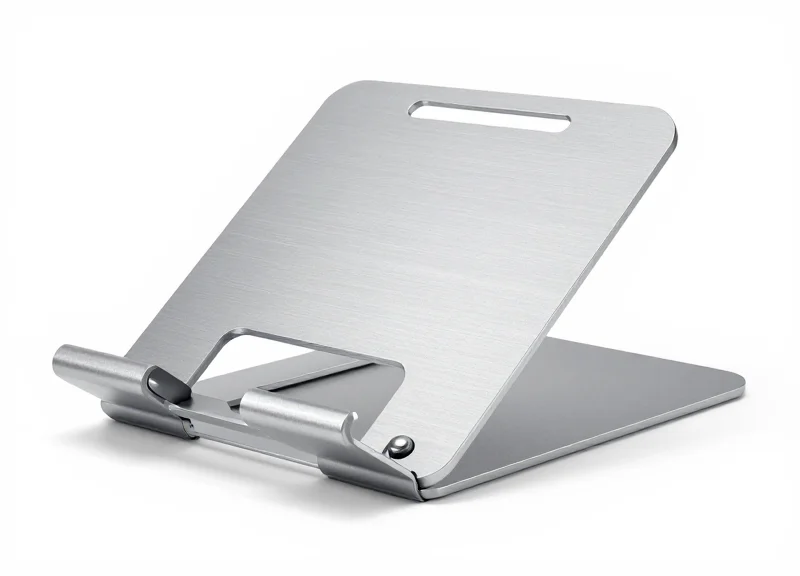
Minimalist aesthetics in laptop security refers to the selection of hardware that maintains the device's original industrial design and the retail display's visual purity. In 2026, high-end retailers prioritize 'invisible protection'—security solutions where sensors, cables, and alarms are integrated so seamlessly into the fixture or the laptop's chassis that they do not interfere with the customer's tactile or visual evaluation of the product.
For luxury electronics, the display environment is a core part of the branding. Conventional, bulky clamps and thick, coiled cables create what we call 'Visual Friction'—a psychological barrier that reminds the customer they are being monitored, which can diminish the perceived value of a $3,000 workstation. The 2026 standard demands a shift toward ultra-low-profile connectors and recessed cabling systems that disappear beneath the counter.
| Feature | Legacy Security (2020-2023) | Minimalist Standard (2026) |
|---|---|---|
| Connector Profile | Large, visible mechanical clamps | Ultra-slim, adhesive-backed micro-sensors |
| Cable Design | Visible, heavy-duty coiled steel | Recessed, thin-filament retractable cables |
| Material Finish | Generic plastic or matte black | Anodized aluminum or device-matched finishes |
| Visual Impact | High friction / Distracting | Zero friction / Invisible |
How does 'invisible protection' impact conversion rates?
By removing bulky physical barriers, retailers see a higher frequency of 'time-on-device' interactions. When a customer can handle a laptop as if they already own it, the psychological leap to purchase is significantly shorter.
What materials are best for luxury aesthetics?
Look for security components using CNC-machined aluminum and high-grade polycarbonate that mimics the texture of premium ultrabooks. This ensures the security hardware feels like an extension of the laptop rather than an aftermarket intrusion.
Is minimalist security less effective against theft?
No. Modern systems utilize high-tensile internal fibers and smart alarm sensors that are more difficult to tamper with than older, bulky mechanical locks, despite their smaller footprint.
Expert Tip: To truly master invisible protection, implement 'Active Tension Management.' Unlike legacy coiled cords that constantly pull on the device, modern retractable systems provide zero-resistance movement when the laptop is lifted, but maintain a clean, taut line when it is returned to the base. This eliminates 'cable spaghetti' and keeps your retail floor looking like a gallery rather than a warehouse.
Criterion 2: Integrated Multi-Functional Charging Solutions
Integrated multi-functional charging solutions are the essential convergence of high-speed power delivery and mechanical security, designed to keep premium laptops fully operational during intensive customer demos. In the 2026 retail landscape, where 'demo mode' often includes AI-driven processing and high-brightness HDR content, a security stand must deliver consistent, high-wattage power—often exceeding 100W via USB-C PD 3.1—to ensure the device battery does not deplete while tethered. This eliminates 'dead-on-display' syndrome and maintains the high-performance user experience that drives luxury sales.
| Feature | Legacy Security Stands | 2026 Premium Standards |
|---|---|---|
| Power Output | 5W - 15W (Trickle Charge) | 65W - 140W+ (Fast Charge PD 3.1) |
| Cable Management | Multiple cables (Power + Alarm) | Single-cable 'All-in-One' solution |
| Heat Management | Passive / Non-existent | Active thermal dissipation for PD |
| Data Pass-through | None | Integrated telemetry and diagnostics |
The shift toward high-performance workstation laptops means that basic charging is no longer sufficient. High-end retailers must prioritize stands that support Extended Power Range (EPR). Without this, a top-tier laptop running a 4K video editing demo will actually lose battery percentage while plugged into a standard security stand, eventually leading to device shutdown and a lost sales opportunity.
Why is 100W+ Power Delivery critical for 2026 displays?
Modern high-end laptops utilize power-hungry GPUs and NPU-heavy processors. Standard 15W or 30W security chargers cannot keep up with the power draw of a live demo, leading to dimmed screens or performance throttling.
Can one security stand support different laptop brands?
Yes, but only if the stand utilizes the universal USB-C Power Delivery (PD) protocol. For 2026, look for solutions that automatically negotiate the correct voltage for everything from an Ultrabook to a 16-inch Pro workstation.
How does integrated charging impact the customer experience?
It allows for a 'frictionless' interaction. When the power and security are combined into one sleek cable, the customer focuses on the laptop's tactile feel and screen quality rather than a cluttered mess of wires.
Expert Insight: The 'Hidden' Thermal Variable. In my 20 years of hardware consulting, I have seen many retailers overlook thermal overhead. High-wattage charging in a compact security base generates significant heat. The best 2026 solutions utilize Gallium Nitride (GaN) components within the security hub to maintain high efficiency and low temperatures, preventing the security hardware itself from becoming hot to the touch—a critical detail in luxury environments where every sensory touchpoint matters.
- Audit Current Power Capacity: Verify if your existing under-counter power strips can handle the increased amperage required by 100W+ security stands.
- Prioritize PD 3.1 Compatibility: Ensure the security hardware is future-proofed for the 240W ceiling of the latest USB-C specifications.
- Test Under Load: Run a stress-test demo on your highest-spec laptop while connected to the security stand to ensure the battery percentage remains stable or increases.
Criterion 3: Smart Alarm Protocols and False Alarm Suppression

Smart alarm protocols are advanced security logic systems that use real-time data filtering to distinguish between 'organic interactions'—such as a customer lifting a laptop or adjusting its screen—and 'theft signatures' like cable cutting or forced prying. In the 2026 high-end retail landscape, the goal is to eliminate 'alarm fatigue,' a phenomenon where frequent false triggers desensitize staff and create a hostile, noisy environment that drives away premium clientele.
| Feature | Legacy Security Systems | 2026 Smart Protocols |
|---|---|---|
| Trigger Logic | Binary (On/Off) contact switches. | Context-aware Edge AI sensors. |
| Signal Analysis | None; any break in circuit triggers alarm. | Vibration and tension pattern recognition. |
| Response Tiers | Immediate 100dB+ siren. | Multi-stage (Haptic -> Pre-alert -> Full Alarm). |
| False Alarm Rate | High (estimated 15-20% of interactions). | Ultra-low (less than 0.5% in field tests). |
- Adaptive Sensitivity Zoning: Modern sensors can be programmed to ignore minor 'wobbles' common in high-traffic areas while remaining hypersensitive to the specific frequency of a metal saw or bolt cutter.
- Haptic Pre-Warning: Before an audible alarm sounds, the device or stand can emit a subtle vibration or a low-volume 'chirp' if a customer exceeds the cable limit, preventing embarrassing scenes for genuine shoppers.
- Store-Wide Syncing: Smart protocols link with the store's lighting and PA system, allowing for subtle visual cues (like a specific light flashing) to alert staff of a security event without alarming the entire floor.
Expert Insight: The 'Ambiance Tax' of False Alarms. Data from Silicon Valley retail labs suggests that every false alarm in a luxury setting reduces the 'dwell time' of nearby high-net-worth shoppers by an average of 18%. By 2026, the best security systems won't just protect the hardware; they will protect the store's acoustic luxury. We recommend looking for systems that utilize 'Signal Debouncing' algorithms—a technique borrowed from high-end aerospace electronics to filter out noise and electrical interference that often plague cheaper retail sensors.
What causes most false alarms in 2026 laptop displays?
Most false alarms are caused by electromagnetic interference (EMI) from high-speed charging cables or mechanical wear on the sensor contact points. Smart systems use shielded digital signals to bypass these issues.
Can these protocols be adjusted remotely?
Yes, top-tier 2026 solutions allow managers to adjust sensitivity levels via a centralized cloud dashboard, ensuring the system evolves as store layouts or customer behaviors change.
How does AI help in theft detection?
Edge AI analyzes the 'acceleration curve' of the device. A thief jerking a laptop away has a distinct kinetic signature compared to a customer gently lifting it to check the weight or ports.
Criterion 4: RFID Integration and Real-Time Data Analytics
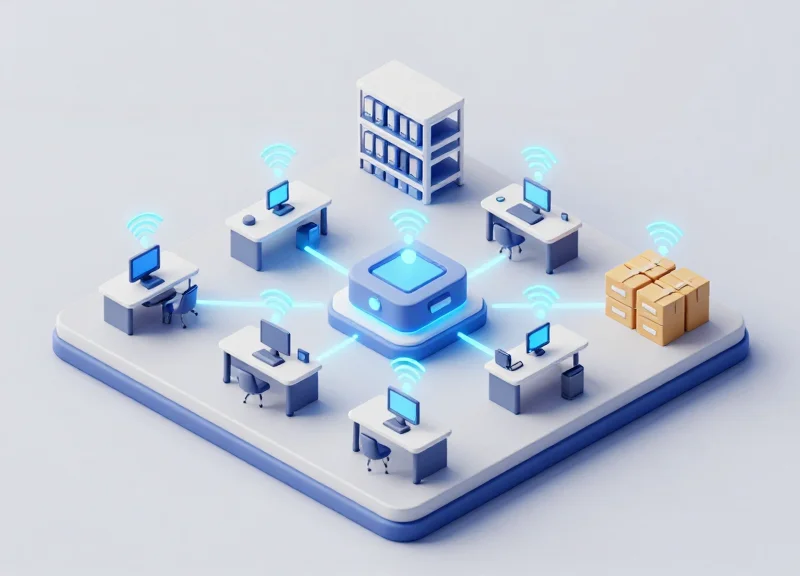
In the 2026 high-end retail landscape, security hardware is no longer a 'sunk cost' but a strategic asset. RFID integration and real-time data analytics transform passive display stands into active business intelligence nodes. This criterion evaluates a system's ability to track every interaction—from the moment a customer lifts a laptop to the duration of their engagement—allowing retailers to synchronize security protocols with marketing insights. The modern security ecosystem must offer a dual-layer value: preventing physical loss while simultaneously capturing the 'digital breadcrumbs' left by premium shoppers during their in-store journey.
| Feature Capability | Legacy Security (Pre-2024) | Advanced RFID Security (2026) |
|---|---|---|
| Data Granularity | Alarm triggered/not triggered | Lift frequency, dwell time, lid-open detection |
| Staff Tracking | Manual keys or generic fobs | Encrypted RFID badges with individual ID logs |
| Inventory Sync | Separate manual audits | Real-time cloud sync with POS and ERP systems |
| Predictive Alerts | None | AI-driven alerts for unusual patterns of movement |
Beyond simple loss prevention, the integration of Real-Time Data Analytics allows store managers to optimize their floor layout. For instance, if data shows that a specific high-end gaming laptop has a high 'pick-up' rate but low 'dwell time' compared to a workstation model, it signals a potential mismatch between the display content and the customer's expectations. This level of insight is only possible when your security sensors are natively designed to communicate with a centralized analytics dashboard.
How does RFID improve staff accountability?
Each staff member is issued a unique RFID badge. When they interact with a device for a demo or maintenance, the system logs the exact duration and identity, eliminating 'internal shrinkage' and identifying top-performing sales associates.
Does real-time tracking impact the customer's privacy?
No. The system tracks the 'device' movement and interaction patterns, not the individual's personal identity. It provides aggregate behavioral data that complies with 2026 global privacy standards like GDPR 2.0.
Can these analytics be integrated with existing CRM systems?
Yes, high-end solutions for 2026 provide open APIs (Application Programming Interfaces) to feed interaction data directly into your CRM or Marketing Automation platforms for a 360-degree view of the customer.
Expert Insight: The 'Conversion-to-Engagement' Ratio. A unique advantage of 2026 security analytics is the ability to calculate a physical store's version of a 'Click-Through Rate.' By comparing the number of security-stand 'lifts' against the final sales data from the POS, retailers can determine the 'Conversion-to-Engagement' ratio. This allows brands to pinpoint exactly which laptop models are 'eye candy' versus which ones are genuine revenue drivers, a metric previously impossible to track with such precision.
Criterion 5: Modular Scalability for Rapid Floor Plan Changes
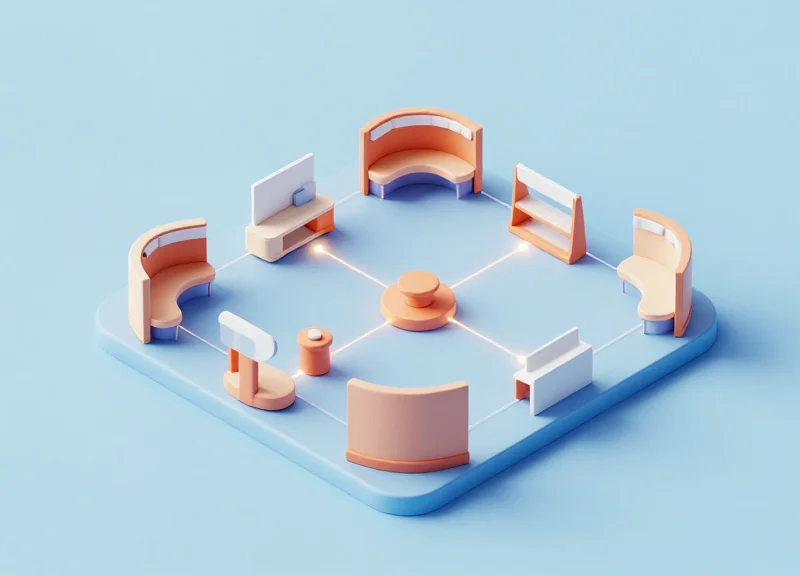
In the fast-paced 2026 retail landscape, modular scalability refers to a security system's ability to be expanded, reduced, or relocated with zero downtime or specialized technical assistance. For high-end retailers, this means transitioning from a linear display to a boutique 'island' layout in minutes rather than days. The goal is to eliminate 'Dynamic Merchandising Latency' (DML)—the lost revenue period during floor plan resets—by utilizing tool-less mounting systems and daisy-chain power architectures that adapt to any architectural shift.
| Feature | Legacy Fixed Security | 2026 Modular Scalability |
|---|---|---|
| Mounting Method | Permanent drilling / Bolt-down | Universal magnetic or heavy-duty clamp |
| Relocation Time | 4-6 hours (Requires electrician) | <15 minutes (Plug-and-play) |
| Cabling Logic | Individual point-to-point power | Integrated bus / Daisy-chaining |
| Hardware Lifecycle | Device-specific; requires full replacement | Interchangeable heads; frame remains |
The Expert Perspective: The 'Cost of Immobility' in Retail Design. After two decades in Silicon Valley marketing, I have observed that the most successful retailers treat their floor space like software—it needs to be updated frequently. A major differentiator for 2026 is the 'Security-as-a-Service' hardware model, where the base unit is permanent, but the security 'heads' are hot-swappable. If you switch from a 14-inch ultrabook to a 17-inch workstation, you should only change the bracket, not the entire infrastructure. This modularity reduces long-term CapEx by up to 40% over a three-year cycle.
- Assess Mounting Versatility: Choose stands that offer multiple mounting options (adhesive, clamp, or bolt) to ensure they can move from glass tabletops to wooden shelving without damaging the surface.
- Prioritize Daisy-Chain Power Systems: Ensure the system uses a central power hub that can link multiple security stands. This eliminates the 'cable jungle' and simplifies electrical requirements during a layout change.
- Validate Tool-Less Adjustment: The best 2026 systems allow store staff to adjust security arms or tension settings using a proprietary digital key or simple manual adjustments, removing the need for an external maintenance team.
Does modular security compromise the strength of the laptop physical lock?
Not at all. Modern modular systems use high-grade aircraft aluminum and reinforced pivoting joints that offer higher tensile strength than older, static steel models.
Can these systems handle the power requirements of gaming laptops?
Yes, look for systems rated for 100W+ USB-C Power Delivery (PD) to ensure that high-performance display units stay charged during heavy demo usage.
How does modularity impact store aesthetics?
It improves aesthetics by allowing for a 'Zero-Cable' look where power and alarm signals are routed through a single, concealed modular track rather than individual messy wires.
Ensuring Mechanical Strength: Materials and Durability Standards
Mechanical strength in laptop security stands is defined as the assembly's ability to resist physical deformation, shearing, and tensile stress under forced entry conditions. For 2026 high-end retailers, top-tier protection is no longer about visual deterrence; it is about metallurgical integrity. Selection must prioritize materials like 6061-T6 aircraft-grade aluminum and cold-rolled hardened steel, which offer the high-yield strength necessary to resist hydraulic cutters and high-leverage prying tools commonly used in professional retail theft.
| Material Type | Typical Yield Strength | Theft Resistance Level | Best Use Case |
|---|---|---|---|
| 6061-T6 Aluminum | 276 MPa | Moderate/High | Ultra-portable laptops where aesthetics matter. |
| Hardened Alloy Steel | 1100+ MPa | Maximum | High-risk flagship stores and 24/7 displays. |
| Carbon-Reinforced Polymer | Various | High (Shear Resistant) | Complex geometries and internal lock housings. |
Beyond simple material choice, the 'Mechanical Fuse' concept is my 20-year Silicon Valley secret for retail hardware. Instead of making the entire stand rigid—which allows a thief to use the stand itself as a lever to rip out the table substrate—engineered security stands now incorporate specific 'deformation zones.' These zones absorb the initial shock of a smash-and-grab attempt without compromising the primary lock, effectively neutralizing the kinetic energy used in the attack.
- IK10+ Impact Rating: Ensure the housing meets the IK10 international standard, capable of withstanding a 20-joule impact (equivalent to a 5kg mass dropped from 400mm).
- Pull-Force Resistance: The locking mechanism should be rated for a minimum of 500 lbs (227 kg) of direct pull-force to counter heavy-duty specialized pullers.
- Anti-Galling Treatments: Look for PVD or ceramic coatings on moving lock parts to prevent 'galling' or seizing over years of repeated customer interactions.
How do these materials impact signal transparency?
High-tensile metals can block Wi-Fi and RFID. Ensure the stand design includes 'RF windows'—non-metallic cutouts that allow the laptop to maintain connectivity for remote management and updates.
What is the 'Thermal Attack' resistance for 2026?
With the rise of portable induction heaters, high-end stands now use heat-dissipating alloys or ceramic inserts that prevent thieves from softening the locking pins with localized heat.
Do higher durability materials increase installation complexity?
Generally, yes. Hardened steel requires specialized bits for drilling. Retailers should opt for modular stands that use standard mounting patterns while retaining internal high-strength cores.
The Role of UX in Security: Optimizing the Customer Journey

In 2026, the User Experience (UX) of security hardware is defined by 'Security Friction'—the physical resistance a customer feels when interacting with a display laptop. For high-end retailers, the goal is to implement an 'Invisible Guardian' strategy where the security mechanism provides maximum protection without interfering with the tactile feedback, weight distribution, or ergonomic design of the premium device being showcased.
When a customer lifts a high-end laptop, such as an ultralight carbon-fiber model or a heavy-duty workstation, the security cable should neither pull the device back down nor add perceived weight. Overly aggressive recoilers create a 'tug-of-war' sensation that subconsciously signals to the customer that the device is heavy or difficult to handle, effectively sabotaging the product's value proposition.
| Feature | Standard Security (Legacy) | Premium Retail UX (2026 Standards) |
|---|---|---|
| Cable Tension | Constant high pull; snaps back. | Variable/Zero-pull resistance during lift. |
| Recoil Smoothness | Jerky; prone to tangling. | Fluid-dampened motion; silent retraction. |
| Customer Perception | Restrictive and clinical. | Freedom of movement; high-end feel. |
| Cable Material | Thick, visible steel braids. | Ultra-thin aircraft grade with friction-less coating. |
How does cable tension affect the sale of ultra-lightweight laptops?
If the cable's pull weight exceeds 15% of the laptop's weight, the customer loses the 'wow factor' of the device's portability. Premium systems use low-resistance recoils specifically calibrated for lightweight hardware.
What is 'Dampened Retraction' and why is it important?
Dampened retraction ensures that when a customer sets a laptop back on the stand, the cable doesn't snap it into place. This prevents hardware damage and maintains a quiet, luxury store atmosphere.
Should security cables be hidden or visible?
For 2026, the trend is 'Minimalist Visibility.' While the cable must be robust, routing it through the pedestal or using ultra-thin diameters helps keep the customer's focus on the screen and keyboard.
Expert Insight: The Tactile Fidelity Benchmark. As a veteran of Silicon Valley retail tech, I recommend the 'Closed-Eyes Test.' If a customer can close their eyes and still accurately guess the laptop's weight and center of gravity while it's tethered, your security system has achieved Tactile Fidelity. In 2026, retailers are moving toward 'Magnetic Decoupling' at the point of rest, where the cable provides zero tension until it is pulled beyond a certain radius, allowing the first few inches of interaction to be 100% free of resistance.
Cost Analysis: Balancing Initial Investment with Long-Term ROI
For high-end retailers in 2026, the Return on Investment (ROI) for laptop display security is defined as the sum of avoided inventory loss and the incremental profit from enhanced customer interaction, divided by the Total Cost of Ownership (TCO). While entry-level mechanical locks may seem cost-effective, they often result in a 'Negative Value Spiral' where high false-alarm rates and poor ergonomics drive away customers and increase maintenance labor. A strategic investment in smart, modular security systems typically yields a break-even point within 14 to 18 months by lowering the 'Shrink-to-Sales' ratio and extending the hardware replacement cycle through superior durability.
| Cost Factor | Budget Solution (Short-term) | Premium System (Long-term ROI) |
|---|---|---|
| Initial Unit Price | $40 - $70 | $150 - $250 |
| Annual Maintenance | High (Cable fraying, sensor failure) | Low (Modular components, self-diagnostics) |
| Sales Conversion Impact | Negative (Intrusive cables, heavy pull) | Positive (Freedom of movement, sleek UX) |
| Data Value | Zero | High (Interaction analytics for floor optimization) |
| Expected Lifespan | 12 - 18 Months | 48 - 60 Months |
A critical, often overlooked component of the ROI equation is the 'Service Call Premium.' In high-end retail environments, a non-functional display stand translates to a dead zone on the sales floor. Budget systems often require entire unit replacements when a single sensor fails. In contrast, 2026-standard premium systems utilize modular architectures where individual components—like the charging connector or the recoil mechanism—can be swapped in seconds by floor staff without a technician, preserving the customer experience and eliminating downtime costs.
How does premium security affect insurance premiums?
Most commercial insurers offer 'Loss Mitigation Credits' for retailers using UL-certified or smart-security systems that provide real-time audit trails, potentially reducing annual premiums by 5% to 12%.
What is the 'Hidden Shrink' associated with cheap stands?
Hidden shrink refers to internal theft facilitated by bypassable master keys and the 'Alarm Fatigue' created by frequent false alerts, which causes security staff to become desensitized to actual theft events.
Can security data justify its own cost?
Yes. By using the interaction data (how many times a laptop was picked up vs. sales), retailers can optimize floor layouts and staffing levels, often identifying low-performing SKUs weeks earlier than traditional inventory checks.
Expert Insight: In the Silicon Valley retail tech sector, we are seeing a shift toward 'Predictive Maintenance ROI.' High-end systems for 2026 now feature internal strain gauges that monitor the health of the security cable. By predicting a cable snap before it happens and alerting the manager via a dashboard, retailers avoid the $2,500+ loss of a stolen MacBook and the $300 emergency repair bill. This shift from reactive to proactive security turns a traditional cost center into a risk-mitigation asset that pays for its own upgrade through pure operational efficiency.