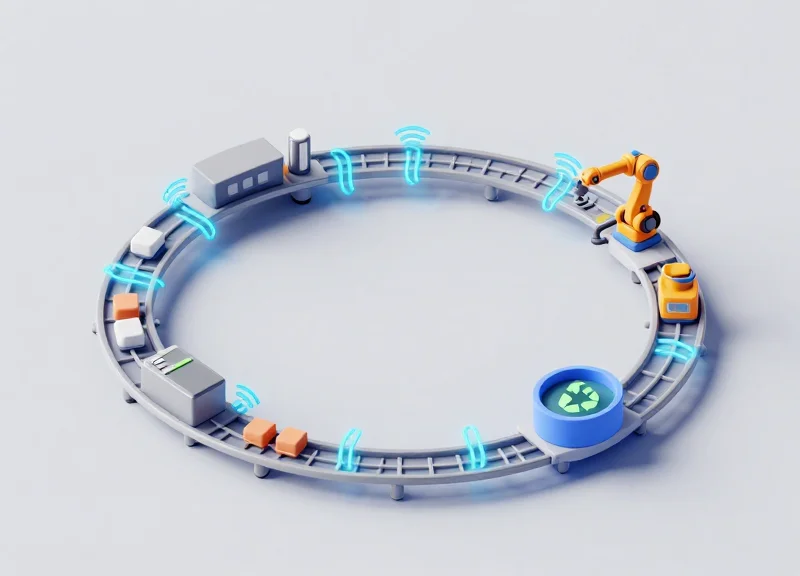
In today's fast-paced industrial landscape, managing an asset from its birth in production to its eventual decommissioning is a complex logistical challenge. Traditional tracking methods often fail to capture the nuances of repair cycles and final disposal, leading to operational blind spots. By integrating Radio Frequency Identification (RFID) technology, businesses can transform these fragmented stages into a seamless, data-rich loop. This guide provides a technical deep-dive into orchestrating an end-to-end asset lifecycle that optimizes efficiency, reduces costs, and ensures full transparency across the entire workflow.
The Evolution of Asset Lifecycle Management
Asset Lifecycle Management (ALM) has evolved from a reactive accounting function into a proactive operational framework, transforming how organizations manage the journey of a physical asset from production through repair and eventual scrapping. Modern ALM leverages Radio Frequency Identification (RFID) to create a 'digital thread'—a continuous, real-time record of an asset’s state, location, and history that eliminates the data silos inherent in traditional manual systems.
Historically, tracking was a linear process. An item was manufactured, shipped, and largely forgotten by the system until it failed or required an annual audit. In today's high-velocity industrial environments, this 'black hole' of visibility is no longer acceptable. The rise of the circular economy and Just-in-Time (JIT) manufacturing requires a closed-loop system where data flows back from the repair shop and the scrap yard to inform future production cycles.
| Feature | Manual/Paper | Barcode/QR | RFID (Digital Loop) |
|---|---|---|---|
| Data Capture | Human Entry | Line-of-Sight Scan | Automated Batch Sensing |
| Error Rate | High (>10%) | Moderate (User Error) | Near Zero (<0.1%) |
| Update Frequency | Weekly/Monthly | At Scan Points | Real-Time/Continuous |
| Lifecycle Insight | Reactive | Historical | Predictive |
The Expert Perspective: The 'Death Certificate' Data Gap. A unique oversight in many industrial workflows is the failure to capture 'terminal data.' While most systems track an asset until it breaks, advanced RFID integration allows for the generation of a digital 'Death Certificate' during the scrapping phase. By analyzing why assets are scrapped (e.g., specific component fatigue vs. accidental damage) via RFID history, manufacturers can adjust production specs in real-time to extend the MTBF (Mean Time Between Failures) of the next generation of assets. This turns the scrap heap into a source of R&D intelligence.
Why is manual asset tracking failing in modern production?
Manual tracking cannot keep pace with high-speed automated lines and leads to 'ghost assets'—items that exist on the ledger but cannot be found physically, causing massive inefficiencies in repair and procurement.
How does RFID differ from barcode scanning in repair workflows?
RFID does not require a direct line of sight. In a repair environment where assets may be covered in grease, paint, or stored deep inside crates, RFID tags can be read instantly without manual handling, accelerating the intake process by up to 80%.
Can RFID help with regulatory compliance during scrapping?
Yes. RFID provides an immutable audit trail that proves an asset was disposed of according to environmental or security regulations, providing an automated 'chain of custody' from the factory floor to the recycling center.
Phase 1: RFID Integration in the Production Environment

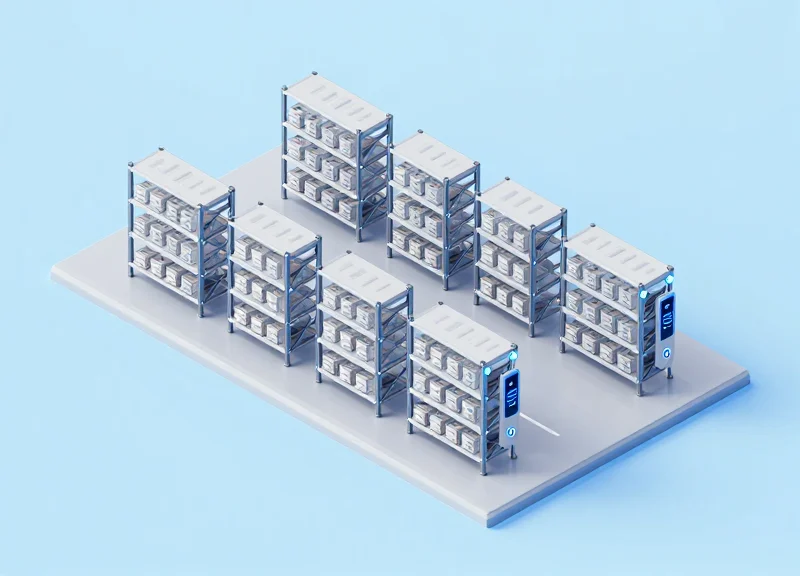
Phase 1 focuses on the 'Digital Birth' of an asset. Integrating RFID at the production stage involves embedding or attaching a Radio Frequency Identification tag to raw materials or components at the earliest possible point of entry. This creates a unique, immutable digital identity that serves as the foundation for the entire lifecycle loop. By automating data capture via fixed overhead readers or integrated conveyor portals, manufacturers eliminate manual scanning errors and gain real-time visibility into Work-in-Process (WIP) status before the asset even leaves the factory floor.
| Tag Type | Substrate Compatibility | Typical Use Case | Durability |
|---|---|---|---|
| On-Metal (PCB/Ceramic) | Metallic Surfaces | Engine blocks, heavy machinery | High - Heat and chemical resistant |
| Smart Labels | Cardboard, Plastic | Packaging, lightweight components | Low - Disposable or temporary |
| Encapsulated Tags | General/Aggressive environments | Returnable Transport Items (RTIs) | Very High - Impact resistant |
- Define the Encoding Standard: Utilize GS1 EPC (Electronic Product Code) standards to ensure interoperability across different vendors and software systems throughout the asset's life.
- Hardware Synchronization: Interface RFID fixed readers with local PLCs (Programmable Logic Controllers) using protocols like Ethernet/IP or Modbus to trigger reads based on physical production events.
- Middleware Logic Layer: Implement a middleware layer to filter 'noisy' data and ensure only valid tag reads are pushed to the ERP or MES (Manufacturing Execution System).
Expert Insight: The 'Shadow Read' Mitigation Strategy. In dense production environments, readers often pick up tags from adjacent lines, creating 'shadow assets.' Silicon Valley veterans solve this by implementing RSSI (Received Signal Strength Indicator) thresholds and 'Dead Reckoning' logic. By filtering out tags that do not meet a specific signal strength or duration profile, you ensure that your digital record accurately reflects the physical movement on the line, preventing ghost inventory issues that plague 30% of first-generation RFID deployments.
Can RFID tags survive high-temperature curing processes?
Yes, specialized high-memory tags made of FR4 or ceramic materials are designed to withstand temperatures exceeding 200°C, common in automotive paint shops and electronics soldering.
How do we handle tag failure during production?
Implement an 'Auto-Reject' station on the conveyor. If a fixed reader fails to verify a tag's encoded data immediately after application, the PLC triggers a pneumatic arm to divert the asset for manual re-tagging.
Should we use Passive or Active RFID?
For production and lifecycle loops, Passive UHF (Ultra-High Frequency) is standard due to its lower cost per tag and sufficient range (up to 10-12 meters) for gate-crossing events.
Architecting the Data Layer: Linking RFID to ERP and WMS

Architecting the data layer for RFID integration requires a robust middleware strategy that acts as a buffer between high-frequency edge hardware and the structured databases of ERP and WMS systems. Rather than flooding enterprise software with raw 'heartbeat' signals, the data layer filters, aggregates, and transforms EPC (Electronic Product Code) events into actionable business logic, such as 'Item Shipped' or 'Component Repaired.' This prevents database bloat and ensures that your system of record remains the single source of truth without being compromised by the noise of 1,000+ reads per second.
| Data Attribute | Raw RFID Reader Output | Processed Enterprise Record |
|---|---|---|
| Frequency | Multiple reads per second | Single transactional update |
| Content | Raw Hexadecimal / EPC Binary | SKU, Batch ID, and Status |
| Destination | Edge Middleware / Buffer | ERP (e.g., SAP, Oracle) / WMS |
| Purpose | Proximity and presence detection | Inventory accuracy and financial audit |
- Edge Filtering and De-duplication: Utilize Low Level Reader Protocol (LLRP) to filter repetitive tags at the reader level. This ensures only 'meaningful' movements or state changes enter the messaging queue.
- Asynchronous Messaging via MQTT/Kafka: Avoid direct SQL writes. Use a message broker to decouple hardware from the ERP. This architecture handles spikes in traffic and ensures data delivery even during network outages.
- Business Logic Mapping: Map RFID 'Zone IDs' to enterprise 'Location Codes.' For example, a read in 'Zone B-4' must trigger a 'Work-in-Progress' update in the ERP automatically.
- API Orchestration: Leverage RESTful APIs or SOAP services to push the final, cleaned data into the WMS, updating stock levels and triggering the next step in the asset loop.
Expert Tip: The 'Data Silo Trap' is the most common failure point in RFID projects. Many teams try to write reader data directly into a local SQL table, creating a silo that is invisible to the global ERP. Always architect for 'Event-Driven Consistency'—where every physical move triggers a message that multiple systems (WMS for location, ERP for value, BI for analytics) can subscribe to simultaneously.
{ "event_type": "RFID_SCAN", "reader_id": "WH-ENTRY-01", "payload": { "epc": "303405C34000123456789ABC", "timestamp": "2023-10-27T10:15:30Z", "action": "INBOUND_RECEIVE" } }How do we handle 'ghost reads' in the data layer?
Ghost reads are mitigated through RSSI (Received Signal Strength Indicator) thresholding in the middleware, ensuring only tags within a specific signal strength are processed as valid interactions.
Can RFID integration work with legacy ERPs?
Yes, by using a 'sidecar' database or an integration platform (iPaaS) that translates modern JSON/MQTT signals into the flat files or XML formats required by older legacy systems.
What is the impact on network latency?
By processing data at the edge, you reduce the payload sent to the cloud or central server by up to 95%, maintaining sub-second response times for production line gates.
Phase 2: Optimizing the Repair and Maintenance Cycle
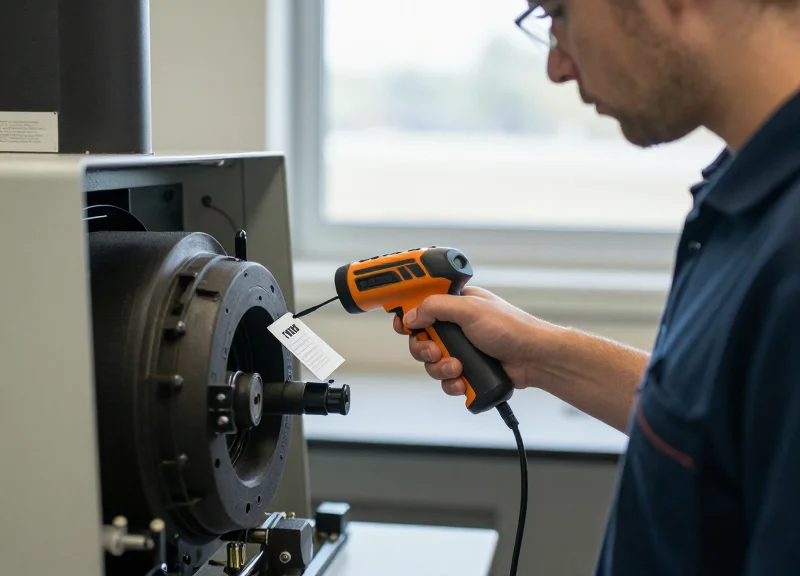
Optimizing the repair and maintenance cycle with RFID involves transforming physical assets into 'smart assets' that automatically report their status, location, and service history. This phase focuses on eliminating the visibility gaps that occur when assets exit the production floor for maintenance, providing a continuous digital thread that tracks the asset through diagnostic, repair, and re-certification stages. By automating the Work-in-Progress (WIP) tracking, companies can reduce Mean Time to Repair (MTTR) by up to 25% by removing manual data entry and search time.
- Automated Intake and Triage: As an asset enters the maintenance bay, fixed RFID portals trigger an 'Arrival' event in the CMMS/ERP, instantly notifying technicians of the priority and required service without manual scanning.
- Digital Twin Synchronization: The technician’s handheld RFID reader pulls the asset’s entire lifecycle history, including previous failure modes and component ages, directly to their tablet or workstation.
- Component-Level Association: When replacement parts are installed, their RFID tags are linked to the parent asset's ID, ensuring the 'as-maintained' configuration is always accurate and compliant.
- Quality Gate Validation: The asset passes through a final 'Exit' portal which verifies that all scheduled maintenance tasks were digitally signed off before the asset can be returned to active inventory.
| Feature | Manual Maintenance Tracking | RFID-Enabled Maintenance |
|---|---|---|
| Data Capture Speed | Slow (Manual Entry) | Instantaneous (Bulk Scanning) |
| Data Integrity | Error-prone (Human Factor) | High (Automated Validation) |
| WIP Visibility | Opaque (The 'Black Hole') | Real-time Dashboarding |
| Audit Compliance | Retrospective/Manual | Continuous/Automated |
Expert Insight: Move beyond simple ID tracking by implementing 'Atomic History Logging.' Instead of just recording that a repair happened, use high-memory User Memory banks on the RFID tag to store the last three critical error codes directly on the hardware. This ensures that even if the central database is offline, the physical asset carries its own diagnostic 'black box' for immediate field assessment.
{ "event": "maintenance_update", "asset_id": "HEX_0045B2", "station": "Repair_Bay_04", "status": "in_progress", "technician_id": "TECH_992", "timestamp": "2023-10-27T10:30:00Z", "parts_replaced": ["FAN_MOD_01", "FIL_092"] }How do we handle RFID interference in metal-heavy repair environments?
Use 'On-Metal' PCB or foam-backed tags that utilize a spacer to prevent the metal surface from detuning the antenna, ensuring 99.9% read rates near machinery.
Can RFID track the time spent at each repair station?
Yes, by logging 'Enter' and 'Exit' timestamps at each zone, the system calculates the exact dwell time, allowing for the identification of process bottlenecks.
Is it possible to automate the re-certification alerts?
Absolutely. The system can be configured to flag an asset as 'Non-Compliant' in the WMS if the RFID tag hasn't been scanned at a certified testing station within a specific timeframe.
Closing the Loop: Automated Tracking in Scrapping and Recycling
Closing the asset loop with RFID technology transforms the end-of-life (EoL) phase from an administrative burden into a verifiable, automated event. By integrating RFID into scrapping and recycling workflows, organizations can generate an immutable 'digital death certificate' for assets, ensuring that every decommissioned item is accounted for, sensitive data is destroyed, and environmental regulations are met without manual data entry.
In a typical industrial environment, assets often 'go ghost' during the disposal phase—remaining on the balance sheet and creating tax liabilities or security risks because the manual paperwork for their destruction was never filed. RFID solves this by triggering a status update in the ERP system the moment a tagged asset enters a designated 'Scrap Zone' or passes through a specialized disposal portal.
- Final Identity Verification: As assets arrive at the decommissioning facility, a fixed RFID reader validates the Serial Number and Asset ID against the central database to prevent the accidental destruction of items still in service.
- Compliance and Security Wipe: For IT assets or machinery with local storage, the RFID tag acts as a trigger to confirm that data sanitization protocols have been completed before physical shredding begins.
- Automated Destruction Logging: Once the asset is processed, the RFID tag is read one last time. The system automatically updates the status to 'Scrapped' or 'Recycled' in the ERP, timestamping the event and logging the precise location.
- ESG and Sustainability Reporting: The collected data is aggregated to provide real-time metrics on material recovery rates, helping the enterprise meet Environmental, Social, and Governance (ESG) targets and regulatory mandates like the EU's Circular Economy Action Plan.
| Feature | Manual Scrapping Process | RFID-Automated Scrapping |
|---|---|---|
| Data Accuracy | Prone to human error and 'Ghost Assets' | 100% verifiable digital audit trail |
| Compliance Speed | Days or weeks to process paperwork | Instantaneous, real-time certification |
| Tax/Insurance Impact | Overpayment on non-existent assets | Immediate removal from active liability |
| Sustainability Tracking | Estimated or anecdotal data | Precise weight and material tracking |
Expert Tip: To prevent 'Ghost Assets' from lingering in your system, implement a 'Logic Gate' in your middleware. If an asset is scanned at a recycling portal but its status in the ERP is still 'Active' or 'In Production,' the system should trigger an immediate security alert to prevent unauthorized disposal or theft.
{
  "action": "DECOMMISSION_ASSET",
  "asset_id": "RFID-9982X-004",
  "location": "DISPOSAL_ZONE_B",
  "disposal_method": "Physical_Shredding",
  "timestamp": "2023-11-24T14:30:00Z",
  "compliance_verified": true,
  "update_erp_status": "SCRAPPED"
}
Can RFID tags be recycled?
Standard passive tags are generally not recycled, but specialized high-value tags can be detached and reused if they are not damaged during the decommissioning process.
How does this impact ISO 14001 certification?
RFID provides the objective evidence required for ISO 14001 audits by proving that waste management protocols are followed consistently and documented accurately.
Is RFID safe for high-security shredding?
Yes. Most industrial shredders easily process standard RFID inlays without damage to the blades, and the tag becomes unreadable once physically destroyed, ending the asset's digital life.
Hardware Selection: Choosing the Right RFID Tags and Readers
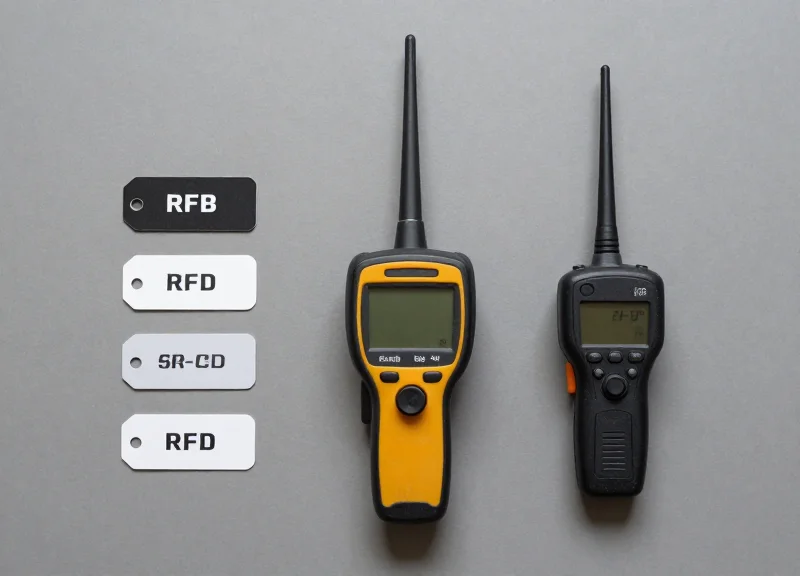
Successful RFID integration hinges on selecting hardware that balances read range, data capacity, and environmental durability. For an asset loop covering production, repair, and scrapping, Ultra-High Frequency (UHF) passive RFID is typically the gold standard due to its long read range (up to 12 meters) and ability to read hundreds of tags simultaneously. However, in environments with high liquid content or dense metal interference, High Frequency (HF/NFC) or specialized 'on-metal' UHF tags are required to ensure signal integrity throughout the asset's lifecycle.
| RFID Type | Typical Range | Best Use Case | Environmental Resilience |
|---|---|---|---|
| UHF (Passive) | 3m - 12m | High-volume production tracking, logistics, and bulk inventory. | Moderate; requires specialized shielding for metal/liquid. |
| HF / NFC | < 10cm | Close-proximity repair check-ins, secure technician authentication. | High; performs well near liquids and human tissue. |
| Active RFID | Up to 100m | Real-time tracking of high-value equipment in large outdoor scrap yards. | Very High; battery-powered signals penetrate most obstacles. |
| UHF On-Metal | 2m - 5m | Heavy machinery, engine blocks, and metal chassis components. | Engineered for high-interference industrial environments. |
Expert Tip: The 'Shadowing' Factor in WIP Racks. A common mistake is testing tags on single units and failing to account for 'RF Shadowing' when assets are bunched together in production racks or scrap bins. For the 'Scrapping' phase specifically, ensure your readers have a high enough power output (EIRP) to penetrate the dense, chaotic orientation of decommissioned assets. Always specify tags with a 'ruggedization rating' of at least IP68 if the repair cycle involves chemical washing or high-pressure steam cleaning.
Should I use fixed or handheld readers for the asset loop?
A hybrid approach is best. Use fixed portal readers at 'choke points' (e.g., exits from production to repair) for automated logging, and handheld readers for ad-hoc audits and deep-dive diagnostics during the repair phase.
How do I handle interference from metal machinery?
Utilize 'on-metal' tags which feature a built-in spacer or ceramic substrate. This prevents the metal surface from detuning the antenna, effectively using the metal itself as a reflector to actually improve the signal in some configurations.
Can RFID tags survive the scrapping process?
While the tag is usually destroyed during physical shredding, its final 'death cry' or a 'last-seen' scan at the recycling gate is critical for compliance. For thermal disposal, use high-temp tags capable of withstanding 200°C+.
Overcoming Technical Implementation Barriers
Overcoming technical implementation barriers in RFID deployments requires a transition from general-purpose hardware to environment-specific engineering. In industrial asset loops, the primary hurdles are RF physics—specifically how radio waves interact with the physical materials in production and repair zones. Success hinges on a three-pronged approach: selecting 'on-metal' specialized tags, tuning reader sensitivity to eliminate 'ghost reads,' and implementing anti-collision algorithms to handle high-density asset environments. Without these mitigations, signal attenuation and multipath interference can reduce read rates from a required 99.9% to a failing 70%.
| Environmental Barrier | Technical Root Cause | Strategic Mitigation |
|---|---|---|
| Metal Interference | RF reflection and detuning of the tag antenna. | Use of spacer-backed 'on-metal' tags or PCB-based rugged tags. |
| Liquid Proximity | Absorption of UHF signals by water or oil-based fluids. | Strategic tag placement on non-liquid containers or switching to HF/NFC for close-range. |
| Signal Collision | Multiple tags responding simultaneously to a single reader query. | Implementing 'Slotted Aloha' or 'Tree-Walking' anti-collision protocols in firmware. |
| Reader Cross-Talk | Overlapping read zones causing redundant or false data. | GPIO-triggered reading windows and RSSI (Received Signal Strength Indicator) thresholding. |
Expert Tip: The 'Multipath' Phantom. One of the most overlooked barriers is multipath reflection, where signals bounce off metallic walls or machinery and read tags located 20 feet away from the intended zone. To solve this, don't just lower the power. Implement RSSI filtering at the middleware level. By setting a minimum signal strength threshold, you can programmatically ignore any tag that doesn't exhibit the high-decibel 'near-field' signature of an asset actually sitting on the repair bench or scrap scale.
How do I handle tag failure in high-heat repair environments?
Utilize high-temperature encapsulated RFID tags (often ceramic or PEEK-cased) capable of withstanding autoclave or paint-oven temperatures up to 250°C without data loss.
What is the best way to prevent 'stray reads' from nearby conveyor belts?
Use polarized antennas (Circular for general orientation, Linear for specific paths) and physical RF shielding, such as lead-lined curtains or aluminum foil barriers, to define a precise 'read portal'.
Can RFID tags be read through metal enclosures during scrapping?
No, UHF signals cannot penetrate solid metal. You must either use an external tag or an aperture-based tag design where the metal enclosure itself acts as a part of the antenna system.
# Example: Filtering tags by RSSI to eliminate distant 'ghost' reads in Python middleware

def process_rfid_event(tag_data, min_rssi=-55):
    # Extract tag ID and signal strength
    epc = tag_data['epc']
    rssi = tag_data['rssi']

    if rssi >= min_rssi:
        return f"Confirmed: Asset {epc} is in the work zone."
    else:
        return f"Ignored: Asset {epc} detected as background noise (RSSI: {rssi})"
Measuring ROI: Key Performance Indicators for RFID Loops

Return on Investment (ROI) for RFID-integrated asset loops is measured by comparing the total cost of ownership—including hardware, tags, and middleware integration—against the quantitative gains in operational velocity and accuracy. To achieve a comprehensive ROI profile, organizations must look beyond simple 'inventory counts' and focus on the reduction of manual labor hours, the elimination of asset shrinkage, and the optimized utilization of equipment throughout its entire lifecycle from production to final decommissioning.
| KPI Category | Legacy/Manual Baseline | RFID-Enabled Target | Economic Impact |
|---|---|---|---|
| Inventory Accuracy | 65% - 80% | 99.5%+ | Reduced emergency procurement and safety stock. |
| Search & Audit Labor | 15-20 mins per asset | Seconds (Automated) | Significant reduction in OpEx and labor overhead. |
| Repair Cycle Time | Undefined/High Variance | Defined Benchmarks | Faster return-to-service for critical production assets. |
| Scrap Compliance | Manual Paper Trail | Automated Digital Cert | Elimination of regulatory fines and data breach risks. |
- Labor Cost Reduction (LCR): Measure the total man-hours spent on manual barcode scanning, physical counting, and searching for 'misplaced' assets. RFID typically reduces these labor costs by 70-90% by enabling bulk-reading and real-time location tracking.
- Asset Utilization Rate (AUR): Calculated as (Time Asset is in Use / Total Available Time). RFID identifies 'hoarded' or idle assets in repair bays, allowing facilities to increase production throughput without purchasing additional hardware.
- Shrinkage and Loss Mitigation: Track the frequency of lost or misplaced tools and components. By creating 'digital fences' at exit points and scrap zones, RFID prevents accidental disposal of high-value assets.
Expert Insight: The 'Ghost Asset Tax' Elimination. A unique but often overlooked ROI factor is the elimination of the 'Ghost Asset Tax'—property taxes and insurance premiums paid on assets that are still on the books but no longer physically present or functional. Because RFID provides a verifiable 'last seen' timestamp and location, enterprises can confidently purge their books, often resulting in immediate 2-5% savings on annual insurance and tax liabilities.
What is the typical payback period for an industrial RFID loop?
Most industrial implementations see a full ROI within 12 to 18 months, depending on the value of the assets and the frequency of the repair cycles.
How do you measure ROI in the scrapping phase?
ROI here is measured through 'Audit Readiness.' The cost of a single compliance failure or environmental fine often exceeds the entire cost of the RFID system.
Can RFID reduce capital expenditure (CapEx)?
Yes. By increasing asset visibility, companies often discover they already own enough equipment and can cancel planned purchases, directly impacting the bottom line.
Future-Proofing Your Asset Strategy with AI and IoT

Future-proofing your asset strategy requires moving beyond simple identification to 'Ambient Intelligence,' where RFID serves as the foundational data layer for AI and IoT convergence. By combining RFID’s granular tracking with IoT’s real-time environmental sensing and AI’s predictive capabilities, enterprises shift from reactive logging to proactive optimization. This integration allows the 'Asset Loop' to become a self-healing system that predicts maintenance needs, automates procurement, and extends the physical lifecycle of industrial equipment by up to 35% through precision lifecycle management.
| Feature | Standard RFID Loop | AI + IoT Integrated Loop |
|---|---|---|
| Data Trigger | Manual or Portal Scan | Continuous Sensor Streaming |
| Maintenance | Scheduled/Reactive | Predictive/Condition-based |
| Decision Making | Human-led via reports | Automated via Edge Logic |
| Asset Visibility | Point-in-time Location | Full Digital Twin Status |
The true 'Silicon Valley' edge in modern asset management is the creation of a Digital Twin. Every time an RFID tag is read during production or repair, it updates a virtual model. When you overlay IoT sensors (measuring heat, vibration, or humidity) onto this RFID history, AI algorithms can identify 'hidden' failure patterns. For instance, if an asset frequently requires repair after passing through a specific high-humidity zone in production—tracked via RFID—the AI can trigger an automated workflow to adjust environmental controls or update the maintenance schedule before a breakdown occurs.
- Sensor Fusion: Integrate passive RFID tags with active IoT sensors to provide both identity and state (e.g., 'This is Drill #402 AND it is currently overheating').
- Edge Intelligence: Deploy AI models at the RFID reader level to filter noise and trigger immediate actions without waiting for cloud processing.
- Feedback Loop Automation: Connect AI insights to ERP systems to automatically order replacement parts when the 'Scrap' probability for an asset reaches a predefined threshold.
Expert Tip: Leverage 'Passive Data Training.' Use your historical RFID movement data as a baseline for AI to simulate 'ideal' asset flow. By training models on how assets move when the line is healthy, the AI can detect subtle deviations in transit times—often the first sign of a mechanical bottleneck or operator fatigue—long before traditional KPIs reflect a problem.
Will AI-driven asset tracking work with my existing RFID hardware?
Yes, most modern RFID middleware can export data streams via MQTT or REST APIs to AI platforms like AWS IoT Core or Azure Digital Twins without requiring tag replacement.
What is the biggest barrier to AI and IoT integration?
Data silos are the primary hurdle. Future-proofing requires a unified data lake where RFID scan events, repair logs, and IoT sensor telemetry are timestamped and correlated.
How does AI impact the scrapping workflow?
AI analyzes the cost-to-repair versus the expected remaining life, providing a 'Scrap vs. Salvage' recommendation that maximizes ROI on every component.