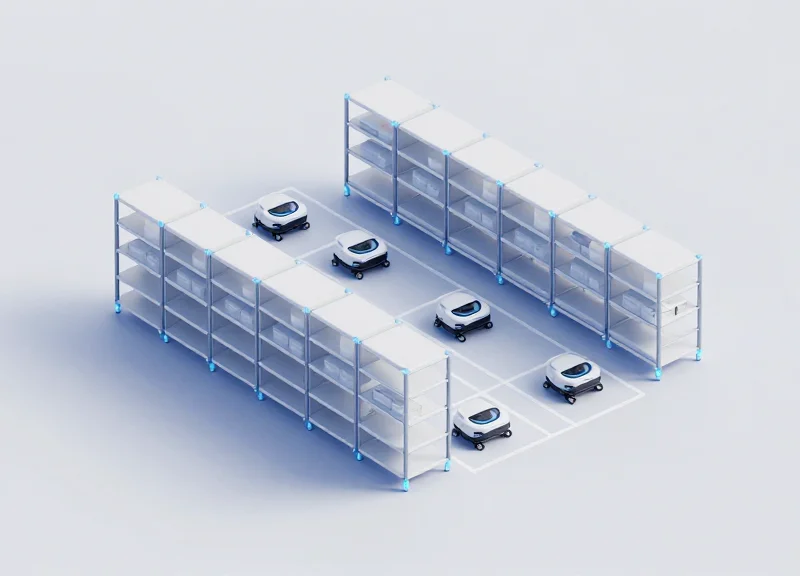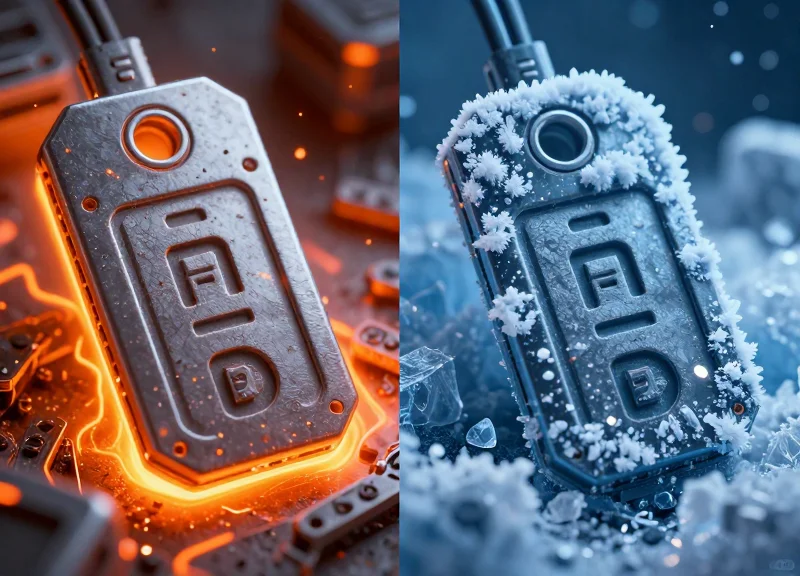
The landscape of retail and logistics is undergoing a tectonic shift. As we approach 2026, the management of fragile goods requires more than just careful handling; it demands intelligent, invisible protection. Legacy Electronic Article Surveillance (EAS) systems often fall short when dealing with high-value, delicate inventory. Enter the era of Next-Gen Protection—where RFID precision and Non-Contact EAS technology converge to create a seamless, high-security environment that prioritizes product integrity and customer experience.
The Evolution of Asset Protection in the Fragile Goods Sector

The evolution of asset protection in the fragile goods sector represents a fundamental shift from 'active friction'—the use of physical barriers and invasive tags—to 'passive visibility' through contactless digital ecosystems. Historically, retailers of delicate items like high-end ceramics, glassware, and electronics were forced to choose between high-security physical locks that hampered the customer experience or minimal security that invited shrinkage. In 2026, this paradigm has been replaced by RFID and non-contact EAS (Electronic Article Surveillance) technologies, which provide a 'digital twin' for every item, ensuring protection and real-time inventory tracking without ever physically compromising the product's integrity.
| Era | Primary Technology | Security Strategy | Impact on Fragile Goods |
|---|---|---|---|
| The Mechanical Era (Pre-1990s) | Locks, Keys, and Cabinets | Physical Denial of Access | High: Items hidden behind glass; zero customer touch. |
| The Electronic Era (1990s-2015) | Hard Tags and AM/RF Gates | Active Deterrence / Alarms | Moderate: Risk of breakage from heavy clamps/pins. |
| The Connectivity Era (2016-2023) | Standard RFID and Smart Shelves | Inventory Visibility | Low: Improved tracking but still required physical tagging. |
| The Autonomous Era (2024-2026+) | Non-Contact EAS and Item-Level RFID | Invisible, Frictionless Protection | Zero: Safe for all materials; enables open merchandising. |
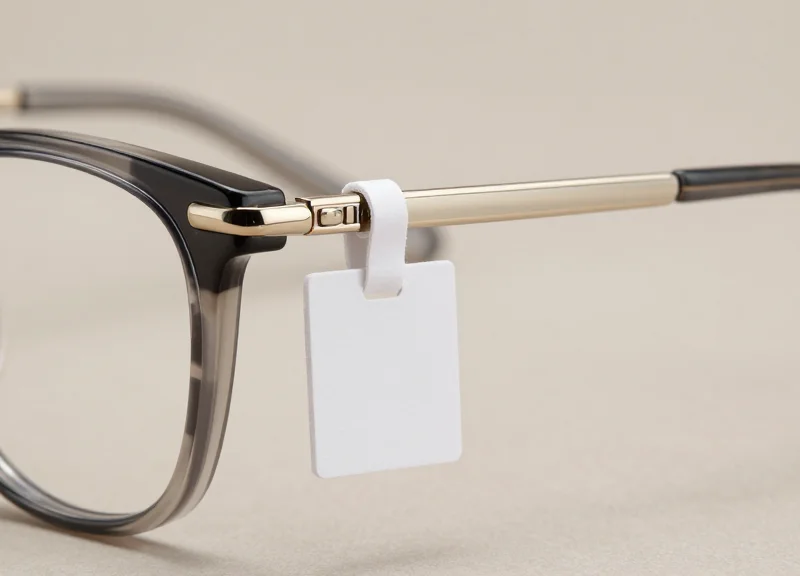
A critical driver of this evolution has been the changing nature of luxury retail. Modern consumers demand a 'hands-on' experience with fragile items, yet retailers cannot afford the soaring costs of shrinkage, which now includes not just theft, but also the 'hidden shrink' of damage caused by traditional security tags. For instance, applying a standard hard tag to a hand-blown glass vase creates a structural stress point that can lead to micro-fractures. The 2026 market has pivoted toward security solutions that are either embedded during the manufacturing process or applied via non-invasive, contactless methods.
Why is 'non-contact' security essential for 2026?
As fragile goods incorporate more complex materials (like recycled composites or ultra-thin glass), traditional mechanical security tags risk causing physical damage or leaving aesthetic marks that devalue the product.
How does modern EAS differ from older systems?
Modern EAS systems use high-frequency identification that doesn't require direct line-of-sight or physical contact, allowing security to be integrated into the product packaging or the item itself.
What role does RFID play in asset protection?
Beyond simple security, RFID provides a granular data stream, allowing retailers to track exactly when an item was moved and by whom, significantly reducing internal 'sweethearting' and supply chain loss.
Expert Insight: In the 2026 retail environment, we are seeing the rise of the 'Fragile-Safe Digital Signature.' This is a unique perspective where security is no longer an after-market addition but a foundational element of the product's digital identity. By leveraging 2026-grade RFID, a ceramic designer can embed a microscopic chip into the clay itself before firing. This allows the piece to be tracked through its entire lifecycle—from the kiln to the living room—without a single person ever needing to attach a damaging plastic clamp. This 'security at the molecular level' is the ultimate evolution of asset protection for the high-value fragile market.
Why Traditional EAS Fails the 2026 Fragile Market
In the 2026 retail landscape, traditional Electronic Article Surveillance (EAS) systems—specifically those relying on physical pinning, heavy clamping, or high-tack adhesive labels—are becoming obsolete for fragile goods. These legacy methods fail because they introduce 'mechanical vulnerability,' where the security measure itself causes more financial loss through physical damage (cracks, scratches, or adhesive residue) than the theft it is intended to prevent. For high-end electronics, luxury ceramics, and volatile pharmaceuticals, the contact-heavy nature of 20th-century EAS is now a liability rather than a safeguard.
| Failure Factor | Legacy EAS Impact | 2026 Market Requirement |
|---|---|---|
| Physical Integrity | Pin-holes and pressure-point fractures | Zero-contact/Non-invasive sensing |
| Aesthetic Value | Bulky tags obscure branding/design | Discreet or embedded protection |
| Handling Speed | Manual detaching slows throughput | Bulk, automated scanning & deactivation |
| Data Granularity | Binary 'In/Out' alarm only | Item-level health and location history |
Beyond simple physical damage, traditional EAS suffers from 'Signal Static' in the presence of complex materials. Many fragile goods in 2026, such as smart-glass or liquid-filled medical vials, interfere with low-frequency AM/RF fields, leading to frequent false positives. This creates a friction-heavy customer experience that luxury brands can no longer afford.
How does 'Tag-Induced Shrinkage' affect the bottom line?
Tag-Induced Shrinkage (TIS) refers to inventory loss caused by the application or removal of security tags. For fragile items, this includes micro-fractures in OLED screens or weakened structural integrity in artisan pottery. By 2026, TIS is expected to account for up to 15% of total losses in high-end retail sectors still using hard-tagging.
Why is adhesive-based EAS failing for sensitive pharmaceuticals?
Modern pharmaceuticals often require cryogenic or specialized storage. Traditional adhesives fail under these conditions or, worse, the chemical composition of the glue can migrate through thin packaging, contaminating the product or rendering labels unreadable.
Can legacy EAS handle the speed of 2026 omnichannel logistics?
No. Traditional EAS requires 'line-of-sight' or 'one-by-one' manual interaction. In a world of automated warehouses and high-speed fulfillment, the manual labor required to manage physical tags creates a massive bottleneck that stalls the supply chain.
Expert Insight: The 'Vibrational Stress' Factor. A little-known flaw in traditional EAS gates is the acoustic vibration used in certain deactivation pads. For ultra-sensitive electronic components and delicate micro-mechanical luxury watches, the specific frequency pulse used to kill a security label can actually cause internal resonance damage. We are moving toward a 'Silent Security' era where protection is purely electromagnetic and non-kinetic.
The Power of RFID: Granular Visibility for Delicate Inventory

RFID (Radio Frequency Identification) serves as the digital nervous system for the 2026 fragile goods market, providing granular, item-level visibility without the need for physical contact or direct line-of-sight. By utilizing electromagnetic fields to capture data from tags embedded in or on packaging, retailers can achieve up to 99% inventory accuracy while completely bypassing the 'touch-point' risks associated with manual scanning of delicate ceramics, luxury electronics, or high-value pharmaceuticals.
The primary advantage of RFID in this sector is its non-contact nature. Traditional inventory methods require staff to pick up, rotate, and scan each individual item. For fragile goods, every manual interaction increases the probability of accidental drops or surface abrasions. RFID allows for 'bulk reading,' where hundreds of items can be scanned simultaneously through their protective shipping crates, ensuring that the first time a human hand touches a product is when the customer makes the purchase.
| Feature | Traditional Barcoding | RFID (Next-Gen) |
|---|---|---|
| Line-of-Sight Required | Yes | No |
| Physical Handling | High (Individual Scan) | Zero (Batch Scan) |
| Scan Speed | 1-2 items per second | Up to 1,000 items per second |
| Data Capacity | Low (ID only) | High (History, Expiry, Temp) |
| Inventory Accuracy | 65-75% | 98-99.9% |
- Real-Time Stock Localization: Pinpoint the exact shelf location of a fragile item to minimize search time and accidental displacement.
- Automated Expiry and Batch Management: Particularly vital for medical fragile goods, RFID tracks shelf-life and batch numbers automatically to ensure FIFO (First-In-First-Out) protocols.
- Shrinkage Reduction: Instant alerts are triggered if a high-value fragile item leaves a designated zone, allowing for non-confrontational loss prevention.
Expert Insight: The Digital Twin Strategy. By 2026, leading retailers are using RFID to create a 'Digital Twin' of every fragile asset. This isn't just about location; it's about life-cycle data. By analyzing the 'RSSI' (Received Signal Strength Indicator), systems can now detect if a package has been tipped or moved excessively, flagging potential internal damage to an item before it even reaches the showroom floor—a process we call 'Signal-Based Health Monitoring'.
Does RFID work through liquid or metal packaging?
Modern 2026 'On-Metal' and 'Liquid-Safe' tags have solved previous interference issues, making RFID viable for perfumes and bottled spirits.
Is the cost of tagging justifiable for all fragile items?
With tag prices dropping below $0.04 and the reduction in labor/damage costs, the ROI is typically achieved within 12-18 months for mid-to-high tier goods.
How does RFID integrate with existing security gates?
RFID readers are now embedded into 'invisible' overhead arrays, replacing bulky pedestals and providing a seamless, open-store aesthetic.
Non-Contact EAS: The Invisible Guard

Non-Contact EAS (Electronic Article Surveillance) represents the next generation of retail loss prevention, moving security hardware from the floor to the ceiling or under-floor environments. Unlike traditional pedestals that create physical bottlenecks, non-contact systems utilize overhead phased-array antennas and sophisticated signal processing to monitor exits and 'transition zones' invisibly. This 'Invisible Guard' is particularly crucial for the 2026 fragile goods market, where maintaining an open, luxurious aesthetic and preventing accidental collisions with bulky security gates are paramount for protecting high-value, delicate inventory.
By 2026, the shift toward 'frictionless' retail means that any physical barrier is a potential point of failure. Fragile items, ranging from high-end ceramics to sensitive laboratory equipment, are at their most vulnerable when being moved through narrow exit points. Non-contact EAS eliminates this risk by expanding the detection zone up to 10 meters in width, allowing for wide, welcoming entrances that do not compromise on security or the integrity of the product.
| Feature | Traditional Pedestal EAS | Non-Contact Overhead EAS |
|---|---|---|
| Physical Footprint | Visible, floor-mounted barriers | Zero (Ceiling or floor concealed) |
| Detection Range | Narrow (Max 2m between pillars) | Extensive (Up to 10m coverage) |
| Fragile Item Safety | High risk of gate collision | Zero physical contact risk |
| Maintenance | High (Vulnerable to cart damage) | Low (Protected from physical impact) |
Expert Insight: The 'Pre-Alarm' Intelligence Layer. A unique development for 2026 is the integration of spatial intelligence into non-contact EAS. Unlike legacy systems that only trigger at the exit, these overhead arrays create a 3D 'pre-alarm zone.' By analyzing the trajectory and speed of a tagged fragile item, the system can send a silent vibration alert to staff mobile devices before the item even reaches the door. This allows for 'discreet intervention'—a soft-customer-service approach that prevents loss without the jarring, high-decibel alarms that can startle customers and lead to accidental drops of delicate goods.
Does Non-Contact EAS work with standard security tags?
Yes, most modern overhead systems are cross-compatible with existing Acousto-Magnetic (AM) 58kHz or Radio Frequency (RF) 8.2MHz tags, making it a viable upgrade without replacing your entire tag inventory.
Is detection accuracy lower because the sensor is further away?
Actually, the accuracy is often higher. Advanced digital signal processing (DSP) in 2026 models filters out 'environmental noise' and metal interference more effectively than older analog pedestals.
Can these systems distinguish between a sale and a theft?
When integrated with Point of Sale (POS) data and RFID, non-contact EAS can identify if an item has been decommissioned at checkout, preventing the 'false alarms' that frustrate honest shoppers.
Synergy in Action: Integrating RFID and EAS for Maximum ROI

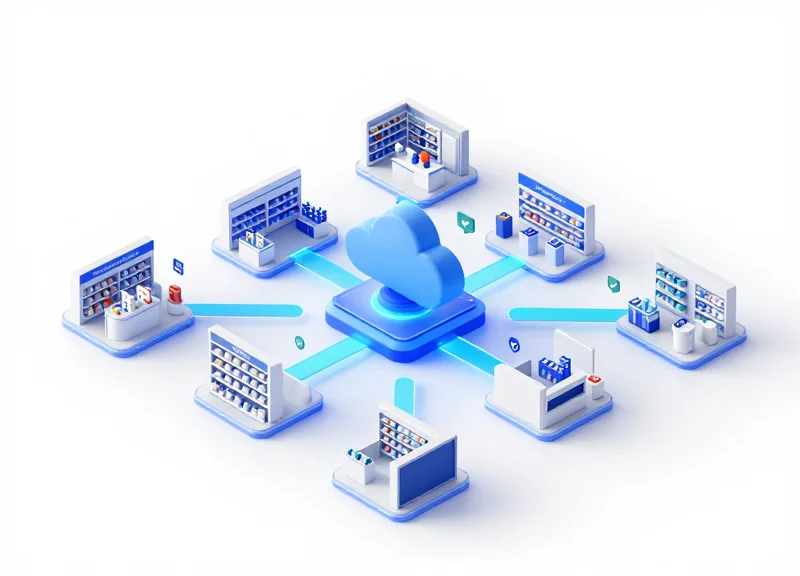
The integration of Radio Frequency Identification (RFID) and Electronic Article Surveillance (EAS) represents the 'Golden Ratio' of modern retail security. By combining the item-level intelligence of RFID with the robust perimeter protection of non-contact EAS, retailers can transform their security gates from simple alarms into data-rich hubs. This synergy allows for a 360-degree view of inventory lifecycle, where a single tag serves two purposes: providing real-time location data for inventory management and triggering invisible security shields to prevent unauthorized removal. The result is a dramatic reduction in 'shrinkage' and an unprecedented increase in operational throughput.
| Feature | Legacy EAS Only | Standalone RFID | Hybrid Integrated System |
|---|---|---|---|
| Primary Function | Theft Deterrence | Inventory Tracking | Loss Prevention + Inventory Intelligence |
| Data Granularity | Binary (Alarm/No Alarm) | Item-specific (SKU/Color/Size) | Real-time visibility of specific stolen items |
| Fragile Goods Handling | High-risk (Contact required) | Low-risk (No contact) | Zero-touch protection & tracking |
| ROI Drivers | Reduced Theft | Stock Accuracy | Labor Savings + Sales Lift + Low Shrink |
The 2026 Expert Insight: Velocity-based Shrinkage Analysis. Beyond simple security, the true ROI of integrated systems in the 2026 market lies in 'Velocity Analytics.' Traditional EAS tells you that something left the store; integrated systems tell you exactly what left and at what speed. By analyzing the velocity of item movement toward exits, AI-driven hybrid systems can distinguish between a customer browsing near the door and a 'grab-and-run' event in progress, allowing for silent alerts to security before the threshold is even crossed.
- Unified Tagging Strategy: Implement dual-technology tags or 'RFID-as-EAS' protocols to reduce the physical hardware attached to delicate items, preserving product integrity.
- Automated Receiving and Reconciliation: Use the RFID layer to instantly check-in fragile shipments without opening boxes, reducing manual handling and potential breakage.
- Smart Exit Analytics: Configure non-contact EAS zones to log the specific ECP (Electronic Product Code) of items during an alarm event to automatically update inventory levels.
- Labor Reallocation: Shift staff from manual stock-counting and security monitoring to high-value customer service, utilizing the automated data stream to drive sales.
How does integration improve the customer experience?
It eliminates 'false alarms' that embarrass customers and allows for an open, gate-free store aesthetic that is essential for high-end fragile goods boutiques.
Is the initial investment for hybrid systems significantly higher?
While the upfront cost is higher than legacy EAS, the ROI is typically realized within 12-18 months through a 25% reduction in labor costs and a 15% increase in on-floor stock availability.
Does this system require specialized staff training?
Modern 2026 interfaces are designed for 'Invisible Tech' operation; the systems run in the background, providing simple, actionable alerts via mobile devices to existing staff.
Reducing Shrinkage Without Compromising Customer Experience

In the 2026 retail landscape, the goal is 'Invisible Security': reducing shrinkage through high-precision RFID and non-contact EAS systems that allow customers to interact with fragile goods unhindered. By replacing bulky, intrusive tags and locked cabinets with overhead sensors and item-level tracking, retailers can mitigate loss while fostering a premium, open-merchandising environment that encourages the tactile engagement necessary for high-end sales.
| Metric | Legacy Security (Locked/Tagged) | Next-Gen Protection (RFID/Non-Contact) |
|---|---|---|
| Product Interaction | Restricted; requires staff assistance. | Full; customers can touch and feel goods freely. |
| Visual Aesthetics | Cluttered by hard tags and glass barriers. | Clean; security is embedded or overhead. |
| Checkout Speed | Slow; manual tag removal required. | Instant; bulk RFID scanning at point-of-sale. |
| Shrinkage Control | Reactive; alarm sounds at the door. | Proactive; real-time tracking of item movement. |
Does removing physical barriers lead to higher theft rates?
Counter-intuitively, no. While physical barriers deter some theft, they also decrease staff visibility. RFID and non-contact EAS provide 'Digital Deterrence' by alerting staff to unusual inventory movement before the item even reaches the exit, often proving more effective than static locks.
How do these systems handle the fragility of premium ceramics or electronics?
Unlike mechanical wraps that can crush delicate packaging, RFID inlays are paper-thin and non-contact EAS uses light or radio waves. This ensures the product's physical integrity remains 100% intact from warehouse to the customer's home.
Can these technologies be integrated with existing store loyalty apps?
Yes. By 2026, leading retailers are using RFID to trigger personalized content on a customer's phone when they pick up a protected item, turning a security feature into a powerful marketing touchpoint.
Expert Insight: The 'Tactile Value' Premium. Data from Silicon Valley retail labs indicates that for fragile and high-value items, the ability for a customer to hold the product increases the 'Perceived Ownership' effect, raising conversion rates by up to 35%. Traditional security methods kill this psychological trigger. By using non-contact EAS, you aren't just protecting inventory; you are actively removing the friction that prevents a lead from becoming a buyer. The technology is no longer a cost center—it is a conversion engine.
Future-Proofing Your Supply Chain for 2026 and Beyond
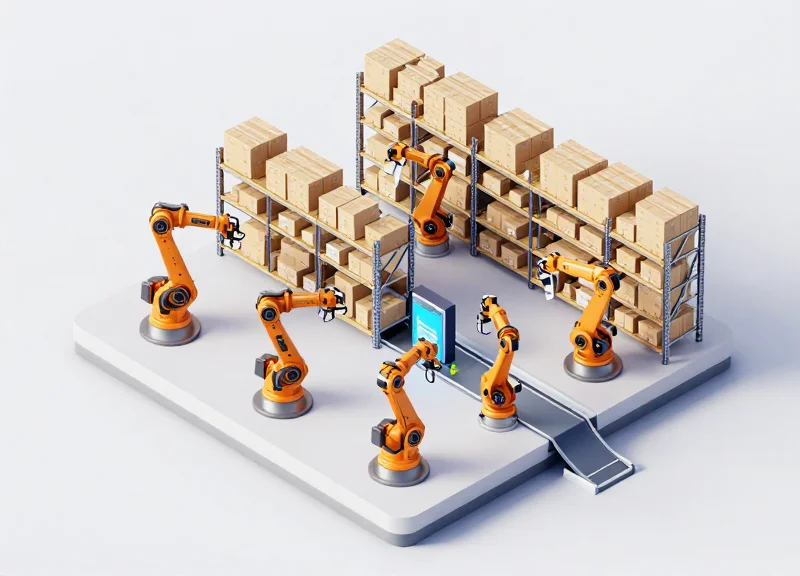
To future-proof your supply chain for 2026, businesses must transition from isolated security hardware to integrated, data-centric ecosystems that leverage RFID and non-contact EAS for both loss prevention and inventory intelligence. This means investing in infrastructure that supports high-speed, item-level visibility and touchless authentication to meet the demands of an increasingly automated and fragile-goods-heavy global market.
- Conduct a Friction Audit: Evaluate your current logistics and retail touchpoints to identify where manual scanning or physical EAS deactivation is causing delays or damaging fragile inventory.
- Implement Hybrid Pilot Programs: Deploy dual-purpose RFID tags that serve both inventory management and security functions to maximize ROI and reduce the physical footprint of tags on delicate packaging.
- Bridge the Data Silos: Integrate your EAS and RFID data streams into a centralized Cloud ERP or Warehouse Management System (WMS) to enable real-time predictive analytics regarding shrinkage trends.
- Scale with Modular Infrastructure: Prioritize overhead or concealed non-contact sensors over fixed pedestals to allow for flexible store and warehouse layouts as market needs evolve.
| Feature | Legacy Supply Chain (2020-2023) | Future-Proofed Supply Chain (2026+) |
|---|---|---|
| Tracking Granularity | Pallet or Case-level | Item-level (Serial Number) |
| Security Interaction | Physical deactivation (High handling) | Non-contact/Overhead (Zero handling) |
| Shrinkage Insight | Ex-post facto (Post-inventory) | Real-time/Predictive |
| Sustainability | Disposable, single-use tags | Sustainable/Recyclable RFID tags |
Is the transition to 2026 standards cost-prohibitive for SMEs?
No. The cost of RFID silicon has plummeted by over 40% in recent years, and the operational savings from reduced shrinkage and manual labor typically result in a full ROI within 12 to 18 months.
Will my existing POS systems work with non-contact EAS?
Most modern non-contact EAS systems utilize API-first architectures, allowing them to integrate with existing POS systems via software bridges without requiring a complete hardware overhaul.
How does this affect fragile goods packaging?
Future-proofing involves 'Smart Packaging' where the protection technology is embedded during manufacturing, reducing the need for secondary security labels that can peel or damage delicate surfaces.
Expert Tip: By 2026, the competitive edge will not come from merely having RFID, but from 'Edge Intelligence.' I recommend implementing RFID readers with onboard processing capabilities that can filter 'ghost reads' and movement directionality locally at the reader level. This prevents data bottlenecks in your cloud environment and ensures that your fragile goods are tracked with 99.9% accuracy as they move across logistics zones, a critical factor for high-value delicate electronics and pharmaceutical compliance.
The DragonGuardGroup Advantage in Fragile Goods Protection
The DragonGuardGroup advantage lies in its 'Protection-by-Design' philosophy, which treats security not as an add-on, but as an integral part of the fragile product's lifecycle. Unlike generic security providers, DragonGuardGroup specializes in hardware that balances high-sensitivity detection with zero-impact application. For the 2026 market, this means utilizing proprietary non-contact EAS systems and soft-contact RFID tagging that prevents micro-fractures in ceramics, glass, and high-end electronics. By combining Electronic Article Surveillance (EAS) for immediate theft deterrence, Radio Frequency Identification (RFID) for real-time tracking, and Electronic Shelf Labels (ESL) for dynamic pricing and item-level data, we provide a triple-layer shield that optimizes both the supply chain and the storefront.
| Feature | Generic Security Providers | DragonGuardGroup Specialized Solutions |
|---|---|---|
| Tagging Impact | High-pressure mechanical pins | Adhesive-safe and non-contact sensors |
| Detection Range | Limited to 1.2m - 1.5m | Extended 2.5m+ with overhead non-contact EAS |
| Data Integration | Siloed EAS and Inventory systems | Unified RFID + EAS + ESL Dashboard |
| Fragile Adaptability | One-size-fits-all hardware | Custom-calibrated sensors for delicate materials |
How does DragonGuardGroup prevent damage during the tagging process?
We utilize 'Soft-Touch' RFID adhesives and non-clamping EAS tags designed specifically for the structural vulnerabilities of fragile goods, ensuring that the security element never compromises the product's integrity.
Can your systems handle the high-traffic demands of 2026 retail?
Yes, our next-gen overhead detection systems are built to process high-density foot traffic without creating bottlenecks, maintaining a frictionless customer experience while providing invisible security.
What is the ROI on integrating RFID and EAS through DragonGuardGroup?
Clients typically see a 30% reduction in shrinkage and a 20% increase in inventory accuracy within the first 12 months, as the system eliminates manual counting and human error in the supply chain.
Expert Insight: The Surface-Tension Calibration Advantage. One unique technical differentiator at DragonGuardGroup is our R&D focus on 'Surface-Tension Calibration.' In 2026, as materials become thinner and more sustainable, traditional adhesives can cause 'delamination' or surface peeling on high-end packaging. DragonGuardGroup has developed a specialized line of low-residue, variable-bond RFID tags that provide maximum security during transit but can be removed by the consumer without leaving a trace or damaging the fragile finish of the item. This attention to chemical compatibility is a level of detail that generic security firms simply do not offer.