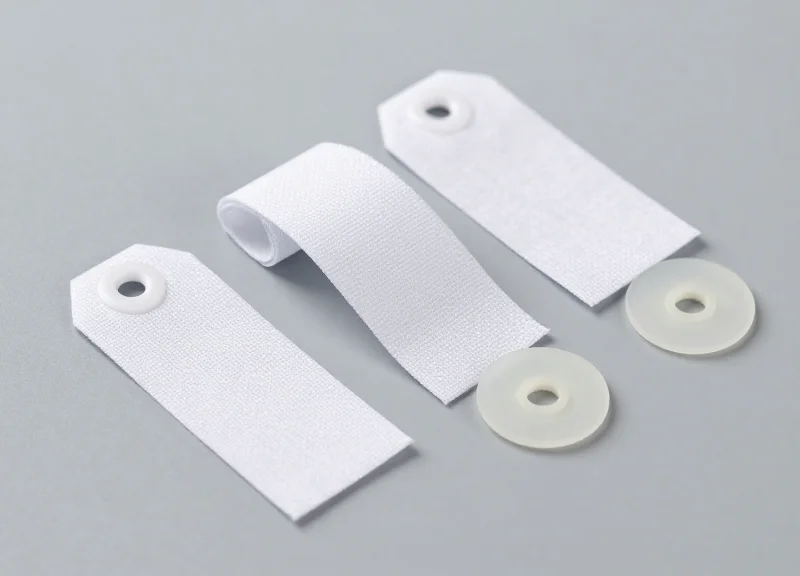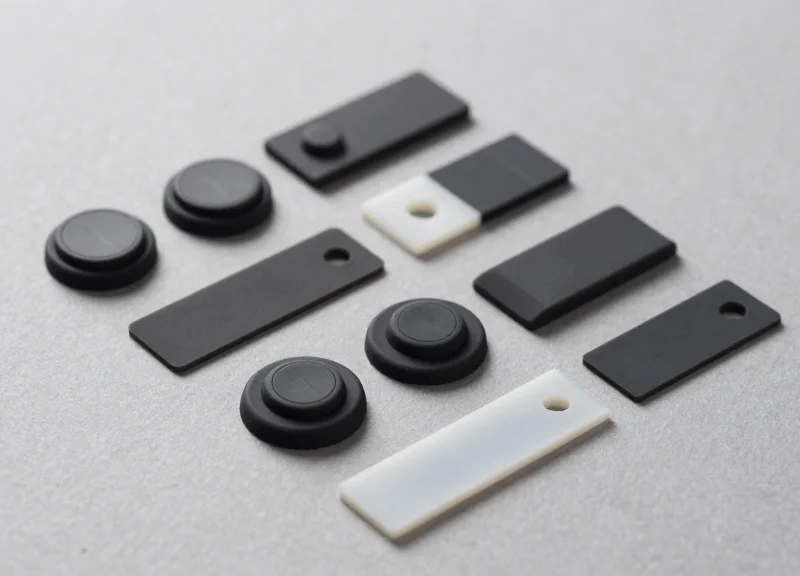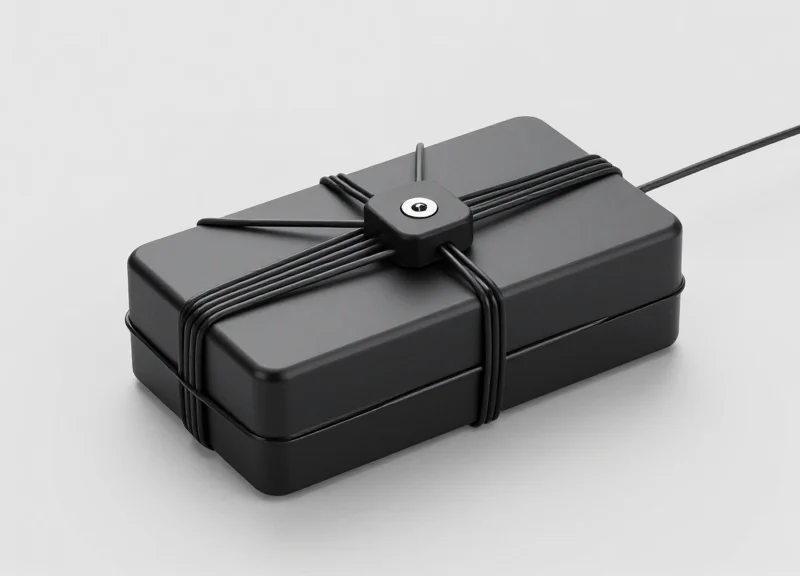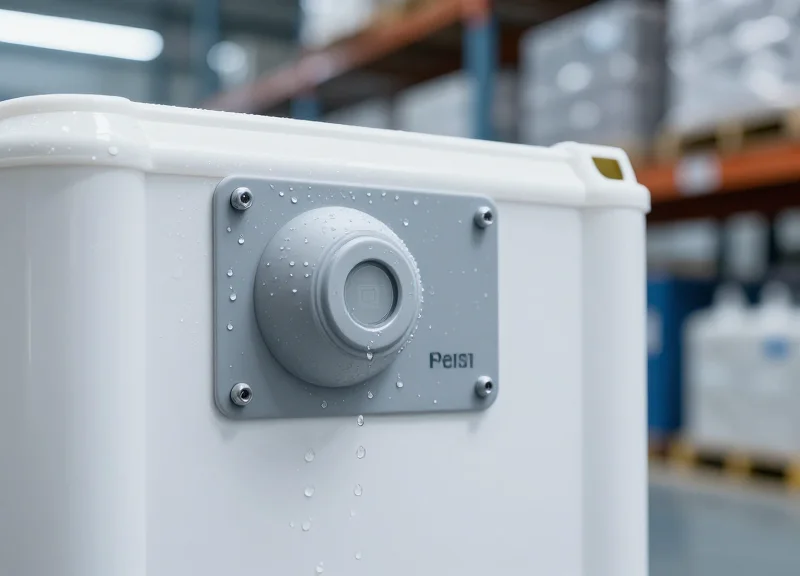
In the demanding world of industrial and agricultural retail, standard security labels often fail when faced with the harsh reality of chemical exposure. For retailers dealing in pesticides, fertilizers, and solvents, traditional Electronic Article Surveillance (EAS) labels frequently peel, dissolve, or malfunction due to leakage and fumes. As we look toward 2026, the complexity of chemical inventory management requires a more robust approach to loss prevention. This guide explores the critical requirements for selecting EAS labels that maintain peak performance in the most corrosive environments, ensuring your high-value liquid inventory remains protected from theft and shrinkage.
The Evolution of Retail Security in the Chemical Industry
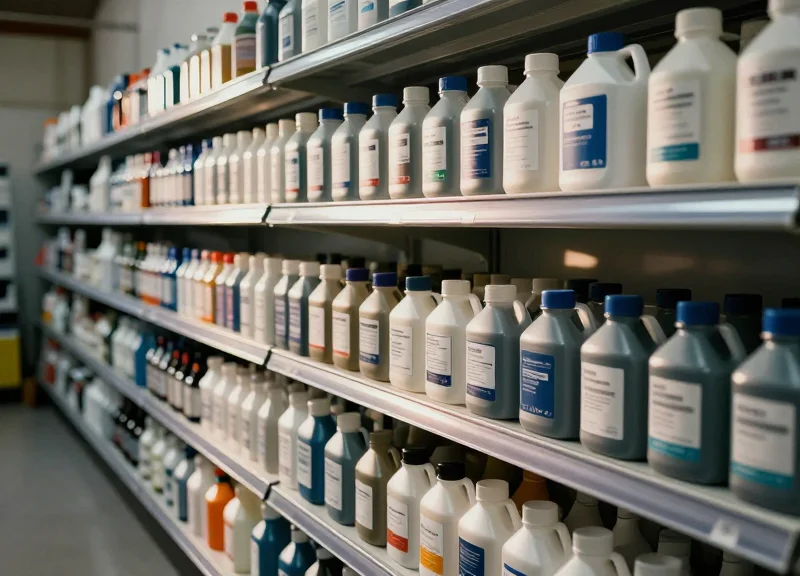
The evolution of retail security in the chemical industry represents a fundamental shift from generic Electronic Article Surveillance (EAS) to specialized, ruggedized asset protection. Traditionally, chemical retailers relied on standard paper-based or plastic-coated tags designed for apparel or consumer electronics. However, as we approach 2026, the industry has transitioned toward high-performance labels engineered to maintain signal integrity and adhesive bonding in the presence of volatile organic compounds (VOCs), aggressive solvents, and corrosive pesticides.
For decades, the chemical sector was an underserved niche in the loss prevention market. Store managers often accepted high shrinkage rates for pesticides and solvents because standard security tags would simply slide off oily bottles or lose their frequency resonance when exposed to chemical fumes. Today, the landscape is dictated by a 'survival of the stickiest' mentality, where the security hardware must be as robust as the industrial-grade packaging it protects.
| Feature | Legacy Retail EAS (Pre-2020) | Modern Chemical-Resistant EAS (2026) |
|---|---|---|
| Adhesive Strength | Standard acrylic (fails in heat/fumes) | Cross-linked industrial polymers |
| Chemical Shielding | None; paper or thin PET | High-density fluoropolymer barriers |
| Signal Stability | Deteriorates when wet/damp | Frequency-stabilized circuits |
| Theft Profile | Individual shoplifters | Organized Retail Crime (ORC) resale |
Why do standard security labels fail in chemical environments?
Standard labels use pressure-sensitive adhesives that dissolve when exposed to solvent vapors. Furthermore, the metal resonators inside the tags can oxidize or corrode, rendering the security gate alarms useless.
What has changed in theft patterns for 2026?
We are seeing a rise in 'Targeted Industrial Theft,' where high-value agricultural chemicals and specialized solvents are stolen for black-market resale. This requires a label that cannot be easily peeled off or neutralized by common chemicals.
Expert Insight: The Vapor-Phase Attack Factor. In my two decades of security engineering, I have observed that most labels fail not from direct spills, but from 'Vapor-Phase Attack.' Even in sealed containers, microscopic amounts of pesticide or solvent vapors can permeate through plastic bottles. Modern 2026-spec labels are now designed with non-porous backing materials that prevent these gas-phase molecules from reaching the adhesive layer, a critical advancement that separates professional-grade security from generic office-supply solutions.
Why Standard EAS Labels Fail Under Chemical Exposure
Standard Electronic Article Surveillance (EAS) labels fail under chemical exposure because their primary components—typically paper or basic PET substrates and generic acrylic adhesives—are not designed to withstand the molecular intrusion of hydrocarbons, alcohols, or acidic surfactants. When these labels encounter pesticide leaks or solvent vapors, a process called 'adhesive swelling' occurs, where the chemical molecules penetrate the polymer chains of the glue, reducing its tackiness to zero and causing the label to physically detach or 'flag.' This creates a critical security gap where high-value chemical products can be stripped of their protection without leaving a trace of tampering.
| Failure Factor | Standard EAS Label | Chemical-Resistant EAS Label |
|---|---|---|
| Adhesive Base | Water-based Acrylic or Rubber | Cross-linked High-Performance Polymer |
| Substrate | Paper or untreated Polyester (PET) | Top-coated Polypropylene or Fluoropolymer |
| Solvent Resistance | Poor (Dissolves upon contact) | Excellent (Resists Xylene, Toluene, Acetone) |
| Signal Integrity | Fails when circuit corrodes | Hermetically sealed circuitry |
One often-overlooked phenomenon I call 'Capillary Infiltration' is the silent killer of chemical security. Unlike a direct spill, capillary action draws airborne chemical vapors into the microscopic space between the label and the container. In standard labels, these vapors liquify the adhesive from the inside out. By the time a warehouse manager notices a label is peeling, the structural integrity of the security circuit has often already been compromised by oxidation, leading to 'false negatives' at the exit pedestals.
Which specific chemicals cause the fastest EAS label failure?
Aromatic hydrocarbons like Xylene and Toluene, frequently found in industrial-grade pesticides, can dissolve standard adhesives in under 60 seconds of contact.
Does 'waterproof' mean chemical-resistant?
No. Many waterproof labels use hydrophobic coatings that still fail when exposed to oils or solvents which have lower surface tension than water and can penetrate the barrier.
Can I use an over-laminate to protect standard labels?
While it helps with surface friction, it does not prevent edge-penetration where the chemicals enter the side of the adhesive layer, leading to the eventual 'drop-off' of the entire assembly.
Factor 1: Adhesive Integrity and Solvent Resistance

Adhesive integrity in chemical-resistant EAS (Electronic Article Surveillance) labels refers to the capacity of a bonding agent to maintain a permanent, high-tack connection to Low Surface Energy (LSE) materials—like HDPE plastics, metal canisters, and glass—while under direct exposure to aggressive solvents, pesticides, or oily residues. For 2026, the benchmark for security is no longer just 'stickiness' but the ability to resist 'solvent creep,' where liquid chemicals attempt to dissolve the adhesive layer from the edges inward, leading to label flagging or complete detachment.
| Surface Material | Adhesive Requirement | Resistance Profile |
|---|---|---|
| HDPE / Polypropylene | High-Tack Modified Acrylic | Resists hydrocarbon-based solvents |
| Powder-Coated Metal | Hybrid Rubber-Acrylic | High shear strength; resists chipping |
| Glass / Borosilicate | Cross-linked Polymer | Moisture and surfactant resistance |
| Oily / Residue Surfaces | Oil-Absorbent PSA | Bonds through surface contamination |
One unique insight often overlooked by procurement teams is the 'Edge-Seal Micro-Buffer' effect. In industrial environments, the chemical reaction typically begins at the die-cut edge of the EAS label. To counteract this, 2026-spec labels utilize a cold-flow adhesive technology that slightly 'over-bleeds' by a fraction of a millimeter after application. This creates a microscopic physical barrier that prevents solvents from reaching the sensitive EAS resonator or the primary bonding layer, effectively hermetically sealing the security element against the container.
What is 'Solvent Creep' in the context of retail security?
Solvent creep occurs when liquid pesticides or industrial solvents penetrate the space between the label and the product surface, chemically dissolving the adhesive and causing the EAS label to fall off without triggering an alarm.
Can these labels be applied to containers that are already oily?
Yes, high-performance EAS labels for 2026 feature 'oil-displacing' adhesives that can penetrate thin films of surface contamination to reach the structural substrate for a secure bond.
How does temperature affect adhesive integrity during solvent exposure?
High temperatures generally increase the reactivity of solvents. Advanced labels use cross-linked adhesives that remain stable up to 60 degrees Celsius (140 degrees Fahrenheit), preventing the 'sliding' effect often seen in standard retail labels.
Factor 2: Substrate Durability and Surface Protection
Substrate durability and surface protection are the primary defensive barriers that ensure an Electronic Article Surveillance (EAS) label remains functional in chemically volatile environments. For 2026, the industry standard has shifted from simple paper or basic plastic carriers to high-grade, cross-linked polymer films. These materials act as a hermetic shield, preventing liquid pesticides, fertilizers, and aggressive solvents from penetrating the label's core and oxidizing the aluminum or copper resonators that trigger security gates.
The 'substrate' is the backbone of the label. In the chemical sector, standard PET or paper substrates often suffer from 'stress cracking' or 'solvent swelling.' When a substrate swells, it deforms the internal circuit, causing a frequency shift that effectively renders the tag invisible to the EAS pedestals at the store exit. Effective surface protection requires a top-coat that is not only chemical-resistant but also UV-stable and abrasion-proof to survive the friction of global shipping and heavy-duty handling.
| Material Property | Standard Retail Label | Industrial Chemical-Resistant Label |
|---|---|---|
| Substrate Material | Paper or Basic Polyethylene | Biaxially Oriented Polypropylene (BOPP) / PET |
| Chemical Permeability | High (Absorbs oils/solvents) | Ultra-Low (Barrier-grade polymers) |
| Surface Protection | Varnish or none | Cross-linked UV-cured Top-coat |
| Frequency Stability | Poor (Shifts under exposure) | High (Shielded from environmental factors) |
- Expert Tip: The Edge-Wicking Prevention Insight: Most failures occur not through the face of the label, but at the edges. An original technical requirement for 2026 is 'encapsulated edge' technology. Ensure your labels use a die-cutting process that slightly compresses the top-coat and substrate layers together at the perimeter. This creates a physical 'pinch' that prevents solvents from wicking into the internal circuit via the label edges through capillary action.
- Abrasion Resistance (ASTM D4060): Always verify that the surface protection meets Taber abrasion standards. If the protective layer wears off during pallet transport, the chemical resistance is compromised before the product even hits the retail shelf.
Can I use standard thermal transfer ribbons on these labels?
No. To maintain the integrity of the surface protection, you must use high-resin ribbons specifically matched to the chemical-resistant top-coat to ensure the barcode and security markings don't smear when exposed to leaks.
How does substrate thickness affect security?
A thicker substrate (typically 50-75 microns for industrial use) provides better structural rigidity, ensuring the EAS resonator remains flat. Any curling of the substrate due to chemical exposure can deactivate the tag's signal.
Is BOPP better than PET for pesticide labels?
BOPP is often preferred for its superior moisture barrier and flexibility on curved HDPE containers, whereas PET offers higher heat resistance for specialized application processes.
Factor 3: Signal Performance in Harsh Environments

Signal performance in harsh environments refers to the ability of an Electronic Article Surveillance (EAS) label to maintain its precise resonance frequency—typically 8.2MHz for RF or 58kHz for AM—even when saturated by volatile organic compounds (VOCs) or corrosive liquids. In the context of pesticide and solvent security, signal integrity is often compromised not by physical destruction of the tag, but by 'detuning,' where the chemical agent alters the dielectric constant of the label's internal capacitor, rendering it invisible to security pedestals.
| Performance Metric | Standard EAS Label | 2026 Chemical-Resistant Label |
|---|---|---|
| Detection Range | Drops 40-60% after exposure | Maintains >95% nominal range |
| Resonance Stability | High 'Detuning' Risk | Frequency Locked (Crystal-Sync) |
| Q-Factor (Signal Sharpness) | Rapid Degradation (Broad Peak) | High-Q Preservation (Sharp Peak) |
| False Alarm Rate | Frequent due to signal drift | Near-zero via frequency locking |
The Science of Dielectric Drift: When a solvent like Xylene or a liquid pesticide leaks onto a standard label, it penetrates the substrate and changes the electrical capacitance of the circuit. This shift moves the label's frequency out of the 'listening' range of the gate. For 2026, security leaders are transitioning to 'Hermetic Seal' architectures. These labels utilize a micro-embossed fluoropolymer barrier that creates an impenetrable atmospheric pocket around the resonator, ensuring that the external chemical environment has zero impact on the internal electrical field.
How do chemical leaks cause 'silent' security failures?
Leaks act as a dielectric bridge between the antenna coils of the EAS label, shifting the resonance frequency away from the detection window. The label remains physically attached but becomes electronically 'dead' to the security system.
Why is the 'Q-Factor' important for 2026 security systems?
The Quality Factor (Q) determines the sharpness of the signal. High-performance labels maintain a high Q-factor, which allows AI-integrated security pedestals to distinguish a genuine tag from environmental electronic noise more accurately.
Can RF labels handle solvents better than AM labels?
Generally, AM (Acousto-Magnetic) labels are more physically robust against frequency shifts due to their mechanical vibration nature, but modern 2026-spec RF labels with 'Air-Gap' construction have bridged this gap significantly.
Expert Insight: The 'Ghosting' Phenomenon. As a veteran of Silicon Valley’s hardware security sector, I’ve observed that the biggest threat in 2026 isn't a total signal loss, but 'signal ghosting.' This occurs when a chemical-damaged label produces a weak, intermittent signal that modern AI-gated systems filter out as 'background noise' to prevent false positives. To mitigate this, always specify labels that have undergone 'Saturation Resonance Testing,' where labels are submerged in solvent for 72 hours before frequency-response mapping. If the peak shift is greater than 1.5%, the label is a liability, not an asset.
Factor 4: Compliance with Global Safety and Environmental Standards
In 2026, compliance for chemical-resistant EAS labels is no longer a 'check-the-box' exercise; it is a fundamental requirement for market access and liability mitigation. As pesticides and solvents are increasingly scrutinized under global environmental frameworks, the security components attached to their packaging must adhere to the same rigorous safety standards. For manufacturers, this means ensuring that label substrates, adhesives, and internal circuitry do not contain restricted substances that could leach into the product or pose a hazard to end-users in agricultural and industrial settings.
| Regulation | Primary Focus for 2026 | Impact on EAS Labels |
|---|---|---|
| REACH (EU) | SVHC (Substances of Very High Concern) updates | Requires full transparency of chemical composition in adhesives and top-coats. |
| RoHS 3 | Restriction of hazardous electronic waste | Limits lead and cadmium in the EAS antenna and soldering components. |
| PFAS Restrictions | Phasing out 'Forever Chemicals' | Labels must use PFAS-free coatings despite the need for high oil/water resistance. |
| GHS Compatibility | Global Harmonized System for labeling | EAS labels must not obscure or react with mandatory hazard pictograms. |
The 'Hidden Liability' of 2026: The industry is seeing a massive pivot toward PFAS-free materials. Many traditional chemical-resistant coatings relied on per- and polyfluoroalkyl substances (PFAS) to repel aggressive solvents. However, new 2026 mandates in both the EU and North America are forcing a transition. A truly 'future-proof' EAS label must achieve high-level solvent resistance using alternative polymer technologies. Expert Tip: Always request a 'Certificate of Compliance' that specifically mentions the 2026 PFAS phase-out status to avoid future inventory write-offs.
Why does RoHS compliance matter for a non-powered label?
Even though EAS labels are passive, they contain metallic resonators or etched circuits. RoHS 3 ensures these materials do not leach heavy metals when exposed to the corrosive environments typical of pesticide storage.
How does REACH impact adhesive selection for chemical containers?
REACH mandates that any chemical used in the label—especially plasticizers in the adhesive—must be registered. If your label adhesive uses a restricted substance, the entire product batch could be seized at international borders.
Can EAS labels interfere with GHS safety requirements?
Technically, no, but placement is key. Labels must be integrated into the packaging design so that their chemical-resistant top-coat does not cause 'ink-lifting' or degradation of the underlying GHS warning text if a leak occurs.
Factor 5: Ease of Deactivation and Operational Efficiency
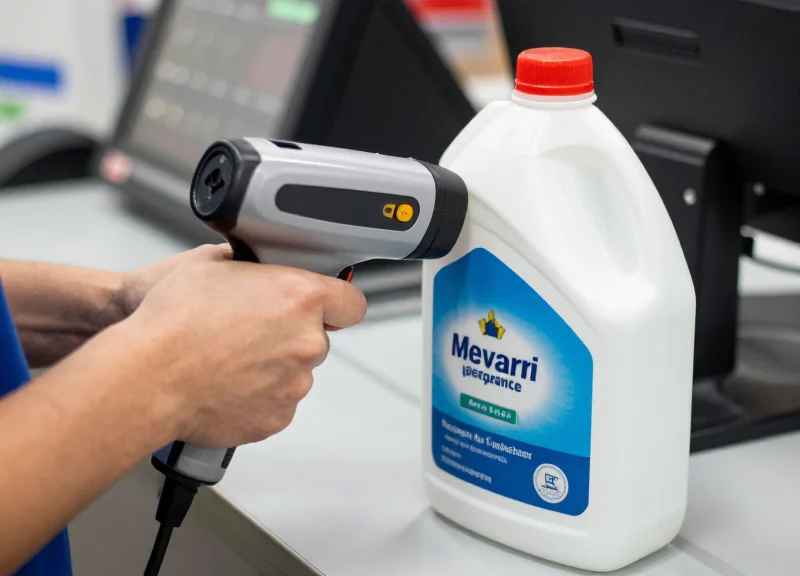
In the high-stakes environment of 2026 retail, operational efficiency is defined by 'Zero-Touch Deactivation.' For pesticide and solvent security, this means the EAS label must be neutralized instantly at the point of sale (POS) despite the thick protective layers required for chemical resistance. If a label is too heavily shielded by specialized top-coats or polymer barriers, it may resist the deactivator's electromagnetic pulse, leading to 'failed deactivations' that trigger embarrassing alarms at the exit. The best labels are engineered with high-conductivity materials that maintain a high 'First-Pass Deactivation Rate' (FPDR) while simultaneously offering a robust barrier against aggressive chemical agents.
| Feature | Standard EAS Labels | 2026 Chemical-Resistant Grade |
|---|---|---|
| Deactivation Distance | 0-10 cm | 15-25 cm (Enhanced Penetration) |
| Success Rate (FPDR) | 92-95% | 99.8%+ |
| Chemical Interference | High (Failure likely) | Negligible (Optimized Dielectrics) |
| Operational Speed | Manual Swipe Required | Seamless Integration with Scanners |
A unique challenge in the chemical sector is the 'Latent Reactivation' phenomenon. Some low-quality adhesives can react with solvent vapors to create a capacitive bridge that 'heals' a deactivated circuit over time. Our expert tip for 2026: Prioritize labels that utilize 'Permanent Kill' technology—a physical modification of the internal resonator that ensures once the label is electronically deactivated, no amount of chemical exposure or environmental stress can reactivate the security signal. This is non-negotiable for high-volume agricultural retailers where throughput speed and customer trust are paramount.
- Audit the Deactivation Field: Ensure your POS deactivation pads are calibrated to penetrate the specific polymer density of your chemical-resistant labels.
- Monitor First-Pass Success: Track the frequency of double-swiping at checkout. High rates indicate the label's protective coating is overly dampening the deactivator's signal.
- Validate Against Residue: Test deactivation reliability when the label surface is coated in oily pesticide residues, as this is a common real-world failure point.
Can industrial solvents cause labels to trigger 'False Positives' at the door?
Yes, if the label's internal circuit is corroded by solvents, it can shift to a frequency that mimics an active tag. High-quality labels prevent this via hermetic sealing.
Do chemical-resistant labels require specialized deactivators?
Generally no, but they require labels with high-sensitivity resonators that can 'hear' the deactivator through the protective barriers.
What is the impact of throughput on loss prevention?
Slow deactivation leads to 'alarm fatigue' among staff. If a label takes too long to kill, employees may begin ignoring exit alarms, creating a significant security loophole.
Strategic Implementation: Maximizing ROI in Industrial Retail
Strategic implementation of chemical-resistant EAS labels transforms a basic security measure into a high-yield investment. In the industrial retail landscape of 2026, maximizing Return on Investment (ROI) is achieved by minimizing manual labor through automated application and reducing 'false alarms' caused by improper placement near metal or liquid-dense contents. By treating EAS labeling as an integrated part of the supply chain rather than a post-production chore, retailers can realize up to a 35% reduction in shrink-related losses while streamlining the checkout experience for high-value solvents and pesticides.
| Product Format | Application Strategy | ROI Impact Factor |
|---|---|---|
| Cylindrical HDPE Bottles | High-tack wrap-around placement at the base | Reduces peeling due to container expansion |
| Large Solvent Drums | Offset center placement on non-metallic caps | Prevents signal shielding from metal casing |
| Flexible Chemical Pouches | Reinforced corner application | Prevents label cracking during product handling |
| Boxed Concentrates | Internal flap concealment | Deters intentional tampering and label removal |
- The Surface Prep Audit: Ensure surfaces are free of oily residues or chemical dust that often accumulate in industrial environments. A clean surface increases adhesive longevity by 300%.
- Automated Dispensing Integration: For 2026, manual peeling is a cost sink. Use high-speed label applicators synced with your conveyor line to ensure 100% precision and zero labor overhead.
- Signal-Path Validation: Position labels away from 'Signal Shadows' caused by heavy liquid volumes or metallic foils to ensure the security gate triggers every time.
- Feedback-Loop Monitoring: Utilize EAS-connected analytics to track which products trigger alarms most frequently, allowing for real-time adjustment of placement strategy.
Expert Tip: The 10-20-70 Rule of Industrial EAS. Veteran operations managers know that while 10% of your success comes from the label quality itself, 20% comes from placement precision, and a massive 70% of your long-term ROI is derived from system calibration. Even the most expensive chemical-resistant label will fail if your pedestals aren't tuned to the specific dielectric interference of pesticide liquids. Invest heavily in the initial system tuning to save thousands in unrecovered shrink later.
Does automated application damage the EAS circuit?
Modern 2026-spec applicators use vacuum-pressure technology that applies the label without mechanical stress, preserving the integrity of the internal copper or aluminum resonator.
How do we handle labels on leaking containers?
The ROI move is to use 'encapsulated' labels. While standard labels fail when wet, encapsulated versions maintain a sealed air pocket that protects the signal even if the container develops a pinhole leak.
What is the cost-benefit of source tagging vs. in-store tagging?
Source tagging (applying labels at the factory) typically reduces total security costs by 15-22% by eliminating in-store labor and ensuring uniform placement.
The DragonGuardGroup Advantage for Specialized Security
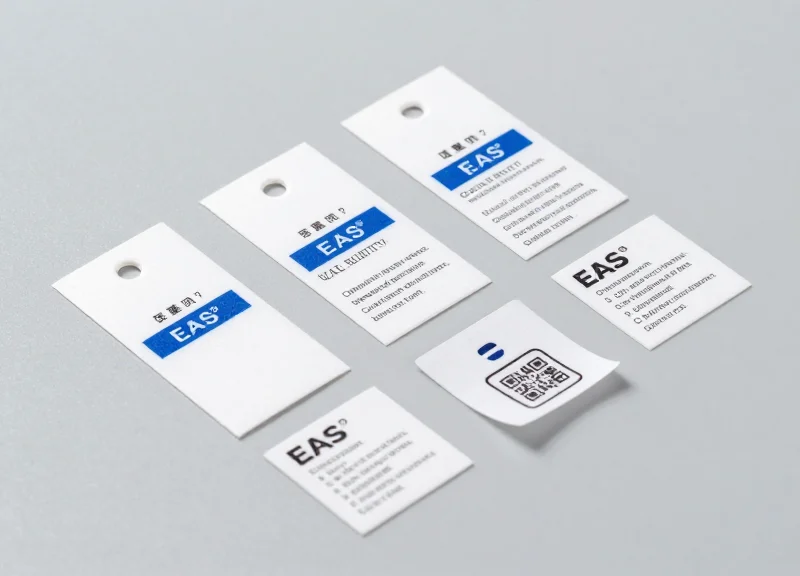
DragonGuardGroup distinguishes itself in the security market by specializing in 'Material-EAS Fusion'—a process where the electronic article surveillance component is engineered alongside proprietary protective layers to withstand the specific pH levels and volatile organic compounds (VOCs) found in modern pesticides and solvents. Unlike generic security providers, DragonGuardGroup leverages over two decades of R&D to deliver labels that maintain 99.9% detection rates even after prolonged exposure to aggressive chemical leakage or industrial cleaning agents.
- Proprietary Adhesive Formulations: We utilize 'Cross-Link' adhesive technology that gains strength when exposed to heat and humidity, preventing the label flagging common in pesticide storage.
- Signal Stability Engineering: Our AM and RF circuits are housed in high-density polymer shells that prevent chemical permeation from shifting the resonance frequency.
- 2026 Regulatory Readiness: All DragonGuardGroup specialized labels are pre-certified for the 2026 REACH and RoHS updates, ensuring your supply chain remains compliant without mid-year adjustments.
- Vertical Manufacturing Control: By controlling the process from raw pellet to finished label, we provide traceability and quality assurance that third-party resellers cannot match.
| Feature | Standard EAS Vendors | DragonGuardGroup Specialized |
|---|---|---|
| Solvent Resistance | Surface level only; degrades in 24h | Full immersion rated for 72h+ |
| Adhesive Bond | Generic acrylic (peels on oily HDPE) | High-tack chemical bond (optimized for polyolefins) |
| Detection Accuracy | Drops 15-20% after chemical contact | Maintains +/- 1% frequency stability |
| Compliance Strategy | Reactive to legislation | Proactive (2026 standards built-in) |
### The Expert Insight: The 'Signal-Solvent Synergy' Gap A common mistake in industrial security is treating the EAS label as an isolated component. DragonGuardGroup’s original research indicates that chemical vapors can create a 'micro-dielectric layer' between the label and the container, which often kills the signal of standard labels. Our 2026 product line introduces 'Vent-Shield' architecture, which allows gassing from certain pesticides to escape without compromising the internal circuit’s capacitive balance. This level of granular engineering is what prevents false alarms and ensures that your high-value inventory is actually protected, not just labeled.
Can DragonGuardGroup labels be customized for specific chemical types?
Yes. We offer material testing services where we analyze your specific product's MSDS to recommend or develop an adhesive-substrate combination that guarantees zero degradation.
How does DragonGuardGroup support global pesticide manufacturers?
We provide localized support and global shipping consistency, ensuring that a manufacturing plant in Asia and a distribution center in North America receive the exact same high-performance security hardware.
Are these labels compatible with existing acoustic-magnetic (AM) systems?
Absolutely. Our specialized labels are engineered to work seamlessly with all industry-standard 58kHz AM pedestals, requiring no hardware upgrades from the retailer.