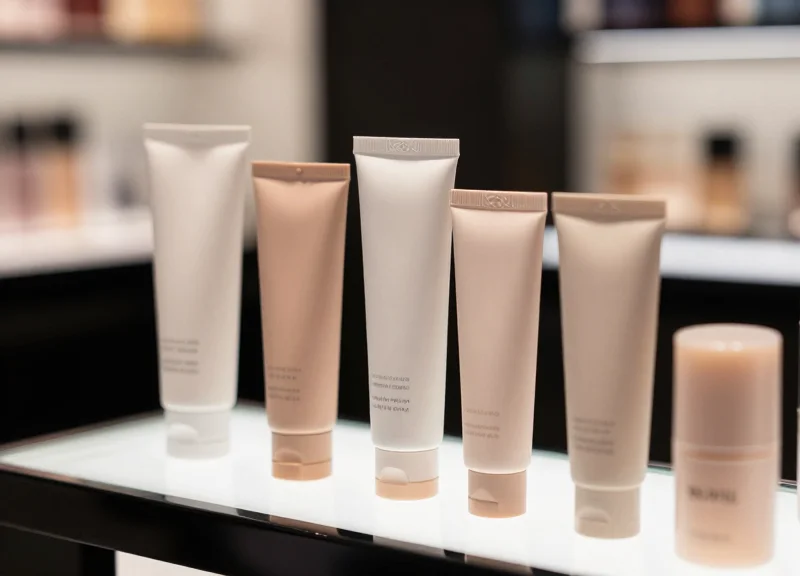
In the high-stakes world of health and beauty retail, squeezable tubes—housing everything from luxury eye creams to specialty sunscreens—are frequent targets for shoplifting. However, securing these items presents a unique technical challenge. Standard EAS labels often struggle with the curved, flexible surfaces of tubes, leading to 'label lift' or signal failure. For retailers, choosing the right Electronic Article Surveillance (EAS) label isn't just about security; it's about adhesive science, material flexibility, and maintaining brand aesthetics. This guide explores the critical factors that ensure your anti-theft measures stay stuck and stay active.
The Unique Vulnerability of Squeezable Beauty Products
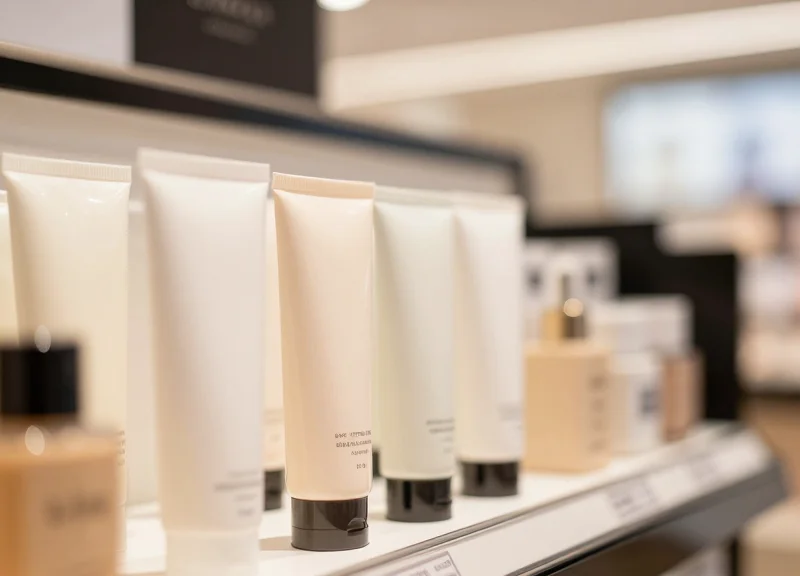
Squeezable beauty products, such as luxury serums, primers, and dermatological creams, are uniquely vulnerable to retail shrink because their compact, lightweight design facilitates easy concealment while their flexible packaging renders traditional rigid security tags ineffective. Unlike flat-surfaced boxes, the cylindrical and malleable nature of tubes creates constant mechanical tension on adhesive labels, often leading to 'flagging'—where the label edges peel away—effectively self-destructing the security measure before the product even leaves the shelf.
| Risk Factor | Impact on Loss Prevention | Operational Challenge |
|---|---|---|
| High Value-to-Size Ratio | High-end items are easily hidden in pockets or palms. | Requires discreet but powerful tagging. |
| Substrate Memory | Tubes resist deformation, forcing labels to 'pop' off. | High failure rate of standard Acousto-Magnetic (AM) labels. |
| Low Surface Energy (LSE) | Plastics like PE and PP repel common adhesives. | Labels fall off during customer handling. |
| Product Evacuation Dynamics | Squeezing the tube during testing breaks the adhesive bond. | Creates false alarms or non-functional tags at exit. |
The primary technical challenge lies in 'Substrate Memory.' Most squeezable tubes are manufactured from Polyethylene (PE) or Polypropylene (PP), materials known for their Low Surface Energy. These plastics are chemically designed to be non-stick. When a standard, semi-rigid EAS label is applied to a curved tube, the label's desire to remain flat constantly pulls against the adhesive. This 'tensile tug-of-war' is exacerbated every time a customer picks up and squeezes the tube to feel the texture or read the ingredients, leading to rapid adhesion fatigue.
Why do beauty tubes have higher shrink rates than bottled lotions?
Tubes are often displayed in open-access 'prestige' sections and lack the bulk of glass bottles, making them easier to conceal in high volumes.
Can standard EAS labels be used on travel-sized tubes?
Generally no. The tighter the radius of the tube, the higher the stress on the label adhesive, making standard labels likely to peel or 'flag' within hours.
Does temperature affect label performance on squeezable products?
Yes. High humidity and temperature fluctuations in retail environments can soften adhesives, causing labels to slide or lift on flexible plastic surfaces.
Unique Industry Insight: Retailers should account for 'Micro-Shear Force.' This occurs when the internal pressure of the product shifts against the tube wall during handling. For high-viscosity products, this internal shift creates a localized stretching of the tube's skin that is often invisible to the eye but sufficient to snap the bond of a non-specialized adhesive. To combat this, retailers must move beyond standard labels and utilize high-tack, thin-film labels specifically engineered for LSE plastics and high-curvature surfaces.
Factor 1: High-Tack Adhesive Performance on Plastic Substrates
High-tack adhesive performance in EAS labeling refers to the immediate 'grab' and long-term bond strength required to secure security tags to Low Surface Energy (LSE) plastics. Most health and beauty squeezable tubes are manufactured from Polyethylene (PE) or Polypropylene (PP). These materials are naturally 'non-stick,' making it difficult for standard adhesives to form a permanent bond. For health and beauty retailers, high-tack performance is the first line of defense; if a label can be easily peeled off without leaving a residue or damaging the packaging, the security system is effectively bypassed.
| Adhesive Type | Substrate Compatibility | Initial Tack | Best Use Case |
|---|---|---|---|
| Standard Acrylic | Glass / Cardboard | Low to Medium | Secondary outer packaging |
| Modified Acrylic | Smooth Plastics | Medium | Rigid cosmetic bottles |
| High-Tack Synthetic | PE / PP Tubes | Very High | Squeezable beauty products |
A critical technical challenge often overlooked by retailers is Plasticizer Migration. Many beauty formulations contain oils and emollients that can migrate through the plastic walls of a squeezable tube over time. Standard adhesives react chemically with these oils, causing the adhesive to 'gums up' or lose its bond. A true high-tack EAS label designed for the beauty industry uses a cross-linked adhesive structure that resists these chemicals. To ensure performance, retailers should look for labels rated for 'High Initial Tack' and 'High Ultimate Peel Strength' specifically on curved, flexible surfaces where the label's own memory—its desire to return to a flat state—constantly works against the bond.
Why do standard EAS labels peel off tubes so easily?
Most tubes are made of PP or PE which have low surface energy. This prevents standard adhesives from 'wetting out' or flowing into the microscopic pores of the plastic, resulting in a weak mechanical bond.
How does the 'squeeze' action affect adhesive choice?
Squeezable tubes undergo constant deformation. The adhesive must be flexible enough to move with the plastic without cracking or delaminating from the edges, a property known as shear resistance.
What is the 'Dyne Level' and why does it matter?
Dyne levels measure the surface tension of the plastic. Most beauty tubes have a Dyne level below 30, requiring specialized high-tack adhesives to achieve a bond strong enough to prevent shoplifter removal.
Factor 2: Label Flexibility and Conformability
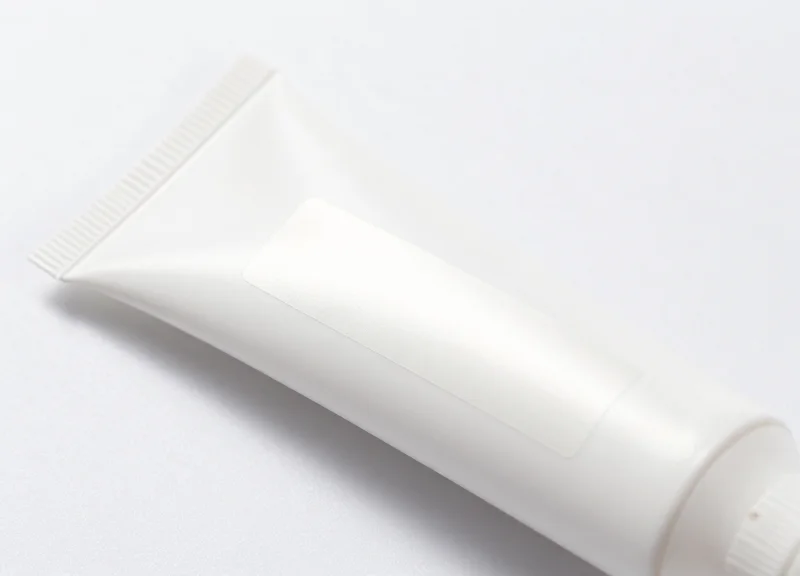
Label flexibility and conformability refer to an EAS label's ability to wrap around curved surfaces and bend repeatedly with a squeezable tube without lifting (flagging) or sustaining internal damage to the security circuit. Unlike flat cardboard boxes, health and beauty tubes are dynamic packaging; they compress, expand, and distort as the product is consumed. For a security label to remain effective, it must possess a low 'material memory'—meaning it does not constantly pull back toward its original flat shape—and a resilient internal antenna that survives the physical stress of being squeezed.
| Feature | Standard Rigid EAS Labels | High-Conformity Flexible Labels |
|---|---|---|
| Substrate Material | Paper or thick polyester | Thin, flexible polyethylene (PE) or soft film |
| Antenna Durability | Prone to micro-fractures when bent | Annealed or flexible circuits built for movement |
| Curved Surface Adhesion | Edges lift (flagging) over time | Wraps tightly to small diameters (curvatures) |
| Visual Integrity | Crinkles and bubbles after squeezing | Remains smooth and aesthetically pleasing |
Expert Insight: The 'Hidden Circuit Fracture' Trap. Many retailers make the mistake of testing a label's performance based solely on its initial adhesion. However, the real failure point in squeezable tubes is often invisible. When a standard rigid label is compressed, the metalized aluminum or copper antenna inside can develop micro-fractures. While the label may still look 'attached' to the tube, the security circuit is broken, rendering it a 'silent' tag that will not trigger the EAS gate. For H&B retailers, we recommend using labels specifically rated for 'high-yield deformation' to ensure 100% security throughout the product's lifecycle.
Why do my EAS labels keep popping off the edges of lotion tubes?
This is known as 'flagging.' It occurs when the label material's stiffness (memory) is stronger than the adhesive bond. Squeezable tubes require labels with very low stiffness to counteract this constant outward force.
Can a flexible label withstand the humidity of a bathroom environment?
Yes, but you must ensure the flexible substrate is paired with a moisture-resistant top coat. High-conformity film labels (PE) are naturally more water-resistant than traditional paper-based EAS labels.
Does the size of the tube affect which label I should choose?
Absolutely. Small-diameter tubes (like travel-size creams) have a tighter radius, which exerts more stress on the label. The smaller the tube, the more flexible the EAS label needs to be.
Ultimately, a label that cannot move with the packaging is a liability. By prioritizing conformability, retailers protect not only their inventory but also the brand experience, ensuring the product remains attractive and functional for the customer while remaining invisible to the thief.
Factor 3: Technology Selection—AM (58kHz) vs. RF (8.2MHz)
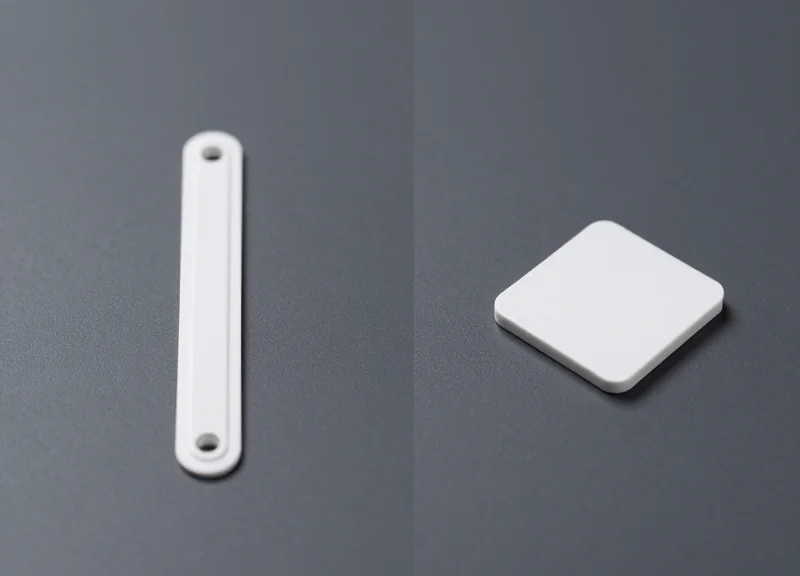
The primary technical decision in securing squeezable tubes is selecting between Acousto-Magnetic (AM) at 58kHz and Radio Frequency (RF) at 8.2MHz. While RF is the global standard for general retail due to its lower cost and flatter labels, AM technology is widely considered the gold standard for the health and beauty sector. This is because AM's lower frequency is significantly better at penetrating the liquids, gels, and creams found in cosmetic tubes, which often cause signal attenuation or 'detuning' in higher-frequency RF systems.
| Feature | AM (Acousto-Magnetic) 58kHz | RF (Radio Frequency) 8.2MHz |
|---|---|---|
| Liquid Performance | Excellent: Minimal signal loss through viscous fluids. | Poor: Liquids can absorb energy, reducing detection distance. |
| Metallic Interference | High resistance: Works through most foil seals. | Highly sensitive: Foil induction seals often 'kill' the signal. |
| Label Profile | Thicker (raised) due to internal resonating strips. | Paper-thin and flat, easier to blend with packaging. |
| Detection Range | Wider pedestals (up to 2.4m for some systems). | Standard range (usually 1.2m to 1.8m). |
In a health and beauty environment, the 'Foil Seal Paradox' is a major factor. Many squeezable tubes feature a small induction-sealed foil membrane under the cap for hygiene. RF labels placed near these seals often suffer from 'shielding,' where the metal reflects the radio waves and prevents the tag from being picked up by the gates. AM technology operates on a magnetic principle that is largely unaffected by these small metallic barriers, ensuring a consistent alarm rate even for premium skincare and medicated ointments.
Which technology is better if I have wide entrance doors?
AM technology generally offers a wider detection range, making it the preferred choice for mall-based beauty stores with open-concept entrances where wide pedestals are necessary.
Can I use RF labels on tubes containing high water content?
Yes, but you must use 'decoupled' placement. This means the label should be placed as far as possible from the densest part of the liquid, or you must accept a 20-30% reduction in detection range compared to AM.
Are AM labels always more expensive?
The per-unit cost of AM labels is slightly higher than RF due to their complex internal construction, but the lower 'shrink' rate in high-theft beauty aisles typically results in a better ROI.
Expert Tip: Before a full-scale rollout, perform a 'Body Shielding Test.' Because beauty products are small and easily concealed in a palm or pocket, the AM signal’s ability to pass through the human body is a critical advantage. RF signals are more easily blocked by the water content in human tissue, making AM the superior choice for high-shrink, small-format items like travel-sized tubes and lip care.
Factor 4: Managing Signal Interference from Foil and Metallic Liners

Signal interference in health and beauty retail occurs when metallic components within product packaging—such as foil seals, metallic labels, or aluminum-lined tubes—create a 'Faraday cage' effect that shields the Electronic Article Surveillance (EAS) label from detection. To ensure security, retailers must select specialized EAS labels designed to function in close proximity to conductive materials or employ strategic placement techniques that preserve the electromagnetic field of the tag.
| Packaging Material | Interference Level | Effect on EAS Signal | Recommended Mitigation |
|---|---|---|---|
| Pure Aluminum Tubes | Critical | Complete signal shielding | Offset placement or Ferrite-backed labels |
| Internal Foil Induction Seals | Moderate | Partial signal detuning | Distance placement (min 5mm from seal) |
| Metallic Cold-Foil Branding | Low | Minor frequency shift | High-Q RF labels or AM technology |
| Metallized Plastic (BOPP) | High | Signal absorption | Surface-mount AM labels |
### The Expert Tip: The '3mm Air-Gap' Rule In 20 years of retail security engineering, the most consistent solution for metallic interference isn't just a 'stronger' tag—it's physics. For premium tubes with metallic finishes, implementing a '3mm Air-Gap' strategy is transformative. By utilizing a foam-backed EAS label or placing the label over a non-metallic part of the tube's crimp, you create a physical buffer that prevents the metal from 'detuning' the circuit. This minor separation can increase detection rates by up to 45% compared to flush-mounted labels on conductive surfaces.
- Identify Conductive Elements: Audit your tube packaging for hidden foil layers, particularly in the shoulder and seal areas of the tube.
- Test Frequency Sensitivity: RF (8.2MHz) labels are generally more sensitive to metal than AM (58kHz) labels; choose AM for high-metallic content packaging.
- Optimize Label Orientation: Apply the label perpendicular to the largest metallic surface to minimize the surface area of the interference zone.
Will an EAS label work if placed directly on a foil seal?
Generally, no. Placing a standard RF label directly on foil will ground the antenna, rendering it dead. You must use a label with a specialized dielectric spacer or move the label further down the tube body.
Do 'Metal-Resistant' labels actually work?
Yes, but they are typically thicker. They use a ferrite layer to redirect the magnetic flux, allowing the tag to communicate even when mounted on conductive surfaces.
How does metallic ink affect security labels?
Unlike solid foil, metallic inks are often non-conductive enough to allow signal passage, but you should always perform a 'drop test' to verify the detection range hasn't been significantly throttled.
Factor 5: Aesthetic Integration and Consumer Experience
Aesthetic integration in EAS tagging refers to the strategic selection and placement of security labels to minimize visual clutter and tactile interference on squeezable tubes. For health and beauty retailers, this means balancing the psychological benefit of visible deterrence with the need to preserve premium branding and ensure that essential product information, such as ingredient lists and usage instructions, remains fully legible to the consumer.
In the luxury skincare and cosmetics market, the 'hand-feel' of a product is a critical part of the brand promise. A bulky or poorly placed EAS label can create cognitive friction, making a high-end product feel cheap or making it difficult for the user to squeeze the tube effectively as the product nears completion. To prevent this, retailers must move beyond 'slap-on' tagging and adopt a design-centric approach to loss prevention.
| Label Type | Visual Impact | Tactile Experience | Best Use Case |
|---|---|---|---|
| Standard White RF/AM | High - Very visible | Noticeable ridge | Mass-market basics, high-theft items |
| Clear/Transparent | Low - Blends with tube | Moderate | Minimalist designs, clear plastic tubes |
| Custom Printed/Branded | Neutral - Looks like part of the art | Integrated | Luxury items, flagship beauty lines |
| Thin-Profile/Micro | Very Low | Minimal interference | Travel-sized tubes, eye creams |
- The 'Crimp-Area' Expert Strategy: A unique insight from high-end retail is to align the EAS label vertically along the crimped seal at the top of the tube. This area is non-squeezable and often contains 'dead space' in the design. Placing the label here prevents it from peeling during use and keeps the main body of the tube clean for branding.
- Regulatory Compliance Mapping: Never place labels over the INCI (ingredient list) or the Batch Code. Obscuring these can lead to legal compliance issues and consumer distrust. Always map the 'security zone' to the front-bottom or rear-top quadrants.
- Post-Purchase Friction: Consider the 'out-of-box' experience. If a label uses an aggressive adhesive that leaves a sticky residue when the consumer tries to remove it, it damages the brand's long-term perception. Use 'Clean-Peel' adhesives for high-end boutique environments.
Can I hide the EAS label inside the tube cap?
While it improves aesthetics, it is generally discouraged. Liquid-heavy beauty products or foil seals in the cap can shield the signal, and the physical space inside the cap is often too small for a standard circuit to function without bending.
Do transparent labels work as well as white ones?
Yes. The transparency only affects the top carrier layer; the internal antenna (aluminum or cobalt) remains just as conductive. They are ideal for 'no-label look' packaging.
How do I ensure the label doesn't ruin the graphics?
Work with your packaging designers to create a 'Security Safe Zone'—a 30mm x 30mm area in the artwork where no critical text exists, specifically reserved for EAS application.
Strategic Placement: Best Practices for Tube Application
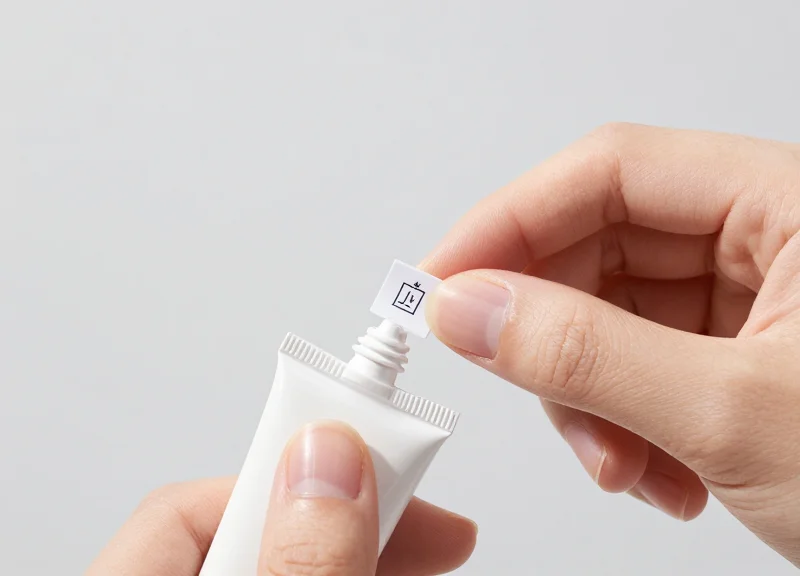
To achieve maximum security and longevity, the best practice for EAS label placement on squeezable tubes is to apply the label to the flat crimp (the sealed tail) or the lower third of the tube body. These locations minimize label 'flagging' (peeling at the edges) caused by the constant flexing of the tube during consumer use. Proper placement ensures that the label remains flat, maintaining the integrity of the internal circuit while ensuring the product can still be merchandised effectively in gravity-feed displays.
| Placement Zone | Pros | Cons | Best For |
|---|---|---|---|
| The Crimp (Tail) | Zero flex zone; virtually impossible to peel without damaging the tube. | Limits label size; may obscure batch codes or expiration dates. | High-theft items, trial sizes, and luxury serums. |
| Lower Body (Back) | Large surface area; allows for larger, more powerful EAS labels. | Subject to 'memory effect' (label trying to return to flat shape). | Standard lotions, cleansers, and 150ml+ tubes. |
| The Cap/Shoulder | High visibility for deterrence; easy to scan at checkout. | High risk of tampering; users can swap caps to bypass security. | Low-risk products with non-removable flip-tops. |
Expert Insight: The Dyne Factor and 'Varnish Voids'. A common failure point in health and beauty retail is applying EAS labels over 'high-slip' UV varnishes used to make tubes feel premium. These coatings lower the surface energy (measured in dynes), making adhesives fail. For the strongest bond, work with your packaging team to create a 'varnish void'—a small, uncoated rectangular window—specifically for the EAS label. This can increase peel resistance by up to 40% compared to applying over a finished decorative coating.
- Surface Preparation: Ensure the tube surface is free of oils, dust, or silicone residues from the manufacturing process. Even microscopic residue can lead to edge-lifting.
- Parallel Orientation: Apply the label lengthwise (parallel to the tube's height) rather than wrapping it around the circumference. This reduces the mechanical stress on the adhesive bond.
- Pressure Application: EAS labels are pressure-sensitive. Use a firm, rolling thumb motion or a soft-edged squeegee to ensure 100% contact between the adhesive and the tube substrate.
- Curing Time: Allow the adhesive to 'wet out' for at least 24 hours before placing the product in high-moisture environments or tight display racks.
Does label placement affect the deactivation process?
Yes. Labels placed too close to the cap may be missed by flat-bed deactivators if the cashier only swipes the bottom of the tube. Consistency in placement across a product line is key for front-end efficiency.
Can I hide the label inside the box?
For tubed products sold in secondary cartons, placing the label on the tube itself is safer. If a shoplifter 'box-swaps' or removes the tube from the box, the security remains with the actual product.
What if the crimp has the expiry date?
Never cover regulatory information. If the crimp is used for date coding, offset the label to the side or move to the lower-back body to ensure compliance.
The Economic Impact of Proper Label Selection
The economic impact of proper EAS label selection is measured through the lens of Total Cost of Ownership (TCO), rather than simple unit price. For health and beauty retailers, the 'cheapest' label often becomes the most expensive when accounting for high shrinkage rates, the labor cost of re-labeling peeling tags, and the 'Friction Tax'—the loss of customer loyalty caused by embarrassing false alarms or damaged packaging aesthetics. A high-quality, tube-specific label typically pays for itself within the first quarter by maintaining a 95%+ detection rate while reducing nuisance alarms by up to 40%.
| Financial Metric | Generic/Standard Labels | Specialized Tube EAS Labels |
|---|---|---|
| Direct Shrinkage Rate | High (4-7%) due to easy removal | Low (1-2%) due to high-tack adhesion |
| Labor Costs | High (Frequent re-application) | Low (Set-and-forget application) |
| False Alarm Frequency | Moderate (Deactivation failure) | Negligible (Stable circuitry) |
| Customer Lifetime Value | Negative impact from sticky residue | Protected brand experience |
Expert Insight: The 'Friction Tax' on Beauty Margins. In twenty years of retail analytics, we have observed that false alarms at the exit pedestal are more than just a nuisance; they are a direct hit to your bottom line. Data shows that 15% of customers who experience a false alarm due to poor deactivation or 'tag revival' (labels that reactivate themselves) will not return to that store location. For premium beauty brands, the cost of losing a high-value customer far outweighs the $0.02 saved on a lower-quality label.
Is the higher upfront cost of AM (Acousto-Magnetic) labels justified for tubes?
Yes. While AM labels carry a slight premium over RF, their superior performance near liquids and foils in beauty products results in a 30% higher recovery rate of stolen goods, easily offsetting the initial investment.
How does label 'flagging' impact retail economics?
Flagging (when labels peel off curved surfaces) creates a secondary cost: markdown loss. When a label peels and damages the tube's graphics or leaves adhesive residue, retailers often have to discount the item by 20-50% to move it, which is a direct margin drain.
What is the ROI timeframe for switching to high-performance labels?
Most retailers see a full return on investment within 3 to 6 months through a combination of reduced shrink, lower labor hours dedicated to 'tag maintenance,' and increased sales from open-merchandising confidence.
Future-Proofing: Moving from EAS to RFID Hybrid Solutions

Future-proofing your retail security means transitioning from simple loss prevention to comprehensive 'Item-Level Intelligence' through RFID hybrid solutions. A hybrid label integrates traditional EAS (Acousto-Magnetic or Radio Frequency) circuitry with an ultra-high frequency (UHF) RFID chip. This dual-technology approach allows health and beauty retailers to maintain high-performance theft deterrence using their existing gate systems while simultaneously unlocking 99% inventory accuracy and omnichannel fulfillment capabilities. By adopting hybrid labels for squeezable tubes, brands can bridge the gap between legacy security and the data-driven demands of modern retail without a 'rip-and-replace' infrastructure overhaul.
| Feature | Standard EAS Label | RFID Label | Hybrid EAS-RFID Label |
|---|---|---|---|
| Primary Purpose | Theft Prevention | Inventory Accuracy | Security + Visibility |
| Data Capacity | None (Bit only) | Unique Serial ID | Unique Serial ID |
| Detection Range | Up to 2 meters | Up to 10+ meters | Dual Range |
| ROI Driver | Shrink Reduction | Supply Chain Efficiency | Total Asset Protection |
For the beauty sector, where SKU proliferation is high—think of 20 different shades of the same squeezable foundation tube—RFID is the only way to ensure 'on-shelf availability' without manual cycle counts. While EAS tells you if a tube is leaving the store, RFID tells you exactly which shade, batch, and expiration date is in the building. As retailers move toward frictionless checkout and automated replenishment, those who have already integrated hybrid labels into their tube packaging will have a significant competitive advantage in data readiness.
Can RFID labels work on metallic or foil squeezable tubes?
Standard RFID tags struggle with metal interference, but 'On-Metal' RFID or 'Flag' tags are designed specifically to create a gap between the antenna and the foil, ensuring readability even on premium metallic packaging.
Is the transition to RFID cost-prohibitive for high-volume beauty items?
The unit cost of RFID labels has dropped by over 70% in the last decade. When factoring in the reduction in labor costs for manual inventory and the elimination of 'out-of-stock' lost sales, the ROI typically outweighs the incremental label cost within 12-18 months.
How does a hybrid label assist in 'Omnichannel' retail?
It allows a store to act as a micro-fulfillment center. With RFID, you can confidently fulfill an online 'Buy Online, Pick Up In Store' (BOPIS) order for a specific tube of cream because you have real-time confirmation of its location.
Expert Tip: The 'Dynamic Expiry' Advantage. An original advantage of RFID in beauty is 'Dynamic Expiry Management.' Unlike EAS, which is inert, an RFID-enabled tube can be scanned at the pallet or shelf level to instantly identify products nearing their expiration date. This allows retailers to implement automated markdowns or strategic promotions on specific batches of squeezable tubes, significantly reducing 'dead stock' waste that EAS-only systems simply cannot track.