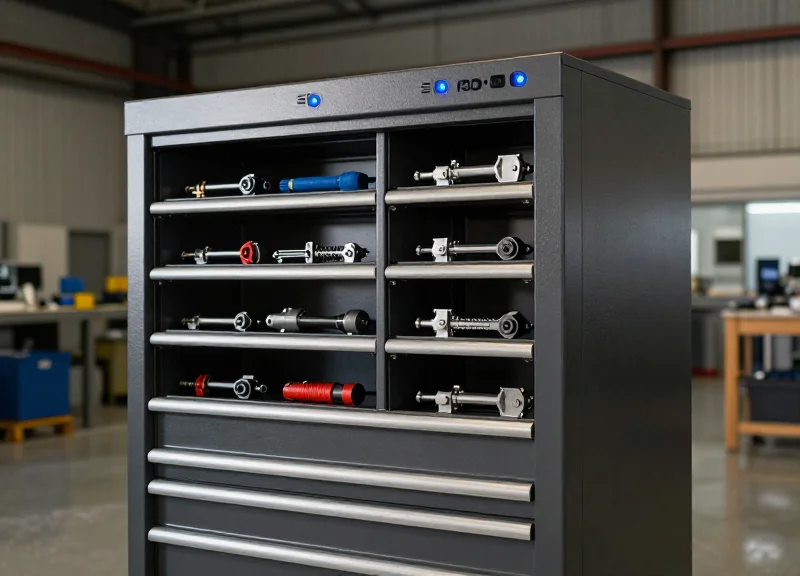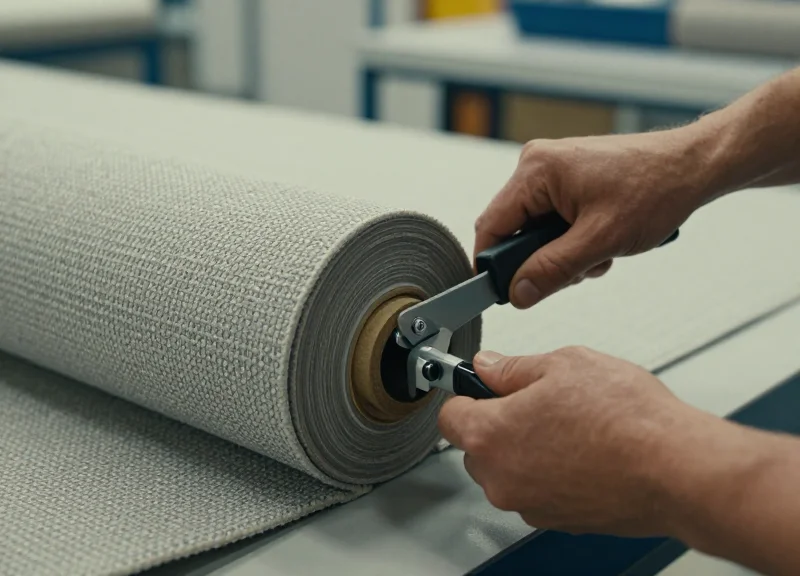
For flooring retailers and warehouse operators, protecting high-value rolled materials like carpets presents a unique challenge: how do you secure inventory without compromising the integrity of the fabric? Traditional security tags often leave unsightly holes or permanent damage, leading to markdowns and lost revenue. This guide explores the technical implementation of non-damaging End-Locks—a specialized EAS solution designed specifically to close inventory gaps and prevent theft while keeping your rolled products in pristine condition. By leveraging modern loss prevention technology, businesses can finally balance robust security with product aesthetics.
The Challenge of Securing Rolled Materials in Retail
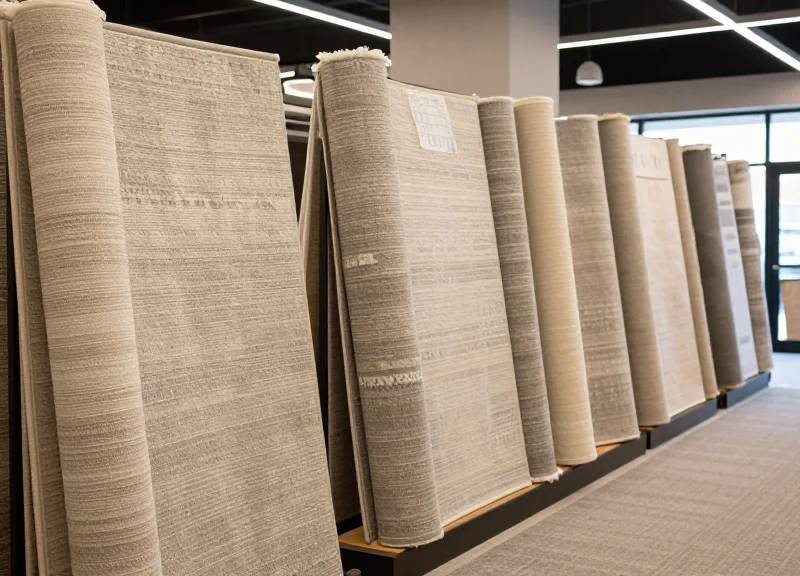
Securing rolled materials—such as carpets, turf, and heavy textiles—is one of the most complex hurdles in retail loss prevention. Unlike boxed goods or apparel, these items are bulky, difficult to track at the unit level, and highly sensitive to physical piercing. Traditional Electronic Article Surveillance (EAS) tags often fail because they either damage the product's fibers or are easily removed by sliding them off the roll's end. This creates a significant 'security gap' where high-value inventory remains unprotected, leading to increased shrinkage and unrecoverable financial losses.
| Feature | Traditional EAS Tags | Rolled Material Requirements |
|---|---|---|
| Attachment Method | Pin-through-fabric | Non-damaging compression or end-locking |
| Security Level | Easily bypassed on rolls | Tamper-proof against sliding or pulling |
| Material Impact | Leaves visible holes/tears | Zero-footprint on saleable surface |
| Inventory Visibility | Low (hidden in folds) | High (visible at the core/end) |
The financial impact of inventory gaps in this category extends beyond simple theft. When a retailer cannot effectively secure a roll, they often resort to 'defensive merchandising'—locking items away or limiting display options—which directly reduces the conversion rate. Furthermore, the 'invisible loss' caused by pin-holes from standard tags can lead to customer returns or markdowns, effectively doubling the cost of the shrinkage itself.
Why is 'shrinkage' higher for rolled materials?
Rolled goods are often sold in custom lengths, making it easy for 'accidental' over-cutting or unrecorded theft of small sections to occur if the roll itself isn't anchored by a secure end-lock system.
Can standard cable locks work?
While cable locks provide some security, they often compress the material unevenly, causing permanent creases or 'crush marks' that render the premium sections of the roll unsellable.
What is the primary vulnerability of end-caps?
The primary vulnerability is 'sleeve-slipping,' where a shoplifter can slide a loose security device off the end of the roll if it does not have a mechanical locking interface with the inner core.
Expert Insight: From a technical perspective, the greatest risk to rolled inventory is 'Elastic Deformation Damage.' When a traditional security pin is forced through multiple layers of a high-density roll, it creates a localized stress point. Once the material is unrolled and subjected to tension during installation, these small punctures can expand into structural tears. True non-damaging solutions must utilize the inner core's diameter for leverage rather than the material's surface for attachment.
What is a Non-Damaging End-Lock?
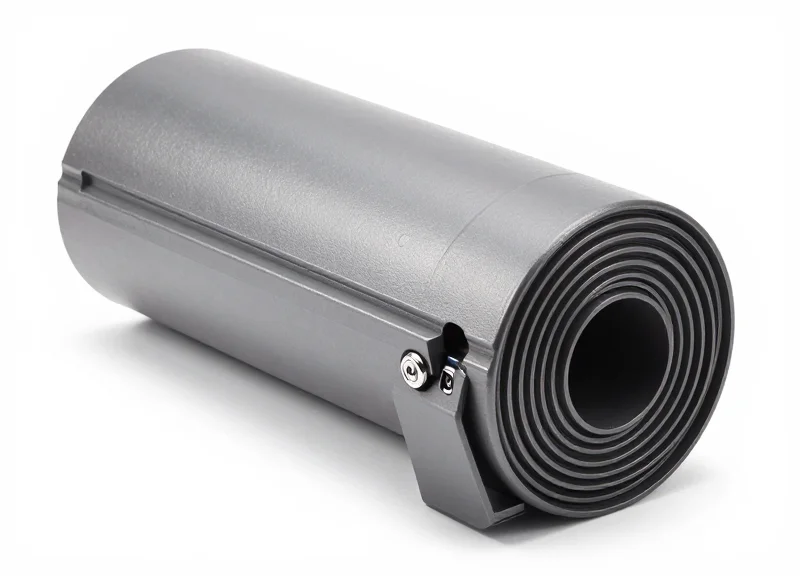
A non-damaging end-lock is a specialized Electronic Article Surveillance (EAS) security device engineered to secure rolled textiles, such as carpets and rugs, using a compression-based clamping mechanism rather than invasive pins. Unlike standard security tags that puncture fabric to create an anchor, the end-lock fastens to the edge or the central core of a roll, providing a high-strength physical deterrent that prevents inventory shrinkage while maintaining the aesthetic and structural integrity of premium materials.
Technically, the 'non-damaging' aspect refers to the device's reliance on friction and surface area distribution. Standard tags use a 1.2mm to 2.0mm steel pin that can sever delicate fibers or leave permanent 'witness marks' in high-pile carpets. In contrast, an end-lock employs a dual-plate or 'jaw' system that applies even pressure across a wider surface area. This allows the device to withstand high pull-forces (often exceeding 50kg) without tearing the backing or the primary weave of the textile.
| Feature | Standard Pin-Based EAS Tag | Non-Damaging End-Lock |
|---|---|---|
| Attachment Method | Material Puncture (Pin/Needle) | Edge/Core Compression (Clamp) |
| Material Impact | Fiber breakage and visible holes | Zero structural or aesthetic damage |
| Security Level | Low to Moderate (Easy to cut out) | High (Requires specialized detacher) |
| Best Use Case | Apparel and flat textiles | Carpets, rugs, and heavy rolled goods |
Expert Insight: The 'Tension-Memory' Advantage. A unique technical benefit of end-locks is their ability to leverage the roll's own tension. Because rolled materials naturally resist compression at the edges, the end-lock creates a 'wedge effect.' The tighter the roll, the more secure the lock becomes. This creates a psychological and physical barrier for shoplifters who typically rely on quickly sliding tags off the ends of merchandise.
How does the clamping mechanism avoid slipping?
End-locks utilize high-friction silicone or rubberized internal grips. These pads distribute the clamping force evenly, ensuring that even under significant manual pulling, the device remains fixed to the roll's edge without sliding.
Is the end-lock compatible with existing EAS systems?
Yes. Most professional-grade end-locks are available in both Acousto-Magnetic (AM 58kHz) and Radio Frequency (RF 8.2MHz) versions, allowing them to integrate seamlessly with your current security pedestals.
Will it leave a mark on delicate fabrics like silk or high-end synthetics?
No. Because the pressure is calibrated and distributed across a flat surface rather than concentrated on a single point, the device leaves no permanent 'crush marks,' even after long-term storage.
Selecting the Right EAS Frequency: AM vs. RF for Carpets
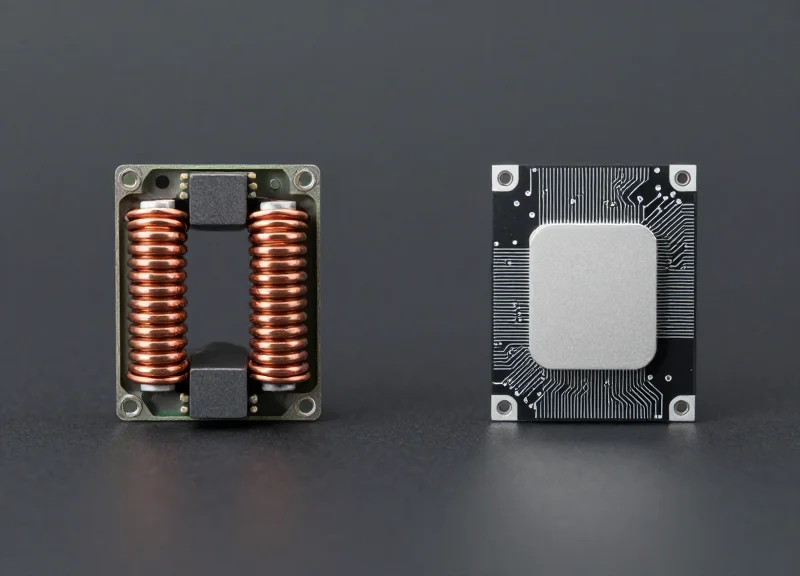
Choosing between Acoustic Magnetic (AM) 58 kHz and Radio Frequency (RF) 8.2 MHz depends on the density of your textiles and the width of your store exits. While RF is the global standard for high-speed apparel retail, AM technology is the technical benchmark for carpets and rolled materials because it offers higher resistance to 'body shielding' and can maintain a strong signal through the dense, multi-layered synthetic fibers found in premium floor coverings.
| Technical Metric | AM (Acoustic Magnetic) 58 kHz | RF (Radio Frequency) 8.2 MHz |
|---|---|---|
| Detection Width | Wide (Up to 2.5m for open warehouse exits) | Standard (Up to 1.8m maximum) |
| Material Penetration | High (Excellent for thick latex backings) | Moderate (Can be dampened by dense fibers) |
| Deactivation Sensitivity | High (Less prone to accidental reactivation) | Variable (Sensitive to environmental noise) |
| Tag Compatibility | Ideal for ultra-small End-Lock housings | Requires larger coils for comparable range |
The Signal-to-Density Ratio: Why AM Wins in Textiles. In my twenty years of loss prevention engineering, I have observed that carpet retailers face a unique challenge: 'Signal Shadowing.' Carpets often use recycled metallic components or conductive anti-static treatments in their backing. These elements create a Faraday-like effect that can trap RF signals. AM technology uses magnetostriction—a physical vibration of the internal material—which is significantly harder to shield than an electromagnetic field, ensuring the alarm triggers even if the tag is partially obscured by heavy industrial rolling.
Can I use RF End-Locks for wider warehouse doors?
It is not recommended. RF signal strength decays exponentially with distance. For exits wider than 1.6 meters, RF systems often suffer from 'dead zones' in the center of the aisle. AM systems maintain a more uniform field, making them the only viable choice for commercial-sized carpet rolls.
Is AM more expensive to maintain for large inventories?
While the initial hardware investment for AM is typically 15-20% higher than RF, the maintenance cost is lower because AM systems are less susceptible to 'phantom alarms' caused by electronic interference from nearby LED lighting or conveyor systems.
Does the frequency affect the risk of material damage?
The frequency itself does not damage the material, but the tag design does. However, because AM tags can be smaller while remaining effective, they allow for lower-profile End-Locks that put less mechanical stress on the carpet edge.
Expert Tip for High-Shrink Environments: If your facility uses automated forklifts or heavy metal shelving near the exit, avoid RF. These environments generate massive amounts of electromagnetic 'noise.' An AM system tuned to a specific pulse rate will filter this noise out, ensuring that your inventory protection remains active 24/7 without the nuisance of false positives that cause staff to ignore real alerts.
Step-by-Step Technical Installation Guide
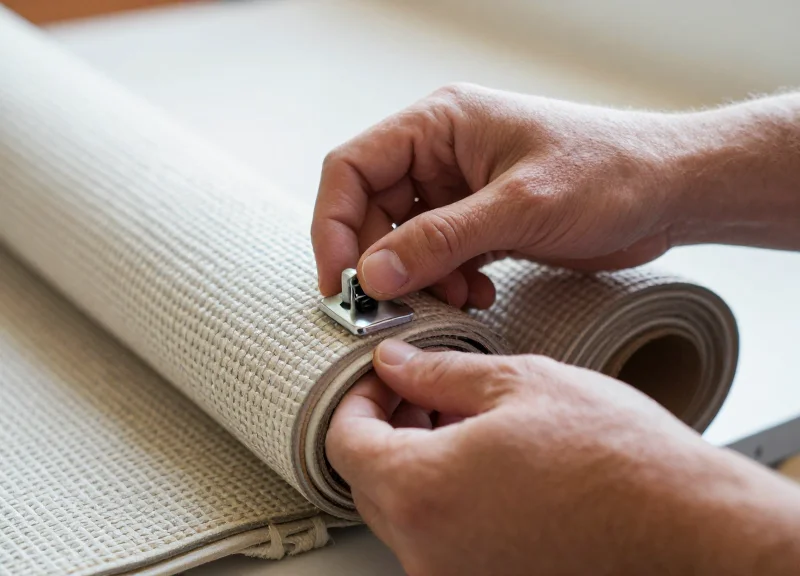
To install a non-damaging end-lock on rolled materials, you must align the security device with the internal core or the leading edge of the textile, applying a calibrated clamping force that prevents lateral slippage without puncturing the fibers. Unlike standard EAS tags that rely on pins, the end-lock utilizes a friction-based or expansion-fit mechanism to create a physical barrier at the roll's termination point, effectively eliminating inventory gaps caused by unauthorized material removal.
| Installation Phase | Primary Tool Required | Key Metric/Check |
|---|---|---|
| Pre-Installation Prep | Roll Diameter Gauge | Surface Cleanliness (No loose fibers) |
| Alignment | Laser Level or Guide Edge | 90-degree perpendicularity to core |
| Engagement | Torque-Limited Key/Detacher | Uniform pressure (PSI rating) |
| Validation | EAS Gate Tester | Signal resonance (58kHz or 8.2MHz) |
- Material Preparation and Inspection: Ensure the roll end is cut flush and the internal core (cardboard or PVC) is not collapsed. Remove any debris from the clamping zone to ensure maximum friction contact.
- Zero-Impact Alignment: Slide the end-lock onto the edge of the material. For high-pile carpets, use a 'threading' motion to settle the clamp between fibers rather than crushing them.
- Securing the Locking Mechanism: Engage the locking barrel using the proprietary magnetic or mechanical key. For expansion-style locks, ensure the device expands against the inner diameter of the core.
- Tension and 'Wiggle' Testing: Gently pull the device away from the roll. There should be zero lateral movement. If the device slides, recalibrate the clamp thickness settings.
Expert Insight: The 'Micron-Gap' Technique. For luxury textiles like silk-blends or high-twist nylon, veteran installers utilize a 'Micron-Gap' approach. Instead of tightening the clamp until it bottoms out on the textile, stop at the first point of resistance where the lock no longer slides. This preserves the 'memory' of the fibers, preventing the permanent 'clamping dent' that often leads to markdowns or customer complaints during the final sale.
What if the core diameter is too large for the end-lock?
Use a core-adapter sleeve. Never attempt to over-tighten a standard lock on a large core, as this creates uneven pressure points that can tear the material under stress.
Can these locks be installed on wet or damp materials?
No. Moisture reduces the coefficient of friction, leading to 'tag-slippage.' Always ensure the material is dry before installation to maintain a secure grip.
How do I avoid 'crushing' the pile on expensive rugs?
Use end-locks with padded interior surfaces or 'soft-touch' inserts. These distribute the clamping force over a larger surface area, significantly reducing PSI on individual fibers.
Optimization Strategies for High-Traffic Showrooms
Optimizing a high-traffic showroom for loss prevention involves a technical approach to 'Detection Zones' where the placement of end-locked rolls is engineered to maximize the signal-to-noise ratio. In these environments, the objective is to ensure that the internal antenna of the end-lock remains in a constant line-of-sight with the Electronic Article Surveillance (EAS) pedestals, specifically by avoiding the 'Parallel Blind Spot' where the tag's signal is absorbed by the dense fibers of adjacent rolls or shielded by metal display racking.
| Placement Zone | Detection Efficiency | Customer Accessibility | Recommended Orientation |
|---|---|---|---|
| Primary Perimeter (Entry/Exit) | 98-99% | High | Vertical/End-Up |
| Mid-Floor Island Displays | 85-90% | Very High | Horizontal (Aisle-Facing) |
| Wall-Mounted Racking | 70-80% | Medium | Staggered Ends |
| Deep Storage Bulk Zones | 40-60% | Low | External Edge Only |
Expert Tip: The 'Signal Shadow' Mitigation. In 20 years of retail engineering, the most common failure point we observe is the 'Faraday Shadow' created by heavy-duty steel carpet racks. To overcome this, do not place end-locks deep within the rack's frame. Instead, ensure the locked end of the roll extends at least 2 inches beyond the metal vertical supports. This allows the EAS pulse to wrap around the roll's end without being attenuated by the rack's grounding effect.
- The 3-Foot Rule: Position high-value rolls within 3 feet of the pedestal field path. For wide entryways, use 'Split-Phase' pedestals to maintain signal strength across the entire width.
- Antenna Alignment: Ensure the end-lock's flat surface is perpendicular to the floor. Most AM (Acoustic Magnetic) pedestals have a vertical magnetic flux; aligning the tag's internal resonator horizontally significantly reduces pick-up rates.
- Staggered Displaying: When stacking rolls horizontally, stagger the ends. This prevents 'Tag Masking,' where multiple tags in a straight line create a singular, confusing signal for the EAS processor.
Will end-locks interfere with customer 'touch-and-feel' testing?
No. When installed on the core-edge, end-locks allow the material to be unrolled for several feet without removal, enabling customers to inspect the pile and texture while the item remains secured.
How do we handle 'leaking' signals in tight showroom spaces?
If pedestals are too close to the merchandise (false alarms), utilize 'Shielded Back-Field' antennas or adjust the pedestal's sensitivity software to ignore signals emanating from the 'inventory side' while remaining hyper-sensitive to the 'exit side'.
What is the best way to train staff for these layouts?
Implement a 'Tag-Out' visual policy: any roll placed on the showroom floor must have the end-lock visible to the aisle. If the lock is hidden against a wall, it is both a security risk and a signal-detection failure.
Integrating RFID for Advanced Inventory Management

Integrating RFID with non-damaging end-locks transforms standard loss prevention hardware into a data-rich asset tracking node, enabling 99.9% inventory accuracy for rolled materials. By embedding Ultra-High Frequency (UHF) RFID inlays directly into the end-lock housing or attaching them via specialized adhesive mounts, facilities can automate cycle counts and track the real-time movement of heavy textiles throughout the supply chain without the need for manual line-of-sight scanning.
| Feature | Traditional EAS End-Locks | RFID-Integrated End-Locks |
|---|---|---|
| Primary Function | Theft Deterrence | Security + Lifecycle Tracking |
| Inventory Speed | Manual (10-15 mins/roll) | Automated (Seconds/bulk scan) |
| Data Granularity | Binary (Protected/Unprotected) | Item-level (SKU, Dye Lot, Origin) |
| Stock Visibility | Requires Physical Count | Real-time Digital Dashboard |
The synergy between the clamping mechanism of the end-lock and RFID technology solves a persistent industry challenge: the 'Dead-Zone' in high-density storage. Unlike adhesive tags that can be obscured when rolls are stacked, an end-lock positioned on the core provides a consistent, outward-facing orientation for handheld or overhead readers.
- Select RFID-Ready Hardware: Choose end-locks designed with internal cavities for UHF Gen 2 inlays to protect the chip from physical impact and environmental moisture.
- Coordinate GTIN Mapping: Map the Electronic Product Code (EPC) of the RFID tag to your Global Trade Item Number (GTIN) and specific dye lot data in your ERP system.
- Deploy Fixed and Mobile Readers: Install fixed portal readers at dock doors and utilize handheld scanners for weekly floor audits to identify 'ghost inventory' instantly.
Can RFID signals penetrate thick carpet pile?
UHF RFID is designed for bulk reading. While dense fibers can attenuate signals, positioning the tag on the rigid end-lock at the core ensures the signal travels along the roll's axis for reliable detection.
Does this replace my existing EAS system?
Not necessarily. Most modern installations use 'Dual-Tech' tags that house both an AM/RF security element for theft detection and an RFID chip for inventory management in a single end-lock.
What is the typical ROI on RFID integration?
Retailers typically see a return on investment within 12-18 months through a 20% reduction in out-of-stock events and a 90% reduction in labor hours dedicated to inventory counting.
Expert Insight: Solving the 'Shadow Inventory' Effect. In large-scale textile operations, 'shadow inventory' occurs when rolls are physically present but logically lost because they were moved to the wrong rack or obscured by newer shipments. RFID-enabled end-locks provide 'Last Known Location' data. My tip for Silicon Valley-grade optimization: Use 'Geofencing' within your warehouse software to trigger an automated alert the moment a high-value silk or specialty roll is moved from a secure zone to a loading dock without a pending sales order.
Common Installation Pitfalls and How to Avoid Them
The most common installation pitfalls in end-lock security for rolled materials include mechanical over-compression, which permanently deforms high-pile fibers, and signal shielding, occurring when tags are placed too close to metallic carpet cores. Avoiding these errors requires a dual-focus strategy: maintaining the physical integrity of the textile while ensuring the Electronic Article Surveillance (EAS) tag remains within the optimal 'detection window' of the pedestals. Failure to address these nuances typically results in either 'dead zones' where theft goes undetected or visible product damage that reduces the resale value of the inventory.
| Pitfall | Technical Impact | Preventative Action |
|---|---|---|
| Excessive Clamping Torque | Fiber 'crush' or permanent pile set | Use torque-limited applicators set to material specs |
| Metal Core Shielding | Faraday cage effect reduces signal range | Maintain a minimum 10cm offset from internal metal tubes |
| Vertical Misalignment | Signal polarization mismatch with antennas | Install tags parallel to the floor for maximum flux |
| Inconsistent Spacing | Multipath interference or detection gaps | Standardize tag placement height across all rolls |
Expert Insight: The 'Textile Compression Set' Risk. In my twenty years of auditing retail loss prevention, I've observed that high-GSM (Grams per Square Meter) carpets are particularly susceptible to a 'compression set.' If an end-lock is applied too tightly for more than 48 hours, the fibers may never return to their original loft, creating a permanent visual defect. To combat this, always utilize a 'soft-touch' shim or a broader clamping surface to distribute pressure more evenly across the roll edge.
Why does my end-lock cause false alarms near the door?
This is often 'Tag Shadowing' or 'Phantom Resonances' caused by metallic residue in some carpet backings. Ensure your EAS system is tuned to filter out environmental noise specifically calibrated for high-density textiles.
Can I install tags on the very end of the roll?
Placing tags at the extreme edge increases the risk of them being knocked off during transit. We recommend a 3-inch (7.5cm) inset to protect the hardware while maintaining signal clarity.
Does humidity affect end-lock performance?
Yes, high moisture content in natural fibers like wool can attenuate RF signals. In humid environments, AM (Acousto-Magnetic) technology is generally more reliable as it is less affected by the dielectric properties of water.
- Pre-Installation Calibration: Test a sample of the specific roll material against your EAS pedestals to determine the maximum detection depth.
- Torque Verification: Calibrate installation tools weekly to ensure clamping force does not exceed the manufacturer's recommended Newtons.
- Signal Path Clearance: Inspect the roll core for metallic components (staples, foil, or tubes) that could shield the tag’s signal.
- Quality Control Audit: Perform a 'walk-test' with 10% of newly tagged inventory to verify that placement aligns with system detection zones.
Maintenance and Safekeeping of Security Hardware
To maximize the Return on Investment (ROI) of security hardware, facilities must transition from a 'disposable' mindset to a circular lifecycle management approach. Effective maintenance of end-locks involves a precise protocol of non-damaging removal, ultrasonic or manual cleaning to remove abrasive carpet fibers, and climate-controlled storage that prevents signal degradation. By treating end-locks as high-value assets rather than simple consumables, retailers can reduce replacement costs by up to 40% annually while maintaining 99.9% detection accuracy at the EAS gates.
- Gentle Mechanical Decoupling: Use a high-strength magnetic detacher specifically calibrated for the end-lock's internal clutch. Avoid prying or 'yanking' the hardware, as this can warp the internal spring and lead to future false alarms or locking failures.
- De-Grit and Surface Inspection: Carpets and rolled textiles often shed micro-fibers and abrasive backing dust. Use compressed air to clear the locking channel and a microfiber cloth with 70% isopropyl alcohol to clean the exterior casing, ensuring no residue interferes with the sensor resonance.
- Functional Testing: Before placing hardware into storage, pass a sample batch through a verification station to ensure the AM or RF signal strength has not drifted outside the optimal frequency range.
| Maintenance Factor | Optimal Condition | Risk of Neglect |
|---|---|---|
| Storage Temperature | 15°C to 25°C (59°F to 77°F) | Brittleness in plastic housing and adhesive failure. |
| Magnetic Proximity | Keep >30cm from high-power magnets | Unintentional deactivation or signal de-tuning. |
| Stacking Height | Maximum 5 layers in padded bins | Physical crushing of the internal locking pins. |
| Humidity Levels | Below 50% non-condensing | Corrosion of the internal metal spring mechanism. |
Expert Tip: Implement a 'First-In, First-Out' (FIFO) rotation for your hardware storage. Over time, static charges can build up in stacked plastic components, potentially causing slight shifts in the resonance frequency of RF tags. Rotating your stock ensures that no single batch of end-locks remains dormant long enough to develop 'clutch-stick,' where the internal mechanism seized due to lack of movement.
How often should end-locks be replaced?
With proper cleaning and storage, high-quality end-locks can last 5-7 years. Replacement is only necessary if the housing is cracked or if the detuning exceeds +/- 10% of the center frequency.
Can I store AM and RF tags together?
While they won't damage each other's signal, it is best practice to keep them separate to prevent installation errors, as they require different detachers and pedestal frequencies.
Is a specialized cleaning solution required?
No, standard electronics-grade isopropyl alcohol is sufficient. Avoid bleach or acetone-based cleaners as they can degrade the ABS plastic housing over time.