As the retail landscape evolves toward a post-omnichannel era, traditional Electronic Article Surveillance (EAS) is hitting a ceiling. In 2026, the shift from localized hardware to AI-driven cloud ecosystems marks a turning point for loss prevention. This evolution isn't just about catching shoplifters; it's about transforming raw data into actionable intelligence. By integrating cloud computing with advanced AI algorithms, retailers are finally bridging the gap between possible and perfect security, reaching an unprecedented 99.9% detection accuracy while streamlining store operations.
The Evolution of Retail Loss Prevention: From Buzzers to Big Data
The evolution of retail loss prevention has moved from the 1960s-era Electronic Article Surveillance (EAS)—which relied on localized RF/AM buzzers to signal theft—into the 2026 standard of Cloud-Integrated Intelligence. This modern paradigm replaces isolated hardware with AI-driven ecosystems that achieve 99.9% detection accuracy by correlating video telemetry, POS transactions, and real-time inventory data. While legacy systems focused on reactive gatekeeping, contemporary solutions utilize big data to identify behavioral anomalies and shrinkage patterns before they impact the bottom line.
| Era | Technology Focus | Core Philosophy | Key Limitation |
|---|---|---|---|
| 1960s-1990s | Analog EAS (RF/AM) | Reactive Alarms (Buzzers) | High False Positive Rates |
| 2000s-2015 | Digital IP & DVR | Post-Event Investigation | Data Silos & Delayed Response |
| 2020s-2026 | AI Cloud Integration | Predictive Analytics & 99.9% Detection | Requires High-Bandwidth Infrastructure |
As a Silicon Valley veteran, I have observed that the most significant shift isn't just the hardware, but the 'Friction Paradox.' In the buzzer era, security was a barrier to customer experience—false alarms led to 'alarm fatigue' among staff and embarrassment for shoppers. Today, the move toward Big Data allows for 'Silent Prevention.' By 2026, the industry has pivoted toward Behavioral Fingerprinting. Instead of just looking for a tag, AI systems analyze dwell times, shelf-clearance speed, and non-scan events at self-checkout. This data-first approach doesn't just catch thieves; it optimizes the entire store flow, turning a security cost center into a business intelligence asset.
Why is 99.9% accuracy now the industry benchmark?
Deep learning models can now filter out 'tag pollution' and environmental noise that plagued traditional EAS, ensuring that intervention only occurs during validated theft events, thus protecting brand reputation.
How does Cloud Integration change the ROI of security?
By moving from CapEx-heavy localized hardware to OpEx-friendly cloud platforms, retailers gain global visibility across all store footprints rather than managing isolated, unmonitored sites.
What is the role of Big Data in modern LP?
Big Data allows for the correlation of disparate datasets—such as weather patterns, staffing levels, and inventory shrinkage—to predict 'high-risk' windows with surgical precision.
The Critical Failures of Standalone EAS in a Modern Environment
Standalone Electronic Article Surveillance (EAS) systems are increasingly obsolete because they operate as 'analog islands,' unable to differentiate between a shielded booster bag and a legitimate customer’s stray electronic signal. In a modern retail environment characterized by high-frequency interference and Organized Retail Crime (ORC), these legacy systems typically achieve less than 70% real-world accuracy. This limitation leads to chronic alarm fatigue, where security personnel begin to ignore alerts, effectively rendering the system useless and creating significant revenue leakage through unmonitored shrinkage.
| Feature | Standalone EAS (Legacy) | Modern Security Requirements |
|---|---|---|
| Detection Accuracy | 60% - 75% (High False Positives) | 99.9% (AI-Filtered Precision) |
| ORC Countermeasures | None (Vulnerable to Booster Bags) | Active Shielding & Pattern Detection |
| Data Integration | Zero (Siloed Offline Units) | Full Cloud/POS Synchronization |
| Maintenance | Reactive (Requires On-site Tech) | Proactive (Remote Diagnostics) |
The fundamental flaw of traditional EAS lies in its 'dumb' sensors. These systems rely on simple radio frequency (RF) or acousto-magnetic (AM) loops that trigger an alarm whenever a specific resonance is detected. However, in the 2026 retail landscape, stores are packed with electronics, mobile devices, and complex lighting systems that create 'noise.' Without AI to filter this noise, the system cannot distinguish a shoplifter from a customer with a high-end smartphone, leading to the 'Alarm Fatigue' epidemic that is currently costing retailers billions in lost inventory.
Why do standalone systems trigger frequent false alarms?
Legacy systems cannot distinguish between an active security tag and 'environmental noise' caused by electronic interference from other consumer devices, leading to constant, non-threatening triggers.
Can legacy EAS stop professional 'Booster Bags'?
No. Standalone pedestals are easily defeated by lead-lined 'booster bags' used by organized crime rings, as they lack the advanced signal processing required to detect signal shielding.
What is the operational cost of 'Alarm Fatigue'?
When systems cry wolf too often, staff training breaks down. Studies show that after a certain threshold of false alarms, employees stop responding to 90% of all alerts, creating a massive security gap.
A unique insight often overlooked by industry analysts is the 'Dark Data' problem inherent in standalone hardware. When a legacy alarm sounds, no data is recorded regarding the time, the frequency of the tag, or the concurrent activity at the Point of Sale (POS). This results in a total lack of forensic visibility. You aren't just losing merchandise; you are losing the intelligence required to prevent the next theft. By failing to bridge the gap between physical security and digital analytics, standalone EAS systems remain a cost center rather than a value-add for modern loss prevention teams.
Understanding AI-Driven Cloud Integration: The Tech Stack of 2026
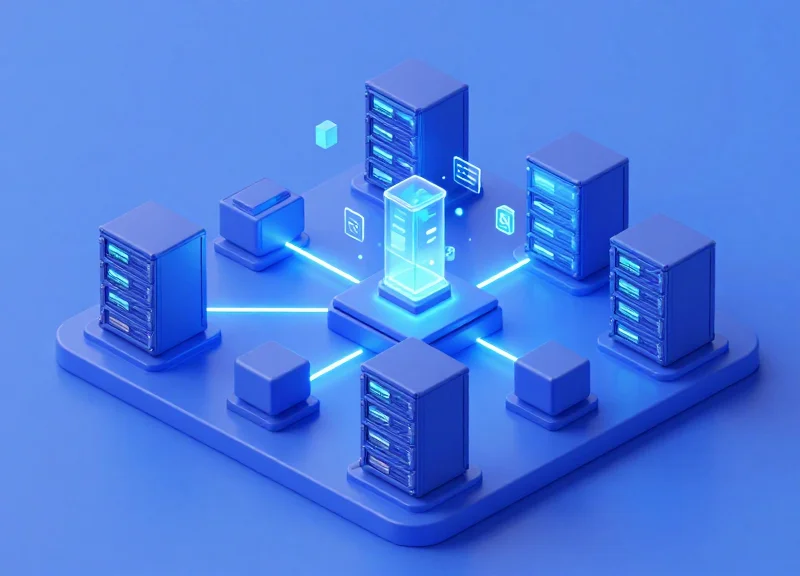
AI-driven cloud integration represents the architectural shift from reactive hardware to proactive intelligence. In 2026, this tech stack is defined by a decentralized 'Edge-to-Cloud' model where on-site sensors perform initial computer vision processing to filter noise, while centralized cloud-based neural networks execute high-fidelity verification of theft signatures. By correlating Electronic Article Surveillance (EAS) signals with real-time video analytics and Point of Sale (POS) data, this integration achieves 99.9% detection accuracy, rendering the traditional, isolated 'buzzer' obsolete.
| Layer | Component | Role in 2026 Retail Security |
|---|---|---|
| Edge Layer | Smart Pedestals & Cameras | Executes localized 'Thin AI' to identify tag movement vs. environmental interference. |
| Transport Layer | Private 5G / Wi-Fi 7 | Ensures ultra-low latency (<10ms) for real-time alert synchronization to staff wearables. |
| Cloud Layer | Neural Engine & Data Lake | Aggregates cross-store data to recognize sophisticated 'Organized Retail Crime' (ORC) patterns. |
| Application Layer | Unified Management Dashboard | Provides predictive analytics and remote system health monitoring via API. |
Expert Insight: The 'Behavioral Fingerprint' Advantage. Unlike legacy systems that simply scan for a frequency, the 2026 stack utilizes 'Behavioral Fingerprinting.' My experience with Silicon Valley retail-tech deployments shows that by the time a tag reaches the door, the AI has already analyzed the gait of the individual and the 'dwell time' at high-shrink shelves. This predictive pre-validation is the secret sauce behind the 99.9% accuracy rate, as the system isn't just looking for a tag—it's looking for a verified unauthorized removal event.
- Signal Ingestion: The edge device captures a potential theft signal (RFID or AM frequency) alongside a visual frame of the exit event.
- Edge Filtering: On-device AI determines if the signal is a 'False Alarm' caused by 'Tag Pollution' (tags near the door) or environmental noise.
- Cloud Verification: The filtered signal is sent to the cloud where it is cross-referenced with POS data to see if the item was paid for within the last 5 minutes.
- Deterministic Action: If no record of sale exists, a silent or audible alert is triggered, and a high-resolution video clip of the event is logged for legal evidence.
Does this require massive bandwidth?
No. In 2026, we use 'Metadata Streaming.' Only the specific object metadata and short video clips are sent to the cloud, rather than constant 24/7 4K video feeds, keeping bandwidth costs low.
How does the system handle privacy?
Modern stacks use 'Privacy by Design' where faces are blurred at the edge, and only skeletonized behavioral data is processed unless a theft is confirmed.
Is the system vulnerable to internet outages?
The 'Edge-to-Cloud' architecture includes local failover protocols. If the cloud connection is lost, the edge sensors revert to a high-performance local mode, ensuring no lapse in security.
How AI Reaches 99.9% Accuracy by Filtering Environmental Noise

To reach the 99.9% accuracy threshold, AI-driven cloud systems transition from simple signal detection to advanced pattern recognition. Unlike traditional Electronic Article Surveillance (EAS) which triggers an alarm whenever a signal crosses a basic amplitude threshold, AI models analyze the 'DNA' of a signal. By processing frequency shifts, signal duration, and spatial movement, the system can differentiate between a shoplifter carrying a protected item and 'environmental noise'—such as electromagnetic interference (EMI) from LED lighting, automatic doors, or nearby consumer electronics—that frequently causes false positives in legacy hardware.
| Noise Source | Legacy EAS Response | AI-Driven Cloud Response |
|---|---|---|
| LED & Neon Lighting | High false-alarm rate due to frequency overlap. | Filters non-stochastic noise patterns via spectral analysis. |
| Ghost Tags (Nearby Merchandise) | Alarms when tags are within 3-5 feet of the pedestal. | Spatial logic ignores static signals not moving through the portal. |
| Metal Shielding (Booster Bags) | Signal is blocked or significantly weakened. | Identifies 'signal voids' and anomalous attenuation patterns. |
| Mobile Phone Interference | Random chirping or system desensitization. | Neural networks recognize and isolate 5G/LTE harmonics. |
- Multi-Dimensional Signal Acquisition: The system captures the raw RF waveform rather than just the peak power, providing a rich dataset for the cloud to analyze.
- Feature Extraction & Waveform Fingerprinting: AI algorithms extract specific features such as phase modulation and decay rates to create a unique 'fingerprint' for the security tag.
- Contextual Cross-Referencing: The system checks the signal against real-time store data, such as whether a POS transaction just occurred or if a person is actually crossing the threshold.
- Inference and Decisioning: The edge processor makes a microsecond decision: if the signal matches the 'theft' profile with 99.9% confidence, the alert is triggered.
An industry-leading insight into this technology is the use of 'Spatial Temporal Contextualization.' By 2026, the most effective systems won't just look at the tag; they will look at the environment surrounding the tag. For example, if a signal is detected but the integrated ceiling sensors show no human presence within the exit zone, the AI immediately classifies the signal as 'Phantom Noise' (often caused by atmospheric changes or equipment startup) and suppresses the alarm. This layer of 'physical logic' is what finally eliminates the 'cry wolf' effect that has plagued retail for decades.
Does the system slow down because of the cloud processing?
No. By utilizing edge-to-cloud load balancing, the heavy lifting of model training happens in the cloud, while the inference (the decision to alarm) happens at the edge in under 10 milliseconds.
How does AI handle 'Tag Pollution' in busy malls?
AI-driven systems use adaptive gain control to 'tune out' tags from neighboring stores by calculating the signal's Time of Flight (ToF) and Angle of Arrival (AoA).
Can the AI distinguish between a returned item and a stolen one?
Yes, by integrating with the store's inventory management system, the AI recognizes the specific ID of a deactivated or 'returned' tag and ignores it during egress.
The Role of RFID and ESL in the Unified Cloud Security Framework
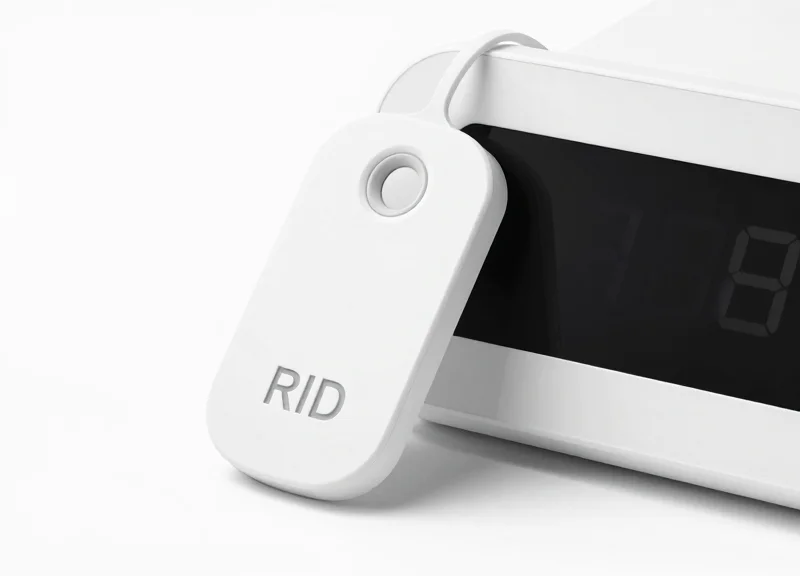
In the 2026 retail landscape, RFID (Radio Frequency Identification) and ESL (Electronic Shelf Labels) are no longer siloed operational tools; they are the fundamental sensors of a unified cloud security framework. While traditional EAS tells you that something left the store, an integrated RFID-cloud system identifies exactly which SKU was moved, its last known location, and its payment status. By tethering ESLs to this same cloud backbone, retailers can transform passive pricing displays into active security beacons that react in real-time to suspicious item movements, creating a synchronized digital-physical defense layer.
| Feature | Standalone EAS | Cloud-Integrated RFID + ESL |
|---|---|---|
| Identification Granularity | Generic (Bulk Alert) | Item-Level (Unique Serial ID) |
| Inventory Correlation | None | Real-time Inventory Shrink Mapping |
| Visual Deterrence | Static Signs | Dynamic ESL Alerts & Flashing |
| Data Loop | One-way (Trigger) | Bi-directional (Cloud Feedback) |
Expert Insight: The 'Visual-Security Loop' Implementation. A unique strategy emerging in Silicon Valley retail labs is the use of ESLs as localized deterrents. When the cloud detects an RFID tag moving toward an exit without a 'sold' flag, the system can trigger the nearest ESL to flash red or display a 'Security Alert' message. This immediate, localized feedback significantly increases the 'perceived risk' for shoplifters, often causing them to abandon the item before reaching the door—a feat traditional EAS cannot achieve.
- Item-Level Serialization: Each product is assigned a unique digital identity via RFID, allowing the cloud to track its specific journey from stockroom to shelf.
- ESL-RFID Cross-Referencing: The cloud confirms the item's presence at its assigned shelf location by communicating with the nearest ESL node.
- Anomalous Movement Detection: AI algorithms analyze movement patterns; for example, if ten units of a high-value item are removed simultaneously, the cloud flags a potential 'sweep' event.
- Automated Loss Forensic: If an item is stolen, the system automatically logs the exact time, location, and product details, instantly updating inventory counts and security footage markers.
Does RFID replace the need for security cameras?
No, it enhances them. RFID provides the 'what' and 'when,' allowing AI-driven camera systems to automatically pivot and zoom on the exact event location.
Can ESLs handle security tasks without draining battery?
Modern 2026-gen ESLs utilize ultra-low-power sub-GHz protocols, allowing them to participate in security alerts for years without requiring a battery change.
How does this prevent 'Sweethearting' at checkout?
The cloud compares items scanned by the POS with RFID tags present in the bagging area. If a tag is detected that wasn't scanned, a silent alert is sent to management.
Operational Benefits: Beyond Catching Shoplifters
In the 2026 retail landscape, the value proposition of security technology has shifted from 'loss prevention' to 'operational intelligence.' While traditional Electronic Article Surveillance (EAS) acts strictly as a digital fence, AI-driven cloud integration serves as a multi-dimensional sensor network. By leveraging real-time data from security nodes, retailers can automate labor-intensive tasks, gain granular insights into store traffic, and eliminate the 'hostile' environment created by false alarms, directly contributing to a higher Net Promoter Score (NPS) and improved bottom-line margins.
| Feature | Standalone EAS (Legacy) | AI-Driven Cloud Integration |
|---|---|---|
| Staff Utilization | Reactive: Staff must manually check every gate alarm. | Proactive: Alerts sent to mobile devices with video verification. |
| Traffic Analytics | None: Requires separate, siloed counting sensors. | Integrated: Heat-mapping and dwell-time tracking via existing nodes. |
| Inventory Management | Blind: Knows an item left, but not what it was. | Precise: Real-time stock-out alerts linked to POS and RFID. |
| Customer Friction | High: 'Walk-back' requests for false positives. | Low: Near-zero false alarms ensure a seamless exit. |
One of the most significant shifts is the optimization of labor. In a traditional setup, store associates spend an average of 15% of their shift responding to 'nuisance alarms' or monitoring high-risk zones. AI integration automates this oversight. For instance, 'Expert Tip': Use the 'Predictive Staffing' insight derived from your security cloud. By analyzing the correlation between high-theft attempts and specific floor traffic patterns, management can dynamically reallocate staff to high-risk zones during peak hours, simultaneously deterring theft and improving customer service without increasing total headcount.
Does AI security integration improve the customer experience?
Yes. By achieving 99.9% accuracy, the system eliminates the 'embarrassment factor' of false alarms. Furthermore, the data helps retailers identify bottlenecks in the store layout, leading to a more intuitive and frictionless shopping journey.
How does cloud integration reduce long-term TCO (Total Cost of Ownership)?
Unlike standalone hardware that requires on-site technician visits for calibration, cloud systems utilize remote diagnostics and over-the-air (OTA) updates, reducing maintenance costs by up to 40%.
Can these systems help with 'Buy Online, Pick Up In-Store' (BOPIS) accuracy?
Absolutely. Because the security framework is integrated with inventory tracking (RFID/ESL), it provides a real-time view of 'true' stock, preventing customers from ordering items that have been stolen or misplaced.
Ultimately, the 2026 model of retail security is defined by the 'Security-as-a-Service' (SaaS) philosophy. The hardware is merely the delivery mechanism for a stream of actionable data. Retailers who view these systems only as a way to catch shoplifters are missing out on the 70% of the system's value that lies in conversion rate optimization, inventory precision, and labor efficiency.
Scalability and Remote Management: The Multi-Store Advantage
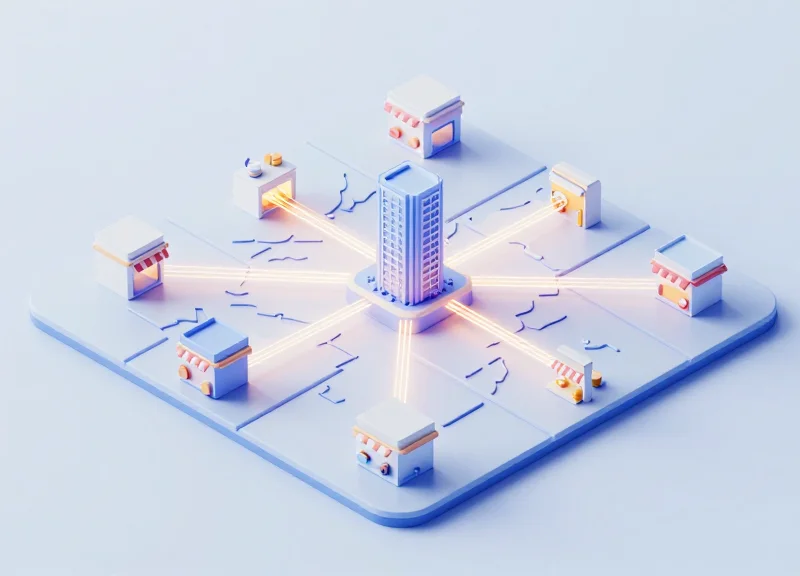
In the 2026 retail landscape, scalability and remote management represent the shift from reactive 'store-level' security to proactive 'fleet-wide' orchestration. Unlike standalone Electronic Article Surveillance (EAS) systems that require manual, on-site adjustments for every pedestal, AI-driven cloud integration allows Loss Prevention (LP) teams to manage thousands of global locations from a single pane of glass. This 'Elastic Security' model means that firmware updates, sensitivity tuning, and system health diagnostics are deployed instantaneously across the entire network, ensuring that a security policy change in London is reflected in Tokyo within seconds, without a single technician visit.
| Feature | Standalone EAS (Legacy) | AI-Driven Cloud Integration (2026) |
|---|---|---|
| Configuration | Manual, on-site per pedestal | Global 'Zero-Touch' Provisioning |
| Maintenance | Reactive 'Truck Rolls' (High Cost) | Predictive Remote Diagnostics |
| Data Access | Siloed; requires local export | Real-time centralized aggregation |
| Policy Deployment | Weeks/Months for large chains | Instantaneous (Global Policy Engine) |
| System Uptime | Unknown until a theft occurs | 99.9% via 24/7 cloud monitoring |
Expert Insight: The 'Path-to-Protection' Predictive Intelligence. A unique advantage of 2026 cloud-integrated systems is the ability to track Organized Retail Crime (ORC) patterns across geographies. By aggregating anonymized alarm data, the cloud platform can identify a specific theft 'signature'—such as a booster bag frequency—at Store A and automatically elevate the sensitivity and alert-readiness of Stores B and C in the predicted path of the shoplifting crew. This transformational shift turns security hardware into a distributed sensor network that outpaces local threats.
How does cloud integration reduce 'Truck Rolls' and maintenance costs?
Cloud platforms allow 90% of technical issues, such as environmental interference recalibration or software bugs, to be resolved remotely. This eliminates the need for expensive physical technician visits, saving large retailers millions in annual Opex.
Can I manage security settings for different regions differently?
Yes. The 2026 Cloud Dashboards utilize 'Tagging and Grouping,' allowing you to apply specific security protocols to high-shrink urban areas while maintaining standard settings for low-risk suburban locations, all from the same interface.
What happens if a store's internet connection goes down?
Modern AI-driven systems utilize 'Edge-First' architecture. The pedestals continue to operate and catch theft locally using cached AI models; once the connection is restored, all stored data and incident logs are automatically synced to the cloud.
By leveraging a centralized 'Global Policy Engine,' retail executives can finally achieve brand consistency in security. Whether you are opening 10 new stores or 500, the cloud infrastructure allows you to 'clone' the security profile of your best-performing location, ensuring that 99.9% detection accuracy is a standard across the enterprise, not a localized exception.
Cost-Benefit Analysis: The ROI of Transitioning to AI-Cloud Security

Transitioning from legacy Standalone Electronic Article Surveillance (EAS) to AI-driven cloud integration is a shift from a 'sunken cost' hardware model to a 'value-generating' data asset. While legacy systems require high upfront Capital Expenditure (CapEx) and suffer from performance degradation over time, AI-cloud frameworks utilize a lower-entry CapEx with a predictable Operational Expenditure (OpEx) model. The Return on Investment (ROI) is primarily realized through three vectors: the radical reduction of 'shrinkage attrition' (theft that goes unnoticed), the elimination of false-alarm labor costs, and the extension of hardware lifecycles via remote firmware optimization.
| Financial Metric | Legacy Standalone EAS | AI-Driven Cloud Integration |
|---|---|---|
| Average False Alarm Rate | 15% - 25% | < 0.1% |
| Maintenance Model | On-site technician (Paid per visit) | Remote diagnostics & Cloud updates |
| Labor Cost (Alarm Response) | High (Vigilance Fatigue) | Minimal (Verified Alerts Only) |
| System Lifespan | 5-7 Years (Hardware Obsolescence) | 10+ Years (Software-Defined Scaling) |
| Shrink Reduction (Year 1) | Baseline | 30% - 50% Improvement over Baseline |
A unique financial insight often overlooked by procurement teams is the 'Vigilance Tax.' In legacy environments, high false-alarm rates lead to employee desensitization. When a system triggers falsely 20 times a day, staff begin to ignore all alerts, effectively rendering the original investment worthless. AI-driven systems eliminate this tax by providing 99.9% detection accuracy, ensuring that every time an alarm sounds, it is an actionable event. This restores staff accountability and ensures that the labor hours spent on security actually contribute to the bottom line.
- Phase 1: Calculate the Labor Leak: Multiply the number of daily false alarms by the average time a staff member spends investigating (usually 2-3 minutes). In a 100-store chain, this often equates to thousands of lost productivity hours annually.
- Phase 2: Assess Maintenance Overhead: Aggregate the costs of physical truck rolls for 'ghost' tag interference and hardware recalibration. Cloud systems eliminate approximately 80% of these visits through remote tuning.
- Phase 3: Project Shrink Recovery: Apply a conservative 30% reduction to your current annual shrink figures. For most mid-to-large retailers, this recovery alone covers the cost of the cloud migration within 14 months.
Does a subscription model cost more over time than a one-time hardware purchase?
No. While standalone hardware has a one-time cost, its 'total cost of ownership' is higher due to unpatched security vulnerabilities, manual labor needs, and the eventual need for full hardware replacement when tech becomes obsolete. Cloud models offer continuous value through feature updates.
Can we repurpose existing sensors to lower the initial cost?
Yes. Many AI-cloud platforms are 'hardware agnostic' or offer bridge controllers that digitize signals from legacy pedestals, allowing retailers to gain 99.9% accuracy without a total 'rip-and-replace' of existing floor assets.
What is the primary driver of ROI in 2026?
Predictive Prevention. Instead of just catching a thief at the door, the integration of AI with cloud video allows the system to identify suspicious patterns before the exit, preventing the loss entirely and avoiding potential legal liabilities.
Future-Proofing Your Infrastructure: Steps for Implementation
Future-proofing your retail security infrastructure involves transitioning from siloed Electronic Article Surveillance (EAS) pedestals to an integrated, AI-driven cloud network through a phased migration of hardware retrofitting and software synchronization. By 2026, the industry standard for implementation focuses on 'Hybrid Edge Processing,' a method that allows legacy hardware to communicate with cloud-based neural networks to achieve near-perfect detection accuracy without requiring a total 'rip-and-replace' of existing physical assets.
- Audit and Hardware Inventory: Begin by assessing the compatibility of current RF, AM, or RFID pedestals. Identify units capable of supporting digital pulse outputs or those that require external IoT bridge controllers to transmit data signals.
- Deploy IoT Edge Gateways: Install localized edge gateways that aggregate signals from your pedestals and cameras. These devices filter noise at the store level before uploading critical event data to the cloud, reducing latency and bandwidth costs.
- Establish the Unified API Layer: Integrate your security hardware with your ERP and Point of Sale (POS) systems via secure APIs. This ensures that every 'alarm' is cross-referenced against real-time sales data to distinguish between theft and clerical errors.
- Implement AI Calibration and Training: Run the system in 'shadow mode' for 14 days. Use this period to train the AI on your specific store traffic patterns, effectively eliminating local environmental interference and ghost alarms.
- Phased Rollout and Feedback Loops: Expand the cloud integration across the enterprise. Use the centralized dashboard to push firmware updates and detection algorithm tweaks globally, ensuring uniform security standards across all locations.
| Implementation Phase | Legacy Limitation | 2026 Cloud-Ready Solution |
|---|---|---|
| Data Processing | Local Hardware Only | Hybrid Edge-to-Cloud Intelligence |
| Alarm Validation | Manual Staff Verification | Automated POS Cross-Referencing |
| System Maintenance | On-site Technician Required | Remote OTA (Over-The-Air) Updates |
| Scalability | One-to-One Configuration | Global Policy Synchronization |
Expert Tip: The most successful implementations in 2026 utilize 'Digital Twin Simulation' before going live. By creating a virtual model of your store's RF environment, you can predict and mitigate signal dead zones or interference from nearby electronics before a single technician arrives on-site. This reduces deployment costs by up to 25%.
Do I need to replace all my existing EAS pedestals?
No. Most modern AI-driven cloud platforms are hardware-agnostic and can use 'Smart Bridges' to pull data from 80% of legacy AM/RF systems currently in use.
What is the typical downtime during the upgrade?
Modular cloud integration typically results in zero downtime for the physical security layer, as the software overlay is implemented in parallel with existing operations.
How does cloud integration affect my store's Wi-Fi bandwidth?
By using Edge Gateways to process data locally, only compressed metadata is sent to the cloud, consuming less bandwidth than a standard HD video stream.